Eggplant Parmigiana
The dish in context
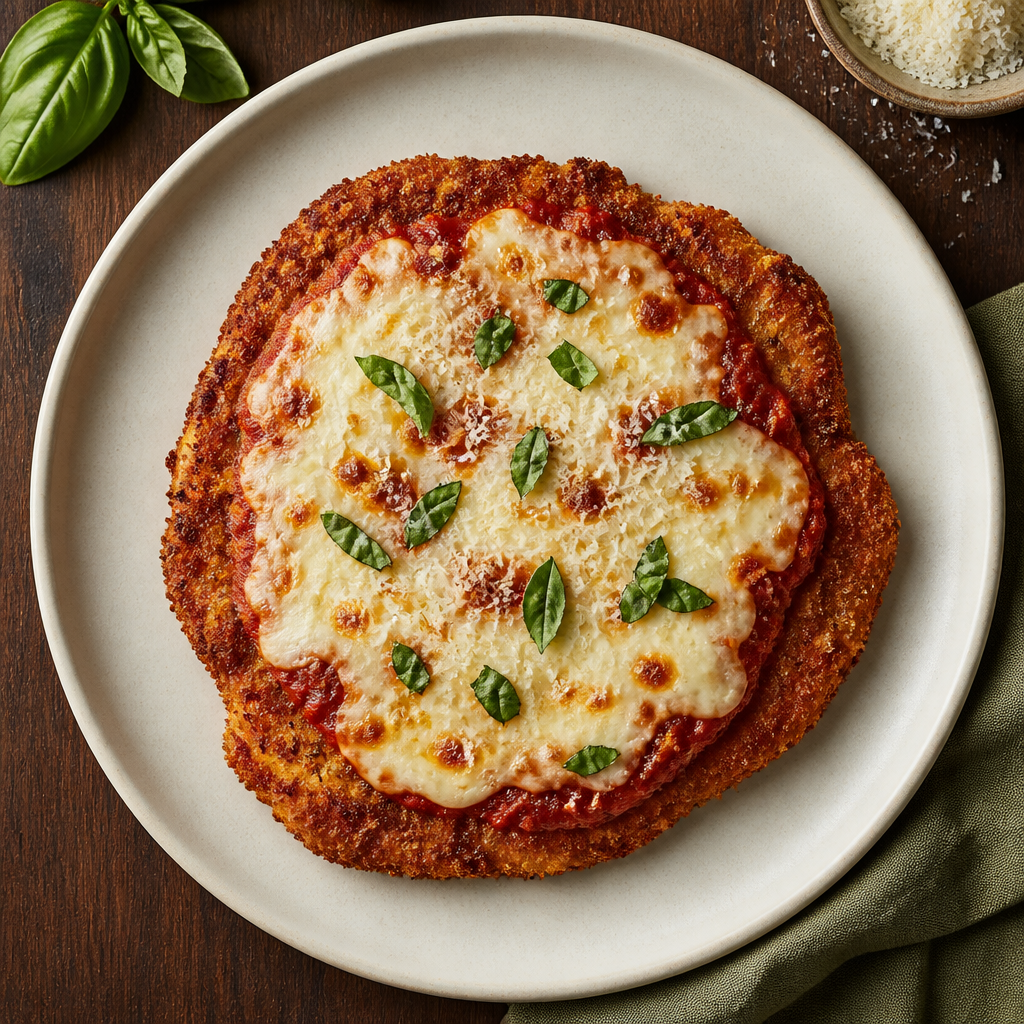
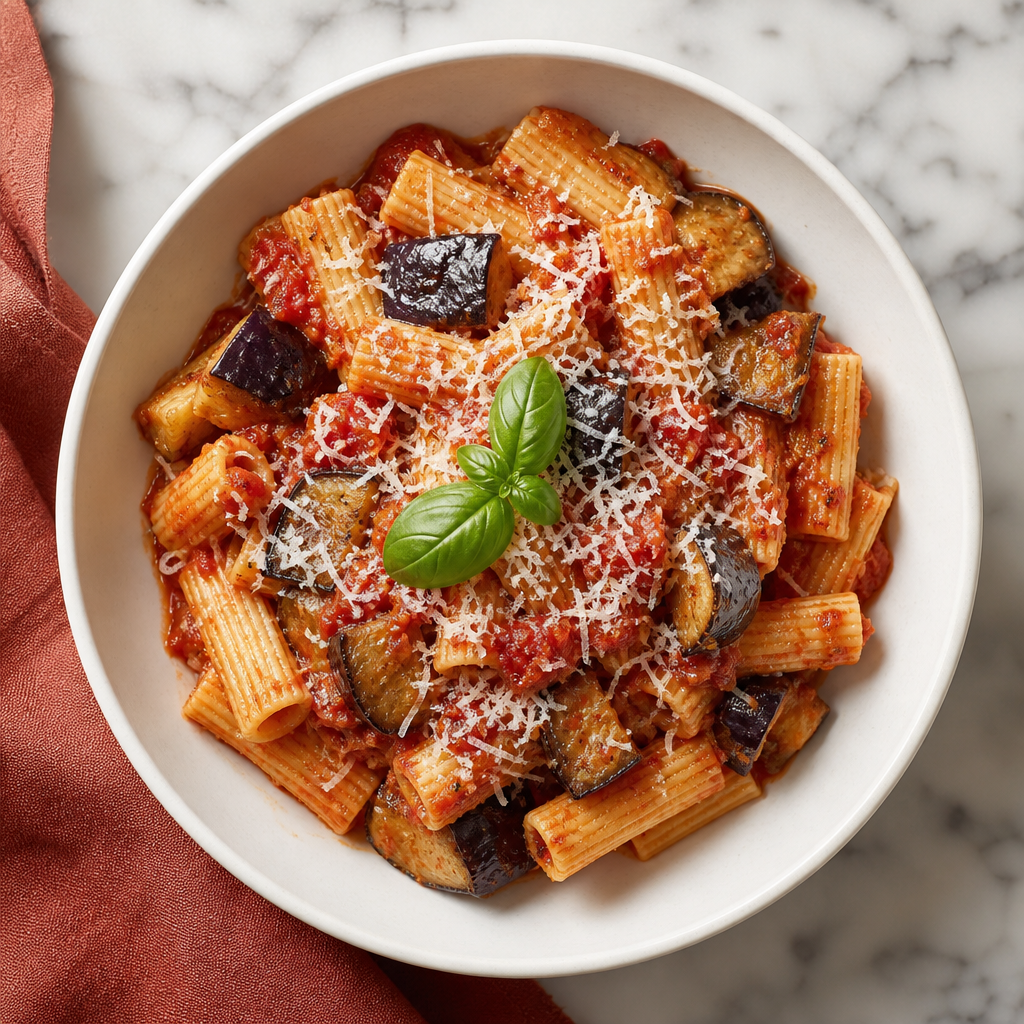
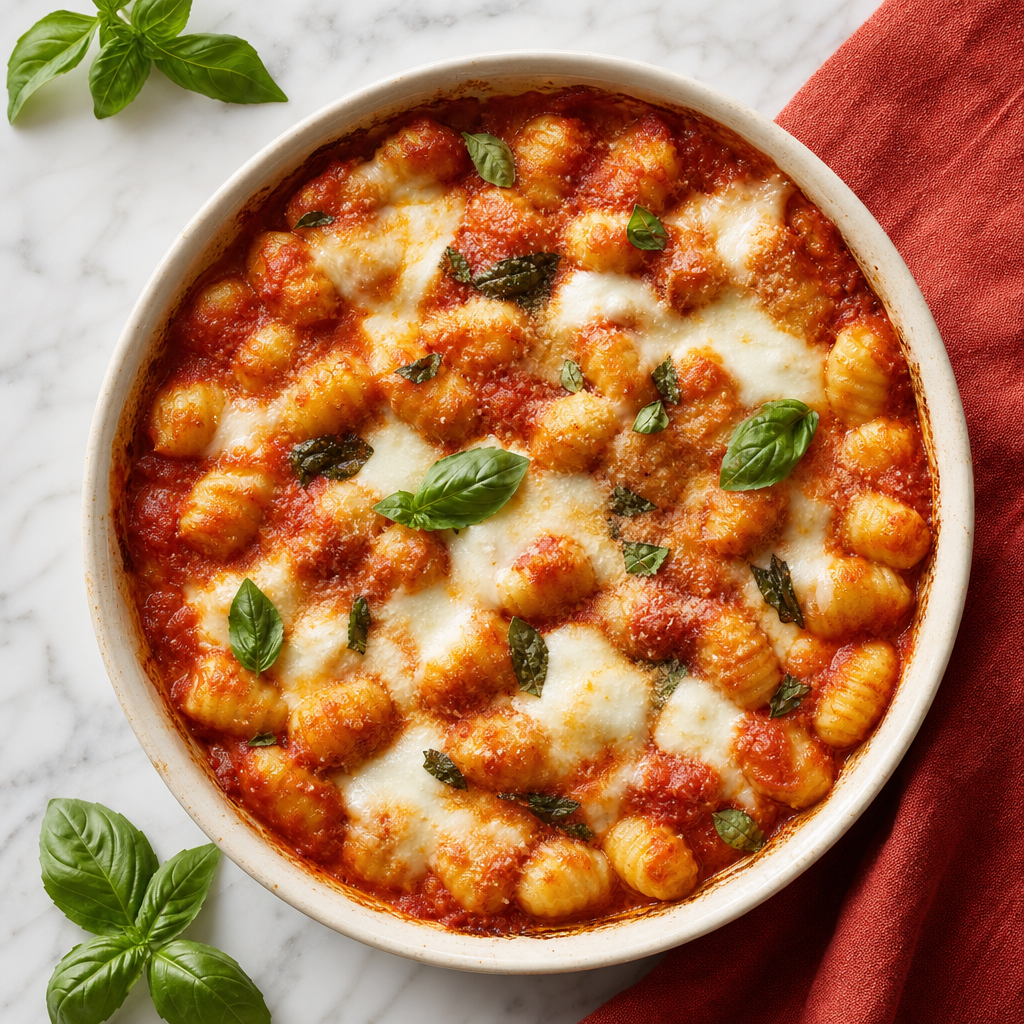
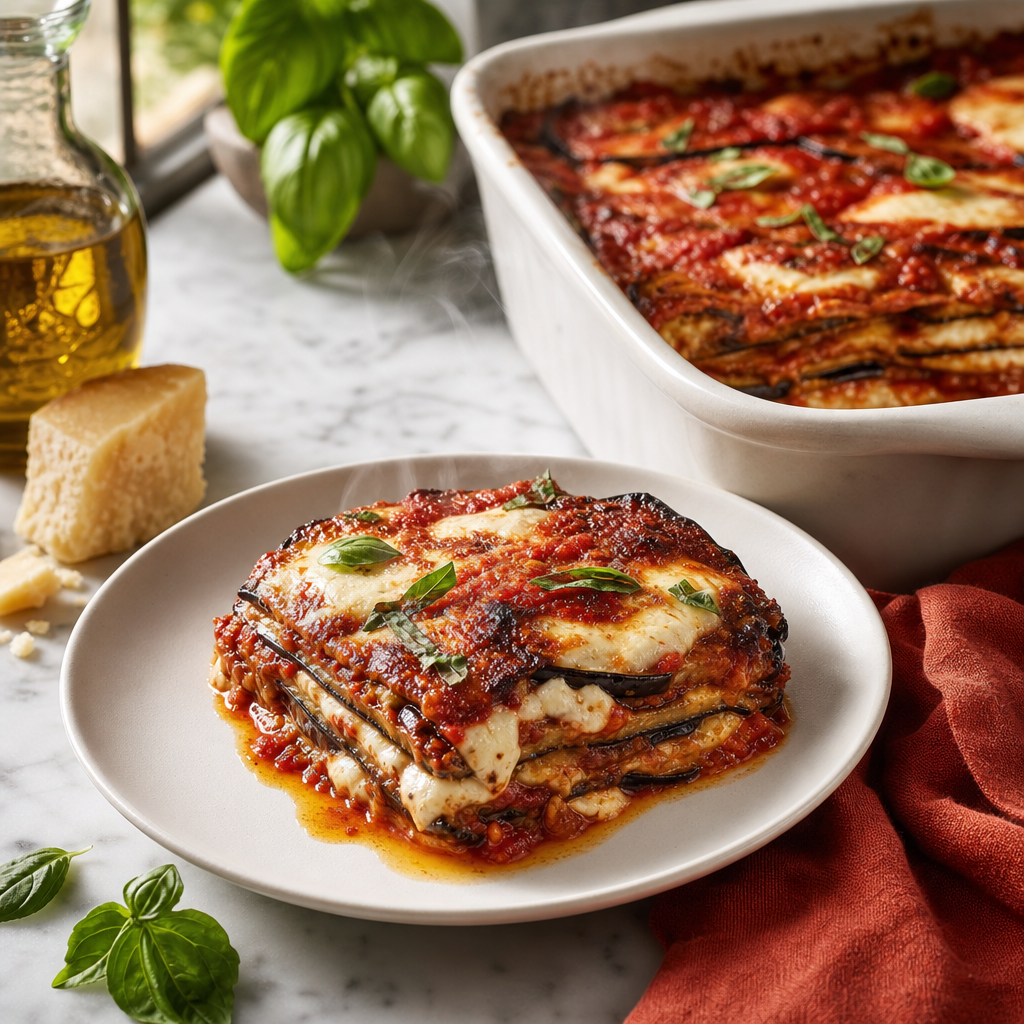
Melanzane alla Parmigiana is claimed across southern Italy, especially Campania and Sicily, with Naples often cited for the tomato-and-cheese form that resembles the modern dish. The Campanian household grammar is clear: fried eggplant, tomato sauce, mozzarella, Parmigiano-Reggiano or local grating cheese, basil, then a short bake to bind the layers. The Italian dish is lighter and softer than the Italian-American breaded cutlet version called eggplant parmesan. Both are legitimate dishes; they are not the same construction.
Method 8 steps · 125 min
Salt and drain the eggplant
Lay the eggplant slices in layers in a colander, salting lightly between layers. Weight with a plate and let drain for 45 minutes, then rinse briefly or wipe off excess salt and pat very dry with towels.
Cook a restrained tomato sauce
Heat 30 ml olive oil in a saucepan over medium heat, add the crushed garlic, and cook until pale gold, 1-2 minutes. Add the crushed tomatoes and 6 g salt, simmer uncovered until thick enough to leave a trail when stirred, 25-30 minutes, then remove the garlic and tear in half the basil.
Drain the mozzarella
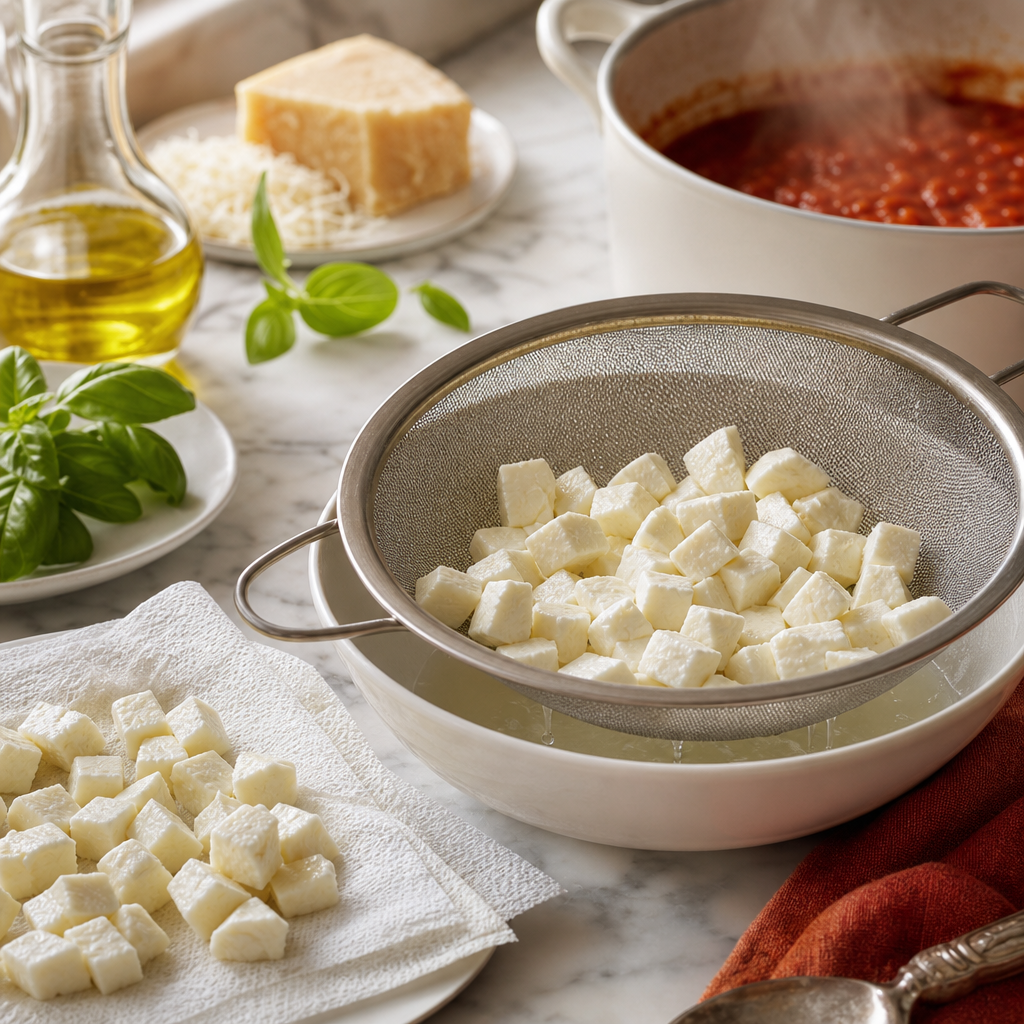
Dice the mozzarella and set it in a sieve or on towels while the sauce cooks. If using buffalo mozzarella, drain it for at least 2 hours, preferably overnight.
Fry the eggplant
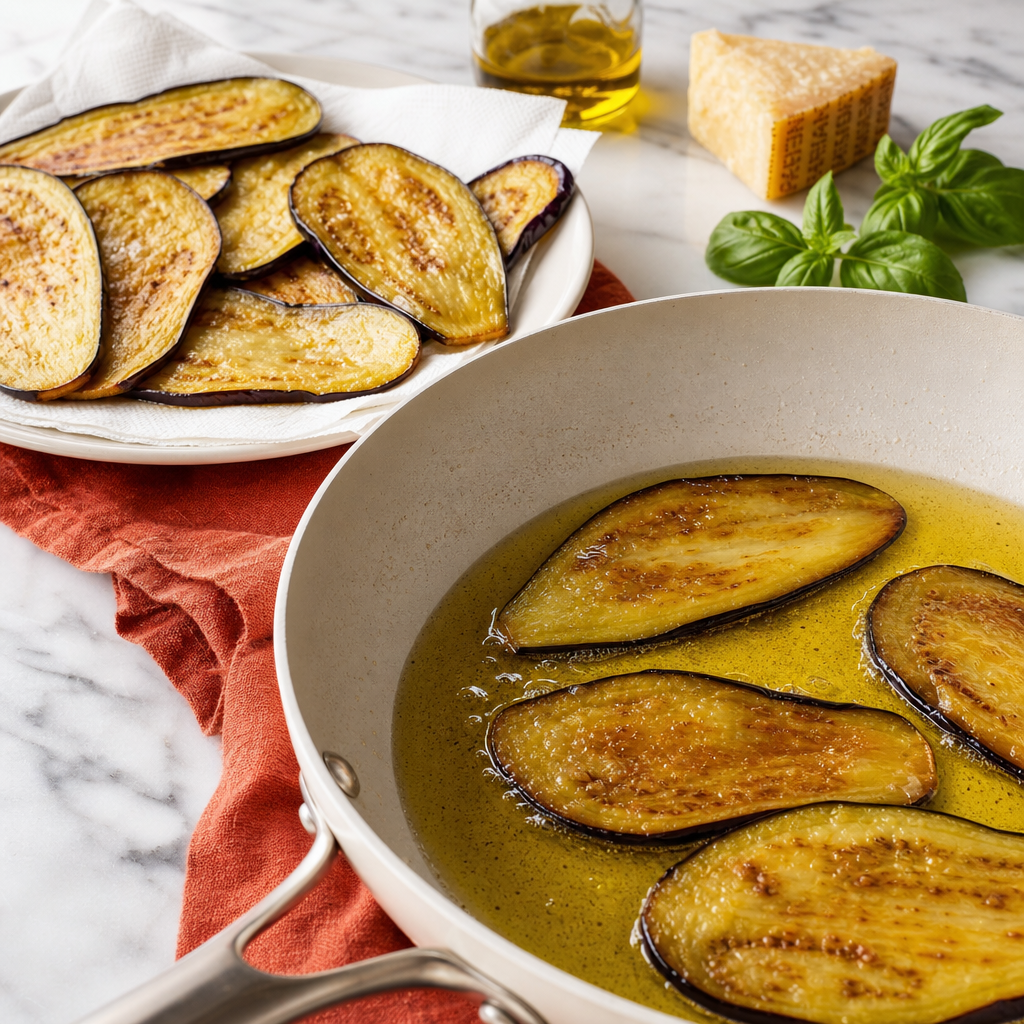
Heat 1 cm oil in a wide skillet to 175-180°C. Fry the eggplant in batches until golden on both sides and fully pliant, 2-3 minutes per side, then drain on a rack or towels; keep the oil hot enough that the slices sizzle immediately but do not smoke.
Heat the oven and prepare the dish
Heat the oven to 190°C. Spread a thin spoonful of tomato sauce across the bottom of a 23 x 33 cm baking dish; the base should be stained red, not filled.
Layer thinly
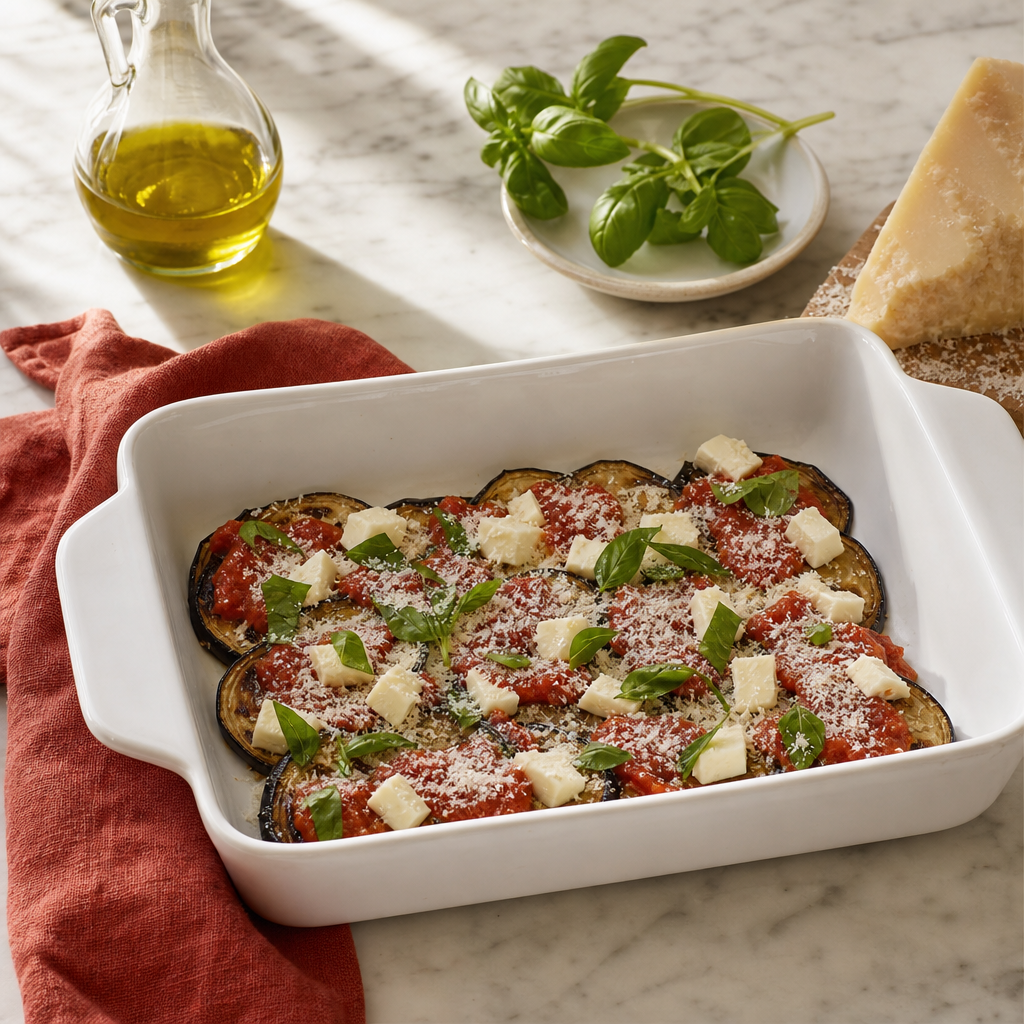
Add a single slightly overlapping layer of fried eggplant. Spoon over a thin layer of sauce, scatter with mozzarella, Parmigiano-Reggiano, a few basil leaves, and a little pepper; repeat until the ingredients are used, finishing with tomato sauce, Parmigiano-Reggiano, and a modest amount of mozzarella.
Bake until bubbling and set at the edges
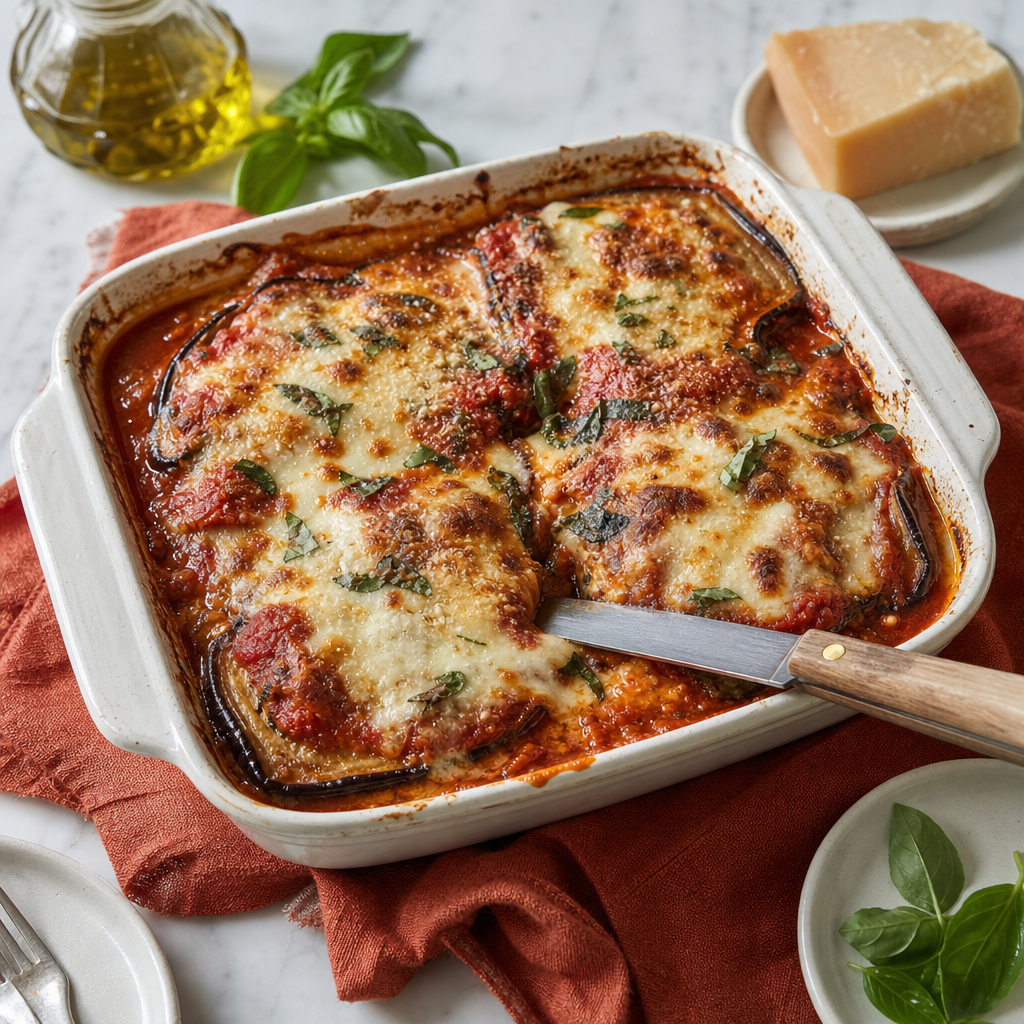
Bake uncovered for 30-35 minutes, until the edges bubble steadily, the top has browned spots, and a knife inserted in the center meets soft stacked resistance rather than loose liquid.
Rest before cutting
Rest the parmigiana for at least 20 minutes before slicing. Serve warm or at room temperature, with fresh basil added after the rest.
Common mistakes
- {'mistake': 'Breading the eggplant for this version.', 'fix': 'Leave the slices unbreaded. Breaded eggplant belongs to the Italian-American eggplant parmesan branch, not this Campanian-style construction.'}
- {'mistake': 'Using too much tomato sauce.', 'fix': 'Apply sauce in thin layers. If sauce pools visibly between layers during assembly, the finished dish will be wet.'}
- {'mistake': 'Skipping mozzarella draining.', 'fix': 'Drain fresh mozzarella before assembly. Wet cheese leaks whey and makes the casserole look broken.'}
- {'mistake': 'Cutting the dish straight from the oven.', 'fix': 'Rest at least 20 minutes. The texture should be soft and sliceable, not molten.'}
- {'mistake': 'Frying at low temperature.', 'fix': 'Keep the oil around 175-180°C. Eggplant fried in cool oil turns heavy and greasy.'}
What does not belong
- {'item': 'Breadcrumb coating', 'reason': 'Breadcrumb coating does not belong in Campanian-style melanzane alla Parmigiana. It changes the dish into the Italian-American cutlet version.'}
- {'item': 'Jarred sweet marinara', 'reason': 'Sweet, oregano-heavy jarred sauce does not belong here. The tomato layer should be clean, reduced, and basil-led.'}
- {'item': 'A thick cap of shredded cheese', 'reason': 'A rubbery cheese blanket does not belong. The mozzarella should appear in pockets between eggplant layers.'}
- {'item': 'Dried basil', 'reason': 'Dried basil does not belong in the layers. It tastes dusty after baking and does not replace fresh basil.'}
- {'item': 'Heavy cream or ricotta', 'reason': 'Cream and ricotta do not belong in this preparation. They mute the eggplant and tomato and push the dish toward a different casserole.'}
- {'item': 'Meat sauce', 'reason': 'Ragù does not belong in the standard eggplant parmigiana structure. Fried eggplant, tomato, cheese, and basil are enough.'}
Adaptations
Use a firm plant-based mozzarella and a dry vegan grating cheese. The dish will lose the dairy structure that binds the layers; reduce the tomato sauce harder and rest longer.
Use vegetarian-certified or microbial-rennet mozzarella and Parmigiano-style cheese if animal rennet is a concern. Parmigiano-Reggiano DOP uses animal rennet.
This Campanian-style version is naturally gluten-free if the cheeses and canned tomatoes are certified free from cross-contact. Breadcrumbs are not part of the recipe.
Dairy-free cheese substitutes can melt, but they do not reproduce the saline-granular role of Parmigiano-Reggiano or the milk structure of mozzarella.
The recipe contains no shellfish.