Pizza Margherita
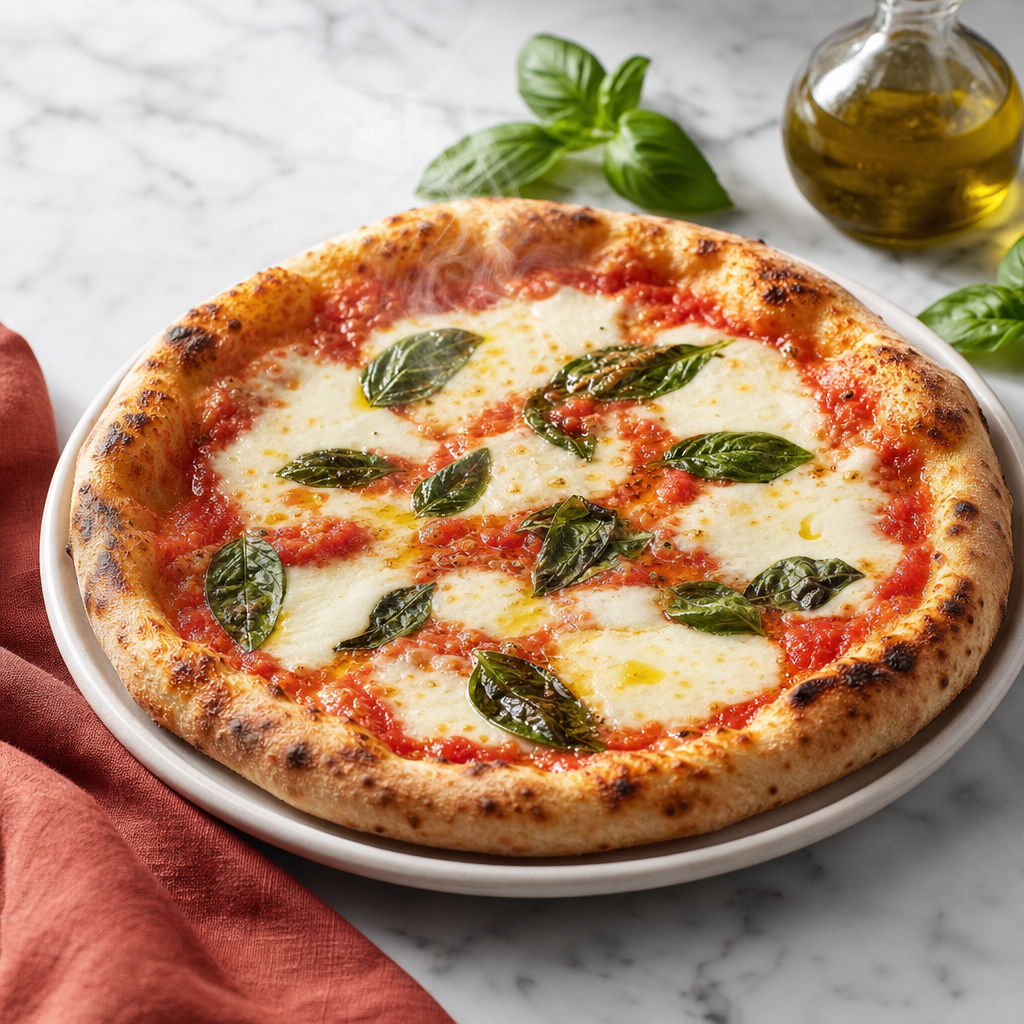
The dish in context
Pizza Margherita is one of the two canonical Neapolitan pizzas, alongside marinara. The modern shorthand is tomato, mozzarella, basil, and olive oil, arranged in the red-white-green colors associated with the Italian flag. The familiar story credits Raffaele Esposito with naming it for Queen Margherita in 1889, but historians dispute parts of that legend; similar combinations of tomato, mozzarella, and basil were already recorded in Naples before then. The useful point is culinary, not royal: this pizza has very few toppings, so the dough, tomato, cheese moisture, and oven heat have nowhere to hide.
Method 8 steps · 1500 min
Mix the dough
Combine flour, salt, and yeast in a bowl. Add the water and mix until no dry flour remains, then knead 5-7 minutes until the dough is smooth, tacky, and elastic rather than shaggy.
Ferment and ball
Cover the dough and ferment 18-24 hours in the refrigerator, or 8-12 hours at cool room temperature. Divide into 2 balls, tighten each into a smooth round, cover, and rest 2 hours at room temperature before baking.
Drain the toppings
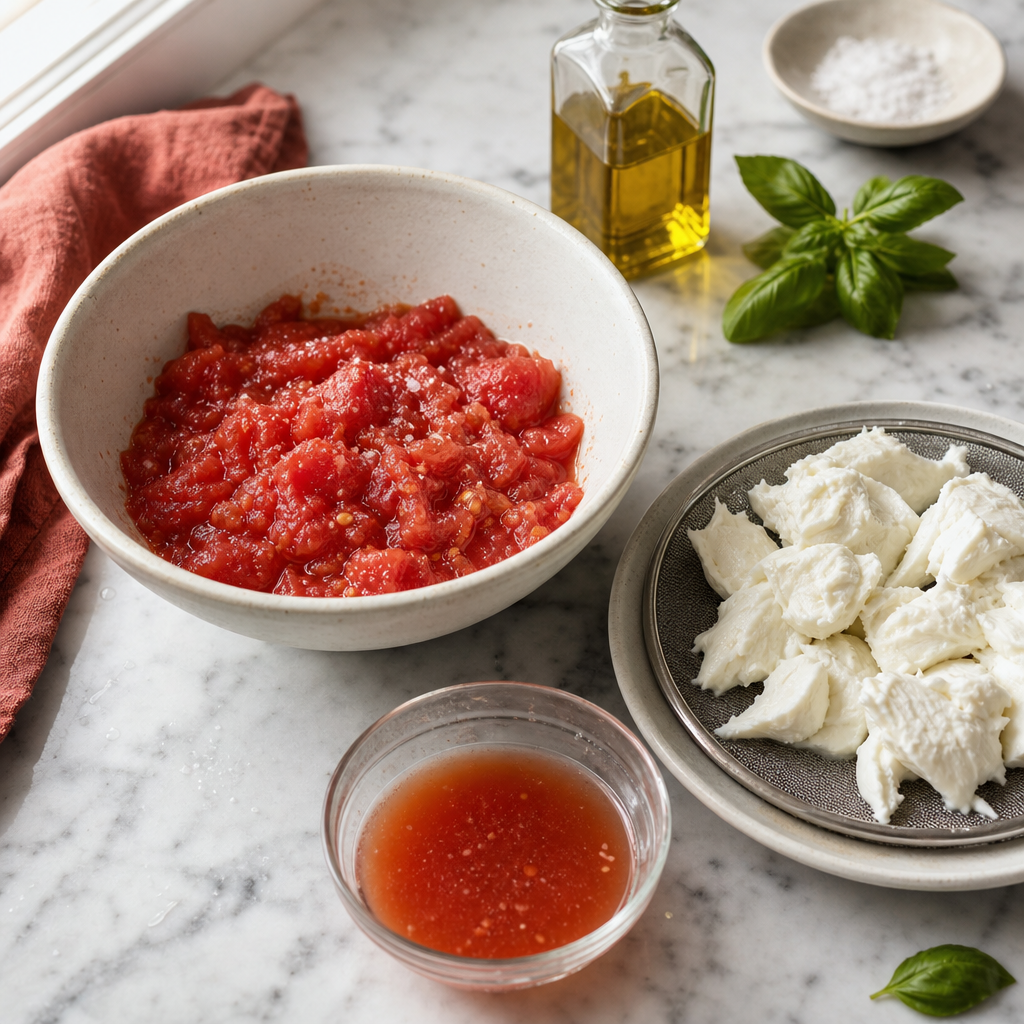
Crush the tomatoes by hand, season with 2 g salt, and drain off loose watery liquid if the tomatoes are thin. Tear the mozzarella into small pieces and drain on paper towels or in a sieve for at least 30 minutes.
Preheat the baking surface
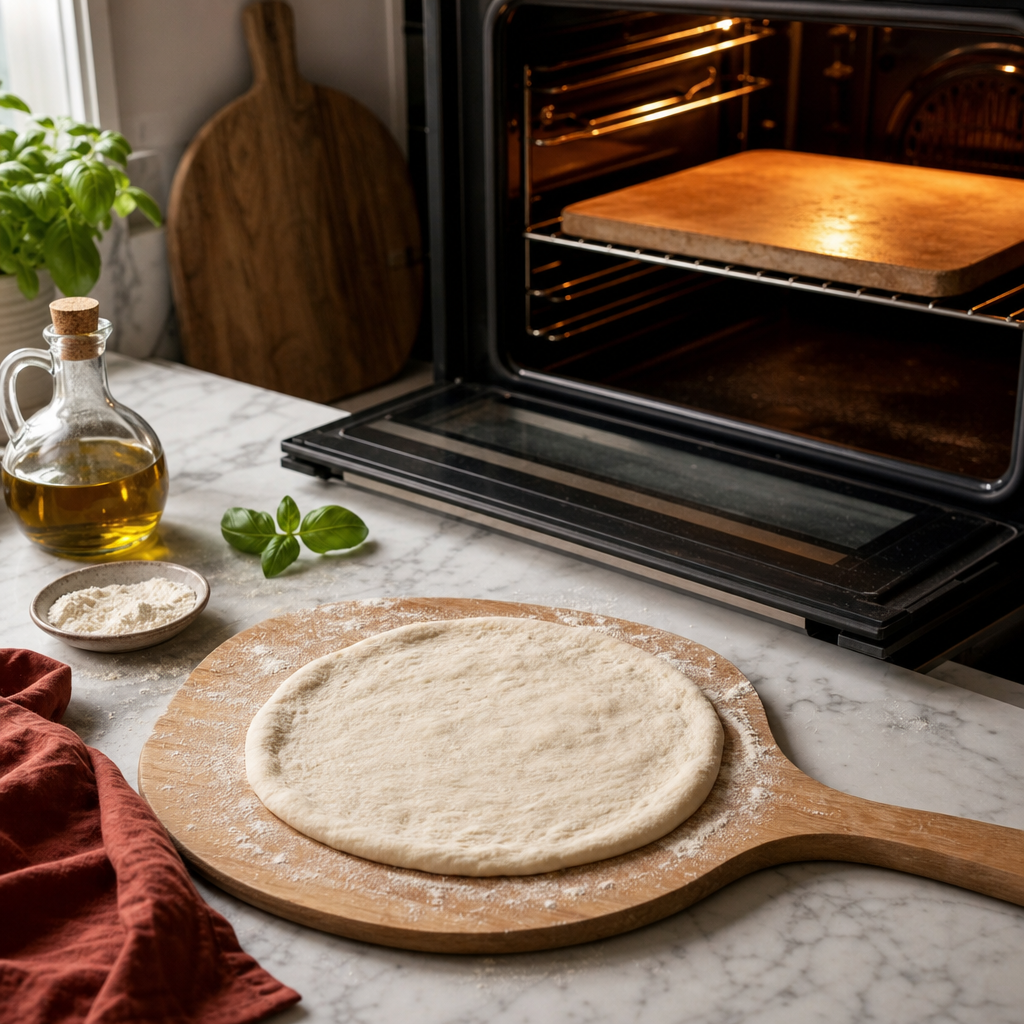
Place a pizza stone or steel on the highest practical oven rack and heat the oven to its maximum setting, ideally 275-290°C / 525-550°F, for at least 45 minutes. If using a broiler finish, heat the stone or steel first, then switch the broiler on for the final 10 minutes.
Stretch the first pizza
Dust the bench lightly with semolina or flour. Press one dough ball from the center outward, leaving a 1.5-2 cm rim untouched, then lift and stretch over the backs of the hands to a 25-28 cm round.
Top lightly
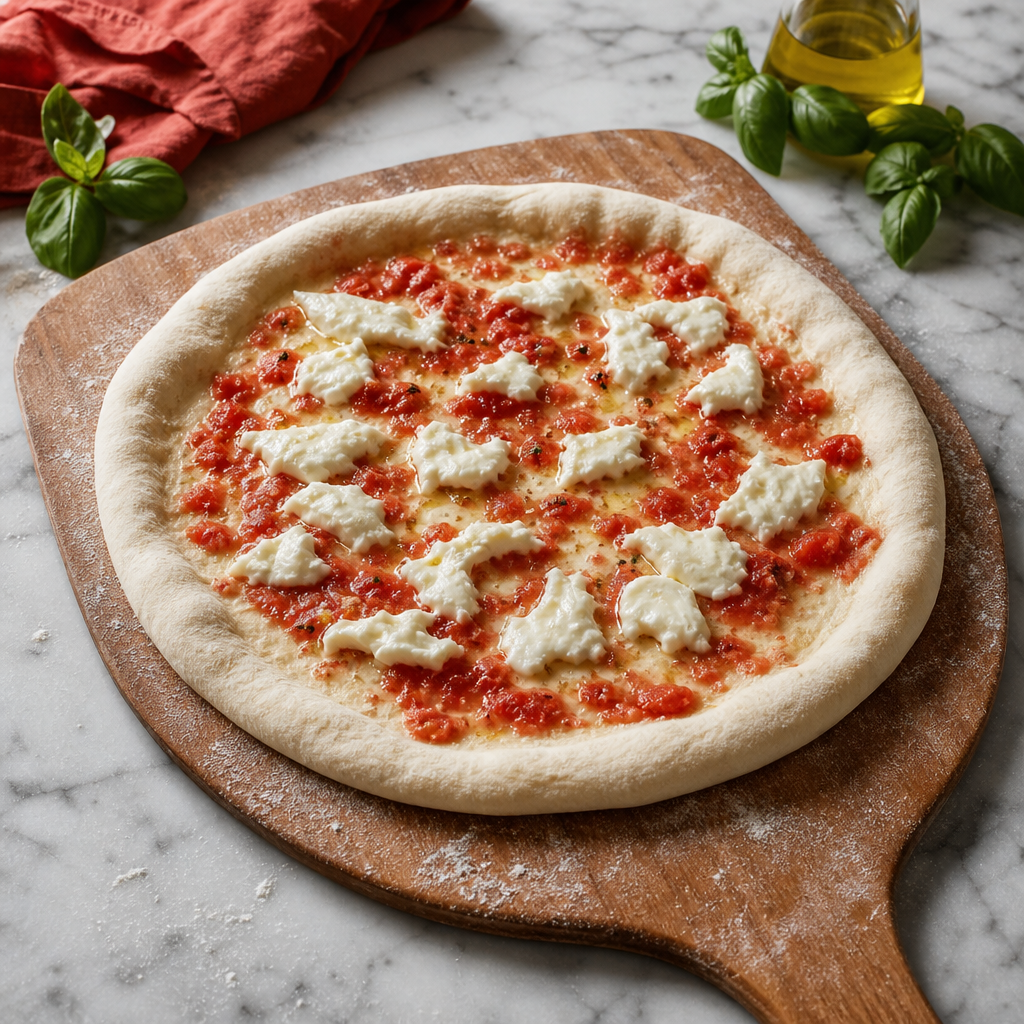
Move the dough to a floured peel. Spread half the crushed tomato in a thin layer, leaving the rim bare, then scatter half the drained mozzarella in irregular gaps; red tomato should still be visible.
Bake hard
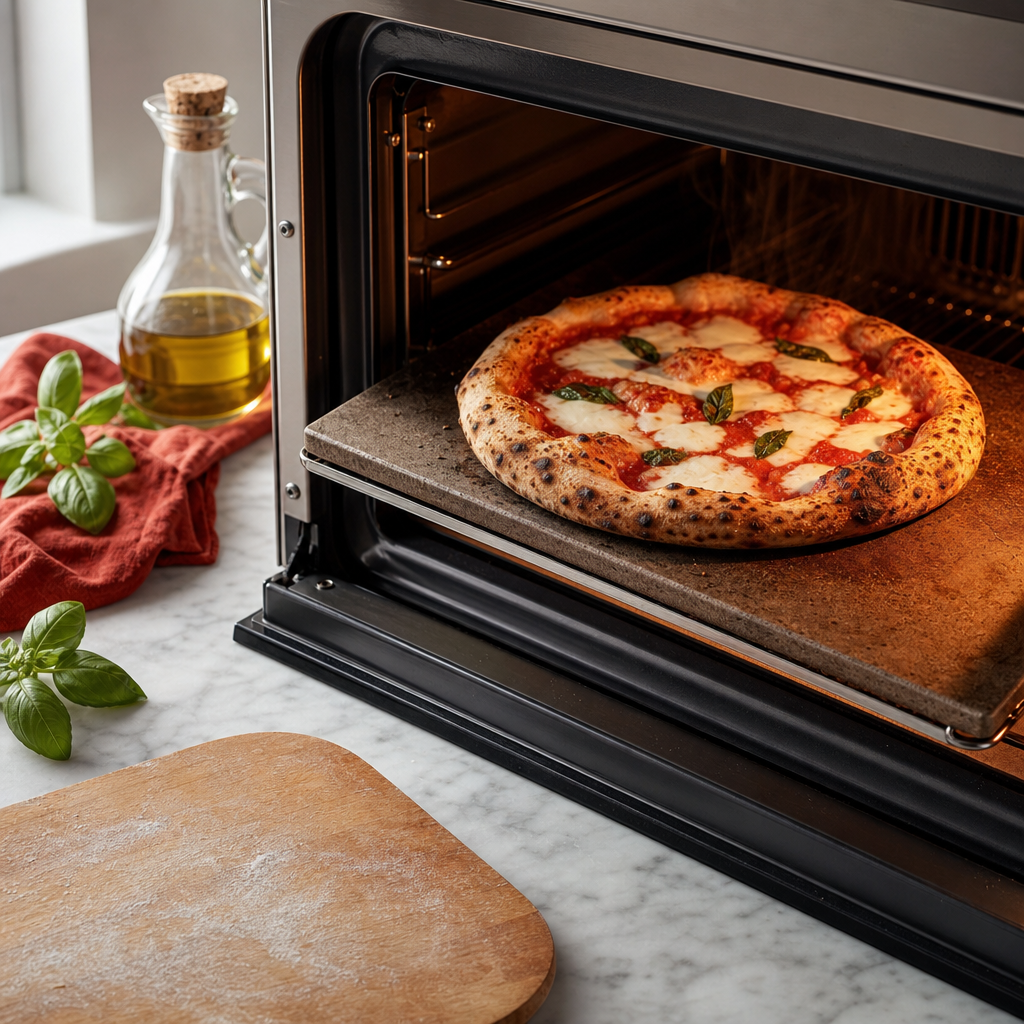
Launch the pizza onto the hot stone or steel. Bake 5-7 minutes in a very hot home oven, rotating once, until the rim is inflated and spotted with char and the cheese has melted into soft white pools.
Finish off the heat
Transfer the pizza to a board. Add fresh basil leaves and a thin drizzle of extra virgin olive oil after baking, then repeat with the second dough ball.
Common mistakes
- {'mistake': 'Using cooked pasta sauce', 'fix': 'Use hand-crushed canned tomatoes with salt. Garlic-heavy, oregano-heavy jarred sauce turns Margherita into a different pizza.'}
- {'mistake': 'Loading the center with wet mozzarella', 'fix': 'Tear and drain the cheese before topping. The center should bake, not poach.'}
- {'mistake': 'Adding basil before the bake', 'fix': 'Add basil after the pizza comes out. Burned basil tastes bitter and looks black, not green.'}
- {'mistake': 'Baking on a cold tray', 'fix': 'Use a fully preheated stone or steel. A cold tray gives a pale, bready base.'}
- {'mistake': 'Rolling the dough flat', 'fix': 'Stretch by hand and leave the outer rim untouched. The raised cornicione depends on trapped gas.'}
What does not belong
- {'item': 'Sugar in the tomato', 'reason': 'Good canned tomatoes need salt and drainage, not sweetness. Sugar makes the sauce taste like pizza-chain tomato paste.'}
- {'item': 'Garlic', 'reason': 'Garlic belongs on marinara, not canonical Margherita. Adding it changes the profile.'}
- {'item': 'Dried oregano', 'reason': 'Oregano is a marinara marker. Margherita uses basil for the green aromatic note.'}
- {'item': 'Parmesan as the main cheese', 'reason': 'Parmigiano-Reggiano can season many Italian dishes, but Margherita is built on fresh mozzarella: fior di latte or mozzarella di bufala.'}
- {'item': 'Olive oil before baking', 'reason': 'In this version the oil finishes the pizza. Putting it on before baking encourages greasiness and dulls the aroma.'}