Pizza Marinara
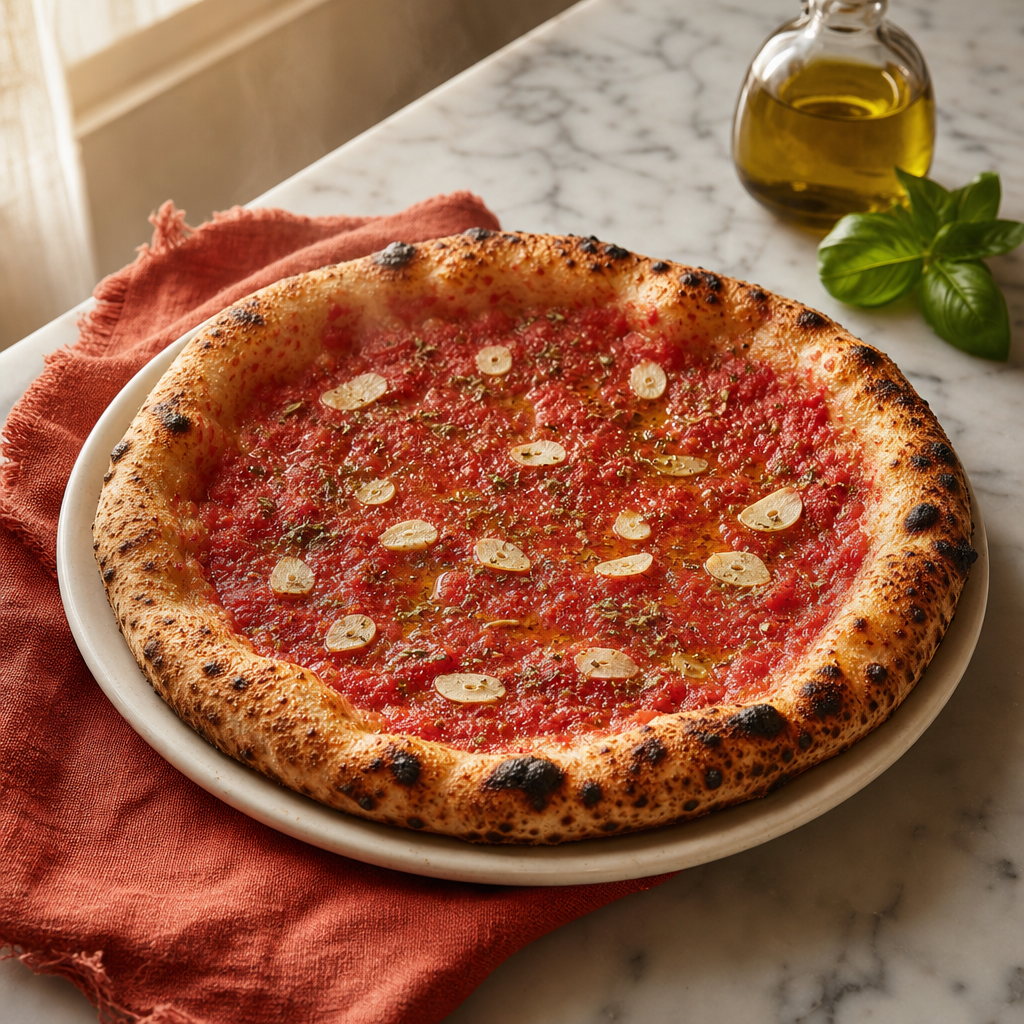
The dish in context
Pizza marinara is one of the canonical pizzas of Naples, alongside margherita. The name points to marinai, sailors, not seafood; the old grammar is tomato, garlic, oregano, and olive oil on a lean dough. Italian and Neapolitan sources are consistent on the point that marinara is a pizza rossa: red, without mozzarella. The sailor origin story is widely repeated, but the safer claim is practical rather than romantic — its toppings were cheap, durable, and available around the port. Adding mozzarella turns the order into something else: closer to a margherita with garlic, not marinara.
Method 10 steps · 1500 min
Mix the dough
Dissolve the salt in the water. Add the flour and yeast, then mix until no dry flour remains and the dough looks rough and shaggy. Cover and rest for 20 minutes.
Knead to a smooth mass
Knead for 5-7 minutes on the counter until the dough changes from torn and lumpy to elastic and slightly tacky. It should cling to the hand for a second, then release; wet paste means too much water or underworked gluten.
Ferment cold
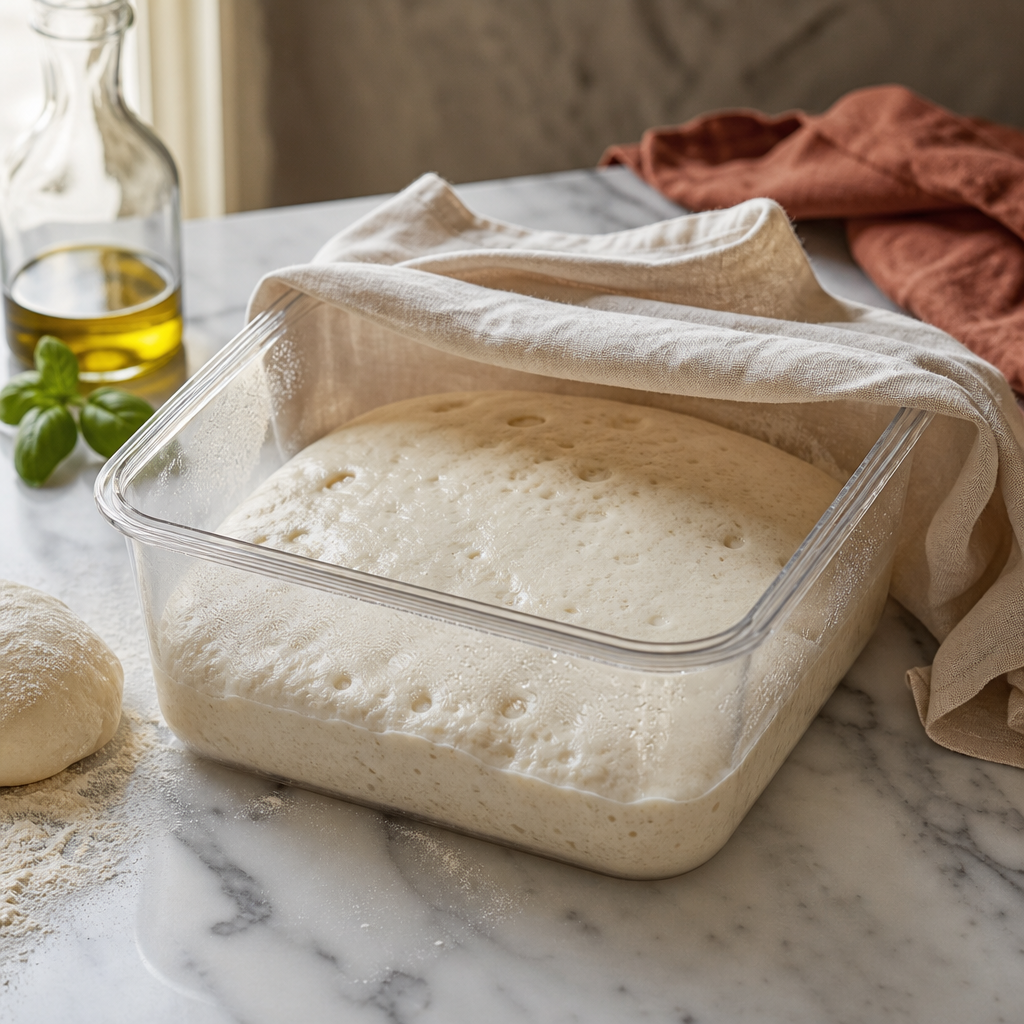
Place the dough in a lightly covered container and refrigerate for 18-24 hours. It should rise visibly, smell faintly fermented, and show small bubbles at the surface.
Ball the dough
Divide into 3 pieces of about 280 g each. Shape each into a tight ball by tucking the edges underneath, then rest covered at room temperature for 2-3 hours until relaxed and puffy.
Crush the tomatoes
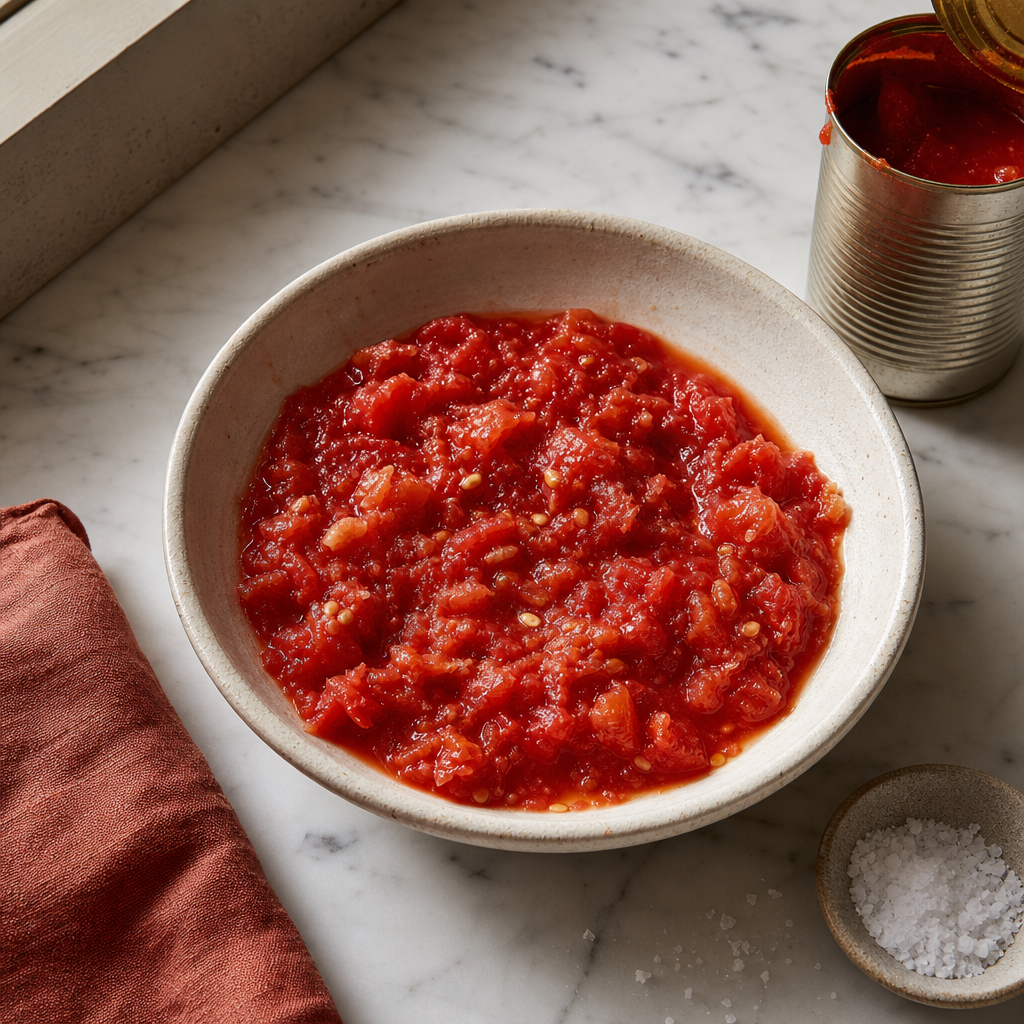
Drain off only the thinnest excess liquid from the can, then crush the tomatoes by hand into a loose, pulpy sauce. Stir in the 4 g salt. Do not cook it.
Heat the baking surface
Set a pizza steel or stone on the upper-middle rack and heat the oven to its highest setting, ideally 275-300°C / 525-575°F, for at least 45 minutes. If the oven has a broiler, heat normally first and switch to broil only for the bake.
Stretch one pizza
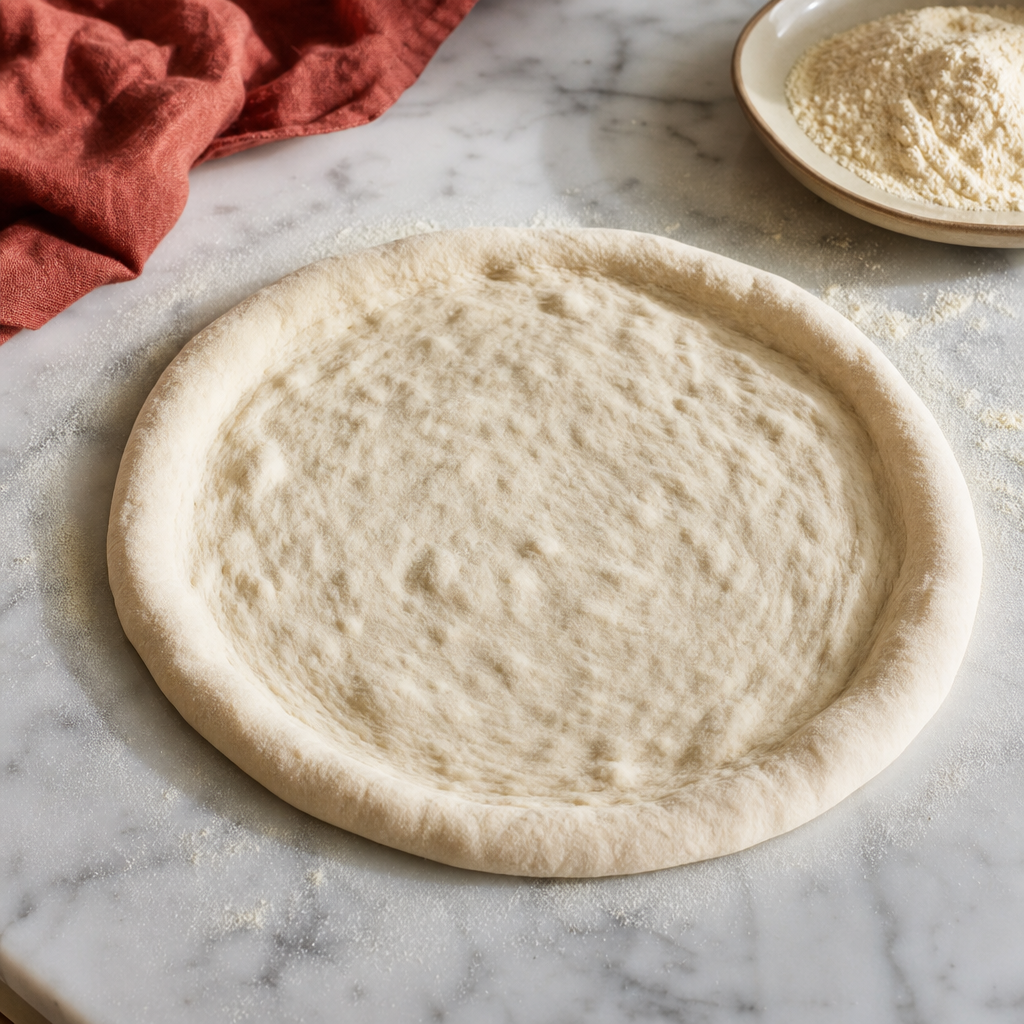
Dust the bench lightly with semolina or flour. Press one dough ball from the center outward, leaving a 1.5-2 cm rim untouched, then stretch to about 28-30 cm. Do not roll it flat.
Top as marinara
Move the stretched dough to a floured peel. Spread about 120 g crushed tomato over the center, stopping before the rim. Scatter one thin-sliced garlic clove, 1/2 tsp oregano, and 12 ml olive oil in a spiral.
Bake hard
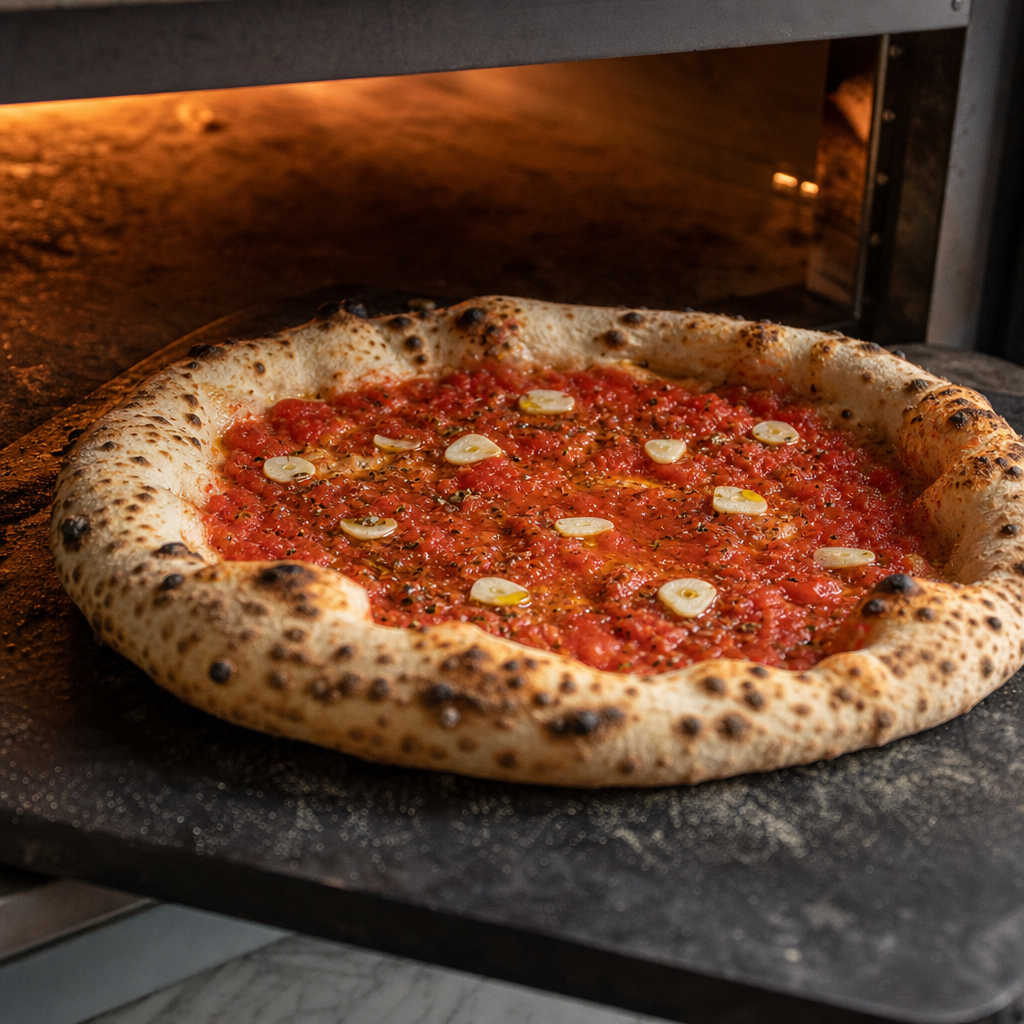
Launch the pizza onto the hot steel or stone. Bake 5-7 minutes in a home oven, turning once if the back browns faster; use the broiler for the final 1-2 minutes if needed. Pull it when the rim is inflated with dark spots and the tomato has thickened but not dried into paste.
Repeat and serve hot
Bake the remaining pizzas one at a time. Brush off burnt flour from the stone or steel between pizzas if needed, then top the next dough only when the oven is ready again.
Common mistakes
- {'mistake': 'Adding mozzarella.', 'fix': 'Mozzarella does not belong on pizza marinara. If cheese is required, make margherita with garlic and call it that.'}
- {'mistake': 'Using seafood because of the word marinara.', 'fix': 'Marinara refers to sailors, not a seafood topping. Clams, shrimp, mussels, and anchovies make different pizzas.'}
- {'mistake': 'Cooking the tomato sauce first.', 'fix': 'Crush the tomatoes raw and let the oven cook them once. Pre-cooked sauce tastes darker and heavier than the Neapolitan structure calls for.'}
- {'mistake': 'Overloading the center with tomato.', 'fix': 'Use a thin layer. A wet red pool gives a limp center and tears during launch.'}
- {'mistake': 'Rolling the dough.', 'fix': 'Press and stretch by hand, leaving the rim untouched. Rolled dough bakes flat and dense.'}
- {'mistake': 'Baking on a cold tray.', 'fix': 'Use a fully preheated steel or stone. A room-temperature sheet pan cannot set the base fast enough for this style.'}
What does not belong
- {'item': 'Mozzarella, fior di latte, burrata, or any cheese', 'reason': 'Pizza marinara is a pizza rossa without cheese. Cheese changes the identity of the dish.'}
- {'item': 'Seafood', 'reason': 'The name is not a seafood instruction. Seafood marinara is a different idea.'}
- {'item': 'Sugar in the sauce', 'reason': 'Good tomatoes need salt, not correction with sweetness. Sugar makes the sauce read canned and flat.'}
- {'item': 'Onion', 'reason': 'Onion pushes the topping toward a cooked tomato sauce profile. Marinara stays sharp: tomato, garlic, oregano, oil.'}
- {'item': 'Pre-shredded cheese or Parmesan', 'reason': 'No cheese belongs here, grated or otherwise.'}
- {'item': 'Heavy herb mixes', 'reason': 'Italian seasoning blends muddy the oregano signal. Use oregano, not a cabinet sweep.'}