Caprese Salad
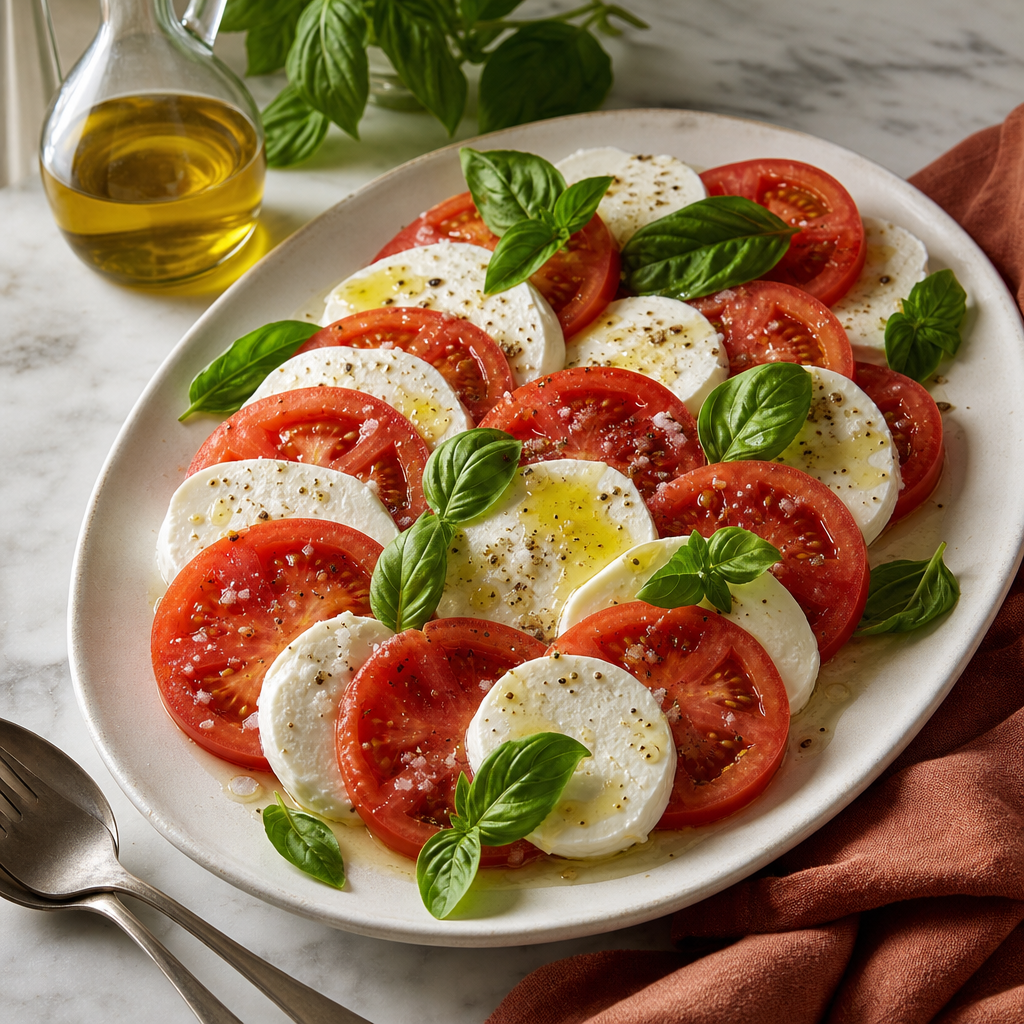
The dish in context
Insalata Caprese is tied to Capri, the island off the Campanian coast, and became internationally visible in the mid-20th century as Capri drew royalty, politicians, and film-era travelers. The dish is built from the grammar of Campania: ripe tomatoes, mozzarella, basil, salt, and extra-virgin olive oil. Many modern versions add balsamic vinegar, pesto, avocado, or burrata, but the canonical plate is leaner and more exacting. It is usually served as an antipasto or summer salad, not as a side buried under a main course.
Method 6 steps · 20 min
Temper the tomatoes and cheese
Hold the tomatoes and mozzarella at cool room temperature for 30-60 minutes before slicing. Drain the mozzarella well; pat only the outside dry, leaving the interior moist.
Slice for contact, not height
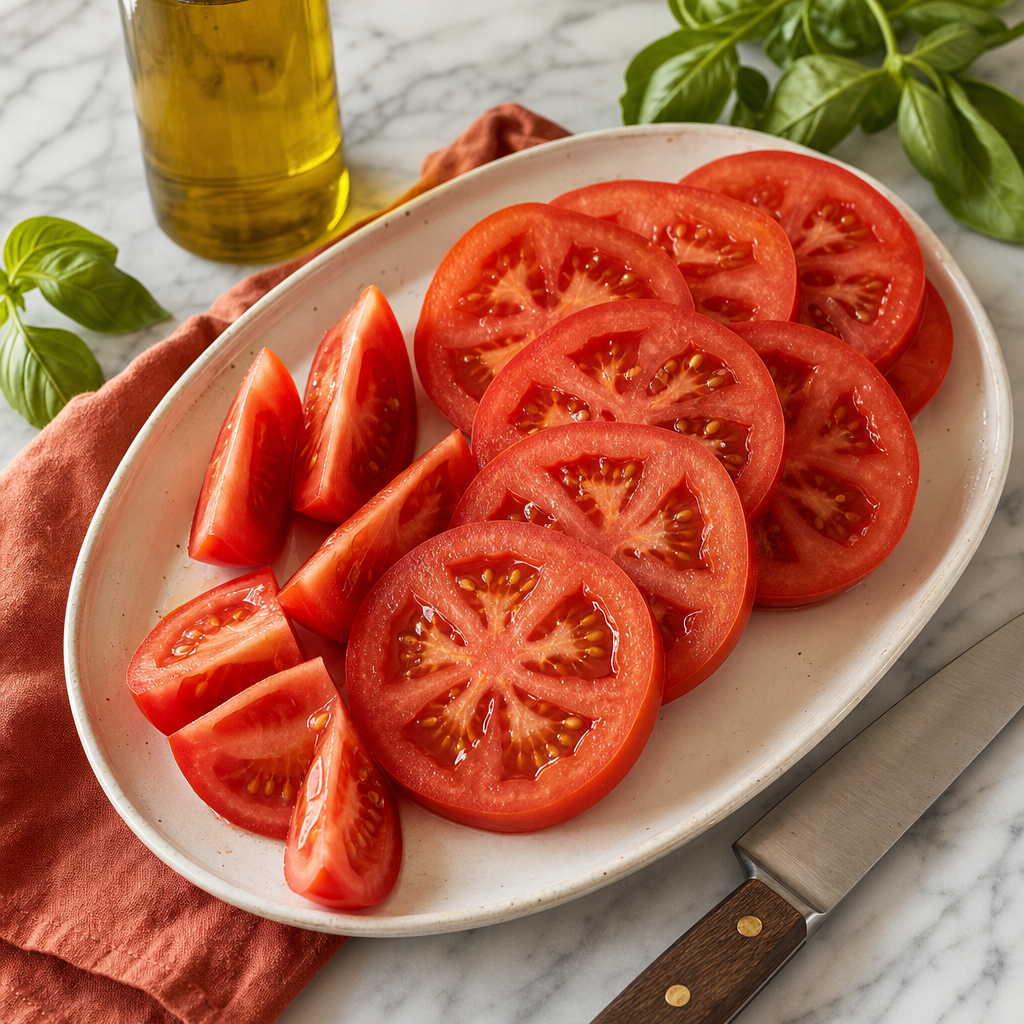
Cut large tomatoes into 8-10 mm slices or thick wedges. Slice the mozzarella slightly thicker, about 1 cm, or tear it into large pieces if it is too soft to slice cleanly.
Salt the tomatoes first
Lay the tomatoes on the platter in a shallow overlap. Season the tomato surfaces with the salt and let them stand for 5 minutes until small beads of juice appear.
Add the mozzarella
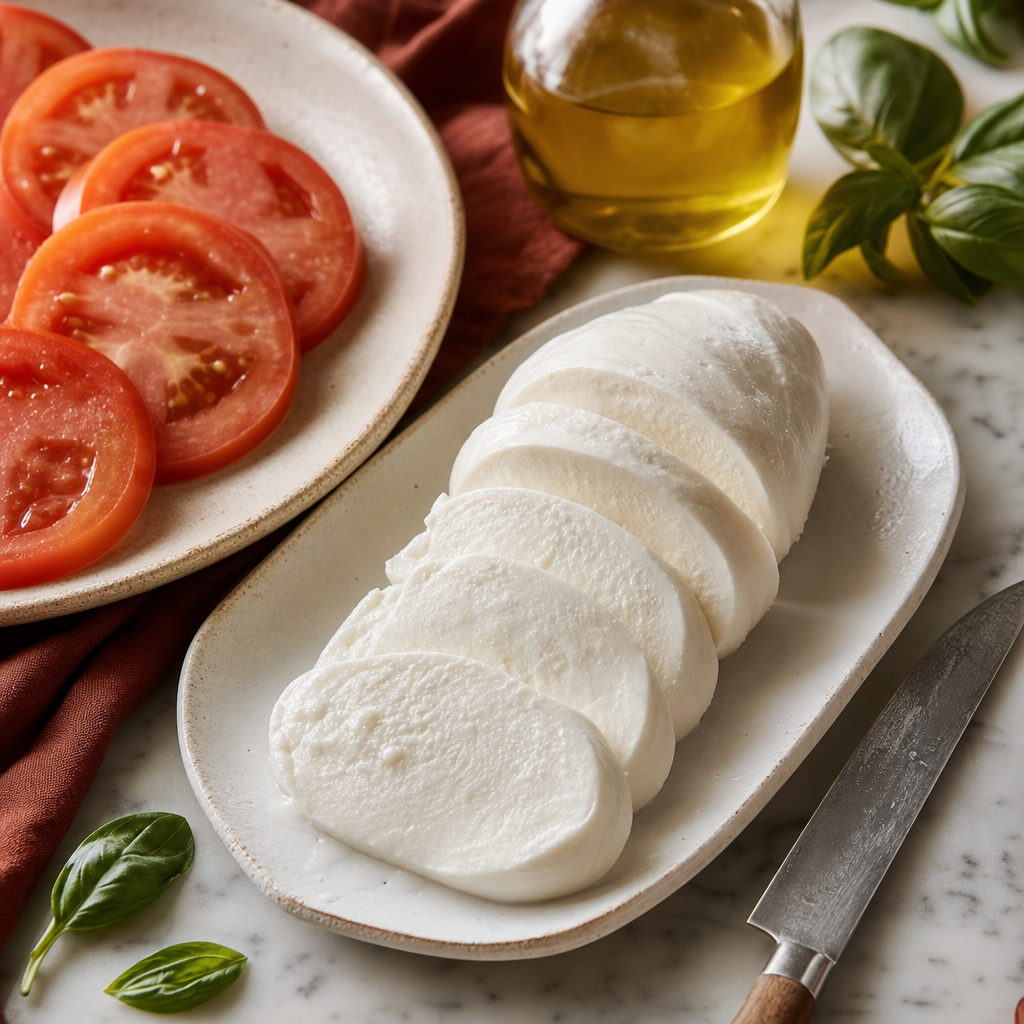
Tuck the mozzarella between and over the tomatoes without building a tall stack. Season the cheese with a few grains of salt if it tastes bland.
Dress late
Drizzle the extra-virgin olive oil over the tomatoes and mozzarella. Add basil leaves at the end, whole or torn by hand, then finish with black pepper if using.
Serve before the platter floods
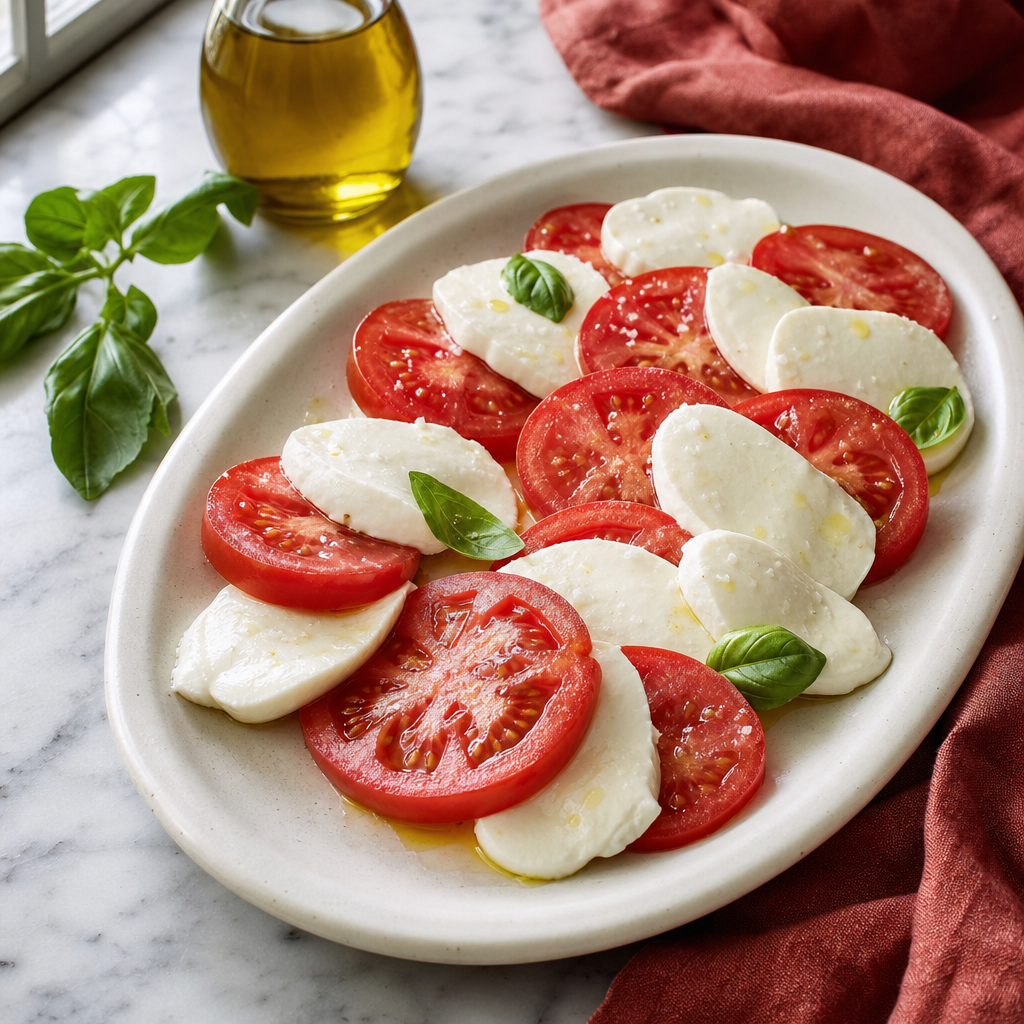
Serve within 10 minutes of dressing. Spoon the tomato-oil juices from the platter over individual portions at the table.
Common mistakes
- Using refrigerated, underripe tomatoes. The dish lives or dies on tomato aroma.
- Using low-moisture mozzarella. It slices neatly but eats rubbery and dry.
- Flooding the platter with balsamic glaze. Sweet acidity covers the tomato instead of sharpening it.
- Chopping everything into a bowl. That makes a tomato-mozzarella salad, not the classic plated structure of Insalata Caprese.
- Dressing too early. Salt and oil are correct; a long wait turns the plate watery.
What does not belong
- Balsamic vinegar does not belong in canonical Insalata Caprese.
- Pesto does not belong; basil leaves provide the green element without garlic, nuts, or cheese.
- Avocado does not belong.
- Lettuce does not belong.
- Dried oregano does not belong.
- Low-moisture pizza mozzarella does not belong.
- Garlic does not belong.