Green Curry Chicken
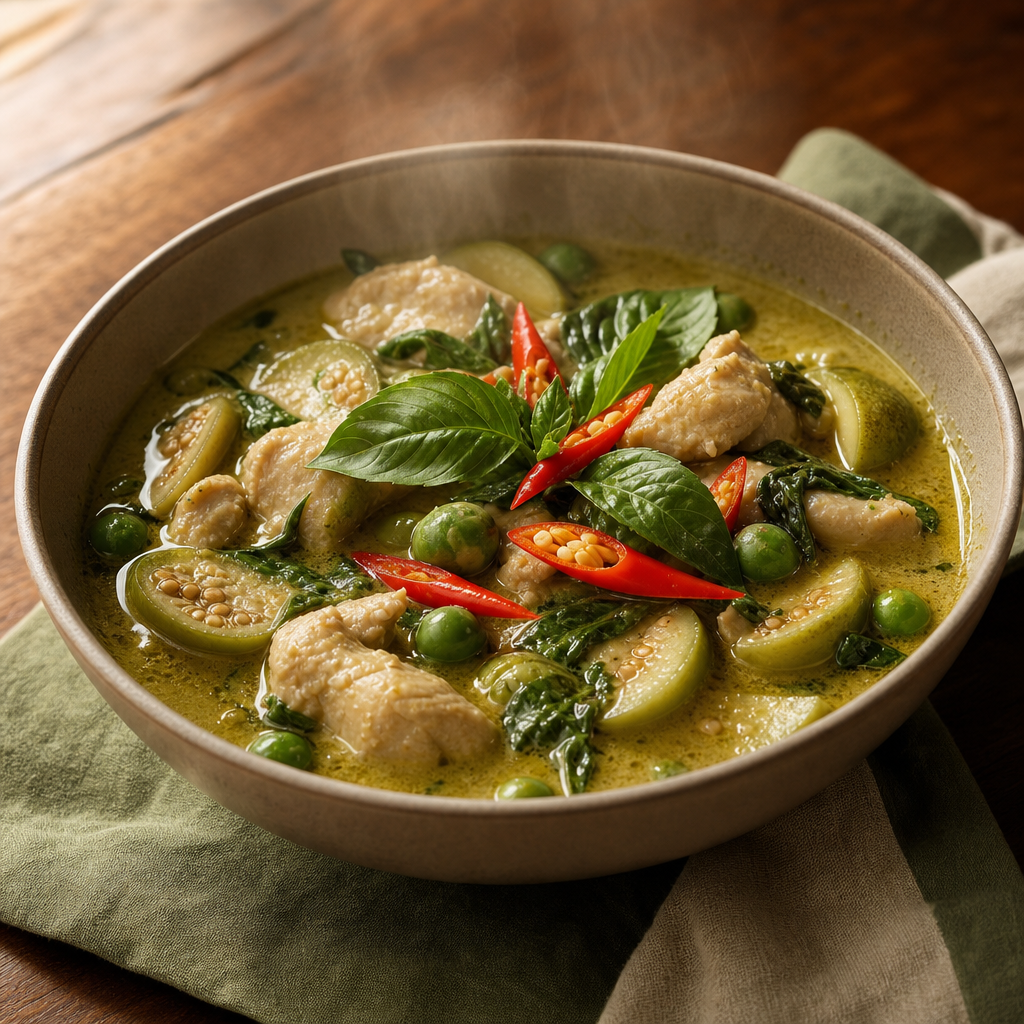
The dish in context
Gaeng keow wan gai is a central Thai coconut curry built from green curry paste, chicken, coconut milk, Thai eggplant, makrut lime leaf, and Thai sweet basil. The name is often mistranslated as a cue to make the curry sugary; in Thai usage, เขียวหวาน points to the soft green color, not a dessert-level sweetness. Modern scholarship and Thai food writers commonly place green curry later than red curry, with strong evidence of development in the early 20th century rather than in ancient court mythology. Household versions vary in chicken cut, added chicken blood, pea eggplant, and the thickness of the coconut, but the grammar is stable: fry paste in coconut fat, season salty-first, keep the basil fresh.
Method 9 steps · 40 min
Cut the chicken and soak the eggplant
Slice the chicken into thin pieces across the grain. Quarter the Thai eggplants and hold them in lightly salted water until needed; drain right before adding.
Split the coconut cream
Put the coconut cream in a wide pot over medium heat and simmer, stirring often, until glossy fat beads appear at the edges and the cream looks slightly curdled. If using stabilized canned coconut milk and no fat appears after 6 minutes, add the neutral oil and move on.
Fry the curry paste
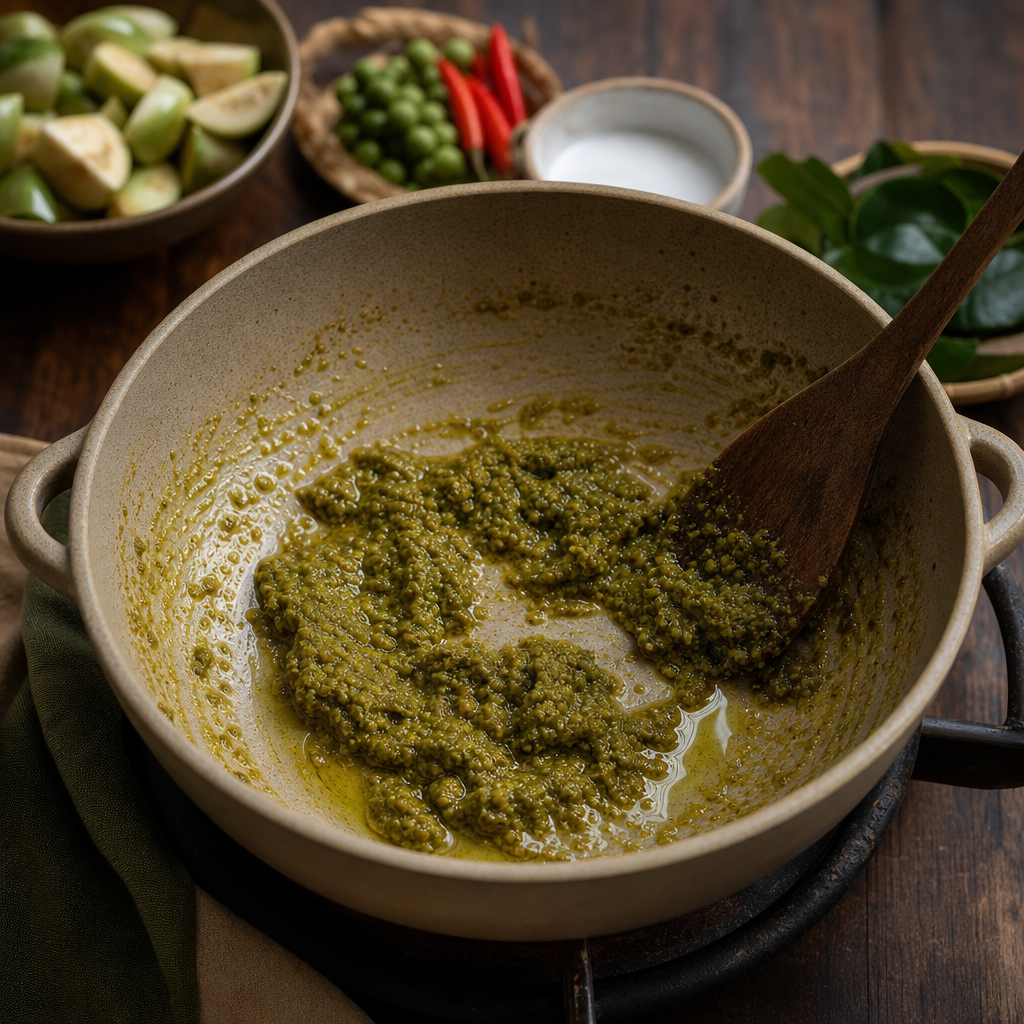
Add the green curry paste and fry it in the coconut fat over medium-low heat for 3-5 minutes. Stir and smear it against the pot until the raw garlic-chile smell fades and green oil stains the fat.
Coat the chicken
Add the chicken and stir until every piece is coated in paste and the outside turns opaque. Do not brown it.
Build the curry liquid
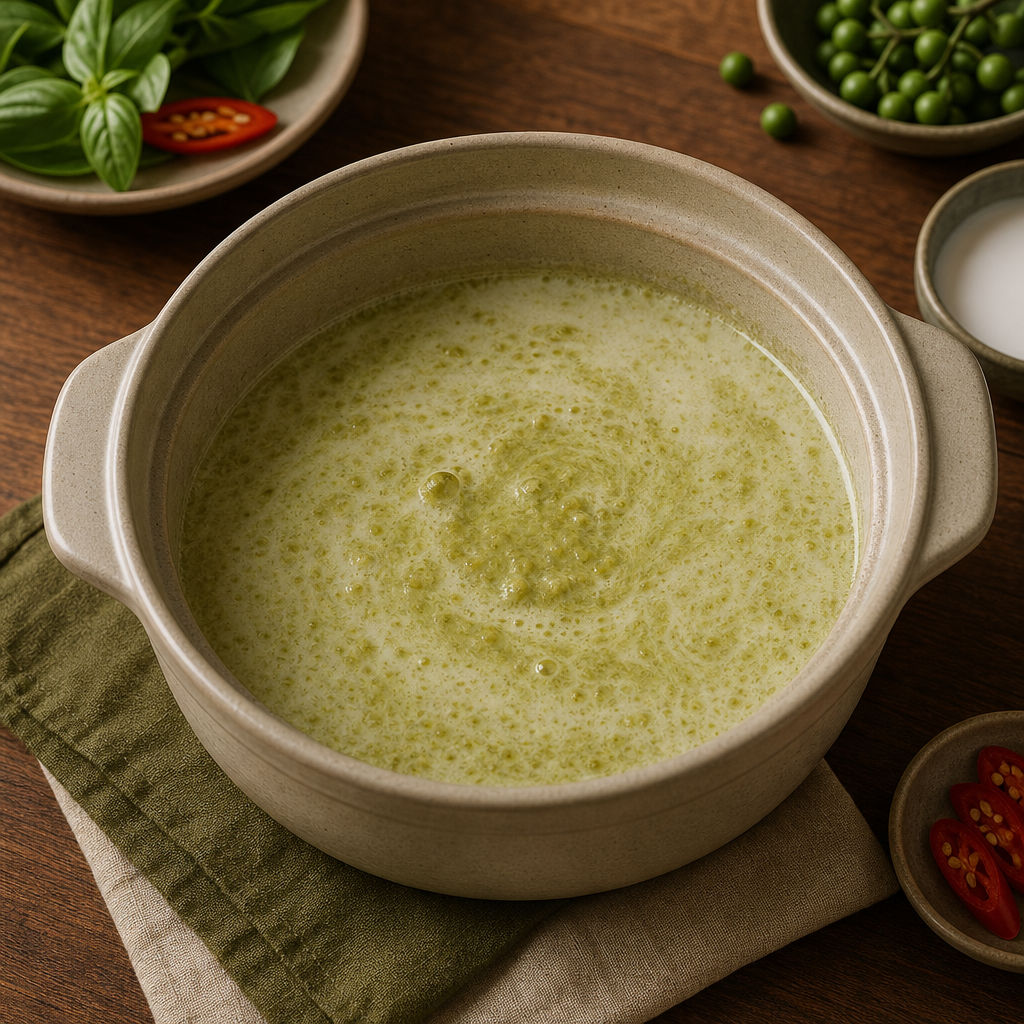
Add the thin coconut milk in two additions, stirring after each one to dissolve the paste into the liquid. Bring to a steady simmer, not a hard boil.
Season salty-first
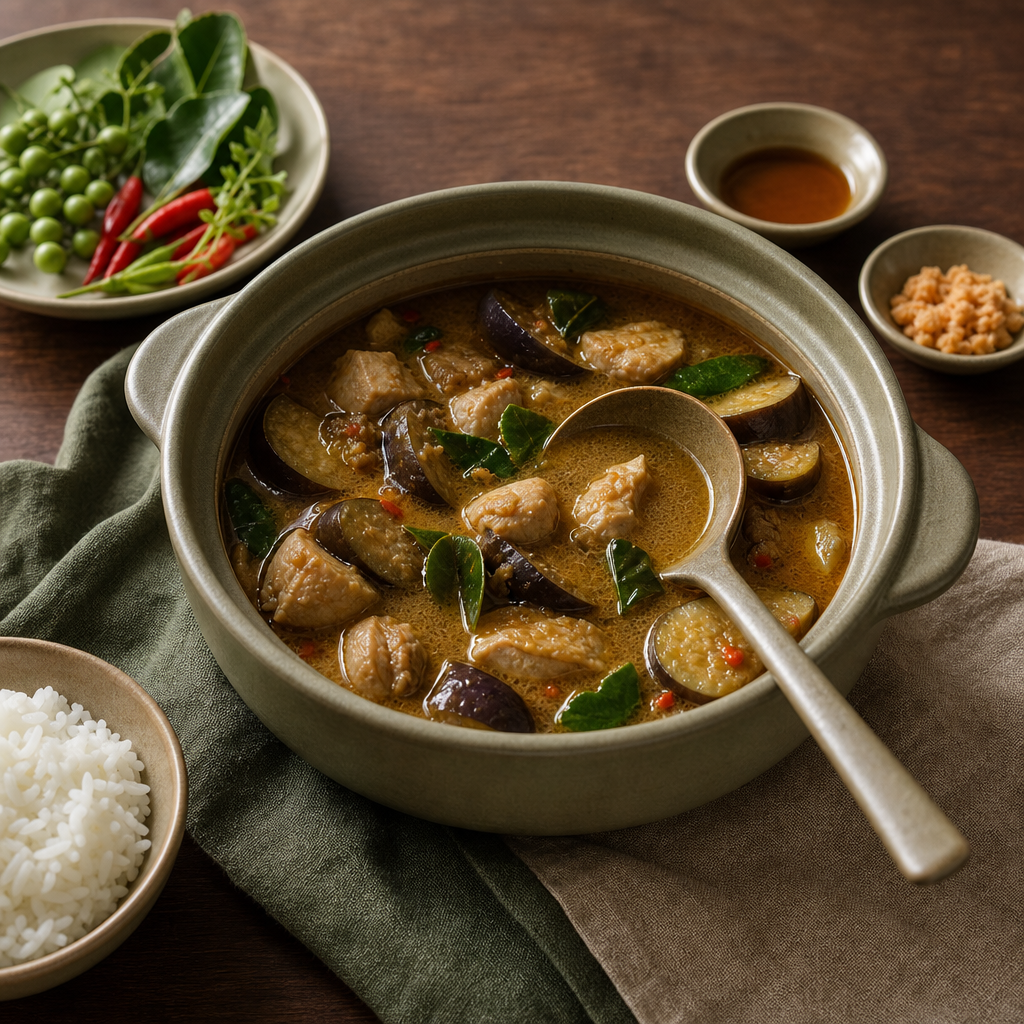
Add the fish sauce, palm sugar, and torn makrut lime leaves. Simmer for 2 minutes, then taste the broth with a spoonful of rice if possible; it should read salty, herbal, and only lightly sweet.
Cook the eggplant
Drain the Thai eggplant and add it with the pea eggplant, if using. Simmer until the Thai eggplant is tender at the center but still holds its shape, 5-7 minutes.
Finish with basil and red chili
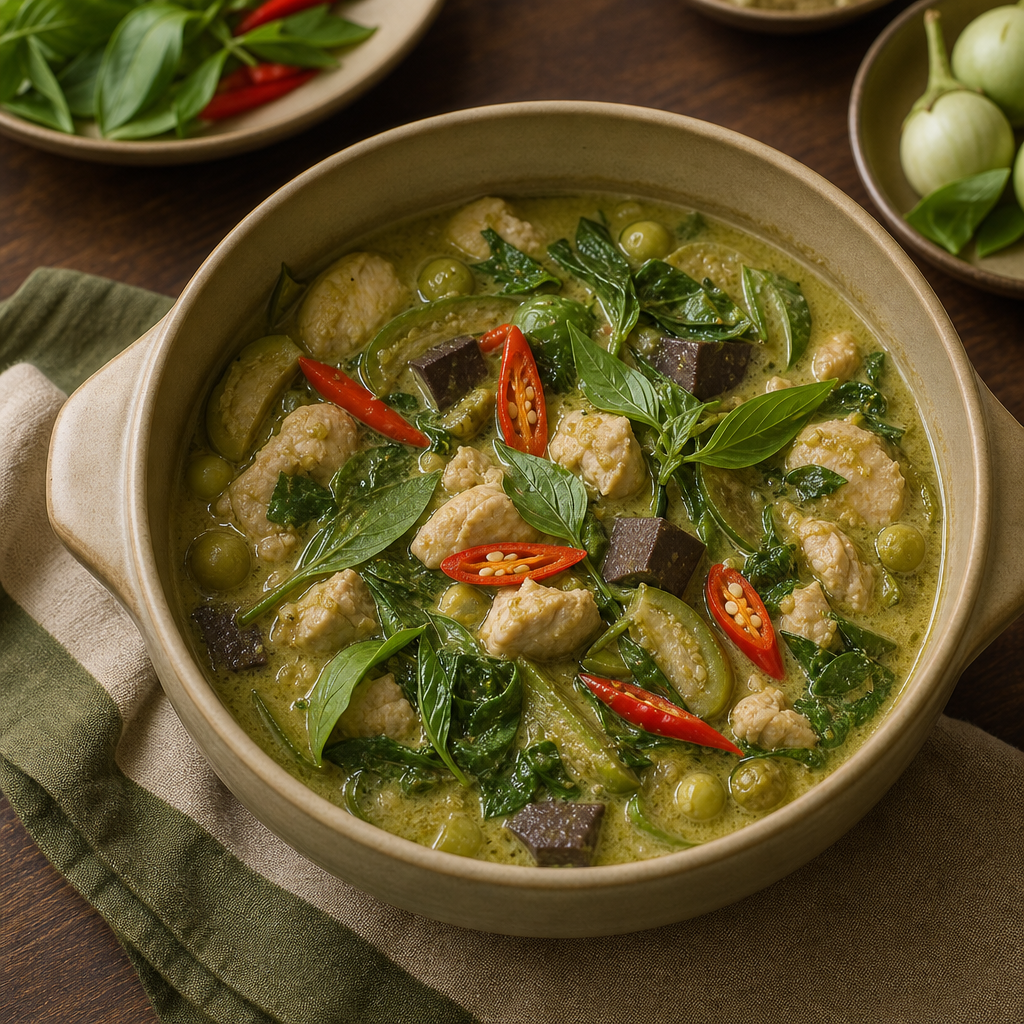
Add the cooked chicken blood, if using, and simmer for 1 minute to heat through. Turn off the heat, fold in Thai sweet basil and red spur chili, and let the basil wilt in residual heat.
Serve with rice or kanom jeen
Serve hot with jasmine rice or ขนมจีน. Spoon enough curry liquid over the starch; this is a curry to carry rice, not a dry stir-fry.
Common mistakes
- {'mistake': 'Making the curry sweet because the English name says green sweet curry.', 'fix': 'Use palm sugar as a rounder, not as a main flavor. The curry should be salty-herbal first, lightly sweet second.'}
- {'mistake': 'Boiling the coconut milk hard after adding it.', 'fix': 'Hold a steady simmer. Violent boiling breaks the coconut into greasy pools and toughens thin chicken.'}
- {'mistake': 'Adding basil early.', 'fix': 'Add ใบโหระพา off heat or at the last few seconds. The leaves should wilt green, not turn black.'}
- {'mistake': 'Using watery light coconut milk.', 'fix': 'Use full-fat coconut milk and dilute only part of it to mimic หางกะทิ. Light coconut milk cannot fry paste properly.'}
- {'mistake': 'Treating all green curry paste as interchangeable.', 'fix': 'Start lower with salty commercial pastes and correct with fish sauce after simmering. Paste is seasoning, not only aroma.'}
What does not belong
- {'item': 'Spinach, cilantro leaves, or food coloring for a greener curry', 'reason': 'The curry does not need to be neon. A soft green oil and pale coconut body are normal; forcing the color muddies the paste and changes the aroma.'}
- {'item': 'Heavy cream or dairy milk', 'reason': 'Dairy does not belong. Coconut milk is the fat, liquid, and aroma of this curry.'}
- {'item': 'Green peas as a substitute for pea eggplant', 'reason': 'Peas add sweetness and a Western mixed-vegetable profile. If มะเขือพวง is unavailable, omit it.'}
- {'item': 'A large spoonful of sugar', 'reason': 'Gaeng keow wan is not a sweet curry in the dessert sense. Too much sugar flattens chile, basil, and makrut lime leaf.'}
- {'item': 'Ginger as an equal replacement for galangal in the paste', 'reason': 'Ginger is a fallback only. Galangal gives the paste its resinous, citrus-pine edge; ginger turns the aroma warm and round.'}
- {'item': 'Flour or cornstarch slurry', 'reason': 'Thickness comes from coconut concentration and emulsified paste, not starch gel. Slurry makes the curry glossy in the wrong way.'}