Ebi Fry
The dish in context
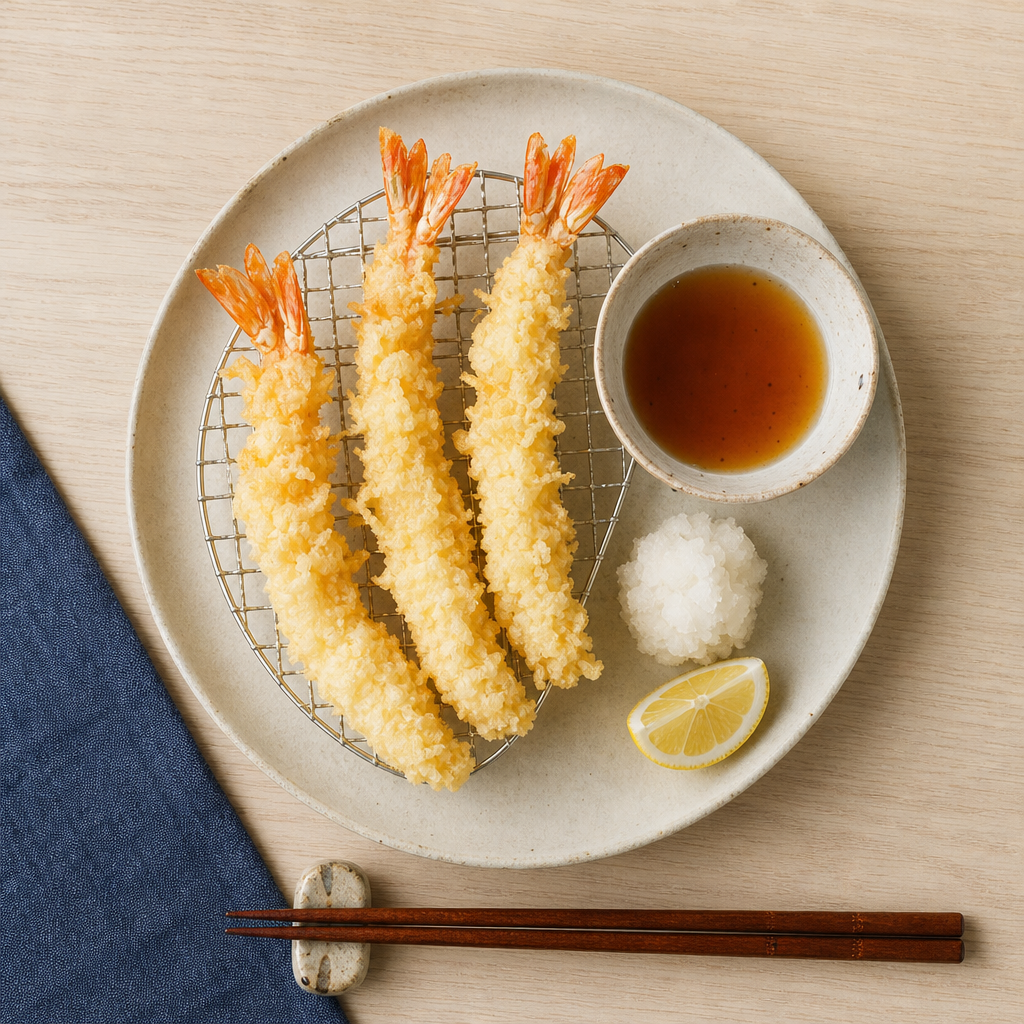
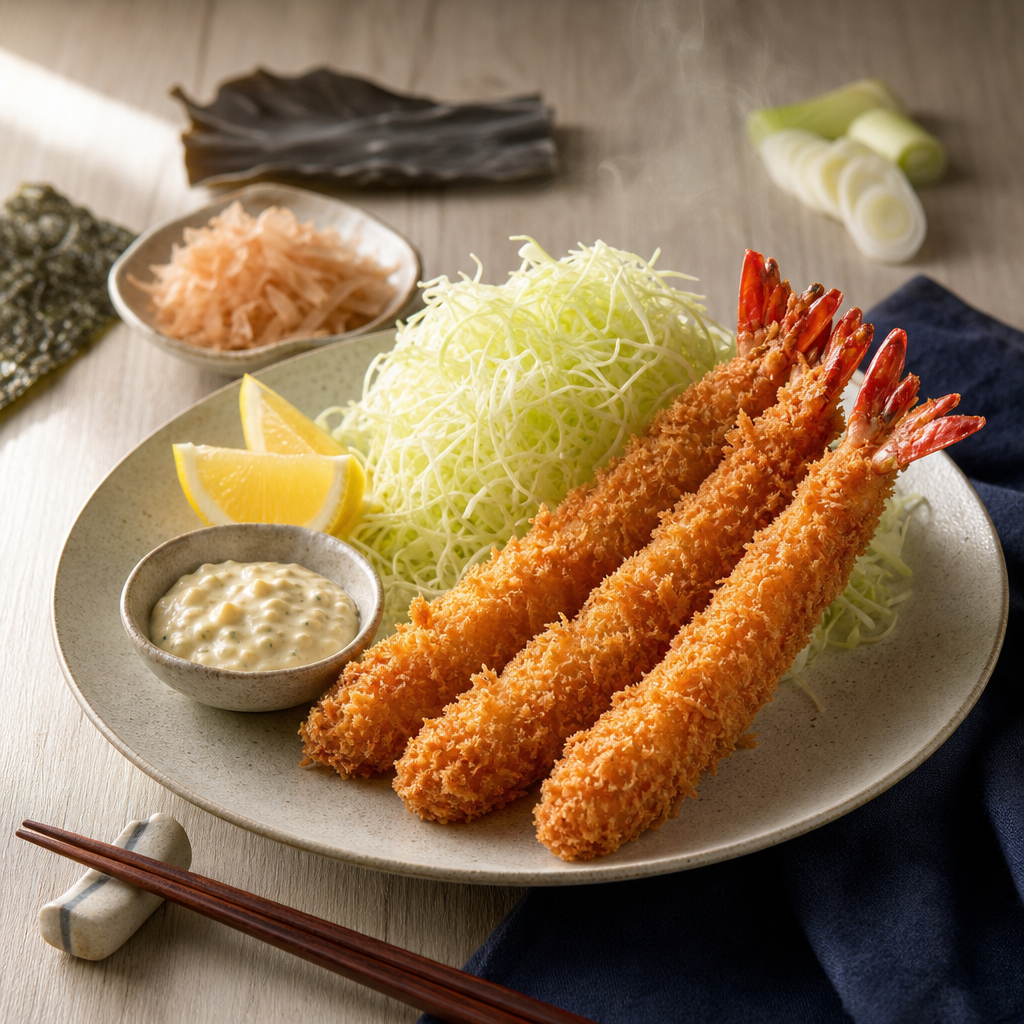
Ebi fry belongs to yōshoku (洋食), Japan's Western-influenced restaurant cooking that took shape from the Meiji period onward and became household food through department-store dining rooms, school lunches, bentos, and family restaurants. The technique is not tempura: the shrimp is dredged in flour, egg, and panko, then deep-fried like tonkatsu or aji fry. Straightening the shrimp is part of the dish's restaurant look, especially for larger prawns served as a plate lunch. Home versions vary between tartar sauce, tonkatsu sauce, Worcestershire sauce, lemon, or a mix of these; the panko crust and whole shrimp are the fixed grammar.
Method 10 steps · 45 min
Clean the shrimp
Peel the shrimp, leaving the tail shell and last segment attached. Rub with the cleaning salt and potato starch until the surface feels tacky, rinse under cold water, then dry hard with paper towels.
Devein and trim the tail
Cut a shallow line along the back and remove the dark vein. Scrape the tail fan with the back of a knife to push out trapped water, then clip the sharp tail tip if needed.
Straighten the shrimp
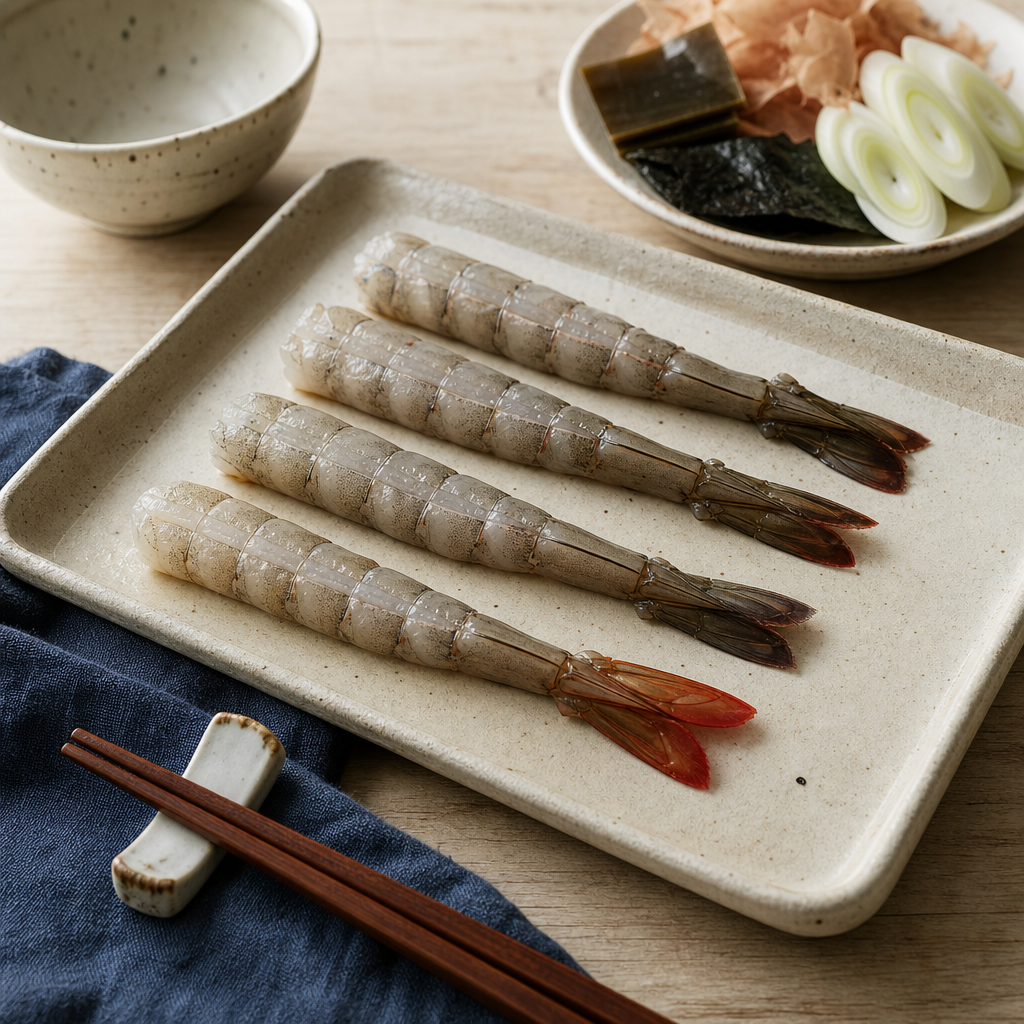
Lay each shrimp belly-side up. Make 4-5 shallow crosswise cuts through the belly muscle, not through the back, then press the shrimp gently until it lengthens and lies mostly straight.
Season
Sprinkle the shrimp with sake, seasoning salt, and white pepper. Let stand 5 minutes, then blot dry again.
Set the breading station
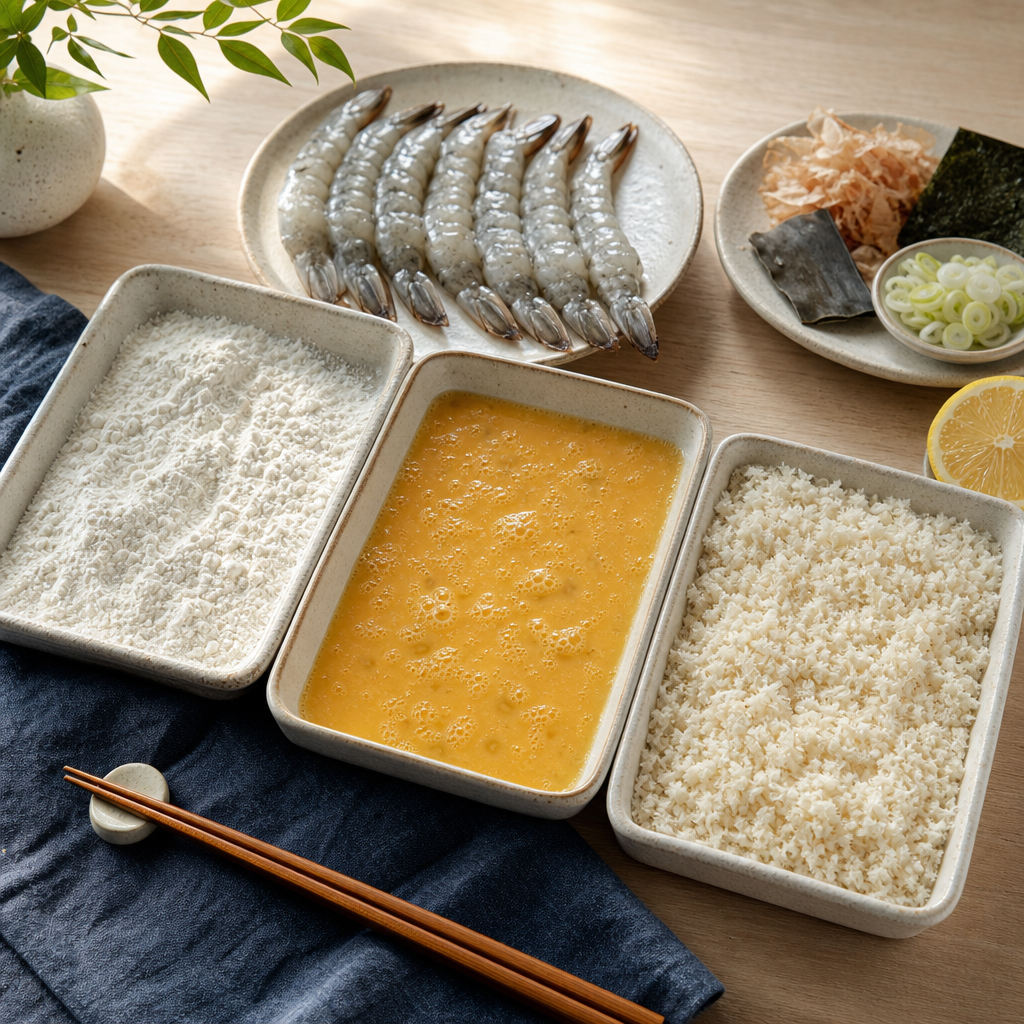
Place flour in one tray, beaten egg in a second, and panko in a third. Crush only the largest panko flakes lightly between your fingers; leave the crumb coarse.
Bread the shrimp
Dredge each shrimp in flour and shake off every loose patch. Dip in egg, let the excess drip, then press into panko without crushing the shrimp; keep the tail clean.
Heat the oil
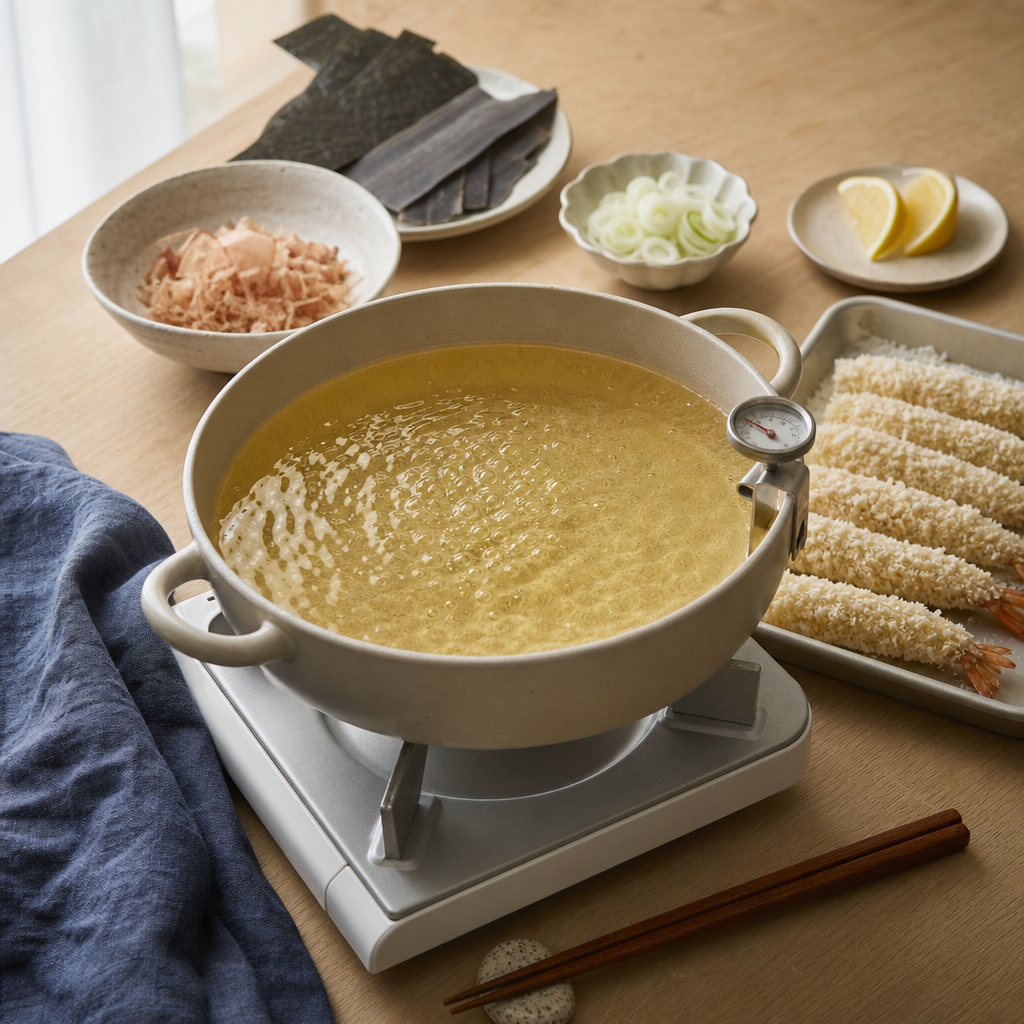
Heat 5-6 cm neutral oil to 170-175°C. Hold that range before the first batch goes in.
Fry
Fry 3-4 shrimp at a time for 2-3 minutes, turning once, until the panko is golden and the shrimp is opaque in the thickest part. Pull them before the body tightens into a hard C-shape.
Drain
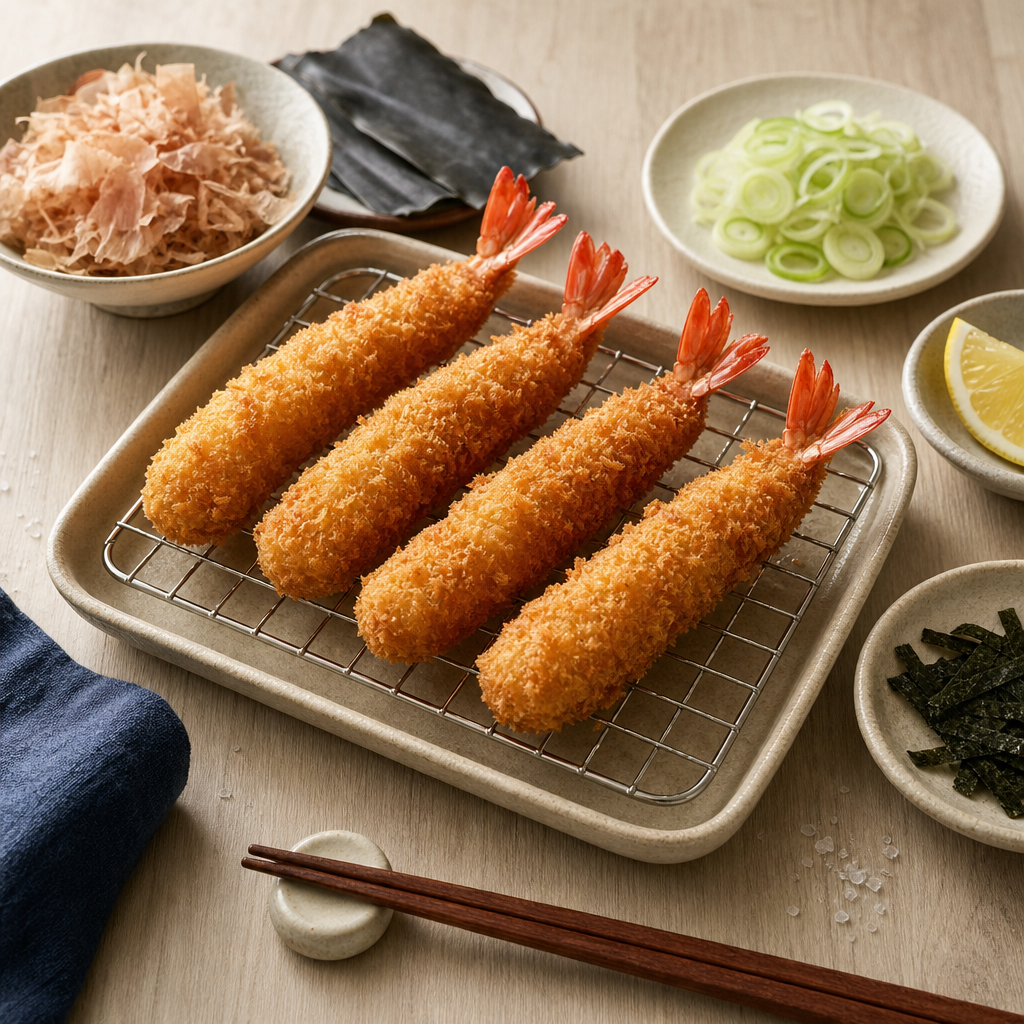
Drain on a wire rack, not paper towels. Salt lightly only if the crust tastes flat.
Serve
Plate with finely shredded cabbage, lemon wedges, and tartar sauce or tonkatsu-style sauce. Serve while the panko still sounds dry when tapped.
Common mistakes
- {'mistake': 'Skipping the belly cuts', 'correction': 'Score the belly muscle 4-5 times and press the shrimp straight. Uncut shrimp curl tightly and lose the classic ebi fry shape.'}
- {'mistake': 'Leaving water in the tail', 'correction': 'Scrape the tail fan before breading. Water trapped there spits in hot oil and breaks the crust near the tail.'}
- {'mistake': 'Using fine dry breadcrumbs', 'correction': 'Use coarse Japanese panko. Fine crumbs form a smooth, heavy casing instead of a shaggy fried shell.'}
- {'mistake': 'Frying too hot', 'correction': 'Hold 170-175°C. Panko browns faster than the shrimp cooks, so high heat gives a dark crust and undercooked center.'}
- {'mistake': 'Draining on paper towels', 'correction': 'Use a rack. Paper towels steam the underside and undo the work of deep-frying.'}
What does not belong
- {'item': 'Tempura batter', 'reason': 'Tempura batter does not belong in ebi fry. The dish is defined by flour, egg, and panko.'}
- {'item': 'Italian seasoned breadcrumbs', 'reason': 'Dried herbs and garlic powder push the dish into a different fried-shrimp grammar. Ebi fry should taste of shrimp, panko, clean oil, and sauce.'}
- {'item': 'Parmesan in the crumb', 'reason': 'Cheese burns before the shrimp is done and muddies the yōshoku profile.'}
- {'item': 'Sweet teriyaki sauce', 'reason': 'Teriyaki sauce does not belong as the default sauce here. Use tartar sauce, tonkatsu sauce, chūnō sauce, Worcestershire sauce, or lemon.'}
- {'item': 'Baking instead of frying as the main method', 'reason': 'Baked panko shrimp can be useful, but it is not the same dish. Ebi fry needs submerged oil for even expansion, dry crunch, and the correct crust color.'}