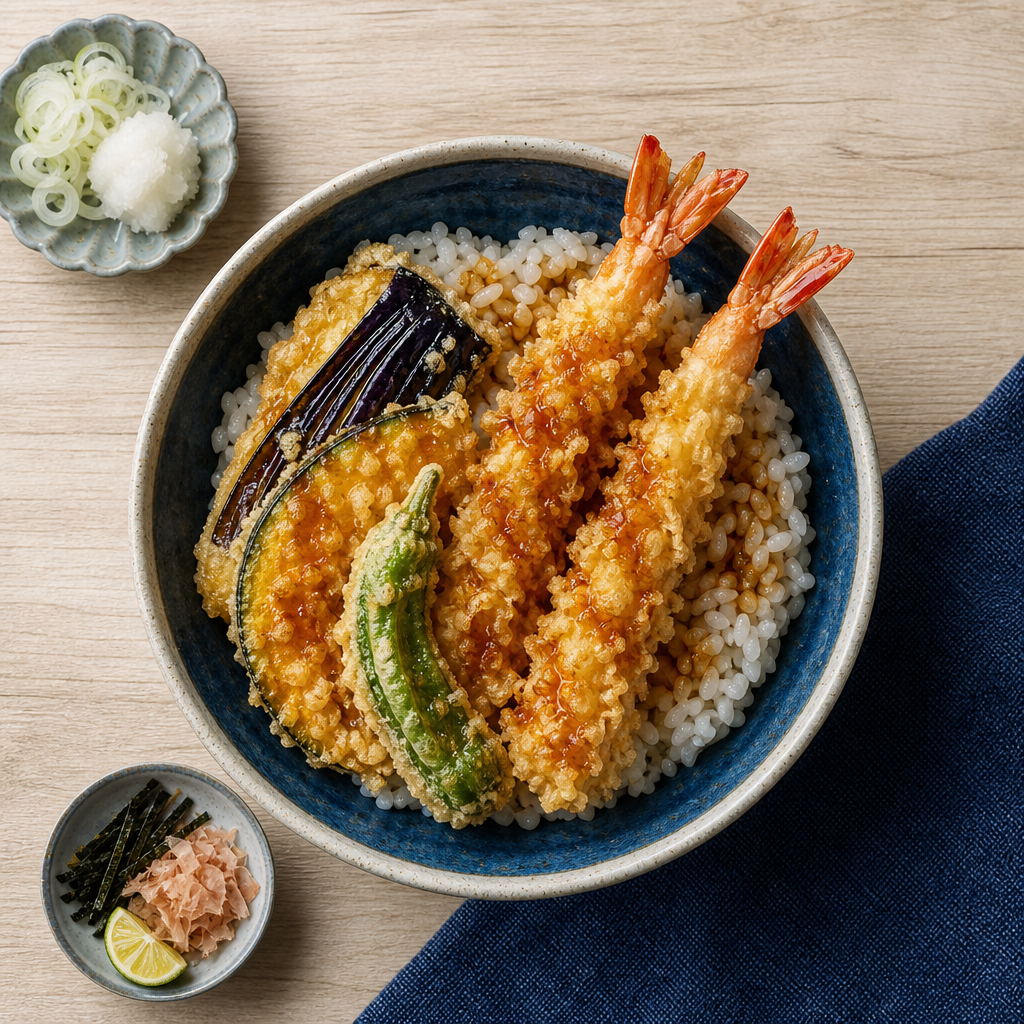
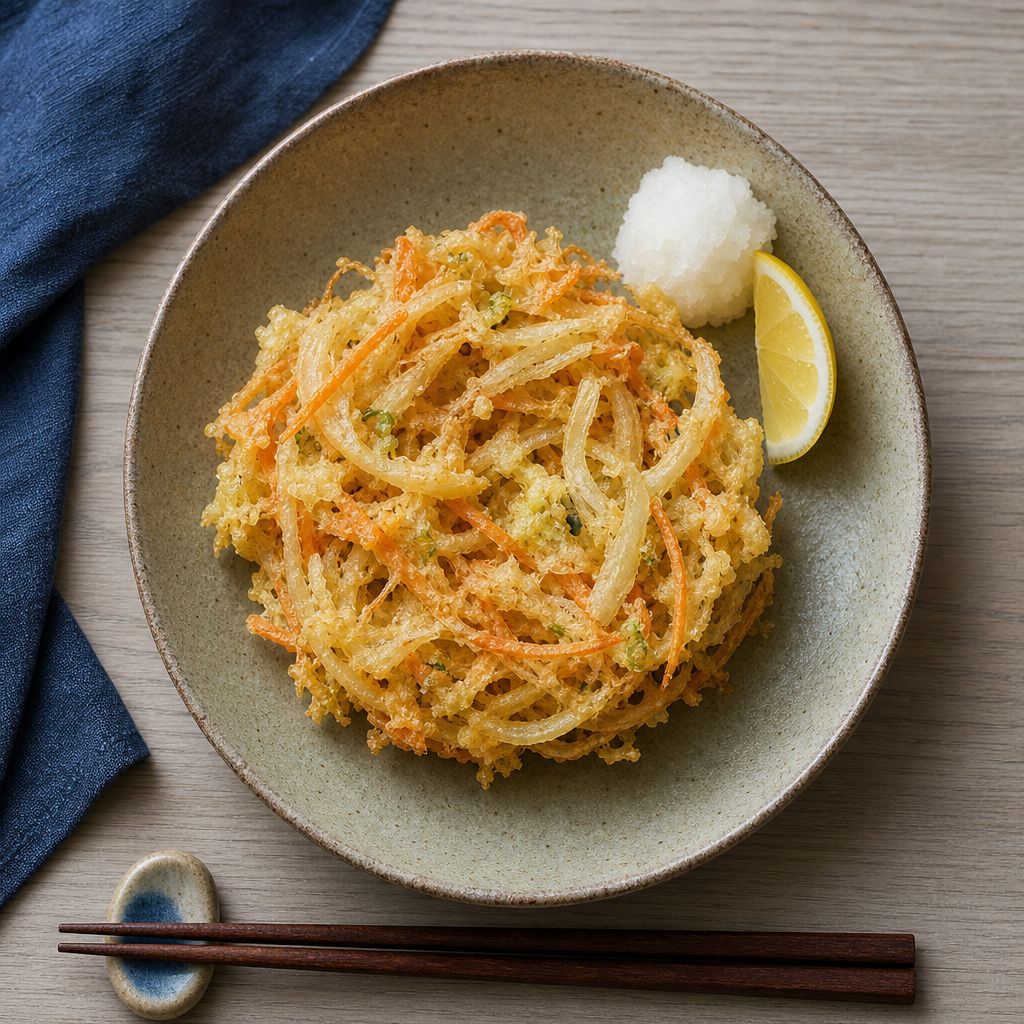
Shrimp Tempura
The dish in context
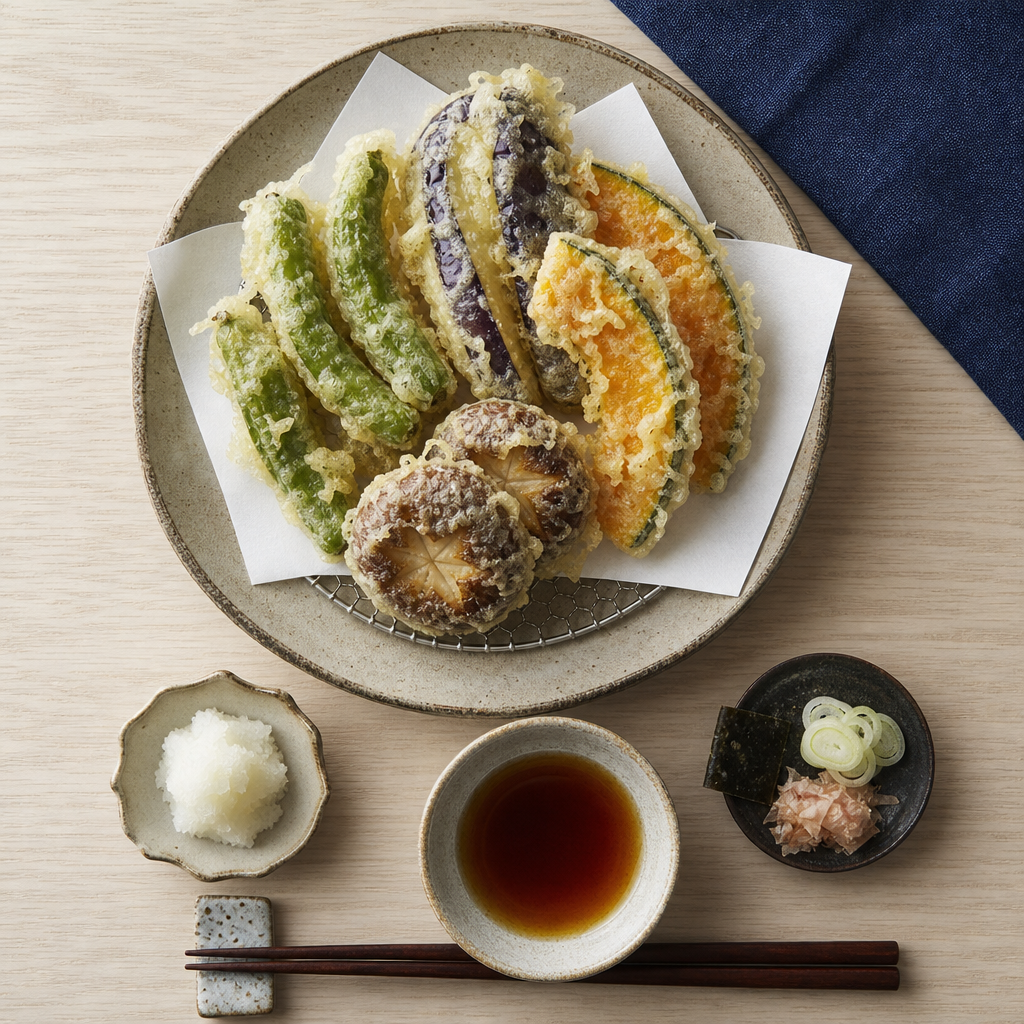
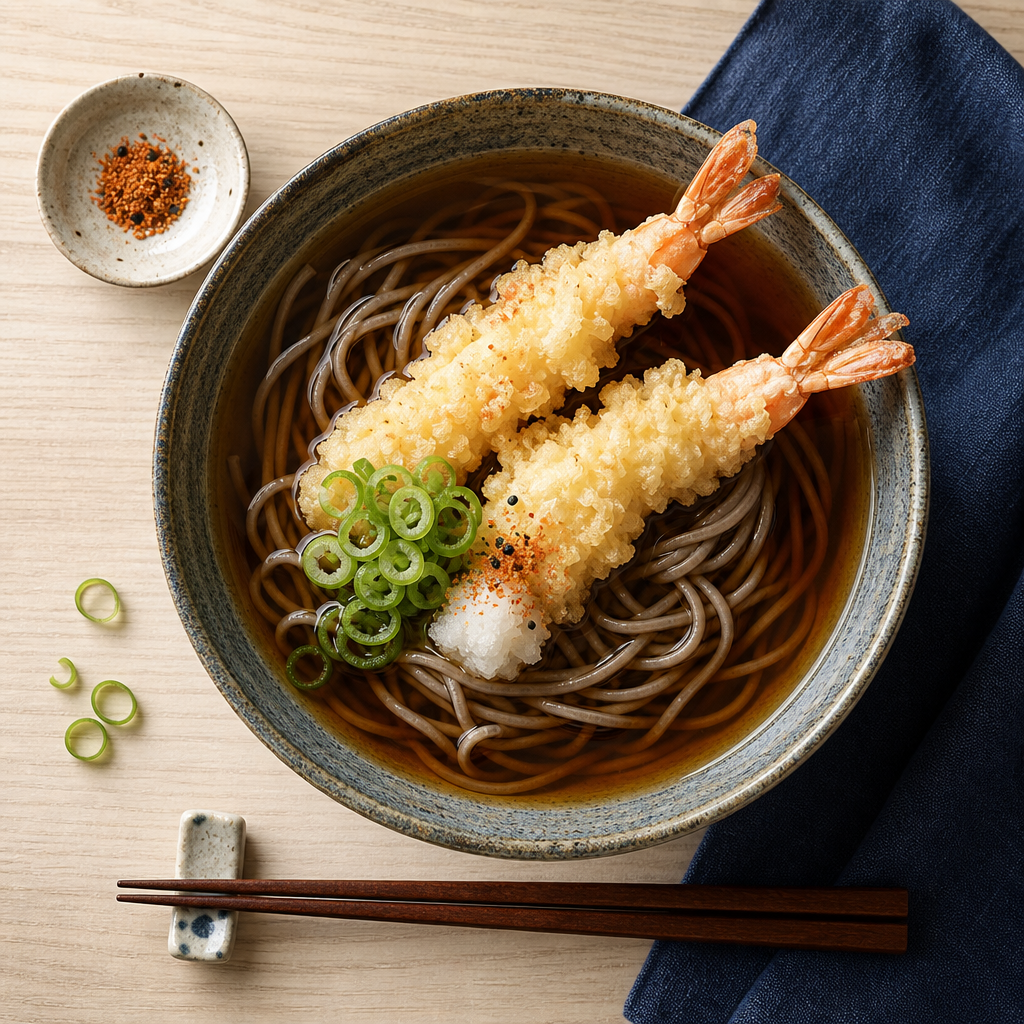
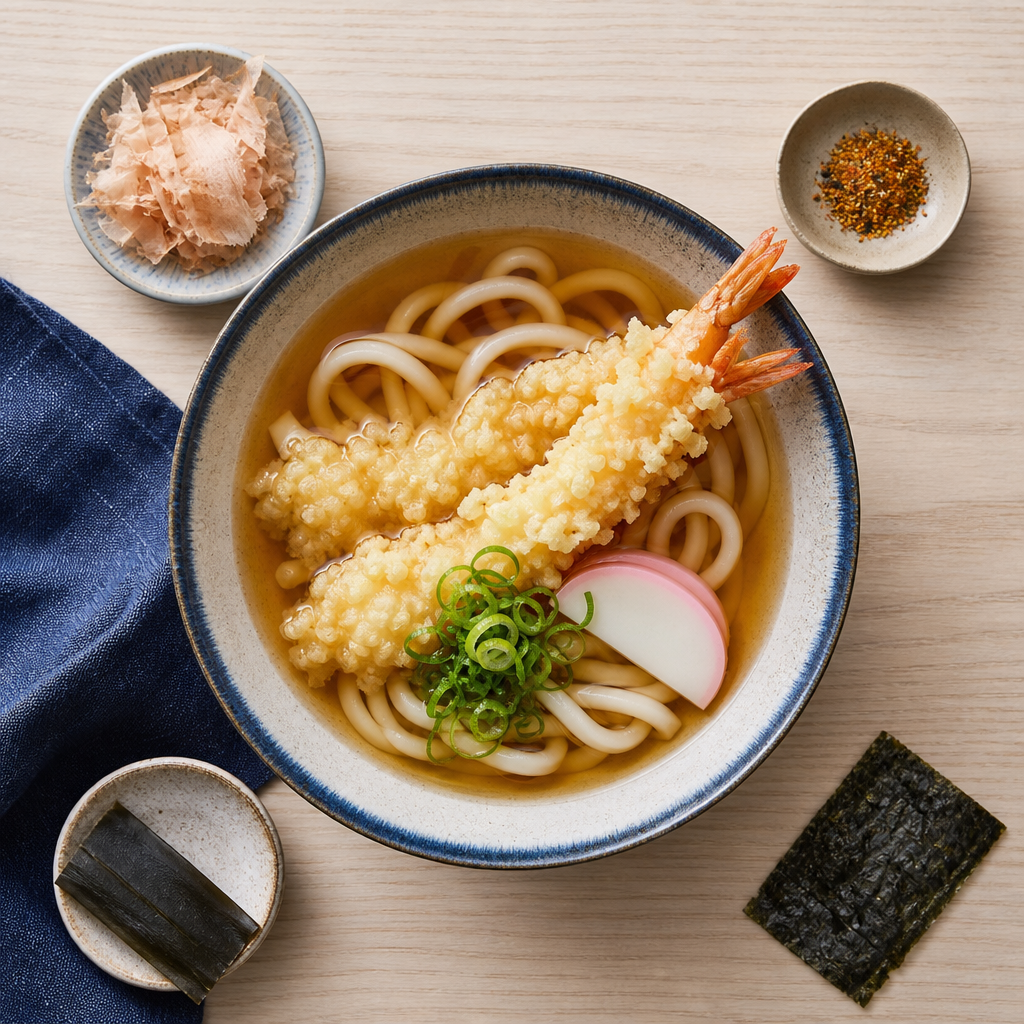
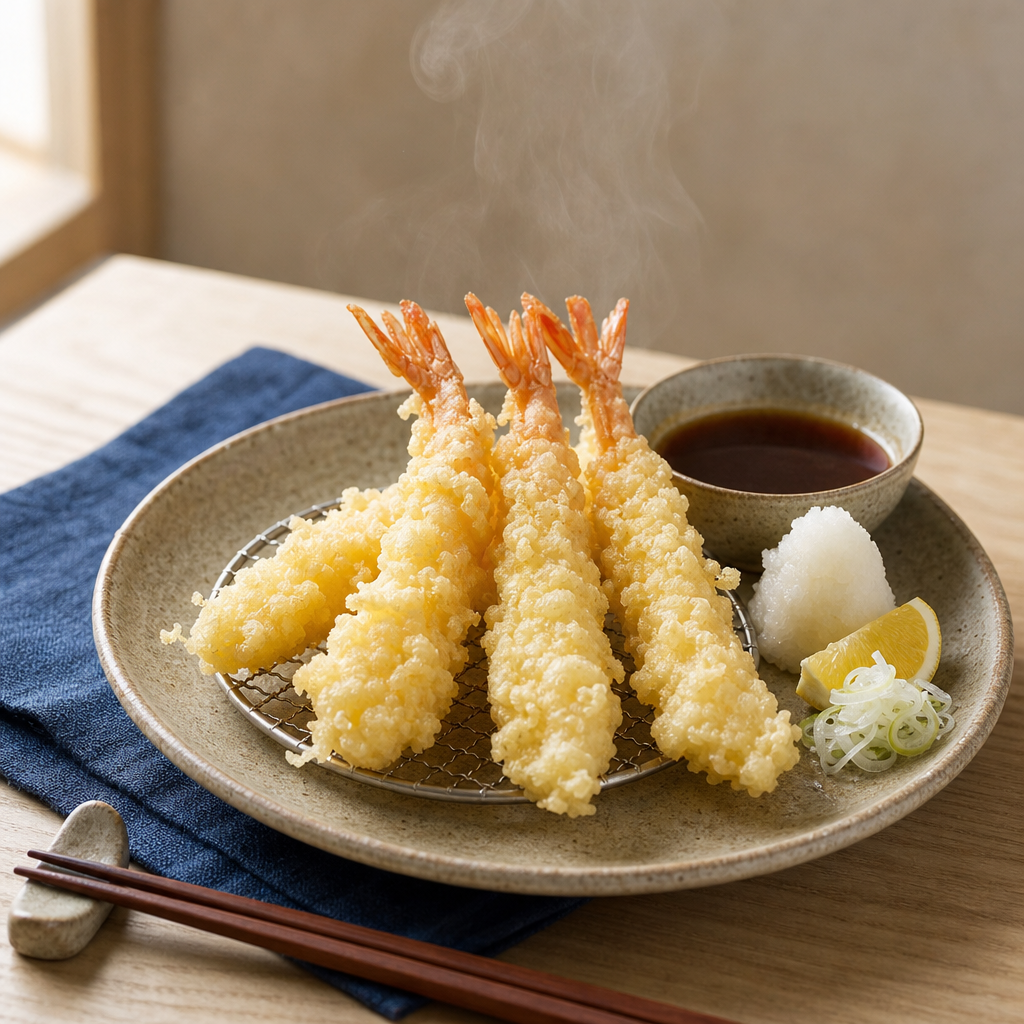
Tempura entered Japan through Portuguese frying techniques in the 16th century, then became fully naturalized in Japanese cooking, especially in Edo-period urban food culture. The Japanese form is defined by restraint: a thin cold batter, brief frying, and a pale crisp shell that does not behave like Western fritter batter. Shrimp tempura, 海老天ぷら, is one of the standard seafood forms and is served as a standalone dish, in tendon, with soba or udon, or as part of a mixed tempura course. Specialist tempura shops often fry piece by piece and serve immediately; the home version has to imitate that timing discipline.
Method 9 steps · 45 min
Make the tentsuyu
Combine dashi, koikuchi shoyu, and mirin in a small saucepan. Bring to a brief simmer for 30 seconds, then turn off the heat. Hold warm and serve with grated daikon.
Peel and trim the shrimp
Peel each shrimp, leaving the tail segment attached. Devein along the back, then scrape moisture from the tail fins with the back of a knife and snip off the sharp tail tip.
Straighten the shrimp
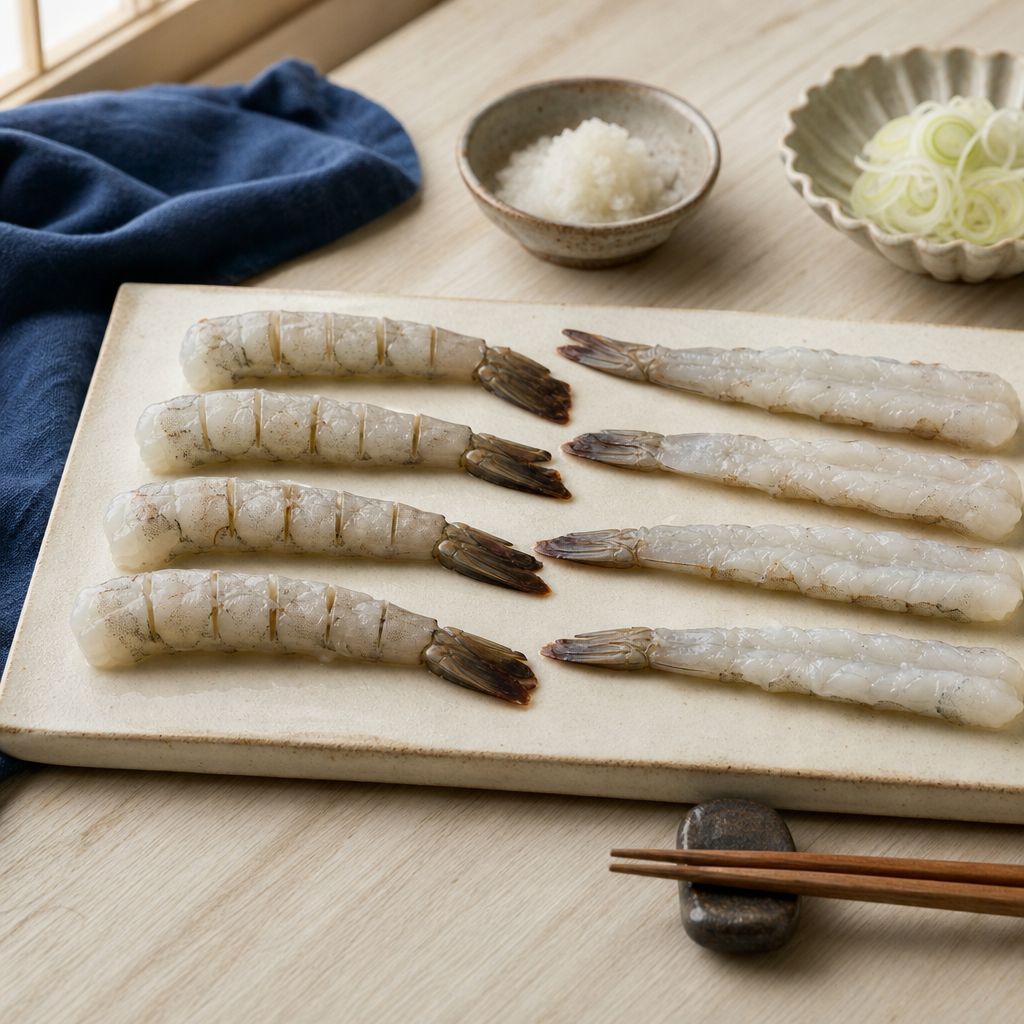
Lay each shrimp belly-side up and make 4 or 5 shallow crosswise cuts through about two-thirds of the flesh. Turn it over and press along the back with fingertips until the muscle fibers relax and the shrimp lies long and straight.
Dry and chill
Pat the shrimp dry with paper towels and refrigerate uncovered while the oil heats. Keep the flour mixture, egg yolk, and water cold until the last moment.
Heat the oil
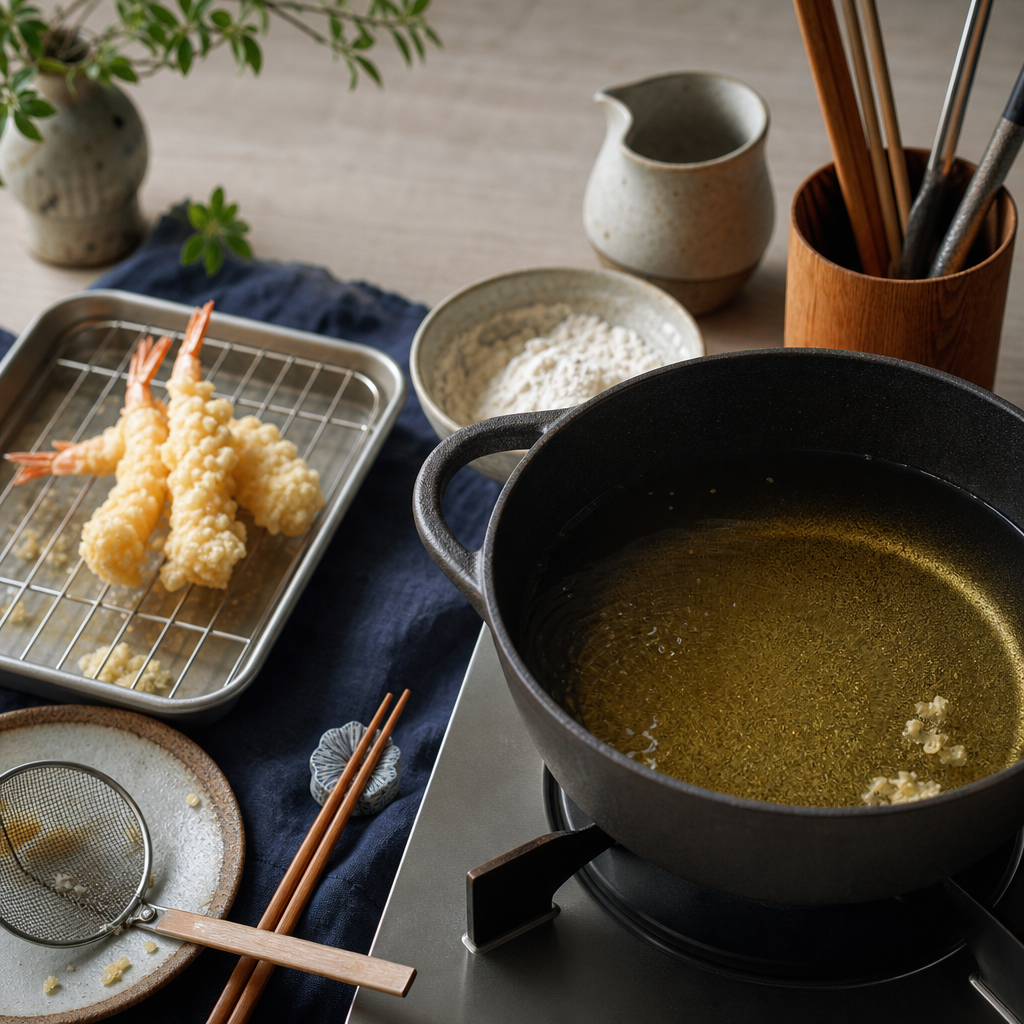
Heat 6-7 cm oil in a heavy pot to 185°C. Set a rack over a tray. Skim stray crumbs between batches so they do not burn into the oil.
Mix the batter late
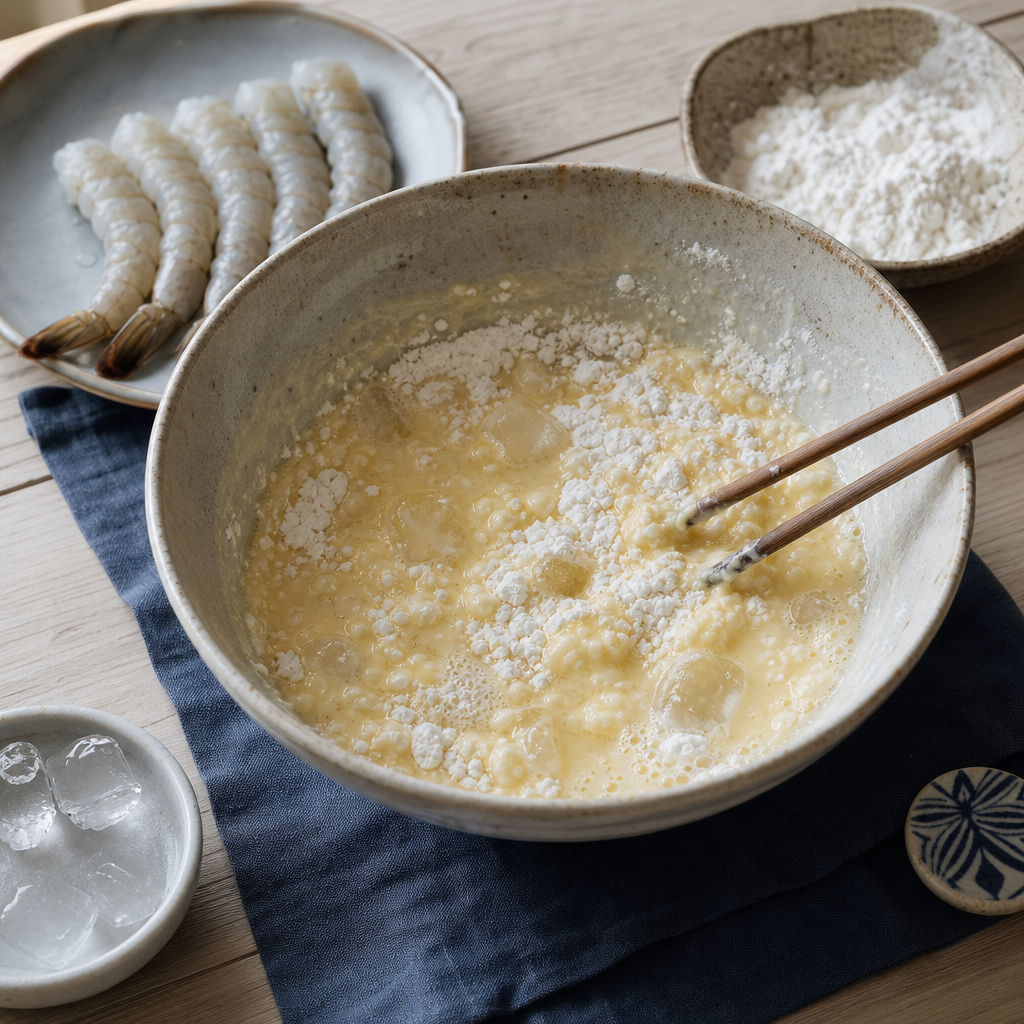
Whisk the egg yolk into the ice water. Add cake flour and potato starch, then stir with chopsticks 8-10 strokes only; leave dry pockets and lumps visible.
Dust and dip
Dust the shrimp lightly with a little extra flour and shake off the excess. Dip into the batter, coating the body but not burying the tail.
Fry in small batches
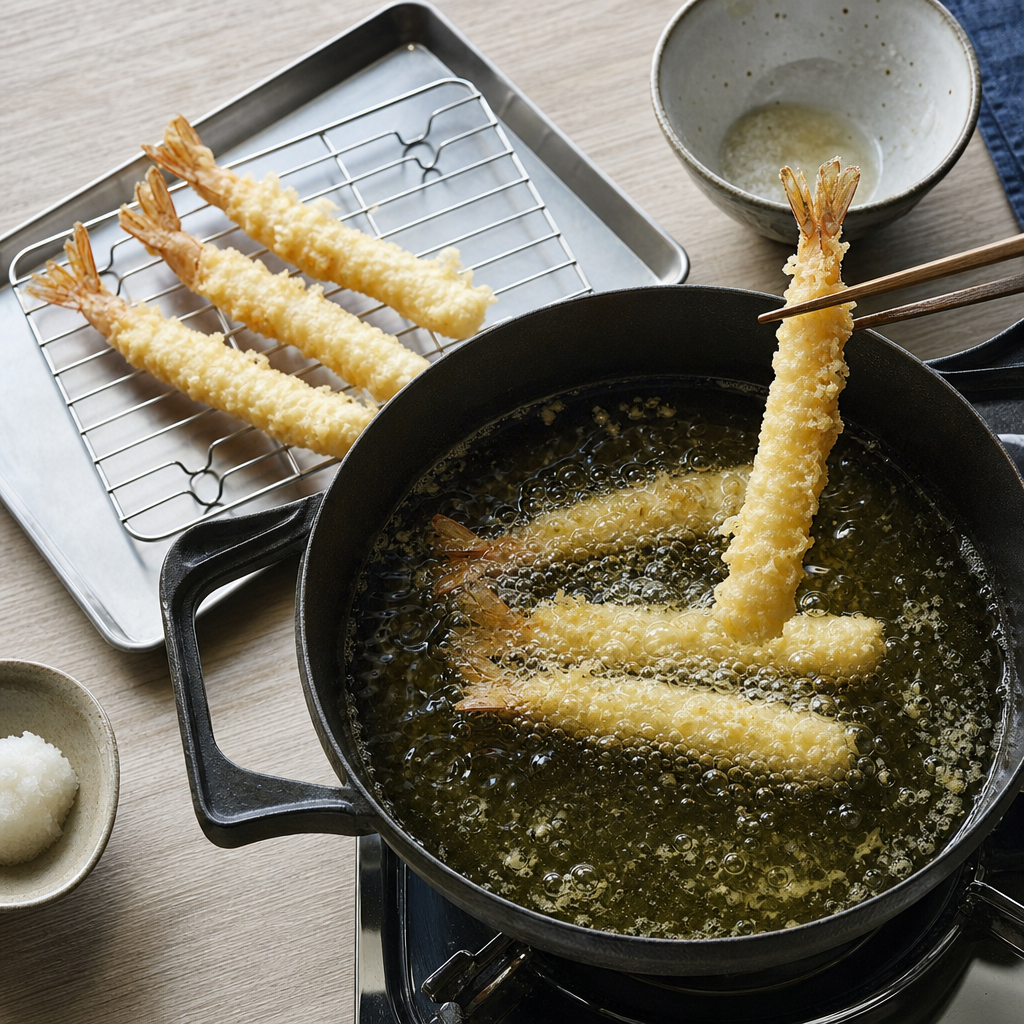
Fry 3-4 shrimp at a time at 180-190°C for 90-120 seconds, turning once if needed. Pull them when the crust is crisp and pale straw-gold and the shrimp feels firm but not tight.
Drain without steaming
Transfer the shrimp to the rack, not a pile of paper towels. Salt lightly if serving with salt; otherwise serve immediately with tentsuyu and grated daikon.
Common mistakes
- {'mistake': 'Mixing the batter smooth', 'correction': 'Stop while lumps and dry streaks remain. Smooth batter means gluten, and gluten means a tough shell.'}
- {'mistake': 'Letting the batter sit', 'correction': 'Mix immediately before frying. If making multiple rounds, mix a second small batch rather than holding one large bowl.'}
- {'mistake': 'Frying too low', 'correction': 'Hold 180-190°C for shrimp. The oil should bubble actively around the shrimp without turning the batter brown in seconds.'}
- {'mistake': 'Skipping the belly cuts', 'correction': 'Cut and press the shrimp straight. Curled shrimp are structurally wrong for this style.'}
- {'mistake': 'Draining in a heap', 'correction': 'Use a rack. Paper towels are acceptable only as a brief landing zone; piles trap steam.'}
What does not belong
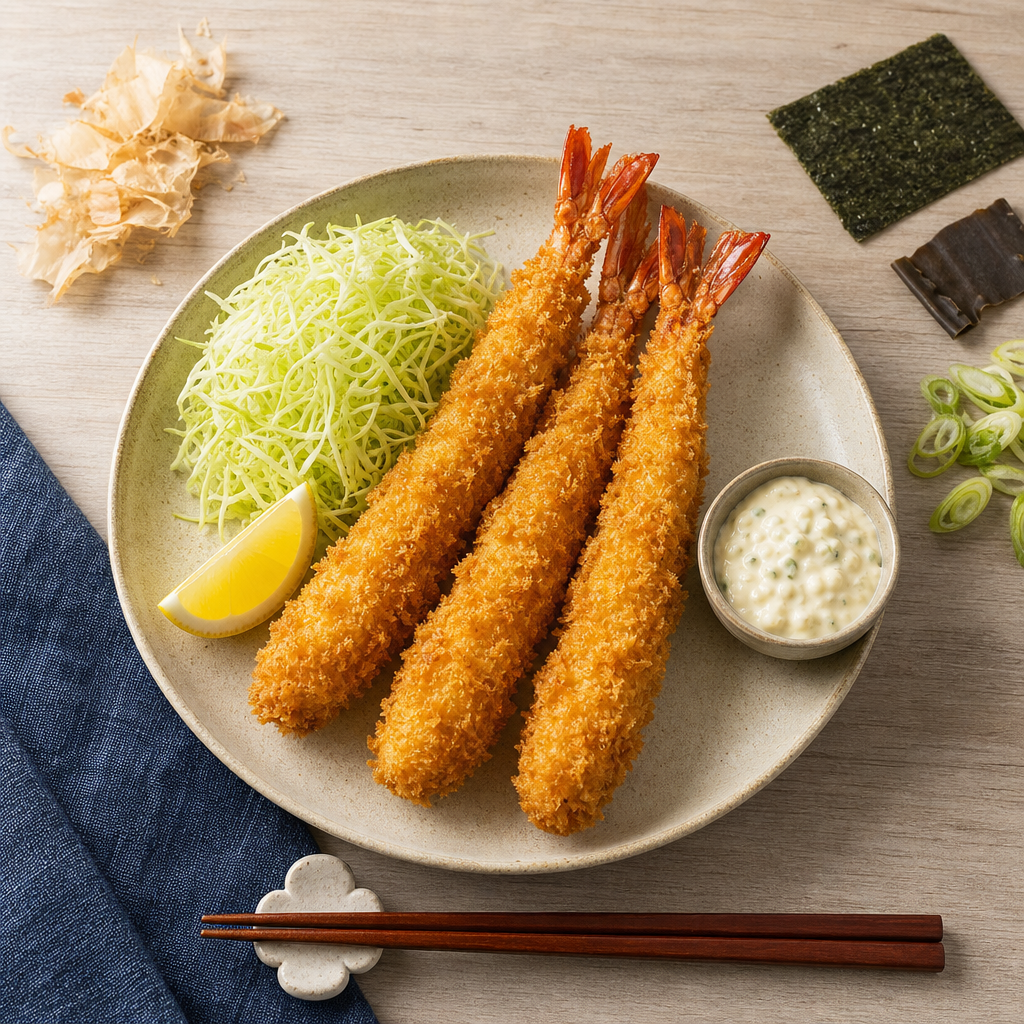
- {'item': 'breadcrumbs or panko', 'reason': 'Breadcrumb-coated fried shrimp is ebi fry, not tempura.'}
- {'item': 'baking-heavy, thick fritter batter', 'reason': 'Tempura batter is thin, cold, and lumpy. Puffy Western batter does not give the correct brittle shell.'}
- {'item': 'teriyaki sauce', 'reason': 'Teriyaki is a glaze, not a tempura dip. Tentsuyu is dashi, soy, and mirin.'}
- {'item': 'garlic powder or paprika in the batter', 'reason': 'Seasoned batter covers the clean shrimp-and-oil profile. Tempura seasoning happens at service, with tentsuyu or salt.'}
- {'item': 'dark toasted sesame oil as the main frying oil', 'reason': 'It burns aromatically loud and dominates the shrimp. Use neutral oil or a restrained blend with untoasted sesame oil.'}