Kakiage Tempura
The dish in context
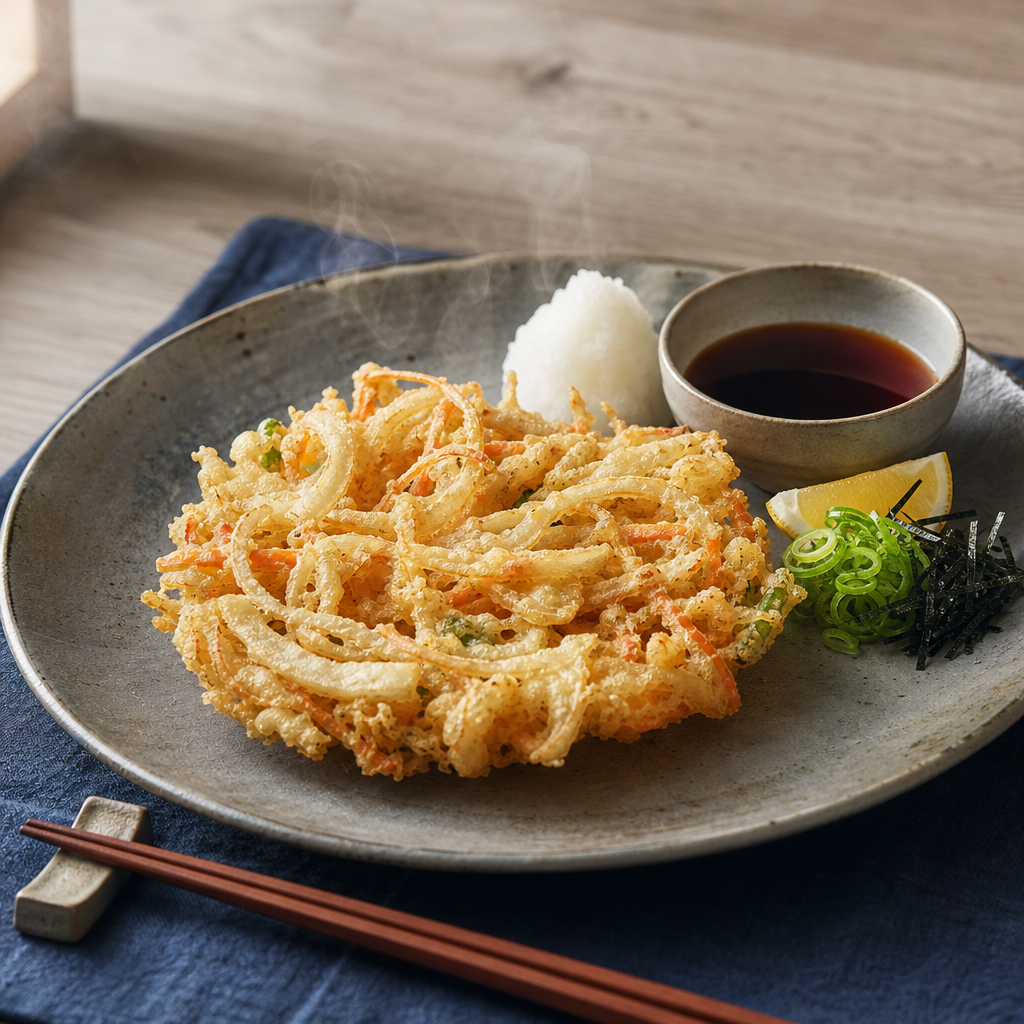
Kakiage (かき揚げ) is the mixed-ingredient branch of tempura: small pieces of vegetable, herb, and sometimes seafood bound together with tempura batter and fried as one raft. Japanese government food-culture sources document regional versions such as Shizuoka sakura ebi kakiage, where tiny Suruga Bay shrimp are mixed with flour and water and fried at high heat. In home cooking, onion, carrot, mitsuba, burdock, corn, mushrooms, and small shrimp all appear; the constant is the structure, not one fixed filling. It is eaten on its own with salt or tentsuyu, over rice as kakiage-don, or set on soba and udon.
Method 9 steps · 45 min
Cut and dry the filling
Slice the onion 5 mm thick, cut the carrot into thin matchsticks, cut the mitsuba into 3 cm lengths, and pat the shrimp dry if using. Spread everything on a tray while the oil heats; visible surface moisture is the enemy.
Heat the oil
Heat 5-6 cm oil to 175-180°C in a heavy pot. Hold that range; below 170°C the fritter drinks oil, above 185°C the edges brown before the onion cooks.
Make the tentsuyu, if serving
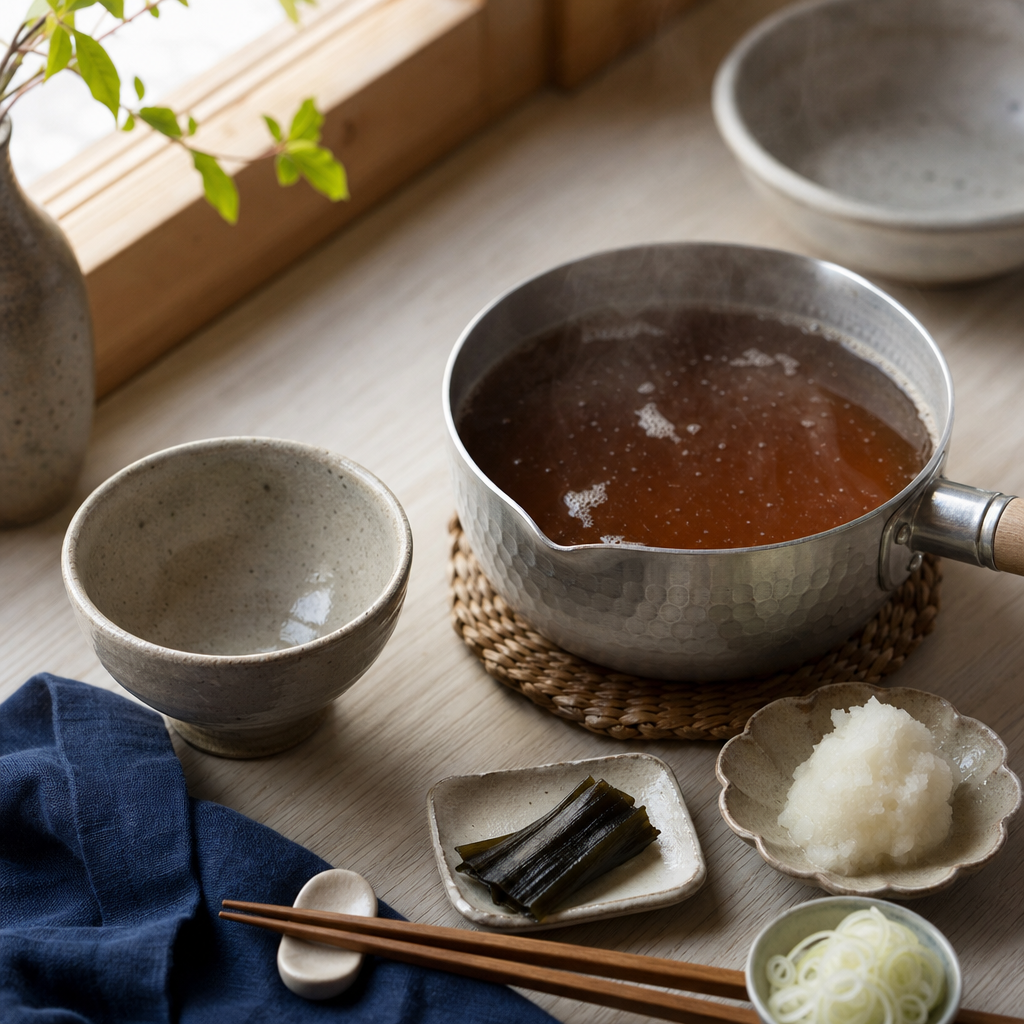
Combine dashi, koikuchi shoyu, and mirin in a small saucepan. Bring to a brief simmer for 30 seconds, then keep warm and serve with grated daikon.
Dust the filling
Toss the onion, carrot, mitsuba, and shrimp with the 35 g dredging flour until every surface looks dry and lightly chalked. Shake off loose flour pooling at the bottom of the bowl.
Mix the batter late
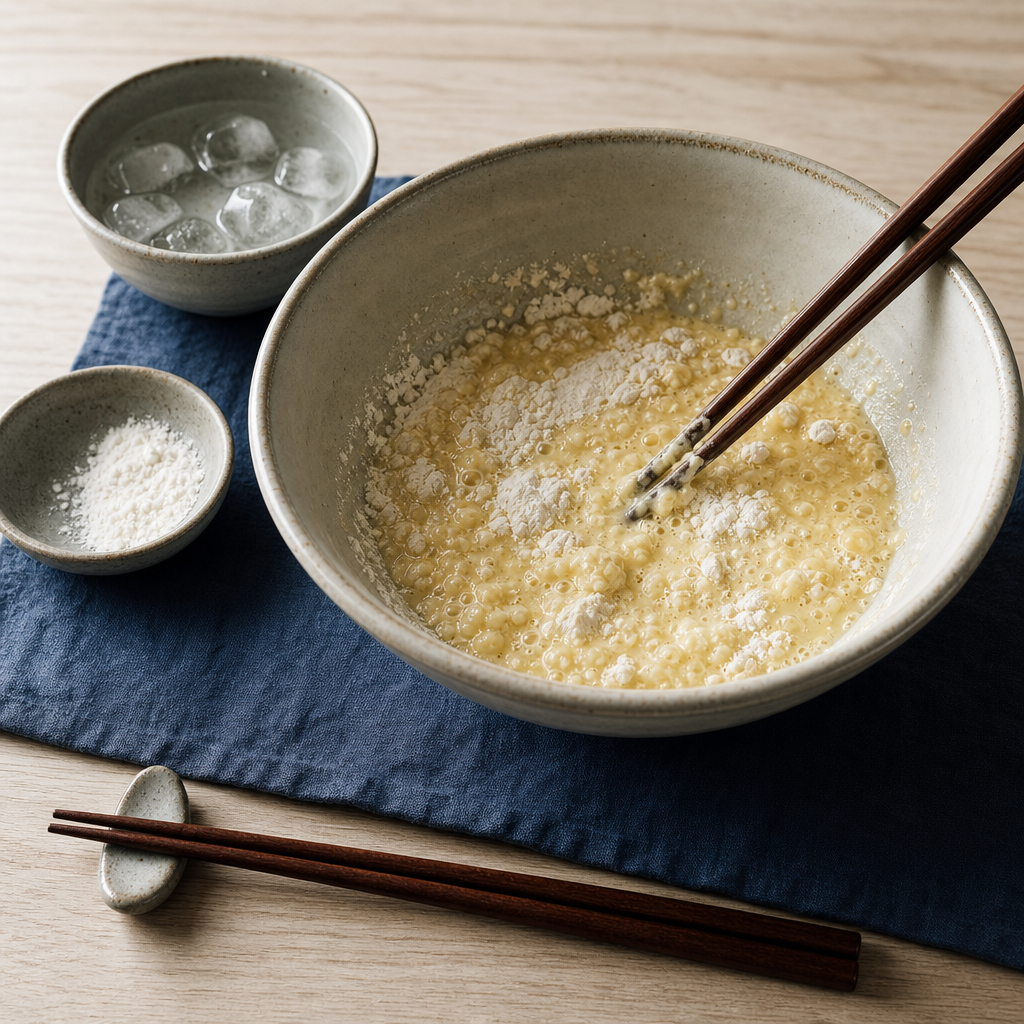
Beat the cold egg yolk into the ice water. Add the 90 g flour and stir with chopsticks 8-10 strokes only; leave lumps and dry streaks.
Bind one portion at a time
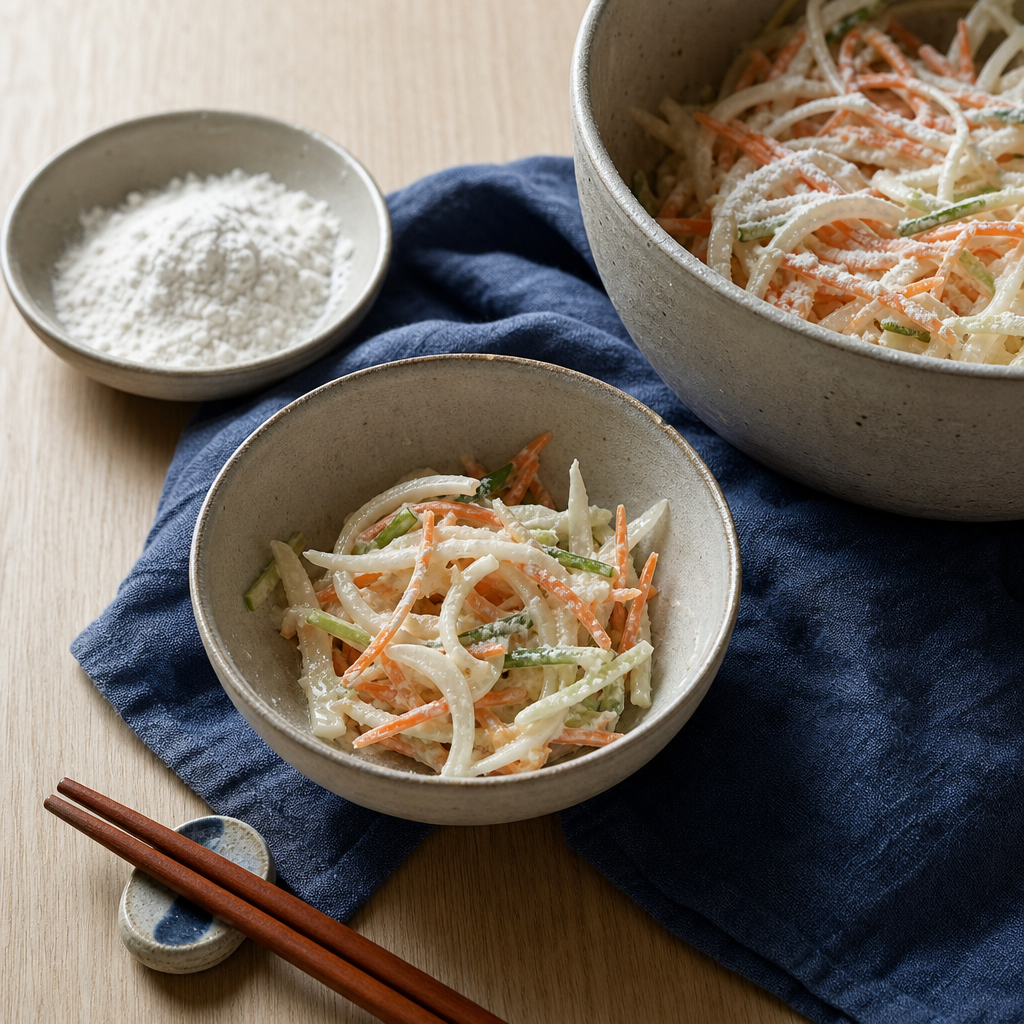
Put one-quarter of the dusted filling in a small bowl and add 2-3 tablespoons batter, only enough to wet the flour and make the strands cling. The mixture should look barely held together, not submerged.
Fry the first kakiage
Slide the portion onto a flat spoon, small ladle, or square of parchment and lower it into the oil. Spread it to about 10-12 cm wide and 1.5 cm thick; fry 90 seconds, turn once, then fry 60-90 seconds more until pale golden and rigid at the edges.
Drain and repeat
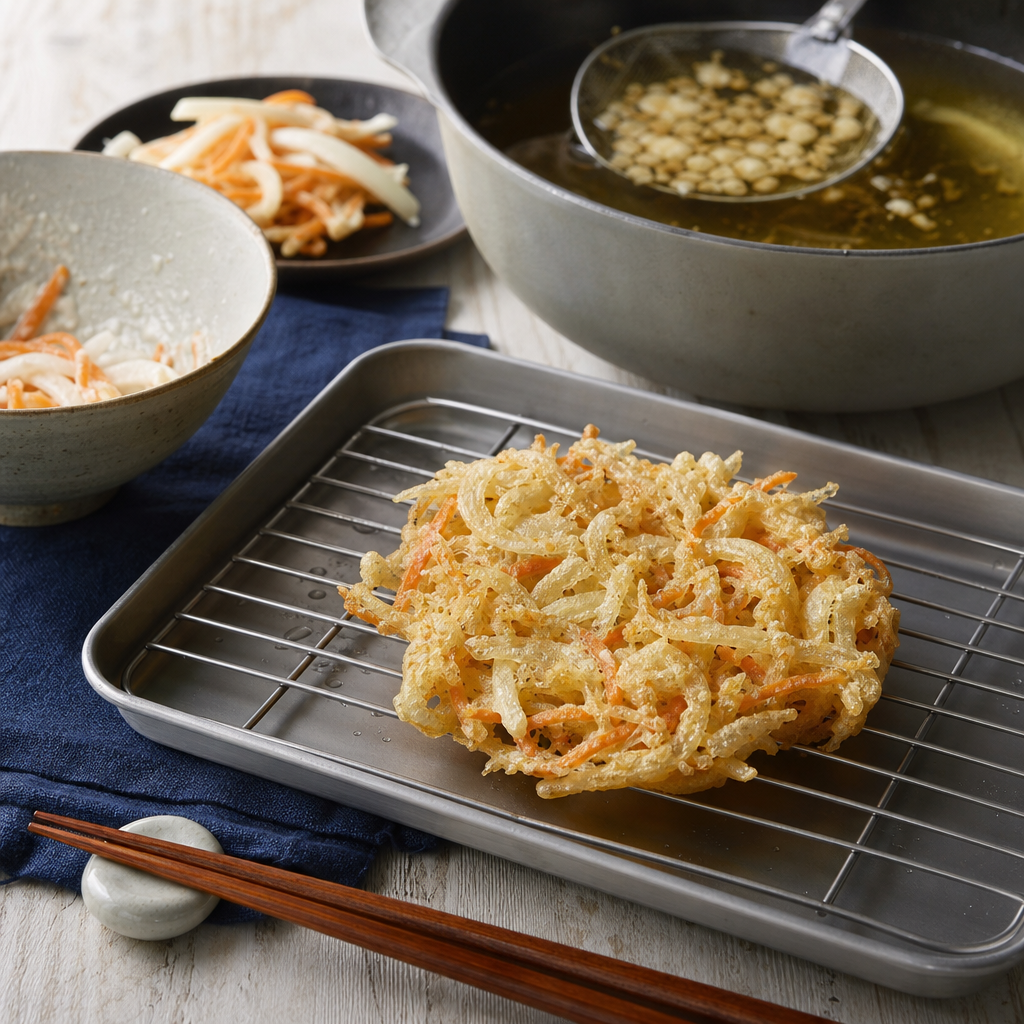
Lift the kakiage to a rack, not paper towels. Skim loose batter bits from the oil, bring the oil back to 175-180°C, and repeat with the remaining portions.
Serve immediately
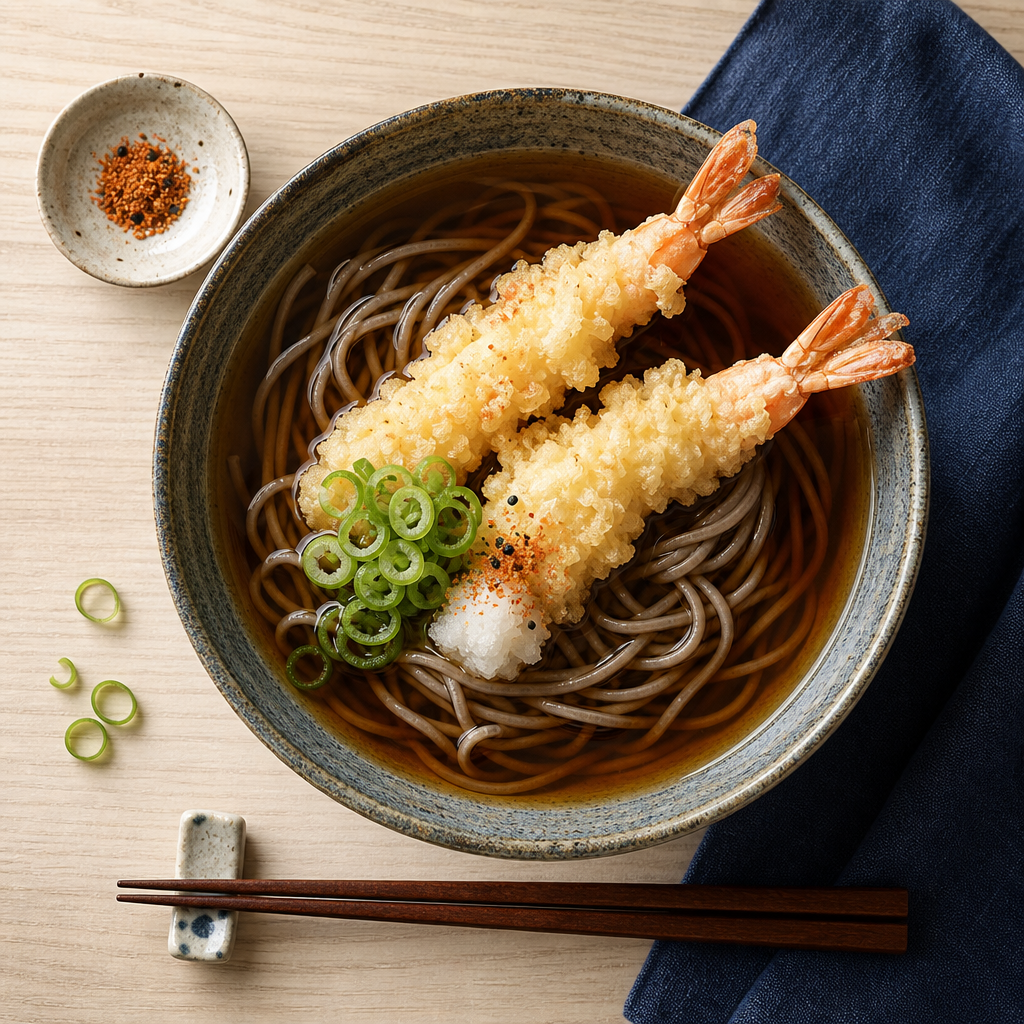
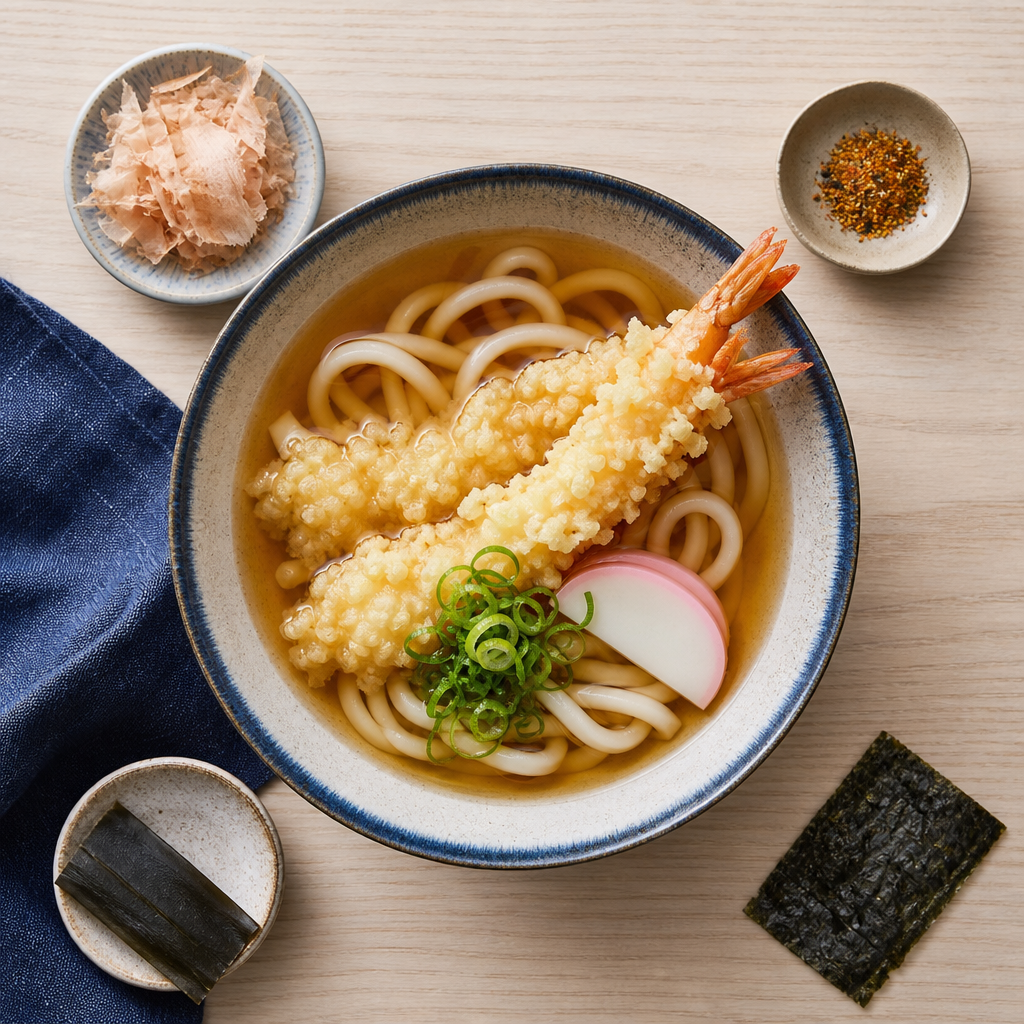
Serve hot with fine salt, matcha salt, or warm tentsuyu and grated daikon. If using as a soba or udon topping, place it on the noodles at the last moment so the top stays crisp.
Common mistakes
- {'mistake': 'Mixing the batter smooth', 'fix': 'Stop while flour lumps remain. Lumpy batter fries lighter because gluten has not been worked into a network.'}
- {'mistake': 'Making a thick mound', 'fix': 'Spread each portion to 1.5 cm thick. The center should cook before the edges move past pale gold.'}
- {'mistake': 'Skipping the flour dusting', 'fix': 'Dust the filling before adding batter. Without that dry layer, onion and shrimp slide out of the coating.'}
- {'mistake': 'Letting the full filling sit in batter', 'fix': 'Bind one portion at a time. Salt and moisture leach from the vegetables while the batter hydrates and weakens.'}
- {'mistake': 'Frying below 170°C', 'fix': 'Wait for 175-180°C between batches. Low oil temperature gives a heavy, greasy fritter with a dull crust.'}
What does not belong
- {'item': 'Panko', 'reason': 'Panko does not belong in kakiage. It turns the dish into a crumbed fritter, not tempura.'}
- {'item': 'Baking powder-heavy batter', 'reason': 'Chemical lift does not fix overmixed batter. Kakiage gets lightness from low gluten, cold batter, and hot oil.'}
- {'item': 'Thick bottled teriyaki sauce', 'reason': "Sweet teriyaki glaze does not belong here. It smothers the lacy crust and replaces tentsuyu's dashi-soy balance with sugar."}
- {'item': 'Mayonnaise in the batter', 'reason': 'Mayonnaise is a shortcut found in some home hacks, but it pushes the batter fatty and opaque. This recipe uses the standard yolk-water-flour structure.'}
- {'item': 'Long soaking in batter', 'reason': 'Kakiage mixture does not rest. Resting hydrates flour and pulls water from the vegetables.'}
Adaptations
Omit shrimp, replace egg yolk with 15 ml additional ice water, and serve with kombu-shiitake dashi tentsuyu or salt. This is a valid vegetable kakiage, not a seafood version.
Use halal-certified soy sauce if required and replace mirin with water plus sugar. Use vegetable kakiage or halal-certified seafood.
Use rice flour for dusting and a rice flour-potato starch batter. Replace shoyu with gluten-free tamari, starting with less because tamari can read saltier.
Traditional kakiage contains no dairy. Butter and cream do not belong.
Omit shrimp and use corn, burdock, mushrooms, or extra onion and carrot. Fry in clean oil that has not been used for shrimp tempura.