Vegetable Tempura
The dish in context
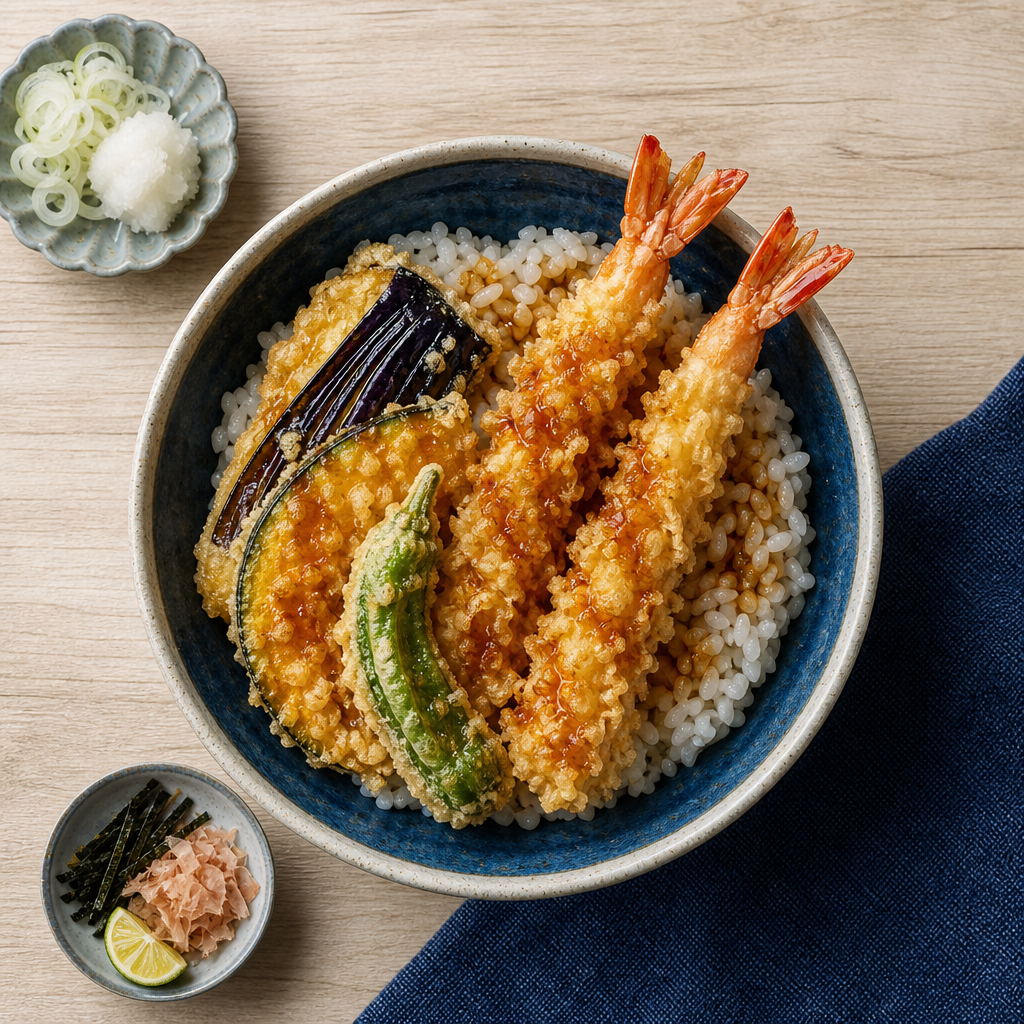
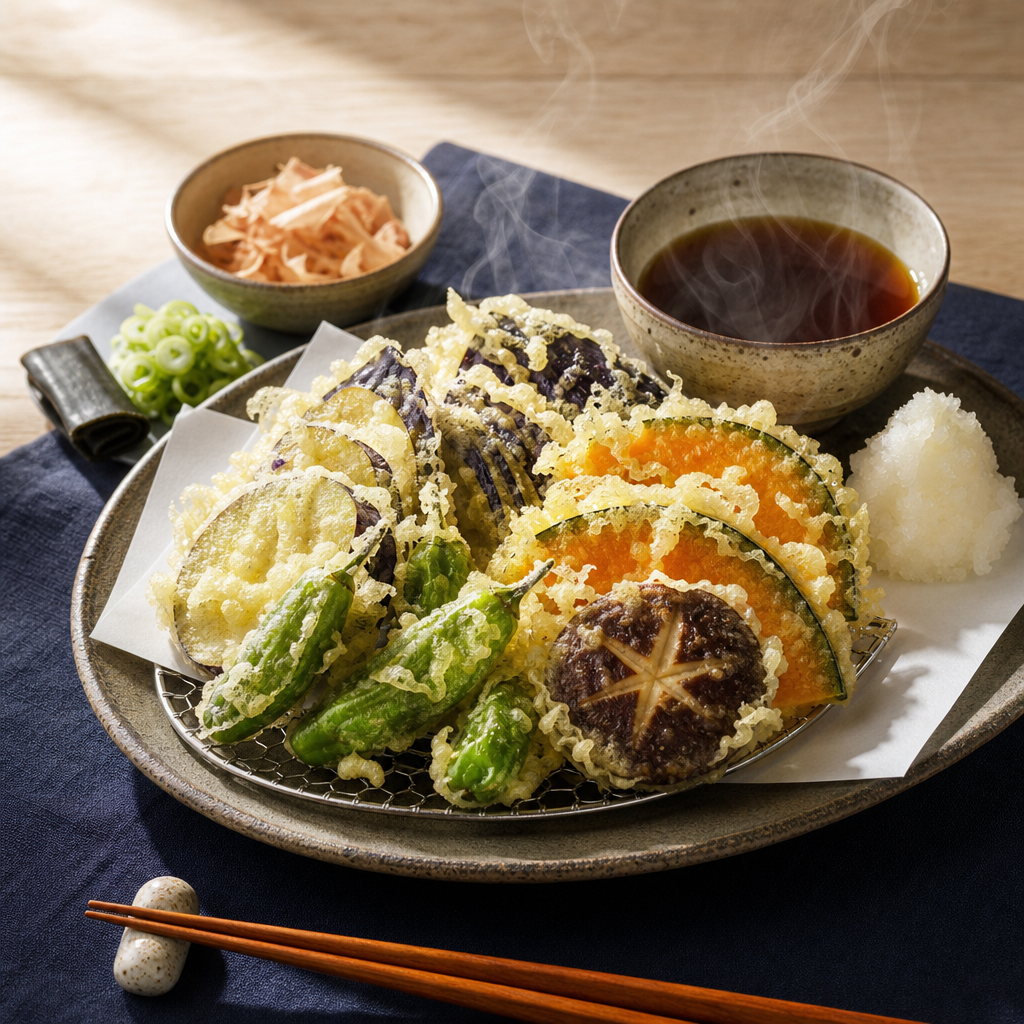
Tempura developed in Japan after Portuguese-style flour-coated frying arrived through 16th-century trade, then became strongly associated with Edo-period urban food culture. Modern tempura is not defined by heavy browning; the canonical texture is thin, crisp, and pale, with the ingredient still recognizable under the coating. Vegetable tempura, yasai tenpura (野菜天ぷら), is often seasonal: kabocha, eggplant, shishito, sweet potato, mushrooms, lotus root, green beans, and shiso all fit the grammar. Edo-style tempura may lean on fragrant sesame oil and tentsuyu, while lighter Kansai-style presentations often use vegetable oil and salt.
Method 8 steps · 45 min
Cut and dry the vegetables
Cut dense vegetables thin: kabocha and sweet potato 5 mm, eggplant about 1 cm, mushrooms whole or halved depending on size. Slit shishito once so steam can escape. Pat every surface dry; wet vegetables blow steam under the batter and shed their coating.
Make the tentsuyu
Combine dashi, koikuchi shoyu, and mirin in a small saucepan. Bring to a brief simmer for 30 seconds, then turn off the heat. Hold warm and serve with grated daikon.
Heat the oil
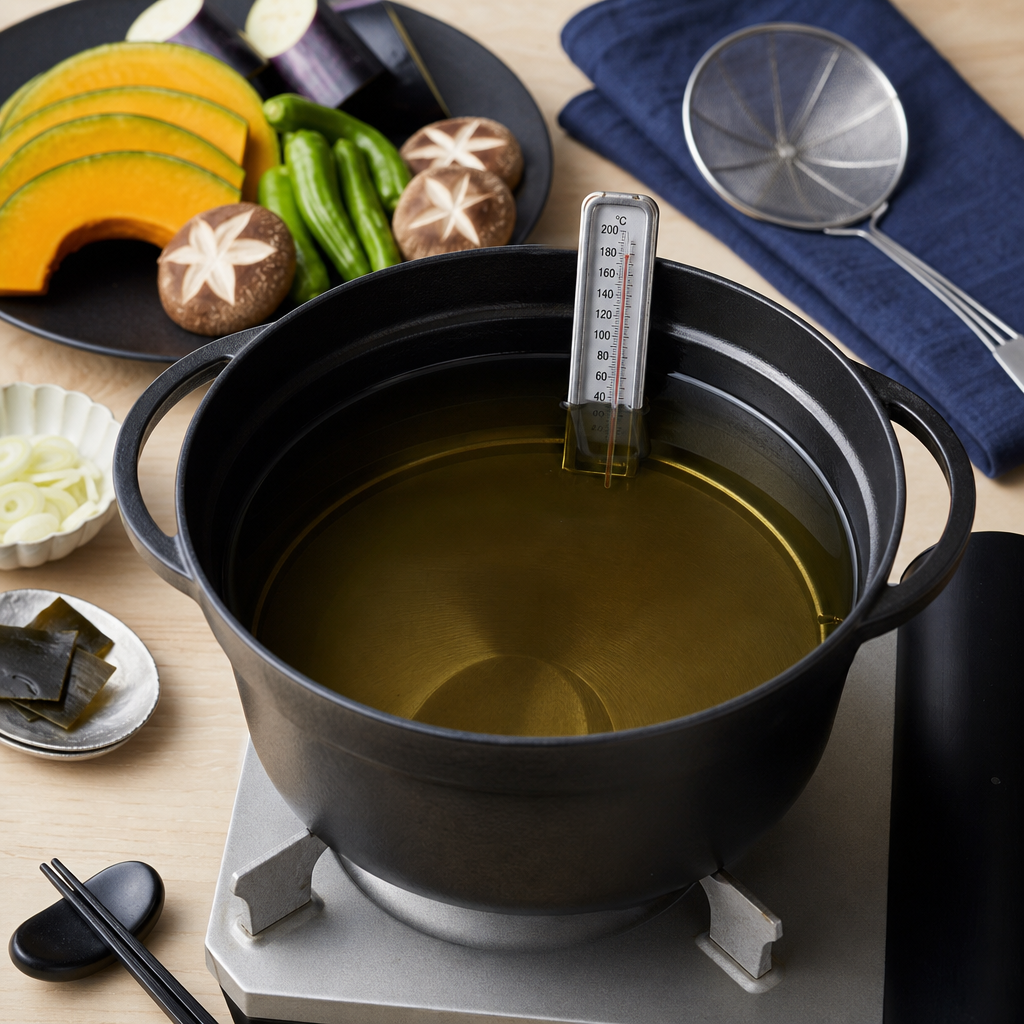
Pour oil to at least 5 cm depth in a heavy pot and heat to 170-180°C. Keep a spider or fine skimmer ready. Do not start frying until the thermometer is stable, not climbing wildly.
Mix the batter late
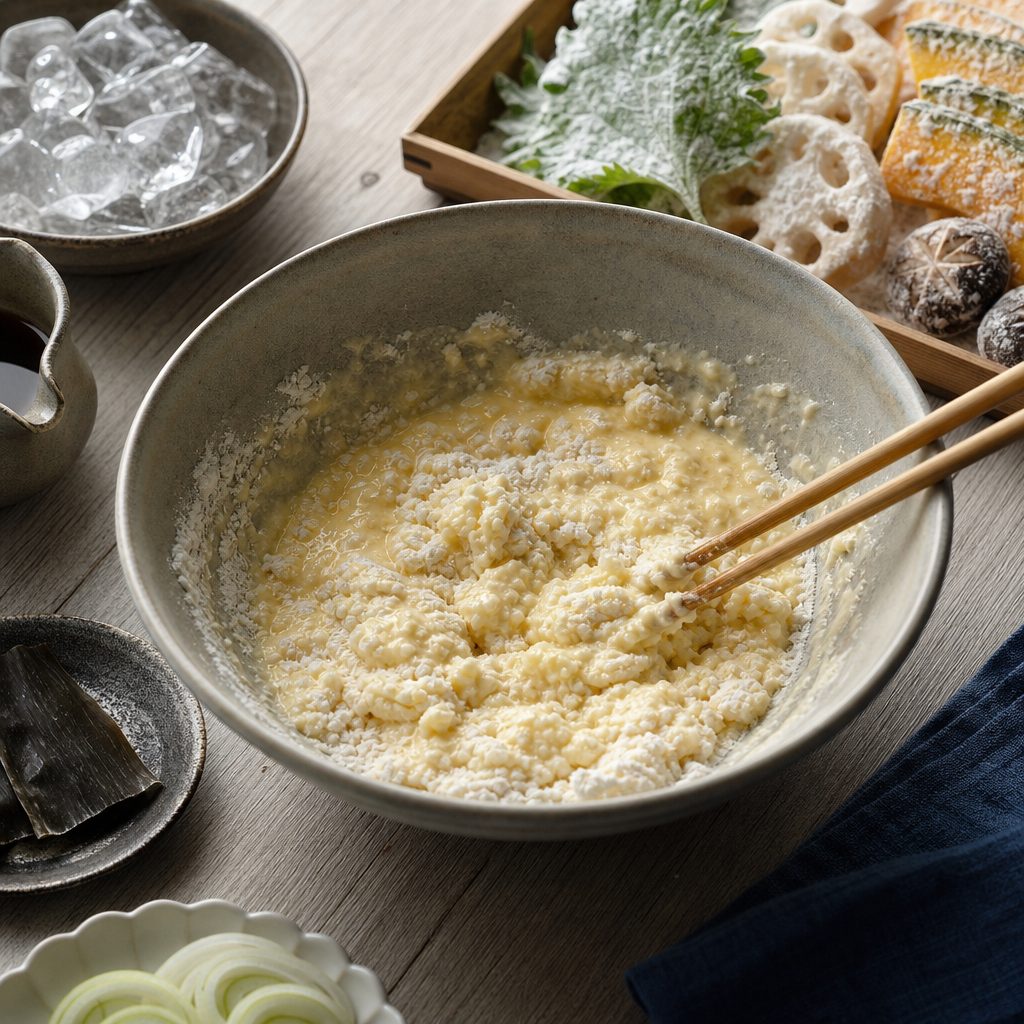
Beat the egg yolk into the ice-cold water. Add the sifted cake flour and stir with chopsticks 8-10 strokes, leaving visible lumps and dry streaks. Stop before the batter looks smooth.
Dust, dip, and fry the dense vegetables
Dust kabocha and sweet potato lightly with cake flour, shake off excess, then dip in batter. Fry in small batches at 170°C until the coating is pale straw-yellow and the center yields to a skewer, 2-3 minutes. Transfer to a rack, not a closed bowl.
Fry eggplant, mushrooms, and peppers
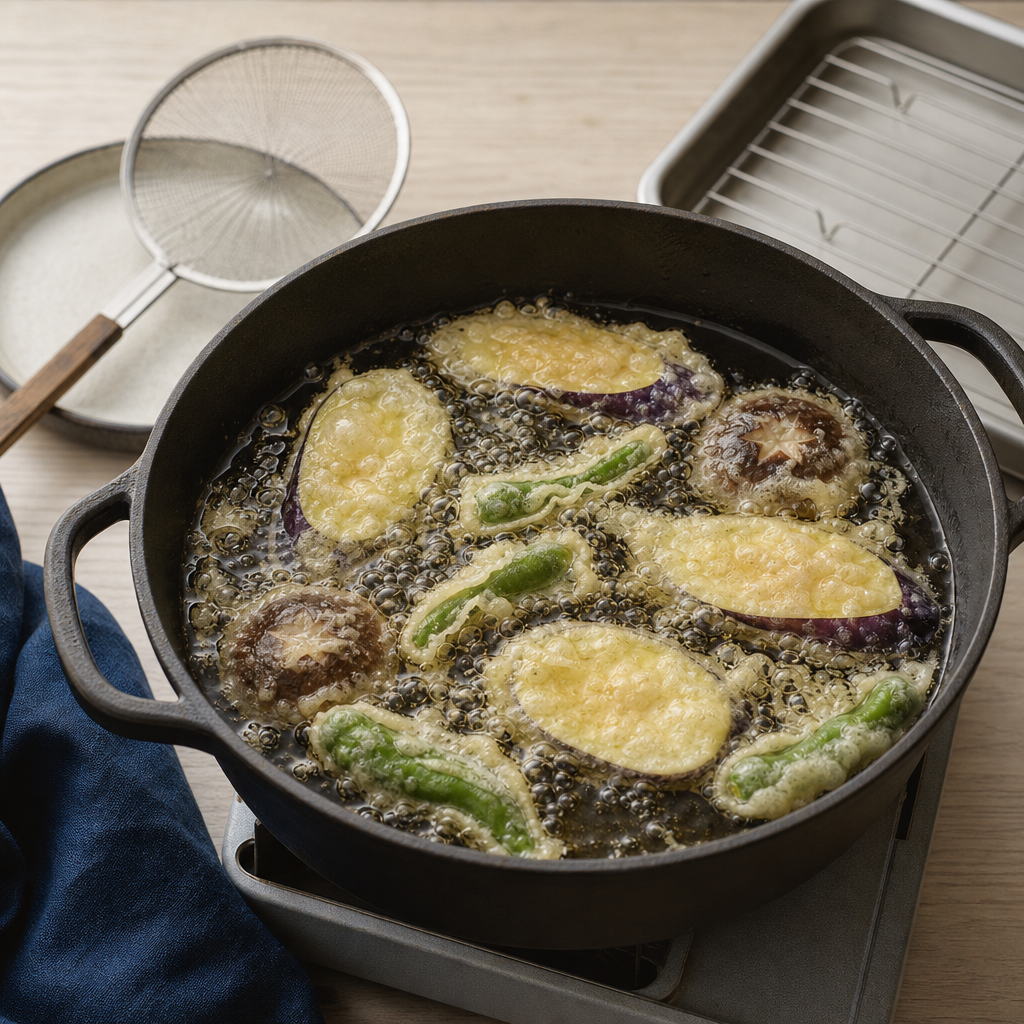
Return the oil to 175-180°C. Dust and batter eggplant, shiitake, and shishito, then fry until the coating sets and the vegetable is cooked through: eggplant 90-120 seconds, shiitake 90 seconds, shishito 45-60 seconds. Skim loose batter crumbs between batches.
Fry shiso on one side
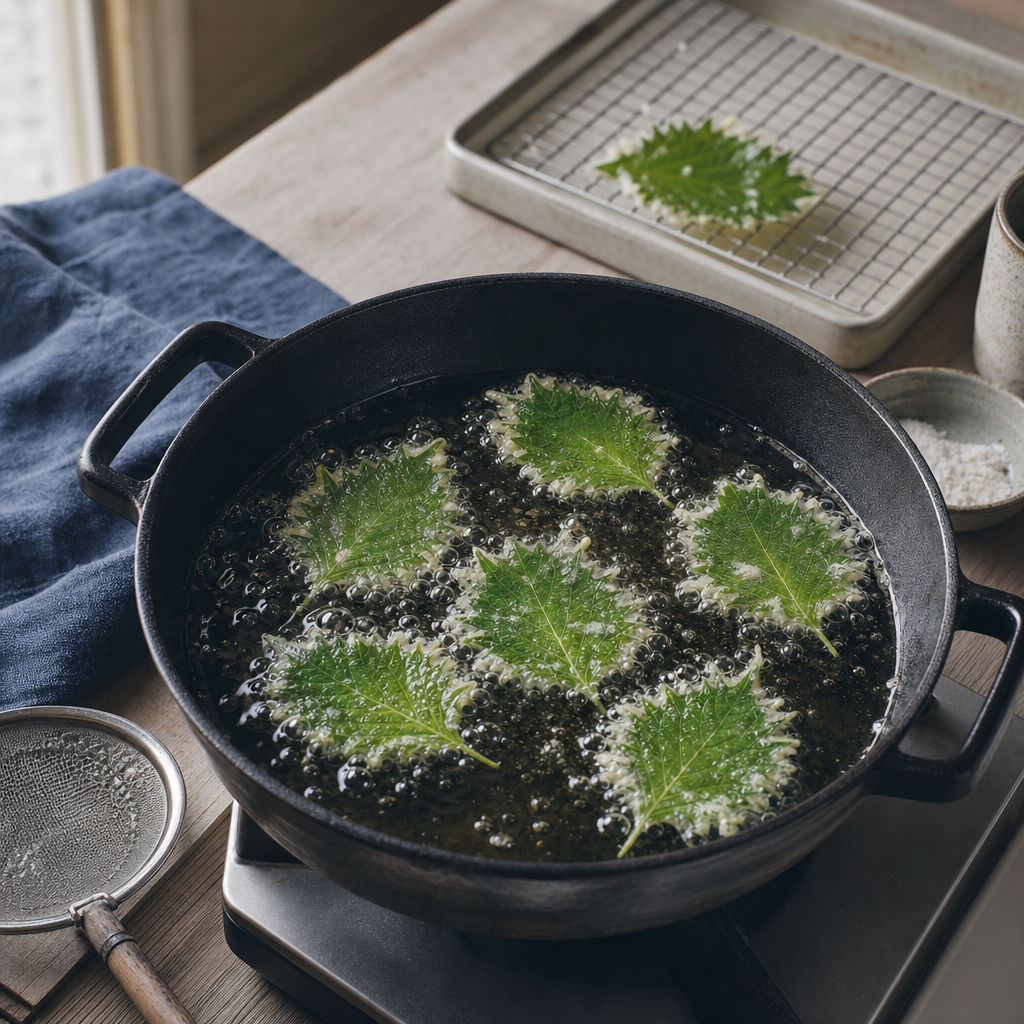
Dip only the underside of each shiso leaf in batter. Lay it batter-side down in the oil and fry 15-20 seconds without flipping. Pull while the leaf is still green and flat.
Serve immediately
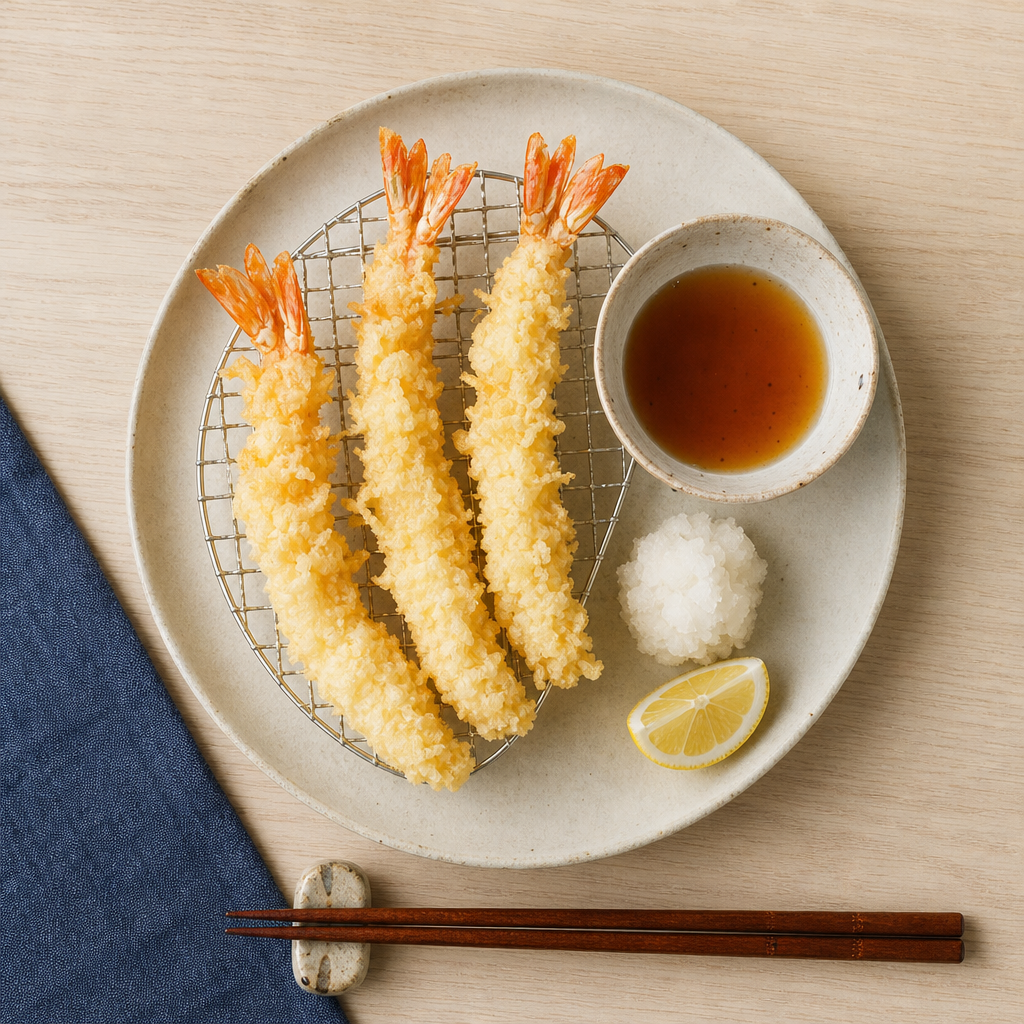
Serve the tempura as it comes out of the oil, or hold batches on a rack in a 95°C oven for no more than 10 minutes. Offer warm tentsuyu with grated daikon and fine salt on the side.
Common mistakes
- Mixing the batter smooth. Smooth batter means gluten development, and gluten makes a chewy coat.
- Using warm water. Cold batter slows gluten formation and shocks into a lighter shell when it hits the oil.
- Crowding the pot. A large batch drops the oil temperature and leaves the vegetables oily before the coating sets.
- Browning tempura like Western fried food. Proper tempura is pale straw-yellow to light gold, not deep brown.
- Skipping the dry flour dusting. Batter slides off slick vegetable skins without a thin dry anchor.
- Letting crumbs burn in the oil. Skim tenkasu between batches or the oil turns bitter.
What does not belong
- Panko does not belong in tempura. Breadcrumb-coated fried food is furai, not tempura.
- Garlic powder does not belong in the batter.
- Soy sauce does not go into the batter.
- Sugar does not belong in the batter; it accelerates browning and pushes the coating away from tempura.
- Baking the vegetables does not make tempura. It makes oven-fried vegetables.
- A thick American teriyaki sauce does not belong as the dip; use tentsuyu or salt.
Adaptations
Use the eggless batter option: omit the yolk and add potato starch. Replace ichiban dashi with kombu and dried shiitake dashi for the tentsuyu.
Use halal-certified mirin substitute or replace mirin with 45 ml water plus 15 g sugar simmered with the dashi and soy. The result is less rounded, but the sauce structure holds.
Use rice flour plus potato starch for the batter and gluten-free tamari in the tentsuyu. The coating will be crisper and more brittle than wheat-flour tempura.
Traditional vegetable tempura contains no dairy.
This version contains no seafood. Use fresh oil that has not fried shrimp or fish if cooking for an allergy.