Tendon
The dish in context
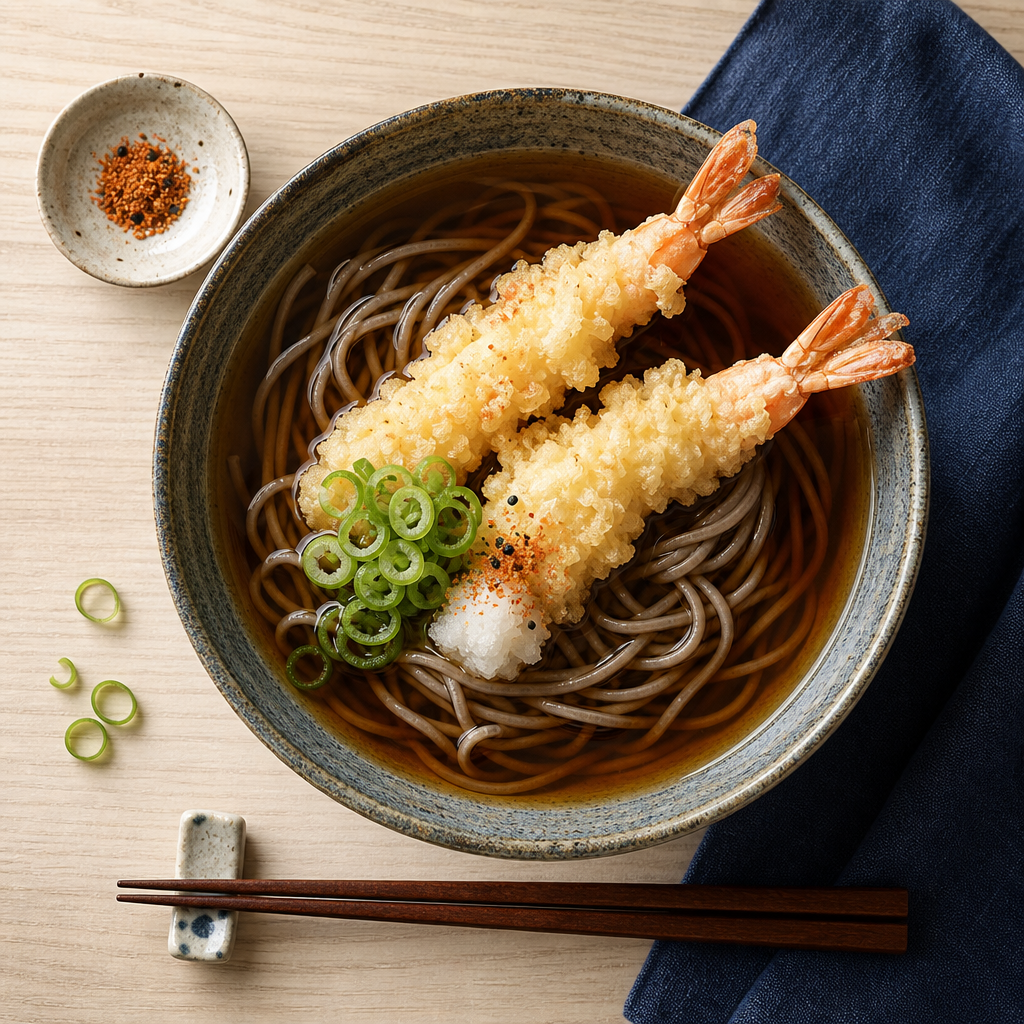
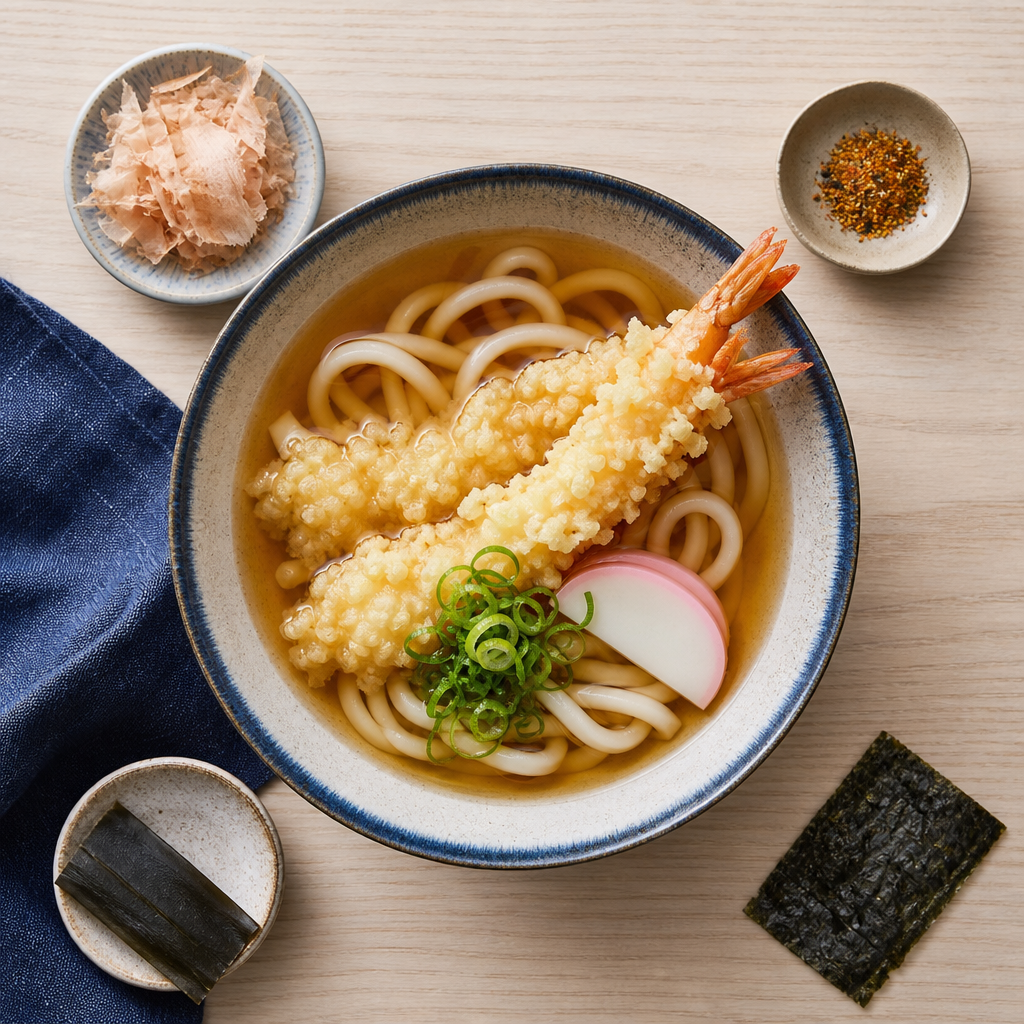
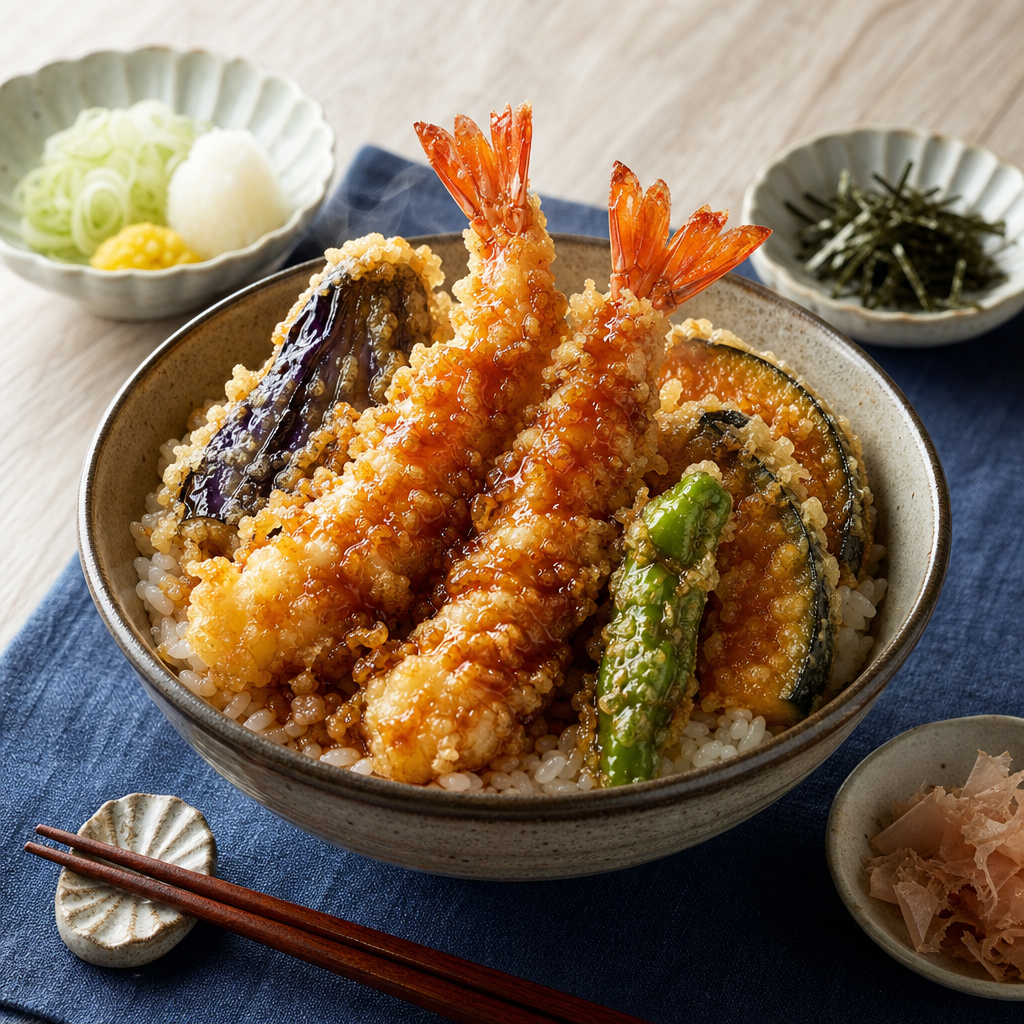
Tendon (天丼) is the donburi form of tempura: fried seafood and vegetables laid over hot rice and finished with a sweet-salty tentsuyu-based sauce. It is strongly associated with Tokyo-style everyday dining, where tempura moved from specialist counters into rice-bowl shops and chain restaurants. Contemporary Japanese sources treat tendon as a familiar rice-bowl category, served at home, hospitals, schools, and dedicated tendon shops rather than as a ceremonial dish. The topping mix varies by shop and season, but shrimp, eggplant, kabocha, and shishito form a stable modern pattern.
Method 9 steps · 75 min
Wash, soak, and cook the rice
Wash the short-grain rice 3-5 times until the water runs nearly clear. Soak with the measured water for 30 minutes, cook, then rest covered for 10 minutes before fluffing with a shamoji or rice paddle.
Make the tendon sauce
Combine dashi, koikuchi shoyu, mirin, sake, and sugar in a small saucepan. Simmer 3-4 minutes until the alcohol edge is gone and the sauce lightly coats a spoon; keep warm.
Prepare the shrimp and vegetables
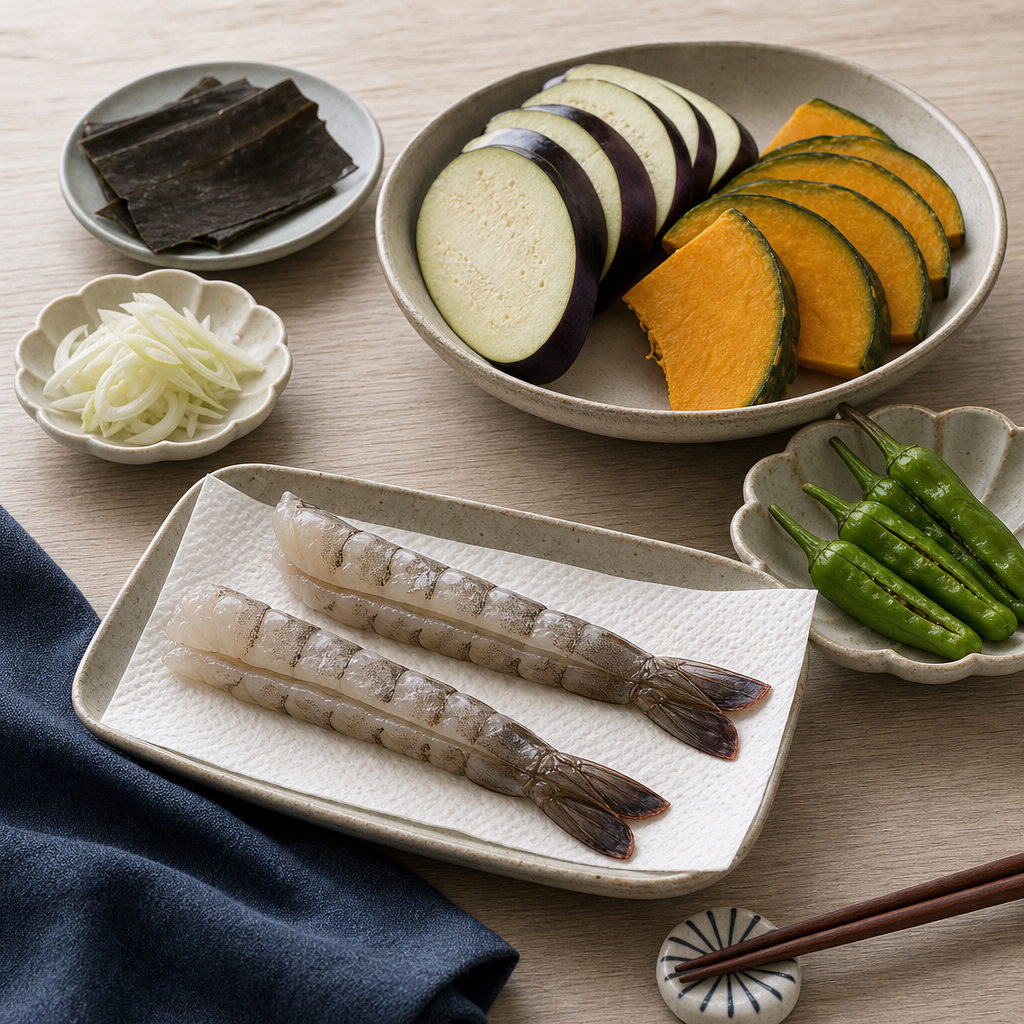
Pat every topping dry. Make 3-4 shallow crosswise cuts on the belly side of each shrimp, then press gently to straighten; slit shishito peppers once. Dust shrimp and vegetables in a thin coat of flour and shake off the excess.
Heat the oil
Heat 5-6 cm oil to 170-175°C for vegetables. Set a wire rack over a tray; paper towels trap steam and soften the underside.
Mix the batter late
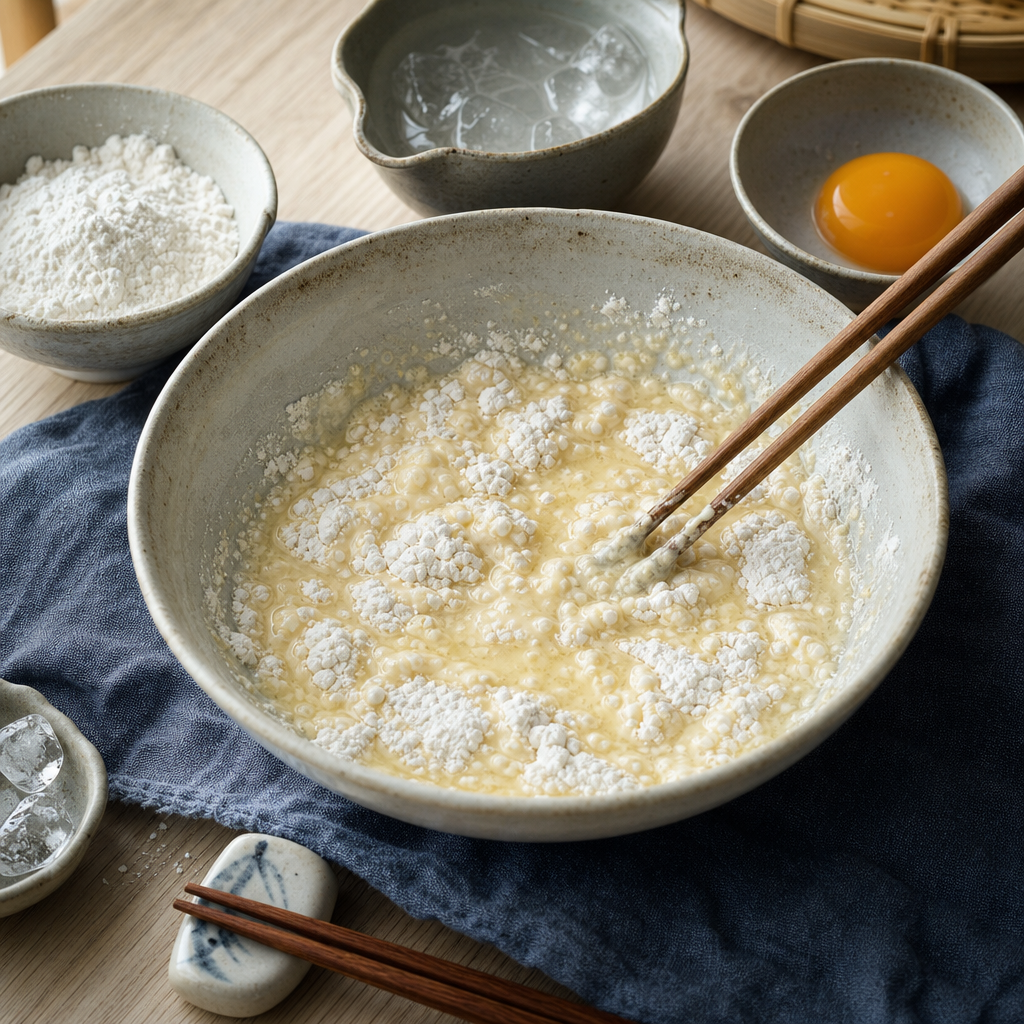
Beat the cold egg yolk into the ice water. Add chilled flour and stir with chopsticks 8-10 strokes only; leave dry patches and lumps.
Fry the vegetables
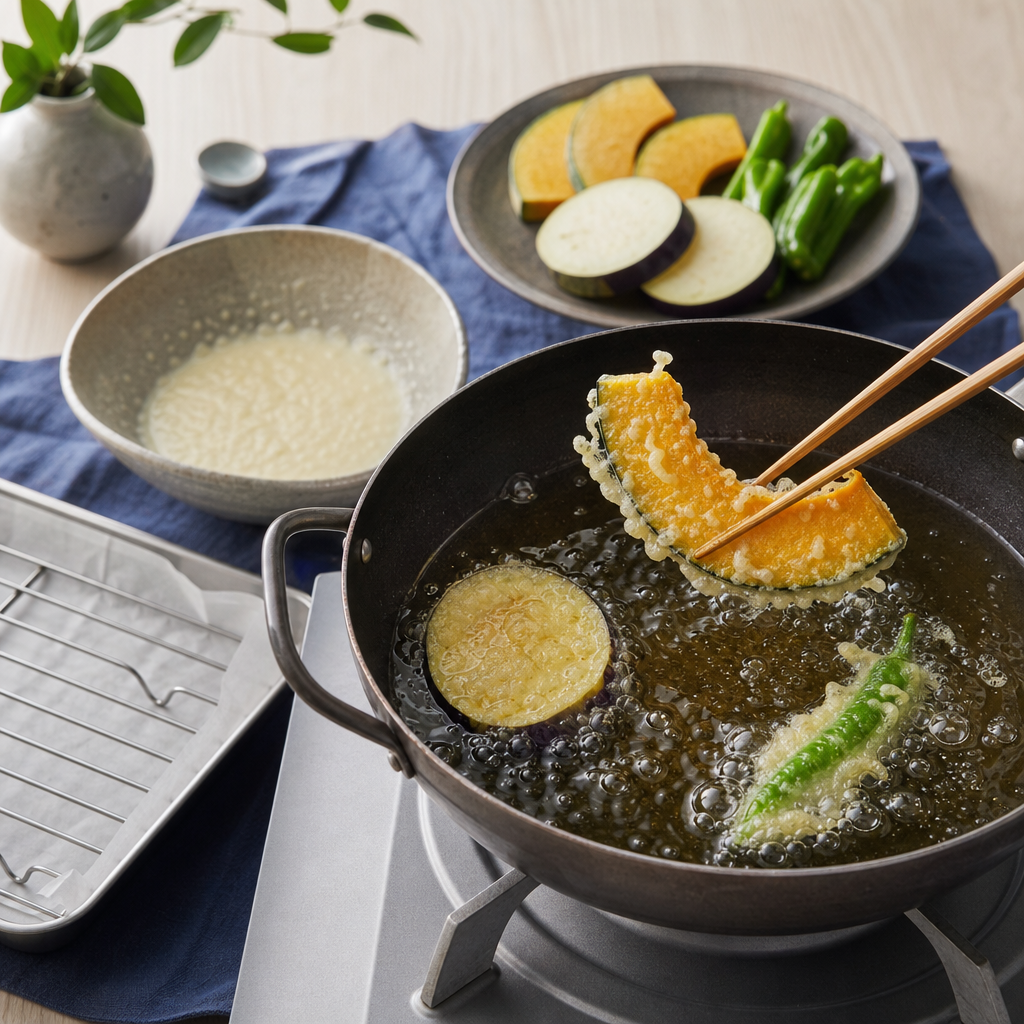
Dip kabocha, eggplant, and shishito into the batter and fry in small batches at 170-175°C. Cook shishito about 45 seconds, eggplant 1-2 minutes, and kabocha 2-3 minutes, turning once, until the coating is pale-gold and crisp.
Fry the shrimp hotter
Raise the oil to 180-185°C. Dip the shrimp, drag a few extra batter drips over the top for craggy flakes, and fry 90 seconds to 2 minutes until the shrimp are opaque and the batter is crisp.
Build the bowls
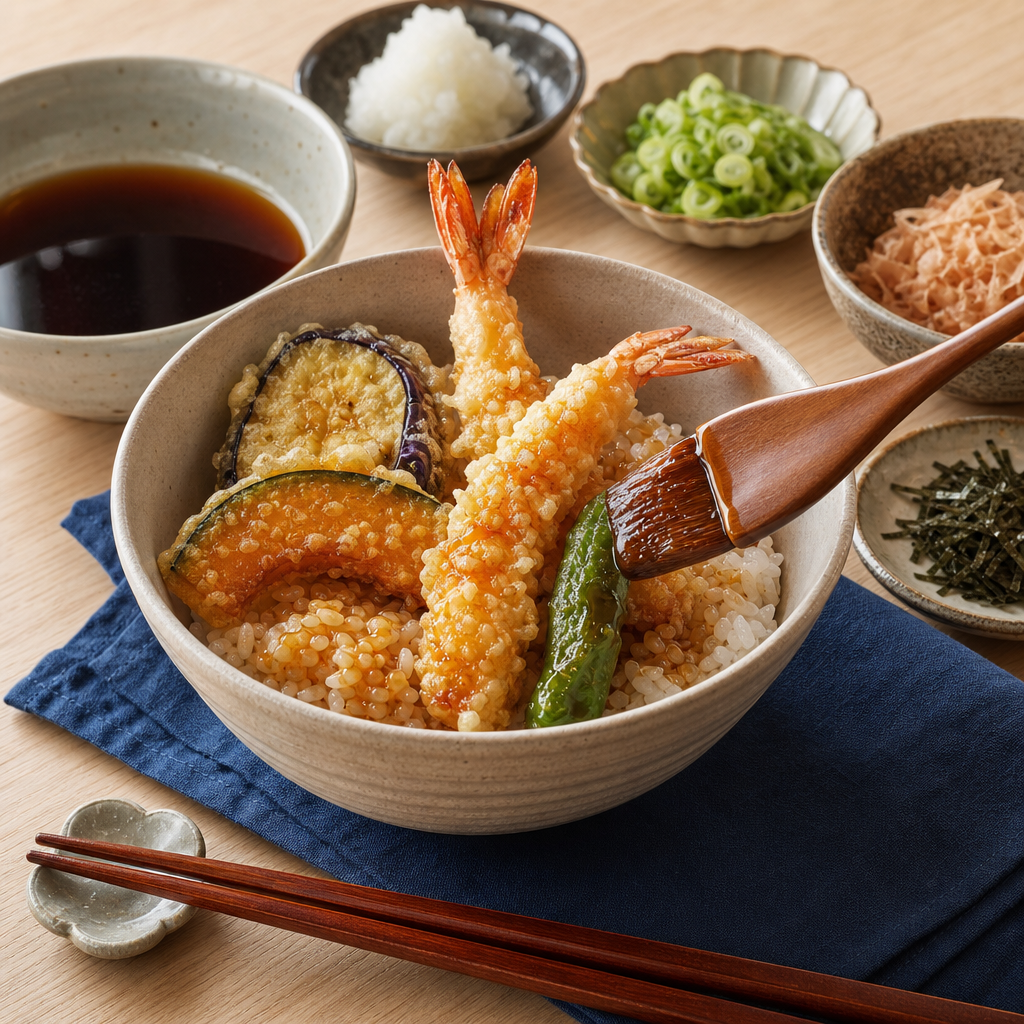
Divide hot rice between donburi bowls and spoon 1-2 tablespoons warm sauce over the rice. Dip or brush each tempura piece lightly with sauce, arrange over the rice, then spoon a final small streak of sauce across the top.
Serve immediately
Serve while the batter still crackles at the edges and the rice is steaming. Add pickles or a clear soup on the side if serving as a set meal.
Common mistakes
- {'mistake': 'Mixing the batter until smooth.', 'fix': 'Stop while lumps and dry flour streaks remain. Tempura batter should look under-mixed.'}
- {'mistake': 'Using long-grain rice.', 'fix': 'Use Japanese short-grain rice. Long-grain rice does not cling to sauce and breaks the donburi structure.'}
- {'mistake': 'Frying everything at one temperature.', 'fix': 'Use 170-175°C for vegetables and 180-185°C for shrimp. The cooking windows are different.'}
- {'mistake': 'Stacking fried tempura on paper towels.', 'fix': 'Drain on a wire rack. Paper traps steam and softens the batter from below.'}
- {'mistake': 'Pouring too much sauce over the bowl.', 'fix': 'Season the rice and brush or dip the tempura lightly. Tendon sauce is a glaze and rice seasoning, not a broth.'}
What does not belong
- {'item': 'teriyaki sauce', 'reason': 'Commercial teriyaki sauce is too thick and too sweet. Tendon uses a tentsuyu-style dashi, soy, and mirin sauce.'}
- {'item': 'long-grain, jasmine, or basmati rice', 'reason': 'These grains stay separate and aromatic in the wrong direction. Japanese short-grain rice is structural.'}
- {'item': 'panko coating', 'reason': 'Panko makes fry coating for furai, not tempura. Tendon needs a thin, lacy batter.'}
- {'item': 'garlic powder or spice rubs in the batter', 'reason': 'Tempura batter is neutral by design. The sauce and toppings carry the seasoning.'}
- {'item': 'mayonnaise or spicy mayo', 'reason': 'That turns the bowl into an international fried-seafood rice bowl. It is not tendon.'}
Adaptations
Use only vegetables, replace ichiban dashi with kombu-shiitake dashi, and omit the egg yolk in the batter with 10 g cornstarch added to the flour. This is vegetable tendon; do not call it shrimp tendon.
Use halal-certified shrimp and replace mirin with water plus sugar and sake with water. If using dashi powder, check for alcohol-derived seasonings.
Use gluten-free tamari in reduced quantity and a gluten-free tempura flour blend based on rice flour and starch. The crust will be more brittle and less stretchy than wheat tempura.
The standard dish contains no dairy. Do not add butter to the rice or sauce.
Replace shrimp with white fish or make vegetable tendon. Fry shellfish-free portions in fresh oil; shared fryer oil is not shellfish-free.