Pasta alla Genovese
The dish in context
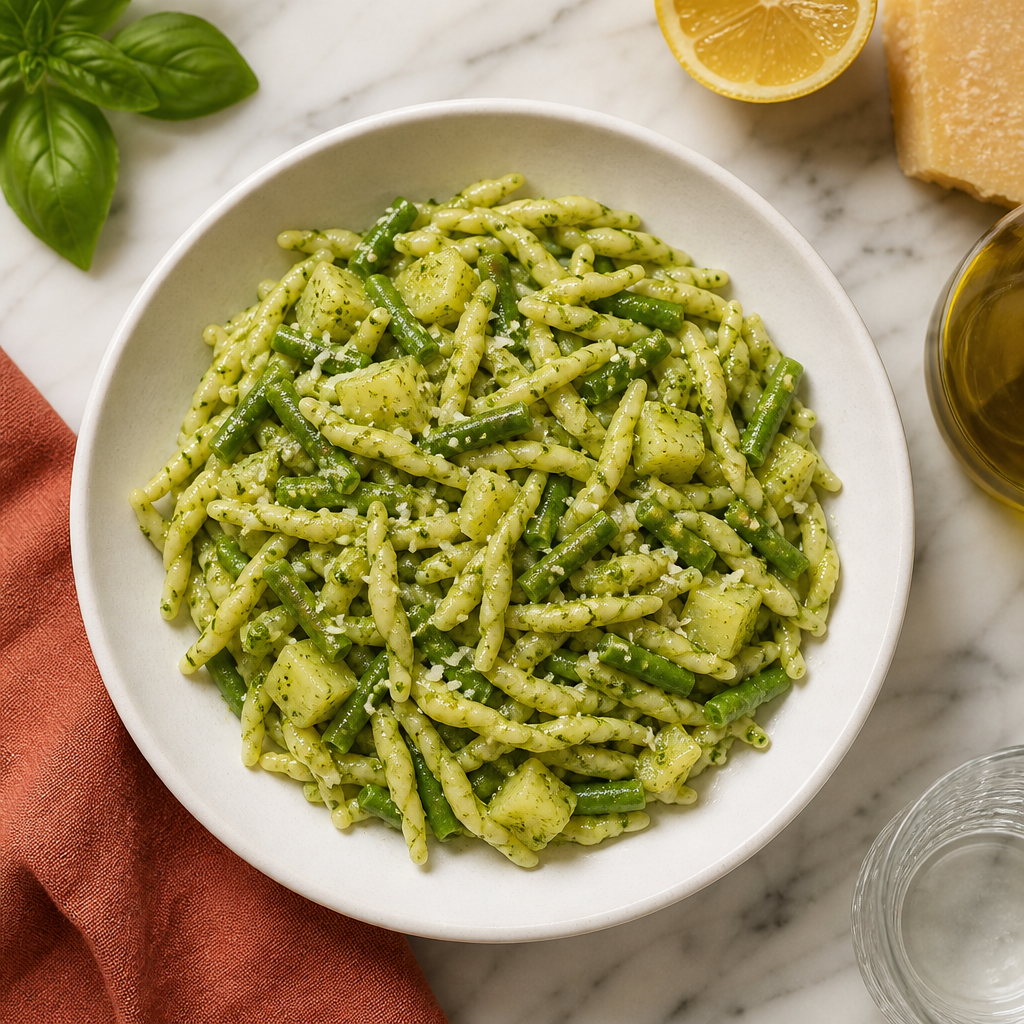
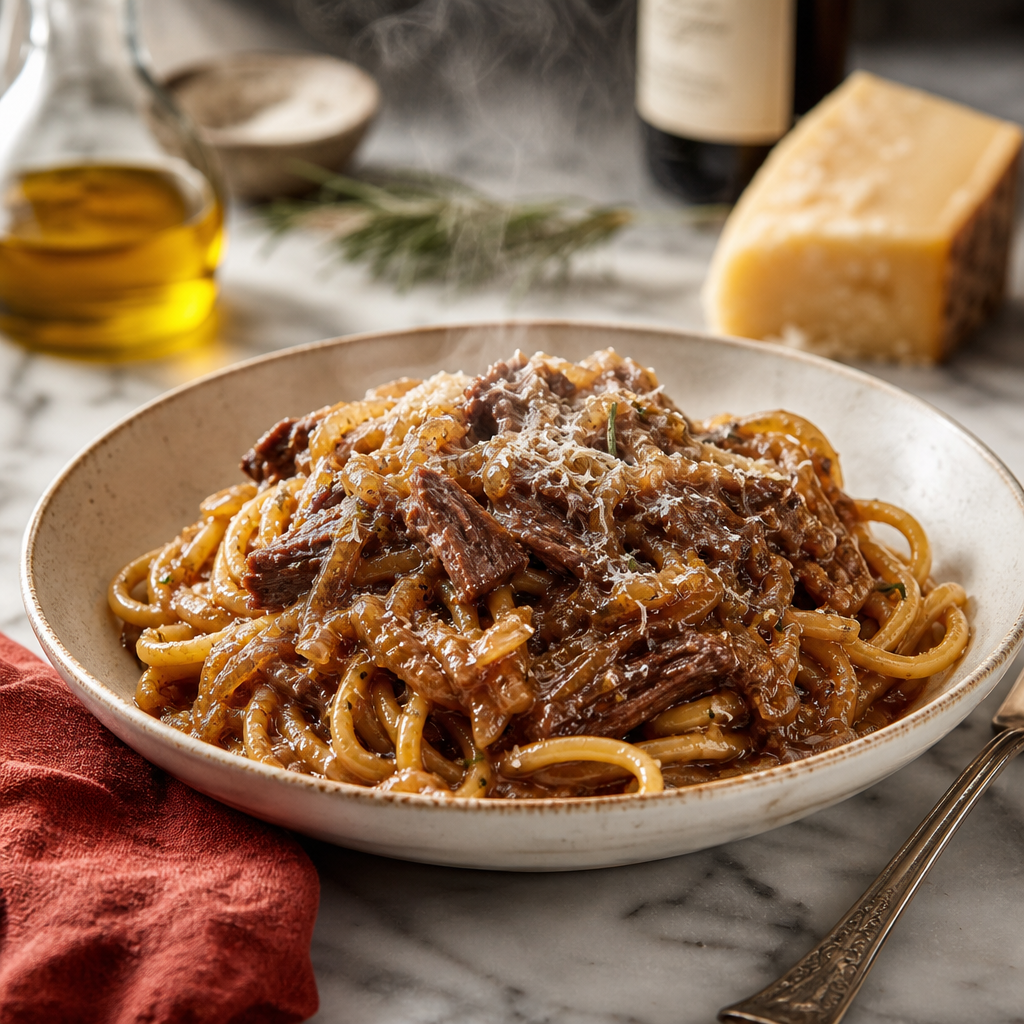
Pasta alla Genovese is Neapolitan, not Ligurian pesto pasta. The name is historically tangled, but the dish belongs to Naples: beef and a heavy load of onions cooked until the onions collapse into a yellow-brown ragù. Like ragù napoletano, it sits in the Southern Italian two-course braise tradition, where the sauce dresses pasta and the meat can be served separately or shredded back in. Modern versions often fold much of the beef into the sauce, but the grammar stays the same: onions first, tough beef, white wine, long cooking.
Method 11 steps · 300 min
Slice the onions correctly
Halve the onions through the root, peel them, then slice pole to pole into thin half-moons. Keep the slices even; ragged thick pieces stay stringy after the sauce has reduced.
Start the fat and soffritto
Heat the olive oil in a wide Dutch oven over medium heat. Add the pancetta, if using, and cook until its fat turns translucent and the edges barely color, 4-6 minutes. Add carrot and celery with a pinch of the measured salt and cook until softened but not browned, 6-8 minutes.
Load the onions
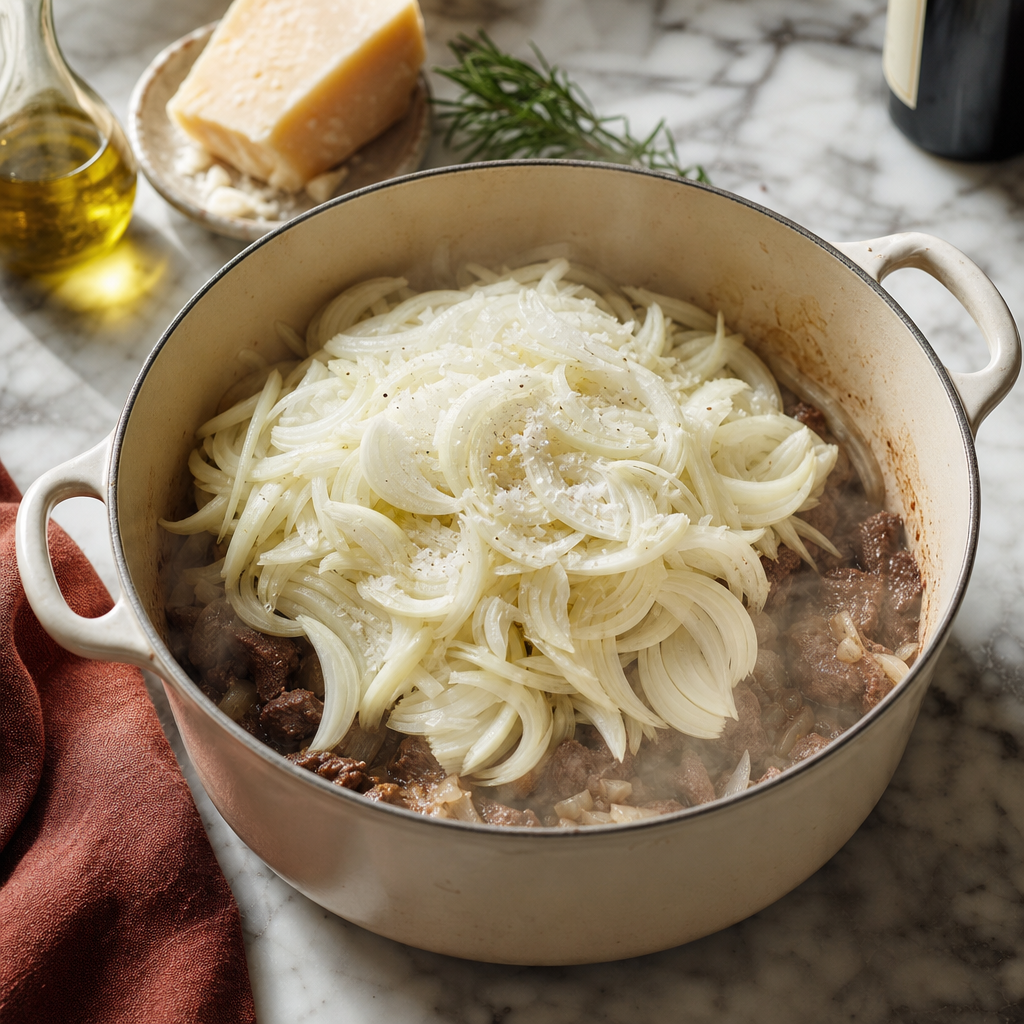
Add all the onions in handfuls, salting lightly as they go in. Stir until the bottom layer begins to steam and collapse, then cover the pot and cook over medium-low heat for 25 minutes, stirring twice.
Bury the beef
Season the beef with the remaining measured salt and black pepper. Nestle the beef pieces into the softened onions, add the bay leaf, cover again, and cook over low heat for 60 minutes, turning the beef once.
Reduce the onion water
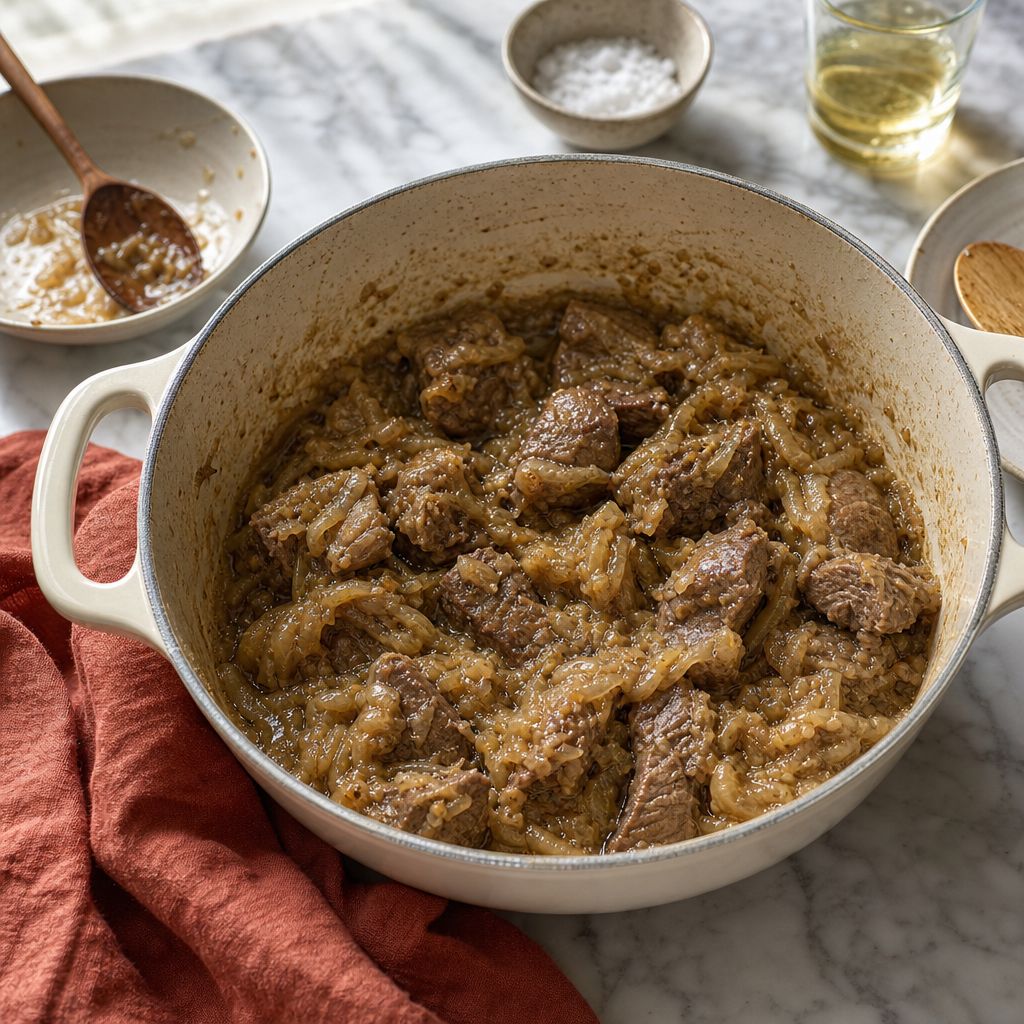
Uncover the pot and raise the heat to medium. Cook, stirring every 5-8 minutes, until the onion liquid reduces and the fat begins to glisten at the edges, 45-60 minutes. Scrape the bottom whenever a tan film forms.
Deglaze with white wine
Add the white wine and scrape the bottom of the pot. Simmer uncovered until the raw wine smell is gone and the liquid is reduced by about half, 10-15 minutes.
Braise until the beef gives way
Lower the heat to the faintest steady simmer, cover with the lid slightly ajar, and cook for 90-120 minutes. Stir every 20 minutes and add a splash of water only if the onions start sticking before the beef is tender. Stop when the beef can be pulled apart with a spoon and the onions are thick, glossy, and golden-brown.
Shred or reserve the beef
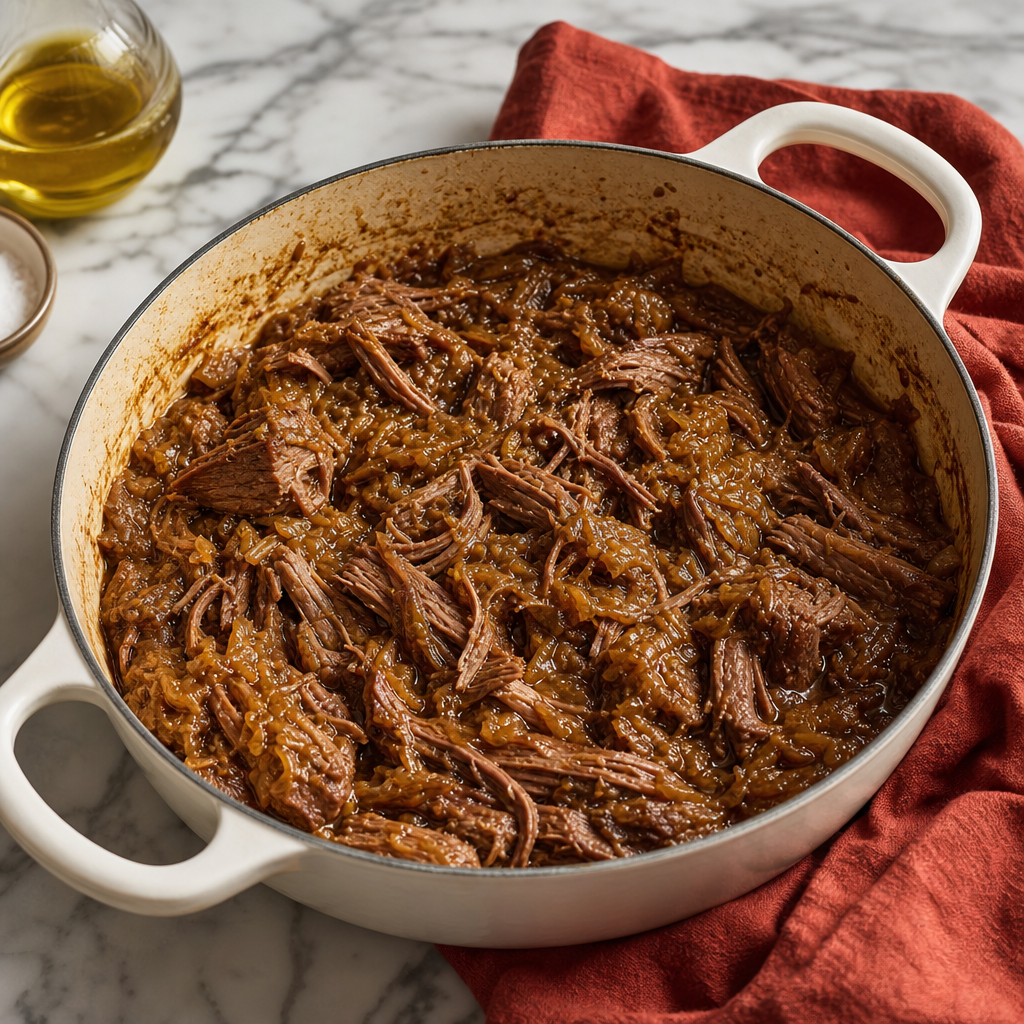
Remove the bay leaf. Pull the beef into large shreds with two forks, then fold it back into the onions; for a more old-style service, reserve some larger pieces as a second course and leave only part of the meat in the sauce.
Cook the pasta
Boil the pasta in well-salted water until 2 minutes short of al dente. Reserve 500 ml pasta water, then drain.
Bind the pasta and sauce
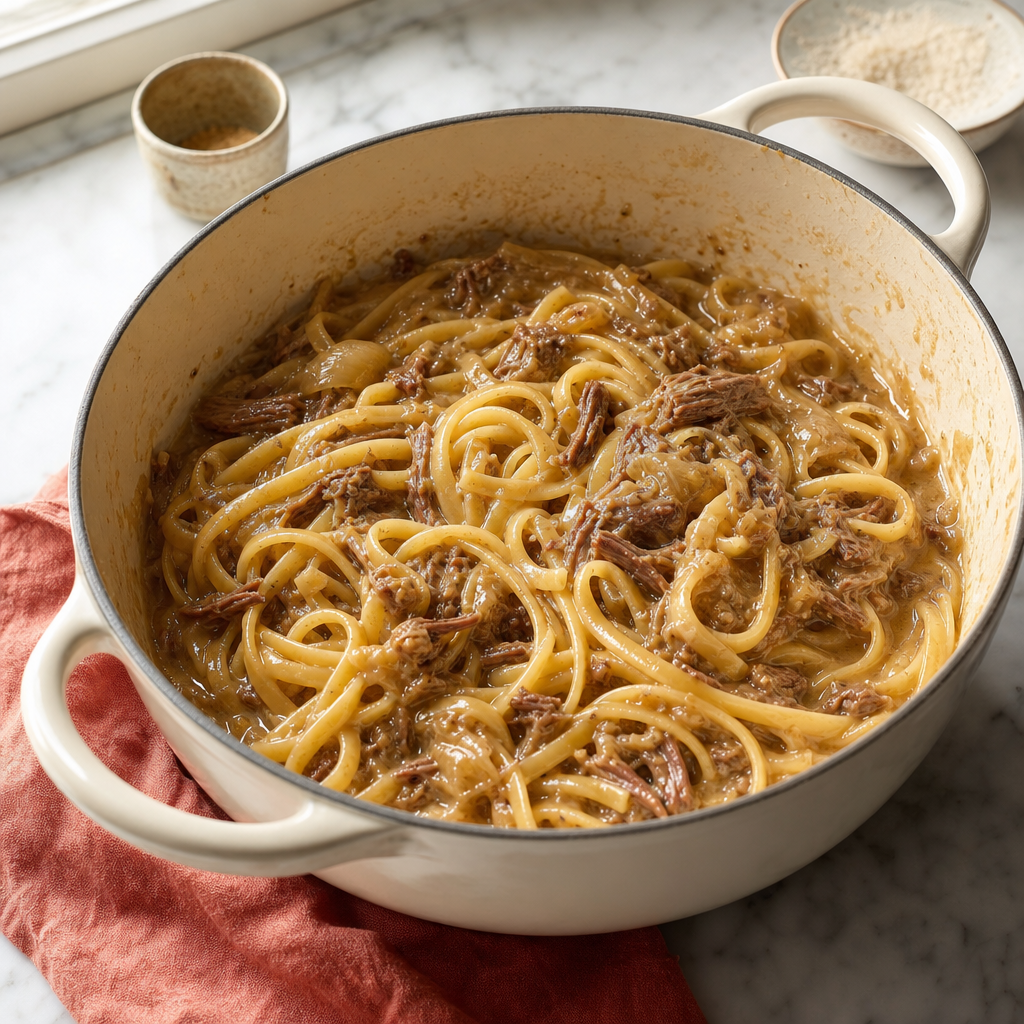
Transfer the pasta to the ragù with 150 ml reserved pasta water. Cook over medium heat, tossing and stirring, until the sauce clings inside and outside the tubes, 2-3 minutes. Add more pasta water in small splashes if the sauce tightens before the pasta is done.
Finish and serve
Rest off heat for 1 minute, then plate in warm shallow bowls. Serve with Pecorino Romano at the table, not a blanket of cheese in the pot.
Common mistakes
- {'mistake': 'Treating it like pesto pasta', 'fix': 'Pasta alla Genovese from Naples is beef and onion ragù. Basil pesto belongs to Liguria and is a different dish.'}
- {'mistake': 'Using too few onions', 'fix': 'Use roughly twice the weight of onions to beef. Less than that produces beef sauce with onion, not Genovese.'}
- {'mistake': 'Browning the onions aggressively at the start', 'fix': 'Sweat first, reduce later. Early hard browning gives bitter edges before the onion mass has softened.'}
- {'mistake': 'Adding stock until the pot looks like stew', 'fix': "Use the onions' own water as the cooking medium. Add only small splashes if the pot threatens to scorch."}
- {'mistake': 'Serving with a thin, wet sauce', 'fix': 'Keep reducing until the onions are glossy and spoon-coating. The sauce should cling to ziti, not pool like soup.'}
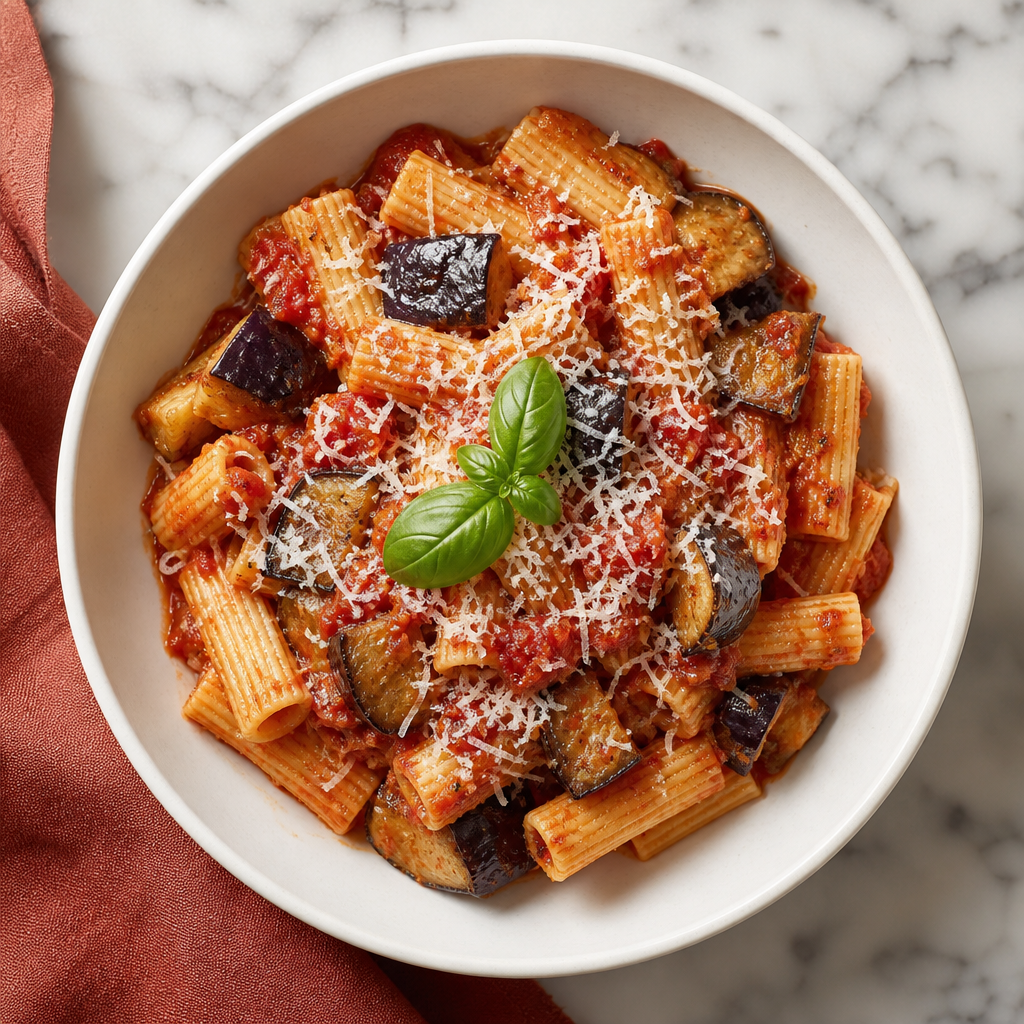
- {'mistake': 'Choosing delicate pasta', 'fix': 'Use ziti, candele, paccheri, rigatoni, or another sturdy dried tube. Thin pasta cannot carry this sauce.'}
What does not belong
- {'item': 'basil pesto', 'reason': 'It belongs to pesto alla Genovese from Liguria, not Pasta alla Genovese from Naples.'}
- {'item': 'cream', 'reason': 'Cream dulls the onion-beef concentration and turns the sauce into a generic rich pasta. It does not belong.'}
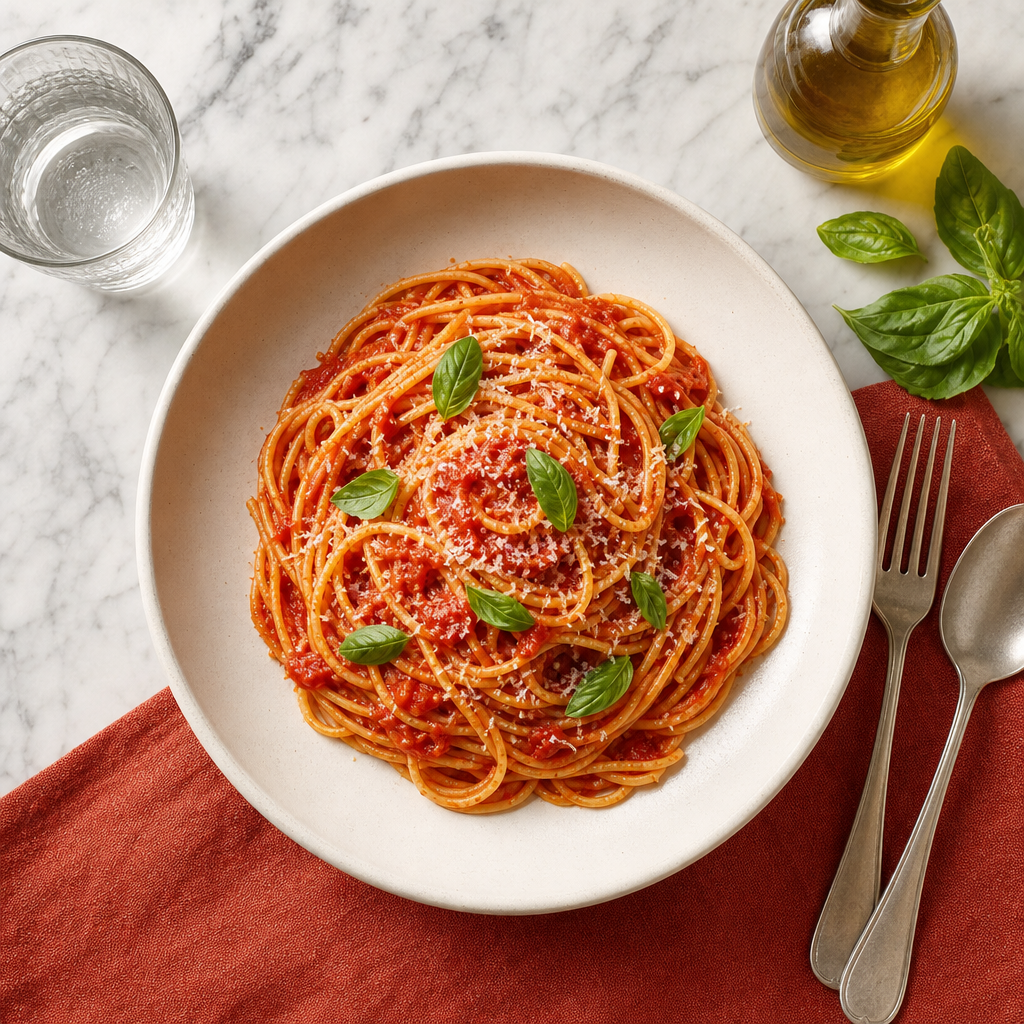
- {'item': 'large amounts of tomato', 'reason': 'A spoon of tomato paste appears in some modern versions, but a red tomato sauce is not the dish. The color should come from onions and beef.'}
- {'item': 'ground beef', 'reason': 'Ground meat changes the braise into a mince ragù. Genovese needs tough beef that shreds after long cooking.'}
- {'item': 'garlic-heavy seasoning', 'reason': 'Garlic can appear in some household cooking, but a garlic-forward sauce pulls the dish away from its onion base. It does not belong in this canonical version.'}
- {'item': 'spaghetti', 'reason': 'Long thin pasta is wrong for this weight of sauce. Use broken ziti, candele, paccheri, or rigatoni.'}