Focaccia Genovese
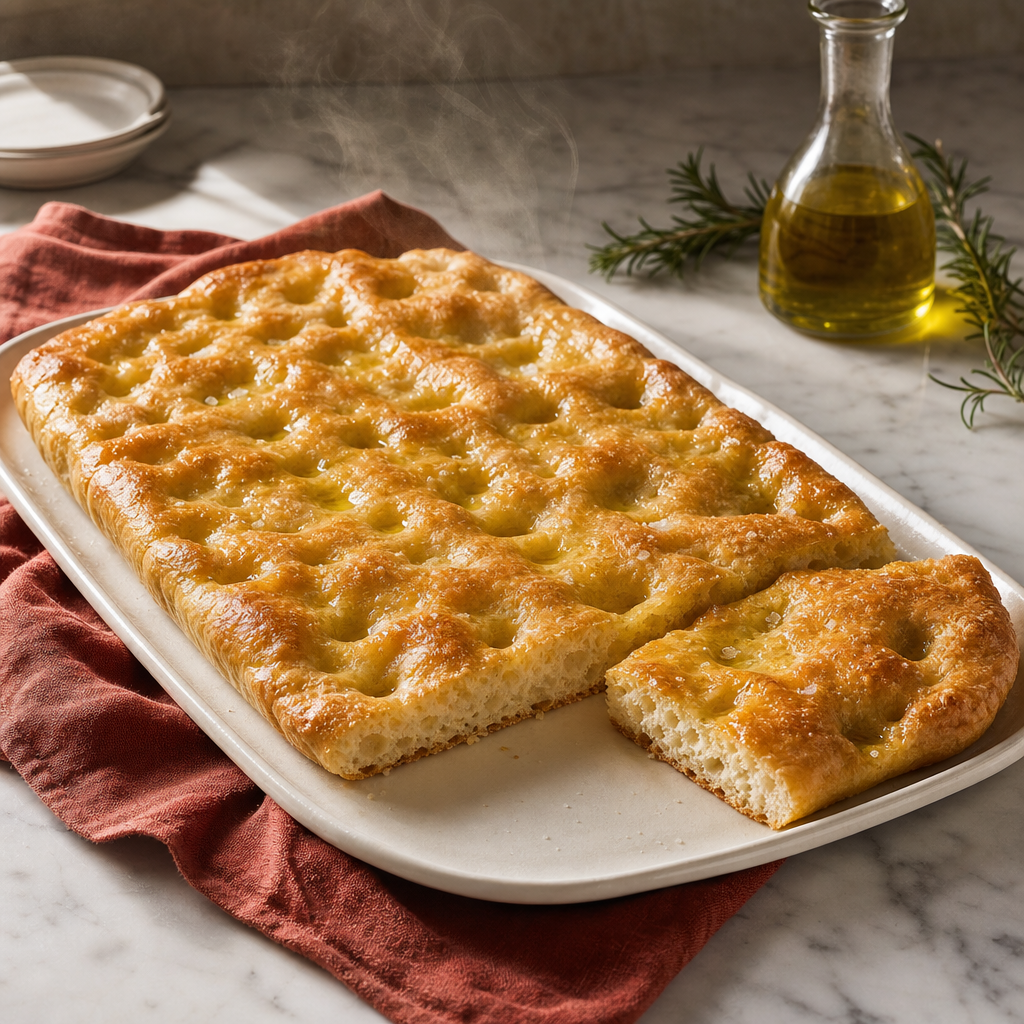
The dish in context
Focaccia alla Genovese, called fügassa in Ligurian, is one of Genoa's defining bakery foods: low, oily, salty, and eaten plain as often as topped. The Genovese style is distinct from focaccia col formaggio di Recco, which is unleavened, paper-thin, and filled with cheese; cheese does not belong in this dough. Traditional sources emphasize the final brine, salamoia, which is poured over the dimpled dough before baking so the surface seasons itself rather than carrying dry salt alone. In Genoa it is commonly eaten at breakfast or as a street snack, including with cappuccino, but as a recipe category it belongs with bread.
Method 9 steps · 300 min
Mix the dough
Combine flour, yeast, and malt or sugar in a large bowl. Add the dough water and mix until no dry flour remains, then add the dough salt and 30 ml olive oil. Work by hand or mixer until the dough is cohesive, elastic, and still slightly tacky, 6-8 minutes in a mixer or 10-12 minutes by hand.
Ferment until doubled
Transfer the dough to a lightly oiled bowl, cover, and ferment at room temperature until doubled, 90-120 minutes. The dough should look swollen and show bubbles at the sides of the bowl.
Oil the pan hard
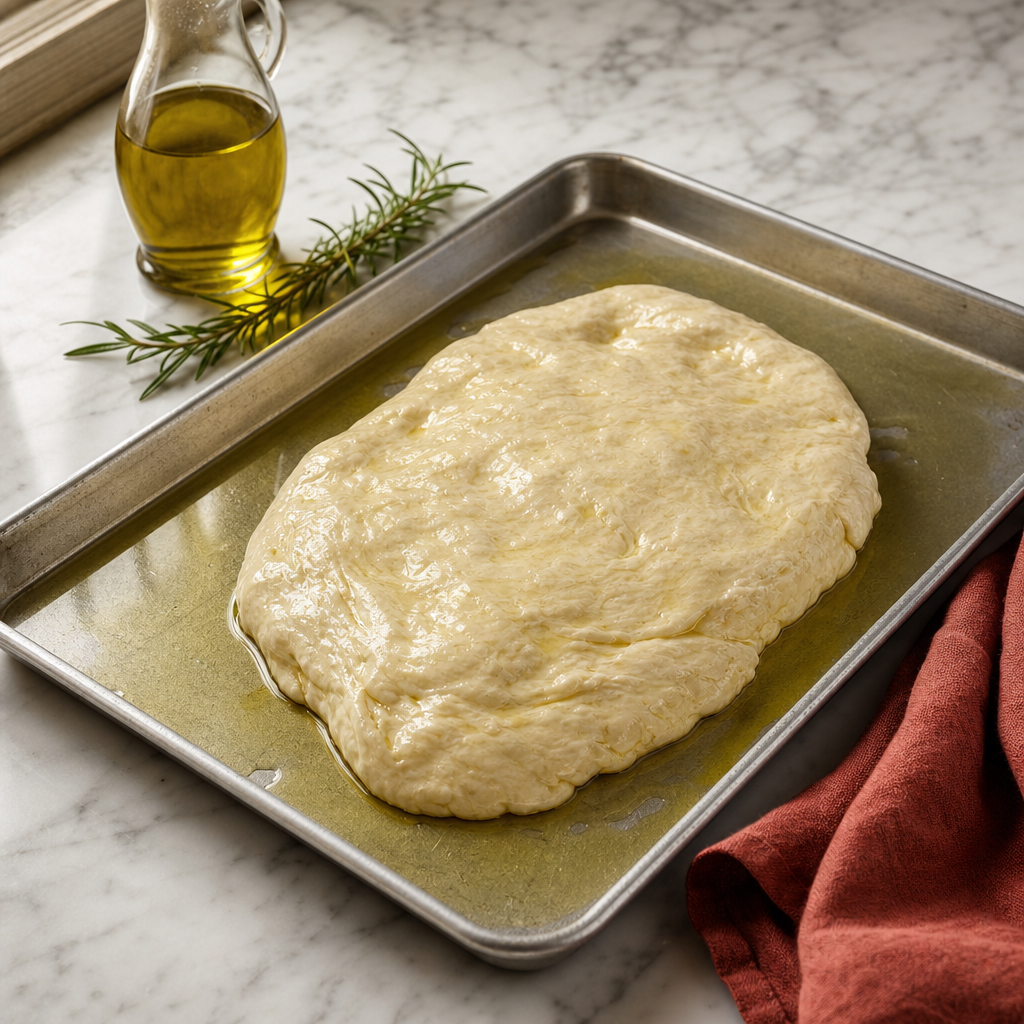
Coat a half sheet pan with about 35 ml olive oil. Turn the dough into the pan and flip it once so both sides are oiled. Rest uncovered for 15 minutes.
Stretch without tearing
Use flat fingers to stretch the dough toward the corners. If it resists, stop and rest it for 10 minutes, then continue until it fills the pan in an even layer.
Proof in the pan
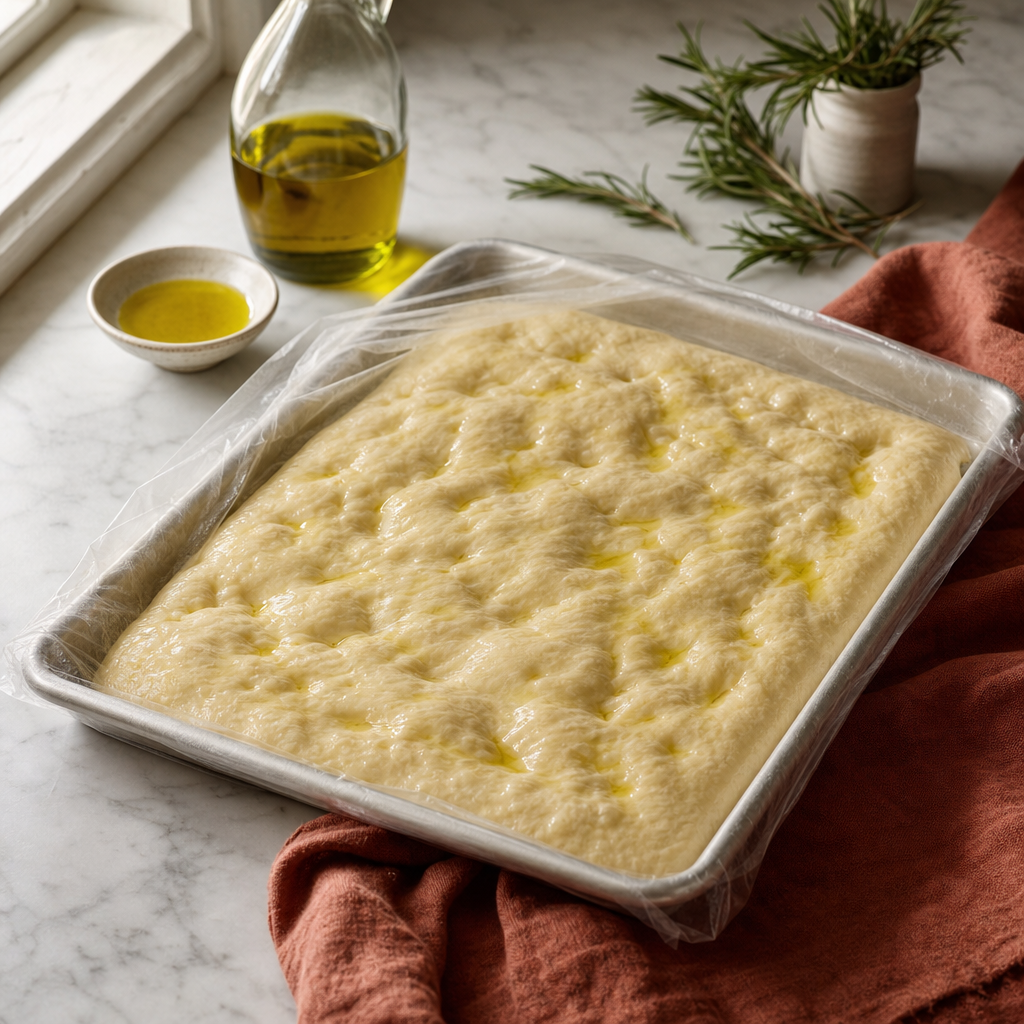
Cover the pan and proof until the dough is puffy and about 1.5-2 cm thick, 45-75 minutes depending on room temperature. Heat the oven to 230°C / 445°F during the last 30 minutes.
Make the salamoia
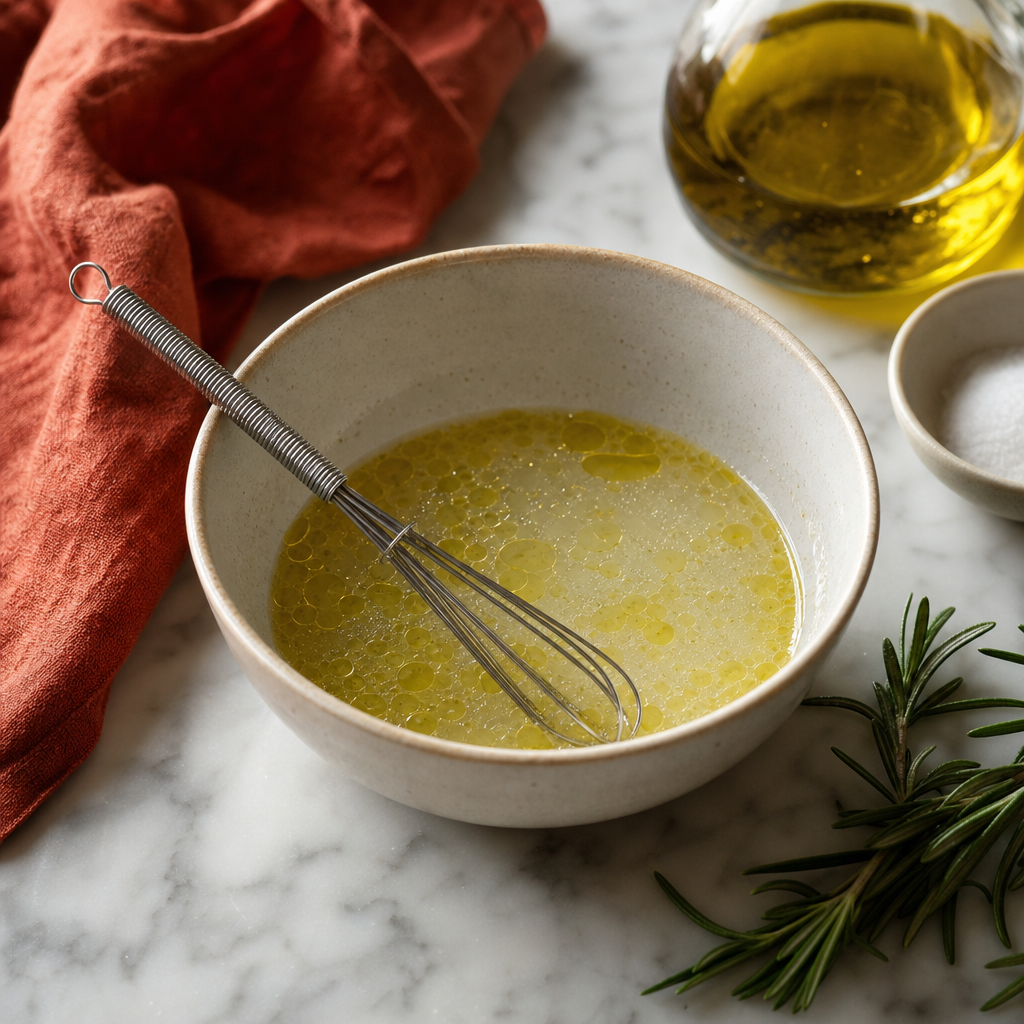
Whisk 45 ml warm water with 5 g fine sea salt until dissolved, then whisk in 20 ml olive oil. The mixture will look broken; that is correct.
Dimple and brine
Press straight down with oiled fingertips across the whole surface, nearly to the pan, without dragging. Pour the brine over the dough and tilt the pan so it collects in the dimples. Scatter coarse salt if using.
Bake until amber at the edges
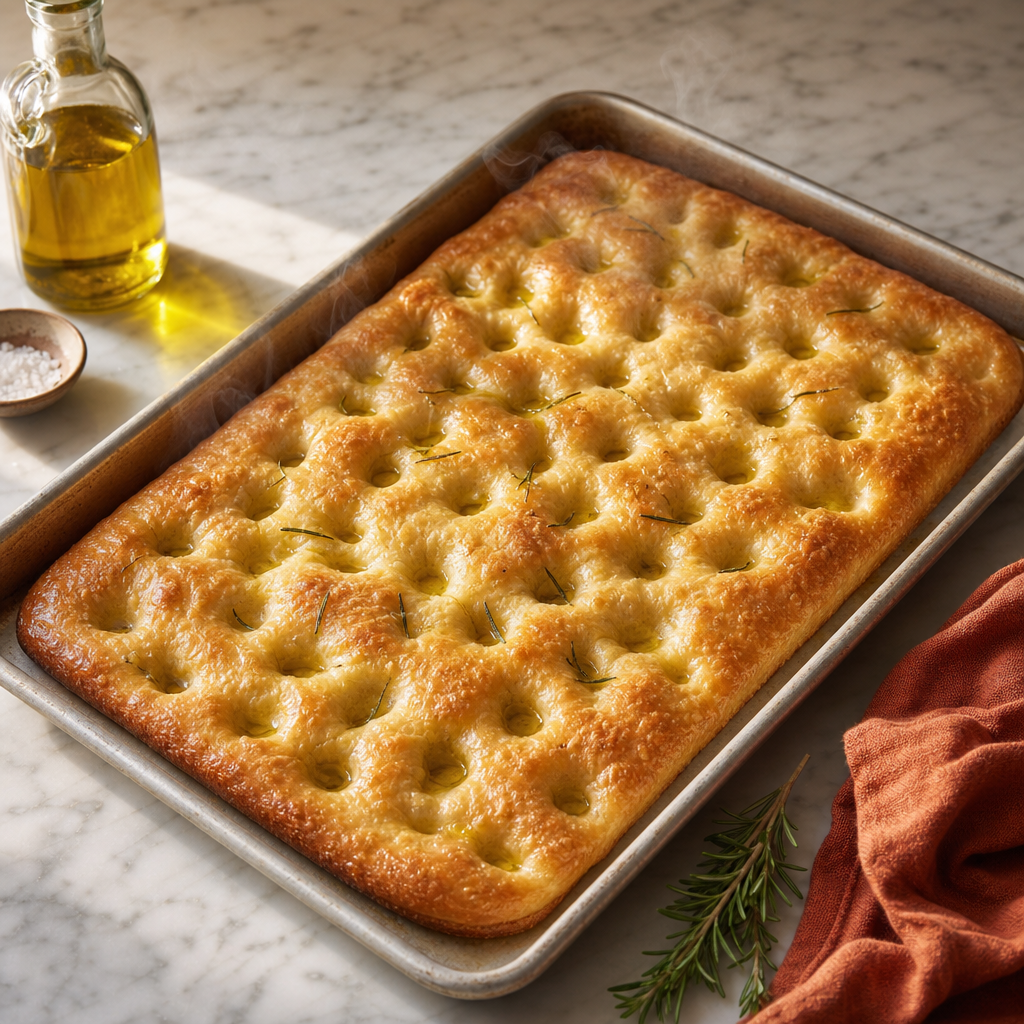
Bake on the lower-middle rack for 18-24 minutes, rotating once if the oven browns unevenly. Pull it when the top is golden, the edges are amber, and the underside is crisp and browned in patches.
Finish with oil and cool briefly
Brush or drizzle the hot focaccia with a thin film of olive oil. Lift it from the pan onto a rack after 5 minutes so the base stays crisp. Cut when warm, not screaming hot.
Common mistakes
- {'mistake': 'Making it too tall', 'why_it_fails': 'Focaccia Genovese is low, usually around 1.5-2 cm after baking. A thick slab moves toward generic focaccia or sandwich bread.'}
- {'mistake': 'Skipping the brine', 'why_it_fails': 'The surface becomes dry and unevenly salted. Salamoia is the mechanism that seasons the dimples.'}
- {'mistake': 'Using timid oil', 'why_it_fails': 'The base will stick or bake pale instead of crisping against the pan. This bread is supposed to be visibly oiled.'}
- {'mistake': 'Dragging fingers through the dough', 'why_it_fails': 'Dragging collapses the gas network and tears the surface. Press straight down.'}
- {'mistake': 'Baking in a cool oven', 'why_it_fails': 'The dough dries before it browns, and the bottom never develops the thin crisp layer.'}
What does not belong
- {'item': 'cheese', 'reason': 'Cheese belongs to focaccia col formaggio di Recco, a different Ligurian bread with unleavened sheets. It does not belong in Focaccia Genovese.'}
- {'item': 'rosemary as the default identity', 'reason': 'Rosemary focaccia exists, but the Genovese baseline is plain oil, salt, and brine. Rosemary should not cover the olive-oil character.'}
- {'item': 'garlic butter', 'reason': 'Butter pushes the bread toward garlic bread. Ligurian focaccia is built on olive oil.'}
- {'item': 'heavy tomato sauce', 'reason': "Tomato-topped focaccia is a variant, not the classic Genovese form. Sauce turns the surface wet and changes the bread's structure."}
- {'item': 'sweet toppings', 'reason': 'The small malt or sugar quantity supports browning only. Sweet focaccia is a different product.'}
Adaptations
The base recipe contains no dairy, egg, meat, or honey if sugar or barley malt is used.
The base recipe contains no alcohol or animal products. Confirm the yeast and flour are certified if required.
Gluten-free flour cannot reproduce the elastic sheet, deep dimples, and chew of Focaccia Genovese without becoming a different bread. Use a dedicated gluten-free focaccia formula rather than a 1:1 swap.
No dairy belongs in the classic dough.
The recipe contains no shellfish.