Pasta e Fagioli
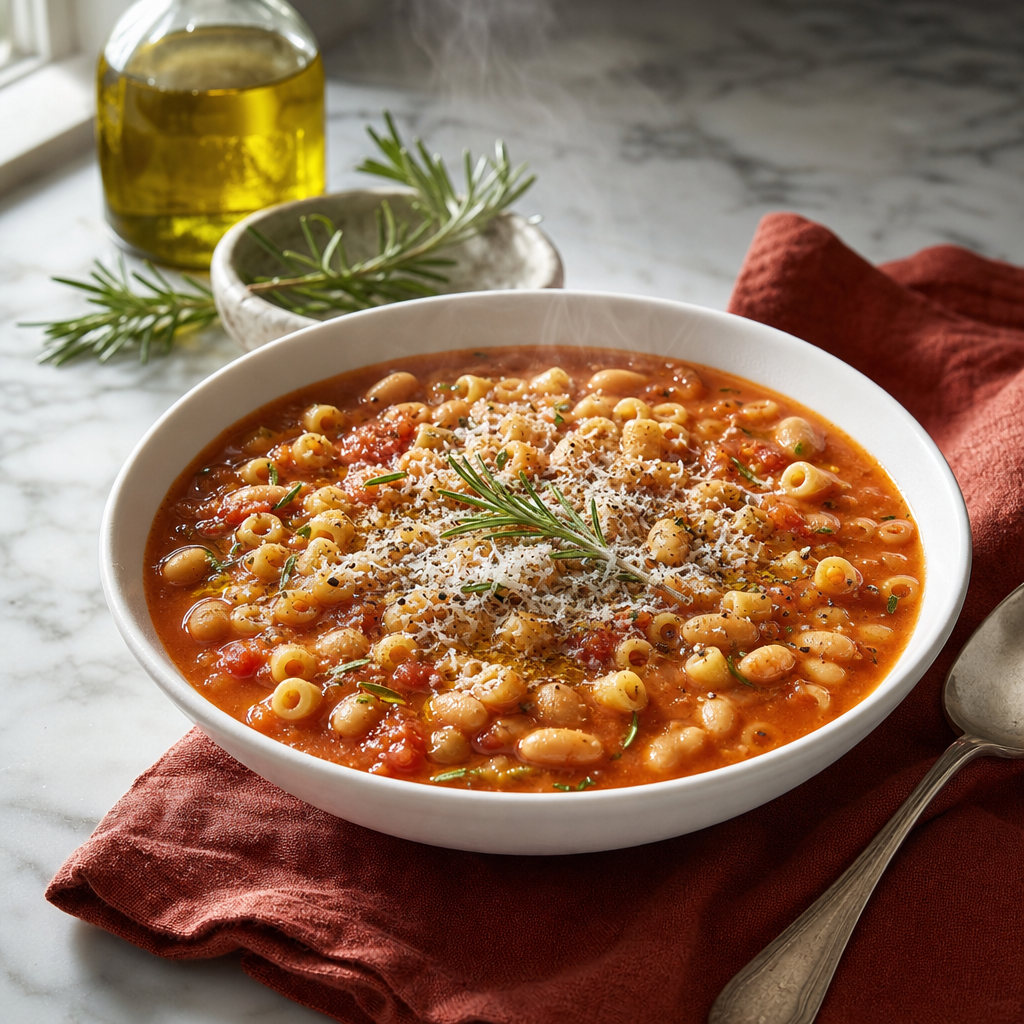
The dish in context
Pasta e fagioli means pasta and beans, and that is the non-negotiable structure: legumes, short pasta, and a broth thickened by starch rather than cream. The dish is pan-Italian, with regional versions moving between soupy and spoon-standing, white and tomato-tinted, olive-oil based and pork-fat based. Cannellini, borlotti, and cranberry beans all appear in credible versions; ditalini and tubetti are common pasta shapes because they fit on the spoon with the beans. Italian-American versions often lean more tomato-rich and sometimes include pancetta or bacon; that is a valid branch, not the only grammar of the dish.
Method 8 steps · 40 min
Render the pancetta, if using
Heat the olive oil in a heavy pot over medium heat. Add the pancetta and cook until the fat has rendered and the edges are lightly browned, 4-5 minutes. If omitting pancetta, warm the oil until it shimmers.
Build the soffritto
Add the onion, carrot, celery, and salt. Cook, stirring often, until the vegetables soften and the onion turns translucent with pale gold edges, 8-10 minutes.
Bloom the garlic and tomato
Add the garlic and cook for 45 seconds, stopping before it browns. Add the passata and cook until it darkens slightly and the oil shows at the edges, 2 minutes.
Simmer the beans
Add the beans, stock or bean liquid, rosemary, and bay leaf. Bring to a simmer, then cook uncovered for 10 minutes.
Thicken with the beans
Remove the rosemary sprig and bay leaf. Mash about one-third of the beans against the side of the pot with a spoon or potato masher, leaving the rest whole.
Cook the pasta in the soup
Stir in the ditalini and simmer, stirring every minute, until the pasta is al dente, usually 1-2 minutes less than the package time. Add 100-200 ml water if the pot tightens before the pasta is cooked.
Add greens, if using
Stir in the cavolo nero and cook until dark green and tender, 2-3 minutes. For spinach, cook 1 minute only.
Rest and finish
Turn off the heat and rest the soup for 5 minutes. Adjust salt and pepper, then serve with a thread of extra-virgin olive oil and Parmigiano-Reggiano at the table.
Common mistakes
- {'mistake': 'Cooking the pasta until soft in the pot.', 'fix': 'Stop at al dente. The pasta keeps absorbing liquid after the heat is off.'}
- {'mistake': 'Leaving all the beans whole.', 'fix': 'Mash one-third of them. Whole beans in thin broth taste unfinished.'}
- {'mistake': 'Using too much tomato.', 'fix': 'Keep tomato as a background note. Pasta e fagioli is not minestrone and not pasta in marinara.'}
- {'mistake': 'Adding cheese into the whole pot.', 'fix': 'Serve Parmigiano-Reggiano at the table. Boiled cheese turns grainy and dulls the bean broth.'}
- {'mistake': 'Letting leftovers sit without extra liquid.', 'fix': 'Thin reheated portions with water, bean liquid, or stock. The pasta will absorb the soup overnight.'}
What does not belong
- {'item': 'Cream', 'reason': 'Cream does not belong in pasta e fagioli. Bean starch and pasta starch provide the body.'}
- {'item': 'Long pasta', 'reason': 'Spaghetti or linguine fight the spoon. Use ditalini, tubetti, small elbows, or another small shape.'}
- {'item': 'Italian seasoning blend', 'reason': 'Dried mixed herbs make the soup taste generic. Rosemary, bay, or both are enough.'}
- {'item': 'Heavy meat load', 'reason': 'Ground beef turns the dish into a different Italian-American soup. Pancetta is seasoning, not bulk.'}
- {'item': 'Sugar', 'reason': 'Sugar flattens the bean broth. If the tomato tastes sharp, cook it longer or use less.'}