Pasta Pesto Genovese
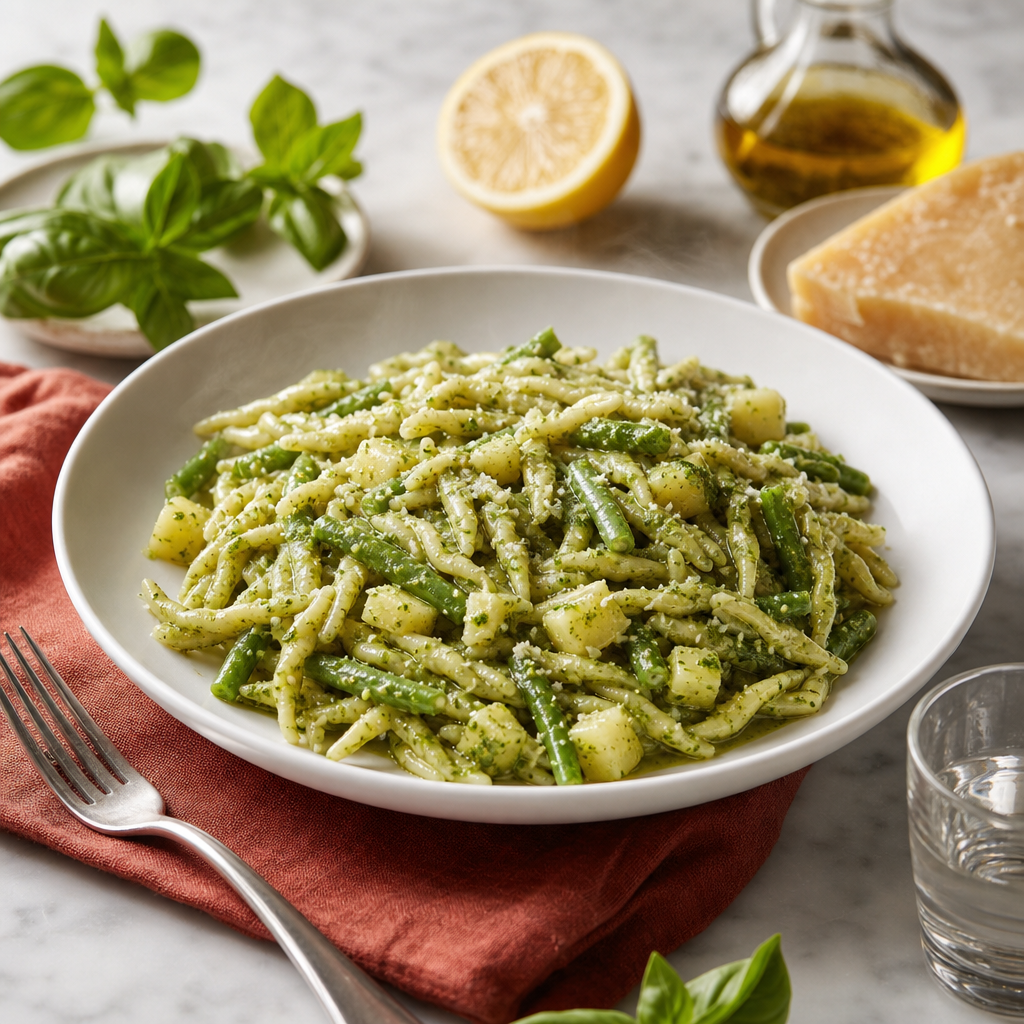
The dish in context
Pesto alla Genovese belongs to Liguria, where basil, olive oil, garlic, pine nuts, and aged cheese are pounded into a raw sauce rather than cooked. The name pesto comes from pestare, to pound or crush, which is why the mortar is not nostalgia; it defines the texture and keeps the basil from heating. Trofie, trenette, and potato gnocchi are the classic carriers, with potatoes and green beans commonly cooked in the same pot as the pasta. Modern food processors are common, but they trade fragrance and color for speed.
Method 8 steps · 35 min
Chill the tools
Set the mortar and pestle in the refrigerator for 10 minutes. If using a food processor, chill the bowl and blade instead.
Start the vegetable boil
Bring the water to a full boil and salt it. Add the potato cubes and boil until the edges begin to soften, about 4 minutes.
Pound the garlic and pine nuts
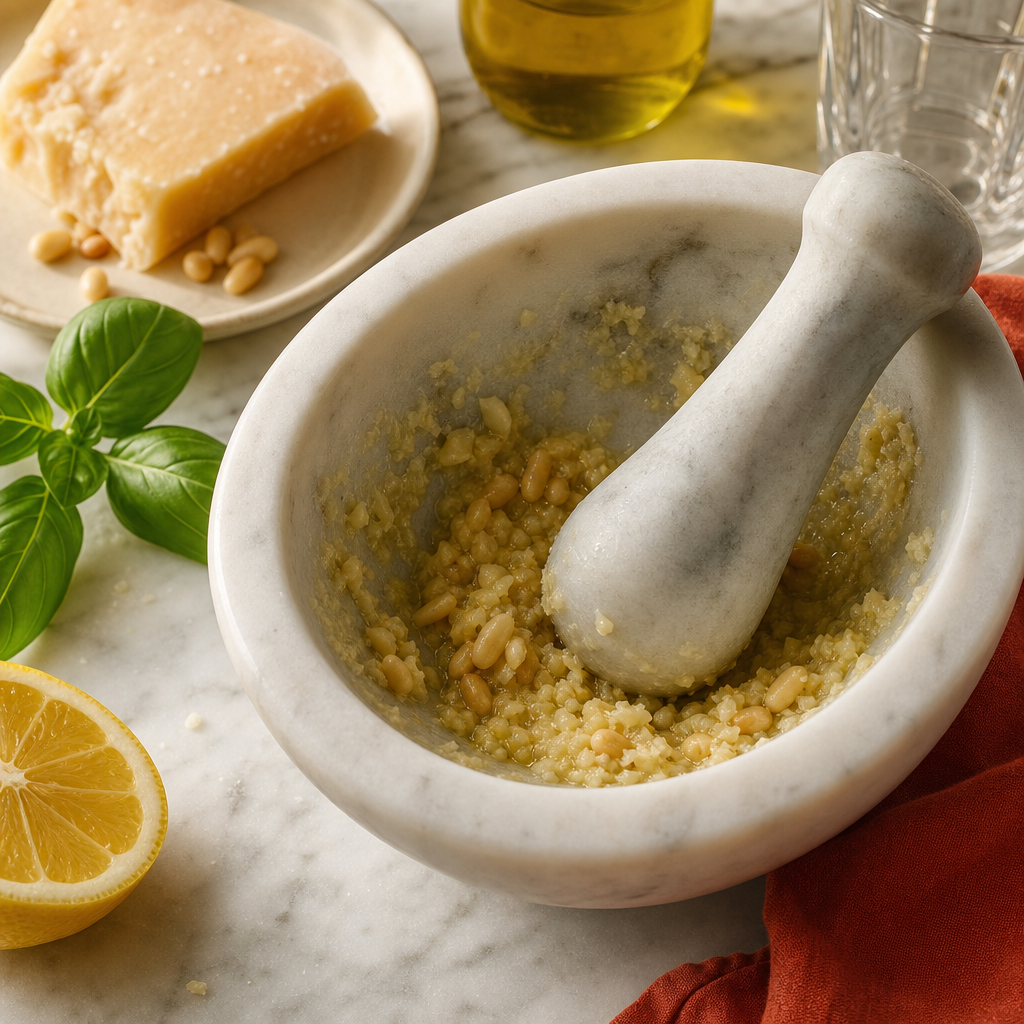
Crush the garlic and pine nuts in the chilled mortar until they form a pale, slightly oily paste. Scrape the sides as needed.
Work in the basil
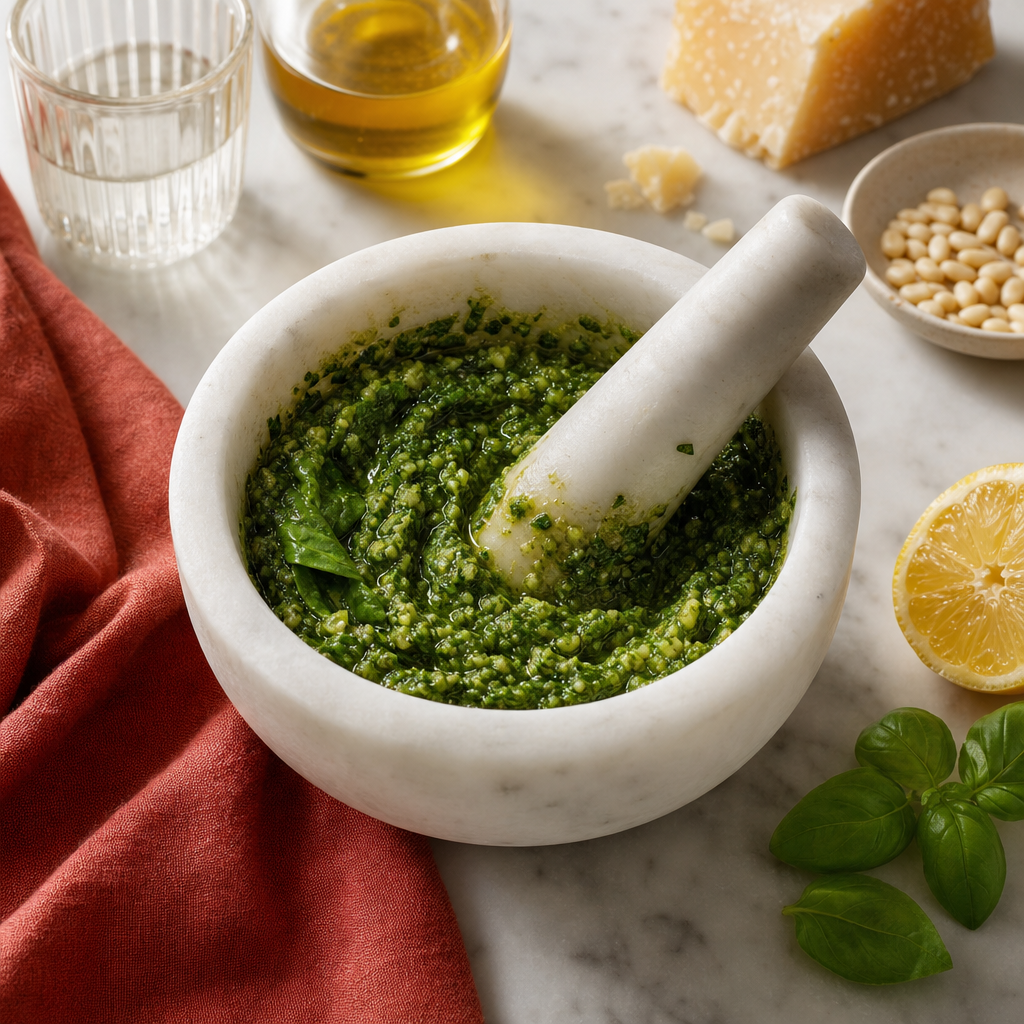
Add the basil in small handfuls and pound with a circular grinding motion until the leaves collapse into a green paste. Stop before the basil turns wet and dark.
Add cheese and oil
Work in the Parmigiano-Reggiano and pecorino. Drizzle in the olive oil gradually, grinding until the sauce is thick, glossy, and spoonable.
Cook the pasta and beans
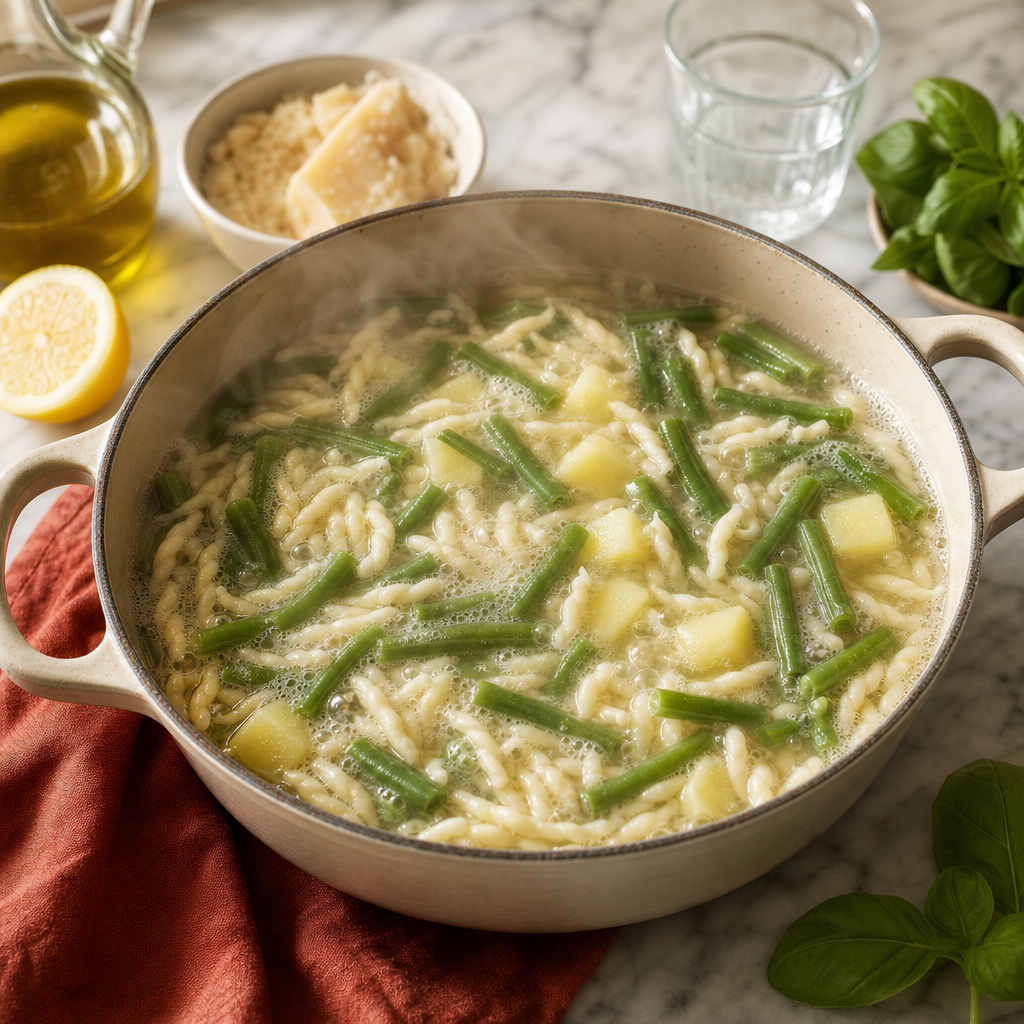
Add the trofie and green beans to the boiling potatoes. Cook until the pasta is al dente and the beans are tender but still green, usually 5-7 minutes for fresh trofie or according to the package for dried.
Loosen the pesto off heat
Scoop 120 ml pasta water into a large warm bowl and let it stand for 30 seconds so it is hot but not boiling. Stir in the pesto until it relaxes into a creamy green sauce.
Toss hard, then serve
Drain the pasta, potatoes, and beans, reserving more pasta water. Add them to the bowl and toss vigorously, adding pasta water 1 tablespoon at a time until every piece is glossy and coated.
Common mistakes
- Blending the pesto until hot. Warm basil oxidizes fast and turns dull, with a cooked-herb smell.
- Adding salt directly to the pesto. The cheeses and salted pasta water provide the seasoning; extra salt in the mortar can push the sauce harsh.
- Heating pesto in a skillet. Pesto Genovese is a raw sauce and should be loosened off heat.
- Using too much garlic. Raw garlic grows louder as it sits; one small clove is enough for four servings.
- Draining all the pasta water. Without starch, pesto coats unevenly and leaves oil on the plate.
What does not belong
- Cream does not belong. The creamy texture comes from cheese, olive oil, basil paste, and starchy pasta water.
- Walnuts do not belong in pesto Genovese. They make salsa di noci territory, not this sauce.
- Lemon juice does not belong. It brightens in a generic way and pushes the basil toward salad dressing.
- Chicken, shrimp, or bacon do not belong in the canonical Ligurian plate.
- Pre-grated shelf-stable cheese does not belong. Anti-caking starches make the sauce dusty and resistant to emulsifying.