Pasta Puttanesca
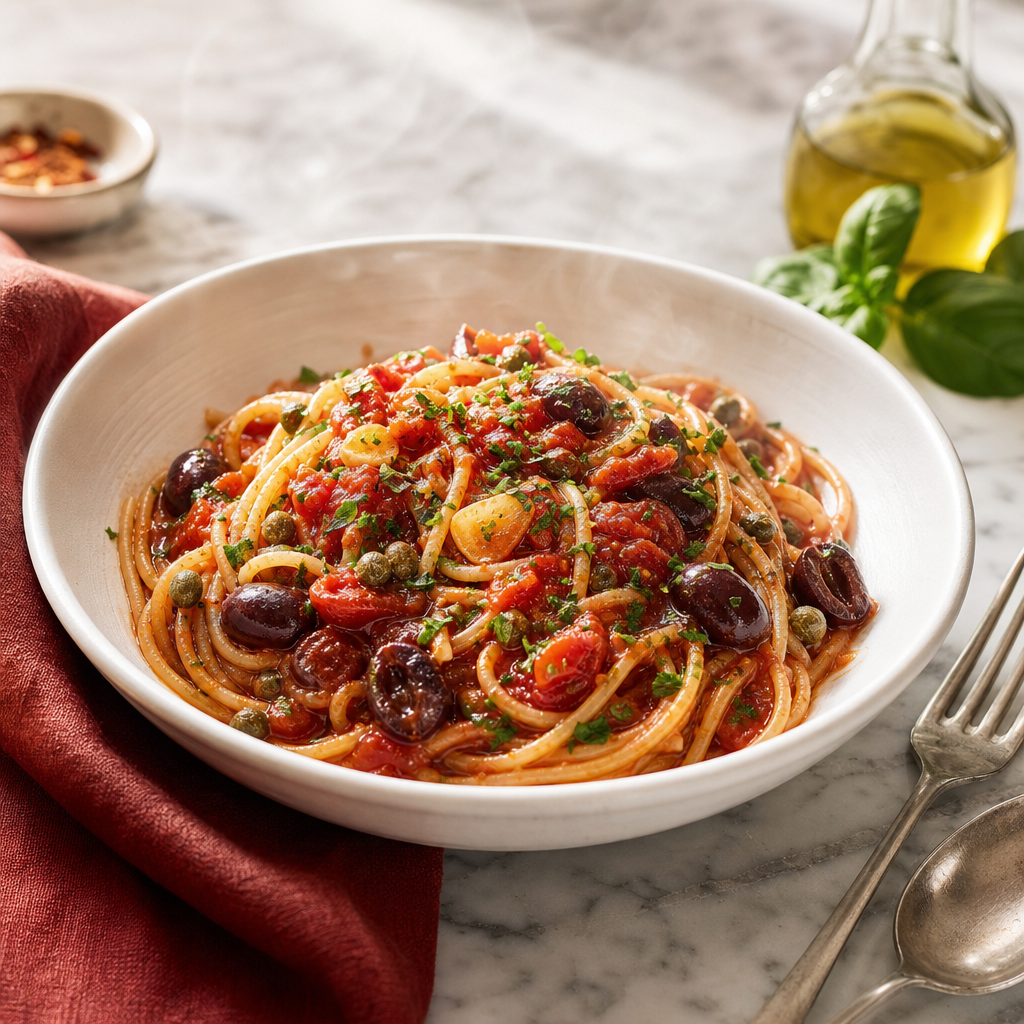
The dish in context
Pasta alla puttanesca is tied most strongly to Naples and the wider Campania-Lazio corridor, with the modern name appearing in print in the mid-20th century. The origin stories are noisy; the stable fact is the sauce grammar: tomato, garlic, olives, capers, chile, and often anchovy. Campanian versions are frequently made without anchovies, while the international and Lazio-leaning version usually includes them. This recipe keeps the anchovies because they dissolve into the oil and give the sauce its hard saline backbone, but the regional variation is real.
Method 6 steps · 25 min
Start the pasta water
Bring 2.5-3 L water to a hard boil for 4 servings and salt it with 24 g fine sea salt. Add the spaghetti and cook 2 minutes less than the package's al dente time.
Infuse the oil
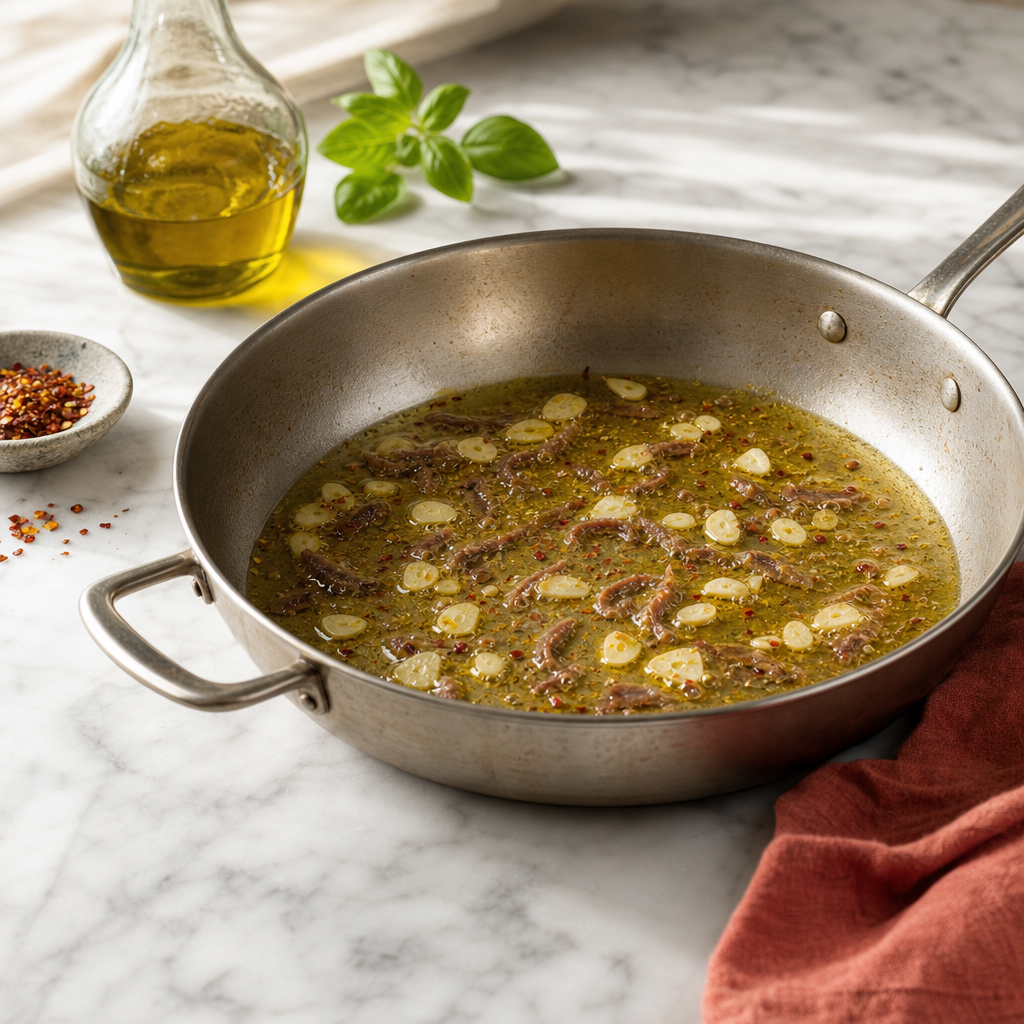
Set a wide sauté pan over medium-low heat. Add the olive oil, sliced garlic, anchovies, and red pepper flakes; cook until the garlic is pale gold at the edges and the anchovies have melted into the oil, 2-3 minutes.
Build the tomato sauce
Add the crushed tomatoes, olives, and capers. Simmer uncovered over medium heat until the sauce thickens and the oil shows in small orange-red beads at the edges, 8-10 minutes.
Reserve pasta water
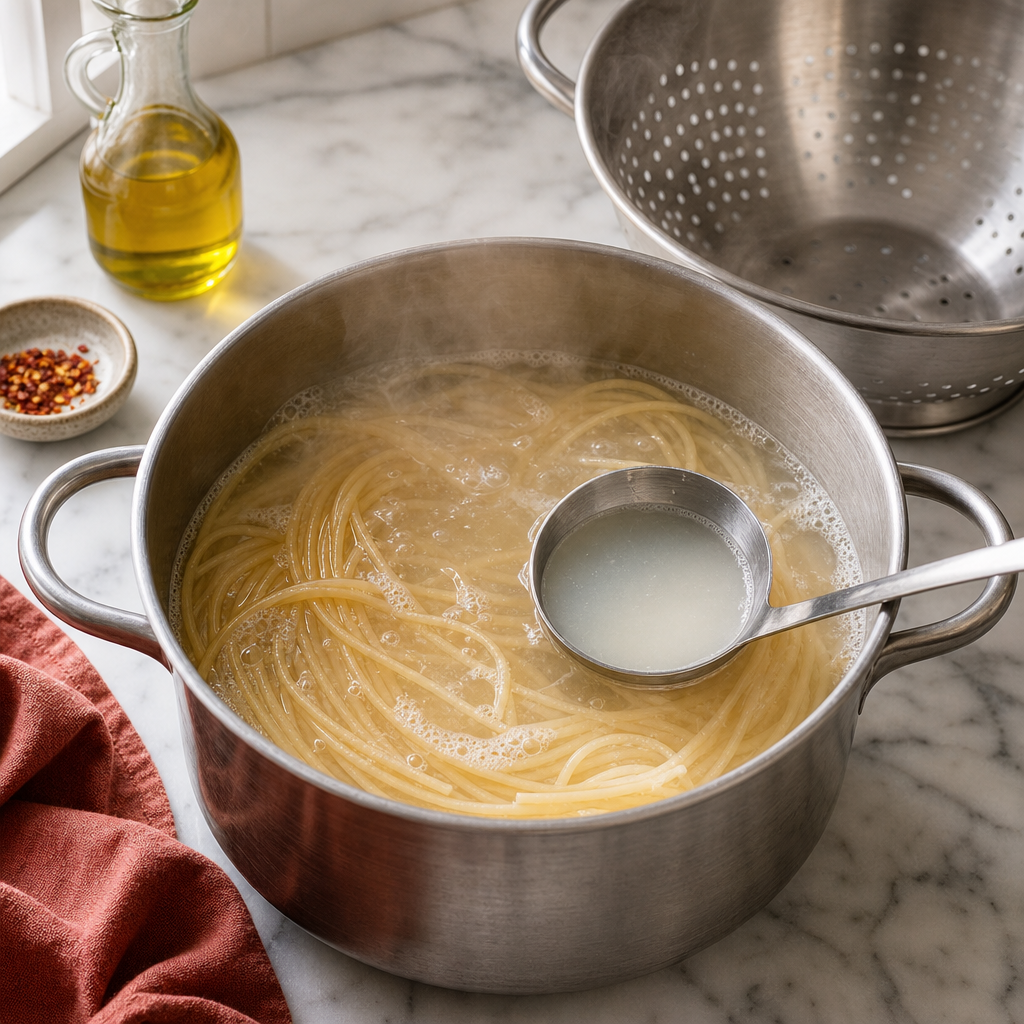
Before draining, scoop out at least 250 ml pasta water. Drain the spaghetti when it is still firm in the center.
Finish the pasta in the sauce
Add the spaghetti to the pan with 120 ml reserved pasta water. Toss and stir over medium-high heat for 1-2 minutes, adding more pasta water in small splashes until the sauce coats the strands and leaves a light trail on the pan.
Finish and serve
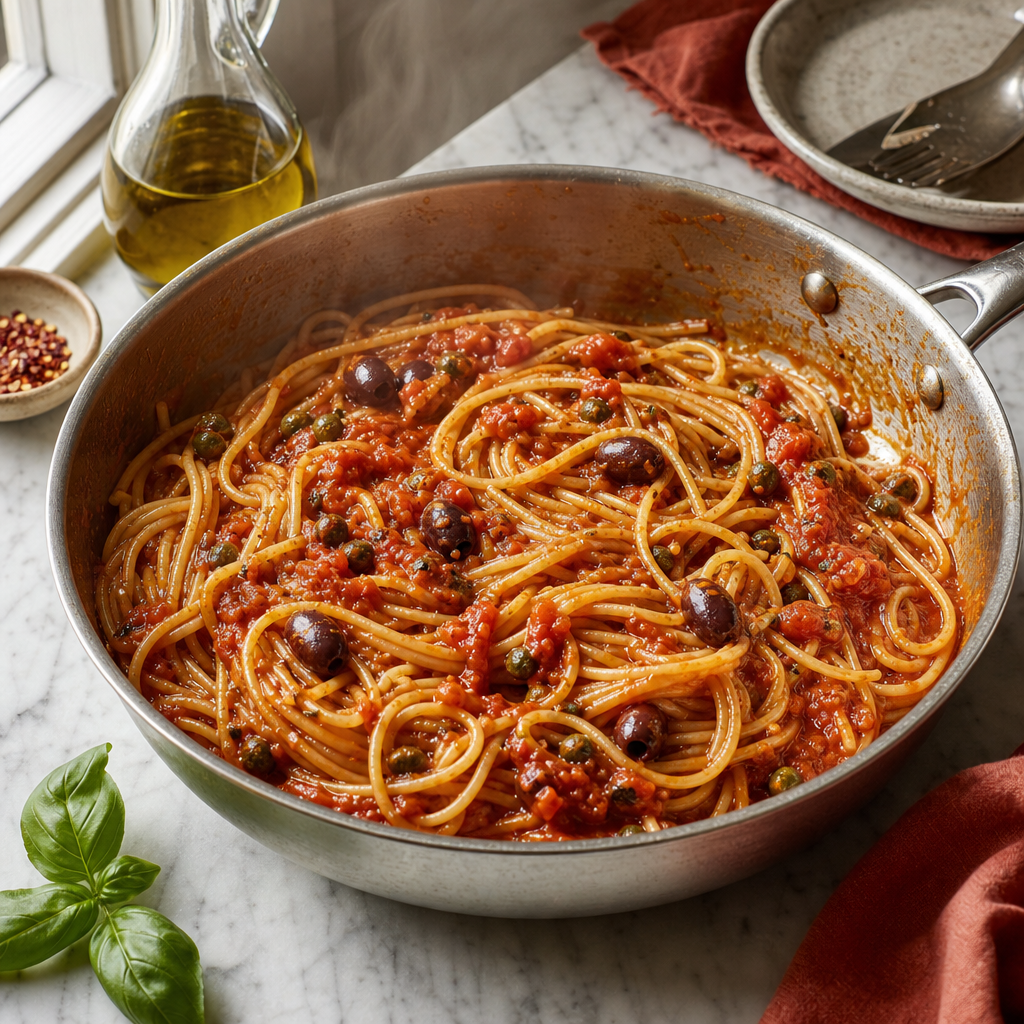
Fold in the parsley off heat. Taste before adding salt; the anchovies, olives, capers, and pasta water usually supply enough. Serve immediately, with no grated cheese.
Common mistakes
- {'mistake': 'Adding salt before the sauce reduces.', 'fix': 'Wait until the pasta is tossed. Capers, olives, anchovies, and salted pasta water concentrate as they cook.'}
- {'mistake': 'Browning the garlic hard.', 'fix': 'Cook the garlic gently in oil until pale gold. Dark brown garlic makes the whole sauce bitter.'}
- {'mistake': 'Rinsing the pasta.', 'fix': 'Do not rinse. Surface starch is what lets the sauce bind instead of sliding off.'}
- {'mistake': 'Using canned black olives.', 'fix': 'Use Gaeta, oil-cured black olives, or Kalamata if necessary. Canned black olives taste flat and give no briny depth.'}
- {'mistake': 'Making a long-simmered ragù out of it.', 'fix': 'Keep the sauce short and assertive. Puttanesca should taste bright, salty, and sharp, not slow-cooked and sweet.'}
What does not belong
- {'item': 'cream', 'reason': 'Cream does not belong. It dulls the salt-acid edge that defines the sauce.'}
- {'item': 'grated cheese', 'reason': 'Cheese does not belong on this version. The sauce is built from tomato, anchovy, olives, and capers; dairy makes it heavy and muddy.'}
- {'item': 'sugar', 'reason': 'Sugar does not belong as a default correction. If the tomatoes taste harsh, reduce them properly and balance with oil, not sweetness.'}
- {'item': 'onion', 'reason': 'Onion is common in some modern recipes, but it softens the dish in the wrong direction. Garlic is the allium here.'}
- {'item': 'chicken, shrimp, or tuna', 'reason': 'Those make pantry-pasta variants, not pasta alla puttanesca. The sauce already has its protein note from anchovy.'}
- {'item': 'broken spaghetti', 'reason': 'Do not break spaghetti. Roll it into the boiling water and let the long strands do their job.'}