Pasta Pomodoro
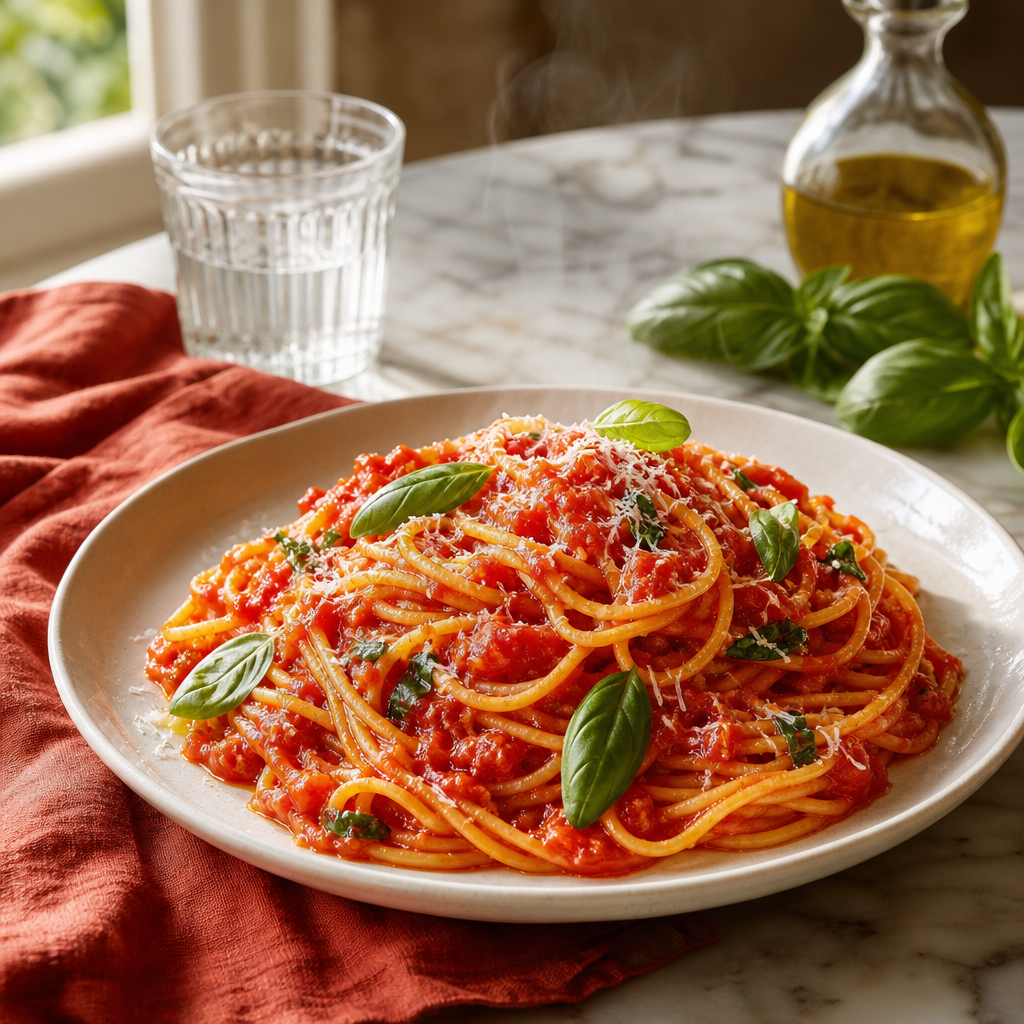
The dish in context
Pasta al pomodoro sits in the southern Italian tomato-pasta lineage most strongly associated with Naples and Campania, where tomato cultivation and dried pasta production met early and stayed together. The dish is not marinara, not ragù, and not a catch-all red sauce; its grammar is pasta, tomato, olive oil, basil, salt, and usually garlic. Italian sources split between fresh ripe tomatoes in season and high-quality preserved tomatoes for year-round consistency. In Italy this is a primo piatto, but internationally it often functions as the full meal.
Method 7 steps · 30 min
Crush the tomatoes
Pour the tomatoes into a bowl. Crush them by hand until pulpy, removing any hard cores; keep the juices.
Start the pasta water
Bring 3.6 L water to a full boil in a large pot. Add 36 g coarse salt only after the water boils.
Perfume the oil
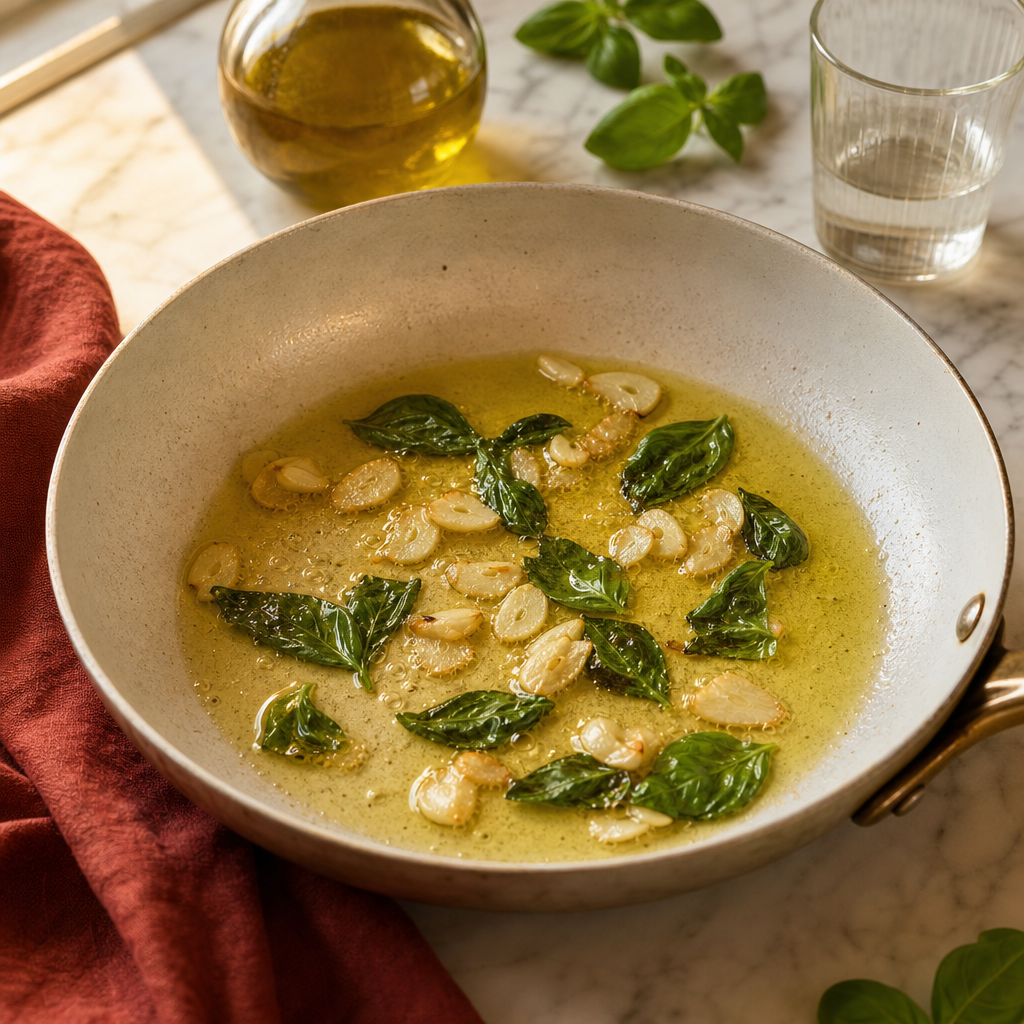
Warm 45 ml olive oil in a wide pan over medium-low heat. Add the crushed garlic and 6-8 basil leaves; cook until the garlic is pale gold at the edges, then remove the basil if it darkens.
Cook the tomato briefly
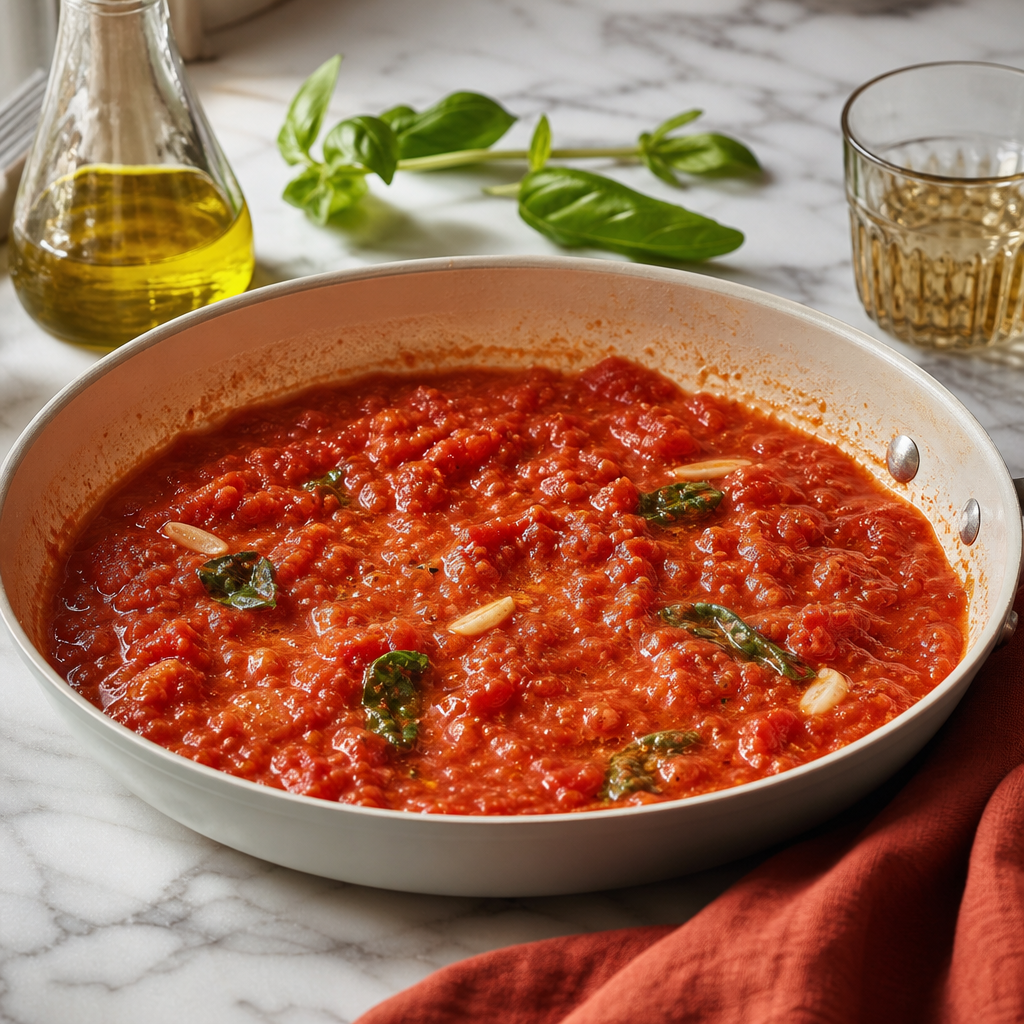
Add the crushed tomatoes and 5 g fine salt. Simmer over medium heat until the sauce thickens slightly and the raw tomato smell softens, 10-12 minutes.
Boil the spaghetti short of done
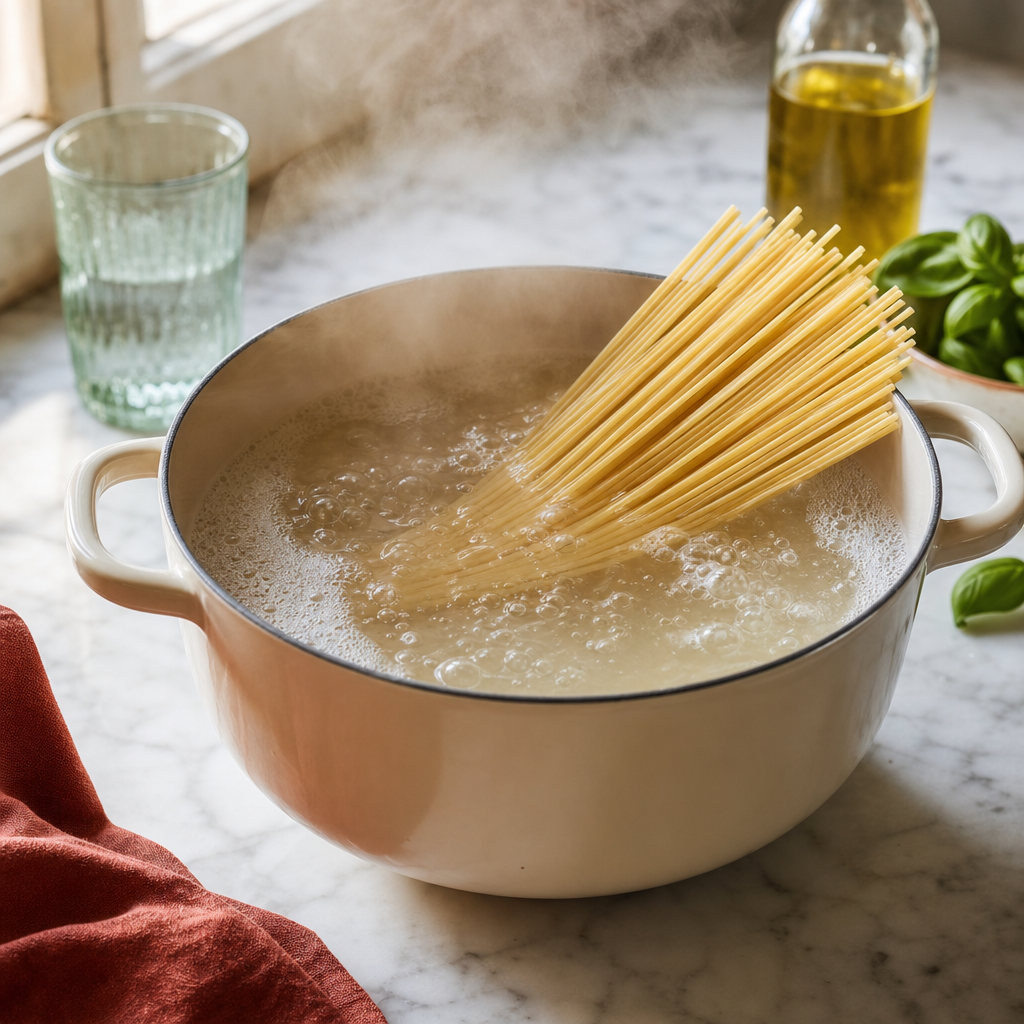
Add the spaghetti to the boiling water and bend it into the pot without breaking it. Cook until 2 minutes shy of the package time, stirring during the first minute so the strands do not weld together.
Finish in the sauce
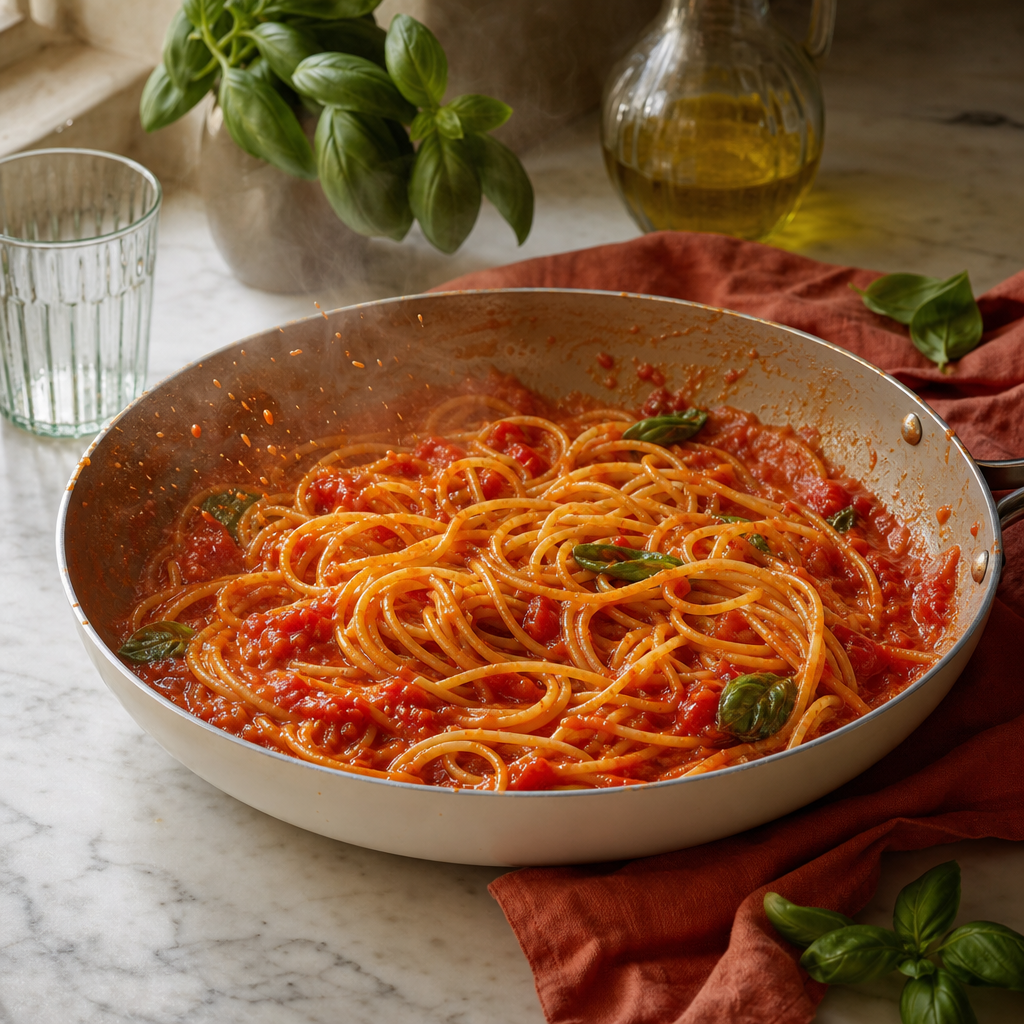
Transfer the pasta directly into the tomato sauce with tongs, carrying some water with it. Add 120 ml pasta water and toss over medium-high heat until the sauce tightens into a glossy red coating, 1-2 minutes.
Finish off heat
Turn off the heat. Tear in the remaining basil, add a small thread of olive oil if the sauce looks dry, and toss once more. Serve with Parmigiano-Reggiano only if wanted.
Common mistakes
- {'mistake': 'Breaking the spaghetti.', 'fix': 'Do not snap it. Feed the strands into the boiling water as they soften; broken spaghetti eats like short scraps, not long pasta.'}
- {'mistake': 'Rinsing the pasta.', 'fix': 'Do not rinse. Surface starch is what lets tomato, oil, and pasta water cling together.'}
- {'mistake': 'Cooking the tomato sauce too long.', 'fix': 'Stop once the raw edge is gone and the sauce has light body. Long simmering pushes pomodoro toward marinara.'}
- {'mistake': 'Dumping drained pasta onto sauce at the table.', 'fix': 'Finish the pasta in the pan. The final 1-2 minutes are where the sauce becomes part of the spaghetti rather than a topping.'}
- {'mistake': 'Using underripe fresh tomatoes.', 'fix': 'Use canned whole peeled tomatoes when fresh tomatoes smell like nothing. Bad fresh tomatoes make thin, acidic sauce.'}
What does not belong
- {'item': 'Cream', 'reason': 'Cream does not belong in pasta al pomodoro. It turns a tomato-and-olive-oil sauce into a pink cream sauce.'}
- {'item': 'Chicken broth', 'reason': 'Broth does not belong. The liquid for binding is pasta water, because its starch emulsifies with olive oil.'}
- {'item': 'Vinegar', 'reason': 'Vinegar does not belong. Tomato acidity is part of the dish; added vinegar makes the sauce sharp and cheap-tasting.'}
- {'item': 'Dried oregano as the main herb', 'reason': 'Oregano pushes the sauce toward Italian-American marinara. Pomodoro is basil-led.'}
- {'item': 'Sugar as routine seasoning', 'reason': 'Sugar is not a default ingredient. If the tomatoes are so harsh that they need sugar, the better correction is better tomatoes.'}
- {'item': 'Butter', 'reason': 'Butter gives gloss, but it changes the structure. Pomodoro is built on olive oil and pasta water.'}