Stir-Fried Broccoli with Beef
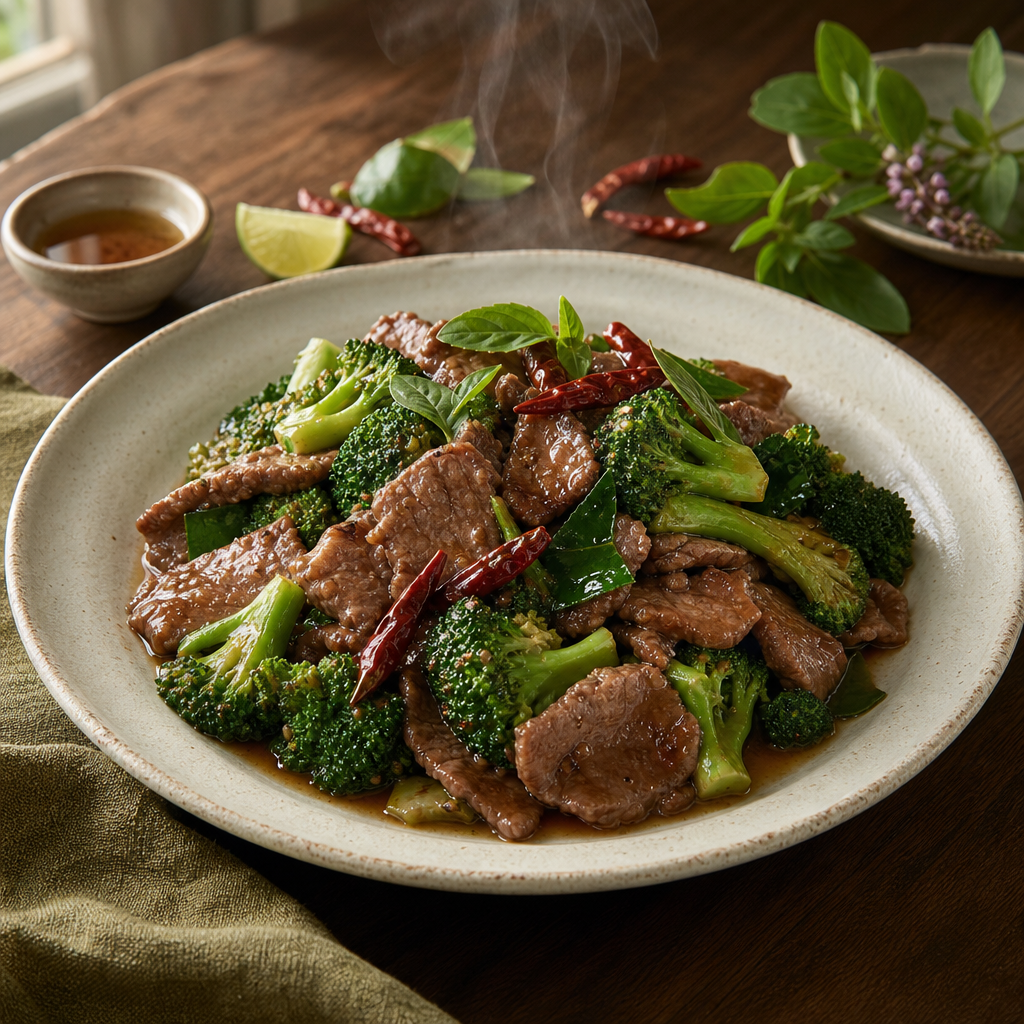
The dish in context
ผัดบรอกโคลีเนื้อ is a Thai-Chinese household and rice-shop stir-fry, not an old royal-court dish and not a curry. Broccoli entered Thai kitchens as a market vegetable alongside Chinese kale, cauliflower, carrot, and cabbage, then settled naturally into the wok grammar of garlic, oyster sauce, soy sauce, and high heat. The dish is common in central Thailand because it fits the rice-plate format: one protein, one vegetable, glossy sauce, plain jasmine rice. Beef is typical, but pork, chicken, shrimp, and mixed vegetables follow the same structure.
Method 7 steps · 25 min
Slice and season the beef
Slice the beef 2-3 mm thick across the grain. Mix it with 1 tsp of the light soy sauce, the cornstarch, and a pinch of white pepper; leave it while the broccoli is cut.
Cut the broccoli for wok timing
Cut broccoli into small florets no wider than 4 cm. Peel thick stems and slice them 5 mm thick. Keep florets, stems, carrot, garlic, and sauce ingredients within reach.
Mix the sauce
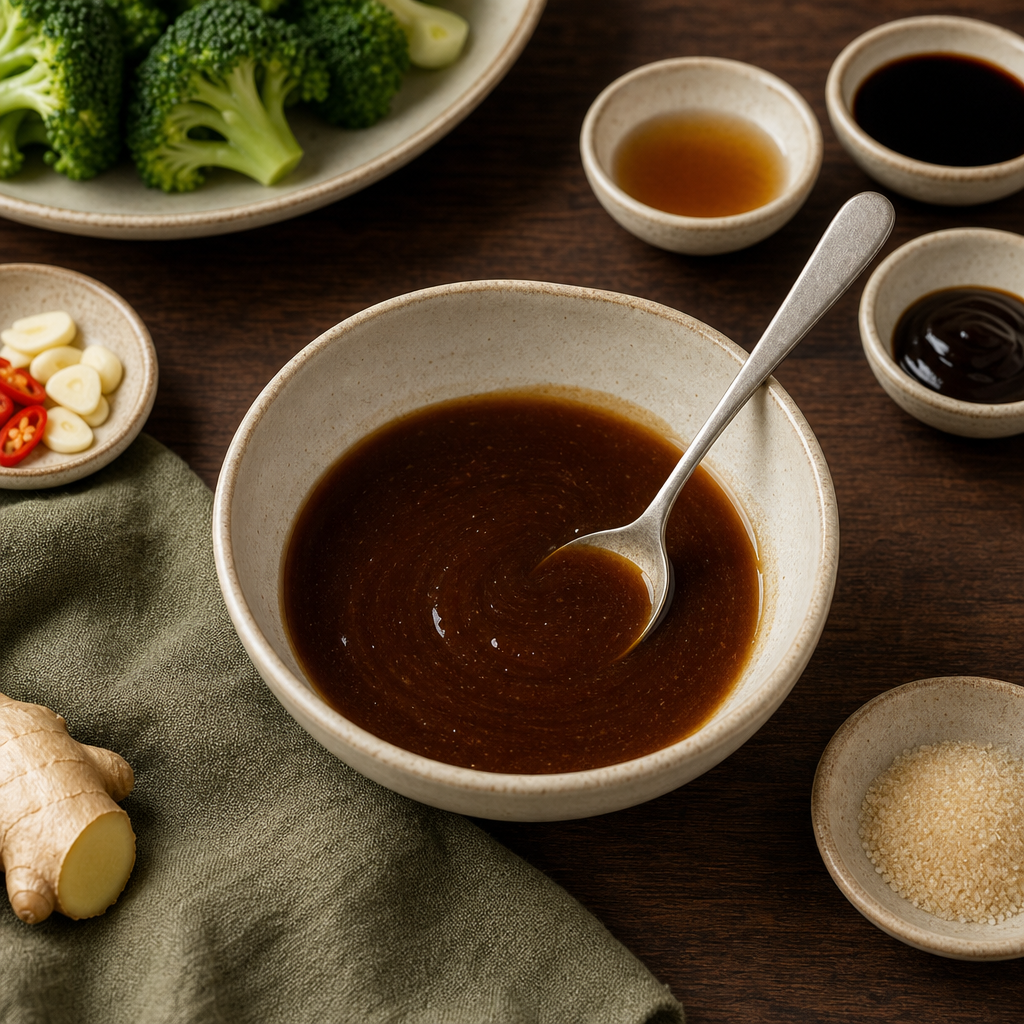
Stir together oyster sauce, remaining light soy sauce, seasoning sauce, sugar, and water or stock in a small bowl.
Sear the beef briefly
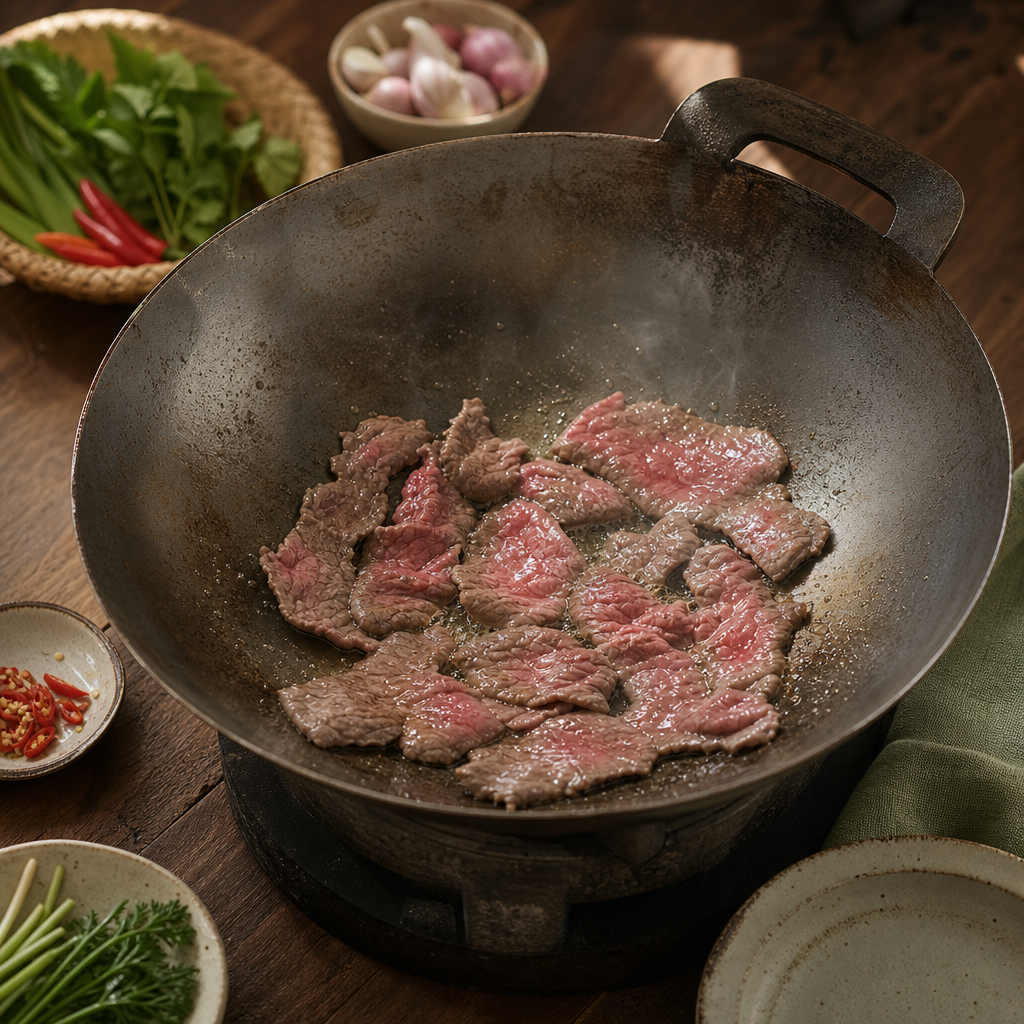
Heat a wok over high heat until a drop of water snaps off the surface. Add 1 tbsp oil, then the beef in a single layer; sear 20-30 seconds, toss once, and remove while still slightly pink.
Fry the garlic
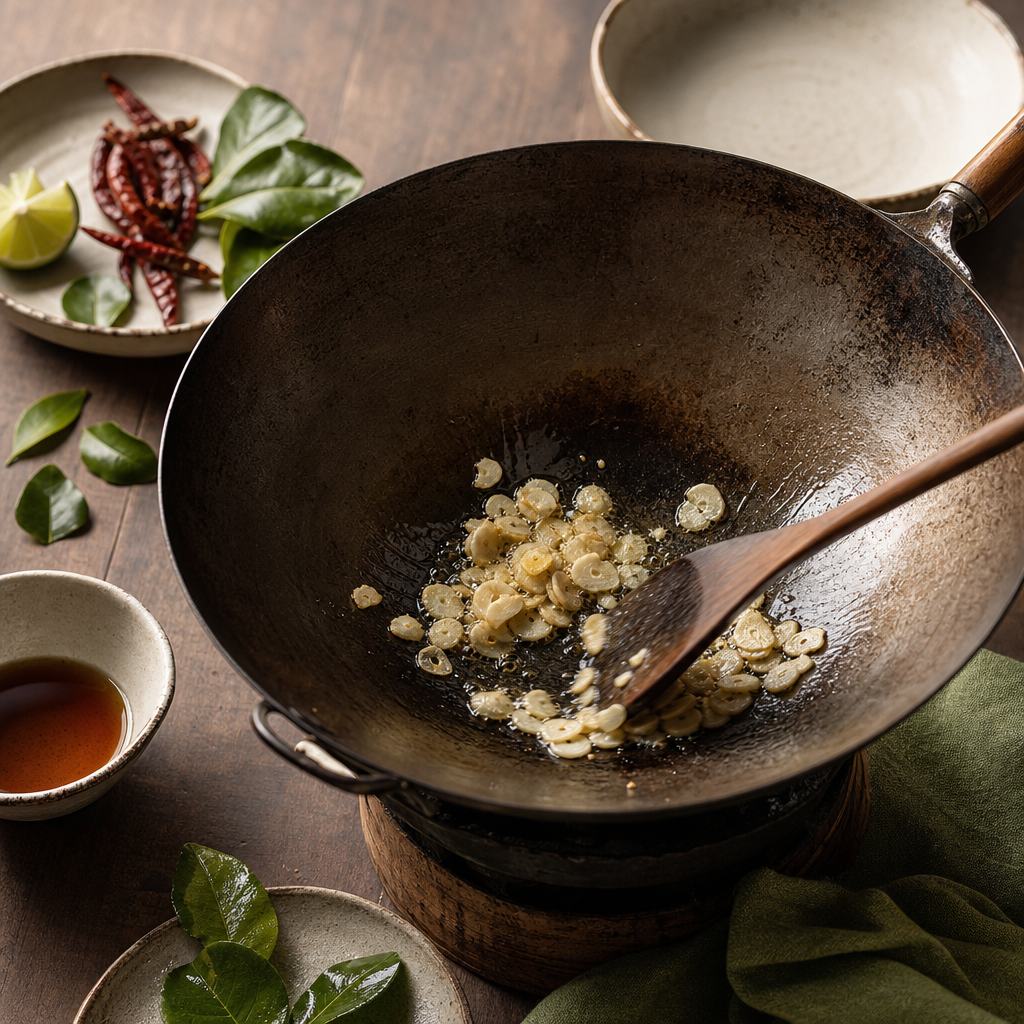
Add the remaining oil. Add garlic and fry 10-15 seconds, stirring constantly, until pale gold at the edges and sharp-smelling.
Cook the broccoli
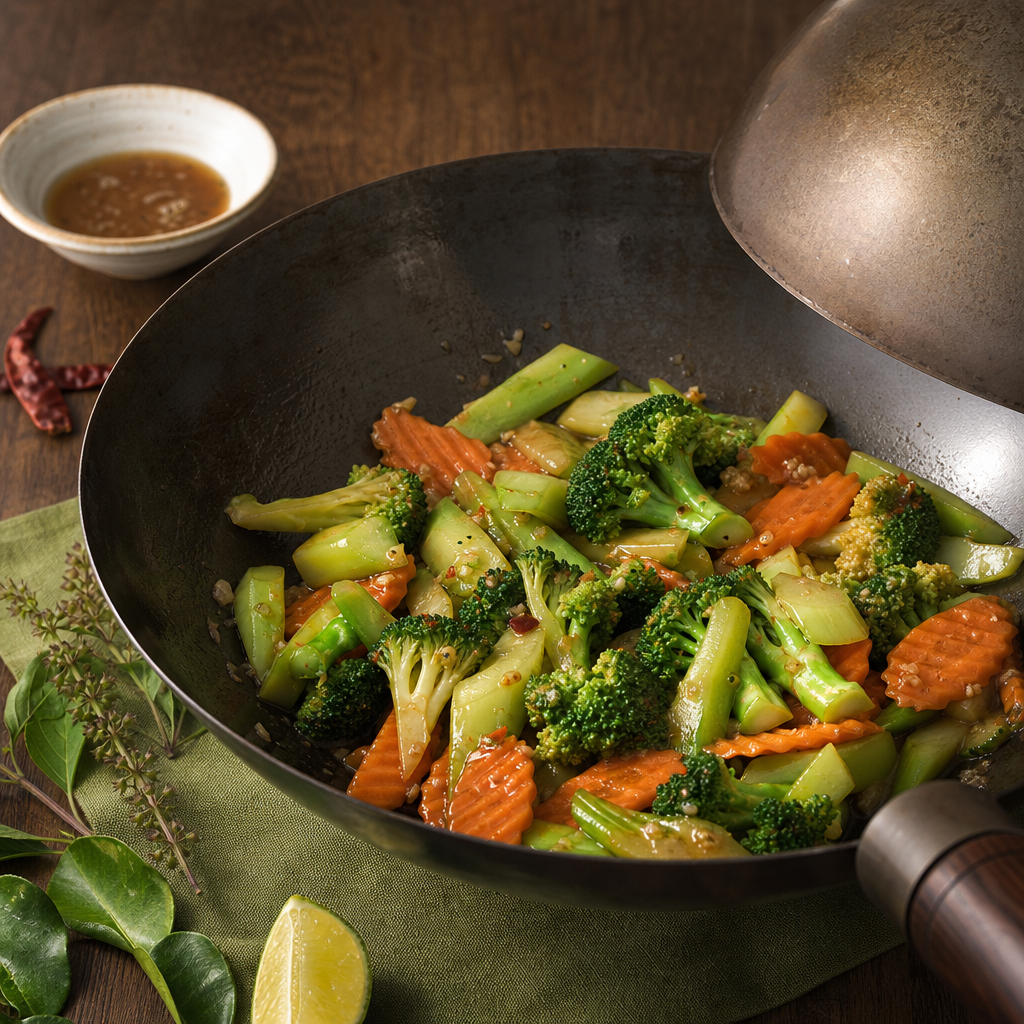
Add broccoli stems and carrot first; toss for 30 seconds. Add florets and the mixed sauce, then cover or dome the wok for 60-90 seconds until the broccoli turns bright green and the stems are crisp-tender.
Return the beef and finish glossy
Return the beef and any juices to the wok. Toss 20-30 seconds until the beef loses its raw edge and the sauce looks glossy, not watery. Serve immediately over jasmine rice.
Common mistakes
- {'mistake': 'Cutting the beef with the grain.', 'fix': 'Slice across the grain into thin sheets. Long muscle fibers are the source of the chew.'}
- {'mistake': 'Adding the broccoli in large chunks.', 'fix': 'Keep florets small and slice stems thin. Stir-fry is fast heat, not a braise.'}
- {'mistake': 'Letting the garlic brown hard before the vegetables go in.', 'fix': 'Stop at pale gold. Dark garlic makes the whole sauce bitter.'}
- {'mistake': 'Cooking the beef all the way through before removing it.', 'fix': 'Pull it while slightly pink. It finishes when returned to the sauce.'}
- {'mistake': 'Using too much water.', 'fix': 'Use enough liquid to steam and glaze. A puddle on the plate means the wok was crowded or the sauce was over-diluted.'}
What does not belong
- {'item': 'coconut milk', 'reason': 'Coconut milk does not belong in this Thai-Chinese stir-fry. It turns a clean oyster-soy wok sauce into a confused curry-like sauce.'}
- {'item': 'curry paste', 'reason': 'Curry paste does not belong. ผัดบรอกโคลีเนื้อ is built on garlic, oyster sauce, and soy sauce, not curry aromatics.'}
- {'item': 'Thai basil or holy basil', 'reason': 'Basil does not belong here. Adding it pulls the dish toward pad krapow, which is a different stir-fry.'}
- {'item': 'fish sauce as the main salt', 'reason': 'Fish sauce can season many Thai dishes, but this one is Thai-Chinese in structure. Light soy sauce is the correct main salt.'}
- {'item': 'bottled sweet chili sauce', 'reason': 'Sweet chili sauce does not belong. It makes the sauce sticky-sweet and masks the garlic and oyster sauce.'}