Yakitori Tsukune
The dish in context
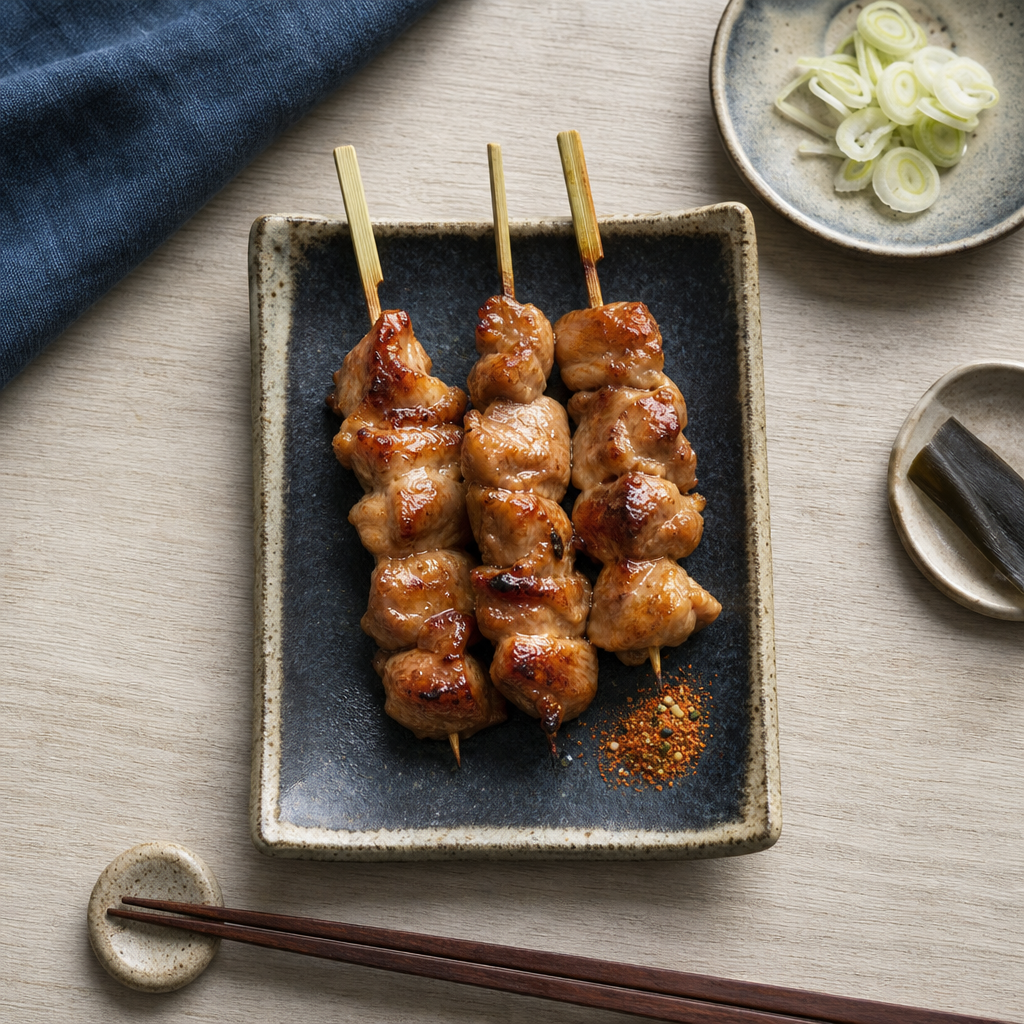
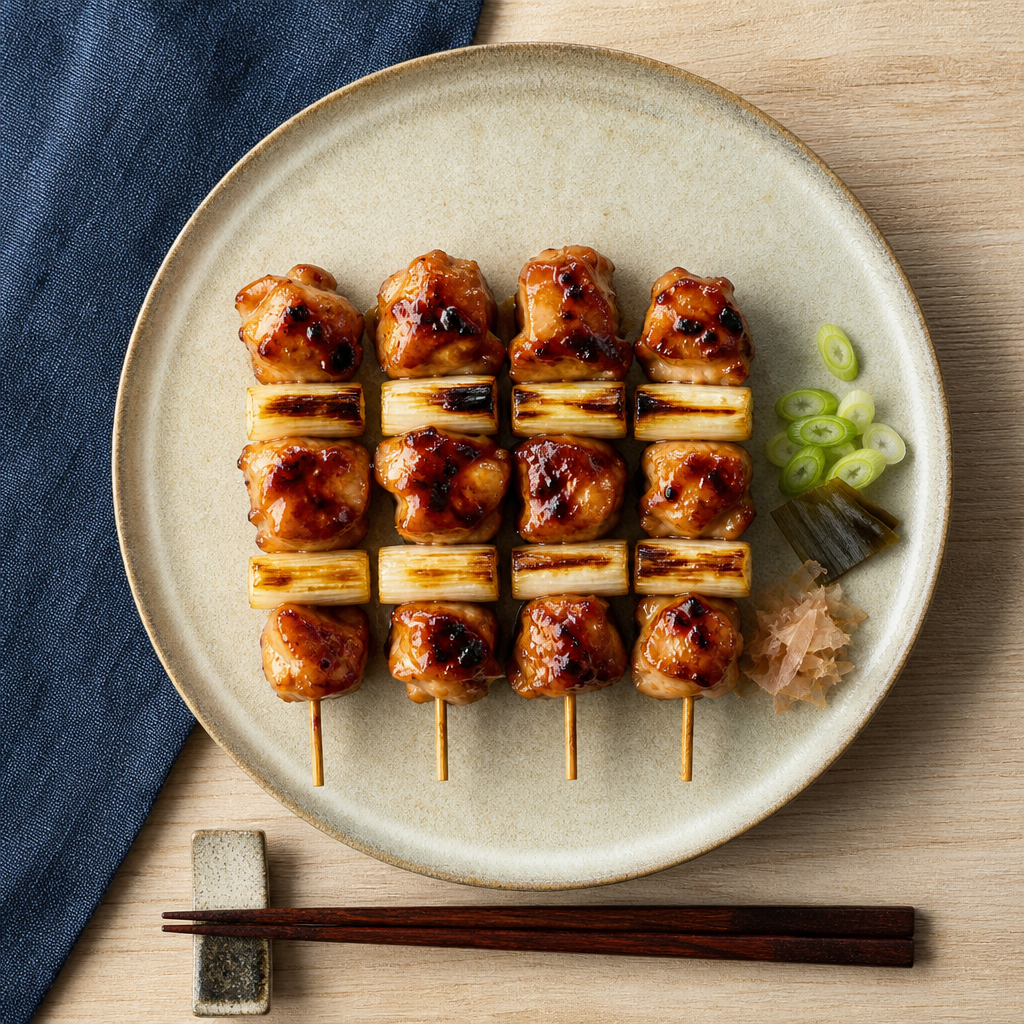
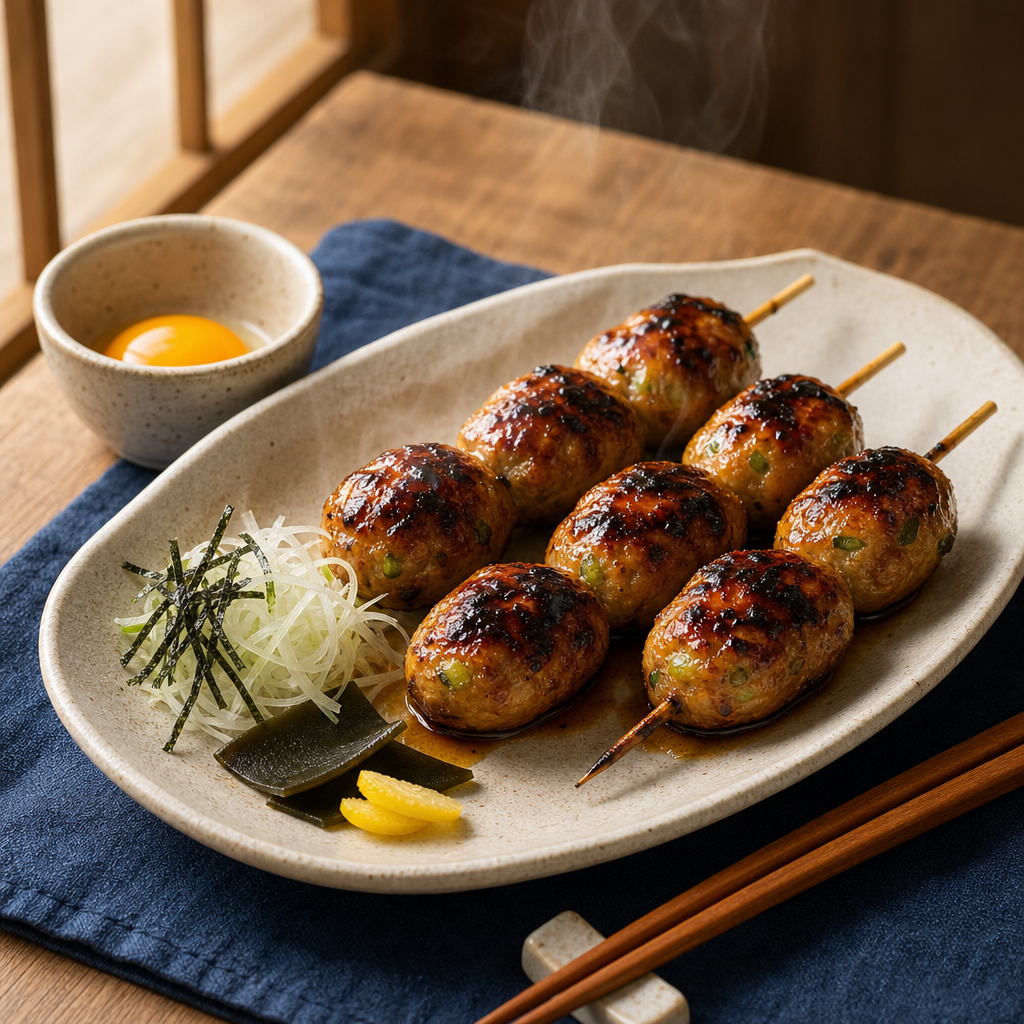
Tsukune (つくね) comes from the verb tsukuneru, to knead and shape by hand, and in yakitori shops it usually means minced chicken formed onto skewers. The dish belongs to the yakitori counter and izakaya grammar: small portions, high heat, repeated turning, and a finishing tare rather than a long marinade. Shop versions vary in texture; some are smooth and springy, while others include chopped cartilage for a deliberate crunch. Tare (たれ) is not one fixed sauce but a family of soy-mirin-sake glazes, often refreshed over time in restaurants. This home version uses a fresh tare reduced to a light syrup and a chilled chicken mixture that will stay on the skewer.
Method 9 steps · 70 min
Soak the skewers
Soak bamboo skewers in water for at least 30 minutes. If using metal skewers, skip the soak and oil them lightly before shaping.
Reduce the tare
Combine the tare shoyu, mirin, sake, sugar, and optional scallion tops or chicken skin in a small saucepan. Simmer until glossy and reduced to about 180 ml, 12-18 minutes, then strain and divide into two bowls: one for glazing raw chicken and one clean bowl for finishing.
Knead the chicken mixture
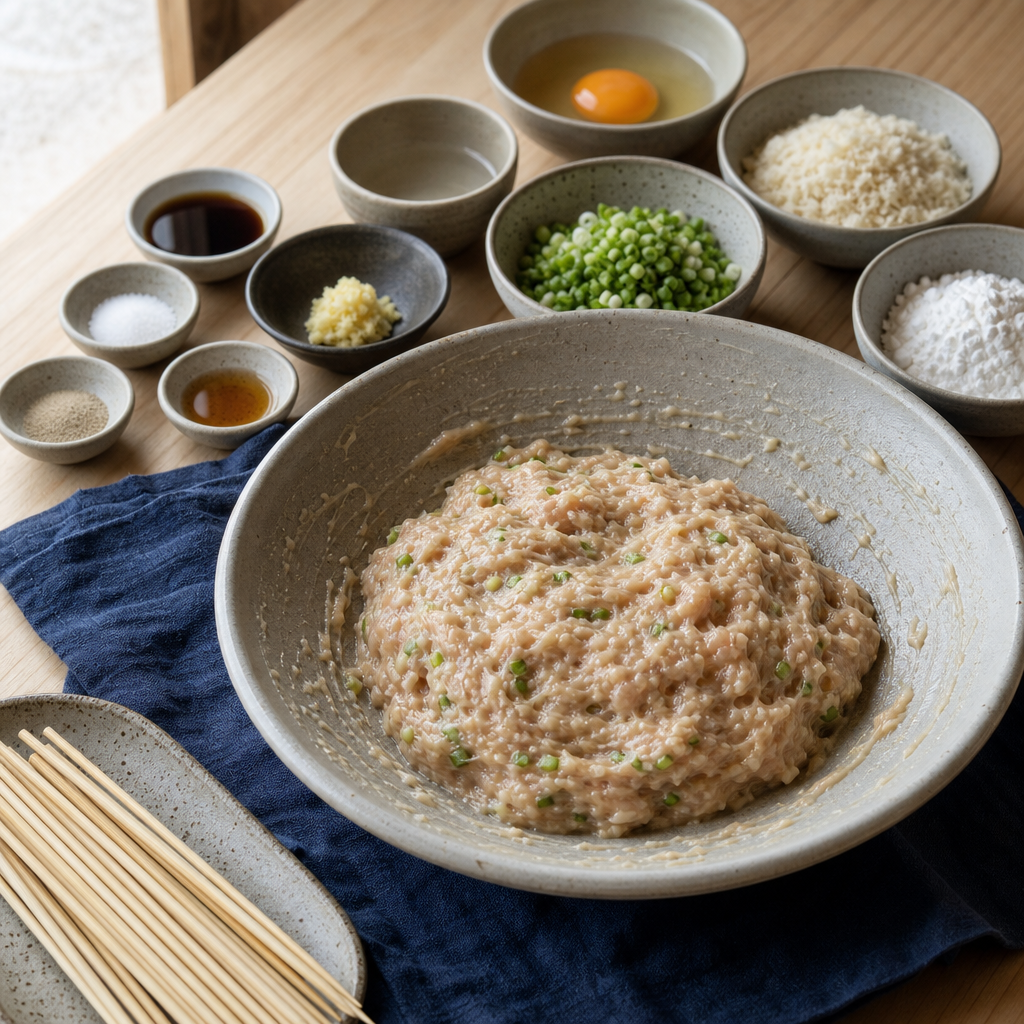
Combine ground chicken, cartilage if using, scallion, ginger, egg, panko, potato starch, sake, shoyu, salt, white pepper, and sesame oil. Knead with a firm hand for 2-3 minutes until the mixture turns sticky, tacky, and slightly stringy when lifted.
Chill the mixture
Cover and refrigerate the chicken mixture for 30 minutes. It should feel cold, firm, and slightly springy before shaping.
Shape onto skewers
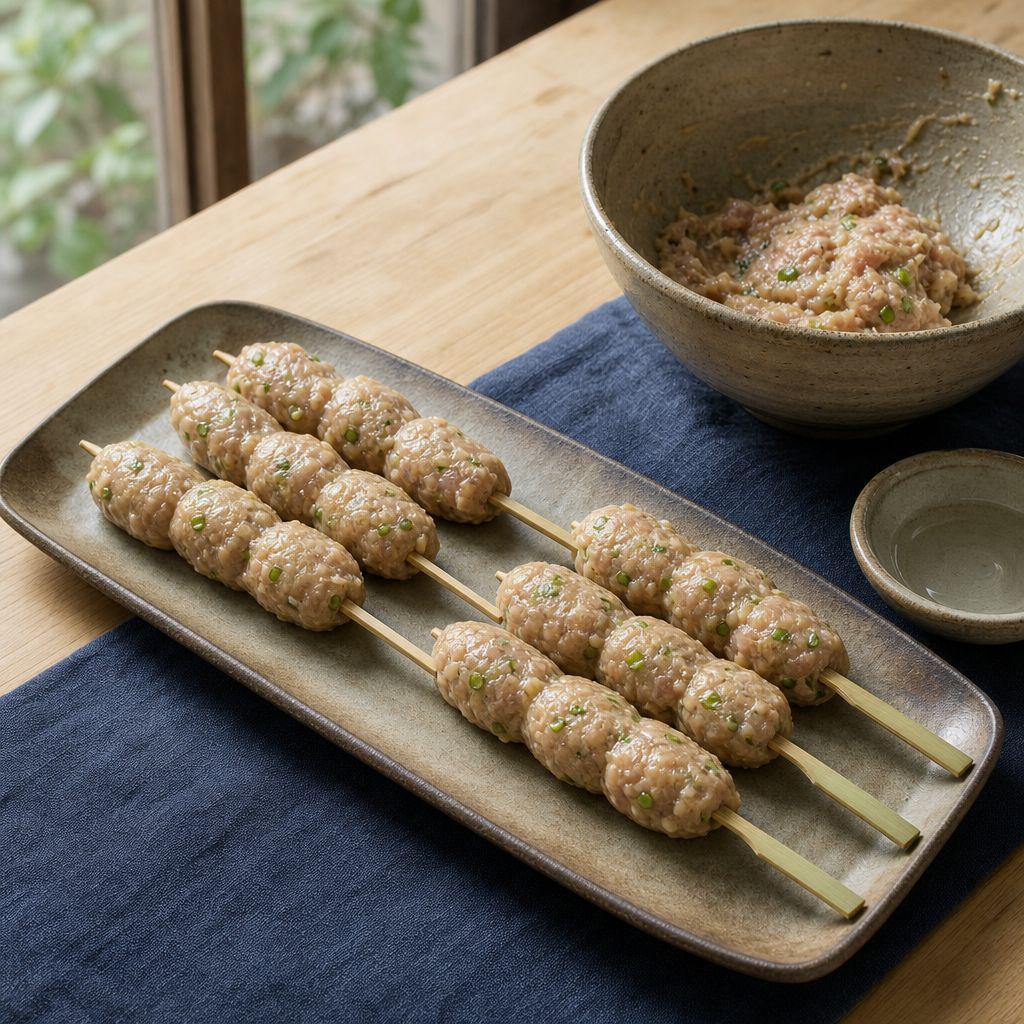
Oil or wet your hands. Divide the mixture into 8 portions, then mold each portion into two or three oval lobes around a skewer, pressing firmly so there are no air pockets between meat and bamboo.
Set the surface over high heat
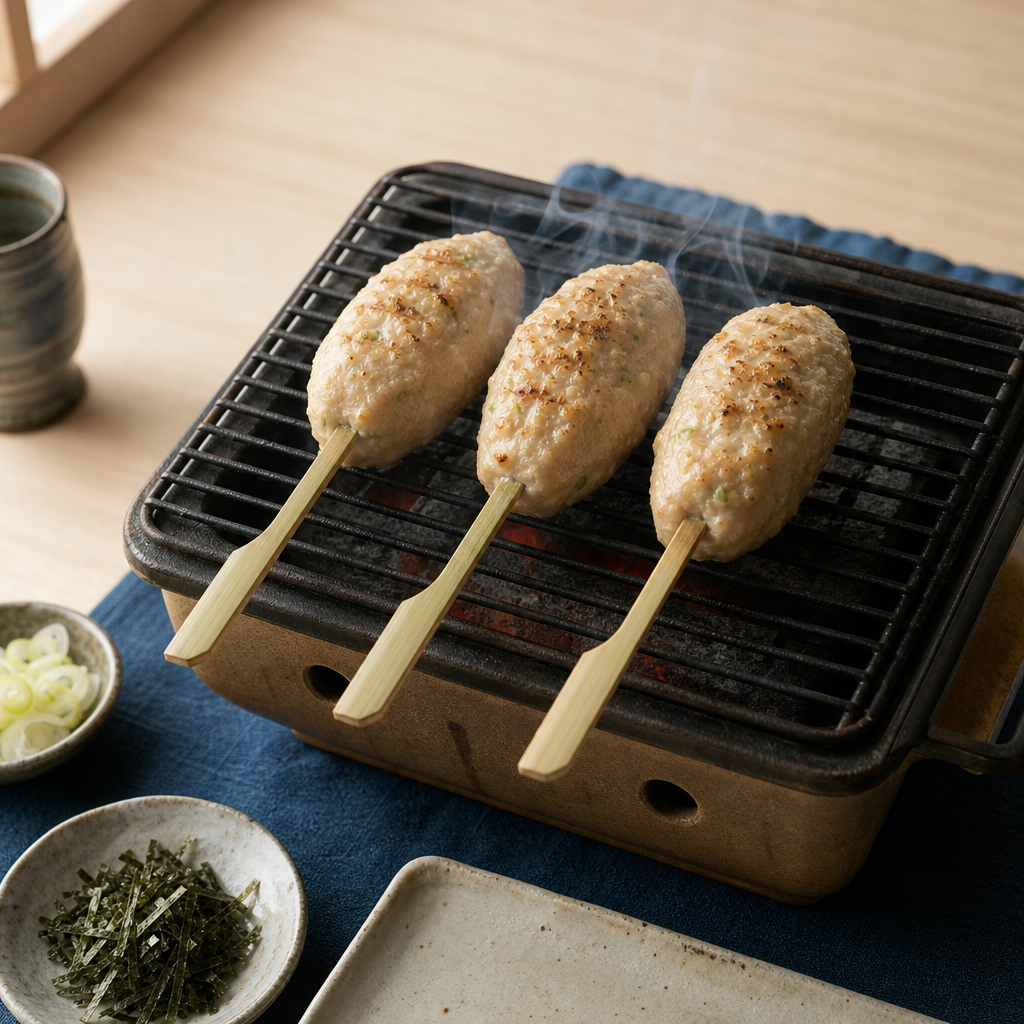
Heat a charcoal grill or gas grill to high and oil the grate. Grill the skewers without tare for 2 minutes on the first side, then turn and grill 2 minutes more until the surface is opaque, lightly browned, and no longer sticky.
Grill through
Continue grilling, turning every 60-90 seconds, until the centers reach 70°C and the exterior has small charred patches, about 5-7 minutes more. Move skewers to a cooler zone if fat flare-ups blacken the surface.
Glaze late
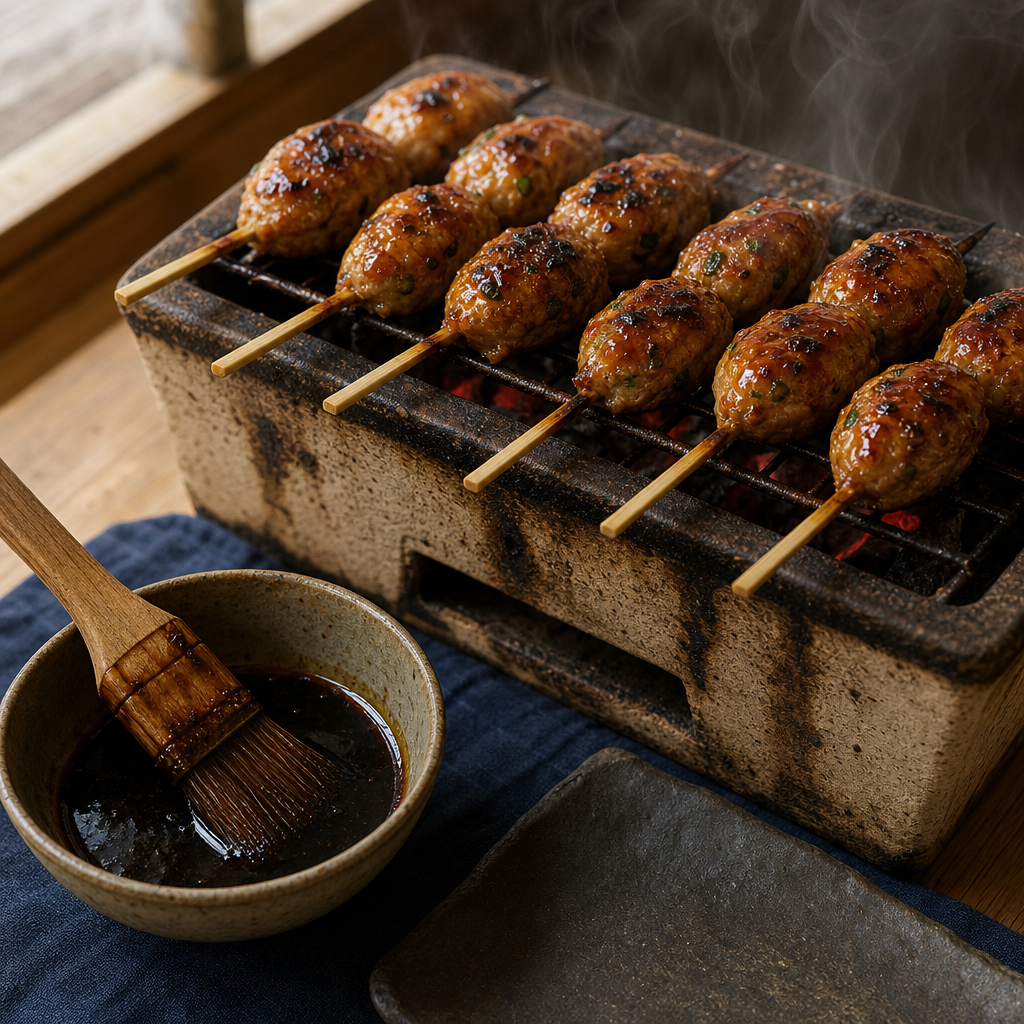
Brush the skewers with the raw-side tare bowl, turn, and grill 30-45 seconds. Repeat once or twice until the glaze tightens into a shiny amber lacquer and the centers reach 74°C.
Finish and serve
Brush with the clean finishing tare. Serve hot with optional pasteurized egg yolk and shichimi togarashi.
Common mistakes
- {'mistake': 'Mixing the chicken only until combined.', 'fix': 'Knead until sticky and stringy. Without myosin extraction, the mixture behaves like wet mince and falls apart.'}
- {'mistake': 'Skipping the chill.', 'fix': 'Cold mixture grips the skewer. Warm ground chicken smears, sags, and tears during the first turn.'}
- {'mistake': 'Glazing from the start.', 'fix': 'Set and partially cook the meat first. Tare belongs in the last minutes because sugar burns faster than chicken cooks.'}
- {'mistake': 'Using very lean chicken breast only.', 'fix': 'Use thigh or mixed meat. Lean breast produces a dry, bouncy skewer with little chicken fat to carry smoke and tare.'}
- {'mistake': 'Making round meatballs and sliding them onto skewers.', 'fix': 'Mold the meat directly onto the skewer in oval lobes. The skewer needs contact through the center, not a loose hole.'}
- {'mistake': 'Reusing the raw-chicken glaze as table sauce.', 'fix': 'Divide the tare before grilling. One bowl is a raw-side tool; the other stays clean for finishing.'}
What does not belong
- {'item': 'Commercial American teriyaki sauce', 'reason': 'It is usually too thick, too sweet, and often garlic-heavy. Yakitori tare is reduced shoyu, mirin, sake, and sugar with a thinner lacquer.'}
- {'item': 'Ketchup, barbecue sauce, or honey glaze', 'reason': 'Those turn the skewer into grilled meatloaf. Tsukune needs soy-mirin salinity and controlled sweetness.'}
- {'item': 'Cheese stuffing', 'reason': 'Cheese-stuffed patties exist as modern cafeteria or home variations, but they do not belong in standard yakitori tsukune.'}
- {'item': 'Heavy garlic seasoning', 'reason': 'Garlic can appear in some modern recipes, but it pushes the profile away from yakitori-counter tsukune. Ginger and scallion are the cleaner baseline.'}
- {'item': 'Bottled sweet chili sauce', 'reason': 'It is the wrong cuisine grammar and the wrong texture. Tsukune is glazed with tare, not dipped in a sticky chili condiment.'}