Yakitori Momo
The dish in context
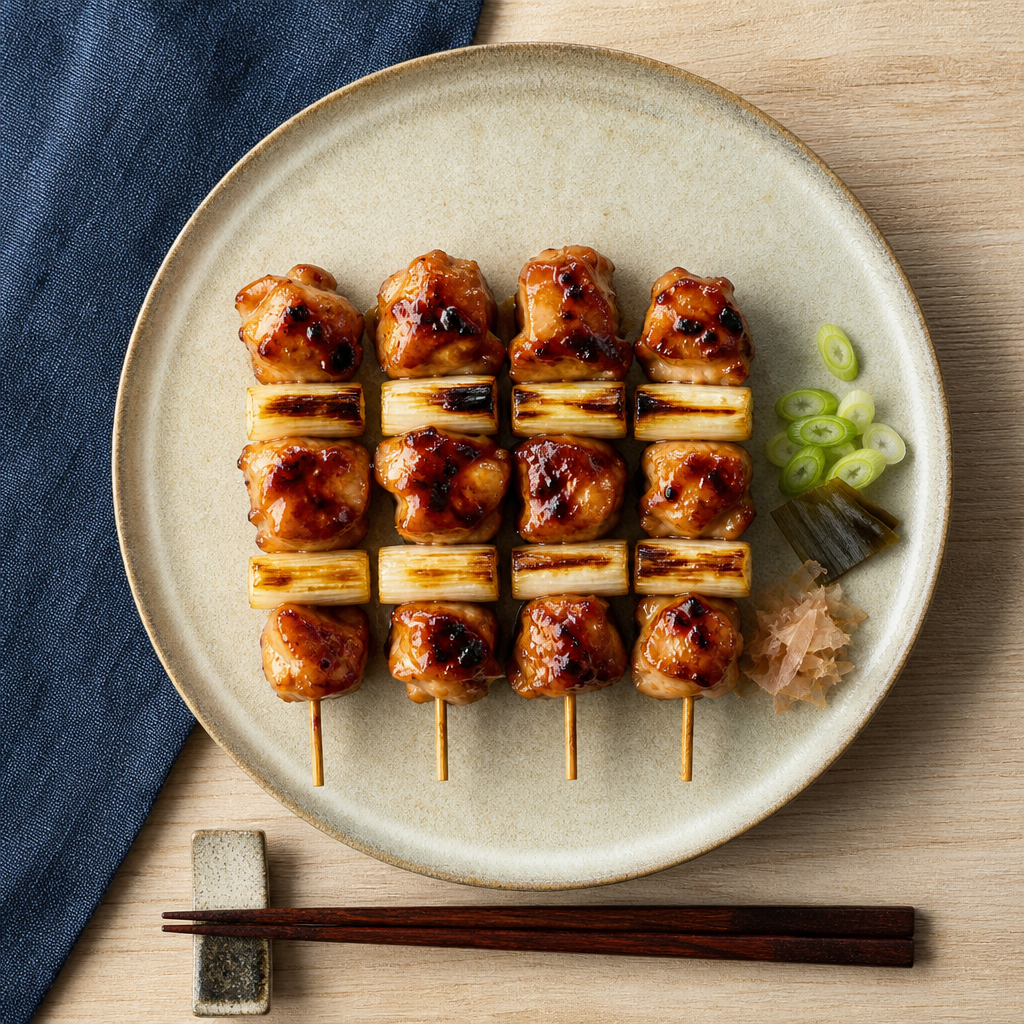
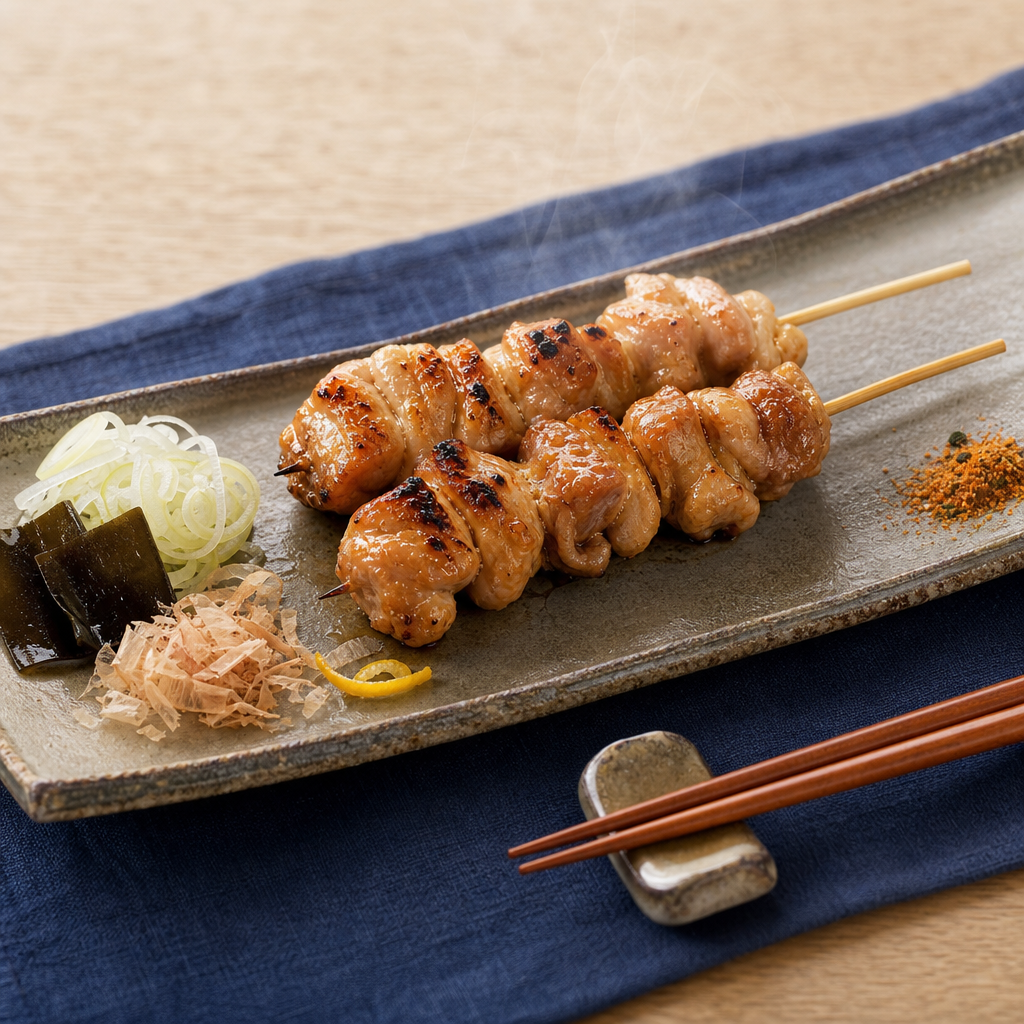
Yakitori developed as a specialized grilled-chicken format in Japan, with restaurants often serving many separate chicken parts rather than one generic skewer. Momo (もも) means thigh, one of the most common and forgiving cuts because its fat and connective tissue tolerate repeated turning over charcoal. Yakitori is usually ordered shio (塩, salt) or tare (タレ, soy-mirin glaze); both are standard, not hierarchy. This recipe uses tare because it exposes the core technique: grill first, brush late, and let the sauce reduce on the meat instead of marinating the chicken like American teriyaki.
Method 8 steps · 55 min
Soak the skewers
Cover the bamboo skewers with water and soak for at least 30 minutes. Keep the pointed ends submerged.
Build the tare
Combine shoyu, mirin, sake, sugar, and chicken bones if using in a small saucepan. Bring to a steady simmer and reduce until glossy and lightly syrupy, about 20 minutes; strain and cool.
Cut and season the thigh
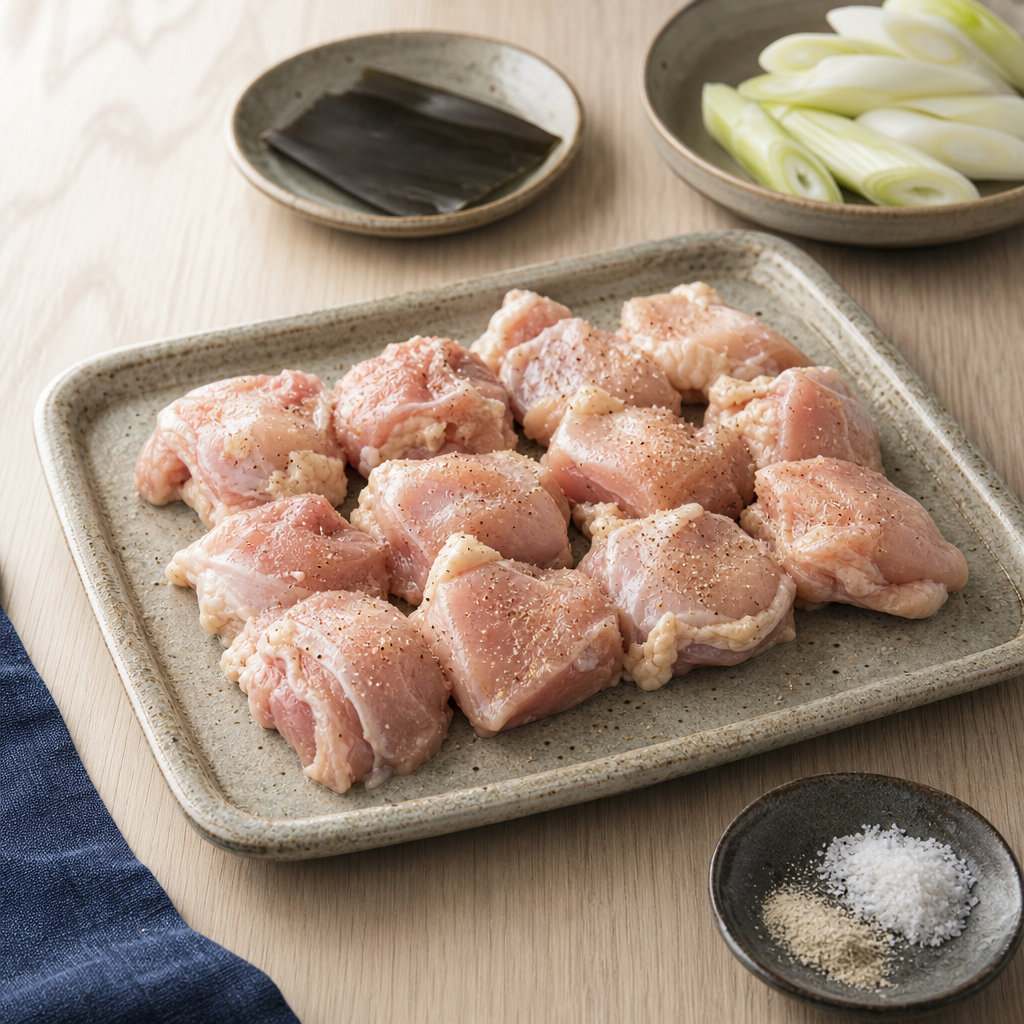
Cut the chicken into 2.5 cm pieces, keeping pieces as even as possible. Toss with salt and white pepper, then rest 10 minutes while the grill heats.
Thread the skewers
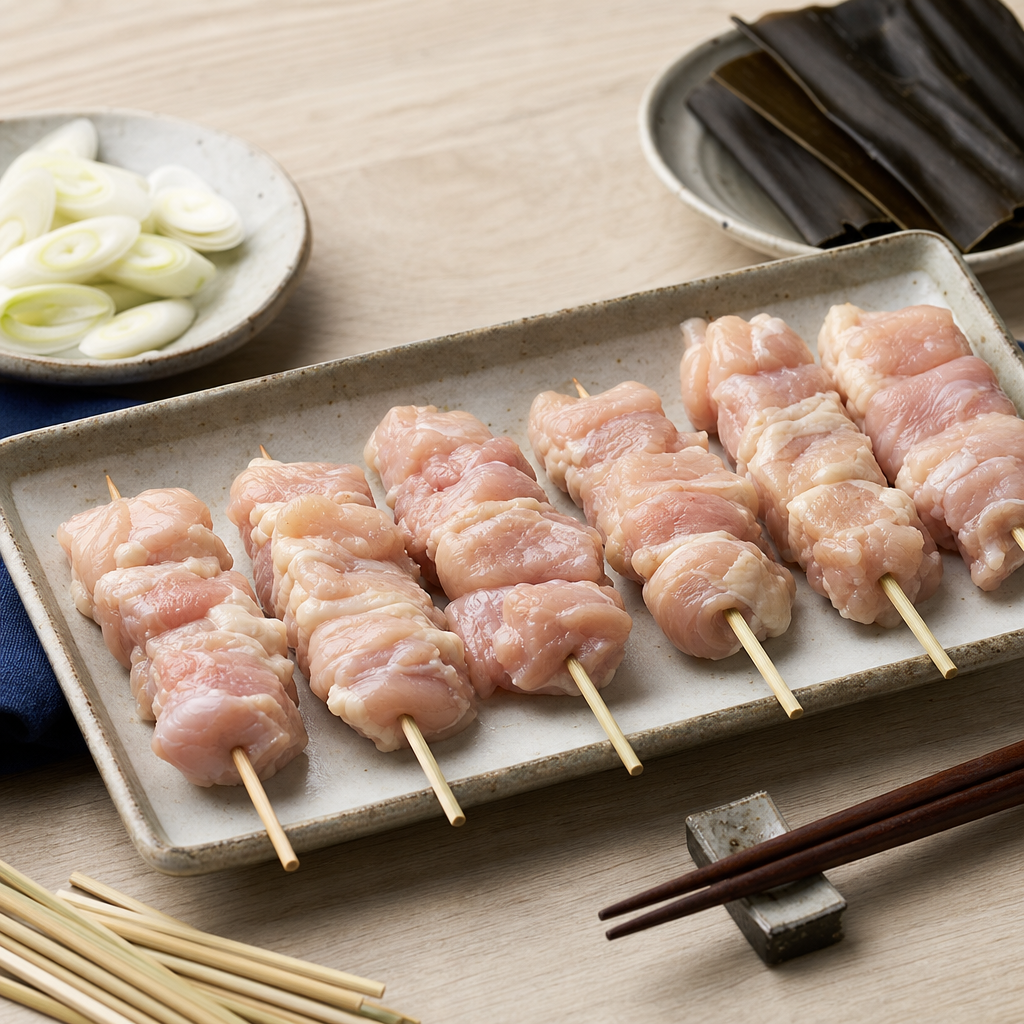
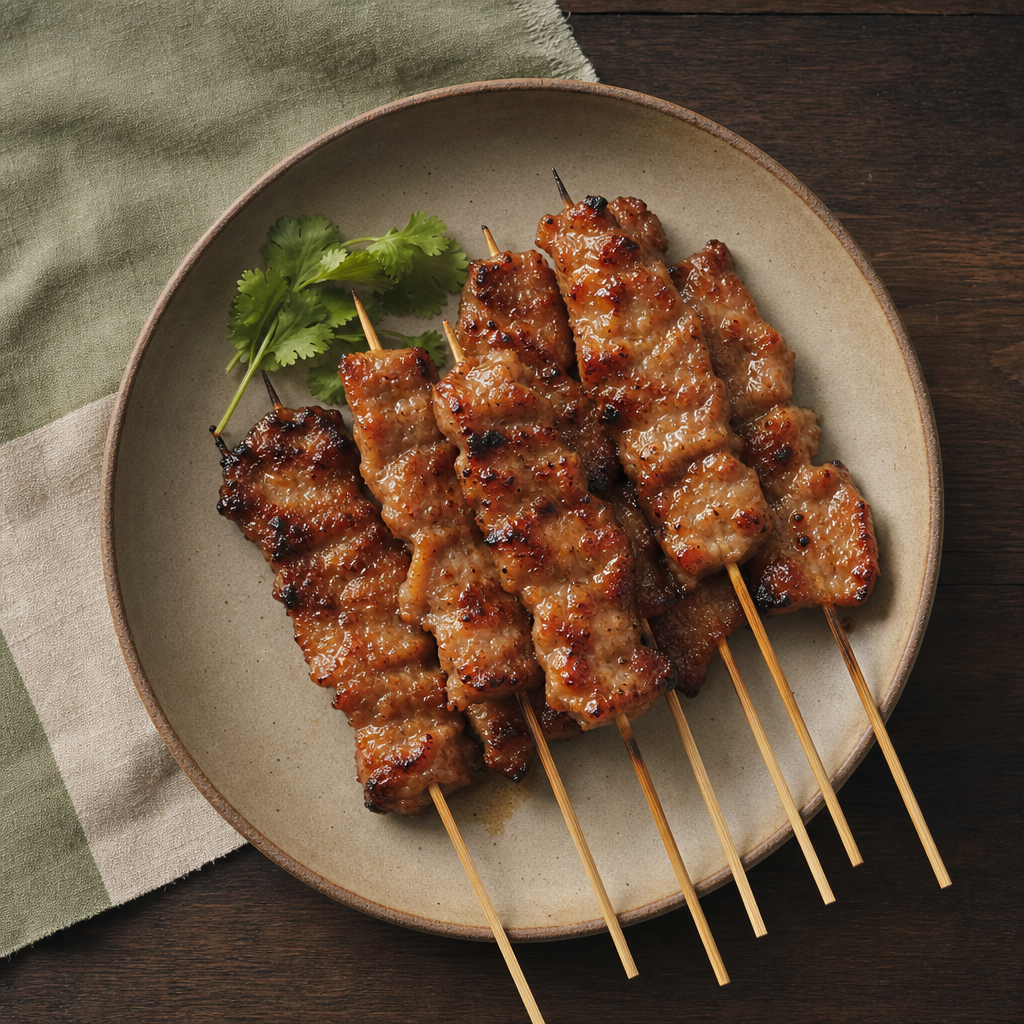
Thread four to five pieces of chicken on each skewer, piercing through the thicker side and compressing the pieces lightly. Keep the surface relatively flat, not balled up.
Set the grill
Prepare a medium-hot charcoal fire with a cooler edge, or heat a broiler with the rack 10 cm below the element. Oil the grate lightly.
Grill without tare first
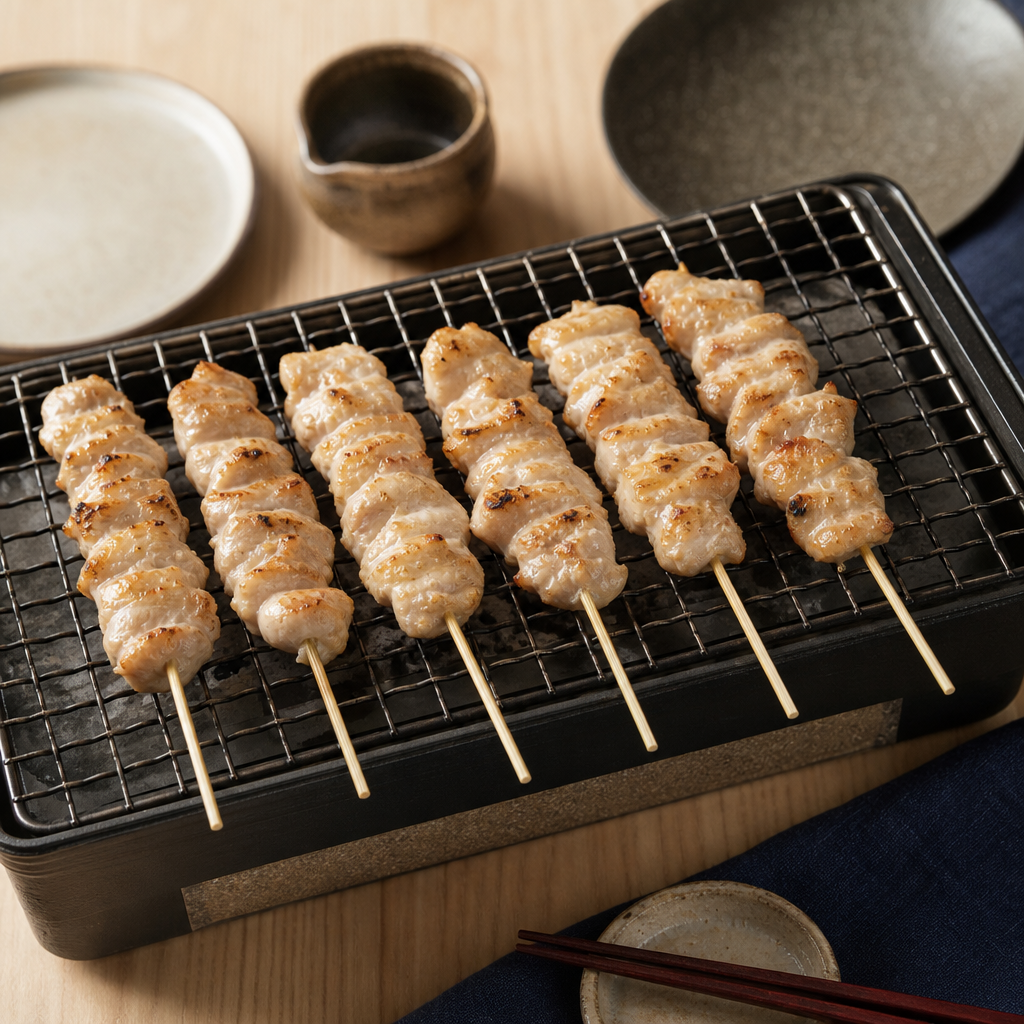
Grill the skewers 4 to 5 minutes, turning every 45 to 60 seconds, until the chicken turns opaque and the edges begin to brown. Do not brush with tare yet.
Glaze in layers
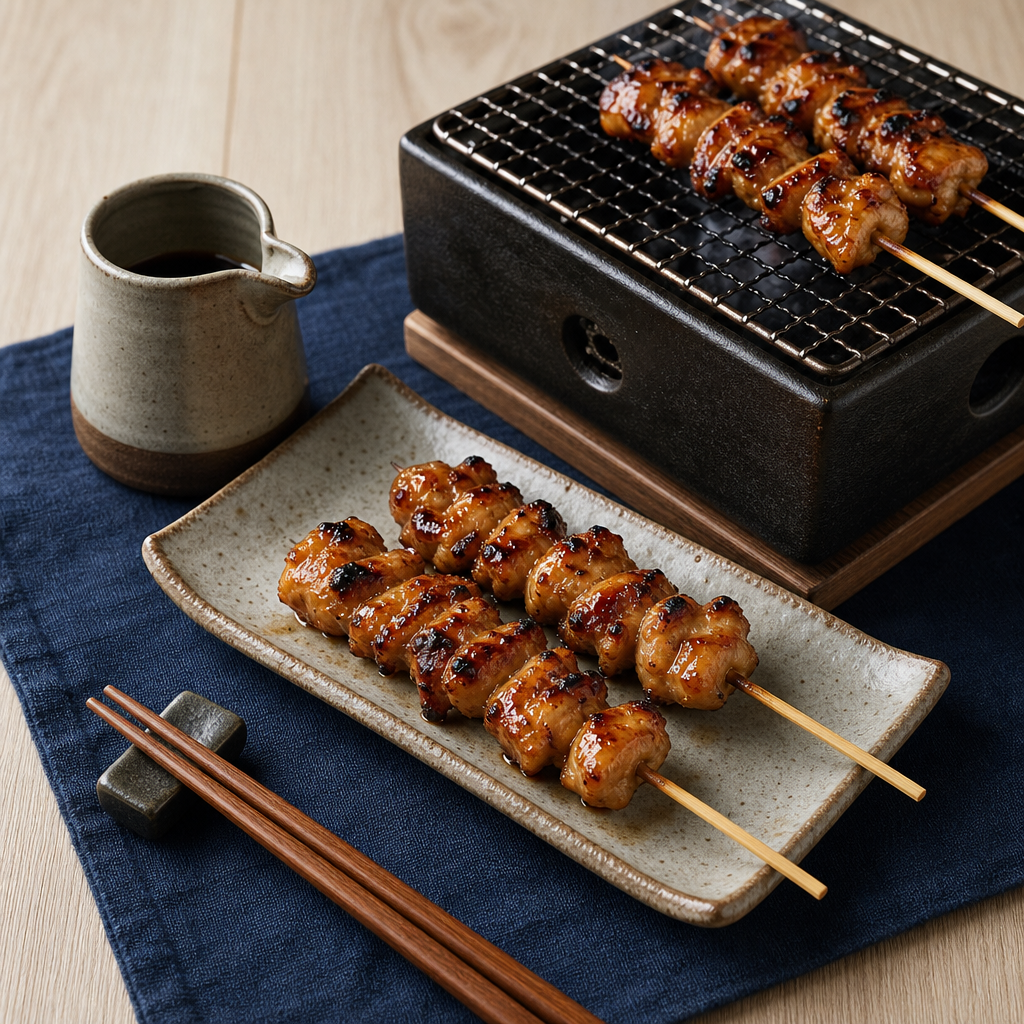
Brush the skewers with tare, turn, and cook 30 to 45 seconds. Repeat 2 or 3 times until the surface is glossy with darkened edges and the thickest piece reaches 74°C.
Rest and serve
Rest the skewers 2 minutes on a warm plate. Serve with shichimi togarashi or sanshō on the side.
Common mistakes
- {'mistake': 'Marinating the chicken in tare.', 'correction': 'Season with salt first, then brush tare late over heat. A soy-sugar marinade darkens too fast and masks the grilled chicken.'}
- {'mistake': 'Using large chicken chunks.', 'correction': 'Cut 2.5 cm pieces. Oversized chunks burn at the edges and stay undercooked near the skewer.'}
- {'mistake': 'Brushing one thick coat of sauce at the end.', 'correction': 'Brush in thin layers with short heat exposure between coats. Lacquer is built, not poured.'}
- {'mistake': 'Letting skewers sit untouched on the grill.', 'correction': 'Turn every minute or less. Yakitori is active grilling; the small pieces need constant repositioning.'}
- {'mistake': 'Using bottled American teriyaki sauce.', 'correction': 'Use tare made from shoyu, mirin, sake, and sugar. Bottled teriyaki is usually too sweet, too thick, and often flavored with garlic or pineapple.'}
What does not belong
- {'item': 'commercial teriyaki sauce', 'reason': 'It does not behave like yakitori tare. The sugar load and thickeners burn before the chicken browns cleanly.'}
- {'item': 'sesame oil', 'reason': 'Sesame oil pushes the skewer toward a sesame-forward marinade profile that is not typical for baseline yakitori momo. The skewer should center chicken fat, smoke, soy, mirin, and sake.'}
- {'item': 'pineapple juice or fruit juice', 'reason': 'Fruit acidity and enzymes do not belong in momo. They soften the surface and make the glaze read like Western teriyaki.'}
- {'item': 'garlic-heavy marinade', 'reason': 'Garlic can appear in some home tare formulas, but it does not belong in a baseline momo skewer. It dominates the small format.'}
- {'item': 'vegetables on the same skewer', 'reason': 'Momo is thigh. Chicken with scallion is negima (ねぎま), a related skewer, not the same order.'}