Moo Ping
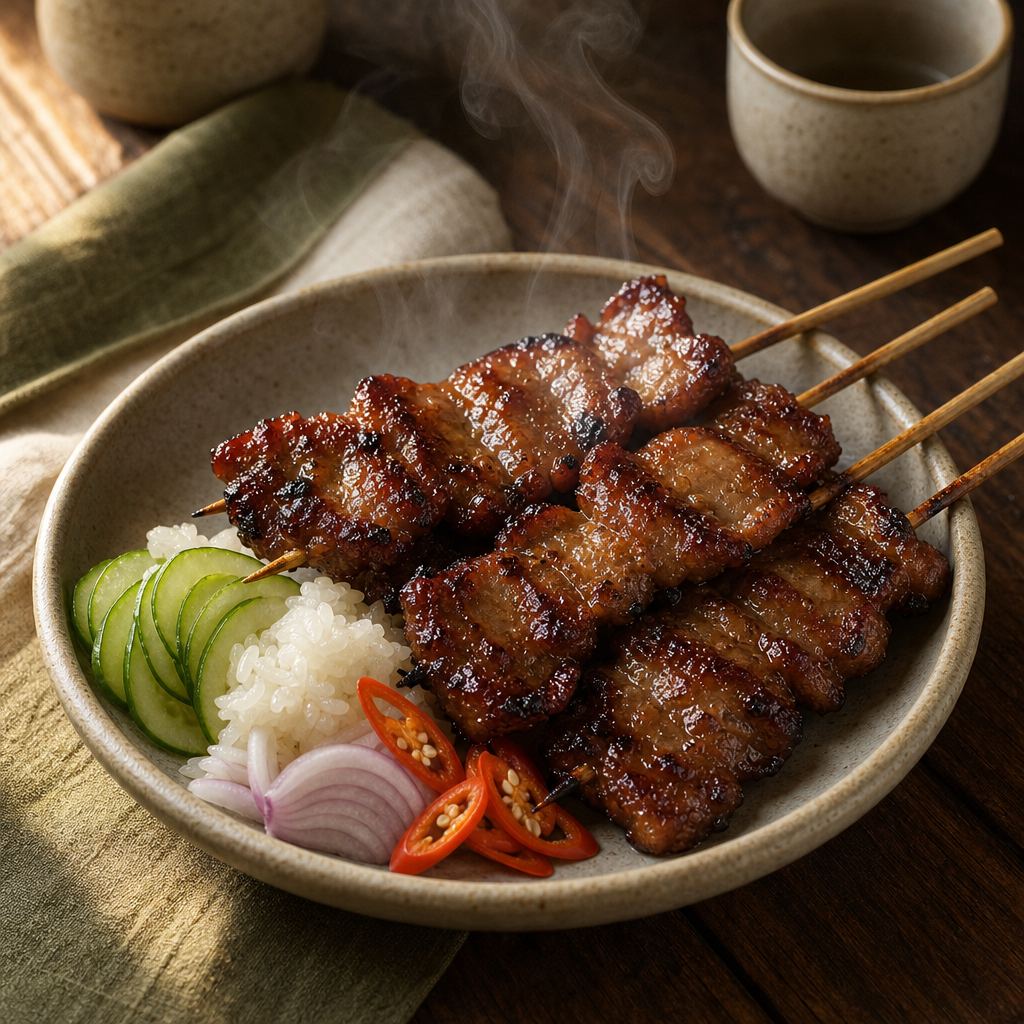
The dish in context
Moo ping is central Thailand's everyday grilled pork skewer, sold from early-morning street carts and usually eaten with sticky rice. Modern Thai sources commonly describe two market styles: older-style pork-forward skewers and the softer milk-marinated style called หมูปิ้งนมสด, which became widespread because it stays tender and sells well from premade wholesale systems. The core grammar is stable: pork sliced thin, seasoned with garlic, white pepper, cilantro root or stems, sugar, fish sauce or soy-based seasonings, then grilled over charcoal. Coconut cream or milk appears in many vendor marinades and bastes; it belongs when used for gloss and browning, not as a curry-like flavor.
Method 8 steps · 255 min
Slice the pork thin
Chill the pork until firm but not frozen, then slice across the grain into 3-4 mm pieces about 3 cm wide. Keep any soft fat attached; remove only hard silver skin and tough seams.
Pound the aromatic paste
Pound cilantro root, garlic, and white pepper to a rough paste. No large garlic chunks should remain.
Build the marinade
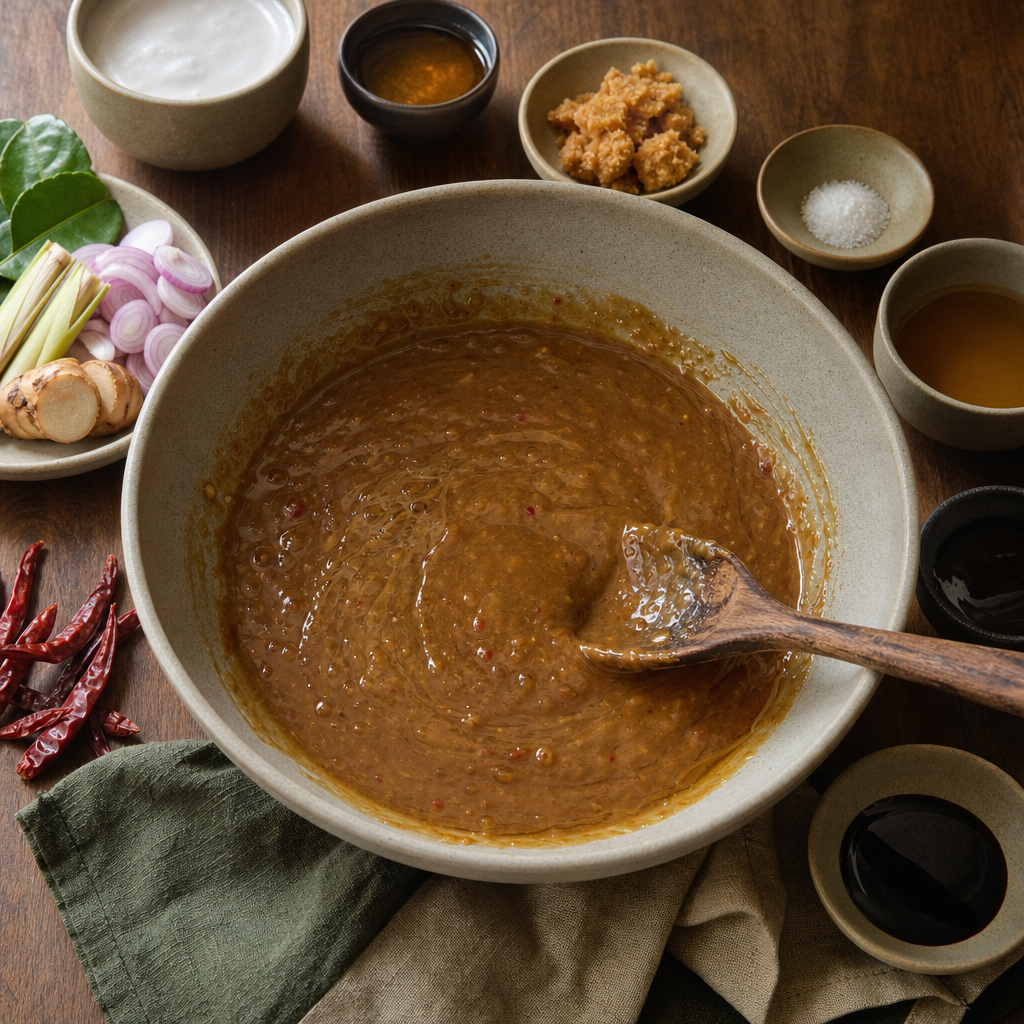
Mix the aromatic paste with palm sugar, fish sauce, thin soy sauce, oyster sauce, dark sweet soy sauce, coconut cream, oil, and MSG if using. Stir until the sugar dissolves into a glossy brown marinade.
Marinate
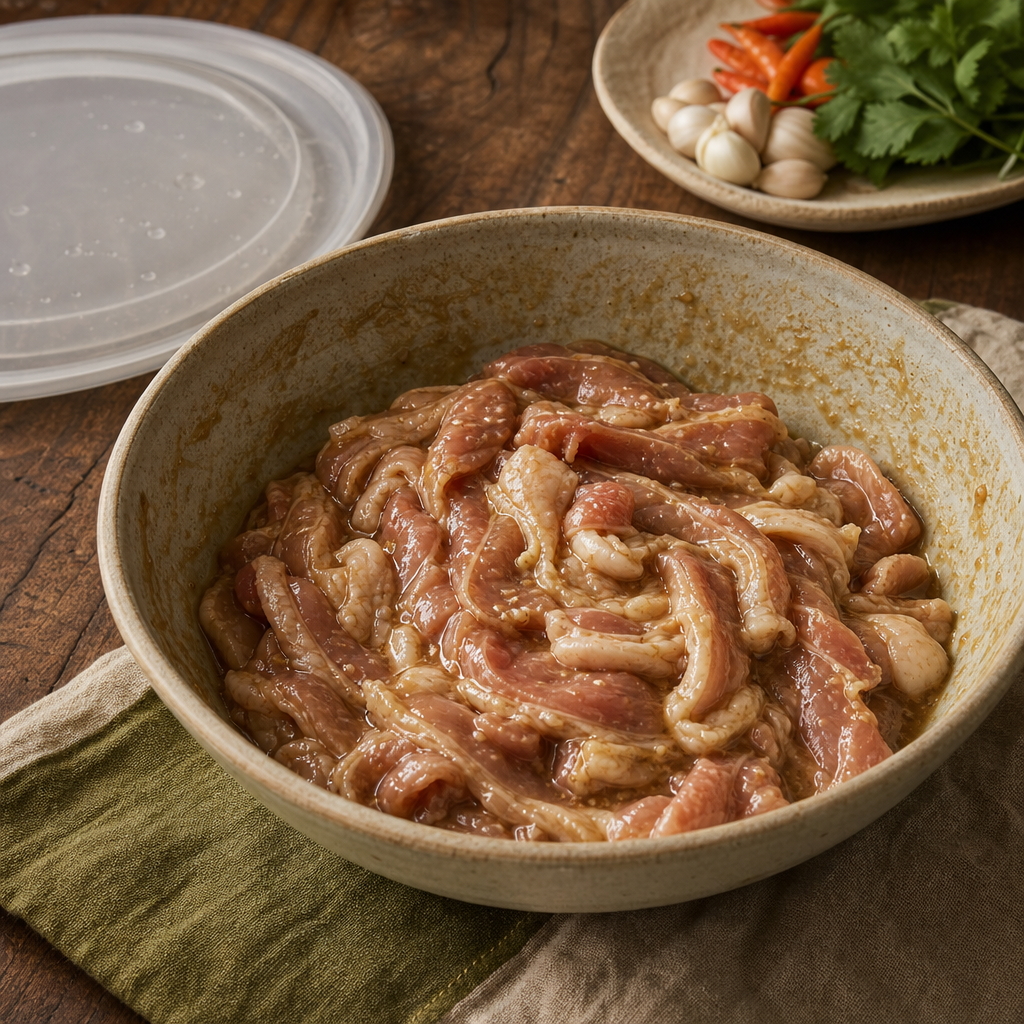
Add the pork and optional pork fat, then massage until every slice is coated and slightly tacky. Cover and refrigerate at least 3 hours, preferably overnight.
Thread tight skewers
Soak bamboo skewers for 30 minutes, then thread pork in compressed folds, alternating a few pieces of fat if using. Leave a 5 cm handle and cover the rest of the skewer with meat.
Set the fire
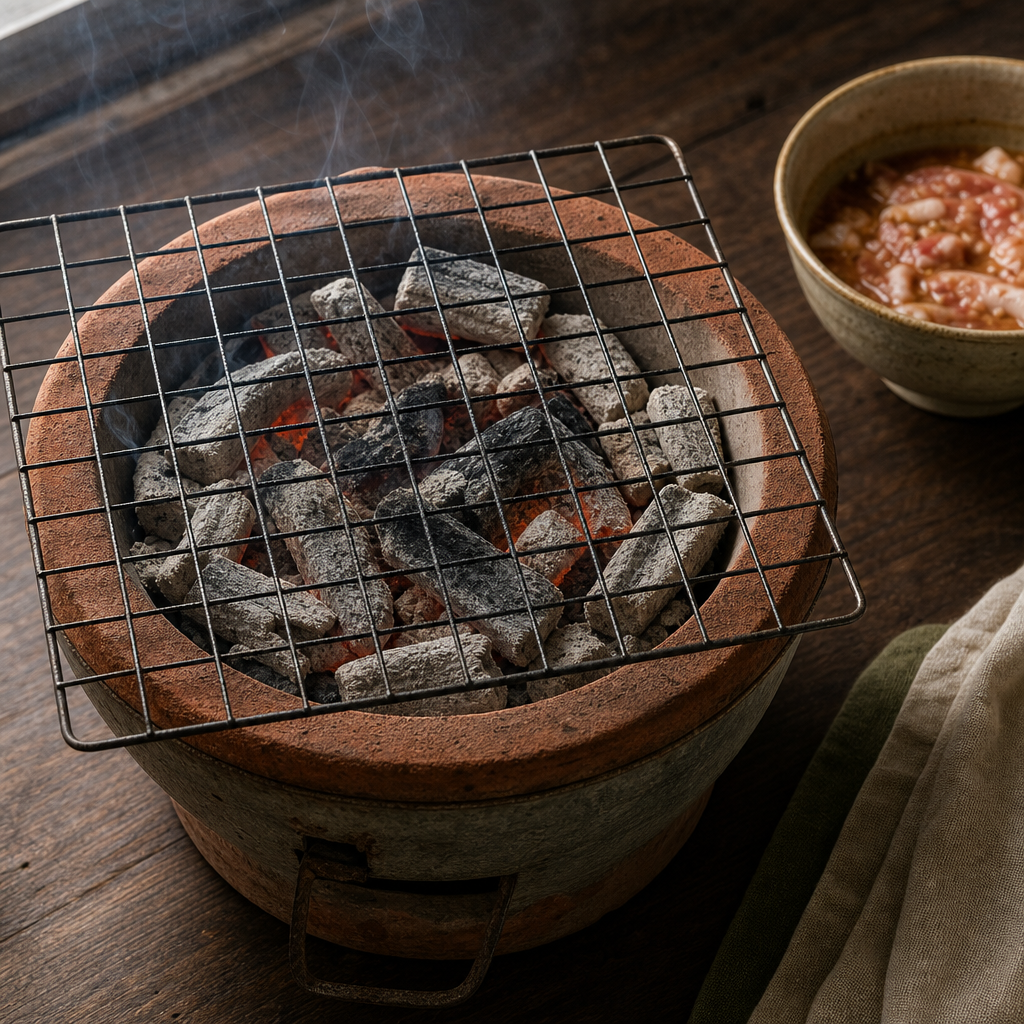
Prepare charcoal for medium heat: the coals should be fully ashed, with no high flames, and hot enough that a hand held 10 cm above the grate feels uncomfortable after 4-5 seconds. Set a small cooler zone to one side.
Grill and turn constantly
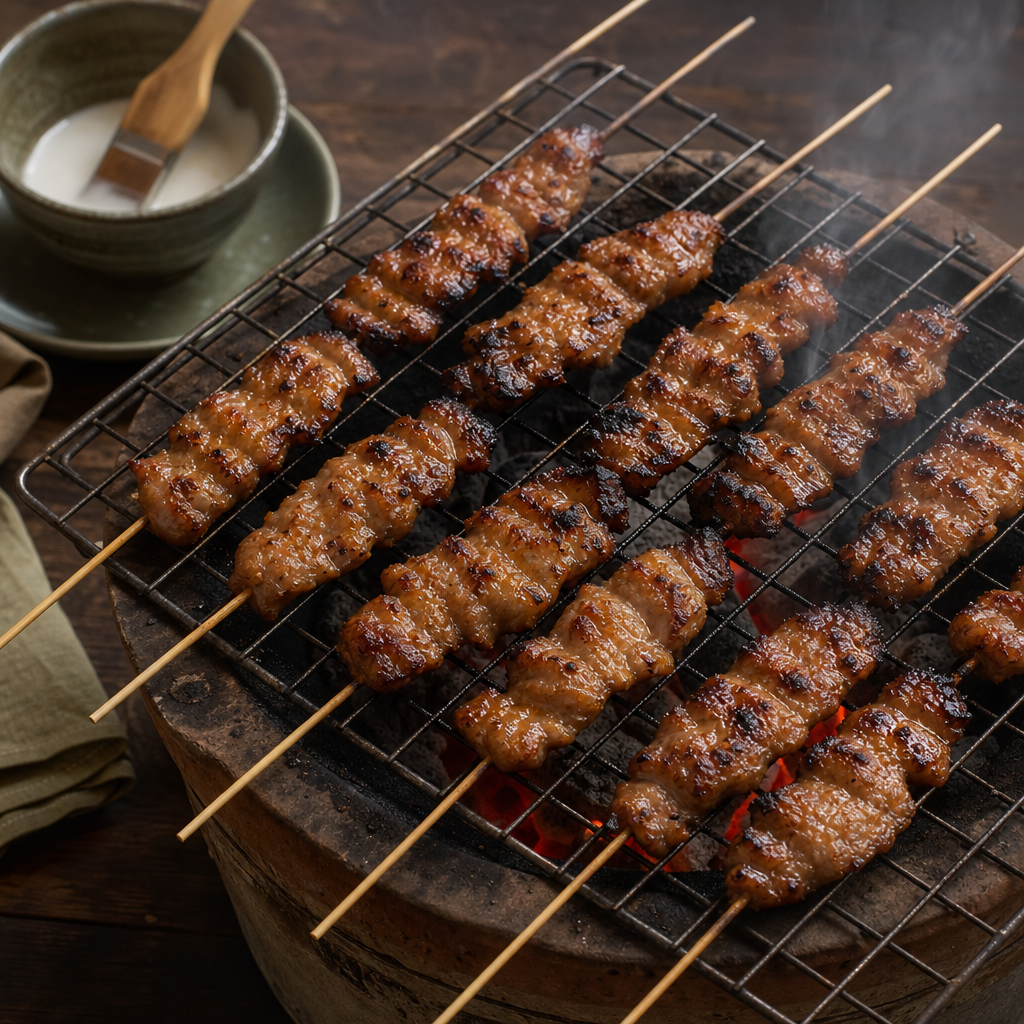
Lay the skewers over the coals and turn every 30-45 seconds. Brush lightly with coconut cream after the first minute, then again whenever the surface looks dry rather than glossy.
Finish at light char
Pull the skewers when the pork is cooked through, glossy, and browned with small charred spots at the edges, 6-8 minutes total depending on slice thickness. Rest 2 minutes before serving with sticky rice.
Common mistakes
- {'mistake': 'Cutting the pork into cubes.', 'fix': 'Slice thin sheets across the grain. Cubes belong to other skewers; moo ping needs folded slices that cook fast and stay tender.'}
- {'mistake': 'Using high flames because the skewers look pale.', 'fix': 'Lower the heat and keep turning. The color comes from repeated basting and evaporation, not from burning sugar in one pass.'}
- {'mistake': 'Leaving exposed bamboo over the coals.', 'fix': 'Thread the meat tightly and cover the skewer except for the handle and tip. Exposed bamboo burns, weakens, and snaps when turned.'}
- {'mistake': 'Adding too much dark soy sauce.', 'fix': 'Use dark soy as a color accent. More dark soy gives a black, heavy-tasting skewer before any real char develops.'}
- {'mistake': 'Serving it without sticky rice.', 'fix': 'Sticky rice is not garnish here. It catches the pork fat and balances the salty-sweet glaze.'}
What does not belong
- {'item': 'Peanut sauce', 'reason': 'Peanut sauce belongs to satay, not moo ping.'}
- {'item': 'Turmeric-heavy curry paste', 'reason': 'That pushes the skewer toward satay or grilled curry pork. Moo ping is garlic, white pepper, cilantro root, salt, sugar, and smoke.'}
- {'item': 'Red food coloring', 'reason': 'Color should come from soy, sugar, coconut cream, and charcoal. Red dye gives the wrong visual signal.'}
- {'item': 'Chili in the marinade', 'reason': 'Moo ping is not a spicy skewer. Heat, if wanted, comes from a separate dipping sauce such as น้ำจิ้มแจ่ว.'}
- {'item': 'Honey as the main sweetener', 'reason': 'Honey burns faster than palm sugar and gives a floral note that reads wrong against fish sauce and white pepper.'}