Butadon
The dish in context
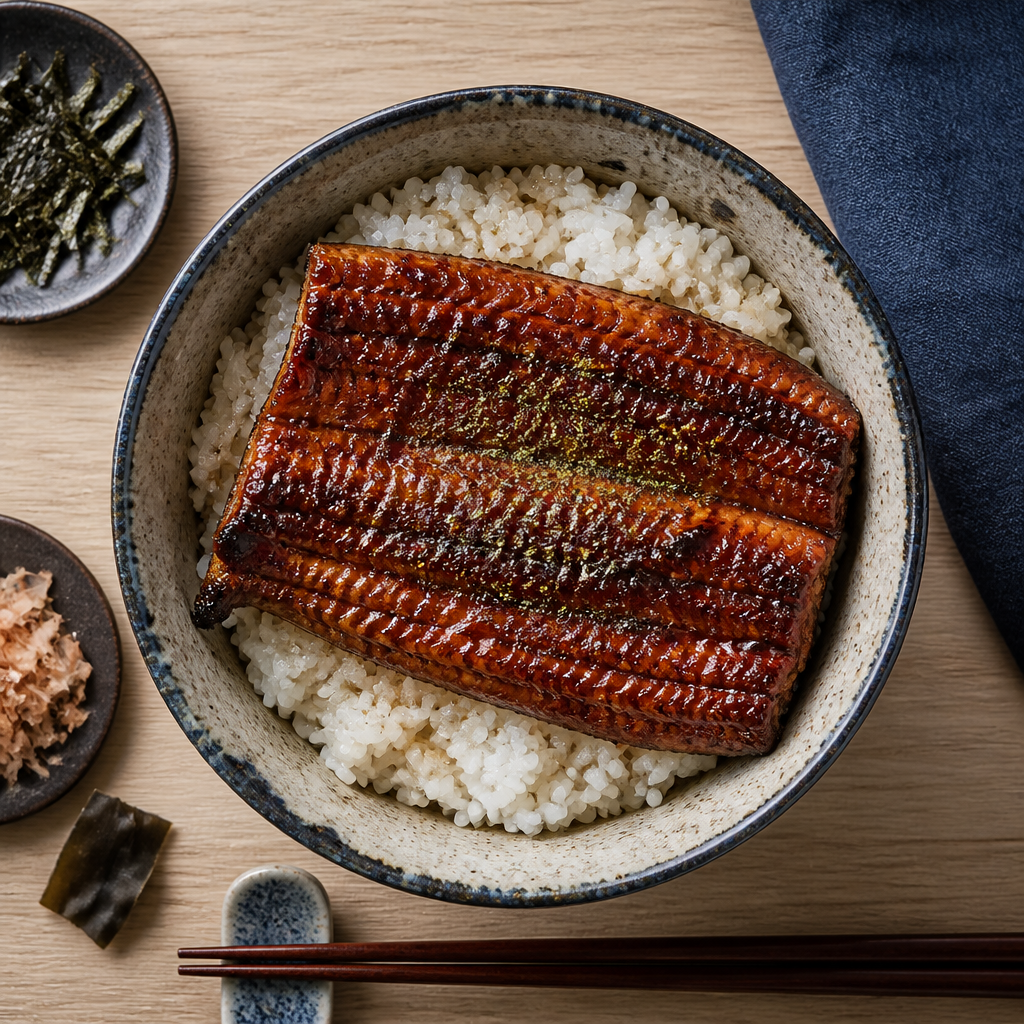
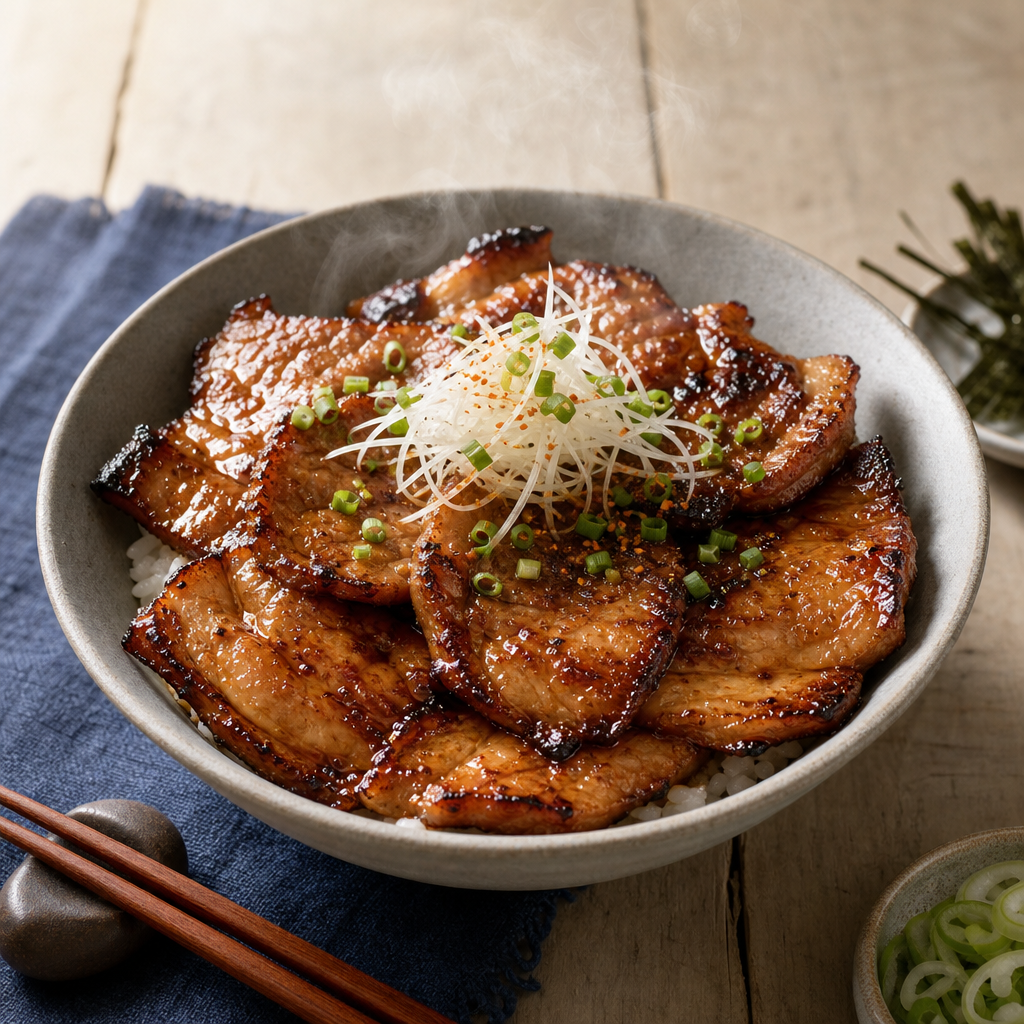
Butadon is strongly associated with Obihiro in the Tokachi region of Hokkaido, where pig farming expanded from the late Meiji period and pork became a practical local protein. Japanese Ministry of Agriculture sources describe the Obihiro style as thick-cut pork grilled or pan-seared, coated in a sugar-soy tare, and served over rice with little beyond scallion garnish. The origin story usually points to early Shōwa-era restaurants adapting the structure of unagi kabayaki donburi: rice, charcoal-grilled protein, and a sweet soy glaze. Outside Hokkaido, butadon can mean looser pork-and-onion bowls, but Tokachi butadon is narrower: pork, rice, tare, char. Extra vegetables do not define this version.
Method 6 steps · 70 min
Wash and soak the rice
Wash the short-grain rice 3-5 times, changing the water until it runs nearly clear. Drain well, add the measured cooking water, and soak for 30 minutes before cooking.
Cook and rest the rice
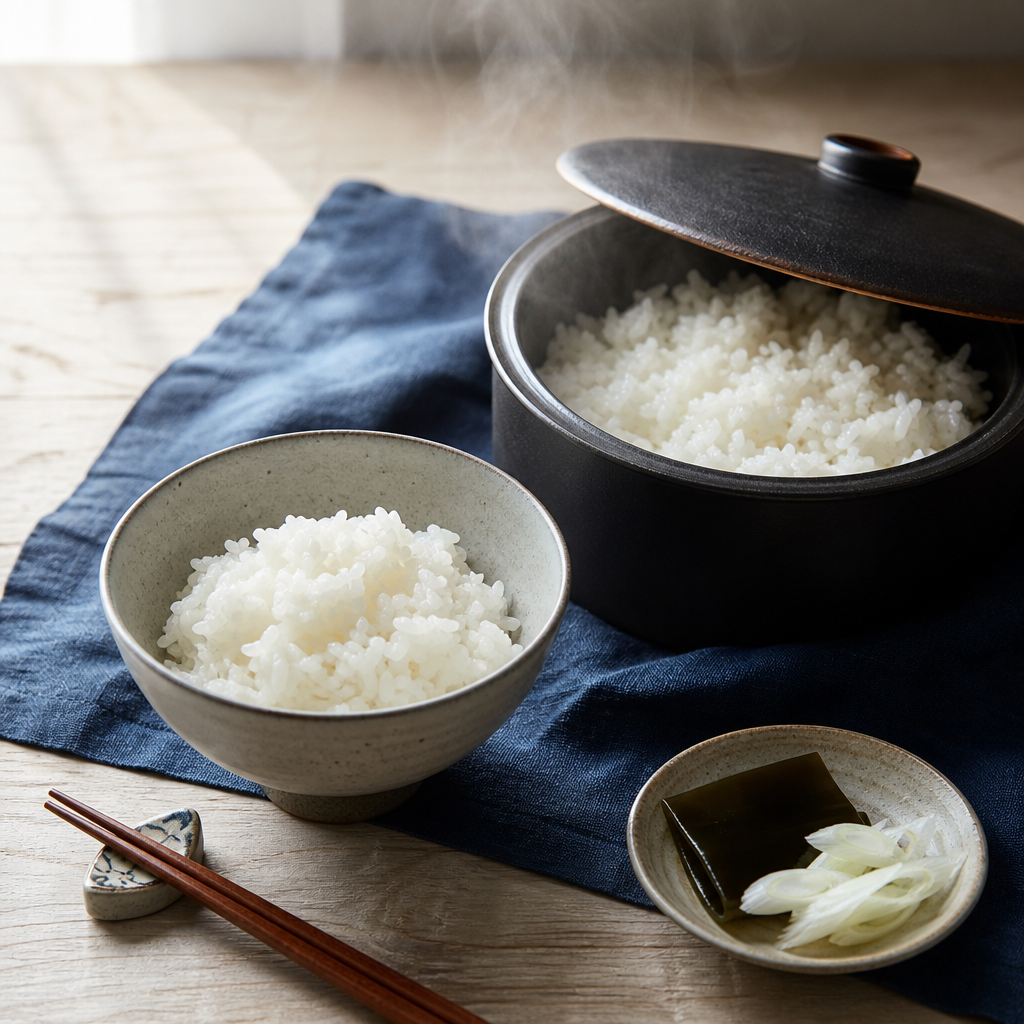
Cook the rice in a rice cooker or covered saucepan. When the heat cycle ends, rest the rice covered for 10 minutes, then fluff gently with a shamoji or rice paddle.
Reduce the tare
Combine shoyu, mirin, sake, and sugar in a small saucepan. Simmer over medium heat until the sugar dissolves and the liquid thickens enough to coat the back of a spoon, 5-7 minutes; it should still pour in a thin stream.
Sear the pork
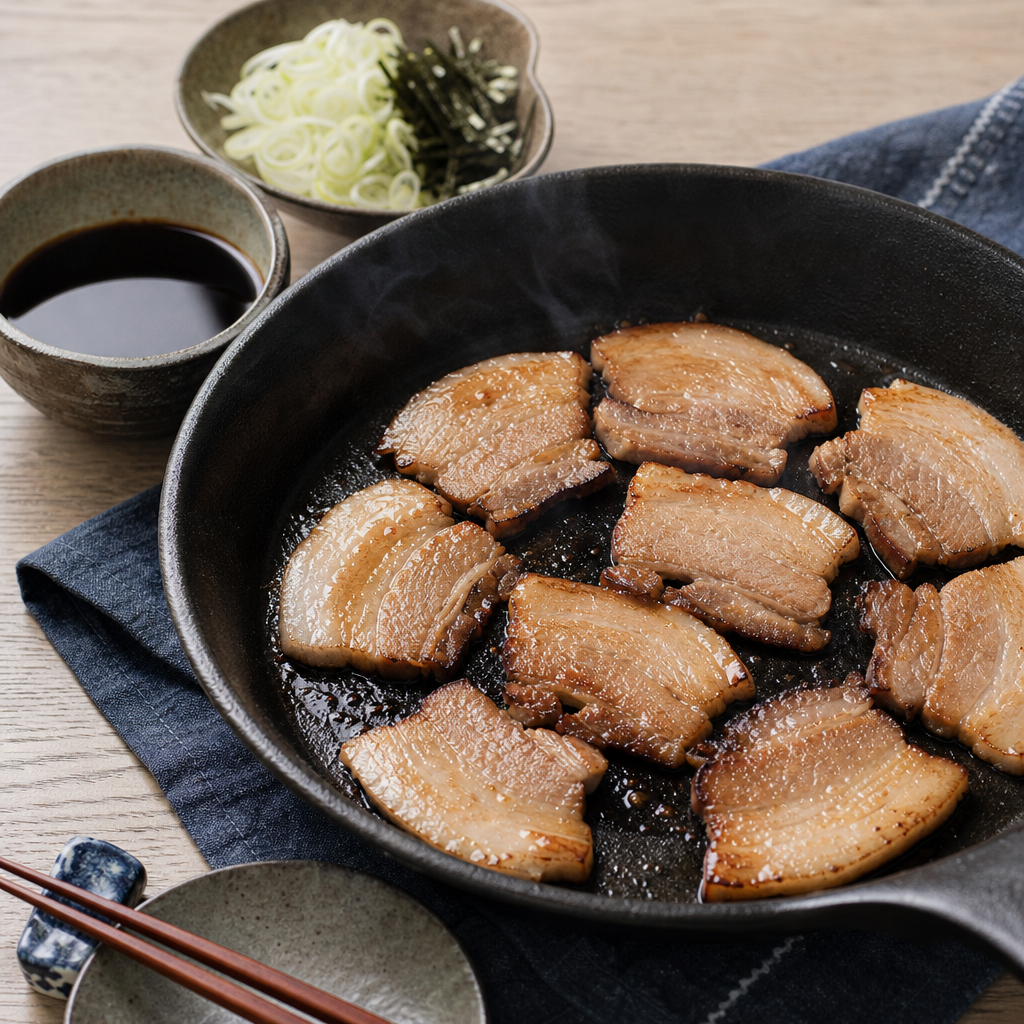
Heat a skillet, grill pan, or charcoal grill over medium-high heat. Sear the pork in a single layer until browned at the edges, about 60-90 seconds per side for 5-7 mm slices; work in batches and drain off excess rendered fat if the pan floods.
Lacquer the pork
Lower the heat to medium. Brush or spoon a thin layer of tare over the pork, turn once, and cook 20-30 seconds per side until glossy and lightly sticky. Do not leave pooled tare in the pan long enough to blacken.
Build the bowls
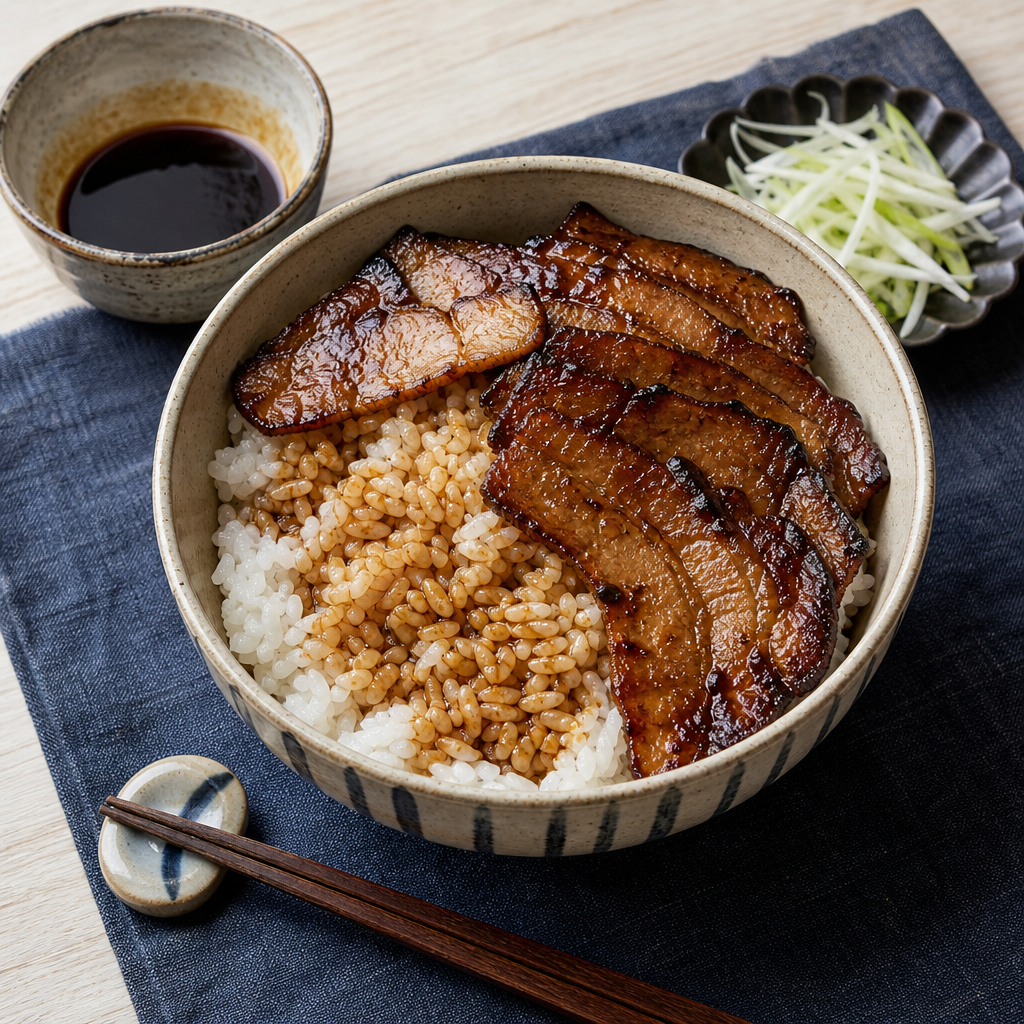
Divide the hot rice among donburi bowls. Drizzle each bowl with 1-2 teaspoons tare, lay the pork slices over the rice in overlapping rows, then add scallion and shichimi if using.
Common mistakes
- {'mistake': 'Using long-grain rice', 'fix': 'Use Japanese short-grain rice. Long-grain rice stays loose and lets the tare run to the bottom instead of clinging to the bowl.'}
- {'mistake': 'Adding the tare before the pork browns', 'fix': 'Sear first, glaze late. Sugar in the sauce blocks proper browning and burns before thick pork cooks through.'}
- {'mistake': 'Cutting the pork too thin', 'fix': 'Use 5-7 mm slices for Tokachi style. Shabu-shabu-thin pork makes a softer simmered bowl, not the Obihiro grilled-pork profile.'}
- {'mistake': 'Making the sauce taste like bottled teriyaki', 'fix': 'Keep the tare narrow: shoyu, mirin, sake, sugar. Garlic-heavy, ginger-heavy, cornstarch-thickened sauces push the dish out of its lane.'}
- {'mistake': 'Crowding the pan', 'fix': 'Cook in batches. Pork releases moisture fast, and crowded slices steam gray instead of taking on browned edges.'}
What does not belong
- {'item': 'Long-grain rice', 'reason': 'Long-grain rice does not belong in Japanese donburi. The texture and starch behavior are wrong.'}
- {'item': 'Bottled American teriyaki sauce', 'reason': 'It is usually too thick, too sweet, and often garlic-forward. Butadon tare should reduce cleanly and glaze thinly.'}
- {'item': 'A pile of stir-fried onions and vegetables', 'reason': 'That makes a different pork rice bowl. Tokachi butadon is intentionally spare: pork, rice, tare, garnish.'}
- {'item': 'Cornstarch slurry', 'reason': 'The shine comes from reduced sugar and mirin, not starch gel. Cornstarch gives a cafeteria glaze.'}
- {'item': 'Mayonnaise', 'reason': 'Mayonnaise covers the char and tare balance. It does not belong on this version.'}