Unadon
The dish in context
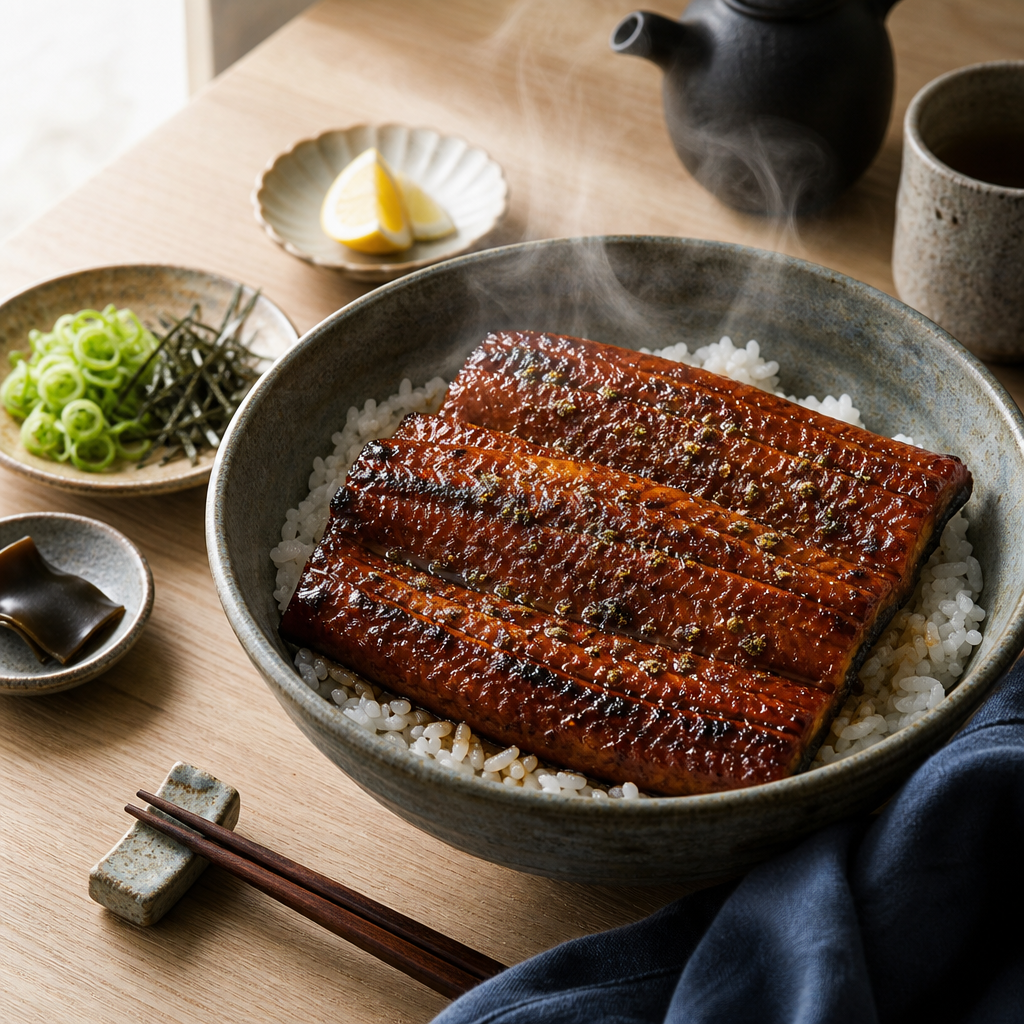
Unadon (鰻丼) is one of Japan’s early donburi forms: grilled eel laid over rice with enough tare (たれ) to season the grains underneath. The Kanto method associated with Tokyo steams the eel before the final grill, giving softer flesh; Kansai-style kabayaki is generally grilled without steaming and has a firmer bite. Eel has a strong seasonal association with Doyō no Ushi no Hi (土用の丑の日), the midsummer day when eating unagi is promoted as restorative. That custom sits beside a modern constraint: Japanese eel is under serious resource pressure, so sourcing from a transparent, regulated farm matters more here than romantic language about tradition.
Method 8 steps · 95 min
Wash and soak the rice
Wash the rice in 3-5 changes of water until the water turns nearly clear, then drain for 10 minutes. Add the measured water and soak for 30 minutes before cooking.
Cook and rest the rice
Cook the rice in a rice cooker or covered heavy pot. When it finishes, rest it covered for 10 minutes, then fluff with a shamoji (しゃもじ) using cutting motions rather than stirring hard.
Build the tare
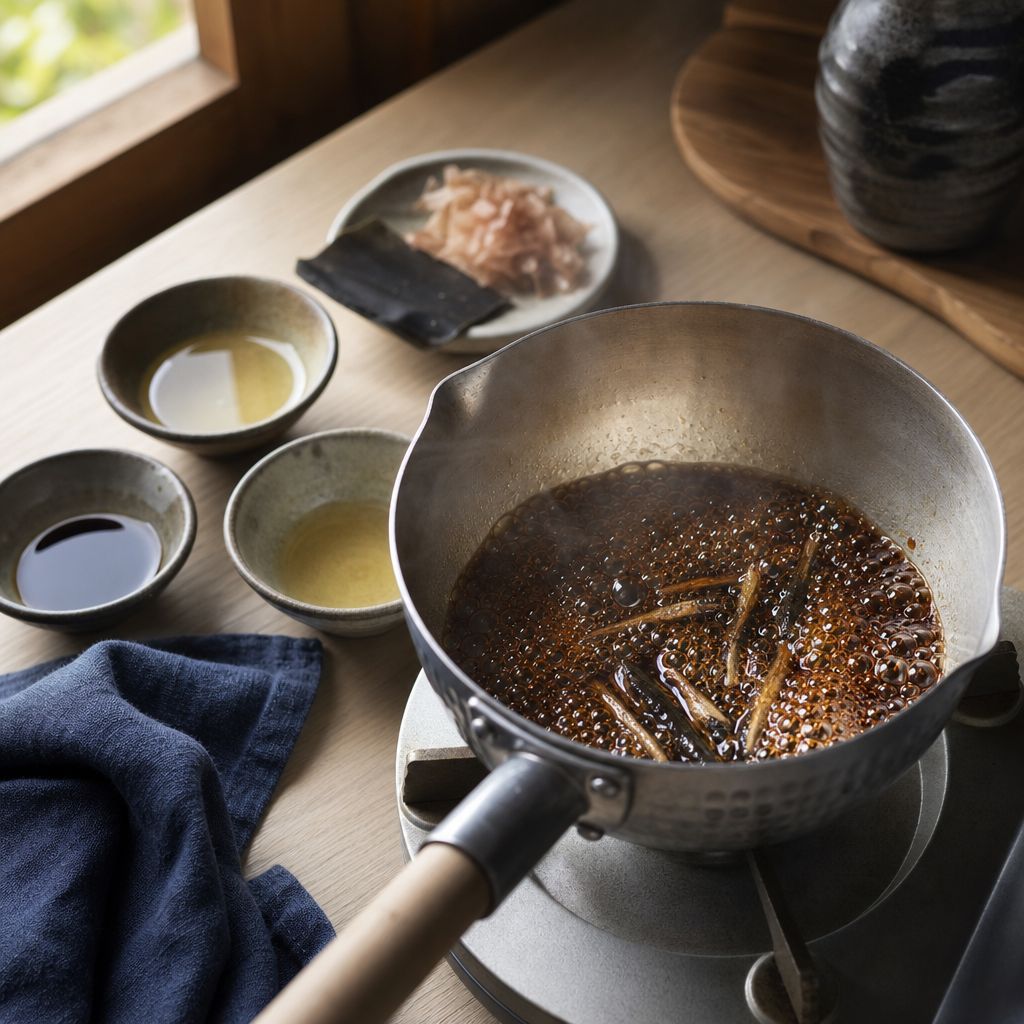
Combine shoyu, mirin, sake, sugar, and eel bones if using in a small saucepan. Bring to a simmer, then cook at a steady bubble until reduced to about 220 ml and glossy enough to coat a spoon in a thin sheet, 25-35 minutes. Strain if bones were used.
Skewer the eel flat
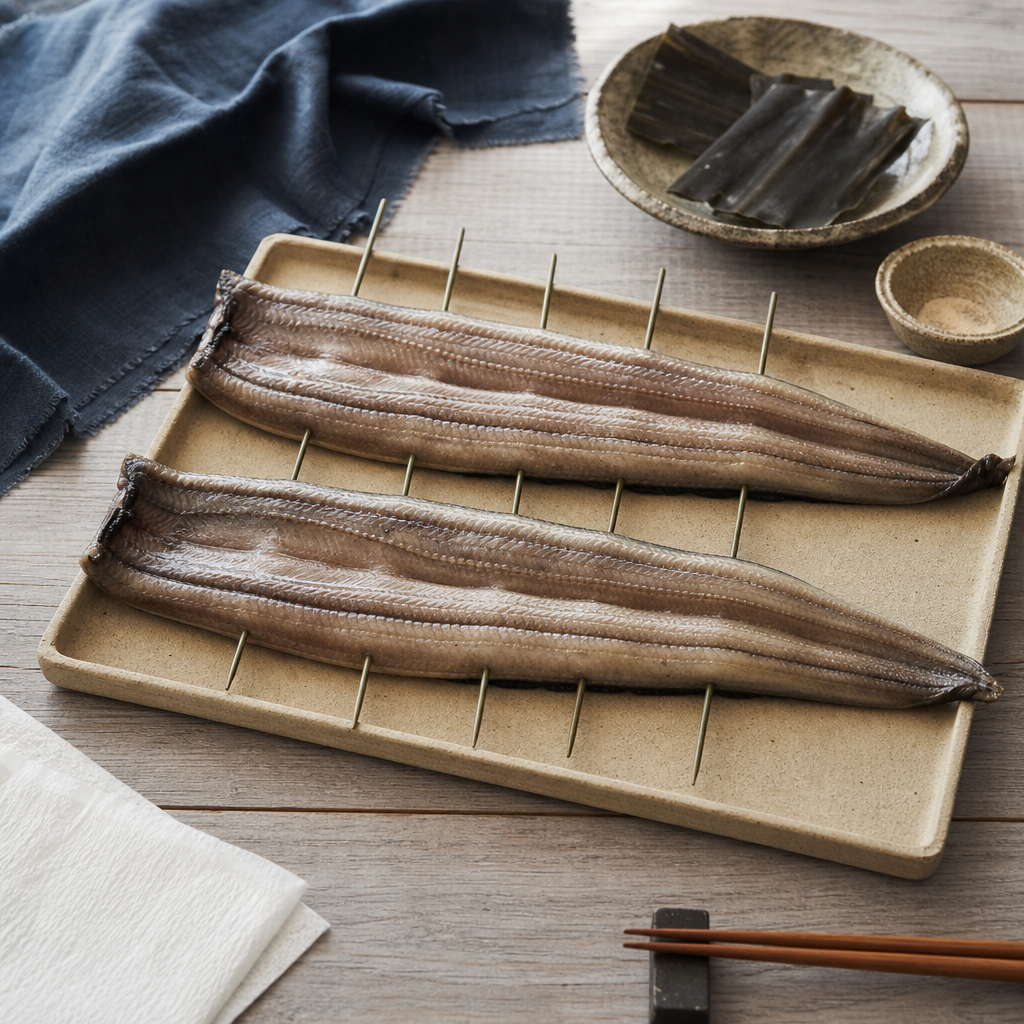
Thread metal or soaked bamboo skewers lengthwise through each eel fillet, keeping the flesh flat and the skin side smooth. Pat the eel dry.
Steam the eel
Set the eel skin-side down on a rack over simmering water with the sake. Cover and steam until the flesh turns opaque and yields to light pressure, 12-15 minutes for raw eel. If using frozen cooked kabayaki, skip this step.
Grill and glaze
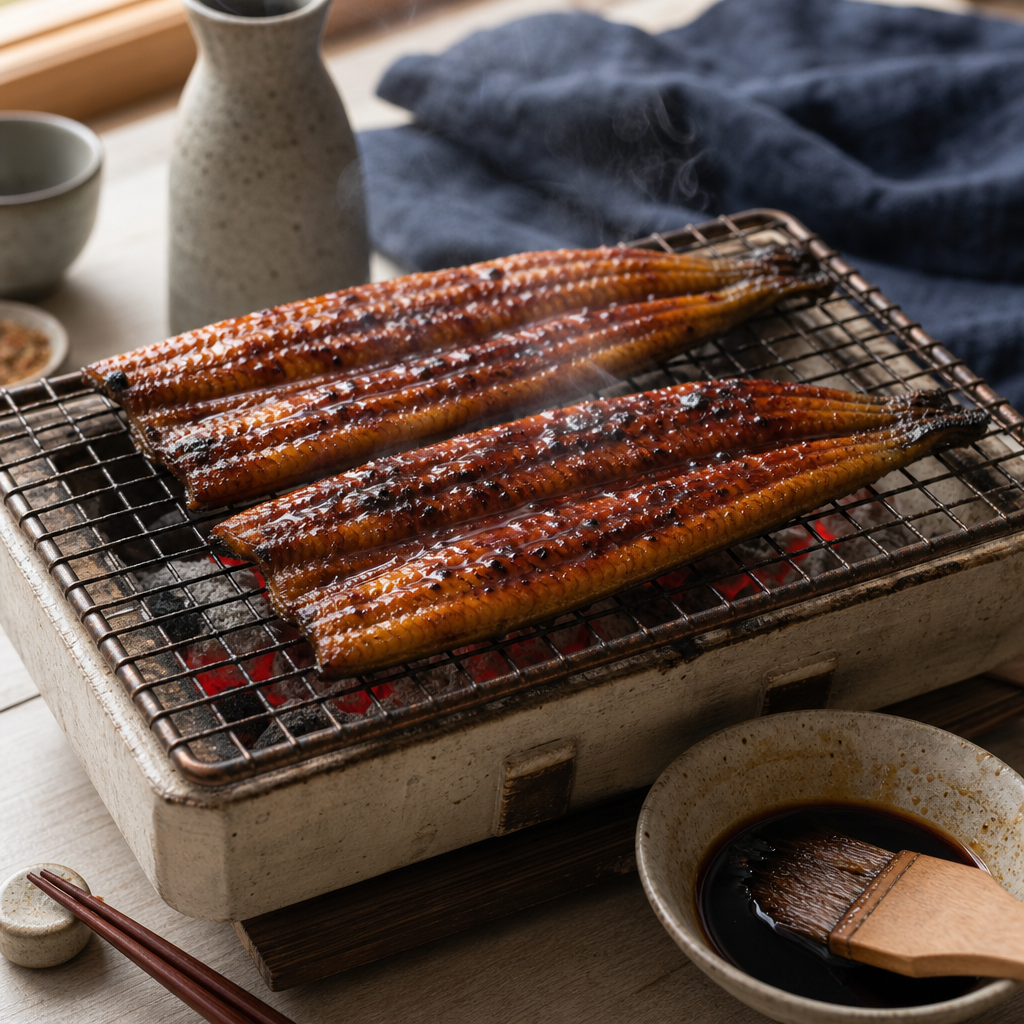
Heat a charcoal grill to medium-hot or set a broiler rack about 12 cm from the element. Grill the eel skin-side down first until the edges begin to brown, then brush with tare, turn, brush again, and repeat in thin coats for 6-8 minutes total. Stop when the surface is amber, shiny, and lightly charred at the ridges.
Season the rice
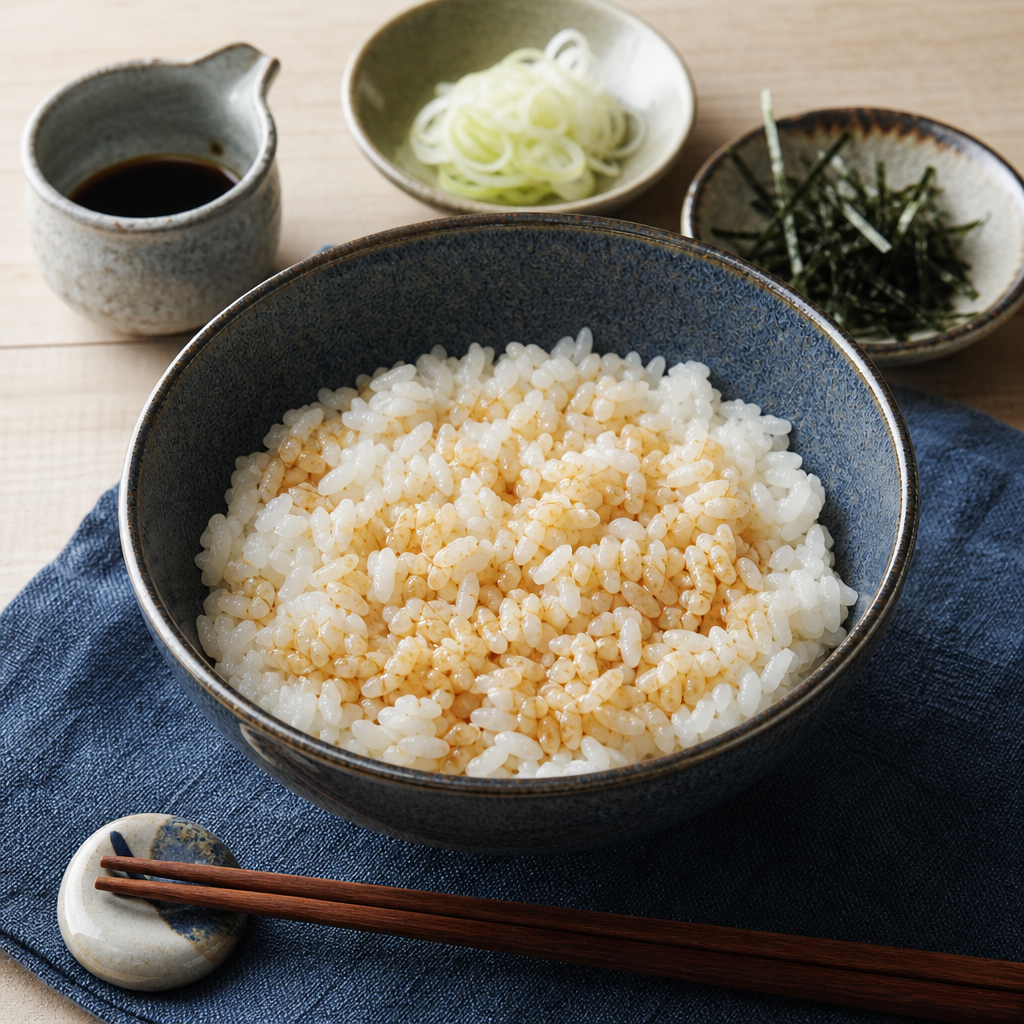
Spoon hot rice into donburi bowls and drizzle each bowl with 1-2 teaspoons tare. Do not soak the rice; the sauce should streak through the top layer.
Assemble
Remove the skewers, lay the eel fillets over the rice skin-side down, and brush once more with warm tare. Finish with a small pinch of ground sanshō.
Common mistakes
- {'mistake': 'Using long-grain rice', 'fix': 'Use Japanese short-grain rice. Long-grain rice stays separate in the wrong way and cannot carry the tare properly.'}
- {'mistake': 'Glazing with bottled American teriyaki sauce', 'fix': 'Make tare from shoyu, mirin, sake, and sugar. Commercial teriyaki sauce is usually too thick, sweet, and garlic-heavy for kabayaki.'}
- {'mistake': 'Reducing the tare to paste', 'fix': 'Stop when it coats a spoon in a thin glossy sheet. If it strings like caramel, loosen it with a splash of sake or water.'}
- {'mistake': 'Boiling or aggressively reheating cooked frozen unagi', 'fix': 'Warm cooked kabayaki under a broiler or in a covered pan with a splash of sake. Boiling strips the glaze and toughens the skin.'}
- {'mistake': 'Skipping the rice rest', 'fix': 'Rest cooked rice 10 minutes before serving. The steam redistributes and the grains firm enough to take sauce without collapsing.'}
What does not belong
- {'item': 'garlic-heavy teriyaki sauce', 'reason': 'It does not belong in unadon. Kabayaki tare is soy, mirin, sake, and sugar; garlic pushes it into a different restaurant sauce category.'}
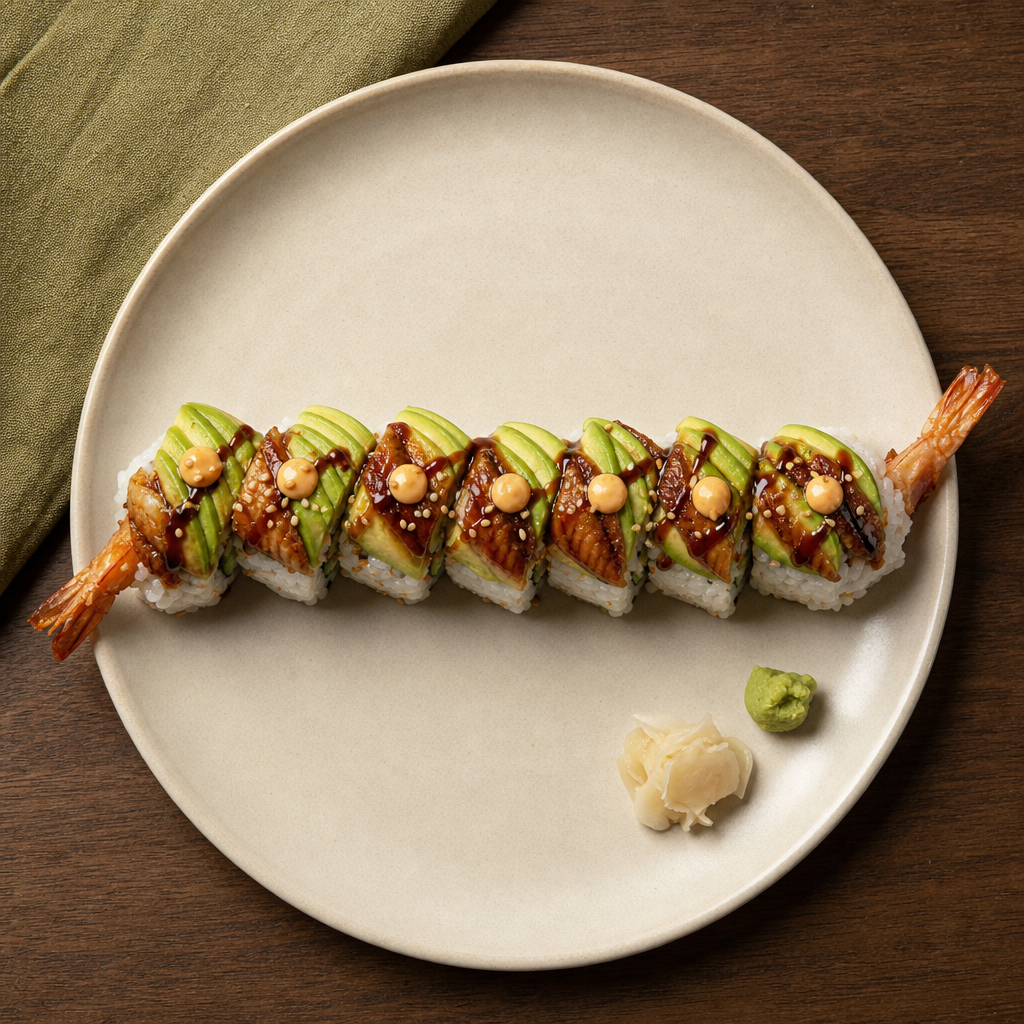
- {'item': 'mayonnaise', 'reason': 'Mayonnaise does not belong on unadon. It covers the eel fat and turns the bowl into fusion sushi-bar grammar.'}
- {'item': 'sesame oil', 'reason': 'Sesame oil does not belong here. Its roasted aroma fights the charcoal and tare instead of supporting them.'}
- {'item': 'long-grain rice or basmati', 'reason': 'Long-grain rice does not belong in Japanese donburi. The texture and aroma are wrong for tare-soaked rice.'}
- {'item': 'avocado, cucumber, or sushi-roll garnishes', 'reason': 'They do not belong in standard unadon. The bowl is eel, rice, tare, and at most sanshō.'}