Yakitori Negima
The dish in context
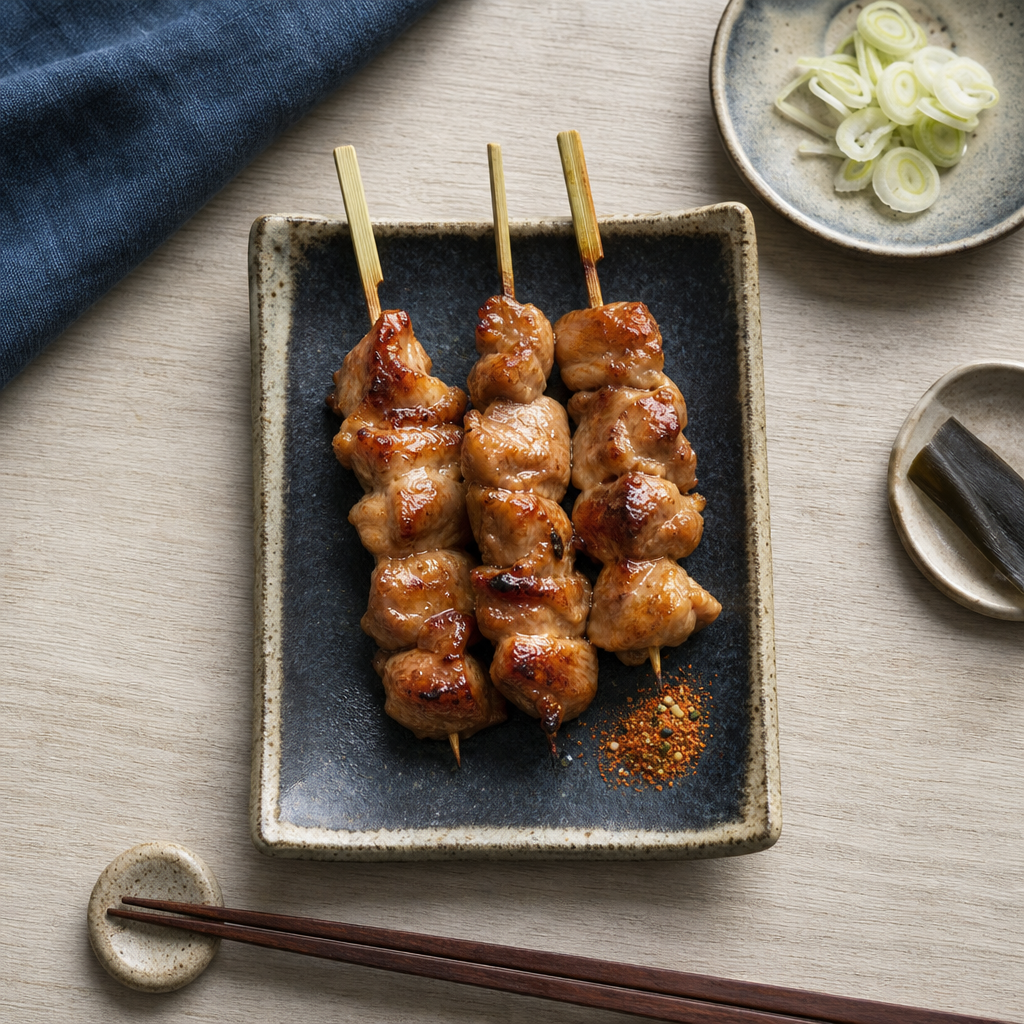
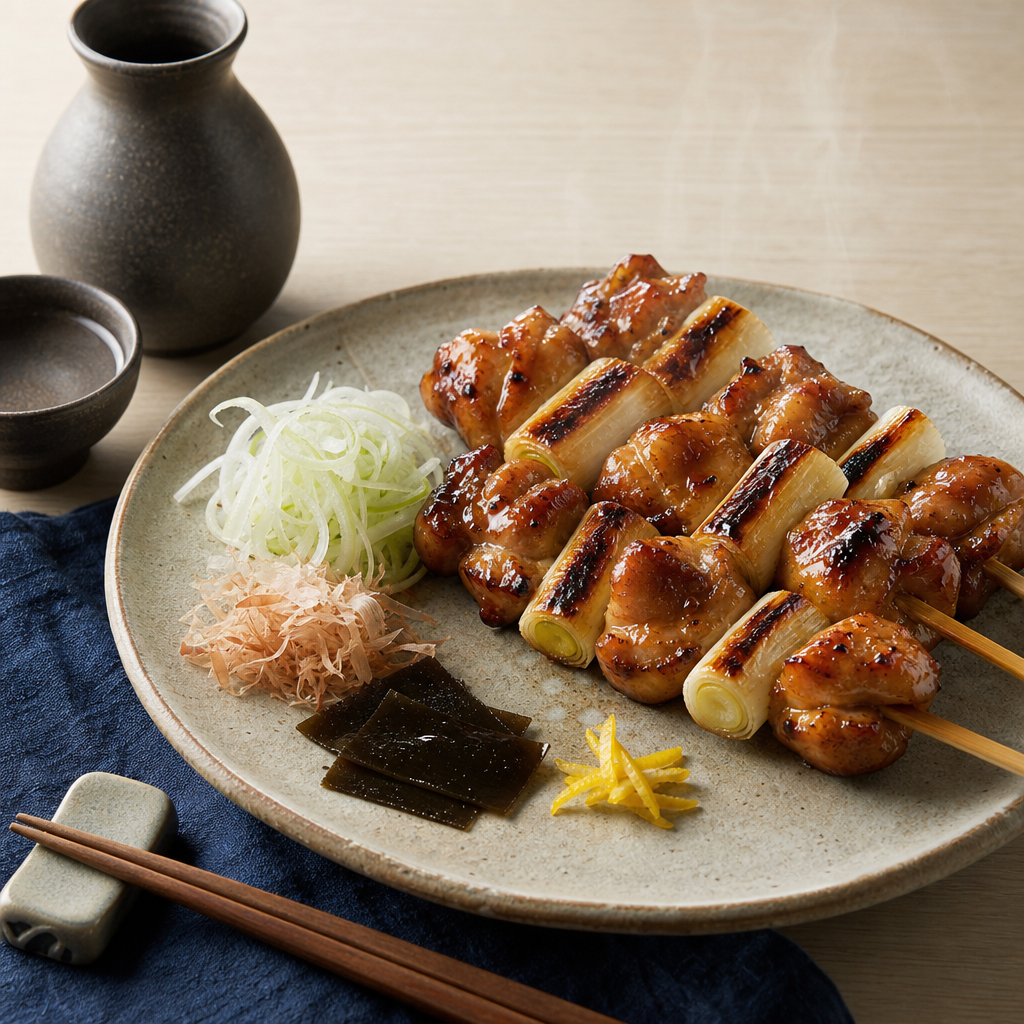
Yakitori developed from street stalls and specialized grill shops, with skewers allowing small cuts, offcuts, and later branded chicken parts to be cooked quickly over charcoal. Negima now usually means chicken and negi skewered in alternation, though the older word ねぎま originally referred to 葱鮪, a leek-and-tuna preparation from Edo food culture. Modern yakitori shops commonly offer two seasonings: shio, meaning salt, or tare, a soy-mirin-sake glaze built up through repeated brushing. This recipe uses the tare branch because it gives the clearest home reference point, but salt-only negima is equally standard in yakitori shops.
Method 8 steps · 75 min
Soak the skewers
Soak the bamboo skewers in water for 30 minutes. If using a broiler or grill pan, still soak them; exposed ends scorch fast.
Reduce the tare
Combine soy sauce, mirin, sake, sugar, and chicken trimmings in a small saucepan. Simmer gently until reduced by about one-third and glossy, 15-20 minutes, then strain into a narrow cup for brushing.
Cut and season the chicken
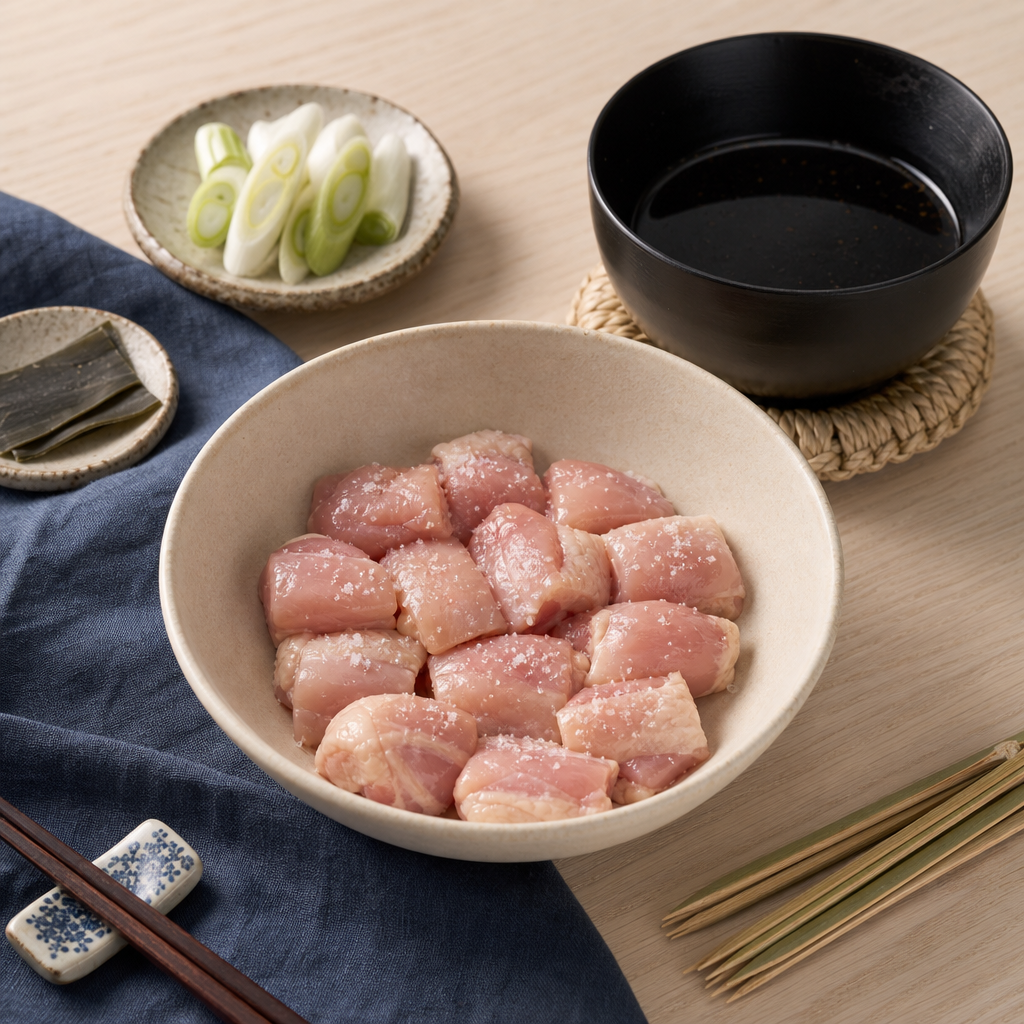
Cut the chicken thigh into 2.5 cm pieces, keeping the pieces as even as possible. Toss with the salt and rest 10 minutes while the tare cools slightly.
Cut the negi
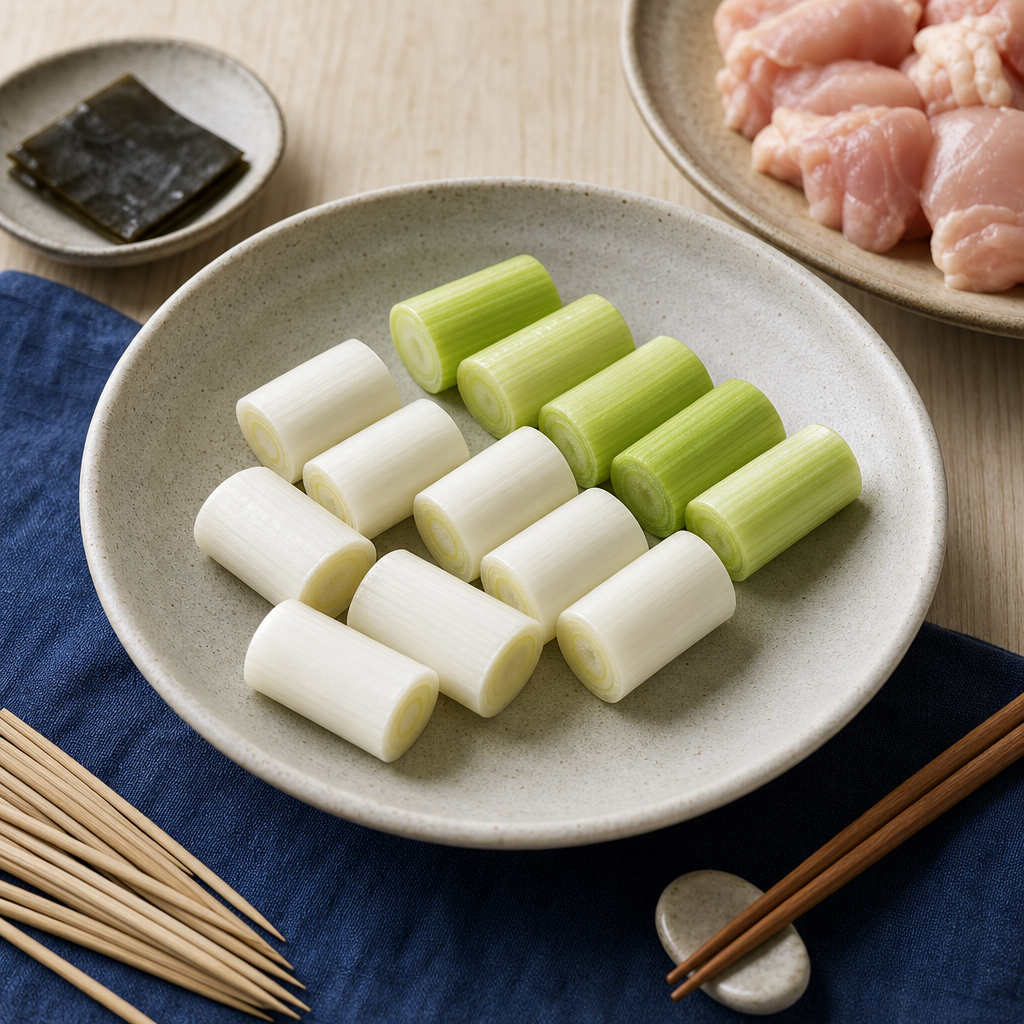
Cut the white and pale-green negi into 2.5 cm cylinders. Keep the cut faces flat so they sit squarely against the grill and blister instead of rolling.
Thread the skewers
Thread each skewer in an alternating pattern: chicken, negi, chicken, negi, chicken. Pierce chicken pieces through two points when possible so they lie flat and do not spin.
Start over moderate direct heat
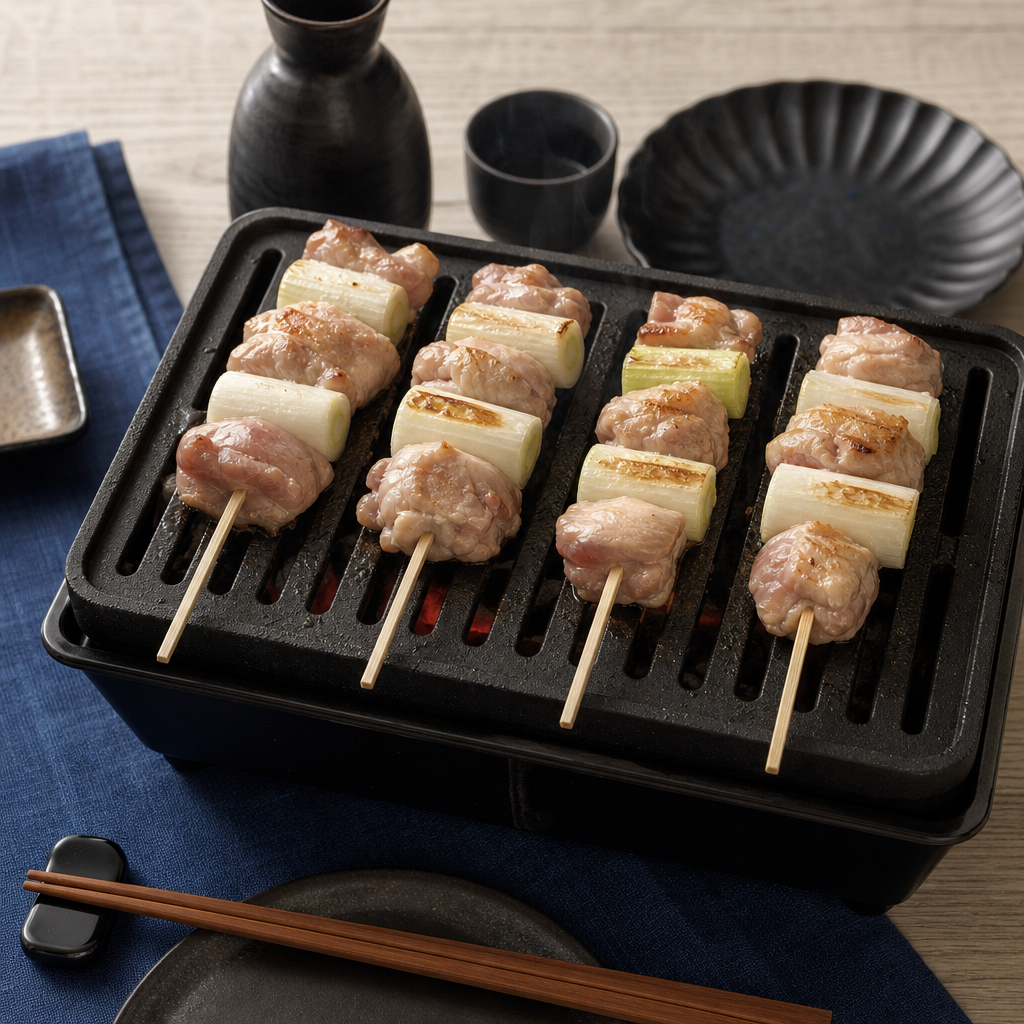
Heat a charcoal grill, gas grill, broiler, or grill pan to medium-high direct heat and oil the grate or pan. Grill the skewers without tare for 3-4 minutes per side, turning until the chicken is mostly opaque and the negi shows brown patches.
Baste late
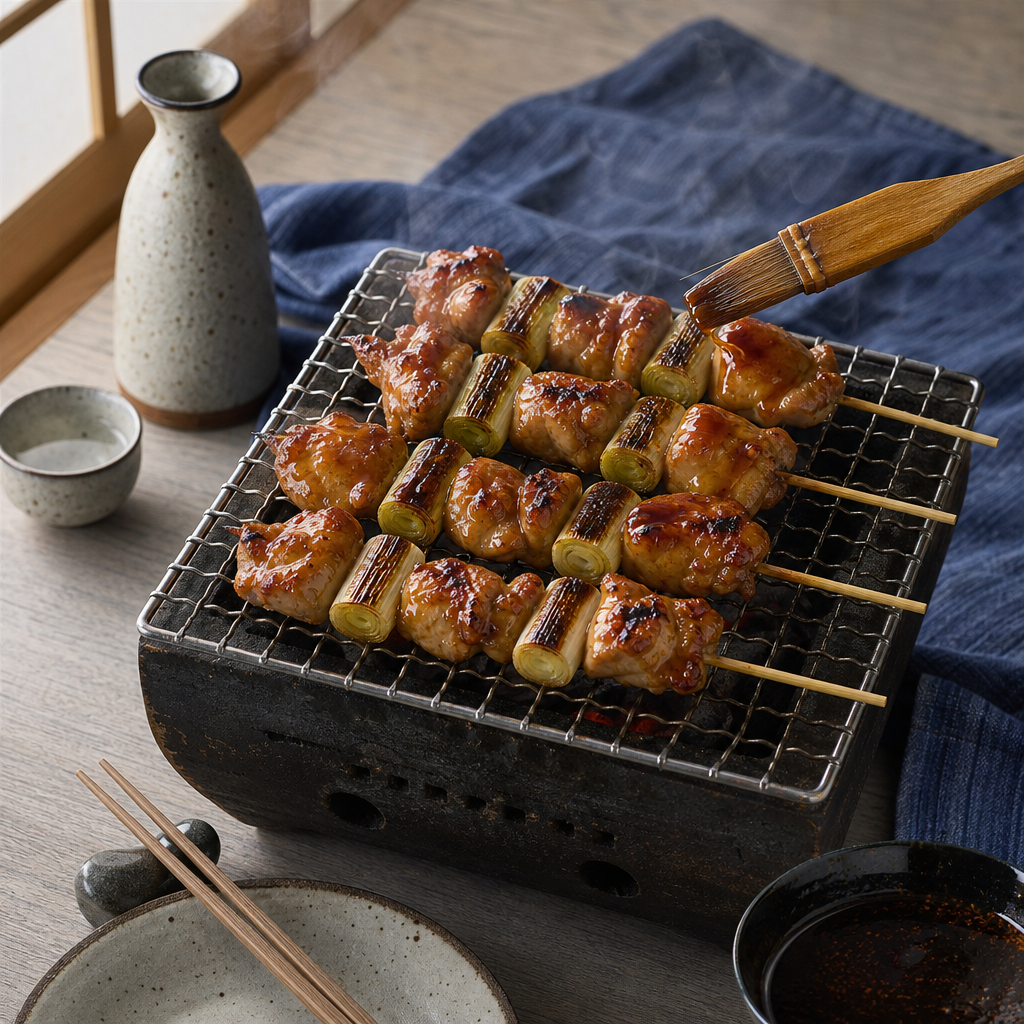
Brush the skewers lightly with tare, turn, and cook 30-45 seconds. Repeat 2-3 times until the surface is shiny and caramelized in spots, not crusted with thick sauce.
Finish and serve
Pull the skewers when the thickest chicken pieces reach 74°C or when the juices run clear and the meat springs back under light pressure. Rest 2 minutes, then serve with shichimi or sansho at the table.
Common mistakes
- {'mistake': 'Using thin green onions', 'fix': 'Use Japanese negi, thick scallions, or young leeks. Thin green onions burn and collapse before the chicken finishes.'}
- {'mistake': 'Basting from the start', 'fix': 'Grill plain first, then brush tare only in the last few minutes. Sugar needs late heat, not a full cooking cycle.'}
- {'mistake': 'Cutting chicken pieces unevenly', 'fix': 'Keep pieces near 2.5 cm. Yakitori depends on repeated turning; mixed sizes break the timing.'}
- {'mistake': 'Using a sweet bottled teriyaki sauce', 'fix': 'Make tare from soy sauce, mirin, sake, and sugar. Commercial American teriyaki is usually too thick and too sweet for yakitori basting.'}
- {'mistake': 'Crowding the skewers on a pan', 'fix': 'Leave space between skewers or cook in batches. Crowding traps steam and leaves the negi pale.'}
What does not belong
- {'item': 'Bell pepper, pineapple, or kebab vegetables', 'reason': 'They turn negima into a mixed grill skewer. Negima is chicken and negi.'}
- {'item': 'Commercial American teriyaki sauce', 'reason': 'It is too thick and sweet for repeated yakitori basting. It burns before it builds a clean lacquer.'}
- {'item': 'Sesame oil in the tare', 'reason': 'Sesame oil pushes the sauce toward a sesame-forward profile and masks the chicken fat.'}
- {'item': 'Garlic-heavy marinade', 'reason': 'Garlic is not the backbone of yakitori negima. The reference flavor is charred chicken, softened negi, and soy-mirin tare.'}
- {'item': 'Long kebab skewers loaded with large chunks', 'reason': 'Yakitori is built as small, controlled skewers. Oversized pieces cook like kebabs and lose the yakitori texture.'}