Yakitori Kawa
The dish in context
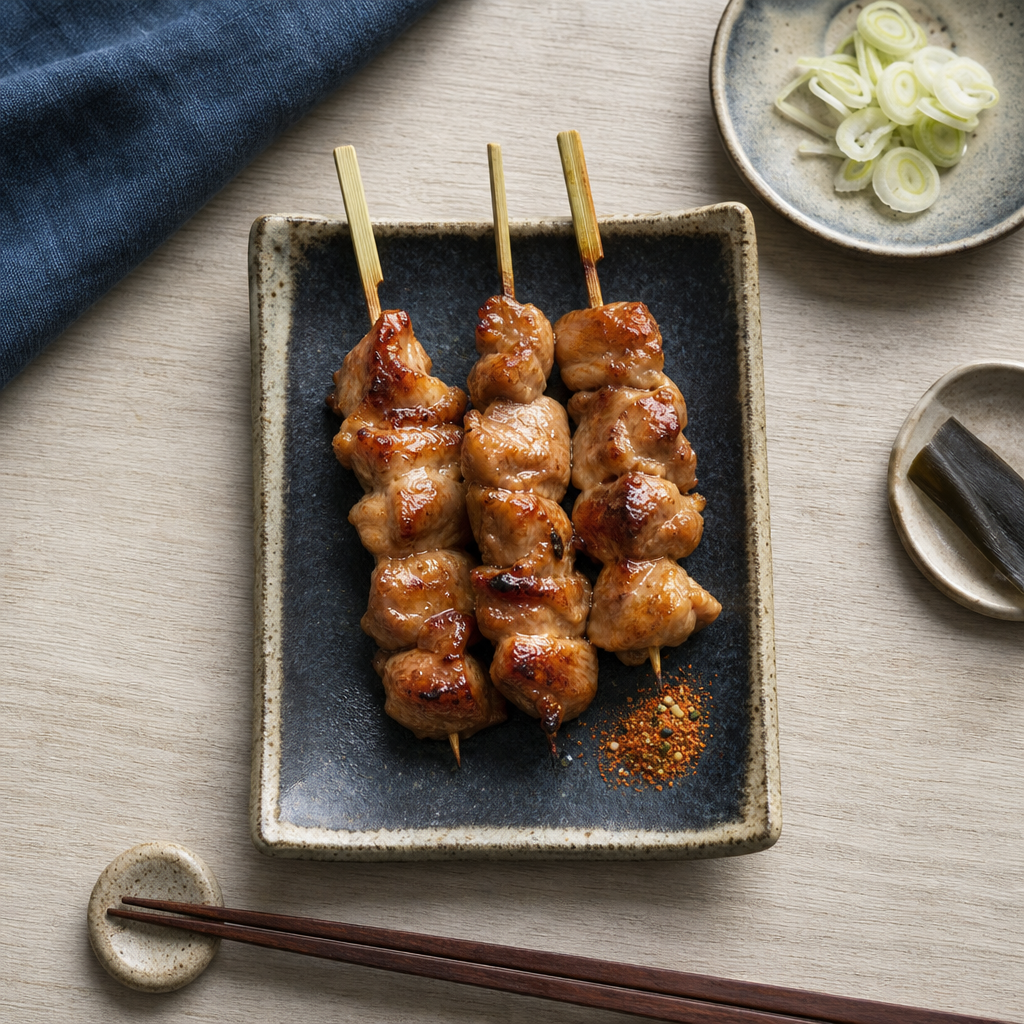
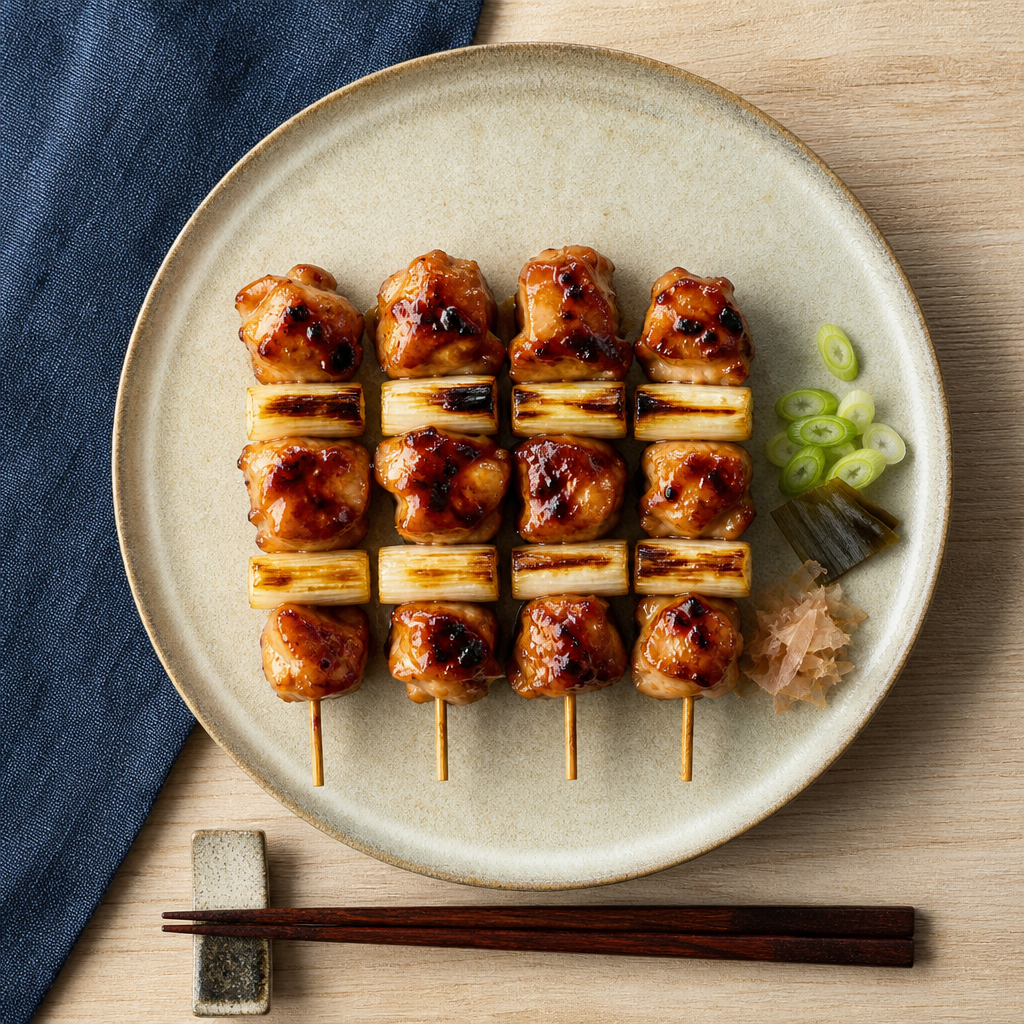
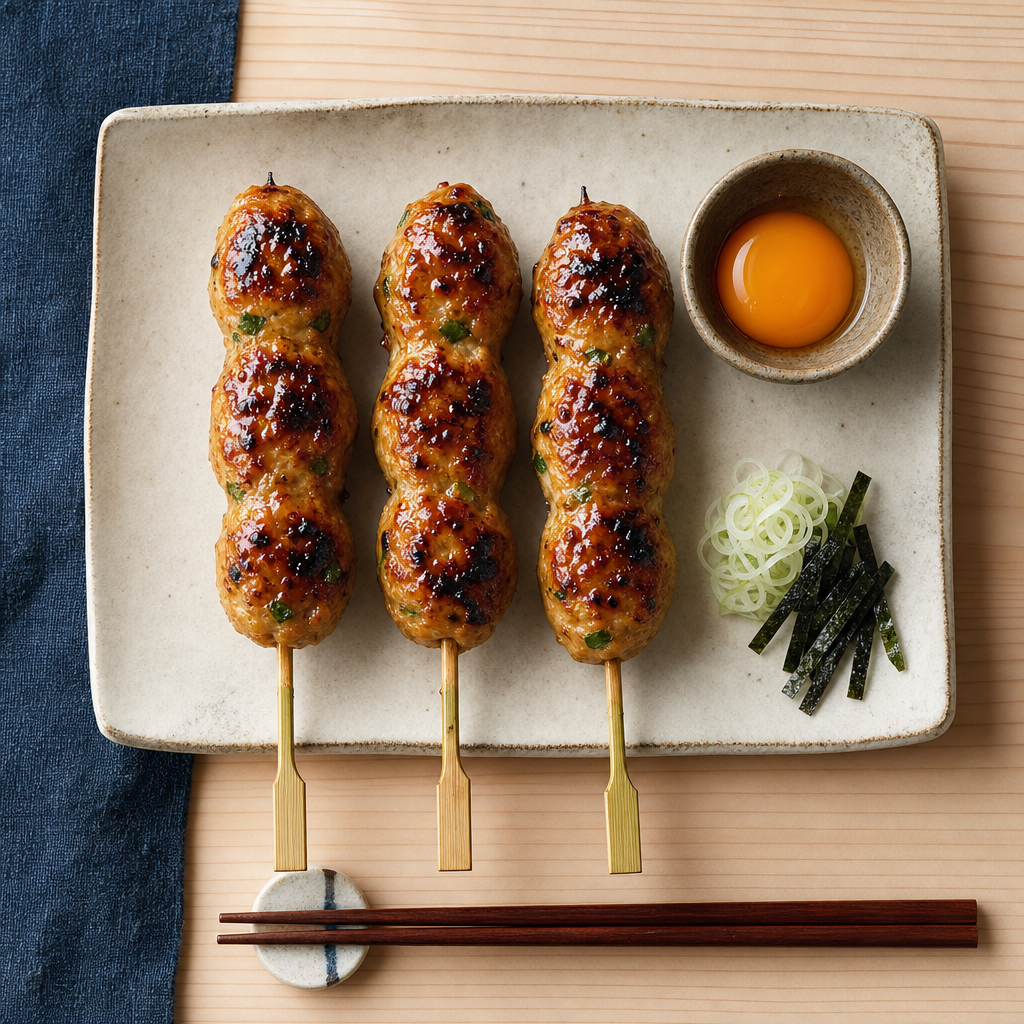
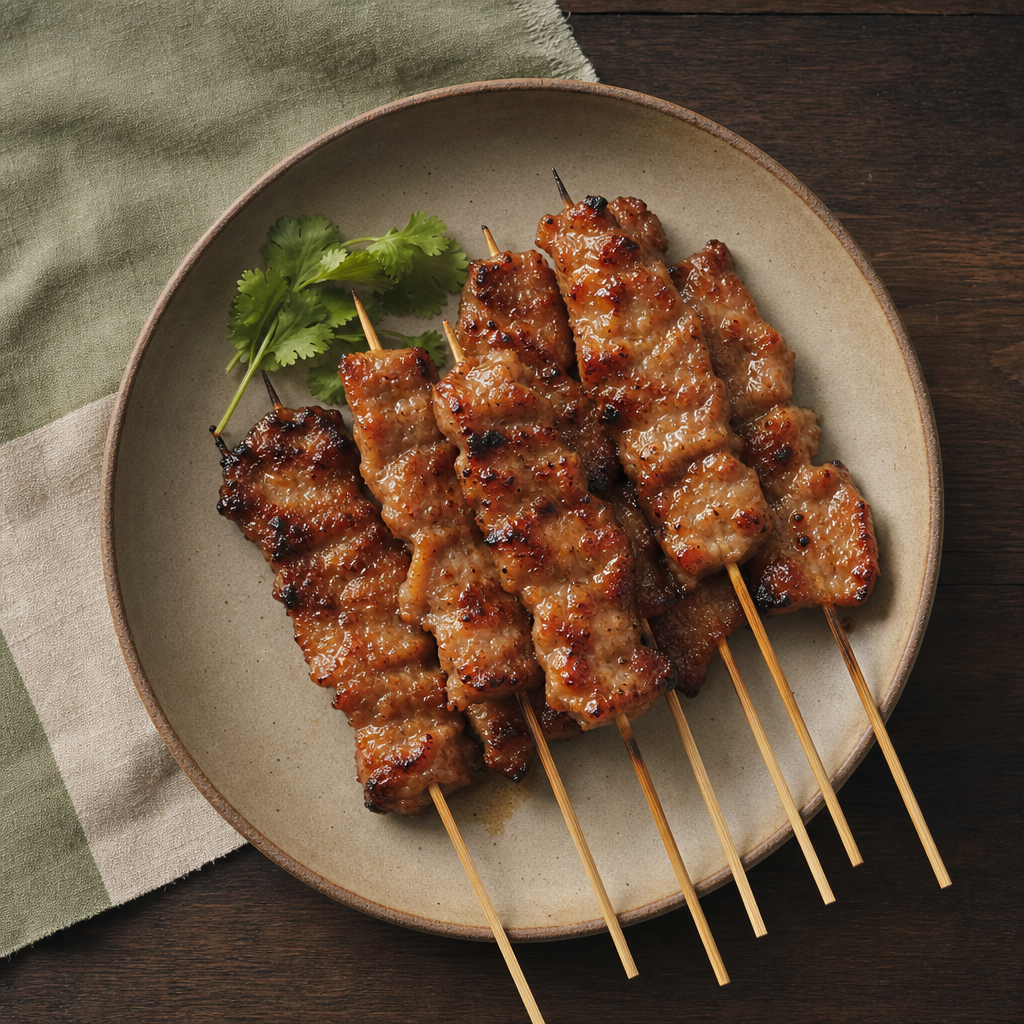
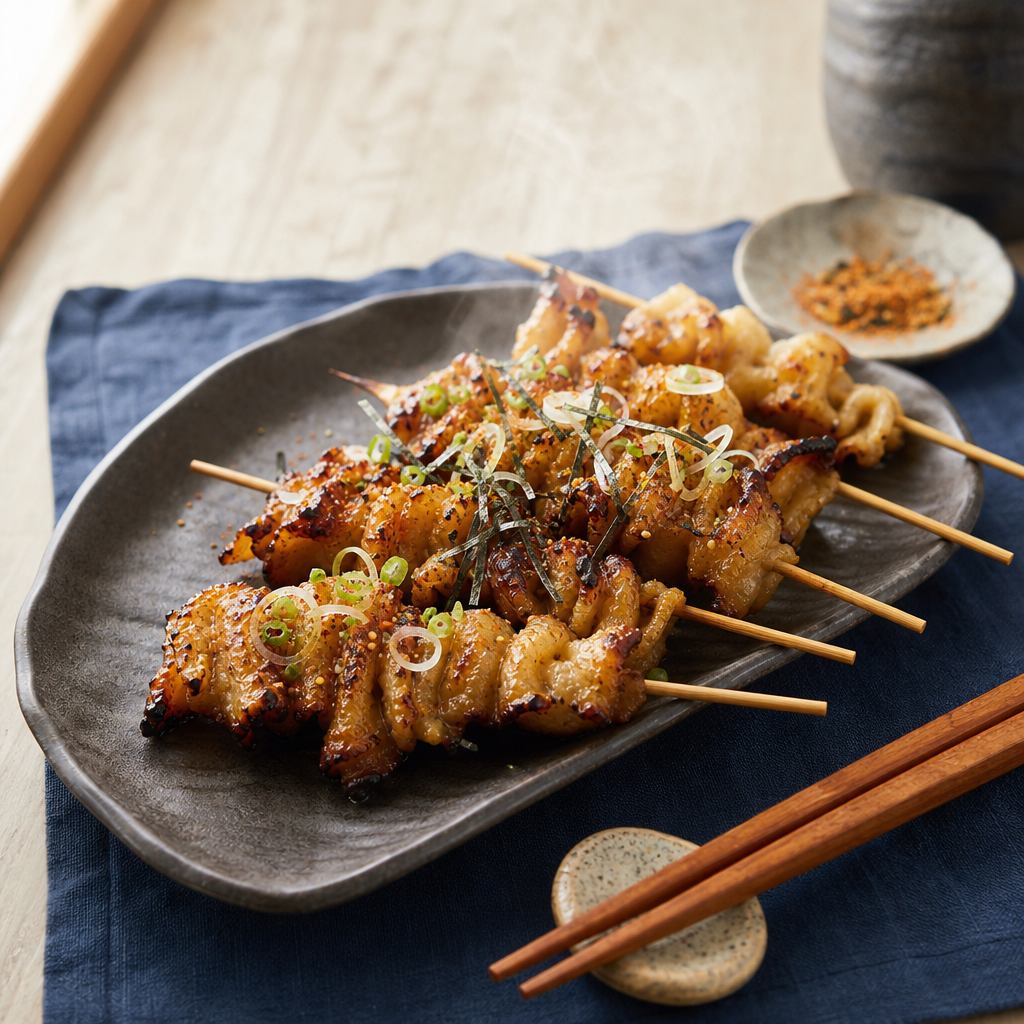
Yakitori developed as a nose-to-tail grilled chicken culture, especially in izakaya and specialist counter restaurants where one bird is divided into many small cuts. Kawa (皮), chicken skin, is one of the standard skewers: fatty, elastic, and crisp-edged when grilled correctly. Shops generally offer shio (salt) or tare (soy-mirin-sake glaze); neither is a universal default. This recipe uses a restrained tare finish because it is common outside specialist shops, but the skin is still grilled for texture first. A separate Fukuoka-style torikawa tradition winds skin tightly around the skewer and grills it over repeated sessions; that is a related style, not this general izakaya version.
Method 8 steps · 75 min
Soak the skewers
Soak bamboo skewers in water for at least 30 minutes. Keep them submerged so the tips do not scorch before the skin is done.
Blanch the skin
Bring the water and blanching sake to a boil. Add the chicken skin, stir once, and simmer for 3 minutes until the pieces tighten and turn opaque. Drain and rinse under cold water.
Trim and dry
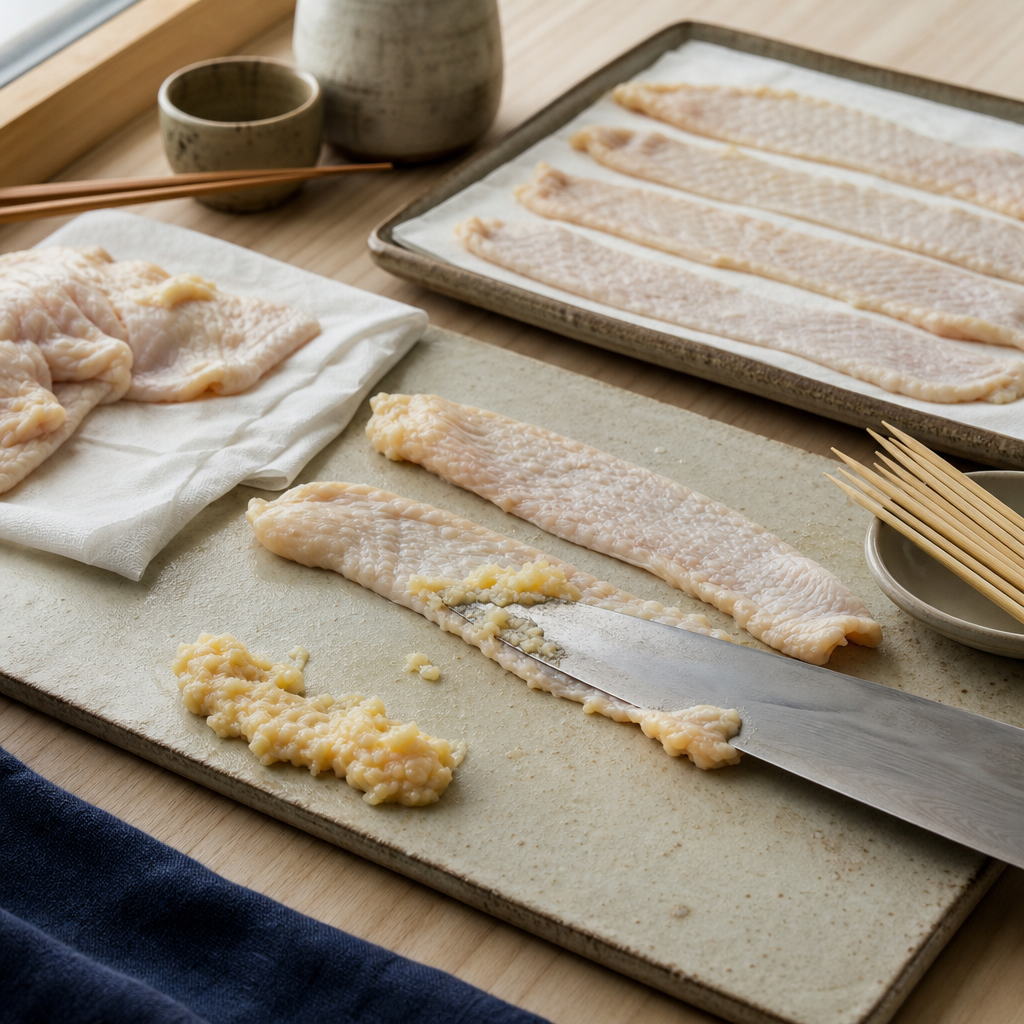
Scrape away thick yellow fat deposits with the back of a knife, leaving a thin fat layer attached. Pat the skin dry, then chill uncovered on a rack for 20 minutes.
Make the tare
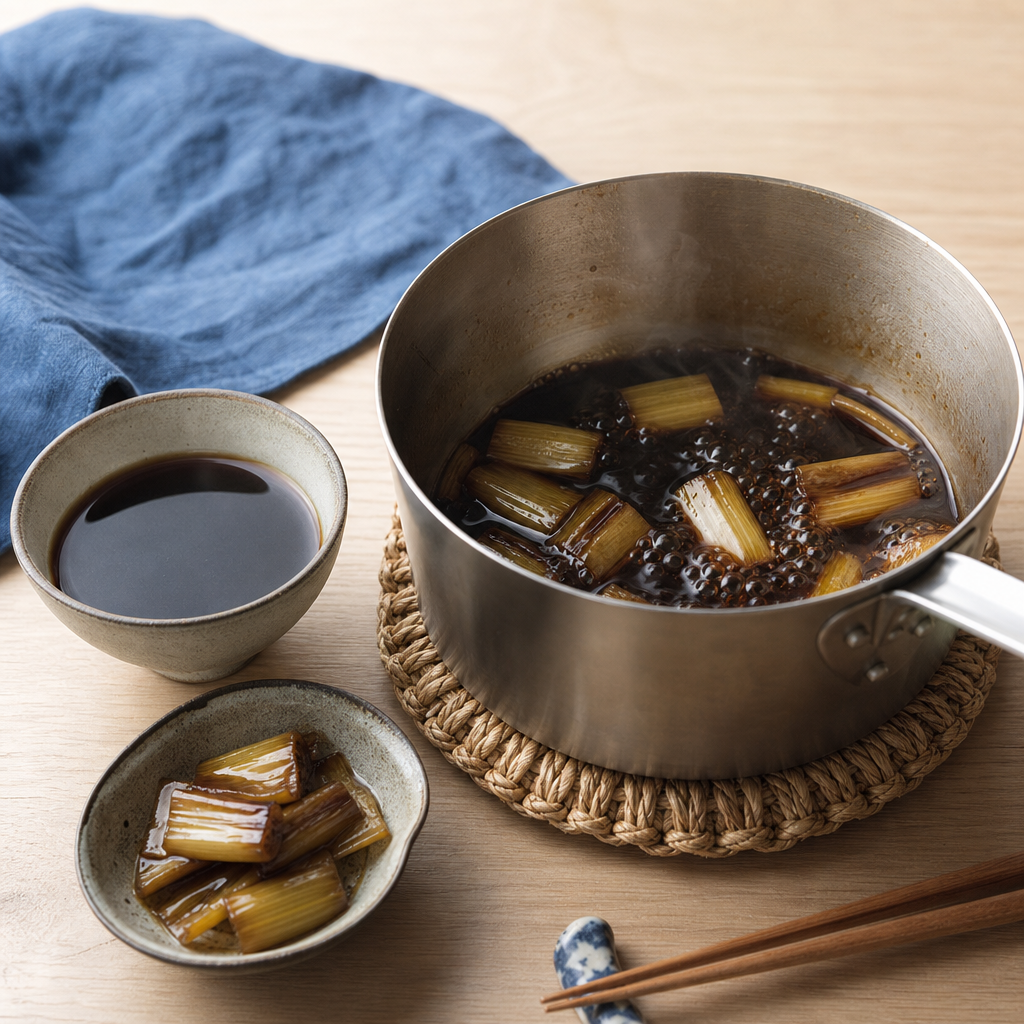
Combine shoyu, mirin, sake, sugar, and negi in a small saucepan. Simmer until glossy and lightly syrupy, about 8-10 minutes, then discard the negi. The tare should coat a spoon in a thin amber film, not drag like barbecue sauce.
Cut and skewer
Cut the skin into strips about 2.5 cm wide. Thread each strip onto a skewer in loose folds, bunching it like an accordion without packing it solid. Season the skewers evenly with salt.
Grill for rendering
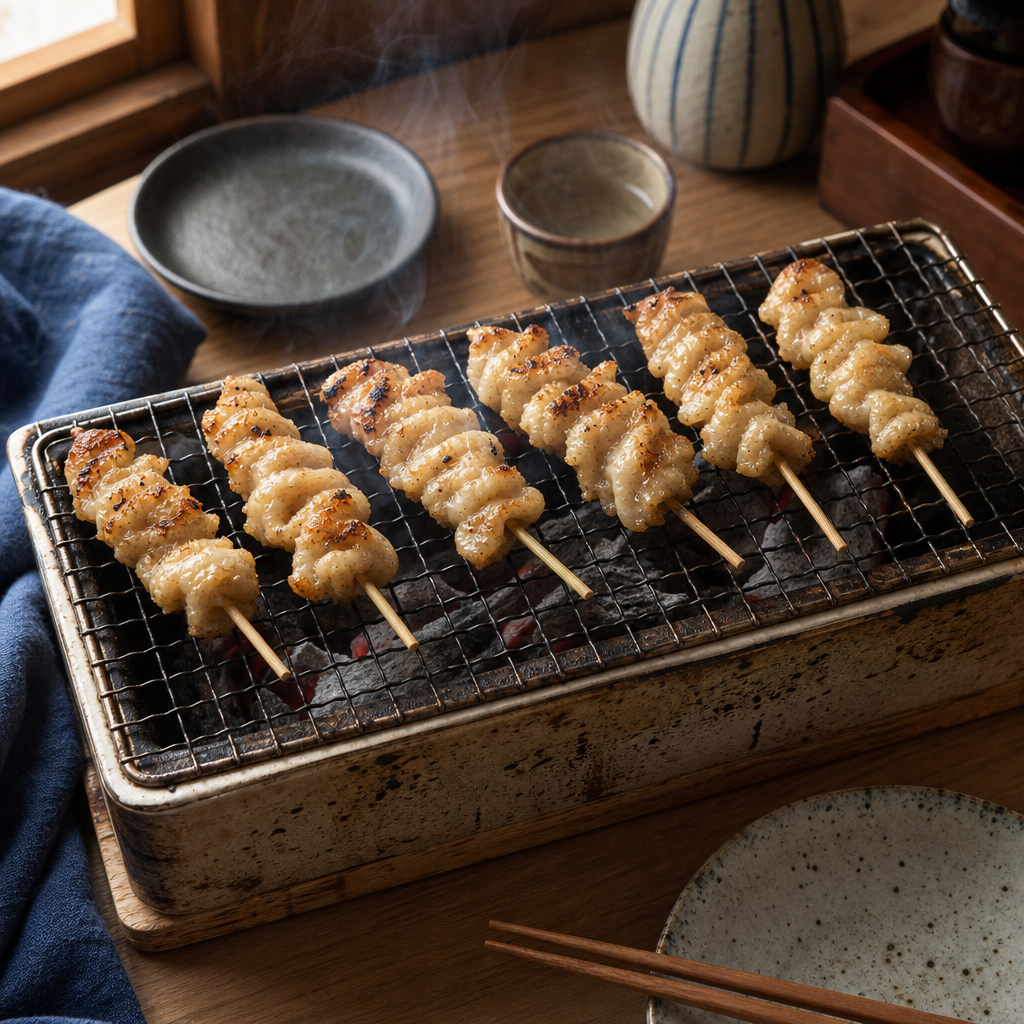
Set a charcoal grill or grill pan to medium heat. Grill the skewers for 4-5 minutes per side, turning often, until the skin has shrunk, the edges are golden, and fat drips steadily but not violently.
Glaze late
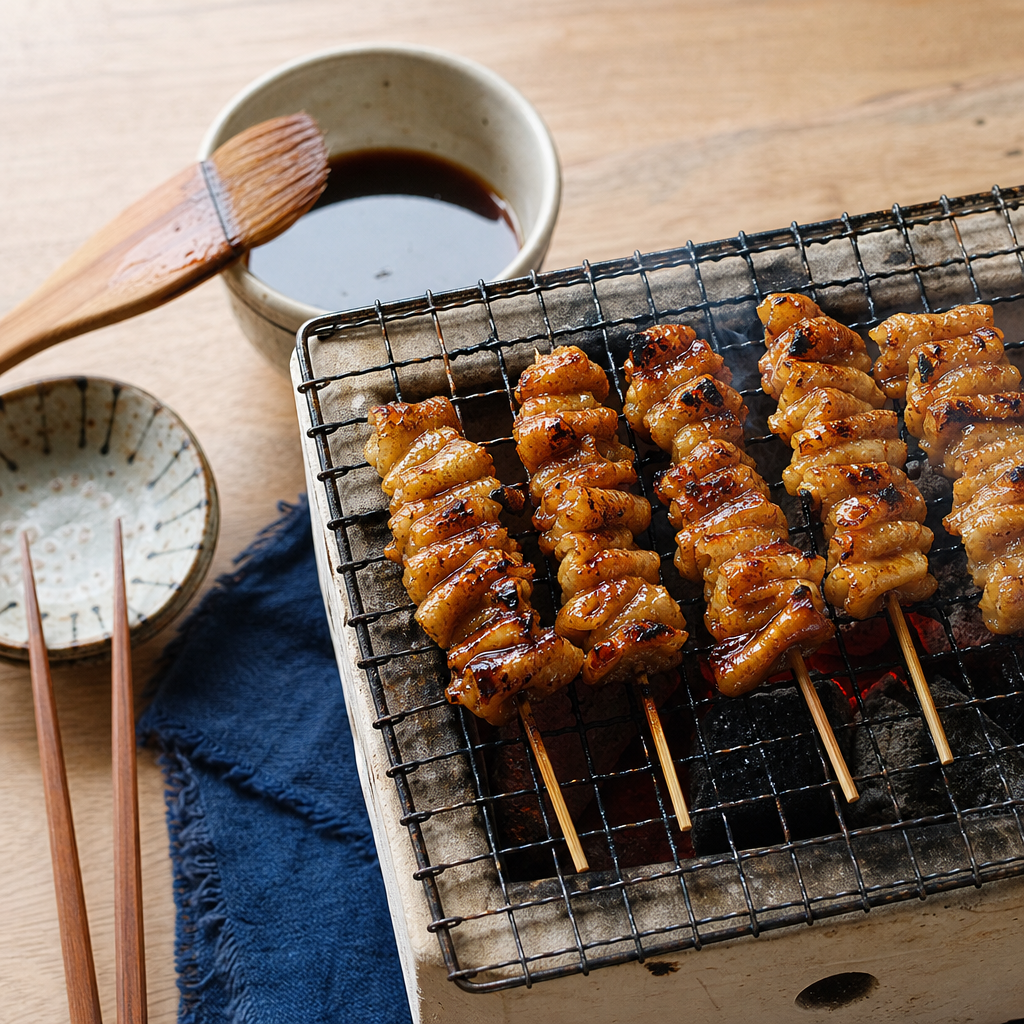
Brush the skewers lightly with tare and grill for 30-45 seconds per side. Brush once more only if the surface still looks dry. Pull the skewers when the glaze is shiny in patches and the edges are crisp.
Serve immediately
Rest the skewers for 1 minute, then serve hot with shichimi or sanshō on the side. Do not stack them in a pile; trapped steam softens the blistered edges.
Common mistakes
- {'mistake': 'Glazing from the beginning.', 'fix': 'Grill the salted skin first, then brush tare only at the end. Early sugar burns and prevents crisp rendering.'}
- {'mistake': 'Threading the skin flat and tight.', 'fix': 'Fold it loosely. Flat strips dry into cracklings; tight folds stay rubbery.'}
- {'mistake': 'Using skin with thick fat chunks still attached.', 'fix': 'Scrape heavy fat after blanching. Leave a thin layer for chew and browning.'}
- {'mistake': 'Cooking over raging heat.', 'fix': 'Use medium heat and turn often. Kawa needs time to shed fat before it browns hard.'}
- {'mistake': 'Calling bottled teriyaki sauce tare.', 'fix': 'Use shoyu, mirin, sake, and a small amount of sugar. Bottled American teriyaki is too thick and too sweet for this skewer.'}
What does not belong
- {'item': 'garlic-heavy marinade', 'reason': 'Garlic does not belong in standard yakitori kawa tare. It covers the rendered chicken fat aroma that defines the skewer.'}
- {'item': 'sesame oil', 'reason': 'Chicken skin already carries the fat. Sesame oil turns the skewer greasy and pushes it toward a different dish.'}
- {'item': 'honey barbecue glaze', 'reason': 'Yakitori tare is thin and soy-mirin based. Sticky barbecue sweetness burns and reads wrong here.'}
- {'item': 'boneless chicken meat pieces', 'reason': 'That is a different yakitori skewer. Kawa is skin; the chew and blistered fat are the point.'}
- {'item': 'cream, butter, or dairy', 'reason': 'Dairy has no role in yakitori kawa.'}