Tebasaki
The dish in context
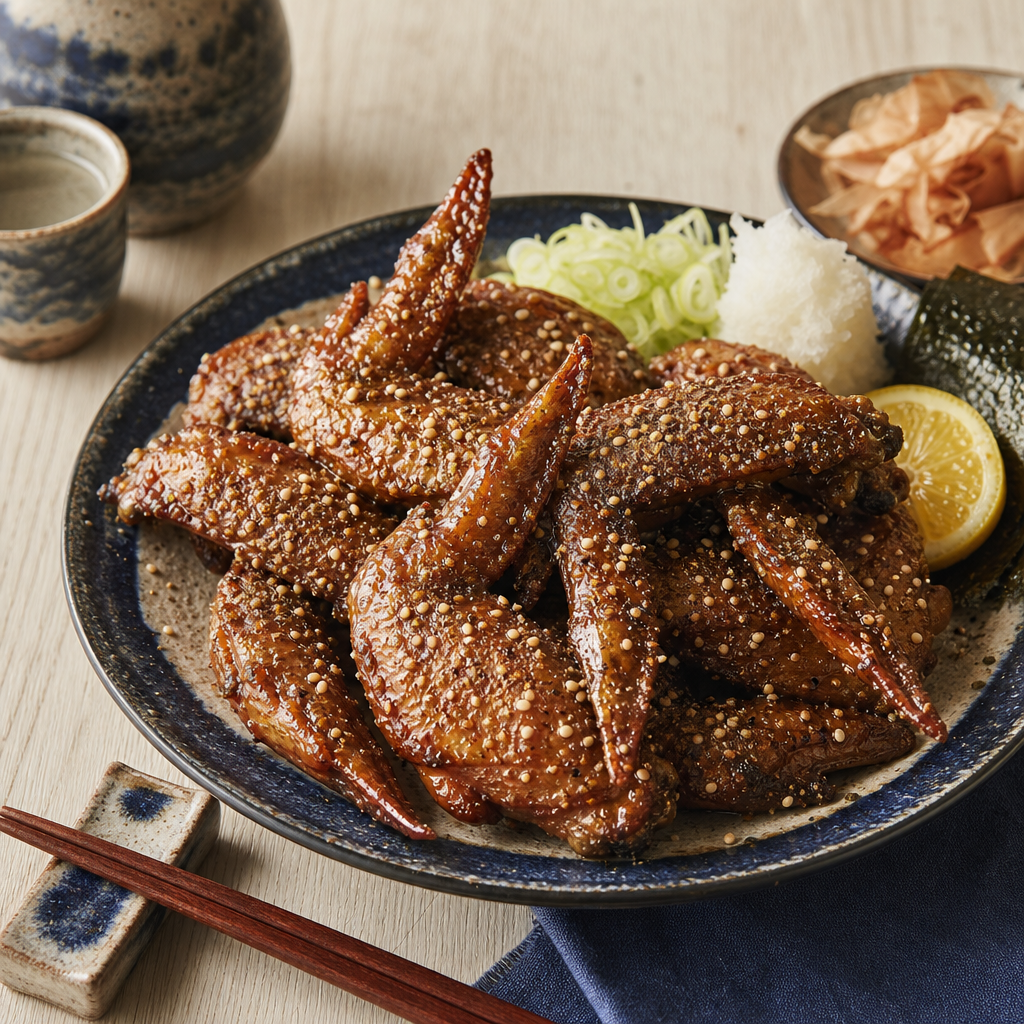
Tebasaki means chicken wing tip in Japanese, but in Nagoya food culture the name points to a specific izakaya-style preparation: small wings fried crisp, brushed or dipped in a sweet-salty soy tare, then hit hard with pepper and sesame. The dish is strongly associated with postwar Nagoya drinking culture and with specialist chains such as Furaibō and Yamachan, whose styles differ mainly in sweetness, pepper level, and sauce handling. The canonical Nagoya structure is not a saucy American wing and not a battered karaage nugget. It is a bone-in wing with dry-crisp skin, a thin glaze, and pepper doing real work.
Method 8 steps · 55 min
Dry and salt the wings
Pat the wings dry until the paper towel stops picking up surface moisture. Toss with the salt, arrange skin-side up on a rack, and refrigerate uncovered for 30 minutes, or up to 8 hours.
Make the tare
Combine soy sauce, sake, mirin, sugar, garlic, and ginger in a small saucepan. Simmer 3-4 minutes, until the sugar dissolves and the sauce smells rounded rather than alcoholic; keep it warm and strain out the aromatics.
Heat the oil
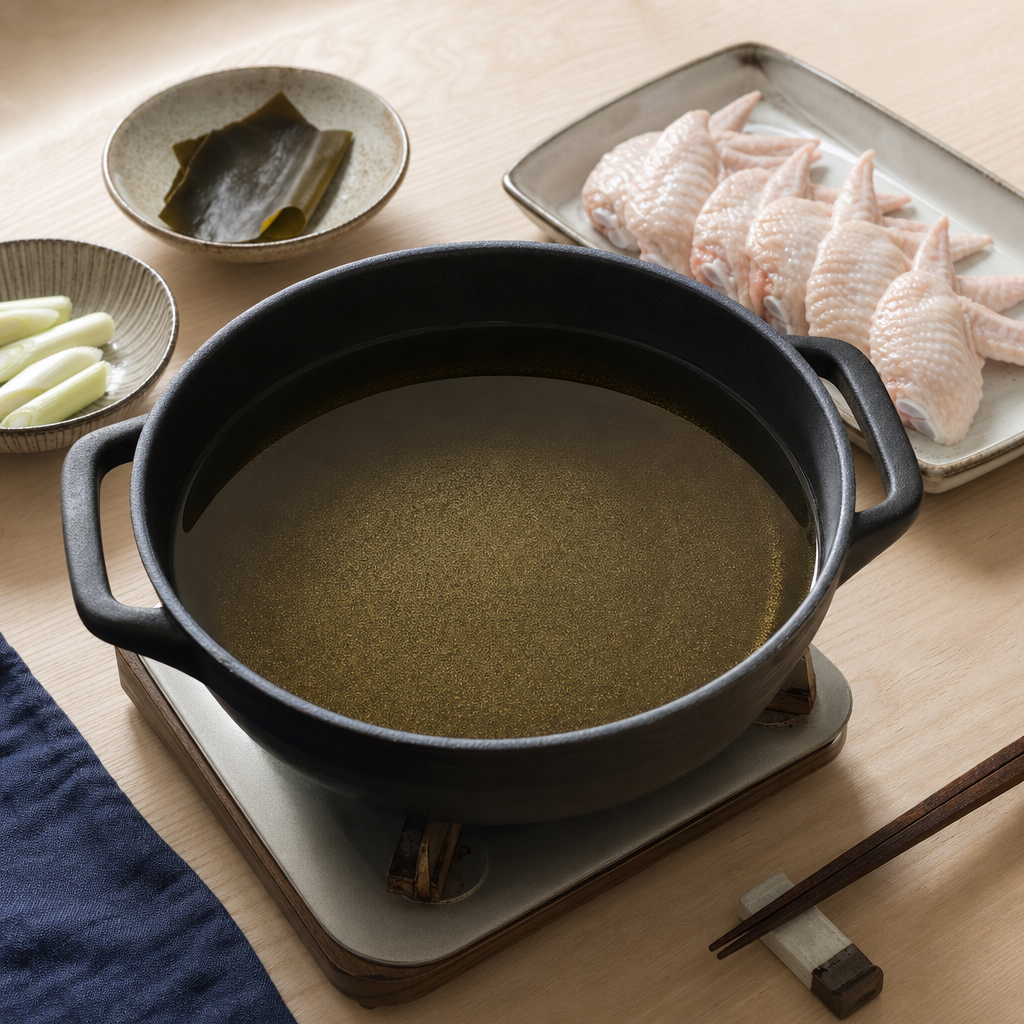
Heat the oil to 160°C in a heavy pot. Hold that temperature before adding chicken; if the oil is still climbing, wait.
First fry
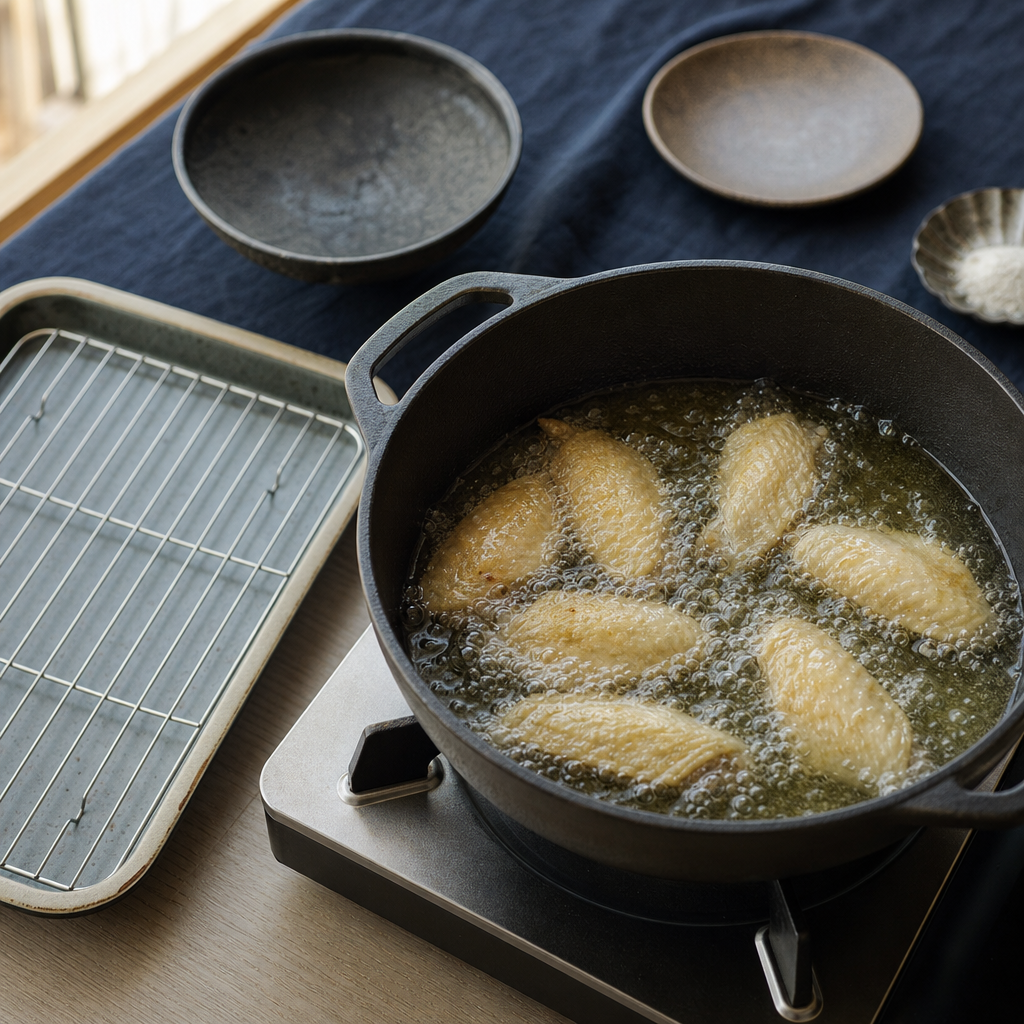
Fry the wings in batches for 6 minutes at 155-165°C, turning once. Pull them when the skin is pale gold and the joints no longer look raw.
Rest the wings
Transfer the wings to a rack and rest 8 minutes while the oil returns to temperature. Do not stack them in a bowl.
Second fry
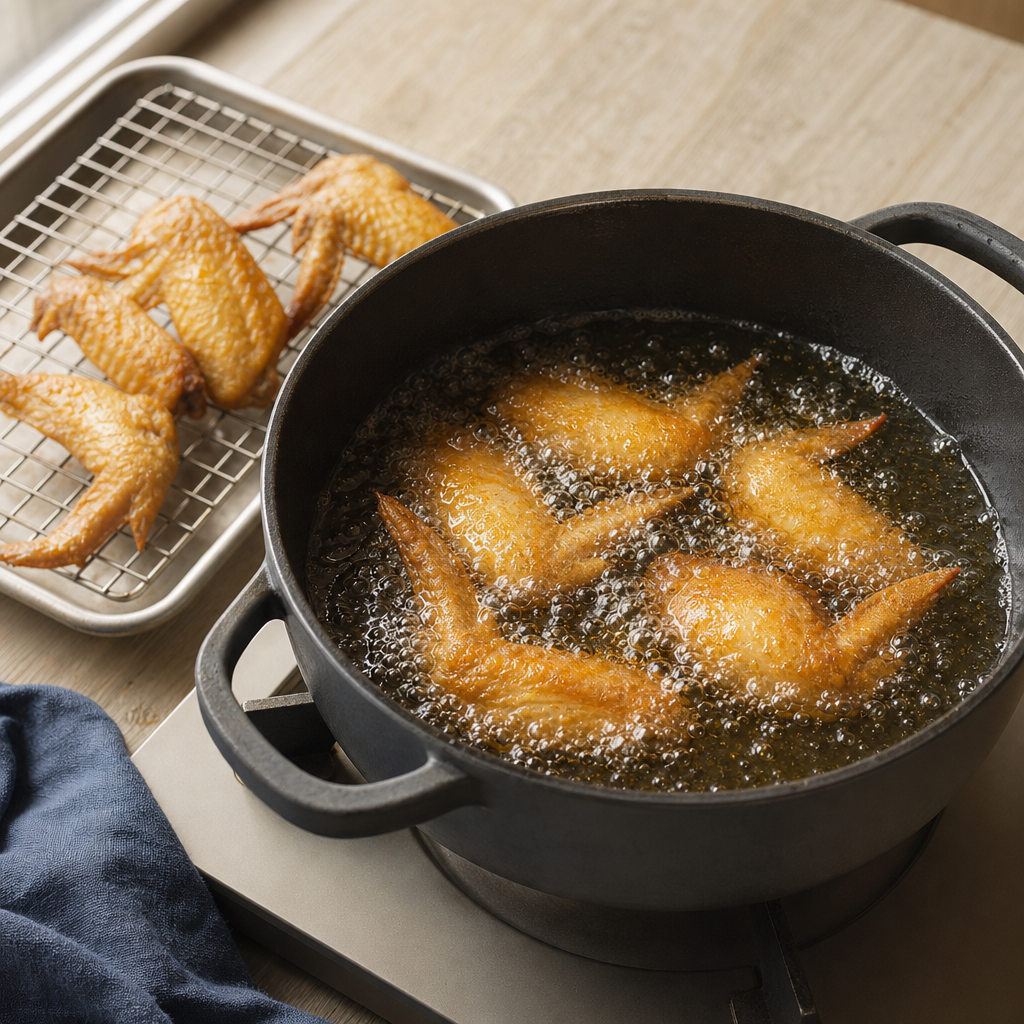
Raise the oil to 185°C. Fry the wings again for 90-120 seconds, until the skin is deeper golden, taut, and faintly blistered.
Glaze while hot
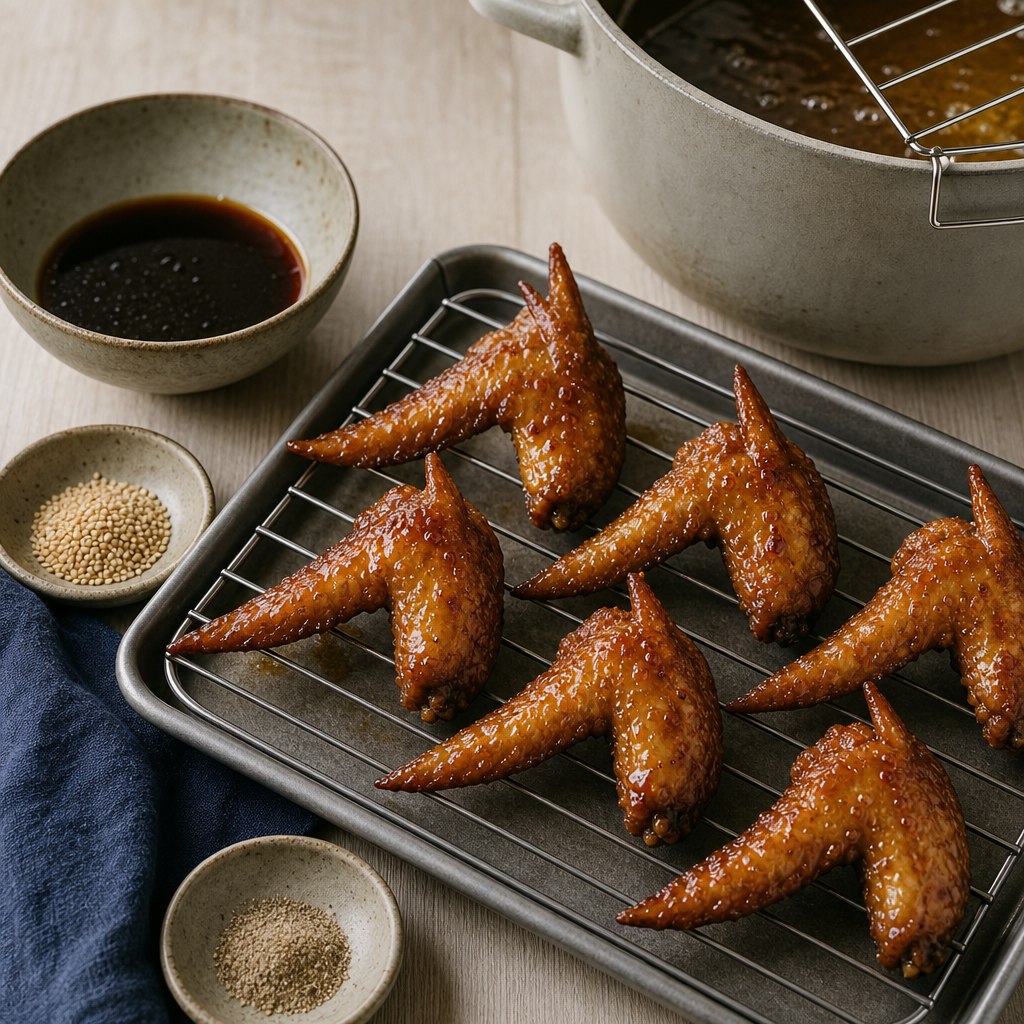
Brush or dip each wing lightly in the warm tare as soon as it leaves the oil, then return it to the rack. The coating should shine but not drip.
Pepper and sesame
Dust the wings heavily with white pepper while the glaze is still tacky, then scatter with toasted sesame. Serve immediately, piled with the tips pointing in different directions.
Common mistakes
- {'mistake': 'Using a thick bottled teriyaki sauce', 'fix': 'Use a thin soy-mirin-sake tare. Thick sauce masks the skin and pushes the dish into American wing territory.'}
- {'mistake': 'Coating the wings in flour or starch', 'fix': 'Nagoya-style tebasaki should have exposed fried skin. A starch crust turns the dish into a different karaage-style wing.'}
- {'mistake': 'Under-seasoning the pepper', 'fix': 'The finished wings should carry visible pepper and a sharp pepper aroma. A polite pinch disappears against soy and chicken fat.'}
- {'mistake': 'Saucing too early', 'fix': 'Glaze after the final fry, not before. Sugar in the tare burns in hot oil and turns bitter.'}
- {'mistake': 'Serving the wings wet', 'fix': 'Brush or dip lightly, then rack them. Sauce pooling on the plate means the tare was too thick or applied too heavily.'}
What does not belong
- {'item': 'American buffalo sauce', 'reason': 'Vinegar-hot-sauce butter coating does not belong in Nagoya tebasaki.'}
- {'item': 'Honey-heavy glaze', 'reason': 'The tare needs gloss, not candy-shell sweetness. Too much honey makes the wings sticky and dulls the pepper.'}
- {'item': 'Mayonnaise drizzle', 'reason': 'Mayo covers the dry skin and pepper finish. It belongs to other fried snacks, not this one.'}
- {'item': 'Scallion blanket', 'reason': 'A few greens are not the issue; burying the wings under scallion changes the visual and aromatic profile.'}
- {'item': 'Boneless chicken', 'reason': 'Tebasaki is a bone-in wing dish. Boneless thigh pieces are karaage or glazed chicken, not tebasaki.'}