Tonjiru
The dish in context
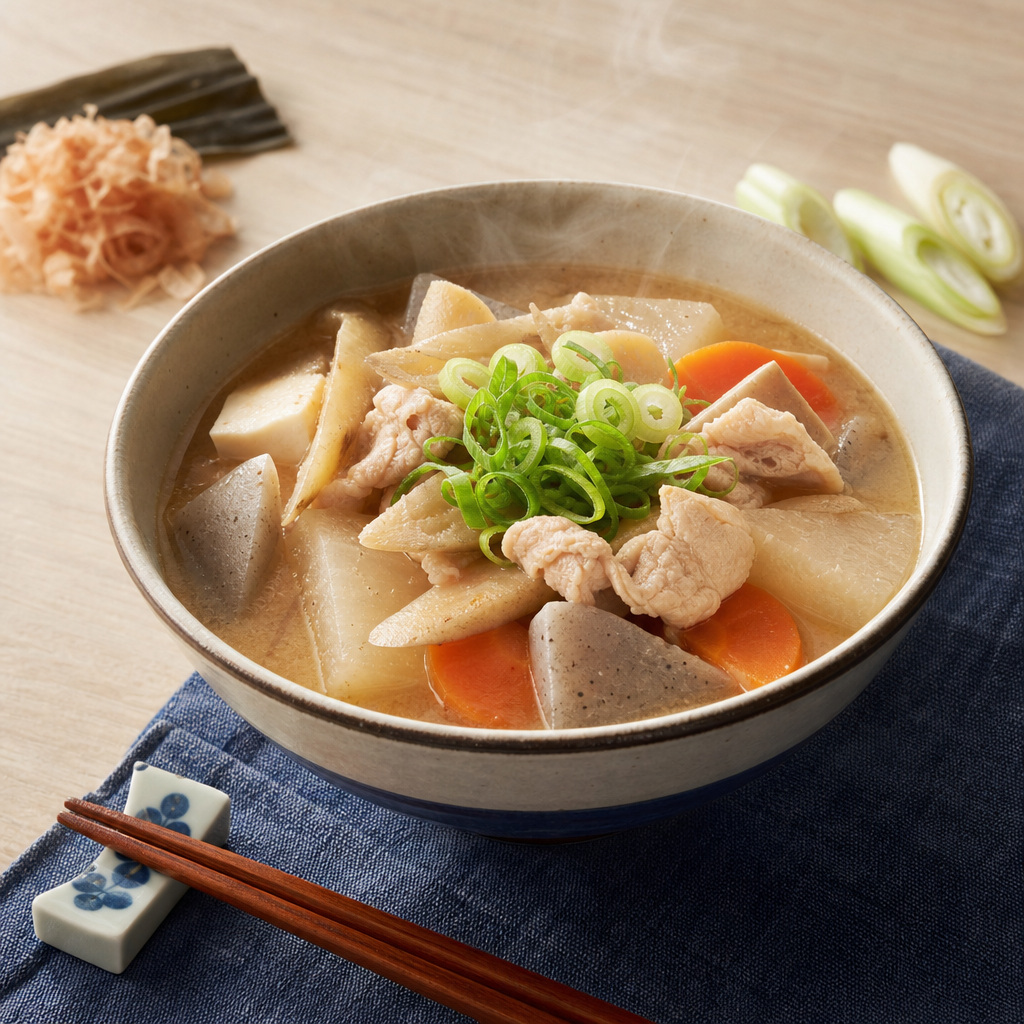
Tonjiru (豚汁) is the pork-and-vegetable branch of miso soup, built as a meal rather than a small bowl beside rice. The name is read tonjiru across much of Japan, while butajiru is common in parts of western Japan and Hokkaido; both readings refer to the same written dish. Its grammar is stable: thin pork, root vegetables, dashi, and miso, with household variation in gobo, konnyaku, taro, tofu, mushrooms, and negi. It appears in home kitchens, school and workplace cafeterias, ski lodges, and tonkatsu shops because it holds heat and carries more body than standard miso soup.
Method 8 steps · 45 min
Pull a clean dashi
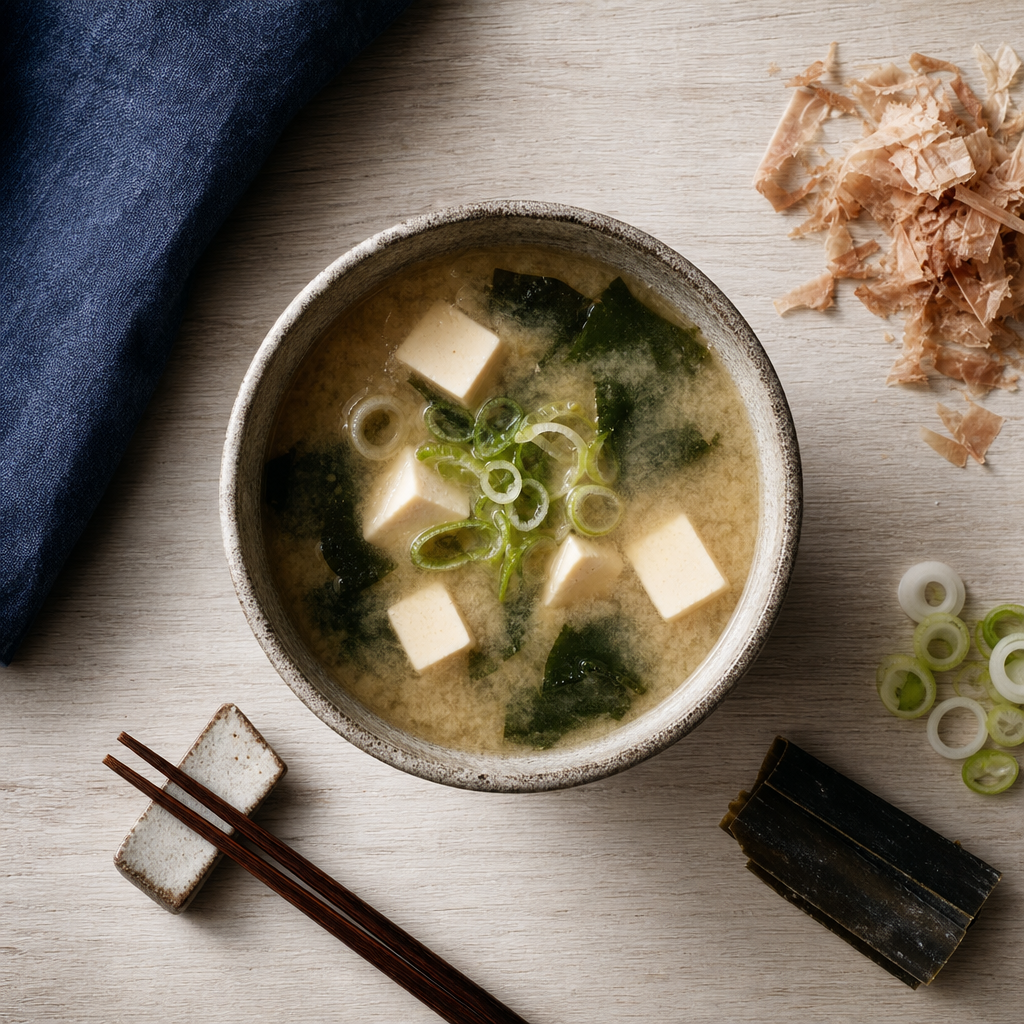
Combine the water and kombu in the pot and soak 20 minutes if time allows. Heat over medium until small bubbles collect at the edges, then remove the kombu before the water boils. Add katsuobushi, turn off the heat, steep 2 minutes, and strain; return 1 L dashi to the pot.
Prep the vegetables to one cooking speed
Cut daikon and carrot into 5 mm half-moons, shave or thinly slice the gobo, and cut taro or potato into bite-size pieces. Rinse gobo briefly in water, then drain. Do not soak it until the water runs clear; that strips away the aroma that belongs in the soup.
Blanch the konnyaku
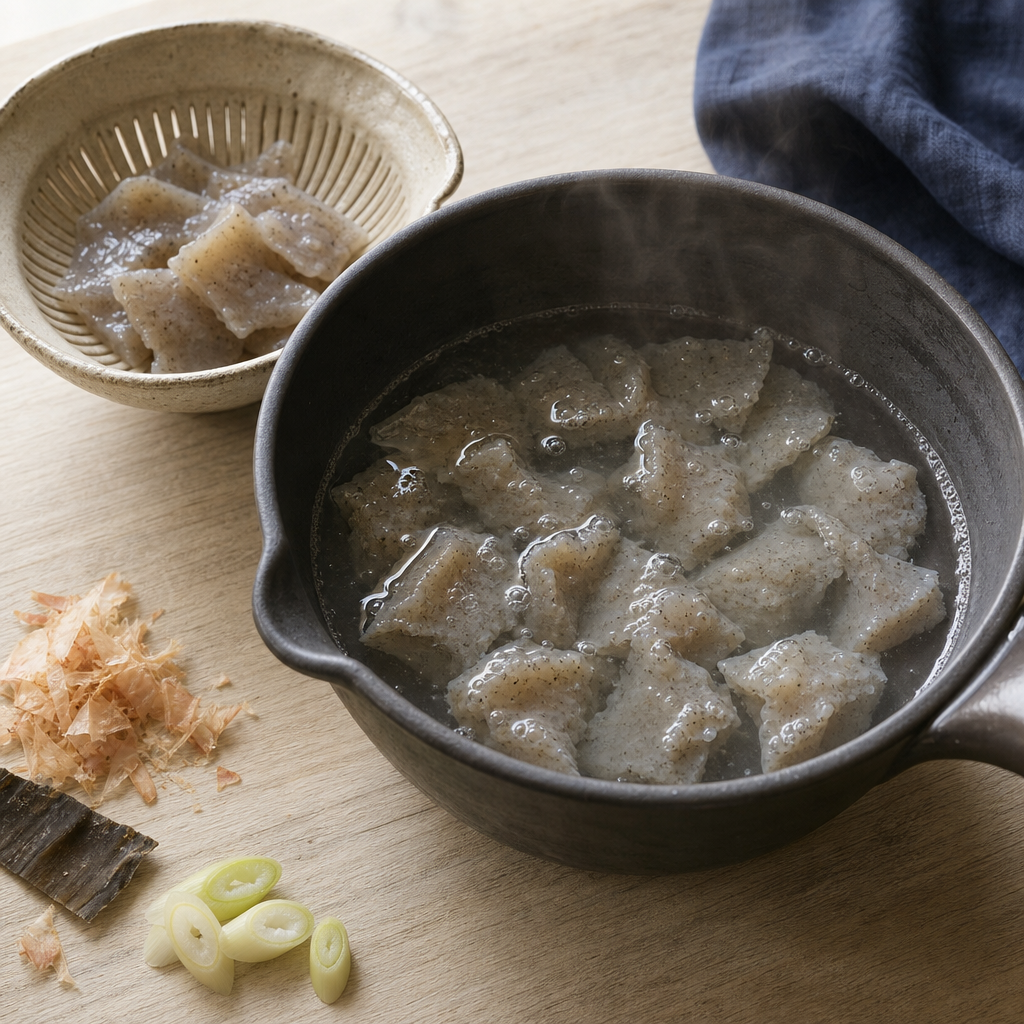
Tear konnyaku into rough bite-size pieces, then boil it in separate water for 2 minutes and drain. Tearing is better than knife-cutting here because the ragged surface catches miso broth.
Render the pork lightly
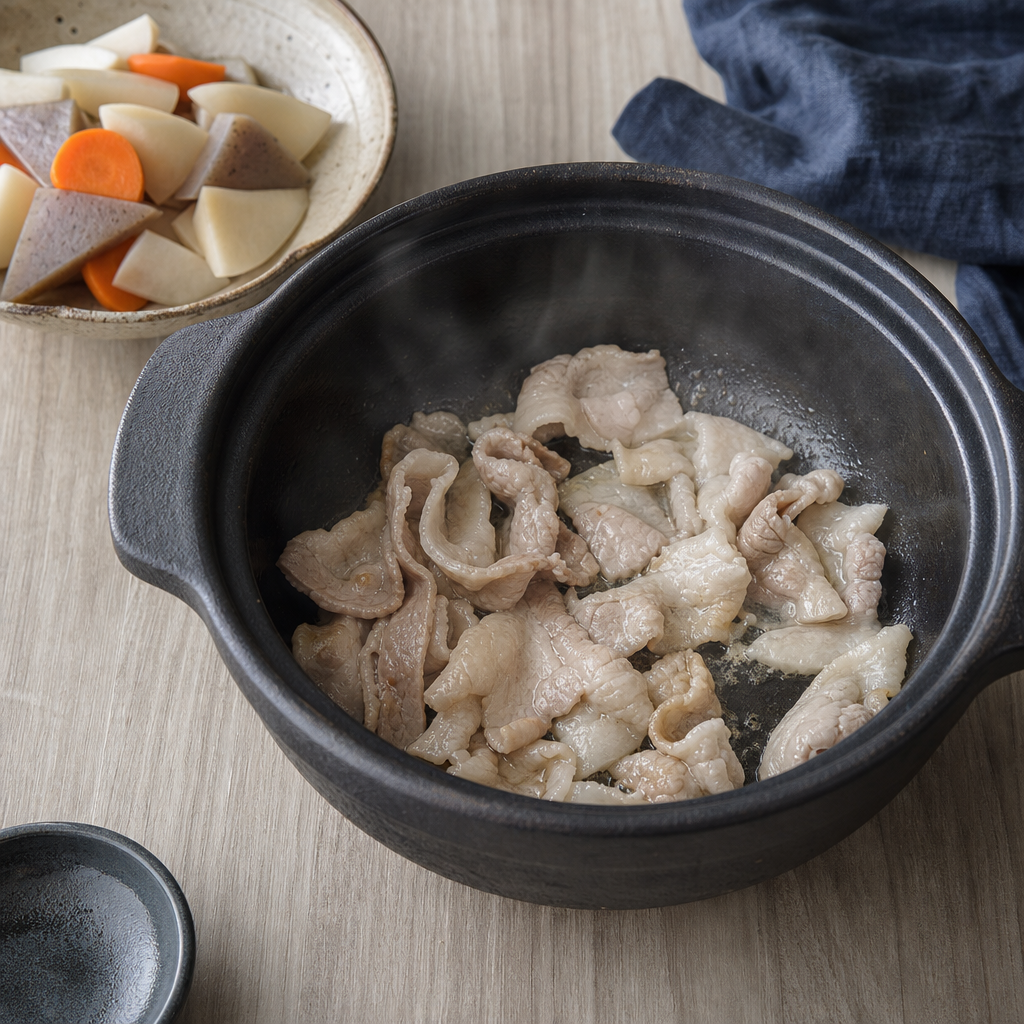
Heat sesame oil in the empty soup pot over medium heat. Add pork and cook until the surface loses its raw pink color and a little fat coats the bottom, about 2 minutes. Do not brown it hard.
Coat the roots
Add daikon, carrot, gobo, konnyaku, and taro or potato to the pork. Stir for 2 minutes, scraping the bottom so the pork fat coats the vegetables. Add sake and let it bubble for 30 seconds.
Simmer until the roots yield
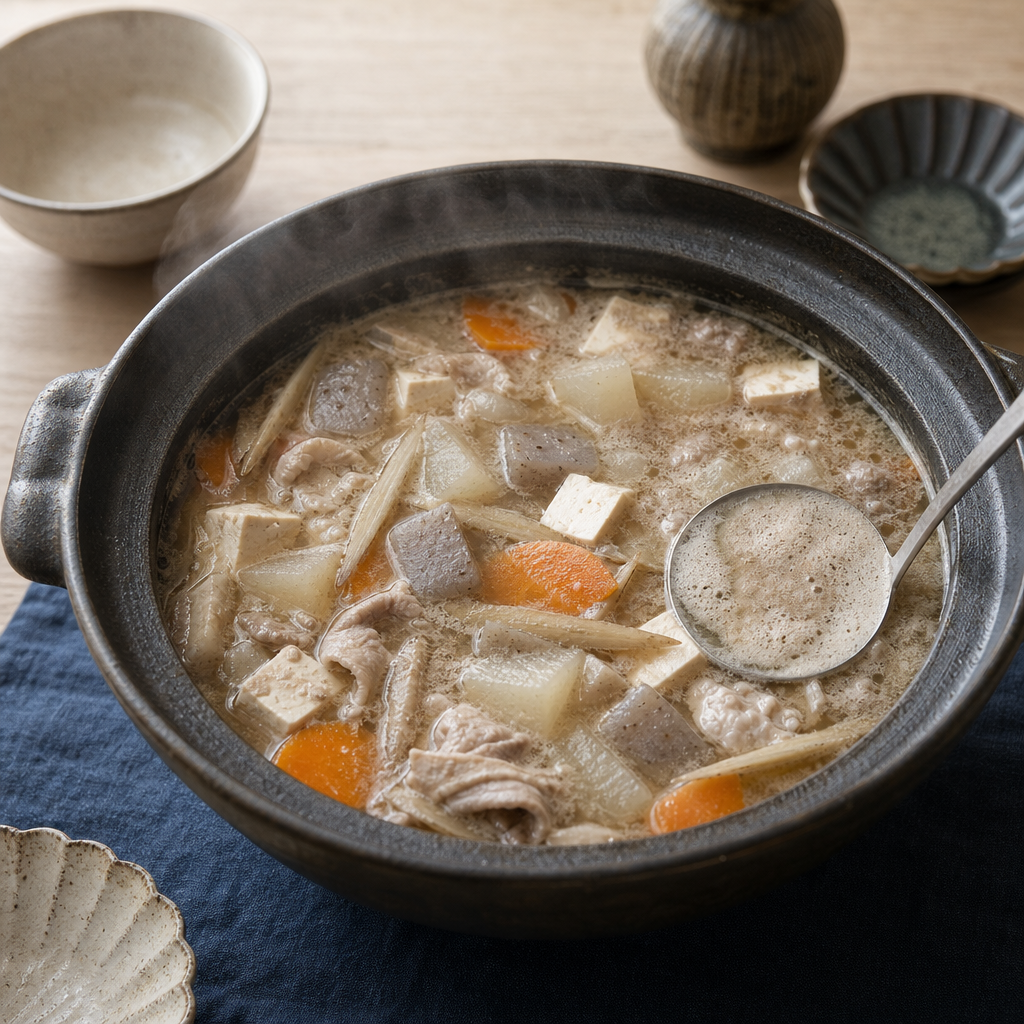
Add the strained dashi and bring to a quiet simmer. Skim the gray foam from the surface, then cook 12-15 minutes until daikon turns translucent at the edge and carrot gives under a chopstick. Add mushrooms during the last 5 minutes.
Dissolve the miso off the boil
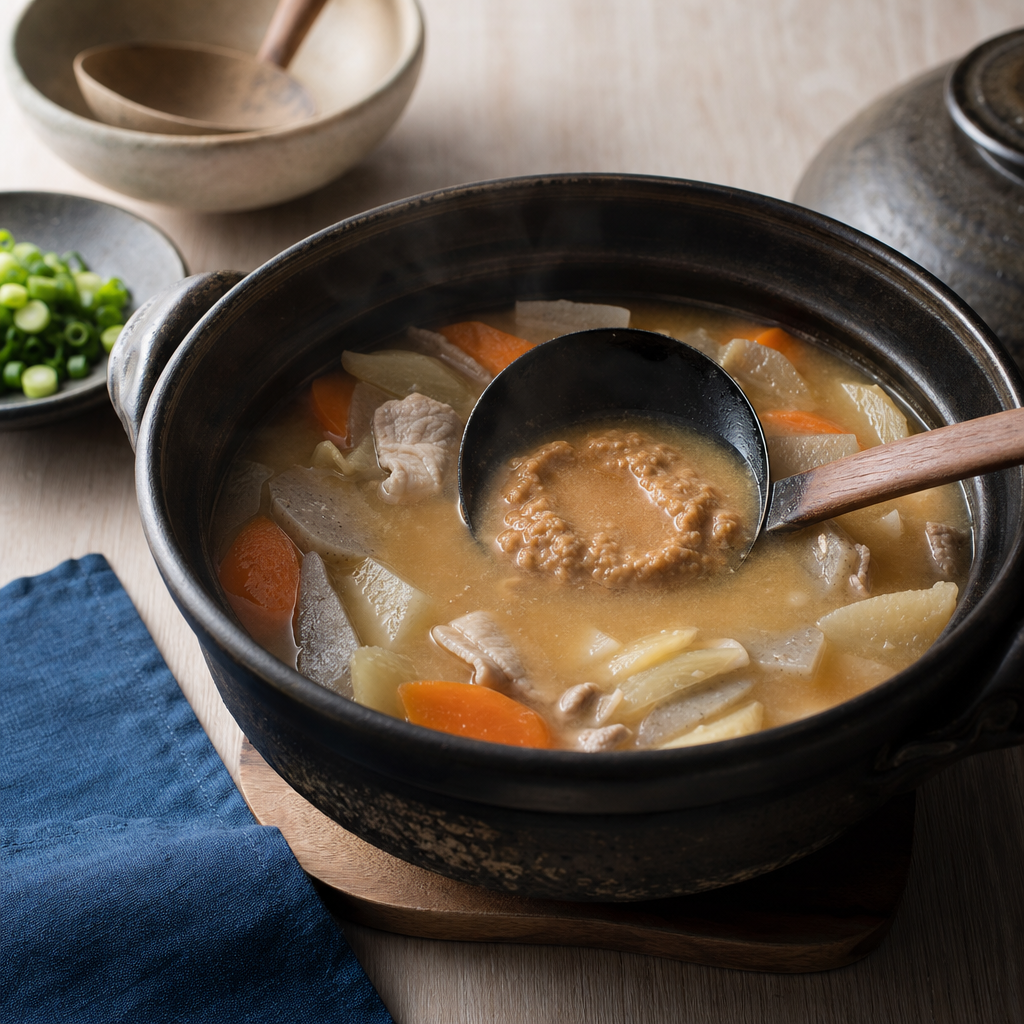
Lower the heat until the soup stops bubbling. Put miso in a ladle, loosen it with hot broth, then stir the loosened miso back into the pot. Taste and add more miso if the broth tastes thin, keeping the soup below a simmer.
Finish with negi
Add half the negi and warm for 30 seconds. Ladle into bowls and top with the remaining negi and a small pinch of shichimi if using. Serve with Japanese short-grain rice when making it a meal.
Common mistakes
- {'mistake': 'Boiling kombu.', 'fix': 'Remove kombu before the water reaches a full boil. Slippery, bitter dashi is not corrected by adding more miso.'}
- {'mistake': 'Boiling after the miso goes in.', 'fix': 'Hold the soup below a simmer once miso is added. Reheat leftovers gently for the same reason.'}
- {'mistake': 'Cutting the vegetables too large.', 'fix': 'Use 5 mm slices for daikon and carrot. Tonjiru is not a Western root-vegetable stew.'}
- {'mistake': 'Using pork cubes.', 'fix': 'Use thin slices. Cubes need a longer braise and leave the vegetables overcooked before the meat softens.'}
- {'mistake': 'Adding all the miso by measurement and stopping there.', 'fix': 'Miso varies. Start low, dissolve fully, then adjust until the broth tastes seasoned but not salty.'}
What does not belong
- {'item': 'cream or milk', 'reason': 'Dairy does not belong in tonjiru. Body comes from pork fat, roots, and miso.'}
- {'item': 'chicken stock', 'reason': 'Chicken stock changes the dish into a different soup. Use dashi; instant dashi powder is a better shortcut than Western stock.'}
- {'item': 'garlic', 'reason': 'Garlic is not part of the standard miso-soup grammar here. It overwhelms the dashi and negi.'}
- {'item': 'soy sauce as the main seasoning', 'reason': 'Tonjiru is miso-seasoned. Soy sauce can appear in some household variants in small amounts, but it does not replace miso.'}
- {'item': 'sugar', 'reason': 'Sugar does not belong in the base. Carrot, daikon, and miso provide the roundness.'}