Kinpira Gobo
The dish in context
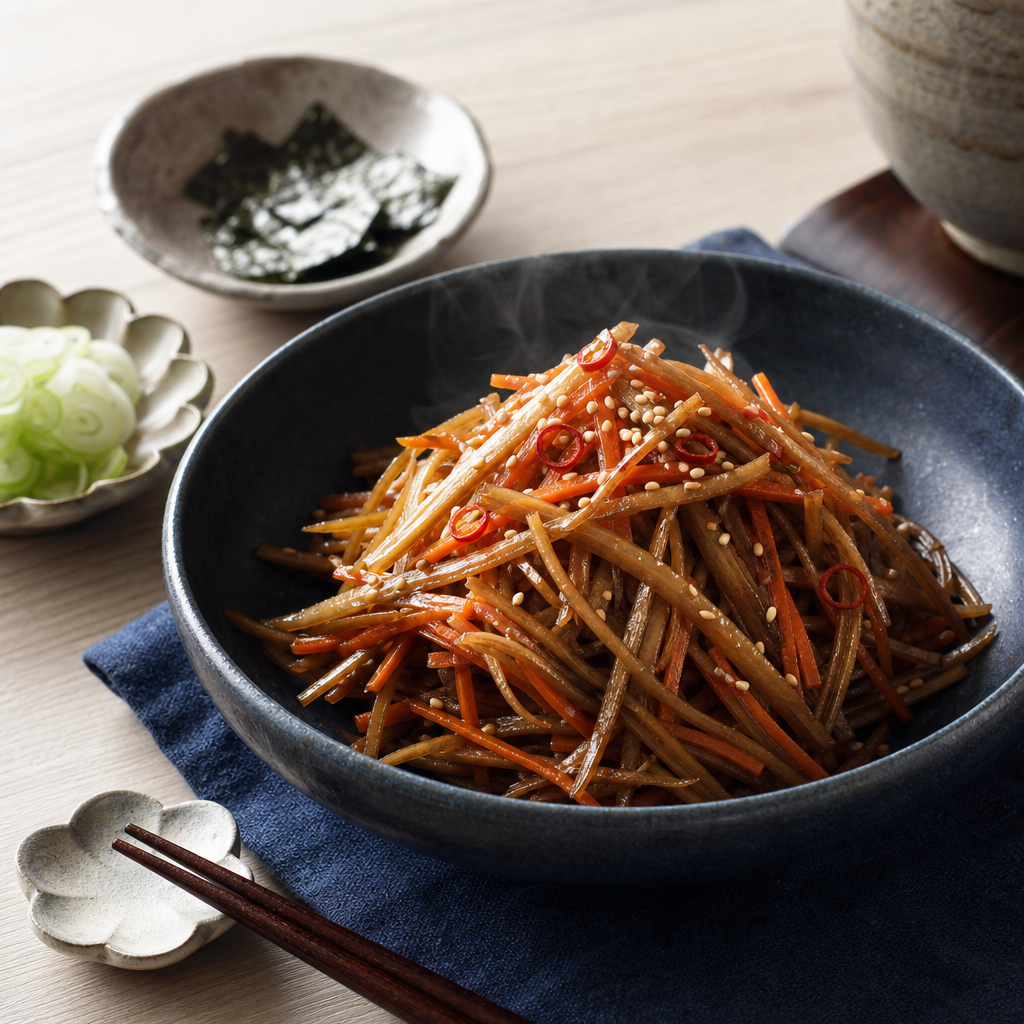
Kinpira is a Japanese home-cooking method for firm vegetables: sauté first, then simmer briefly in a sweet-salty soy seasoning until the liquid reduces to a glaze. Gobō, burdock root, is the standard version and remains a common bento and teishoku side because it holds texture after chilling. The name is commonly linked to Sakata Kintoki's strong son Kinpira from Japanese popular storytelling, a reference to the dish's sturdy, fibrous bite rather than delicacy. Household versions vary in the cut, the carrot ratio, and whether chili is present, but the core grammar is burdock, sesame oil, shoyu, sake or mirin, and controlled reduction.
Method 7 steps · 30 min
Scrub and cut the burdock
Scrub the burdock under running water with a vegetable brush or crumpled foil, removing dirt but not shaving it down to white flesh. Cut into 5-6 cm lengths, slice lengthwise into 2-3 mm sheets, then cut those sheets into 2-3 mm matchsticks.
Soak briefly
Drop the cut burdock into cold water as it is cut. Soak 5 minutes, then drain well and shake off surface water.
Prepare the seasoning
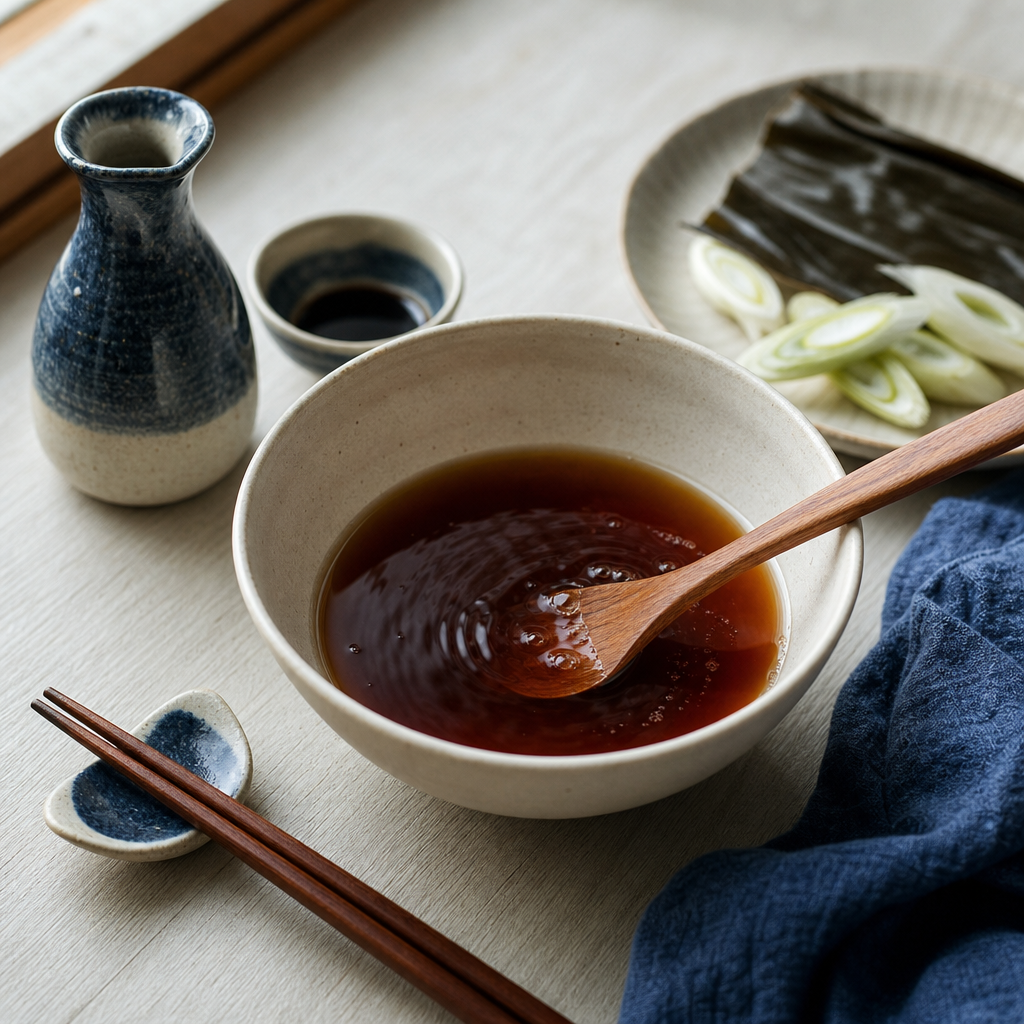
Stir together sake, mirin, shoyu, and sugar in a small bowl until the sugar is mostly dissolved.
Sauté the burdock
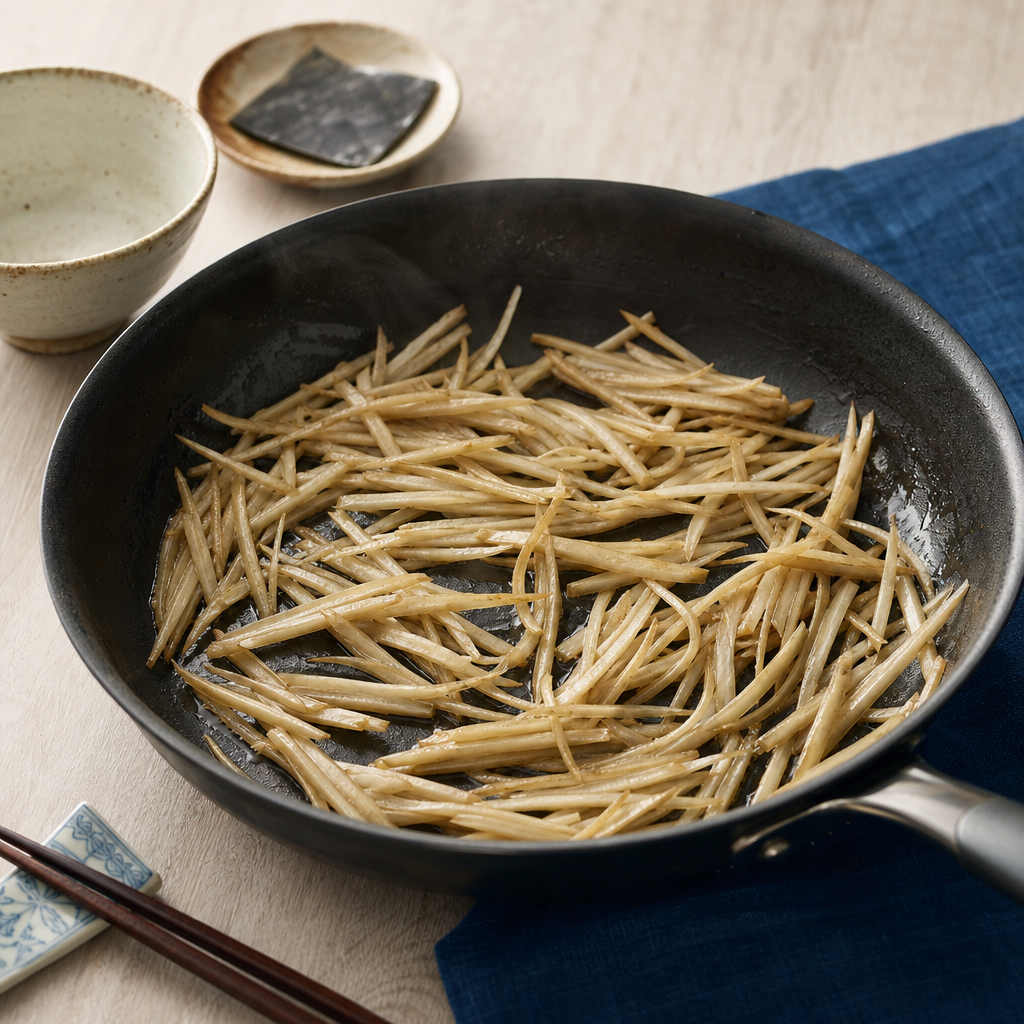
Heat the sesame oil in a wide skillet over medium-high heat. Add the drained burdock and stir-fry 2 minutes, until the pieces look slightly translucent at the edges and smell nutty-earthy.
Add carrot and chili
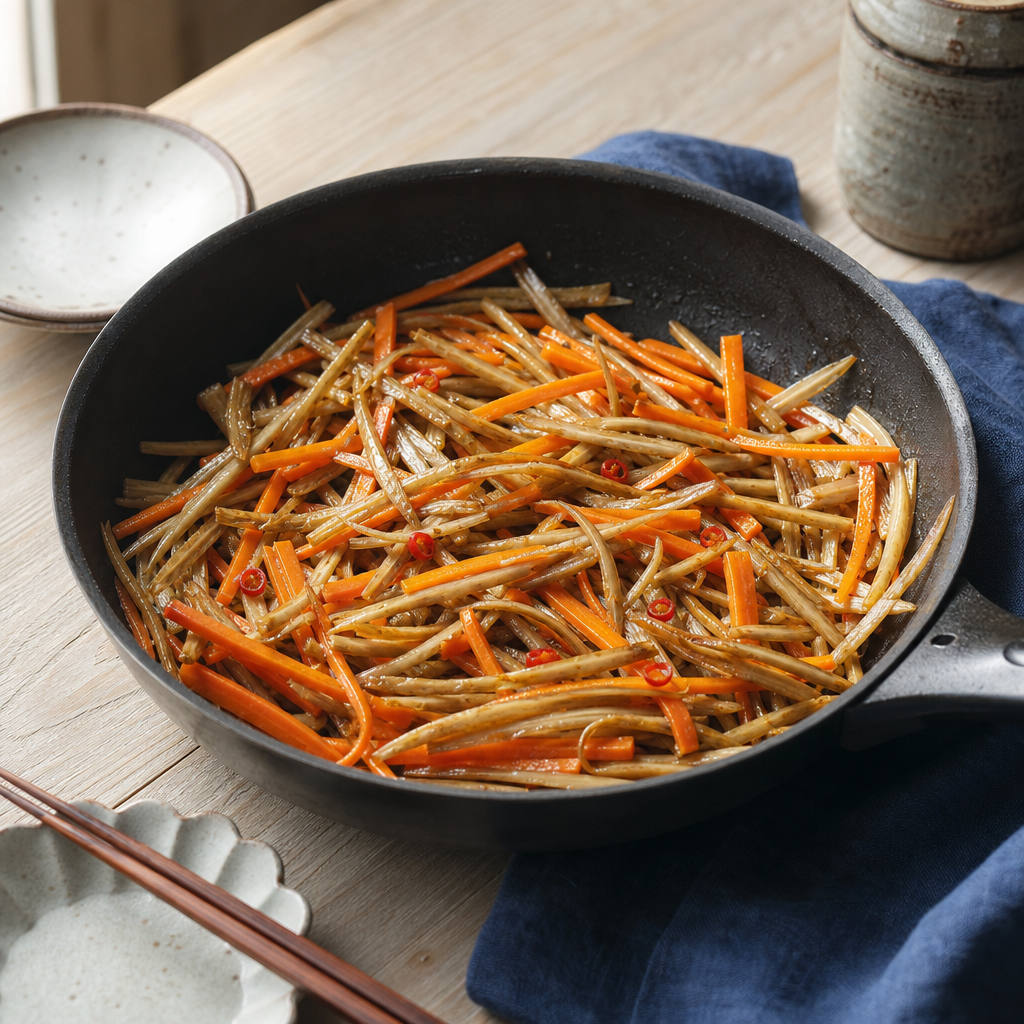
Add the carrot and dried chili. Stir-fry 1 minute, keeping the vegetables moving so the carrot warms without softening completely.
Simmer and reduce
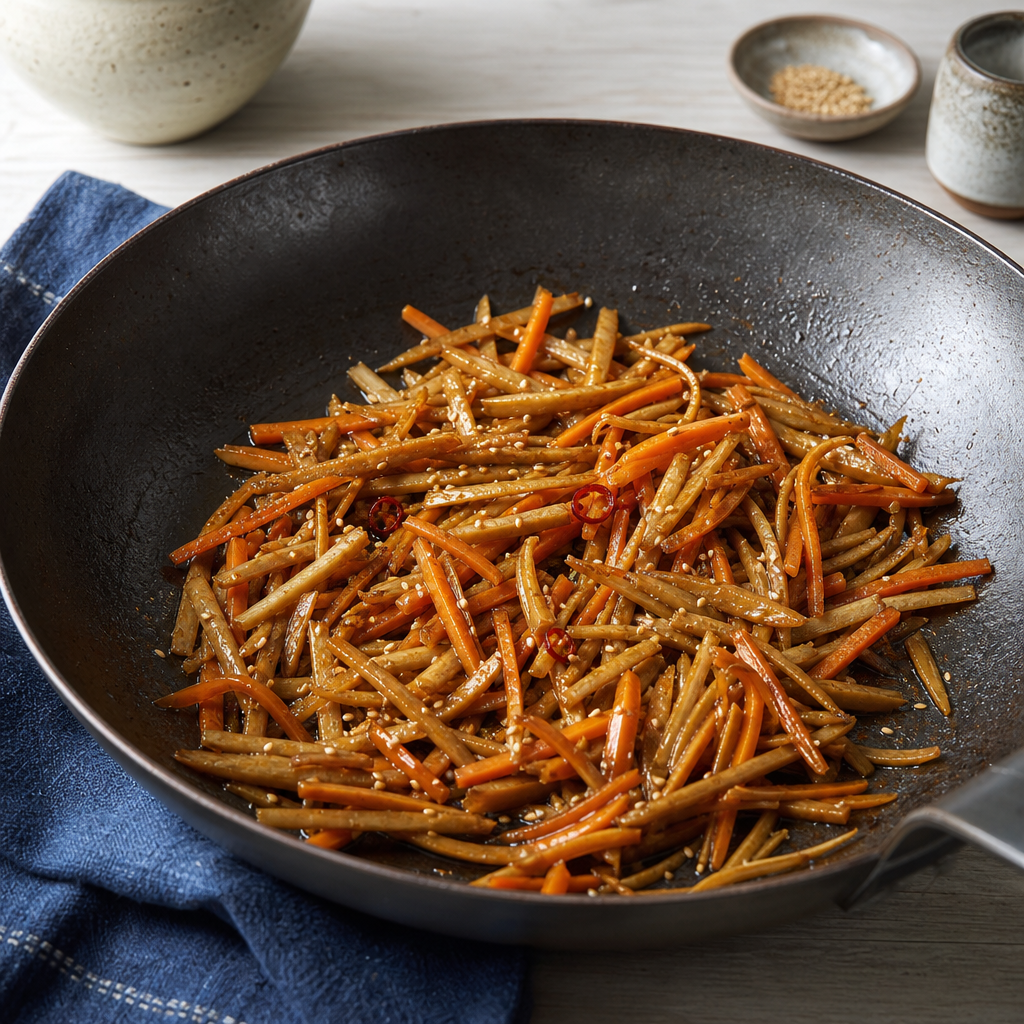
Pour in the seasoning mixture and stir once to coat. Cook over medium heat 4-6 minutes, stirring often, until the liquid is nearly gone and the vegetables look glossy rather than wet.
Finish with sesame
Turn off the heat. Sprinkle with toasted sesame seeds and toss once or twice, then transfer to a shallow container to cool.
Common mistakes
- {'mistake': 'Peeling the burdock like a carrot', 'fix': 'Scrub it instead. The skin is thin and aromatic; removing it completely makes the dish taste less like gobo.'}
- {'mistake': 'Soaking the cut burdock for 30 minutes or more', 'fix': 'Use a 5-minute soak. Long soaking pulls out the earthy aroma the dish is built around.'}
- {'mistake': 'Cutting thick batons', 'fix': 'Cut 2-3 mm matchsticks. Thick pieces need longer simmering and lose the crisp-chewy target texture.'}
- {'mistake': 'Leaving visible sauce in the pan', 'fix': 'Reduce until the vegetables are lacquered and the pan is almost dry. Kinpira should not sit in a puddle.'}
- {'mistake': 'Using Chinese dark soy sauce as a direct substitute', 'fix': 'Use Japanese koikuchi shoyu. Chinese dark soy is darker, sweeter, and more viscous; it pushes the dish toward a different seasoning profile.'}
What does not belong
- {'item': 'Garlic', 'reason': 'Garlic does not belong in standard kinpira gobo. It covers the clean burdock-sesame aroma.'}
- {'item': 'Ginger', 'reason': 'Ginger turns the seasoning toward a different stir-fry profile. Kinpira gobo gets its edge from burdock, sesame oil, and chili, not warm aromatics.'}
- {'item': 'Teriyaki sauce', 'reason': 'Commercial teriyaki sauce does not belong here. It is too thick and sweet, and it skips the reduction that defines the dish.'}
- {'item': 'Butter', 'reason': 'Butter muddies the sesame oil finish and makes the side heavy when served cold in bento.'}
- {'item': 'Dashi', 'reason': 'Dashi is central to many Japanese simmered dishes, but it is not necessary here. Kinpira relies on a small amount of concentrated seasoning reduced directly onto the vegetables.'}
Adaptations
Use standard plant-based sake, mirin, shoyu, sugar, and sesame oil. No dashi or animal product is needed.
Replace sake with water and use halal-certified mirin-style seasoning or water plus 6 g sugar for the mirin. The result loses rice-wine aroma but keeps the sauté-simmer structure.
Use gluten-free tamari in place of shoyu, starting with about 80% of the soy sauce amount because tamari can taste saltier. Confirm the mirin and sake labels are gluten-free.
No dairy is used. Butter does not belong in kinpira gobo.
No shellfish is used.