Chicken Teriyaki Bento
The dish in context
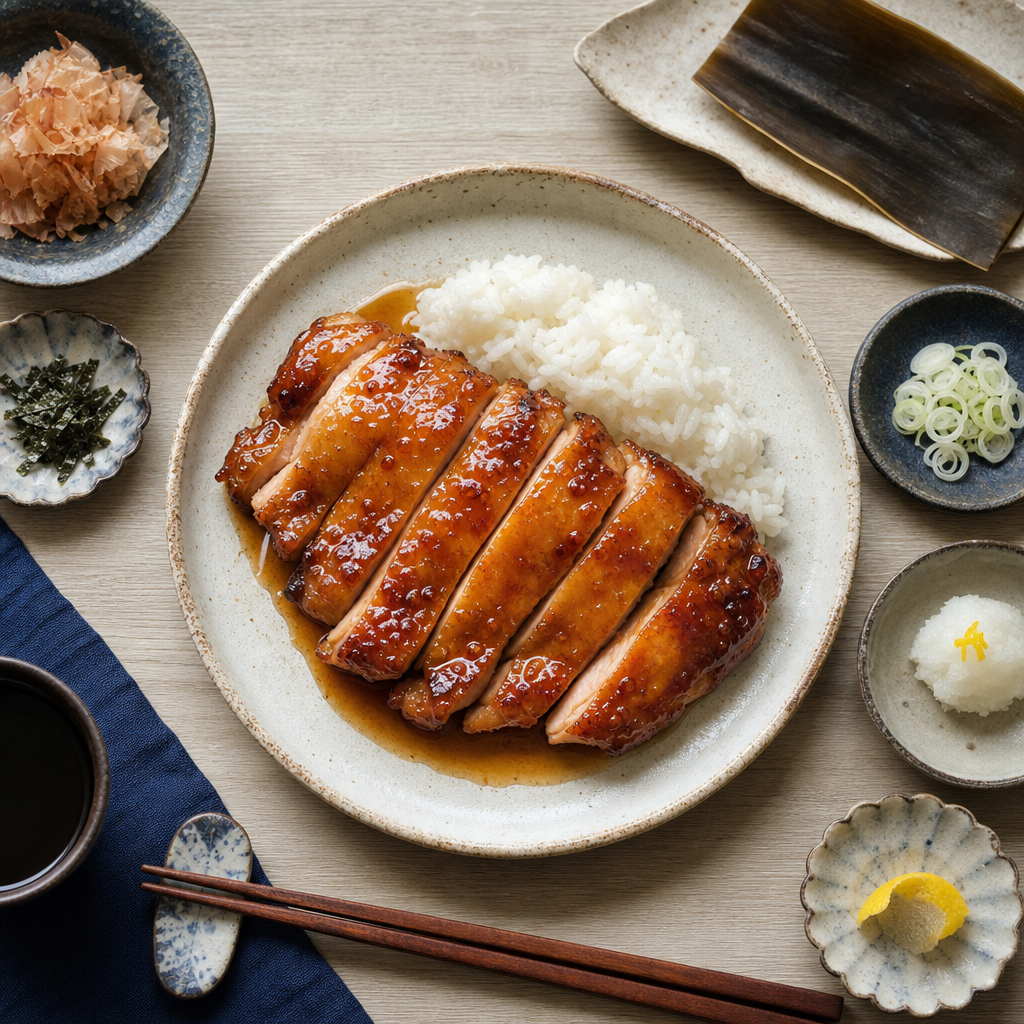
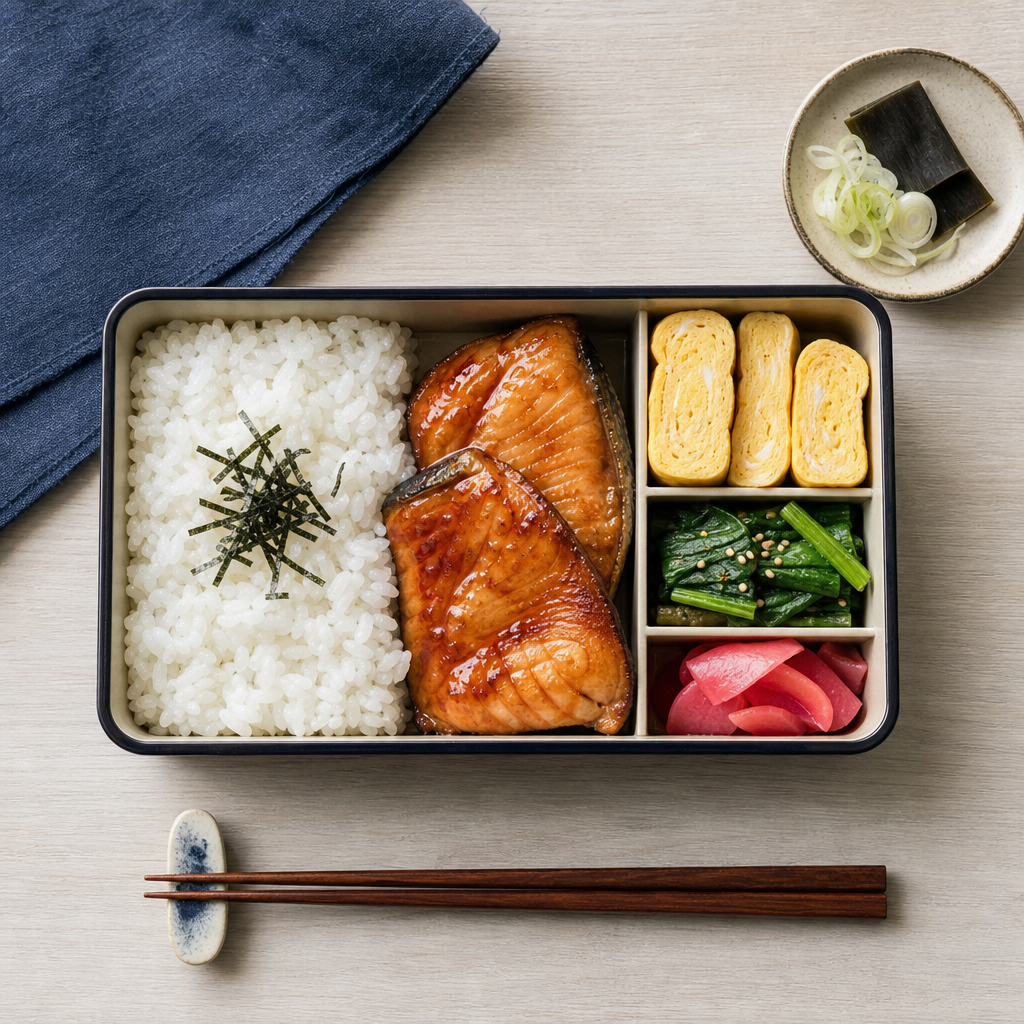
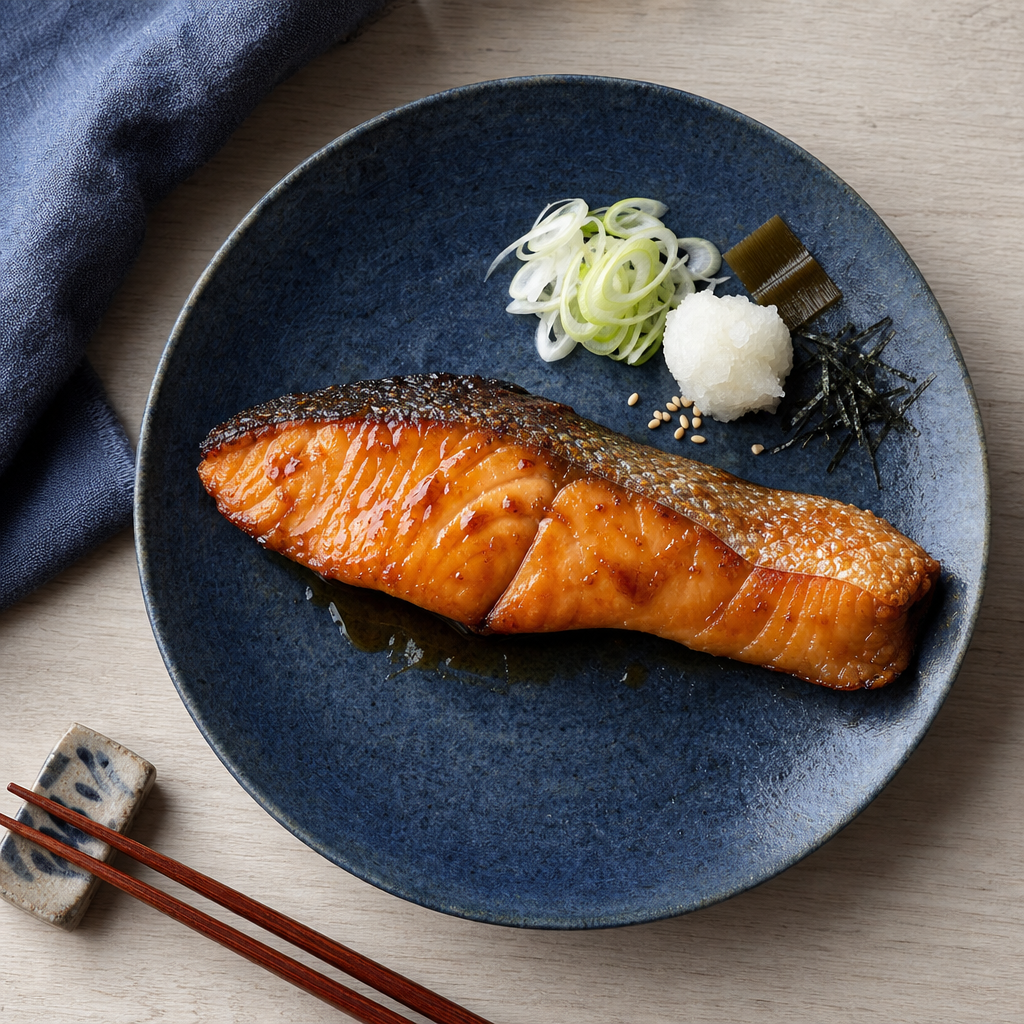
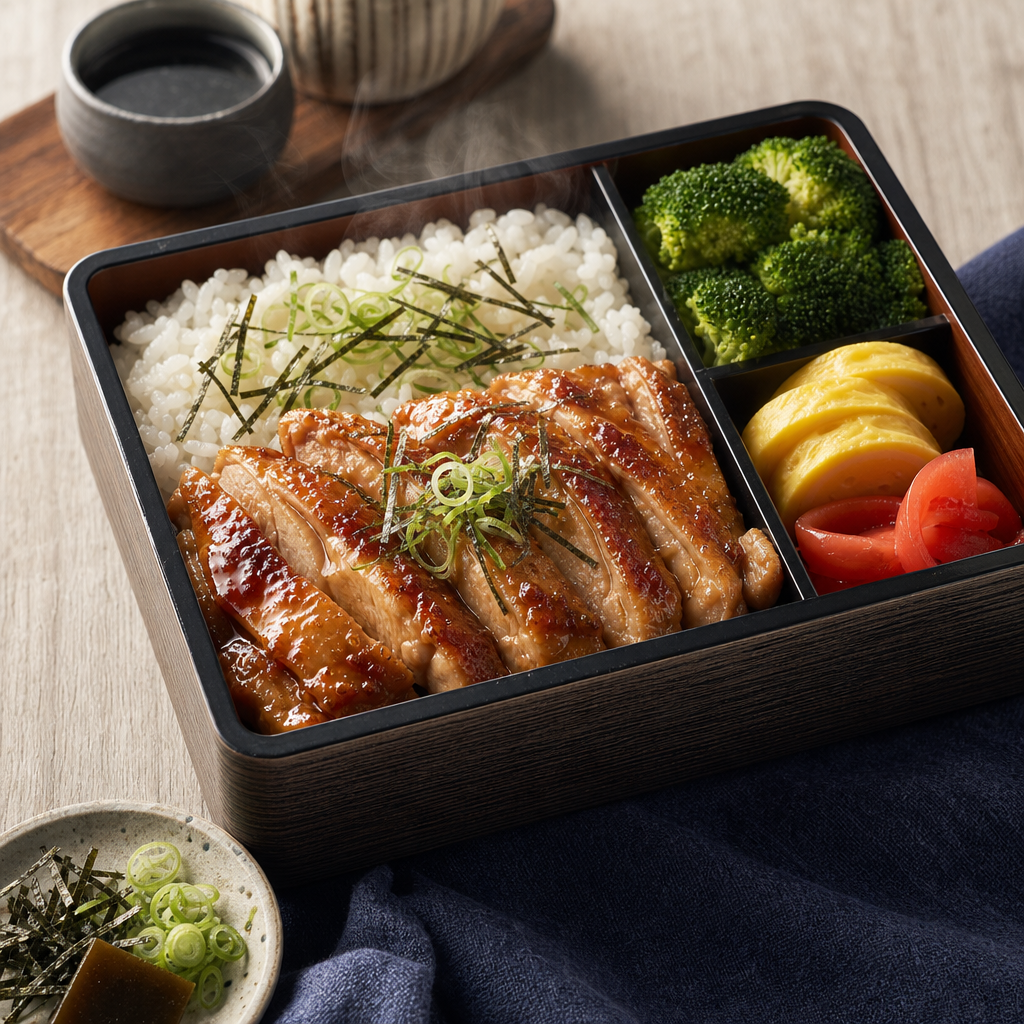
Teriyaki in Japan names a cooking effect as much as a sauce: 照り means shine and 焼き means grilled or seared. The domestic version is built from shoyu, mirin, sake, and sometimes sugar, reduced onto fish or meat until it forms a glossy coat. Chicken teriyaki bento is a modern lunchbox standard because the glaze holds well at room temperature and seasons plain rice without needing a separate sauce cup. Japanese bento logic favors compact foods that stay defined after cooling; watery vegetables and loose sauce work against the form. American bottled teriyaki is a related restaurant and supermarket branch, but it is usually thicker, sweeter, and less useful for a Japan-style lunchbox.
Method 9 steps · 70 min
Wash and soak the rice
Wash the short-grain rice in several changes of cold water until the water runs nearly clear, rubbing the grains with a light hand. Drain, add the measured cooking water, and soak 30 minutes before cooking.
Cook and rest the rice
Cook the rice in a rice cooker, or bring it to a boil in a covered heavy saucepan, reduce to very low, cook 12 minutes, then rest off heat 10 minutes without opening the lid. Fluff with a shamoji or rice paddle using cutting motions, not vigorous stirring.
Prepare the chicken and sauce
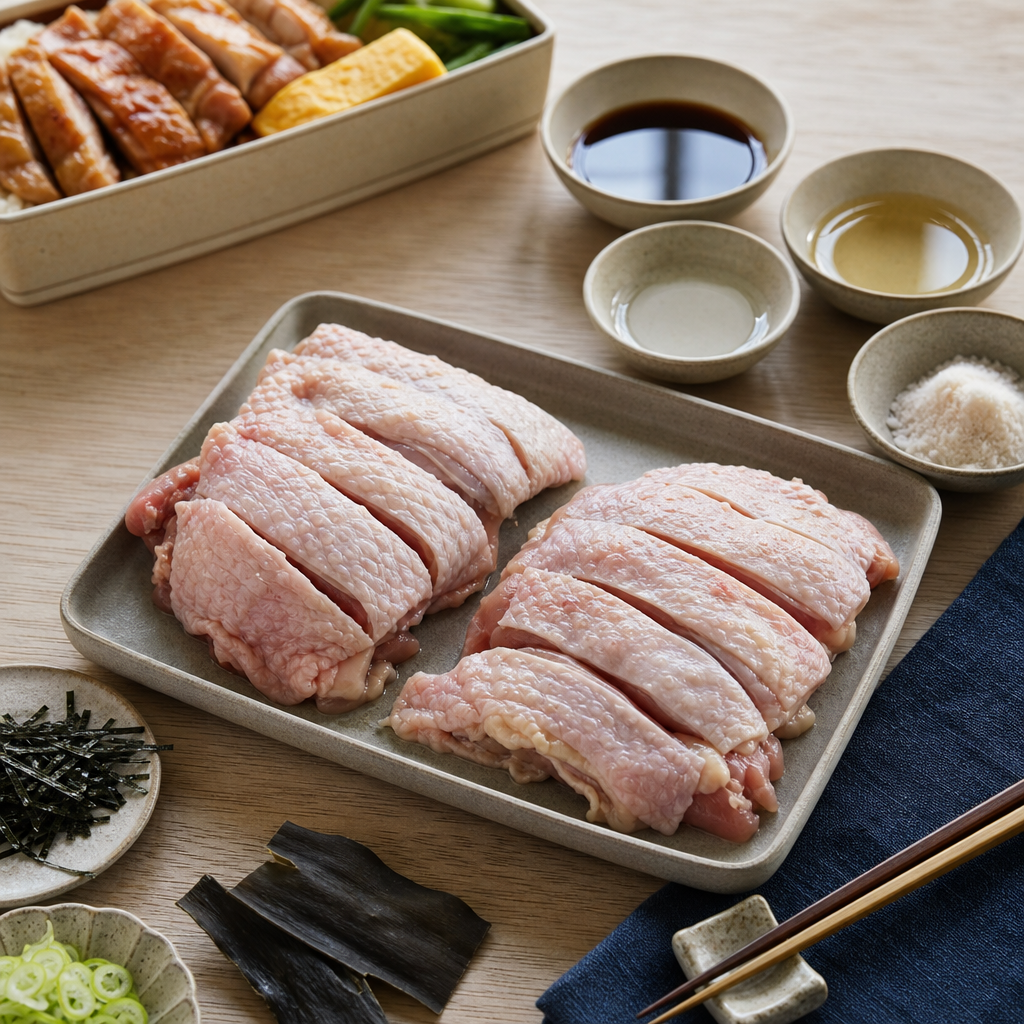
Trim loose fat from the chicken but leave the skin. Slash the thick parts from the meat side so each thigh lies close to even thickness, then season with salt. Stir shoyu, mirin, sake, sugar, and ginger if using until the sugar dissolves.
Blanch the green side
Boil salted water, blanch the broccoli 60-75 seconds until bright green and still firm at the stem, then drain hard. Spread on a tray so steam escapes.
Brown the chicken skin
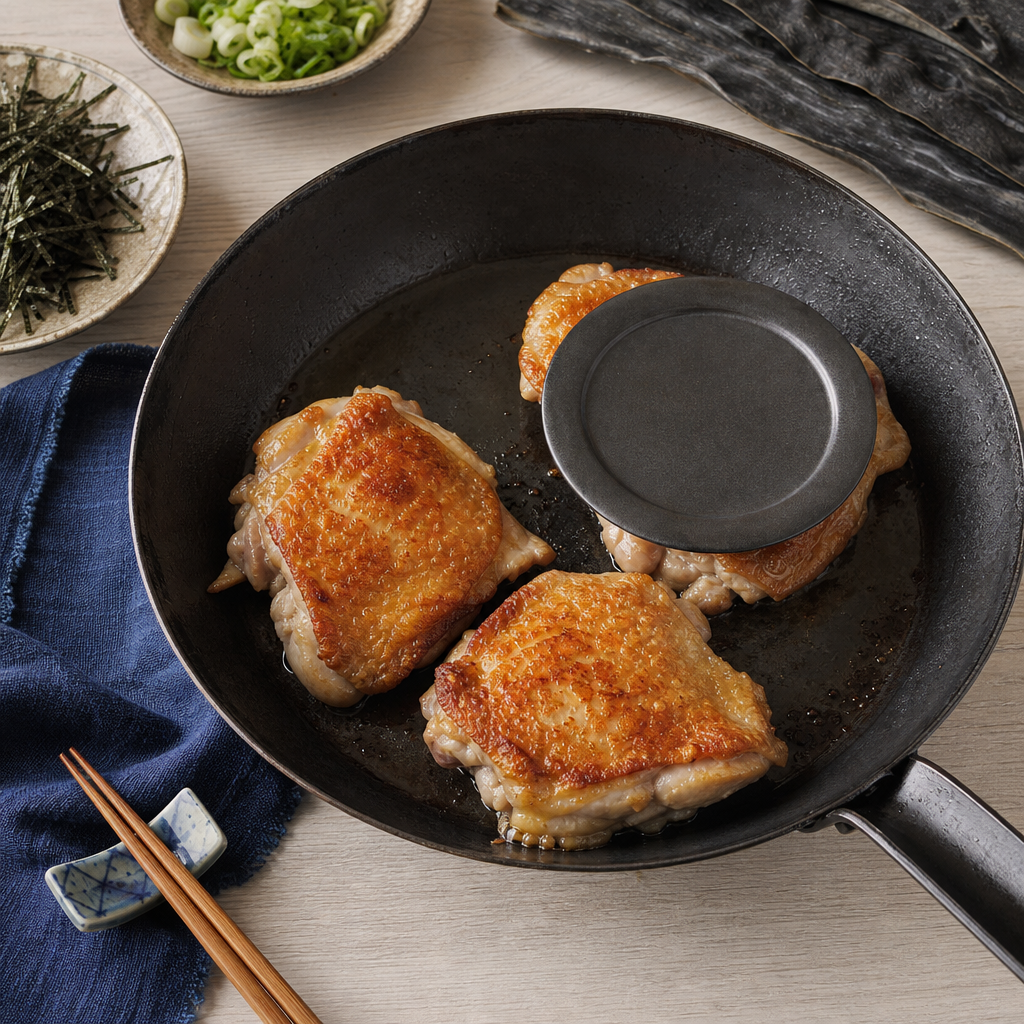
Heat a skillet over medium heat with the oil. Place chicken skin-side down and cook 7-9 minutes, pressing the first minute so the skin contacts the pan, until the skin is deep golden in patches and the edges are opaque.
Cook the second side
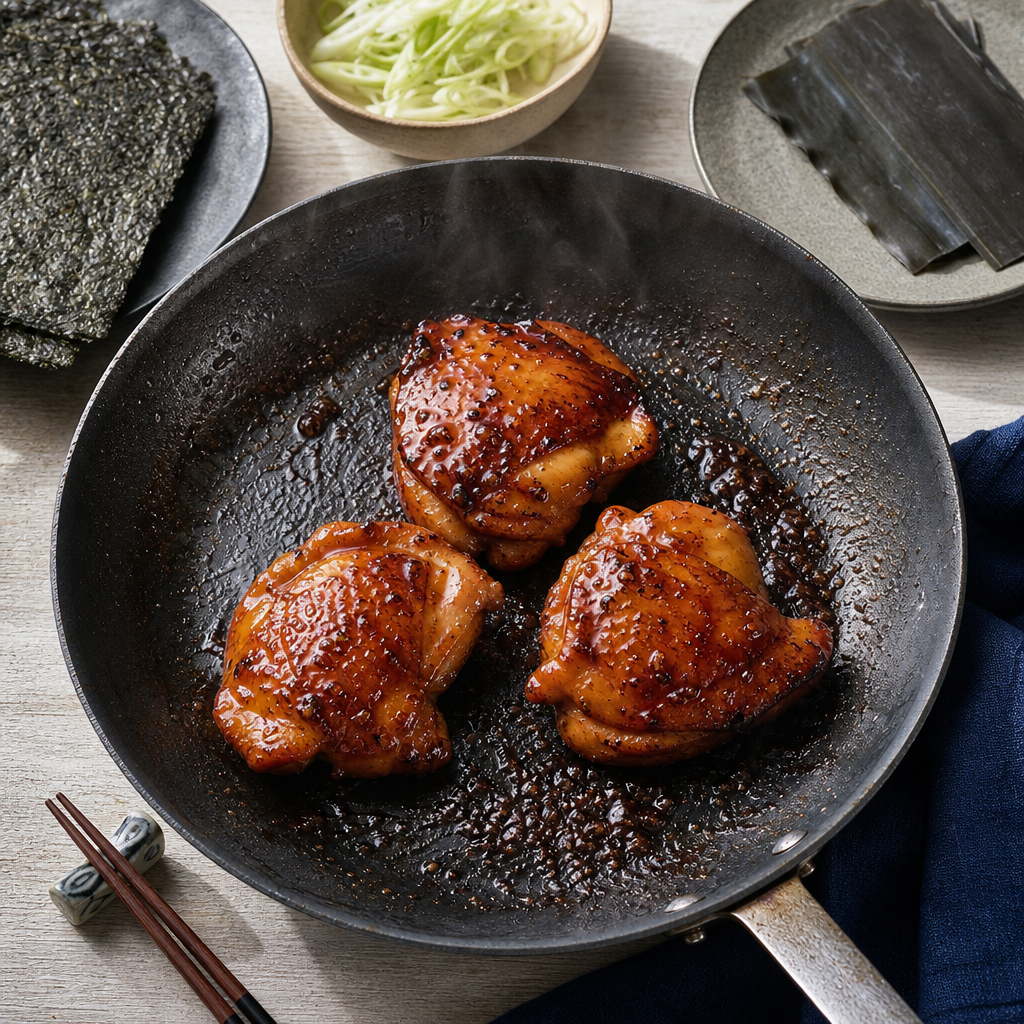
Flip the chicken and cook 3-4 minutes more, until the thickest part reaches about 70°C. Pour off or wipe out excess fat, leaving the browned film on the pan.
Glaze
Add the sauce mixture to the skillet and simmer, turning the chicken every 30 seconds, until the bubbles become tight and glossy and the sauce leaves a clear trail when a spatula crosses the pan. Stop before it turns sticky like candy.
Rest and slice
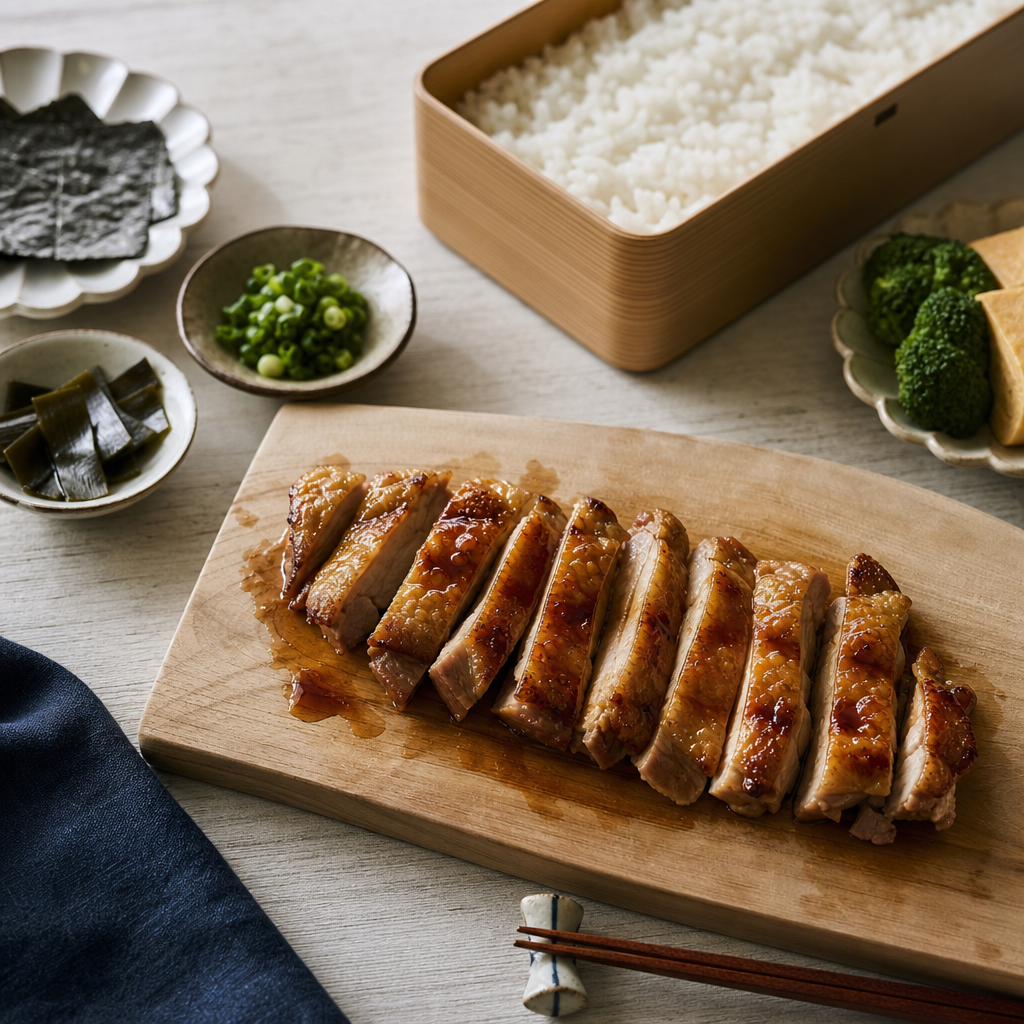
Move the chicken to a board and rest 5 minutes. Slice across the grain into 1.5-2 cm strips, then spoon a thin layer of pan glaze over the cut pieces.
Pack the bento
Pack rice into one side of each bento box and let visible steam fade. Arrange chicken in overlapping slices, add broccoli and takuan in separate spaces, then finish the chicken with sesame seeds and a trace of shichimi if using.
Common mistakes
- {'mistake': 'Using long-grain rice', 'why_it_fails': 'Long-grain rice stays separate and dry. Bento rice should hold together in soft clumps without turning to paste.'}
- {'mistake': 'Adding sauce before the chicken browns', 'why_it_fails': 'Soy, mirin, and sugar burn before raw chicken skin renders. The result is steamed meat with a scorched, dull glaze.'}
- {'mistake': 'Reducing the sauce until it is thick in the hot pan', 'why_it_fails': 'Sugar keeps tightening as it cools. A sauce that looks fully thick in the pan becomes tacky and harsh in the lunchbox.'}
- {'mistake': 'Closing the bento while the rice is steaming', 'why_it_fails': 'Steam condenses on the lid and drips back down. That water weakens the rice texture and makes the chicken glaze run.'}
- {'mistake': 'Packing wet vegetables beside the rice', 'why_it_fails': 'Bento sides need to be drained and cooled. Water moves through the box faster than sauce does.'}
What does not belong
- {'item': 'Bottled American teriyaki sauce', 'reason': 'It does not belong in this bento. It is usually starch-thickened and sugar-heavy, which gives a dull coating instead of a pan-reduced shine.'}
- {'item': 'Long-grain rice, jasmine rice, or basmati', 'reason': 'These do not belong in Japanese bento rice. The grain structure is wrong for packing and eating at room temperature.'}
- {'item': 'Garlic-heavy sauce', 'reason': 'Garlic is common in many teriyaki-adjacent restaurant sauces, but it pushes this lunchbox toward American takeout. Ginger is optional; garlic is not the default grammar here.'}
- {'item': 'Cornstarch slurry', 'reason': 'Cornstarch thickening does not belong in a Japan-style teriyaki glaze. Reduction and mirin give the shine; starch gives a gelatinous film.'}
- {'item': 'Mayonnaise over the chicken', 'reason': 'Japanese mayonnaise has a place in some bento sides, but it does not belong on chicken teriyaki here. It smears the glaze and makes the rice greasy.'}