Salmon Teriyaki Bento
The dish in context
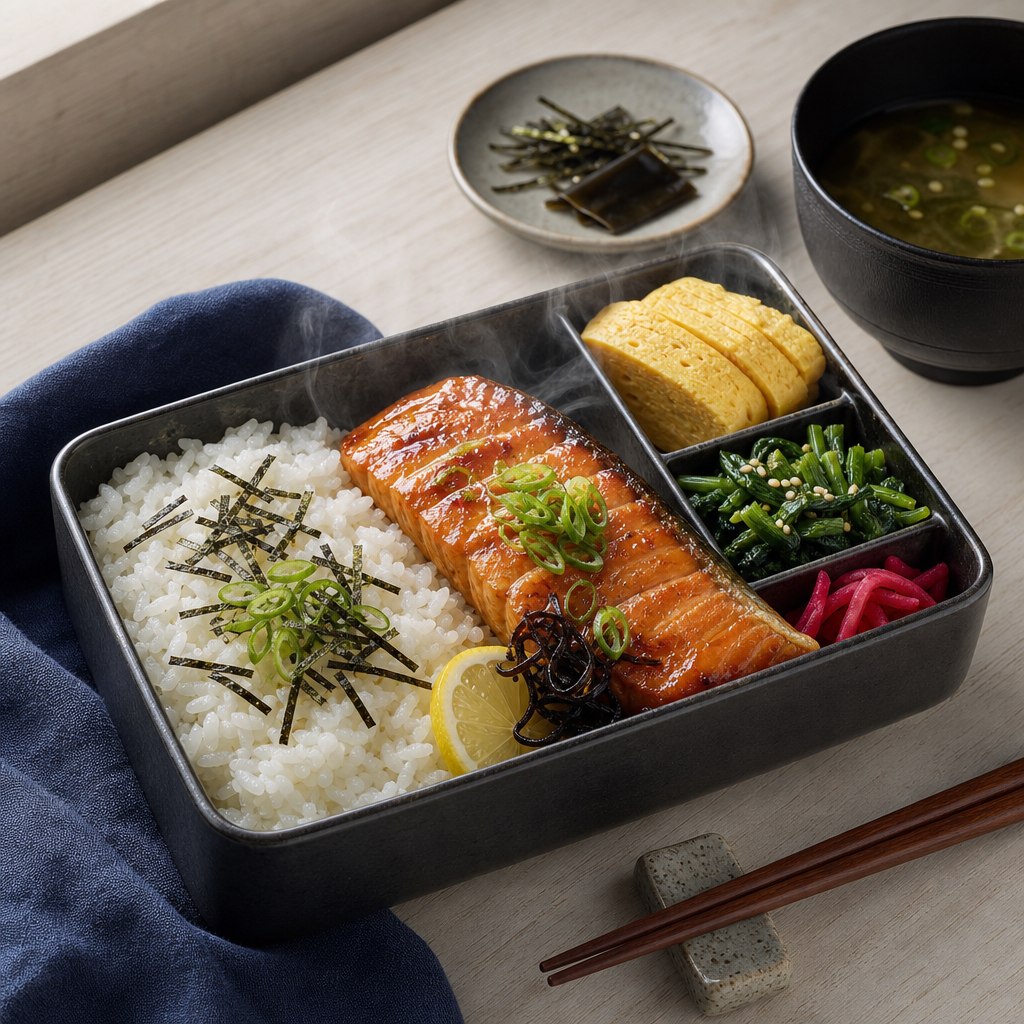
Bento (弁当) is a Japanese packed-meal format with older roots in portable rice meals and a recognizable modern form shaped by theater-going, railway travel, school lunches, and home kitchens. MAFF materials describe makunouchi bento as an Edo-period theater meal built from rice and durable side dishes such as simmered vegetables, fish cake, and rolled egg. Teriyaki (照り焼き) refers to a gloss-producing grilling or pan-glazing technique, not a bottled sauce category; the shine comes from reducing soy sauce, sake, and mirin around cooked protein. Salmon teriyaki is common in home and lunchbox cooking because it holds well at room temperature once cooled and packs neatly with rice and small sides.
Method 10 steps · 65 min
Wash and soak the rice
Wash the short-grain rice in several changes of cold water until the water turns nearly clear, then drain well. Add the measured cooking water and soak 30 minutes before cooking.
Cook and rest the rice
Cook the rice in a rice cooker, or bring it to a boil in a covered saucepan, reduce to low for 12 minutes, then turn off the heat. Rest covered for 10 minutes and fluff with a rice paddle using cutting motions, not vigorous stirring.
Season and dry the salmon
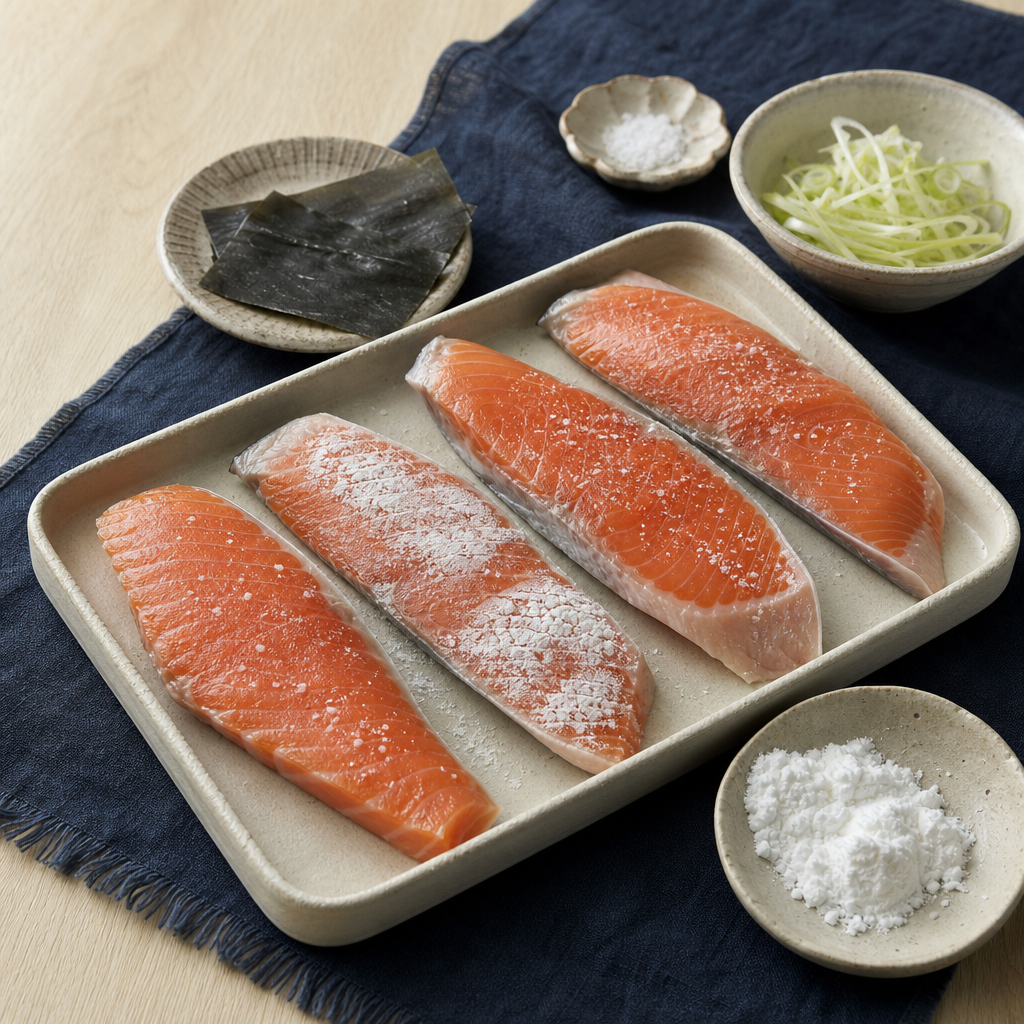
Pat the salmon dry, salt lightly, and let it stand 10 minutes. Blot off the moisture that beads on the surface, then dust with potato starch in a thin film.
Mix the teriyaki tare
Combine sake, mirin, koikuchi shoyu, and sugar in a small bowl. Stir until the sugar is mostly dissolved.
Pan-sear the salmon
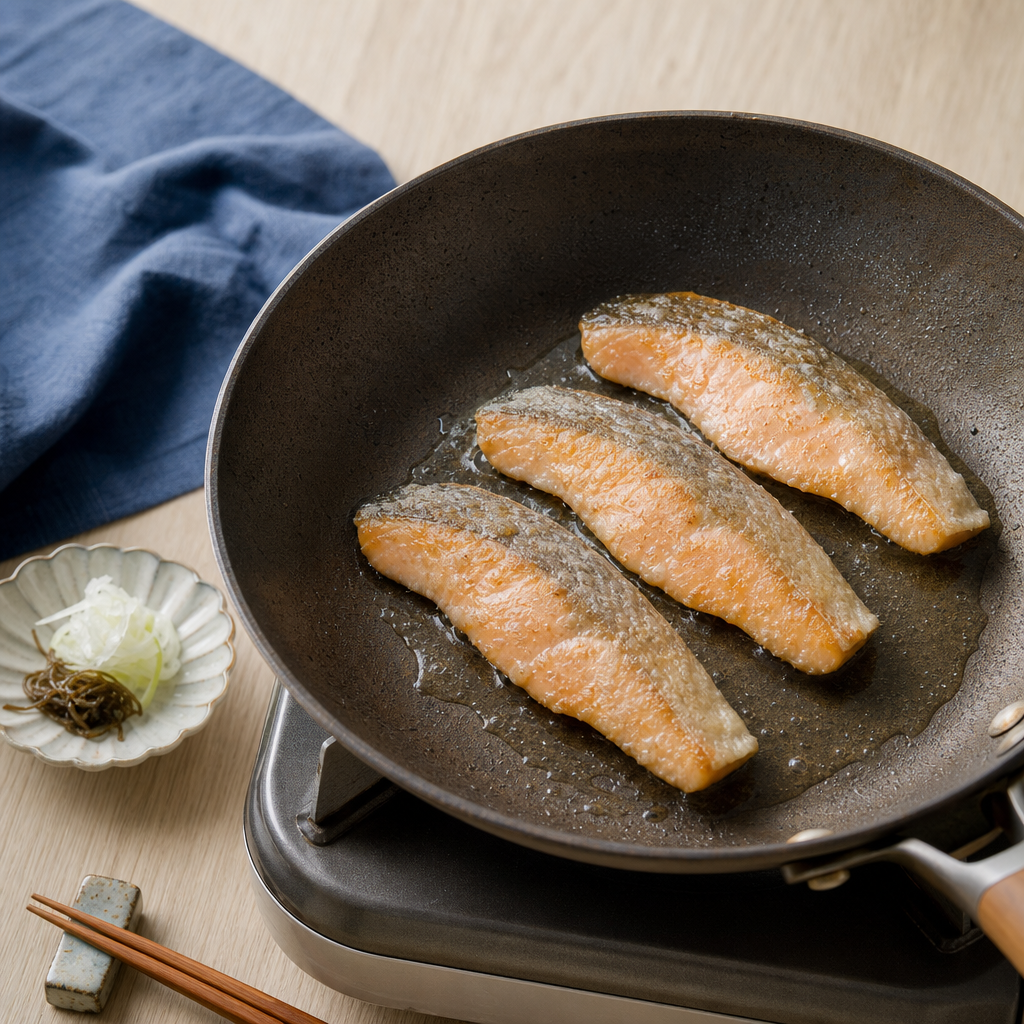
Heat the oil in a skillet over medium heat. Cook the salmon presentation-side down until lightly browned, about 3 minutes, then turn and cook the second side 2-3 minutes more; thick pieces should be barely opaque at the center.
Glaze to a lacquer
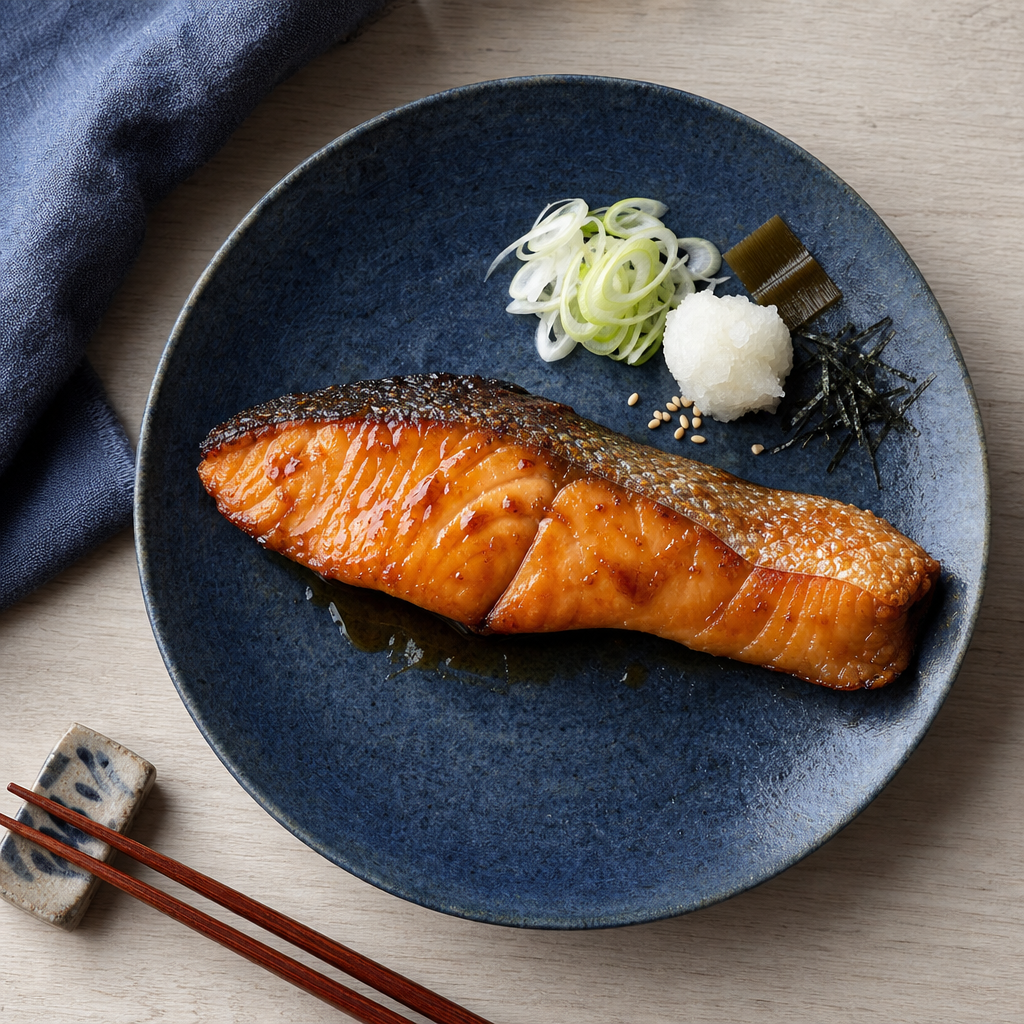
Lower the heat to medium-low, add the tare, and spoon it over the salmon as it bubbles. Stop when the sauce forms small shiny bubbles and coats the fish in a thin amber layer, 1-2 minutes; remove the fish before the glaze turns sticky and black at the pan edges.
Cook the tamagoyaki
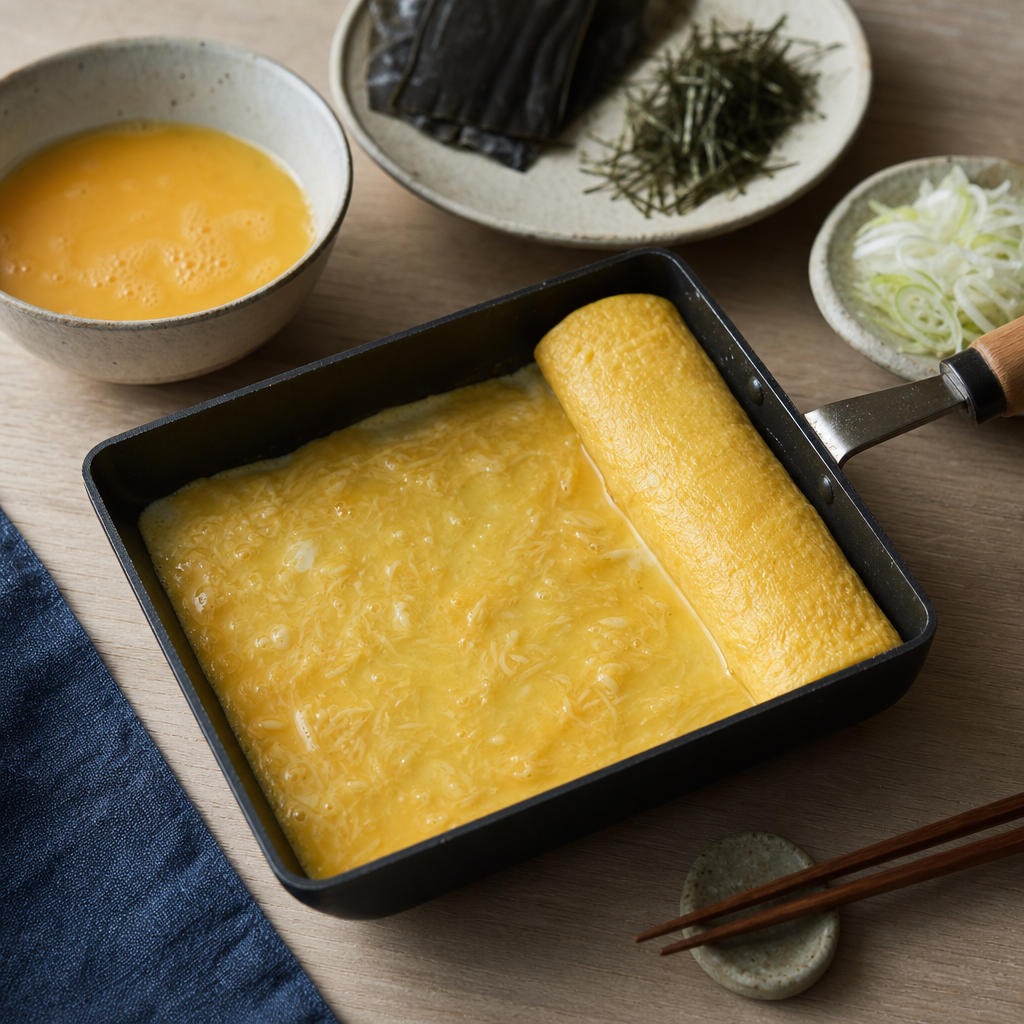
Beat the eggs with the tamagoyaki seasoning. Oil a small rectangular pan or skillet, add the egg in thin layers, and roll each set layer over itself until a compact omelette forms; cool, then slice into thick pieces.
Prepare low-moisture sides
Blanch the green vegetable in salted water until bright and barely tender, then drain and cool on a towel. Keep pickles separate until packing.
Cool before packing
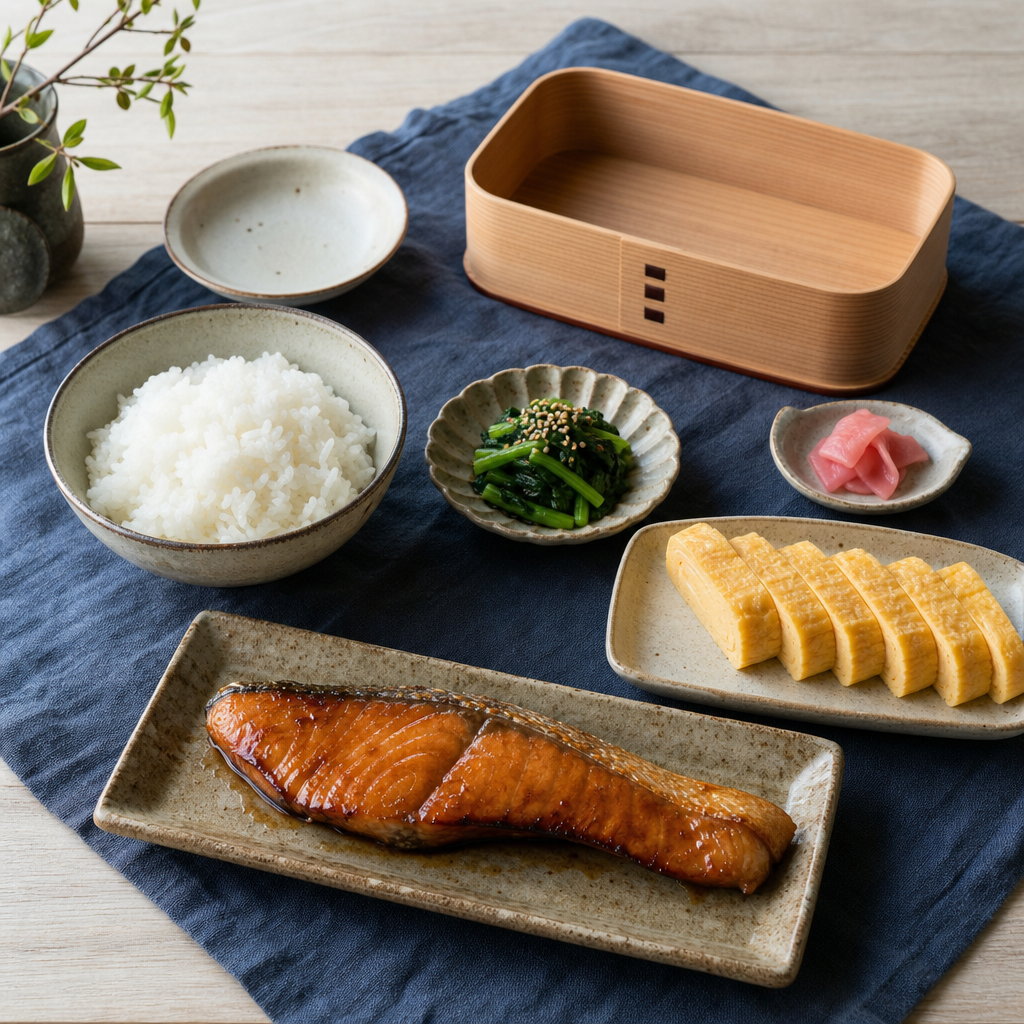
Let the rice, salmon, and omelette stop steaming before closing the bento. They can be warm, but visible steam trapped under a lid is wrong.
Pack the bento
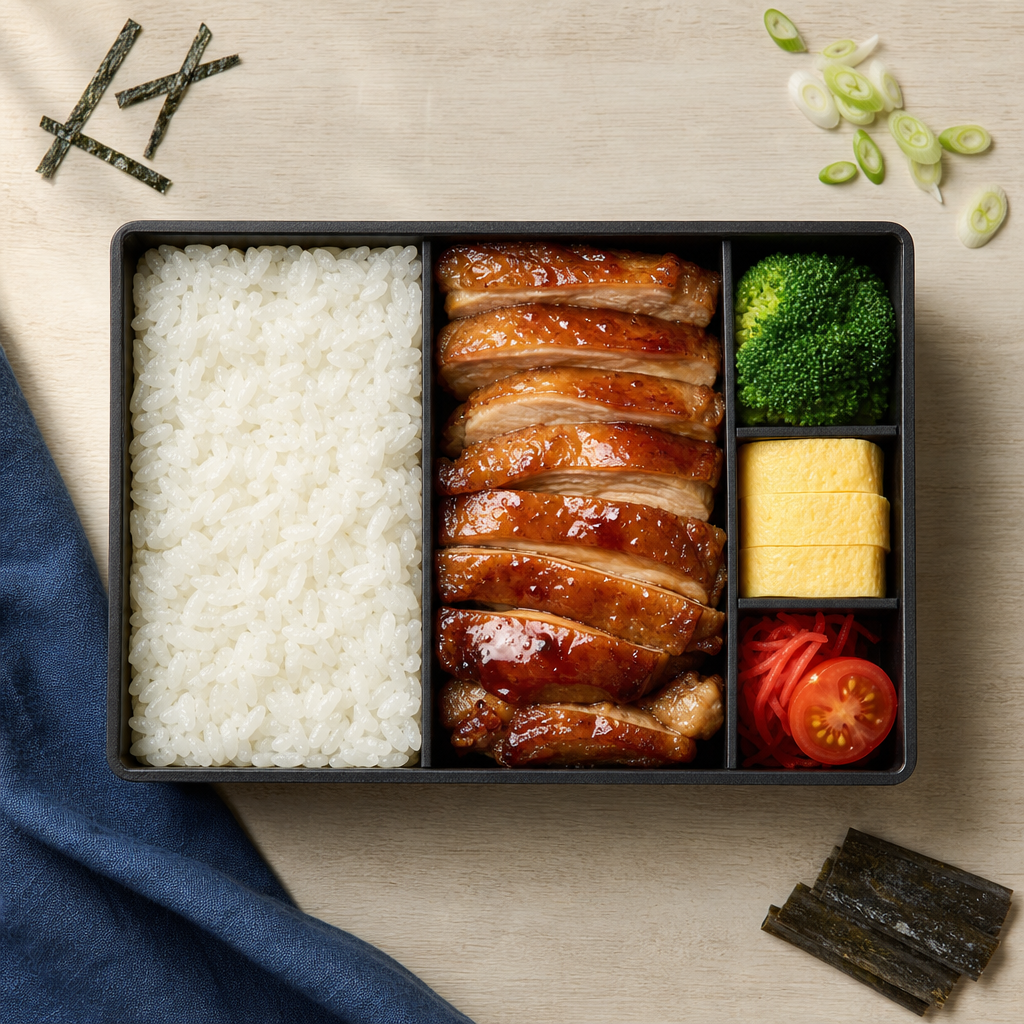
Pack rice on one side and sprinkle with black sesame if using. Place salmon beside the rice or in its own compartment, then add tamagoyaki, greens, and pickles so no two wet items touch directly.
Common mistakes
- {'mistake': 'Using long-grain rice', 'why_it_fails': 'Long-grain rice separates and dries out in a bento. Japanese short-grain rice stays cohesive without becoming paste.'}
- {'mistake': 'Using bottled American teriyaki sauce', 'why_it_fails': 'Most commercial versions are thick, sugary, and garlic-heavy. Japanese teriyaki glaze is built in the pan from soy sauce, sake, and mirin.'}
- {'mistake': 'Closing the bento while the food is steaming', 'why_it_fails': 'Steam condenses on the lid and drips back onto the rice and sides. The texture collapses before lunch.'}
- {'mistake': 'Reducing the glaze until it becomes tar-like', 'why_it_fails': 'Soy sauce turns harsh when over-reduced. The correct glaze is glossy and fluid enough to coat the fish in a thin layer.'}
- {'mistake': 'Packing wet vegetables', 'why_it_fails': 'Water seeps into rice and dilutes seasoning. Blanched vegetables need draining time on a towel.'}
What does not belong
- {'item': 'Cream or butter in the teriyaki glaze', 'reason': 'Cream and butter do not belong in Japanese teriyaki. They dull the soy-mirin shine and turn the glaze into a Western pan sauce.'}
- {'item': 'Pineapple juice', 'reason': 'Pineapple-style teriyaki is a Hawaiian-American branch, not the Japanese bento standard for 鮭照り焼き弁当.'}
- {'item': 'Garlic-heavy bottled sauce', 'reason': 'Garlic can appear in modern teriyaki variants, but it should not define this bento. The core profile is soy, sake, mirin, and fish.'}
- {'item': 'Mayonnaise over the salmon', 'reason': 'Mayonnaise turns the fish into a different lunchbox style and smothers the lacquered surface.'}
- {'item': 'Soy sauce poured over the rice', 'reason': 'Soy sauce on plain rice does not belong here. The rice is a neutral anchor for seasoned side dishes.'}