Salmon Onigiri
The dish in context
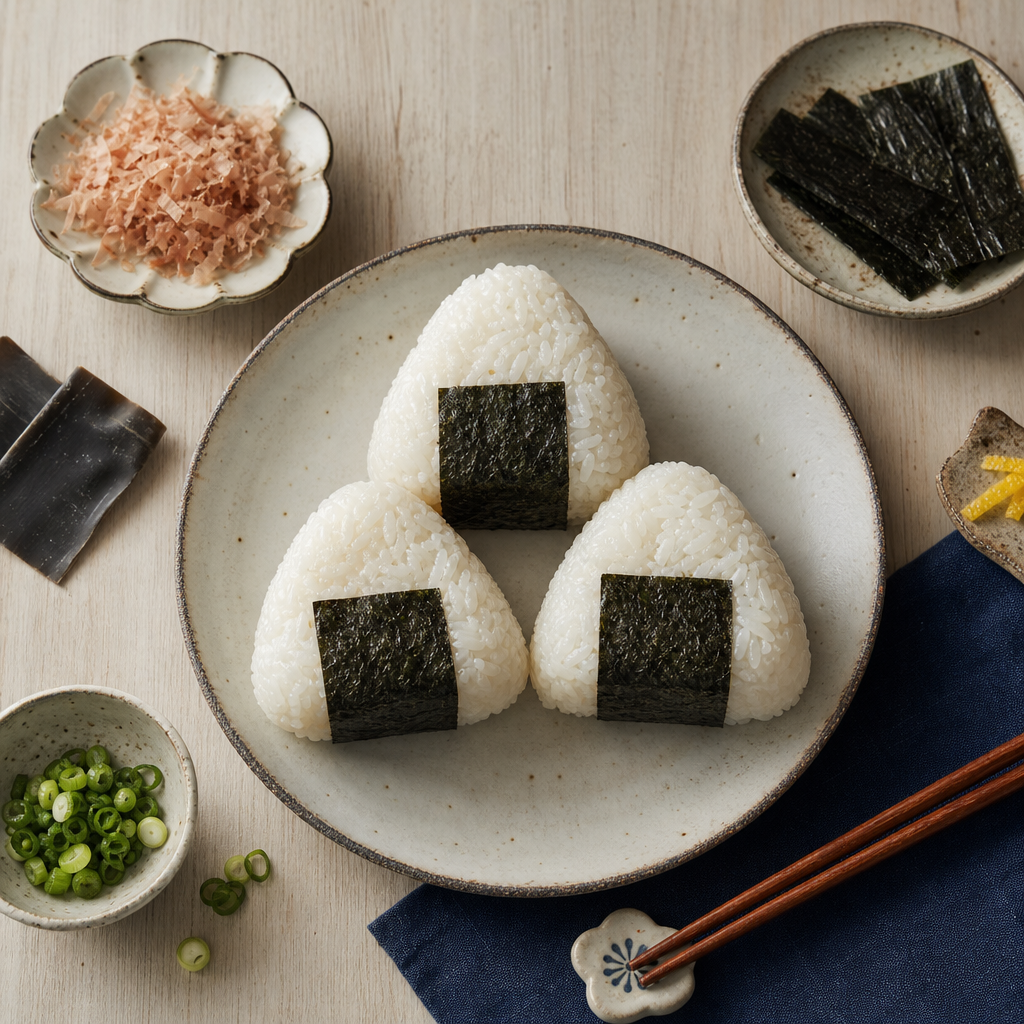
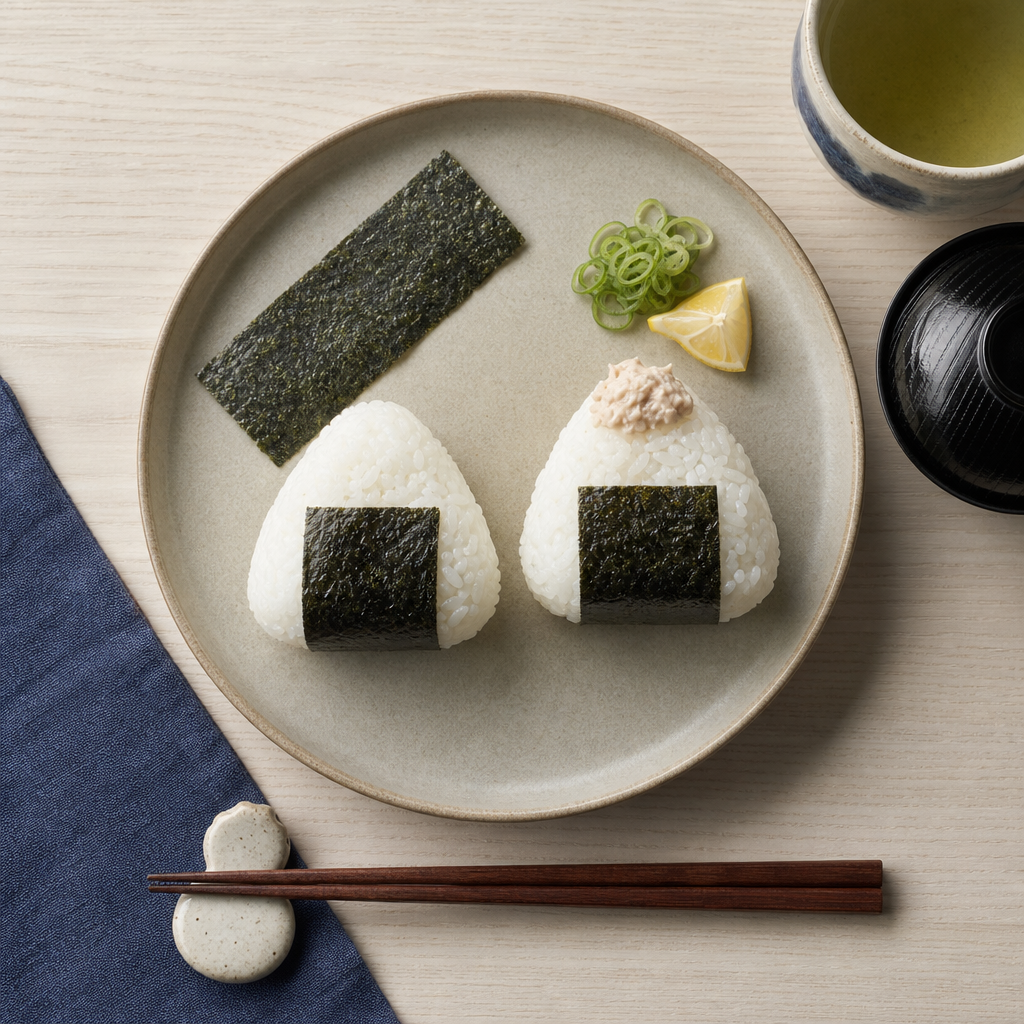
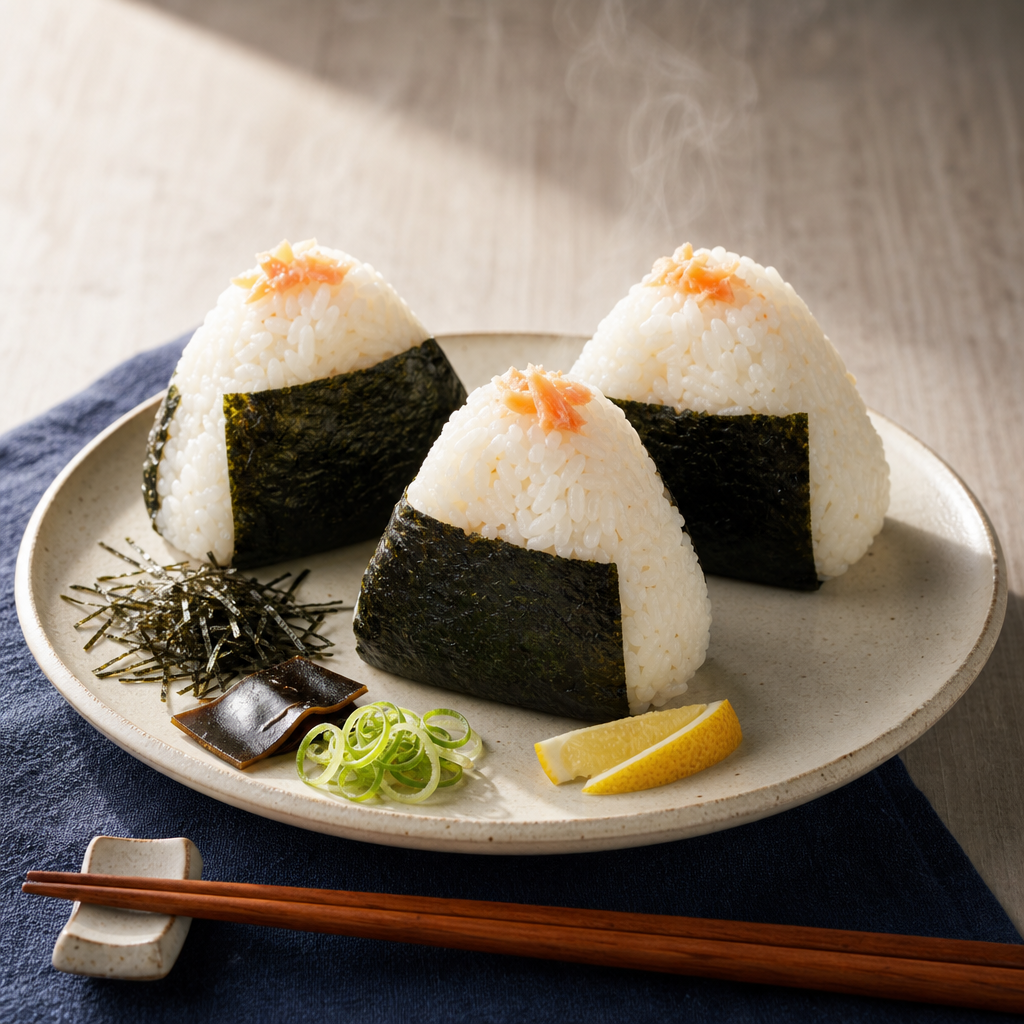
Onigiri, also called omusubi, are Japanese molded rice parcels eaten at home, packed into bentō, and sold everywhere from specialty rice shops to convenience stores. The form is old, but the modern triangle with crisp nori is strongly associated with postwar retail packaging and konbini food culture. Salmon is one of the standard fillings: salted, cooked, flaked, and tucked into plain rice rather than mixed into vinegared sushi rice. The point is not decoration. It is seasoned rice, a compact savory center, and a wrapper that stays dry until eating.
Method 7 steps · 70 min
Wash and soak the rice
Rinse the rice in a bowl with cold water, swishing with the fingertips and draining. Repeat 3-5 times, until the water turns cloudy rather than milky-white. Drain well, add the measured cooking water, and soak 30 minutes.
Cook and rest the rice
Cook the soaked rice in a rice cooker, or bring it to a boil in a covered saucepan, reduce to low, and cook 12 minutes. Turn off the heat and rest, covered, 10 minutes. Fluff with a rice paddle using cutting motions, not vigorous stirring.
Cook the salmon
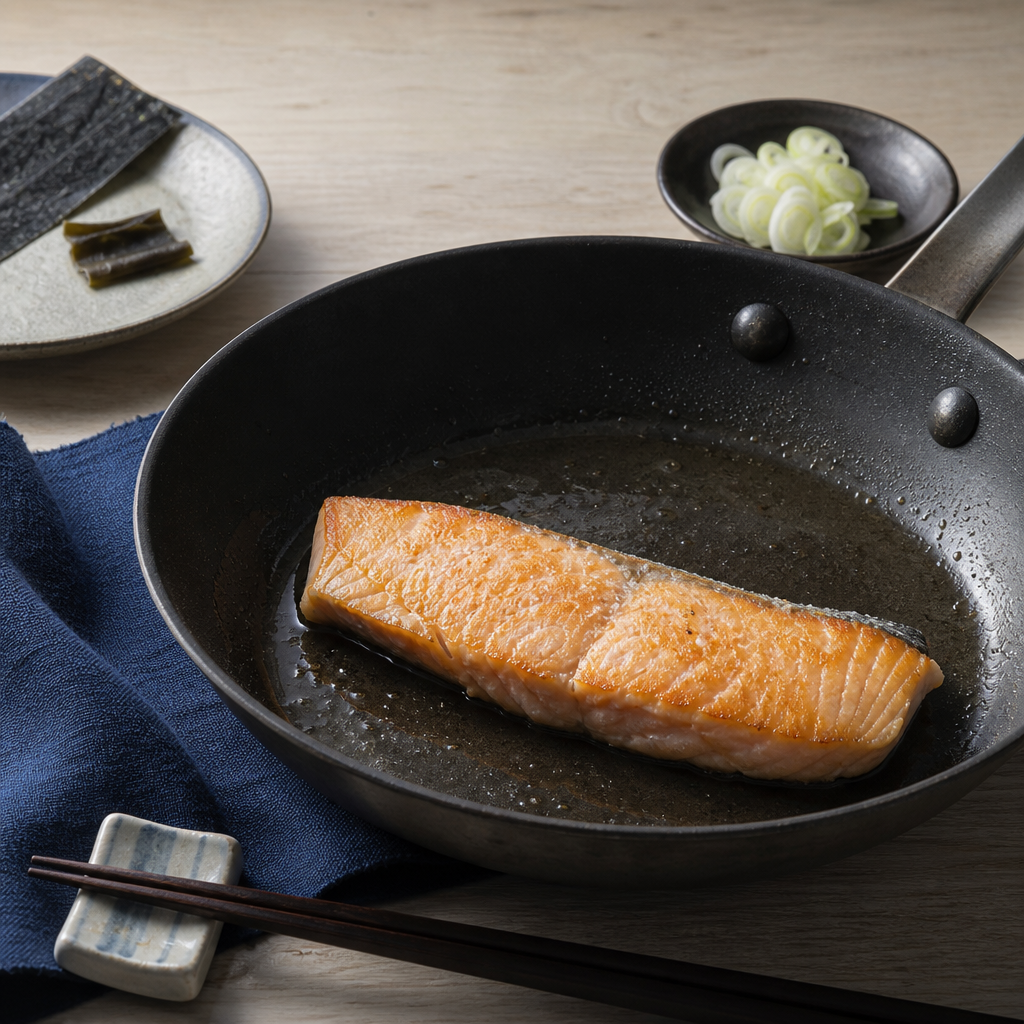
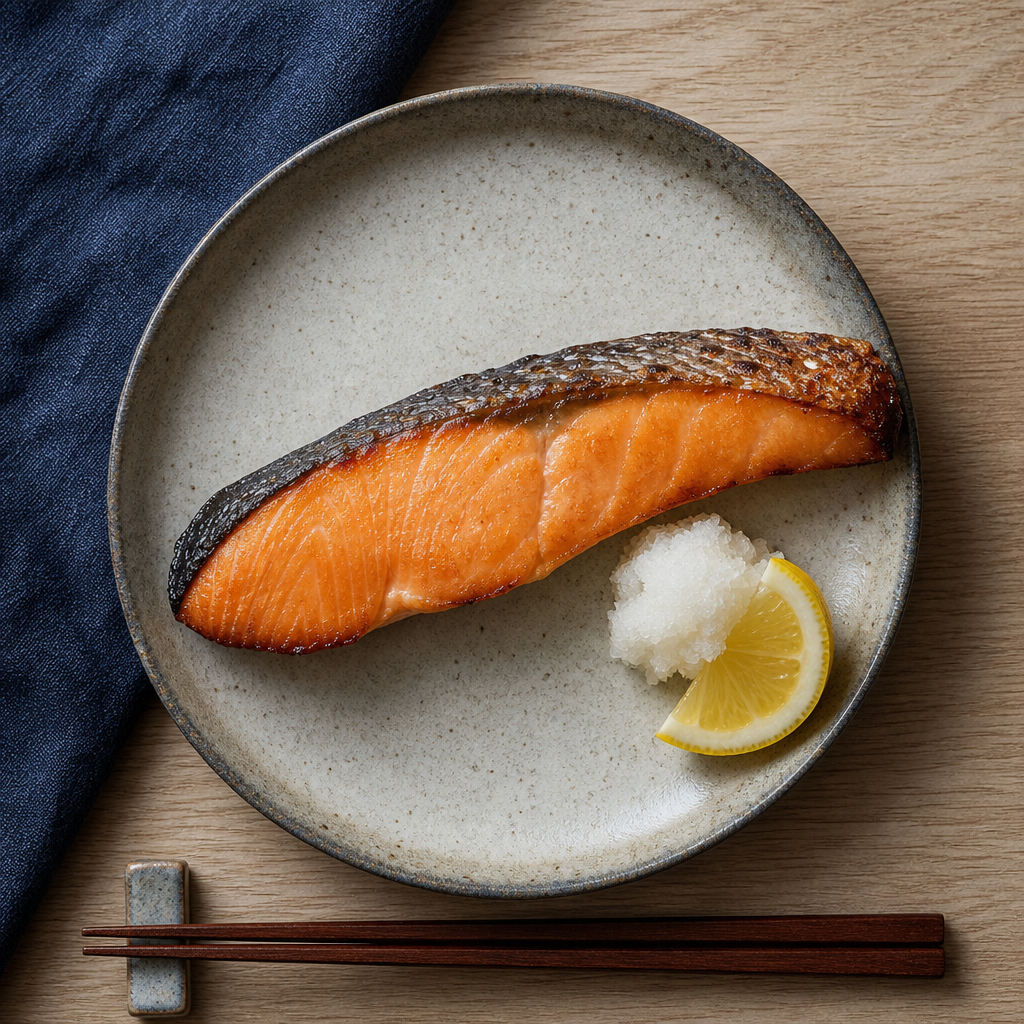
Season the salmon with 4 g of the salt. Pan-cook over medium heat with a thin film of oil, or grill, until the flesh flakes and the center is opaque, 6-8 minutes depending on thickness. Rest 5 minutes, then remove skin and bones.
Flake the filling
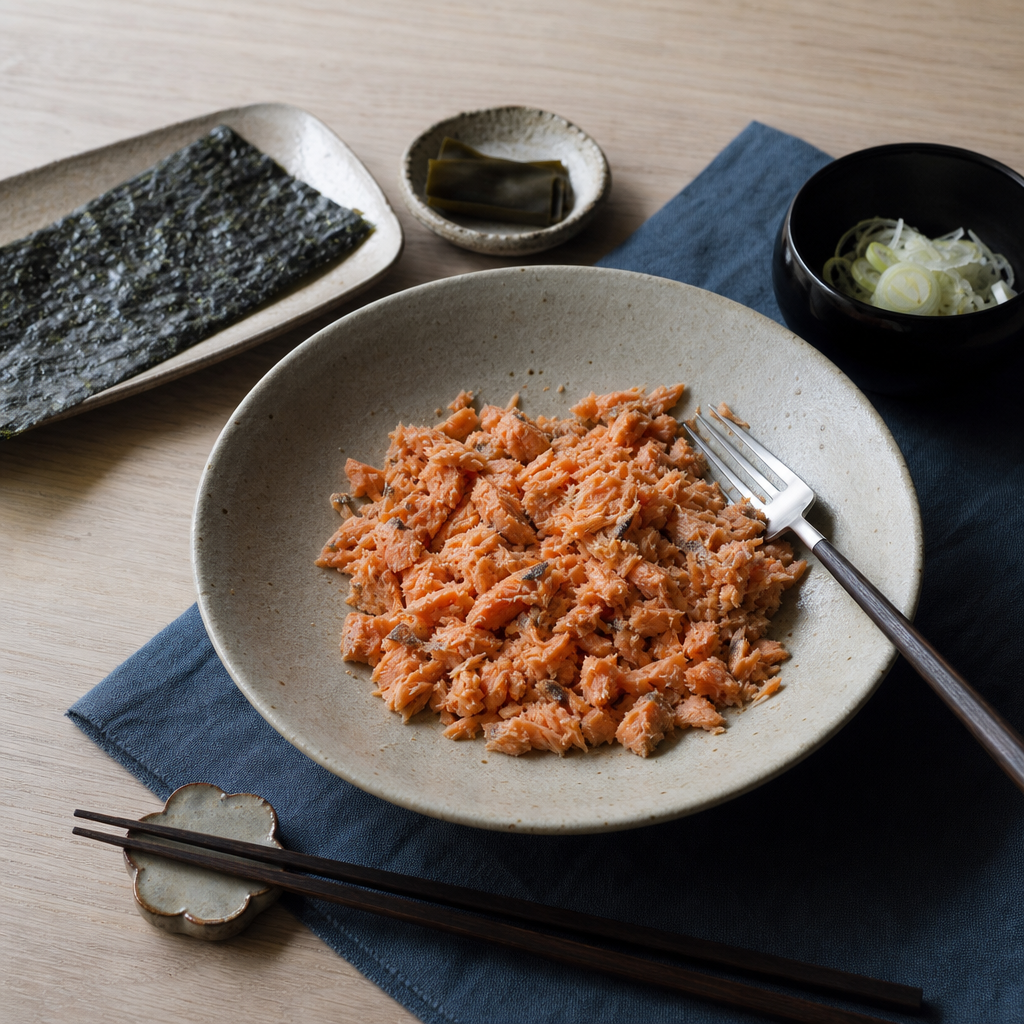
Flake the salmon with a fork into small pieces, roughly pea-size and smaller. Taste a small piece; it should read distinctly salty because it will be surrounded by unsalted rice.
Set up salted hands
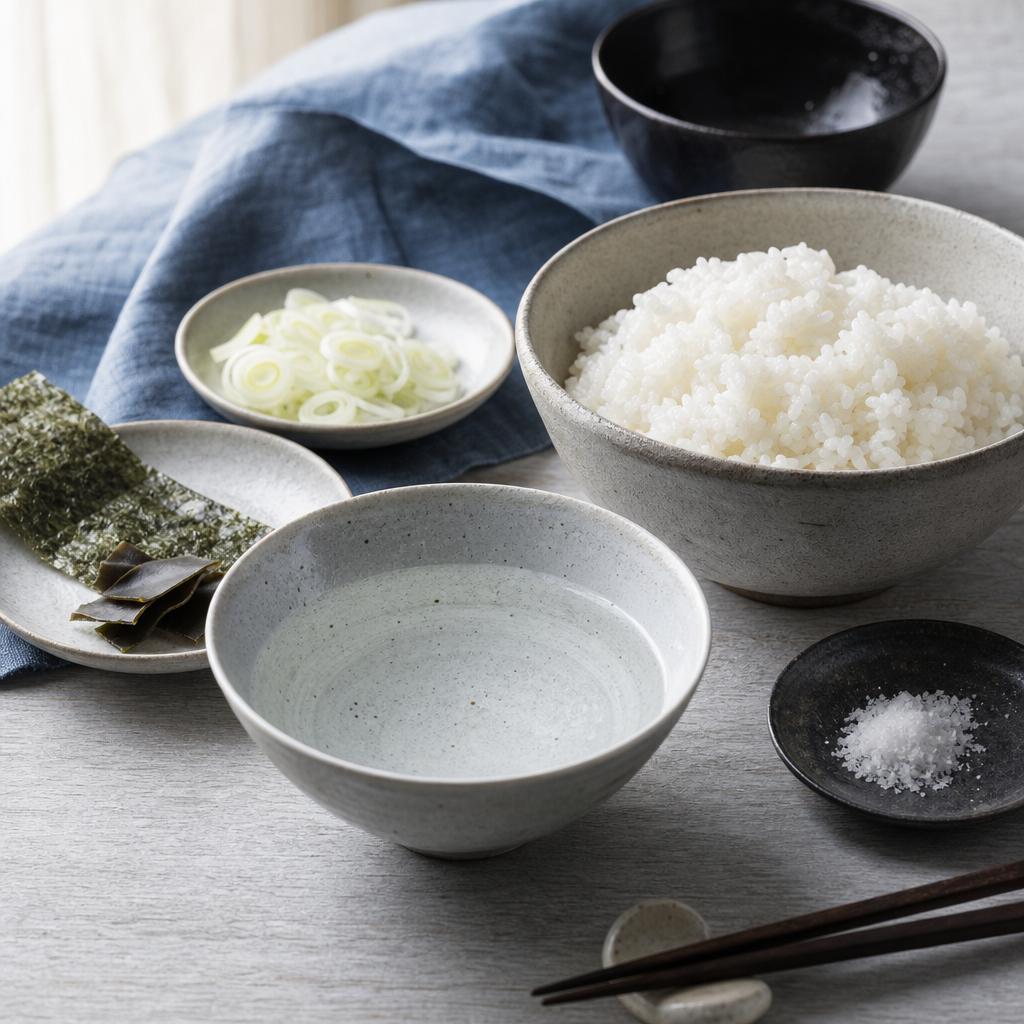
Put a bowl of water and the remaining salt beside the warm rice. Wet both hands, rub a pinch of salt across the palms, and shake off excess water. Work while the rice is warm but not burning-hot.
Fill and shape
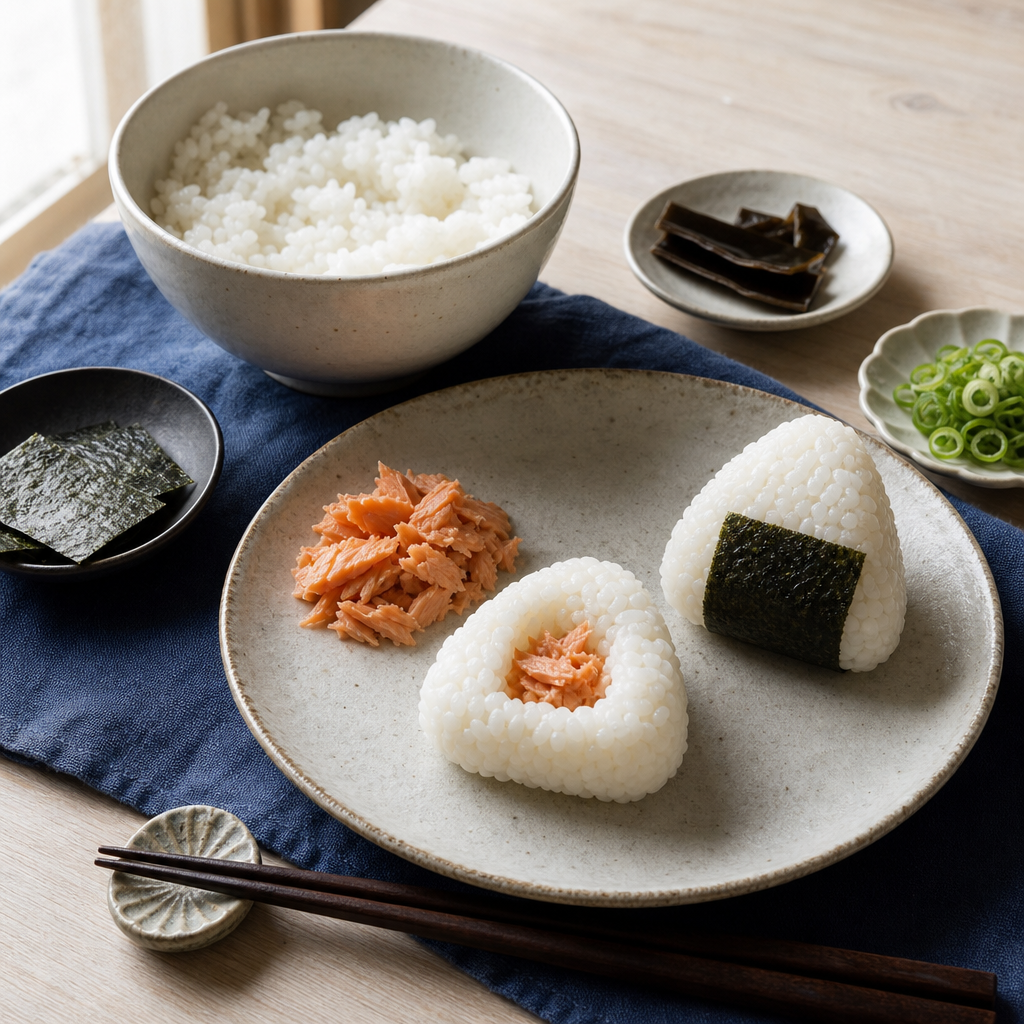
Scoop about 80 g warm rice into one palm and make a shallow hollow. Add 20-25 g salmon, cover with a little more rice if needed, then press into a triangle with firm, brief turns between both hands. Do not squeeze until dense; the grains should hold together while still looking separate.
Wrap with nori
Wrap each onigiri with nori immediately before eating for a crisp sheet, or wrap earlier if a softer konbini-style sheet is wanted. For packing, keep nori separate and add it at the table.
Common mistakes
- {'mistake': 'Using long-grain rice', 'correction': 'Long-grain rice does not have the starch balance to cling. Use Japanese short-grain rice or a close Korean short-grain substitute.'}
- {'mistake': 'Seasoning the rice with sushi vinegar', 'correction': 'Onigiri rice is plain cooked rice with salt on the hands. Sushi rice belongs to sushi, not salmon onigiri.'}
- {'mistake': 'Shaping cold rice', 'correction': 'Shape while the rice is warm. Cold rice cracks and needs too much pressure, which makes the onigiri dense.'}
- {'mistake': 'Overfilling the center', 'correction': 'Keep the salmon compact. If filling reaches the edges, the rice cannot seal and the triangle falls apart.'}
- {'mistake': 'Wrapping nori too early when crispness is expected', 'correction': 'Pack nori separately. Steam from the rice softens it within minutes.'}
What does not belong
- {'item': 'sushi vinegar', 'reason': 'Sushi vinegar does not belong in standard onigiri. It changes the dish into something closer to shaped sushi rice.'}
- {'item': 'long-grain rice, basmati, or jasmine rice', 'reason': 'These grains do not cling correctly and give the wrong aroma and texture.'}
- {'item': 'sweet bottled teriyaki sauce', 'reason': 'A sweet glaze can be a modern variation, but classic salmon onigiri uses salted cooked salmon. Thick American teriyaki sauce makes the filling wet and sugary.'}
- {'item': 'mayonnaise', 'reason': 'Mayonnaise belongs to tuna-mayo onigiri, not basic salmon onigiri. It also loosens the filling and softens the rice wall.'}
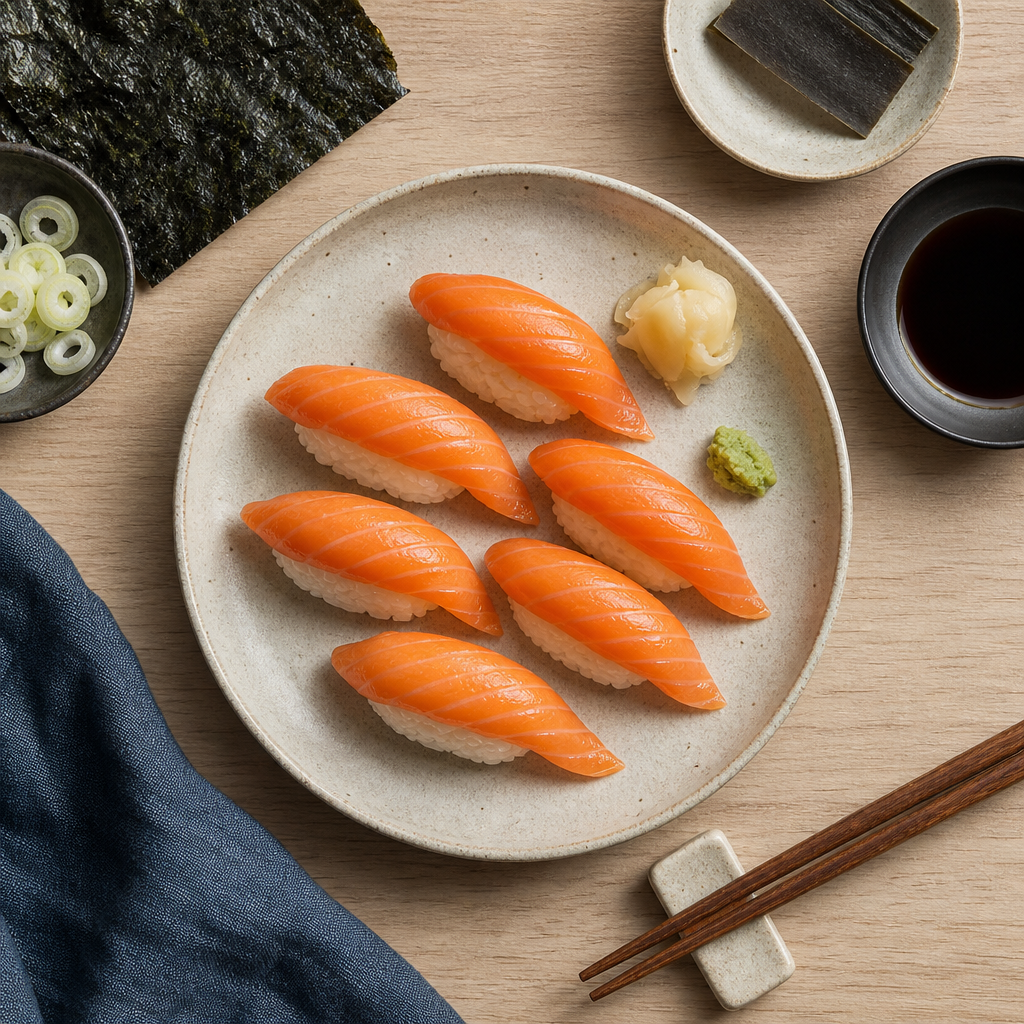
- {'item': 'raw salmon', 'reason': 'Raw salmon does not belong in packed onigiri. This is not nigiri sushi, and the food-safety window is different.'}