Umeboshi Onigiri
The dish in context
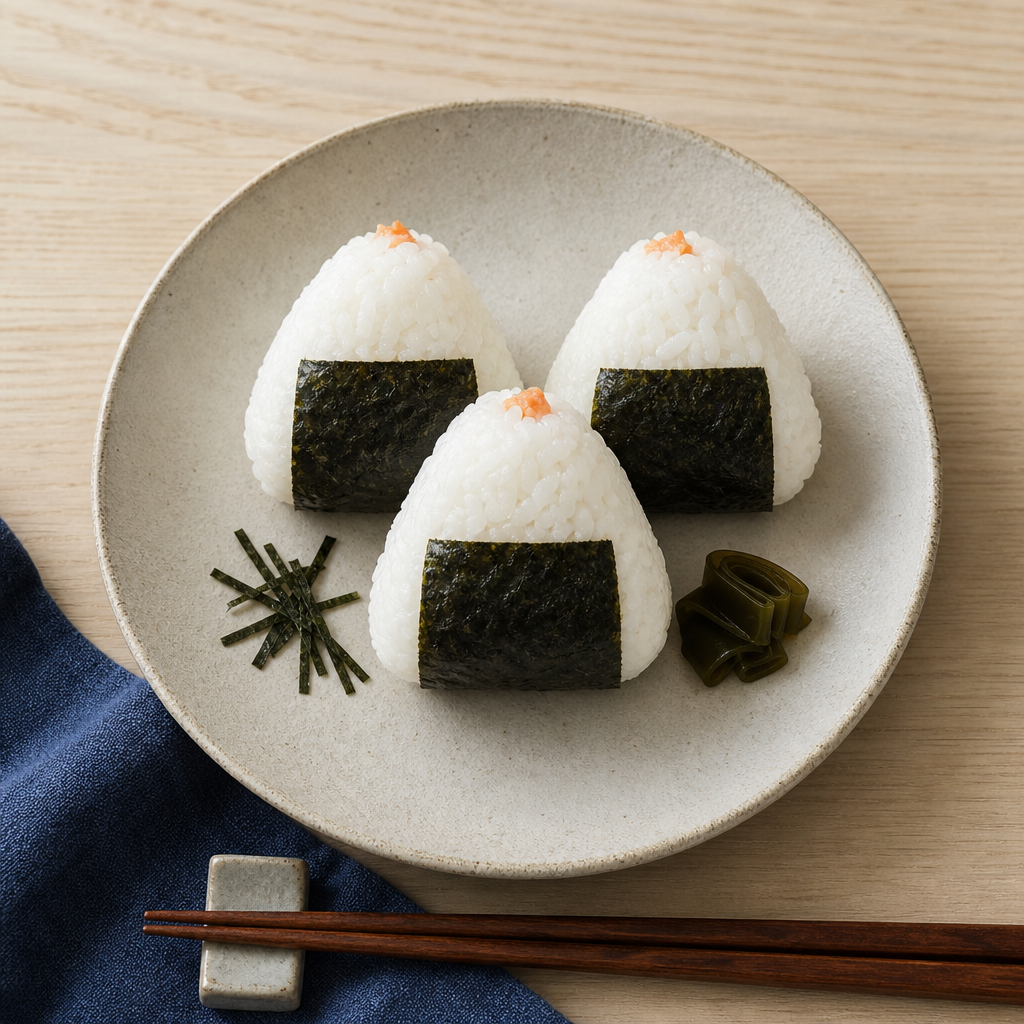
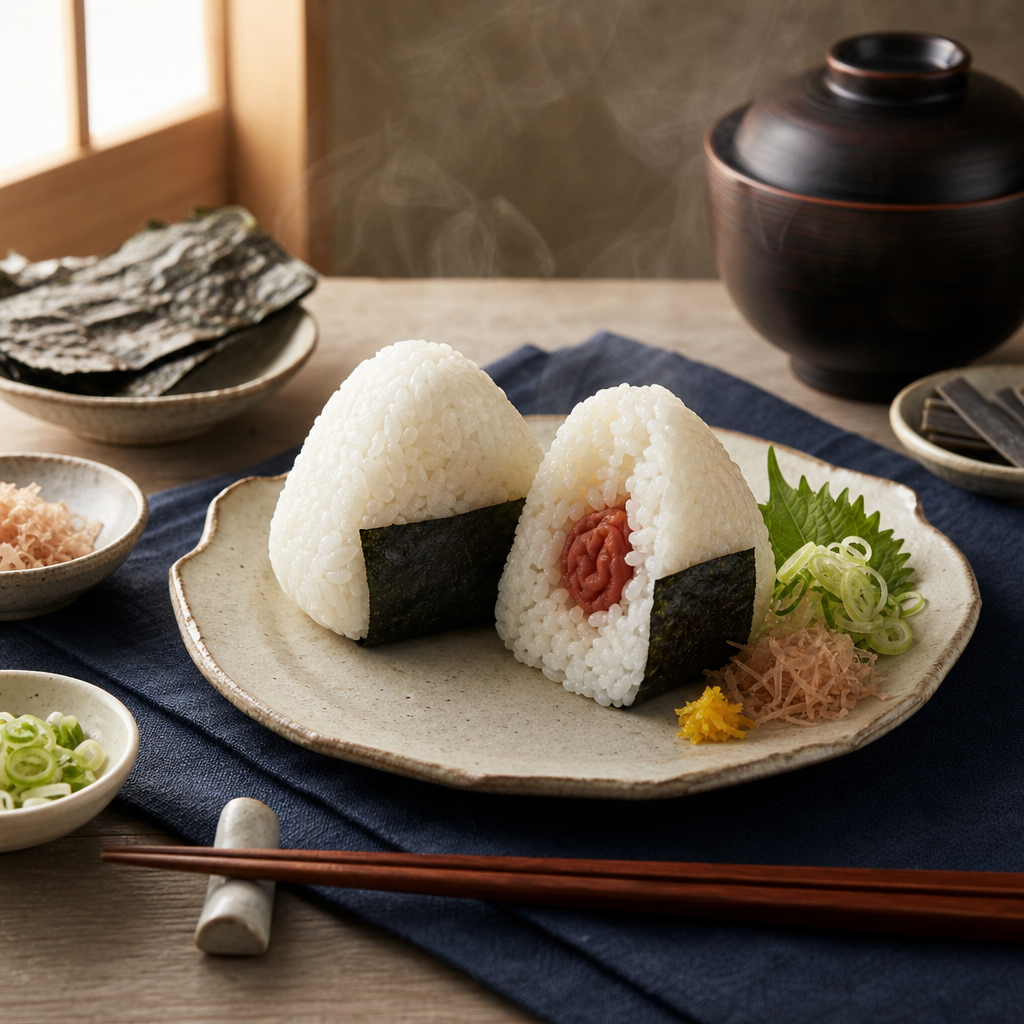
Onigiri, also called omusubi, is Japan's household and convenience-store rice food: portable, hand-shaped, and built around cooked short-grain rice rather than vinegared sushi rice. Umeboshi (梅干し), salted and dried ume fruit, is one of the canonical fillings because its salt and acidity season the rice from the center outward. The pairing also has a practical history in bento culture; salty, acidic umeboshi helps the rice keep better than a mild filling. Shapes vary by household and region — triangle, ball, cylinder — but the grammar stays fixed: warm rice, salted hands, a compact savory filling, and pressure light enough that the grains still read as rice.
Method 8 steps · 65 min
Wash the rice
Put the rice in a bowl, cover with cold water, and swirl with the fingertips. Drain the cloudy water and repeat 3-5 times, until the water runs nearly clear rather than milky white. Drain well in a sieve for 10 minutes.
Soak before cooking
Combine the drained rice with 360 ml cold water in a rice cooker or heavy saucepan. Let it stand for 30 minutes before applying heat.
Cook and rest the rice
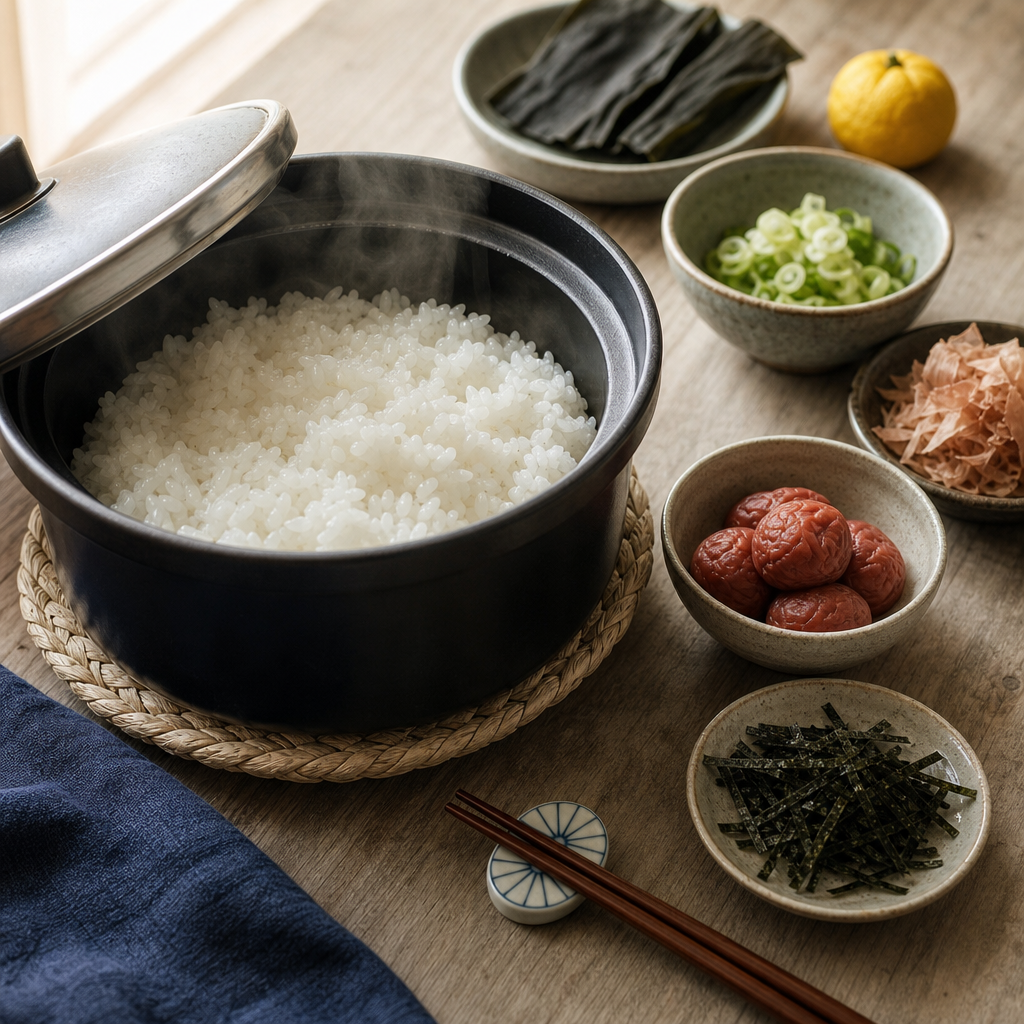
Cook in a rice cooker, or cover the saucepan and bring to a simmer over medium heat. Reduce to low and cook 12 minutes, then turn off the heat and rest, still covered, for 10 minutes. Do not lift the lid during the rest.
Fluff, then cool slightly
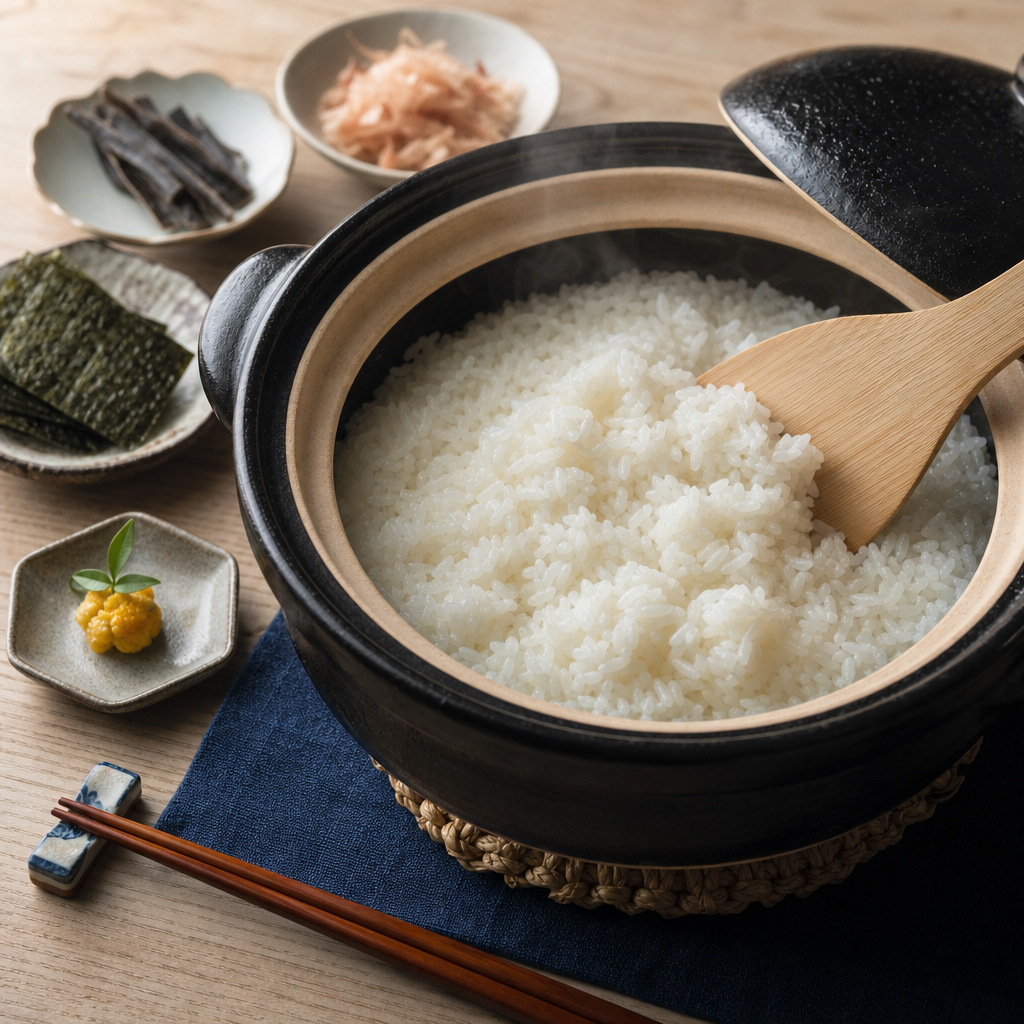
Use a shamoji or rice paddle to lift and fold the rice from the bottom with cutting motions. Let it cool until hot but handleable, about 5 minutes; it should still steam lightly.
Prepare the umeboshi
Remove any pits from the umeboshi. Leave small umeboshi whole, or tear large ones into 4 rough pieces and use about 1 teaspoon per onigiri.
Salt the hands
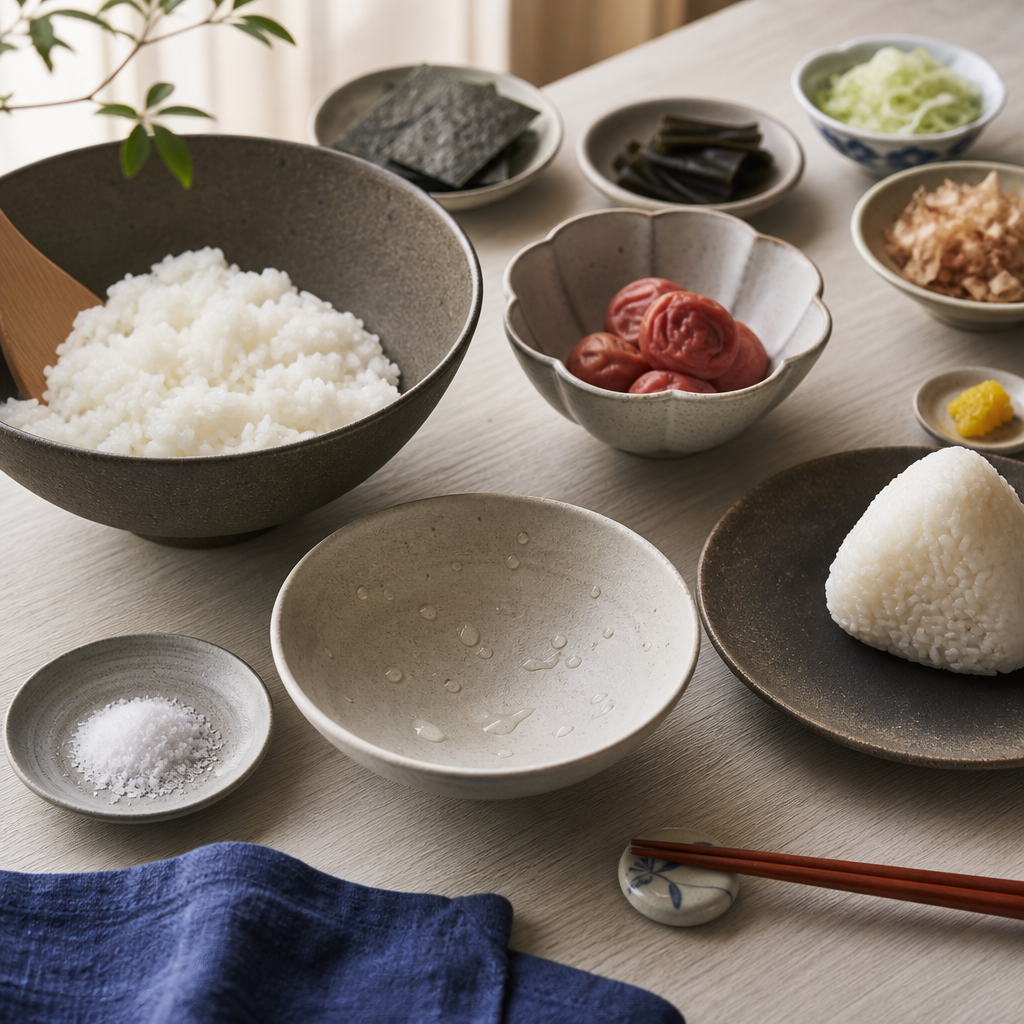
Wet both hands, shake off excess water, and rub a small pinch of salt across the palms and fingers. Keep the salt light; the umeboshi is already salty.
Fill and shape
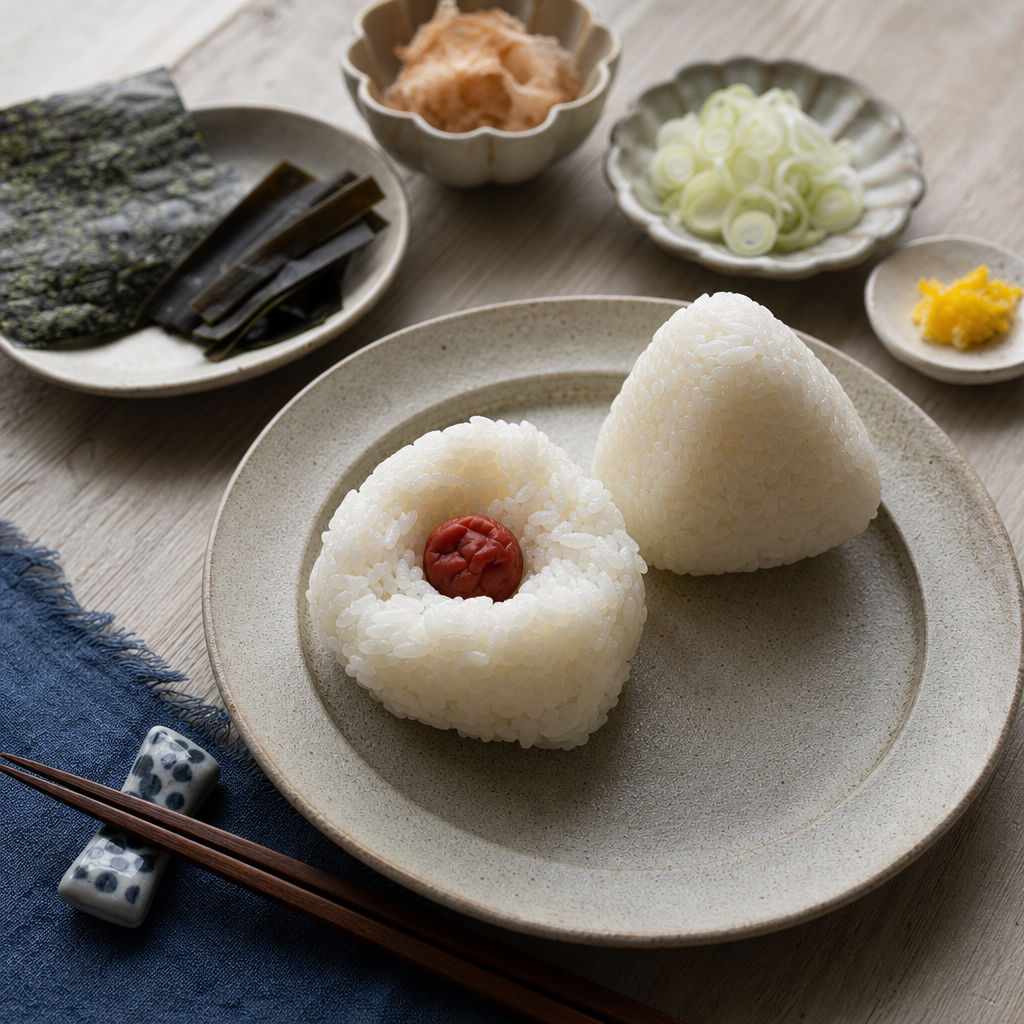
Place about 150 g warm rice in one palm, press a shallow hollow into the center, and add the umeboshi. Cover with rice and shape into a triangle by pressing with the opposite hand: flat face, rotate, flat face, rotate. Press only until the grains hold together.
Wrap with nori
Add a strip of nori to the base or one side of each onigiri if serving now. For bento or later eating, wrap each rice ball tightly and pack the nori separately.
Common mistakes
- Using long-grain rice. It does not have the amylopectin structure needed to cling, so the onigiri crumbles or has to be crushed into shape.
- Shaping with cold rice. Cold rice cracks at the edges and will not seal around the umeboshi.
- Compacting the rice too hard. The surface should show grains, not a smooth paste.
- Overfilling with umeboshi. One small plum or about 1 teaspoon paste is enough for a standard onigiri.
- Wrapping nori too early when crisp nori is wanted. Pack it separately for lunch boxes.
What does not belong
- Sushi vinegar does not belong in umeboshi onigiri. That makes sushi rice, not household onigiri rice.
- Long-grain, jasmine, or basmati rice does not belong. The aroma and texture pull the dish away from Japanese onigiri.
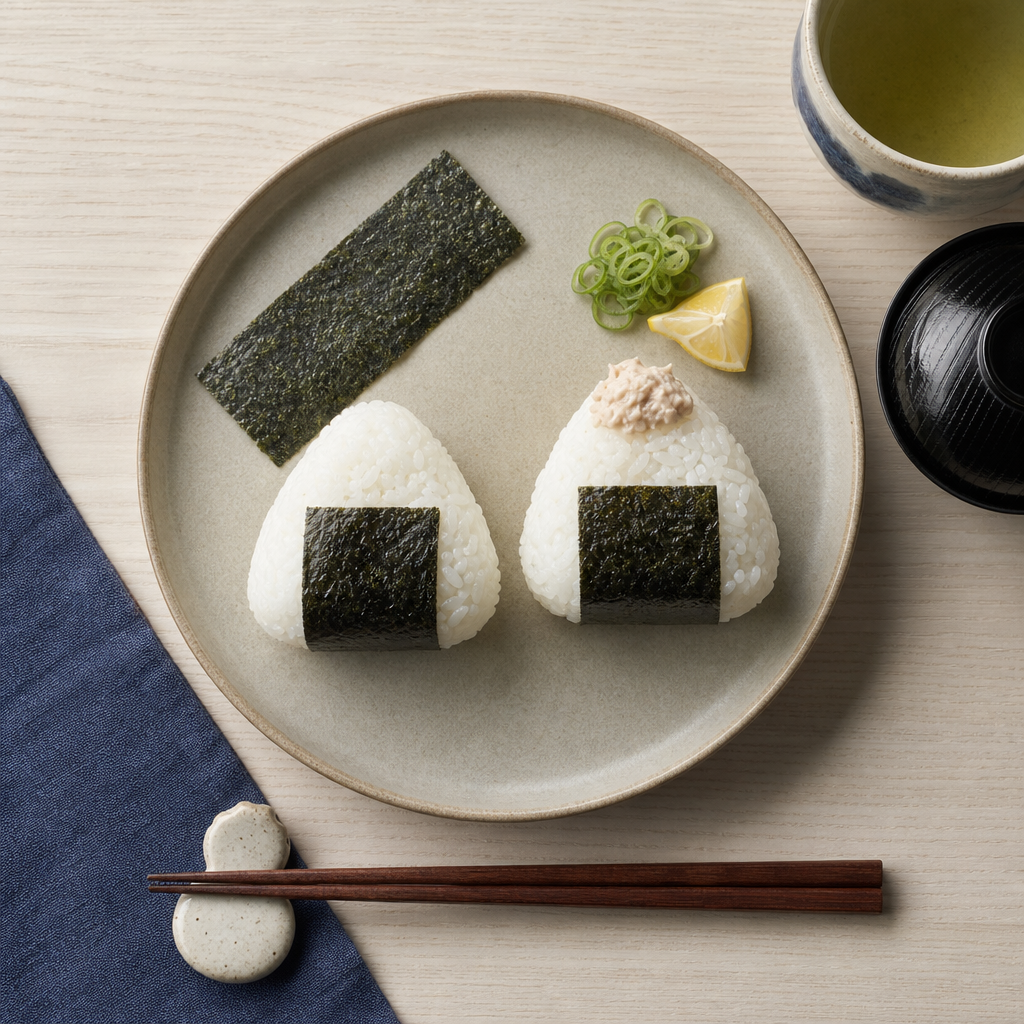
- Mayonnaise does not belong in this version. Tuna-mayo onigiri is a separate filling.
- Sugar does not belong in the rice. Umeboshi supplies the seasoning; sweetened rice muddies the sour-salty center.
- Soy sauce poured over the rice does not belong. It stains the grains, makes the surface wet, and fights the umeboshi.