Ochazuke
The dish in context
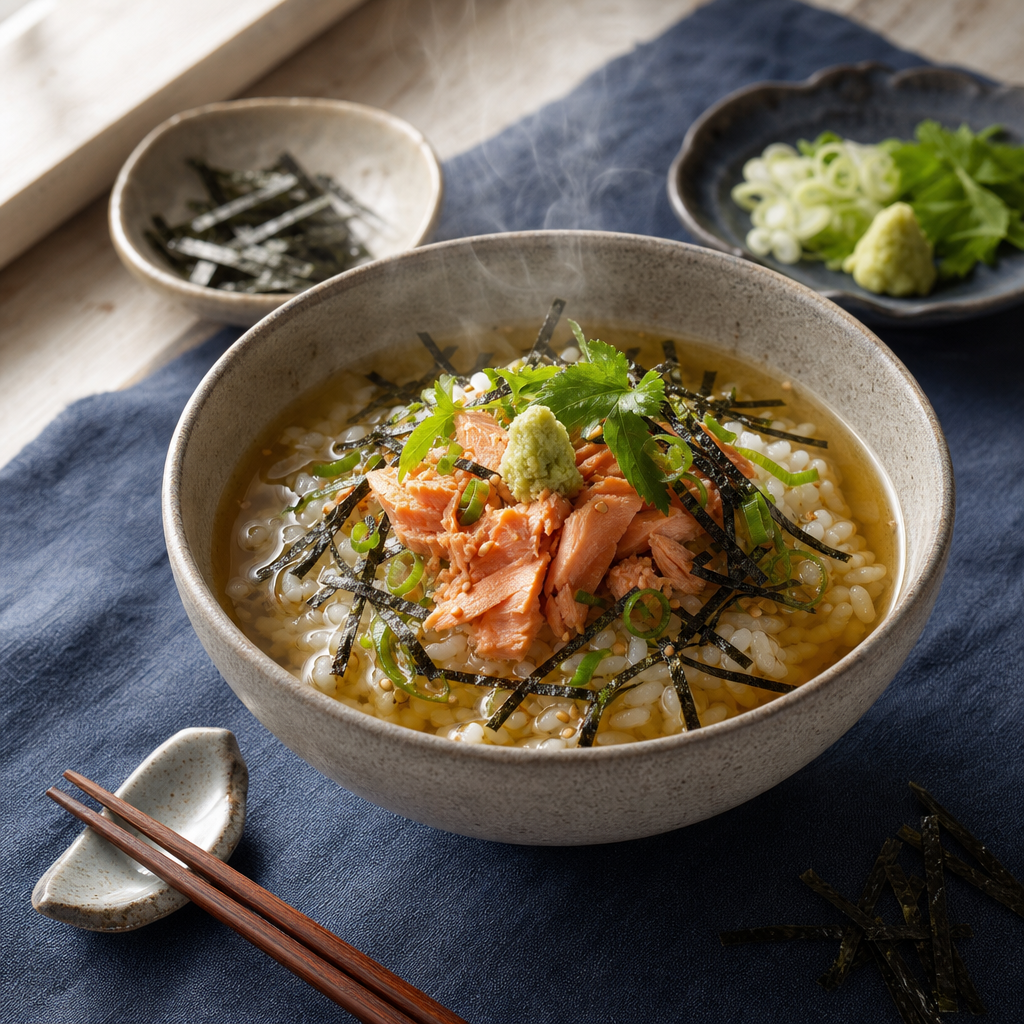
Ochazuke (お茶漬け) means rice soaked with tea, though modern household versions often use dashi, hot water, or tea seasoned with dashi and soy sauce. It sits in the Japanese home-cooking category of small, practical meals: leftover rice, pickles, salted fish, nori, or pantry seasonings turned into something hot and clean. Commercial ochazuke packets made the dish even more common after the mid-20th century, but the structure predates them: rice, hot liquid, salty topping, crisp garnish. Salmon, umeboshi, tarako, sea bream, and nori are all established toppings; this version uses salted salmon because it gives the cleanest balance for a first bowl.
Method 6 steps · 25 min
Salt the salmon
Sprinkle the salmon evenly with the salt and let it stand for 10 minutes. Blot off surface moisture before cooking.
Cook and flake the fish
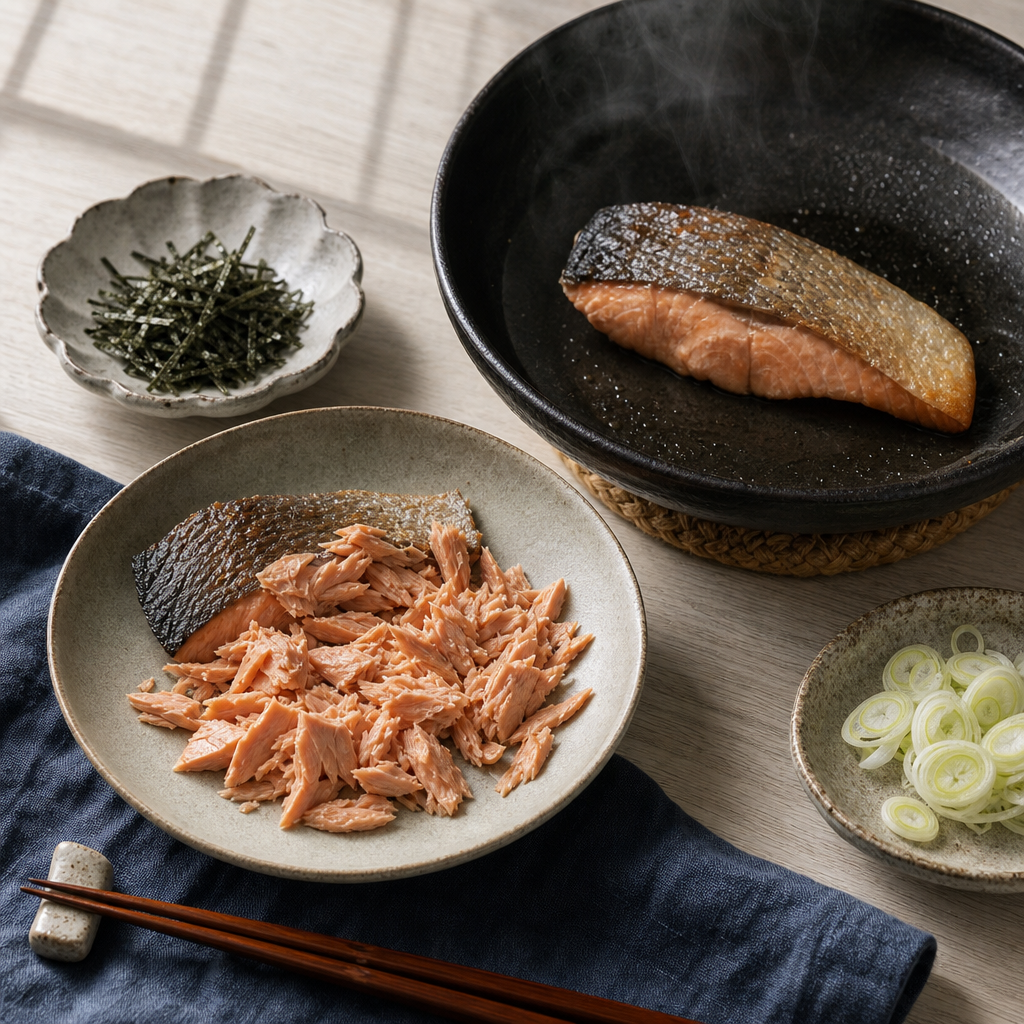
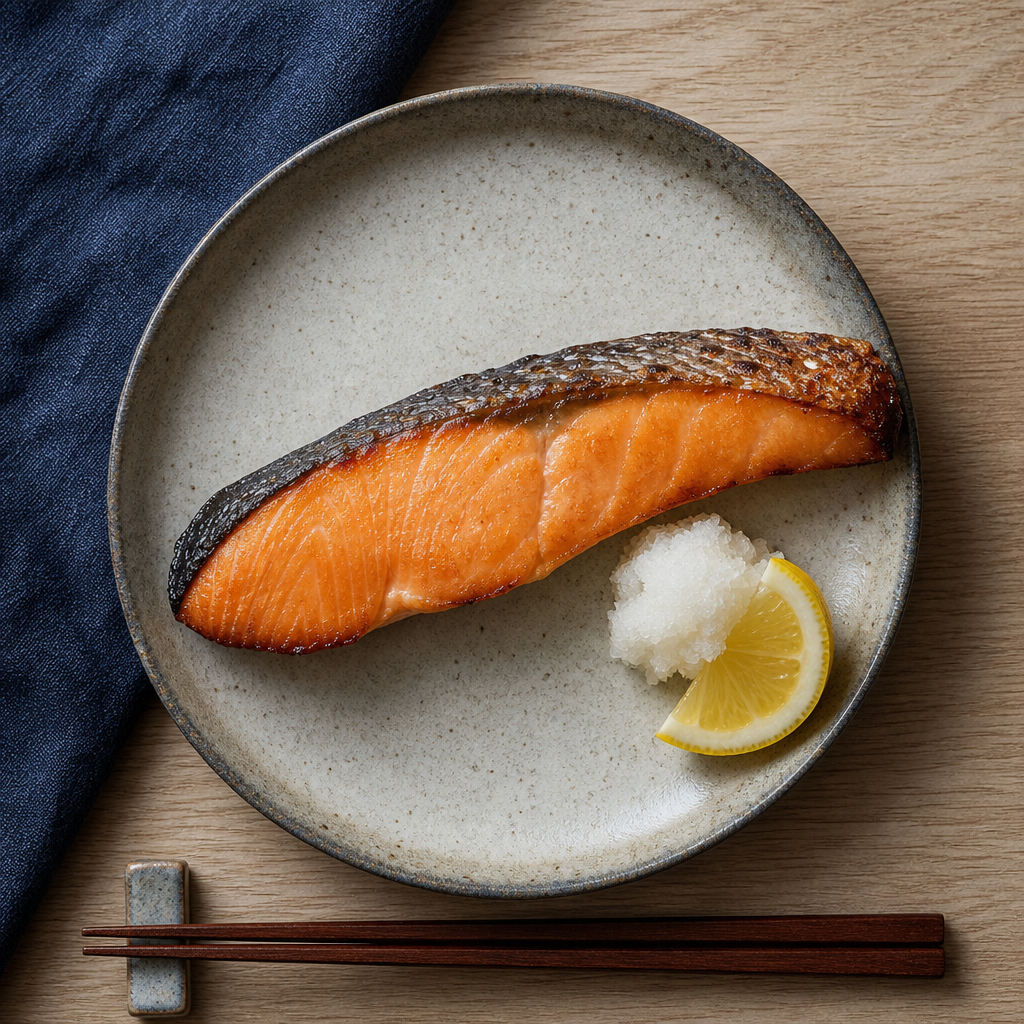
Cook the salmon skin-side down in a dry skillet over medium heat for 4-5 minutes, then turn and cook 2-3 minutes more, until the thickest part flakes but is not chalky. Remove bones and break the fish into rough flakes.
Warm the rice
Divide the warm short-grain rice between two bowls. If using cold leftover rice, steam or microwave it until hot, then loosen it with a rice paddle without crushing the grains.
Brew the tea broth
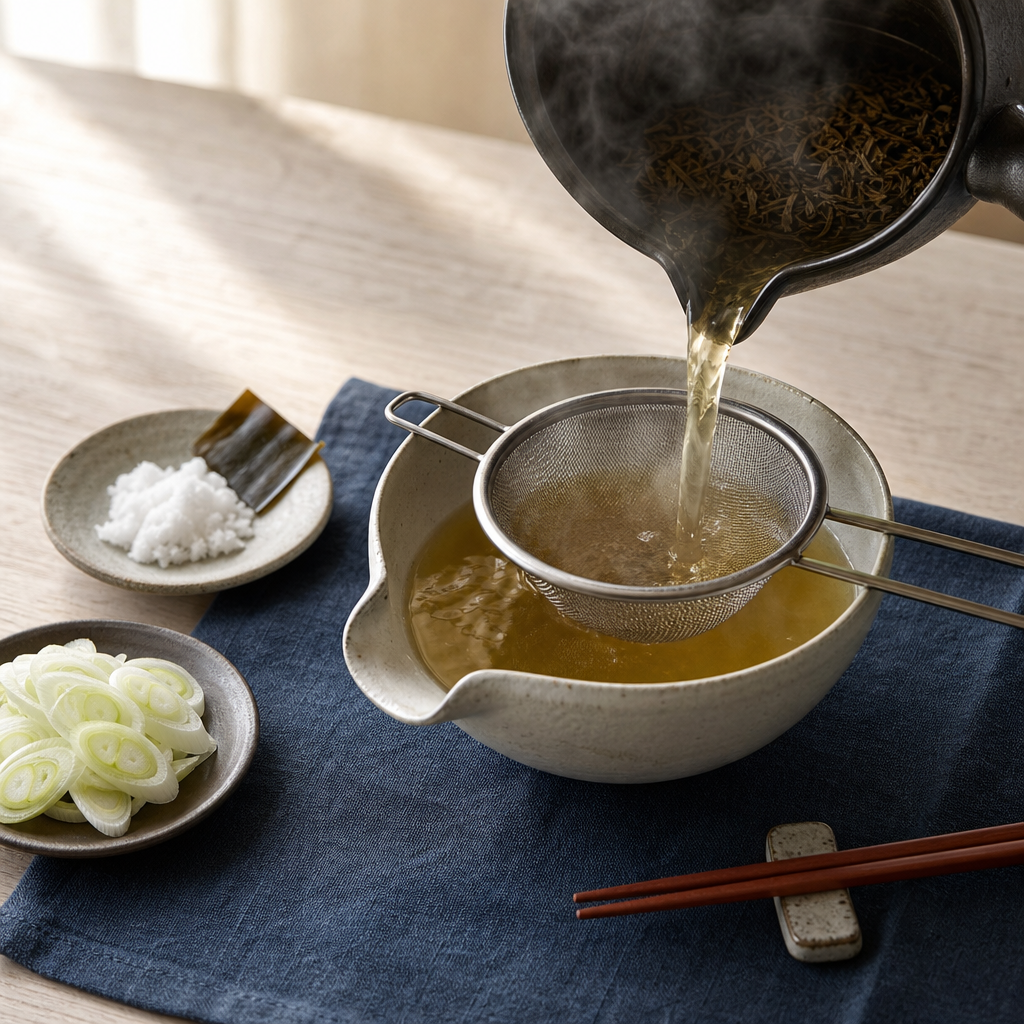
Brew the hojicha with 500 ml water at a full simmer, or sencha with 500 ml water around 80°C, for 60-90 seconds. Strain, then stir in the dashi powder and 5 ml shoyu; hold back the remaining shoyu for adjustment.
Build the bowls
Set the salmon flakes on the rice. Add nori, sesame, arare, mitsuba or scallion, and a small dab of wasabi.
Pour and adjust
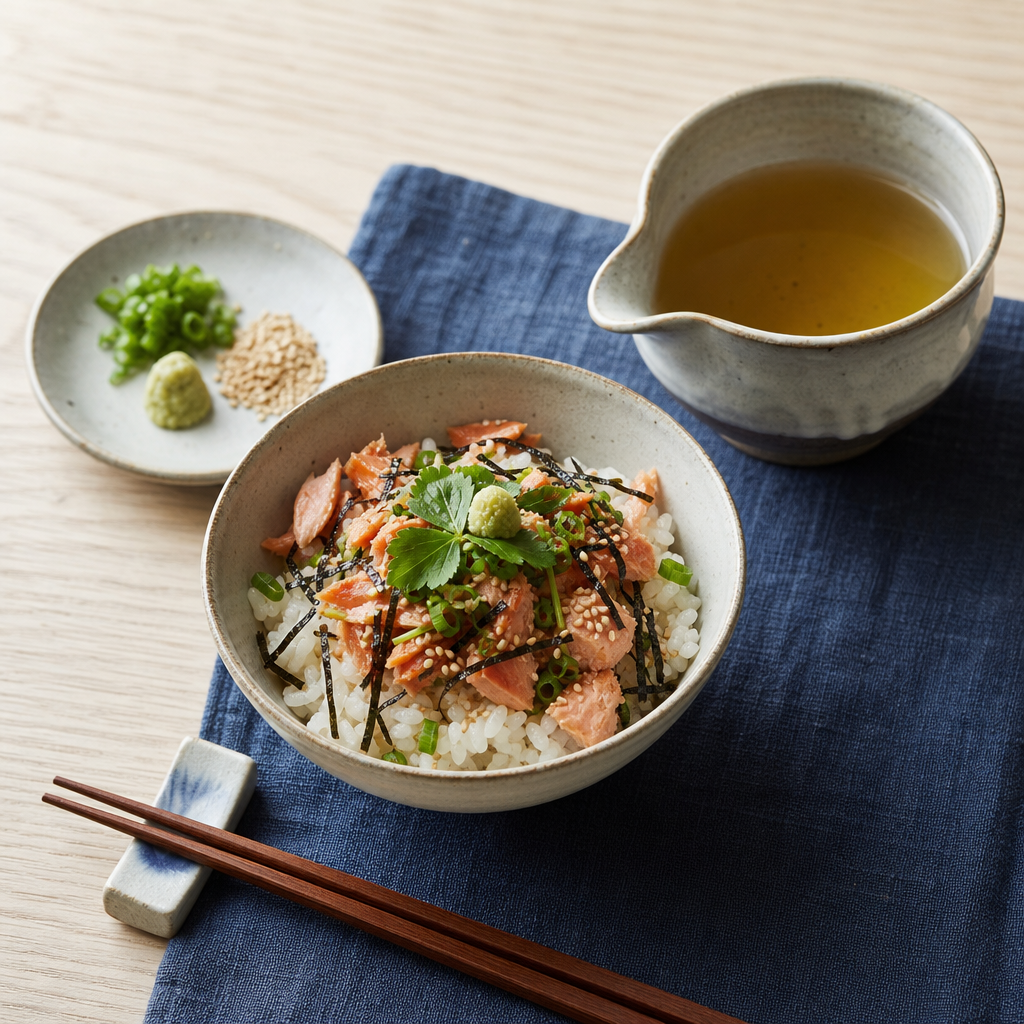
Pour 200-250 ml hot tea broth around the edge of each bowl, not directly over the nori. Taste the broth at the side of the bowl and add the remaining shoyu only if the salmon has not salted it enough.
Common mistakes
- {'mistake': 'Using long-grain rice', 'why_it_fails': 'Long-grain rice stays separate in hot liquid and gives the texture of rice in soup. Ochazuke needs Japanese short-grain rice that clings lightly but does not dissolve.'}
- {'mistake': 'Overbrewing sencha', 'why_it_fails': 'Boiling sencha extracts harsh tannins. Use lower-temperature water or choose hojicha if the kitchen setup is imprecise.'}
- {'mistake': 'Pouring in too much liquid', 'why_it_fails': 'Ochazuke is rice soaked with hot liquid, not a full soup. The rice should remain visible above the broth.'}
- {'mistake': 'Adding soy sauce until the broth turns dark', 'why_it_fails': 'The bowl becomes soy-rice with toppings. Salt should come in layers: salmon first, then dashi, then a small correction of shoyu.'}
- {'mistake': 'Letting nori sit wet before serving', 'why_it_fails': 'Nori loses its roasted aroma within minutes once soaked. Add it at the end and pour around it, not through it.'}
What does not belong
- {'item': 'Long-grain, jasmine, or basmati rice', 'reason': 'They do not have the cling or chew required for ochazuke.'}
- {'item': 'Cream, butter, or milk', 'reason': 'Dairy turns a clear tea-rice bowl into a different dish. It does not belong.'}
- {'item': 'Teriyaki sauce', 'reason': 'Sweet glaze overwhelms the tea and makes the bowl heavy. Ochazuke is not a sauce bowl.'}
- {'item': 'Sweet breakfast cereal as arare', 'reason': 'Arare is a crisp rice garnish, not sweetness. Sugar in the topping reads immediately wrong.'}
- {'item': 'Chinese dark soy sauce as a 1:1 swap', 'reason': 'It is darker and often sweeter or more molasses-like than Japanese koikuchi shoyu. The broth loses its clarity.'}