Teriyaki Salmon
The dish in context
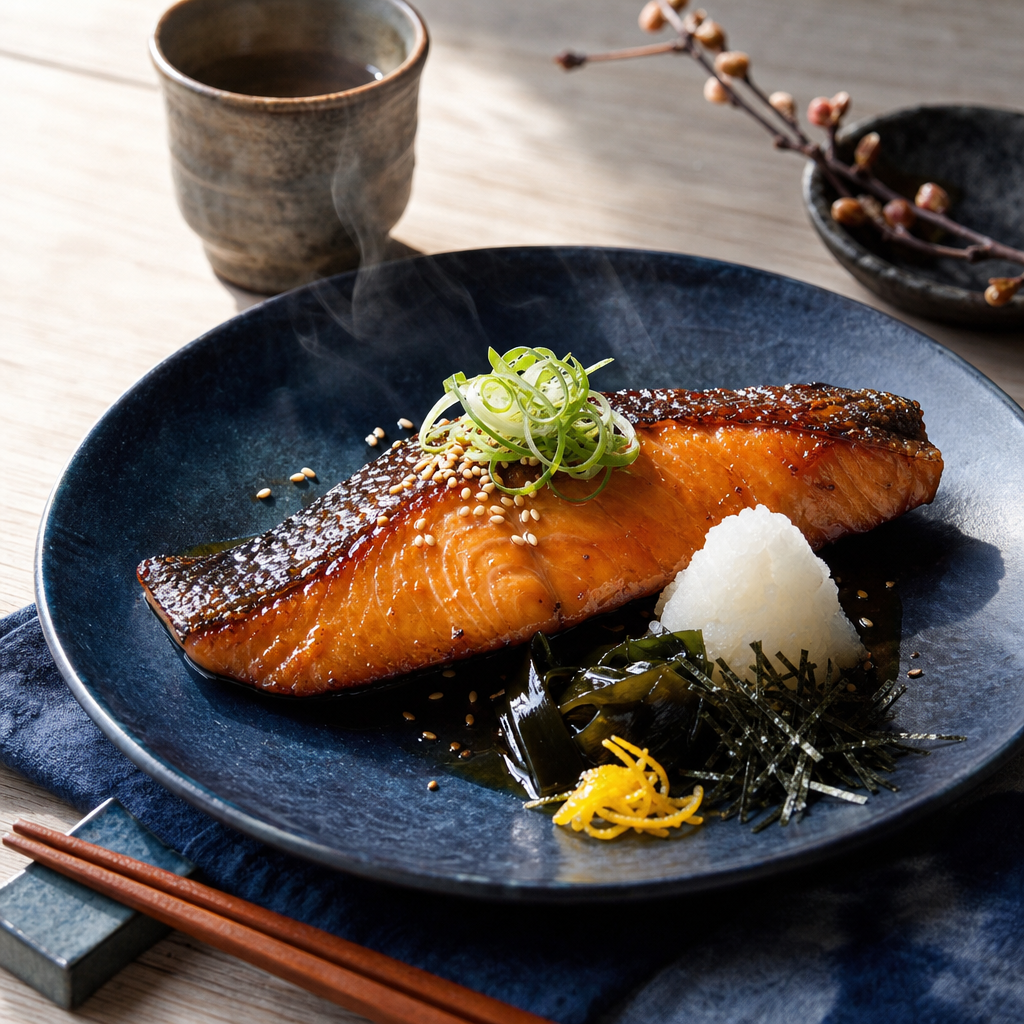
Teriyaki (照り焼き) is a Japanese cooking method built around tare reduced into a shine: teri means gloss, yaki means grilled or pan-cooked. The standard grammar is shoyu, mirin, sake, and sometimes sugar, applied to fish or meat as it cooks so the surface lacquers rather than drowns. Salmon is a later household-standard fit for the method, especially in modern Japanese home cooking where portioned fillets are common. American bottled teriyaki sauce is a separate product category: thicker, sweeter, and often loaded with garlic, ginger, starch, or pineapple. That sauce does not define this dish.
Method 8 steps · 25 min
Salt and dry the salmon
Sprinkle the salmon evenly with the salt and leave it skin side down for 10 minutes. Blot the surface dry with paper towels, including the skin edge.
Mix the tare
Stir together the shoyu, mirin, sake, and sugar until the sugar mostly dissolves. Keep the tare beside the stove.
Dust the fish
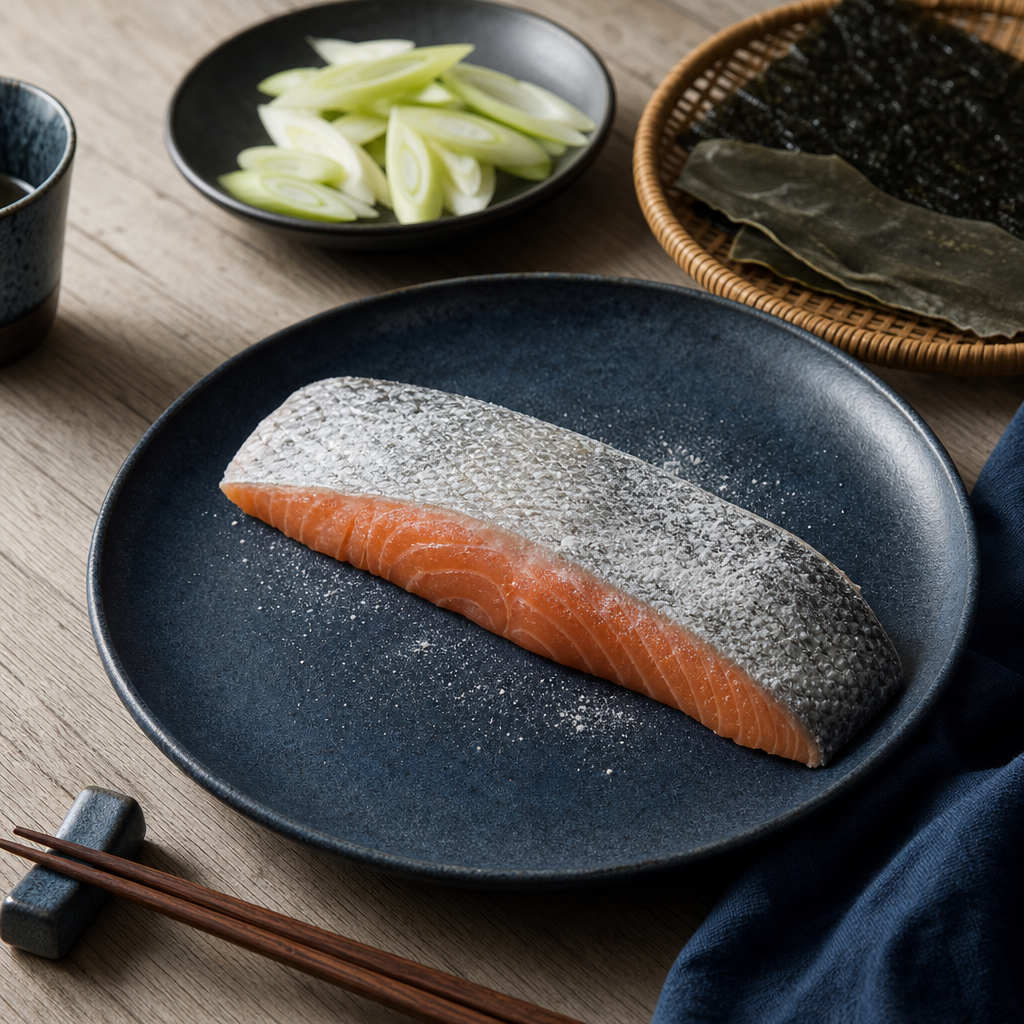
Dust the salmon with flour, then tap off every loose patch. The fish should look matte, not coated in a visible layer.
Sear skin side first
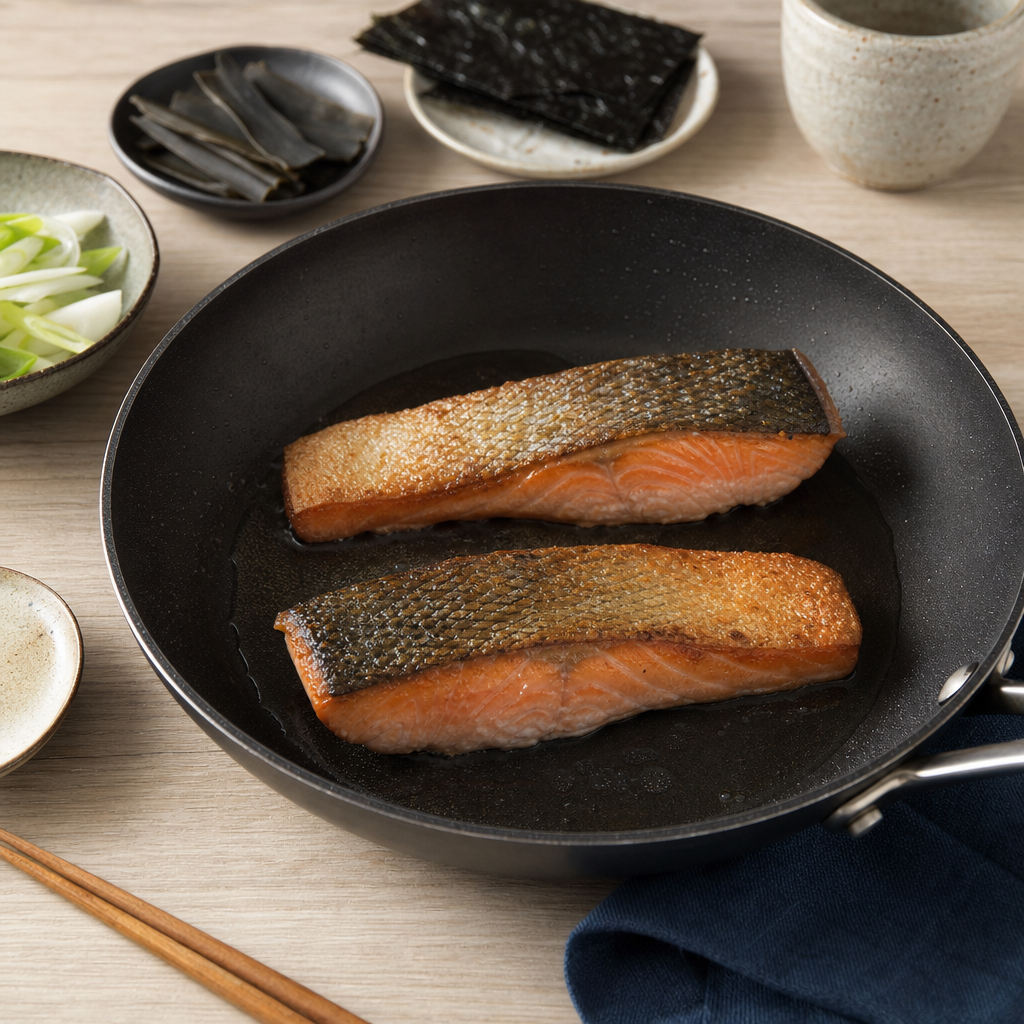
Heat the oil in a skillet over medium heat. Add the salmon skin side down and cook until the skin edge darkens and the lower third of the fish turns opaque, 3-4 minutes.
Turn and cook the second side
Turn the fillets and cook the second side for 2-3 minutes, depending on thickness. If the sides are still raw-looking at the center, cover the pan for 30-45 seconds, then uncover.
Add the tare and reduce
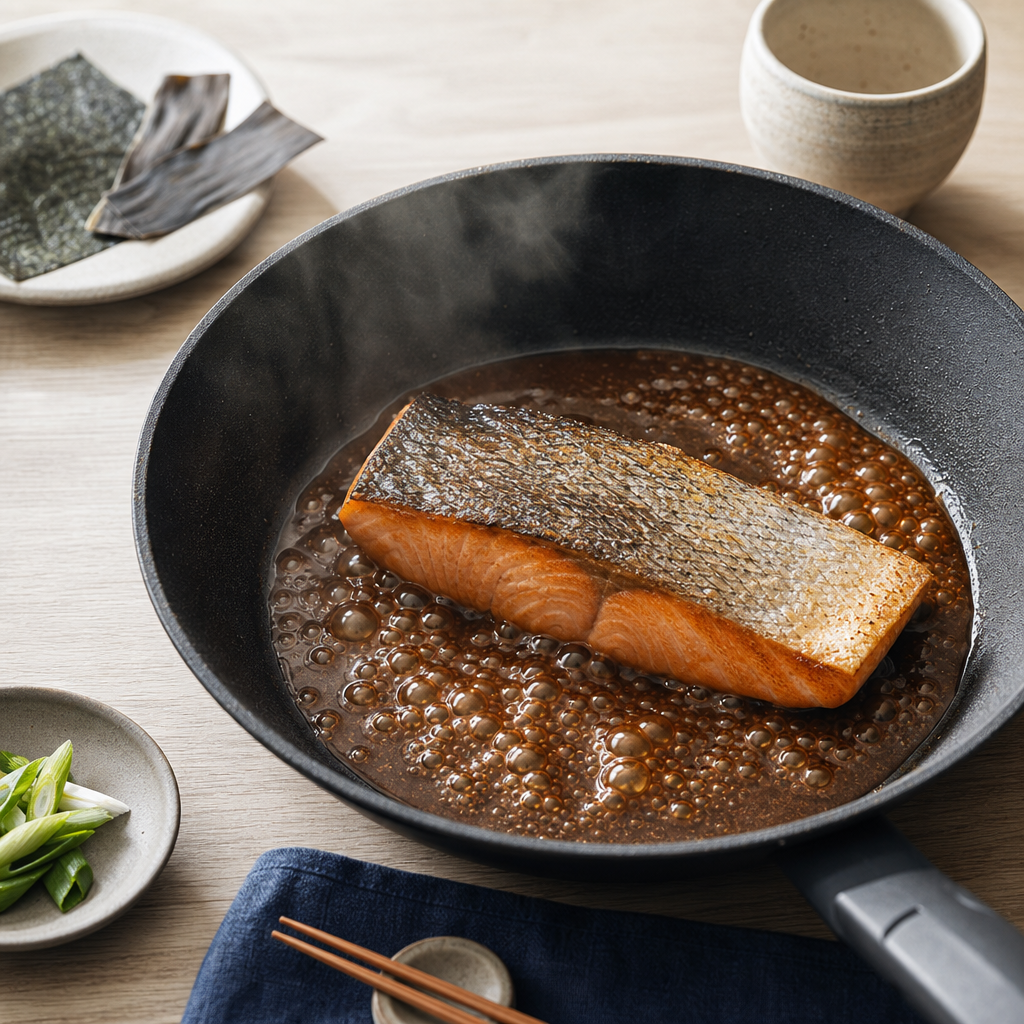
Lower the heat to medium-low and pour in the tare around the fish, not directly over the crisp skin. Simmer until the bubbles turn larger and slower and the sauce coats a spoon in a thin amber layer, 2-4 minutes.
Glaze the salmon
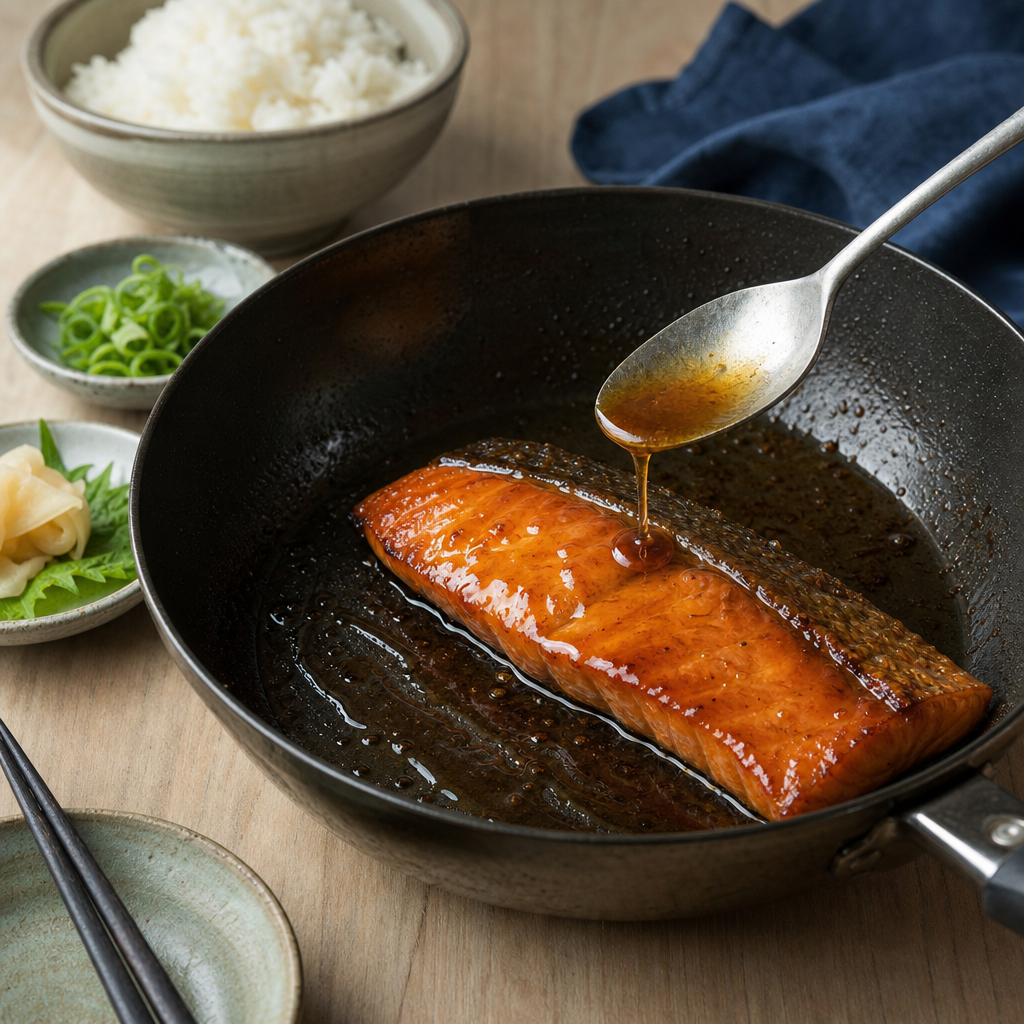
Spoon the reducing tare over the salmon 6-8 times, tilting the pan if needed. Stop when the fish is glossy and the sauce leaves a brief trail across the pan.
Serve immediately
Transfer the salmon to plates and spoon over a small amount of remaining glaze. Serve with steamed Japanese short-grain rice and, if using, scallion or grated daikon.
Common mistakes
- {'mistake': 'Using bottled American teriyaki sauce.', 'fix': 'Use shoyu, mirin, sake, and sugar. Bottled sauce is usually too sweet, too thick, and often tastes of garlic or pineapple before it tastes of soy and mirin.'}
- {'mistake': 'Adding the tare before the salmon browns.', 'fix': 'Sear first, glaze second. Sugar in the tare burns before wet fish can brown.'}
- {'mistake': 'Reducing the sauce until it becomes sticky.', 'fix': 'Stop when the sauce coats a spoon thinly and bubbles slowly. Teriyaki should shine, not form a chewy shell.'}
- {'mistake': 'Marinating salmon for hours in soy-heavy tare.', 'fix': 'Do not long-marinate delicate fillets. The salt tightens the surface and can make the fish cured at the edges.'}
- {'mistake': 'Crowding the pan.', 'fix': 'Cook in batches. Steam trapped between fillets dilutes the tare and gives pale fish.'}
What does not belong
- {'item': 'Pineapple juice', 'reason': 'Pineapple belongs to many American teriyaki sauces, not household-standard Japanese teriyaki salmon. It makes the glaze fruity and blunt.'}
- {'item': 'Cornstarch slurry', 'reason': 'Cornstarch does not belong in the pan glaze. Reduction is what creates the shine.'}
- {'item': 'Sesame oil in the tare', 'reason': 'Sesame oil dominates the mirin-sake aroma and makes the dish read as generic soy-sesame salmon.'}
- {'item': 'Garlic-heavy marinade', 'reason': 'Garlic is not the core profile here. It covers the clean shoyu-mirin balance.'}
- {'item': 'Honey as the main sweetener', 'reason': 'Honey makes the glaze floral and sticky. Sugar and mirin give a cleaner Japanese teriyaki finish.'}
- {'item': 'Lemon juice', 'reason': 'Acid does not belong in the tare. Serve grated daikon if the plate needs sharpness.'}