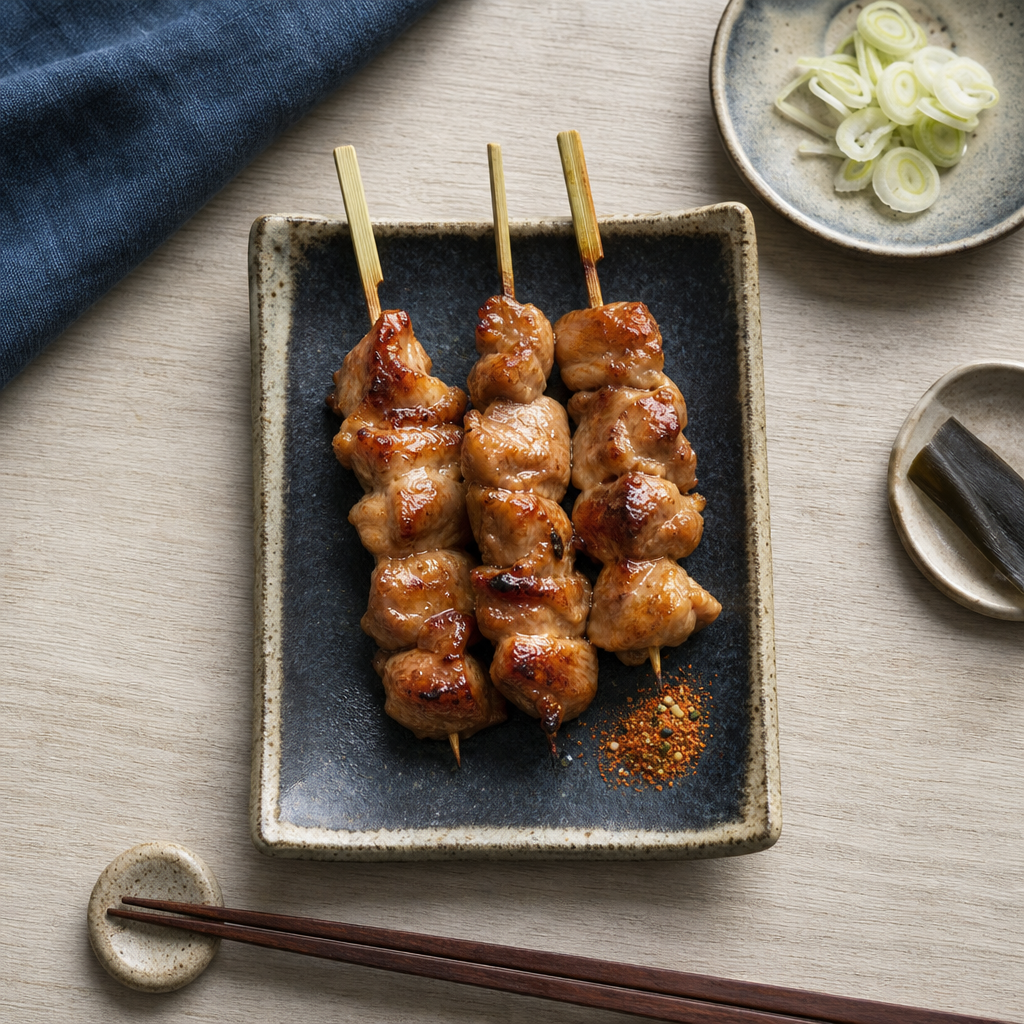
Teriyaki Chicken
The dish in context
Teriyaki (照り焼き) names a Japanese cooking method: teri means shine, yaki means grilled or pan-cooked. The core glaze is built from shoyu, mirin, sake, and sometimes sugar, then reduced against the protein until it reflects light. Japan-domestic chicken teriyaki is usually cleaner than the thick, sugary bottled sauces common in American takeout; garlic, ginger, and cornstarch are later or regionalized choices, not the base grammar. Chicken thigh became the household standard because its fat tolerates hard browning and repeated basting without drying out.
Method 6 steps · 30 min
Flatten the chicken
Pat the chicken dry. Trim loose fat, then score the meat side in shallow cuts and press the thick parts flat so each thigh cooks at an even thickness. Dust the meat side lightly with potato starch if using; leave the skin side mostly bare.
Mix the tare
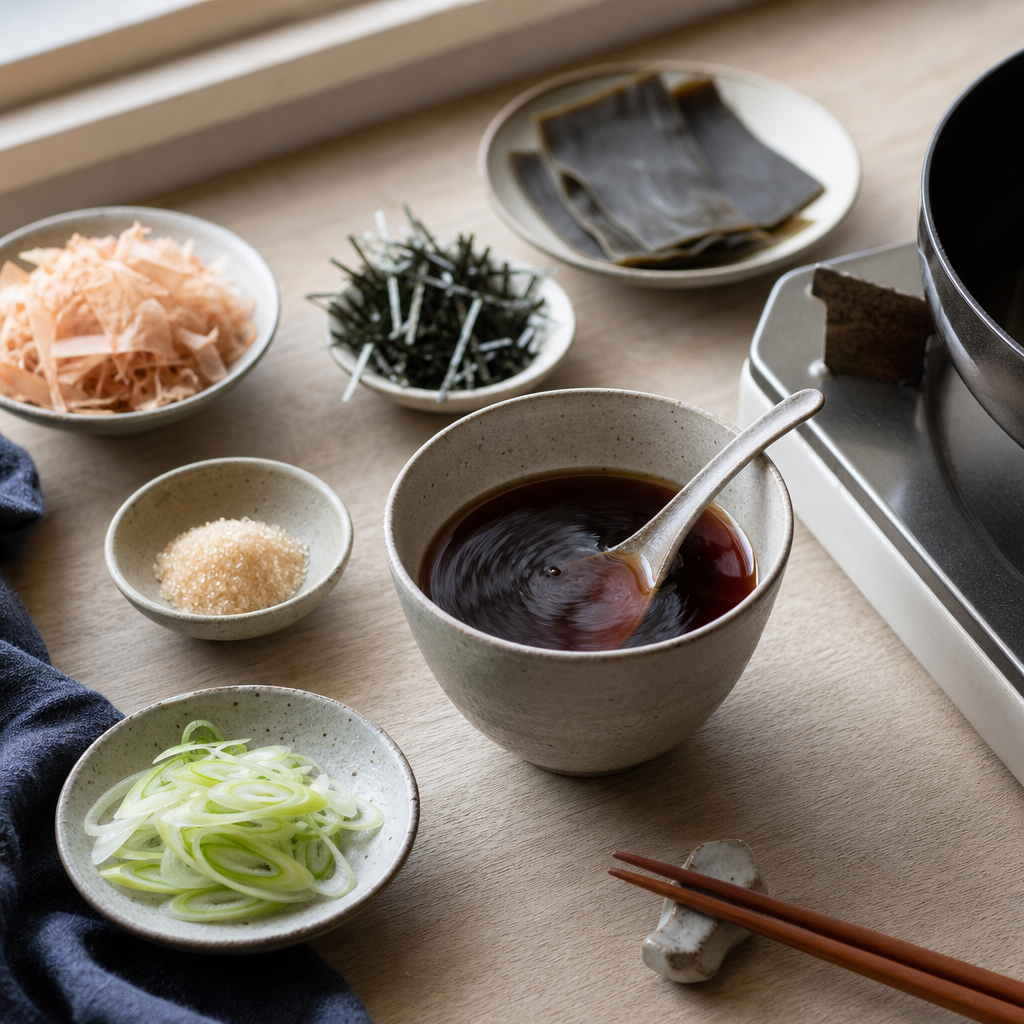
Stir shoyu, mirin, sake, and sugar until the sugar is mostly dissolved. Keep it beside the stove.
Brown the skin
Heat the oil in a wide skillet over medium heat. Lay the chicken skin-side down and cook without moving until the skin is deep golden and the edges tighten, 7-9 minutes. Press any domed pieces with a spatula for the first minute so the skin contacts the pan.
Cook the meat side
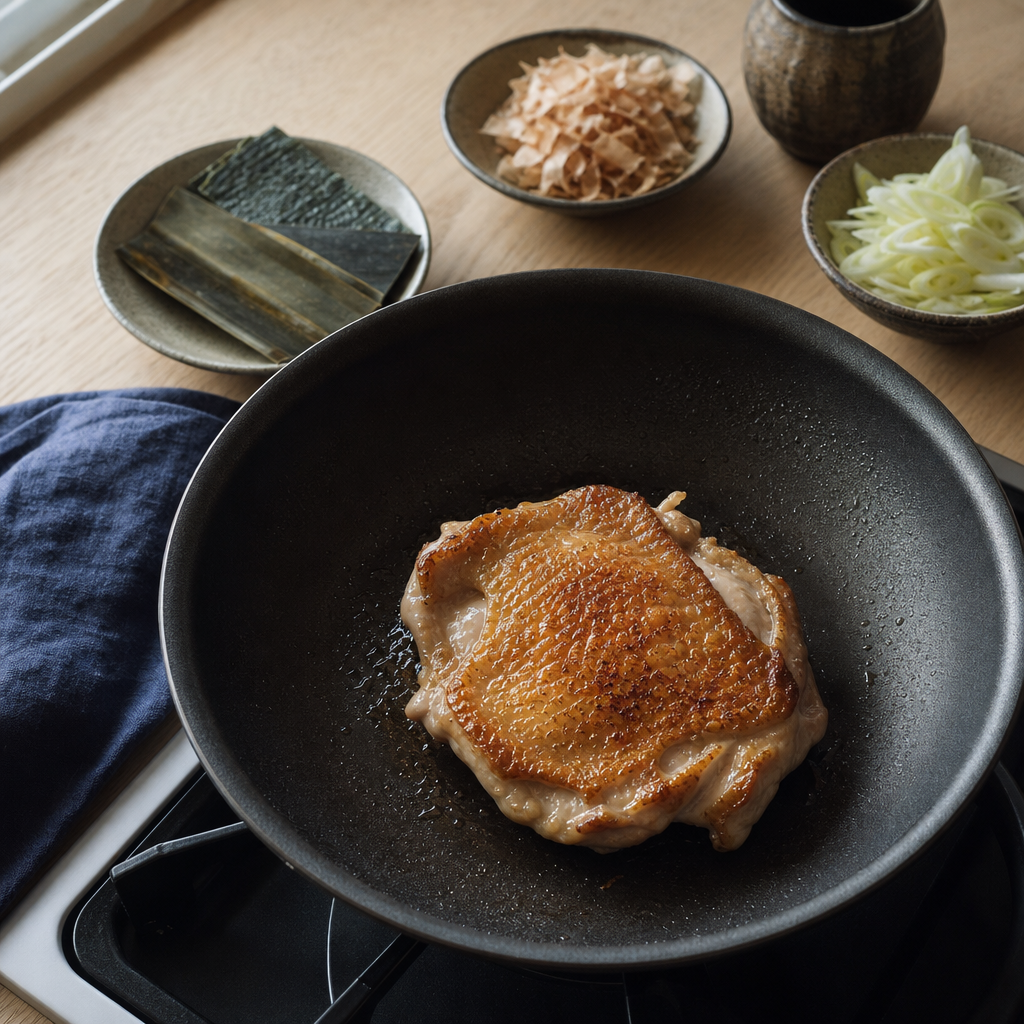
Turn the chicken and cook the meat side for 3-4 minutes, until the thickest part is nearly cooked through. Pour off excess rendered fat, leaving the browned fond in the pan.
Reduce and baste
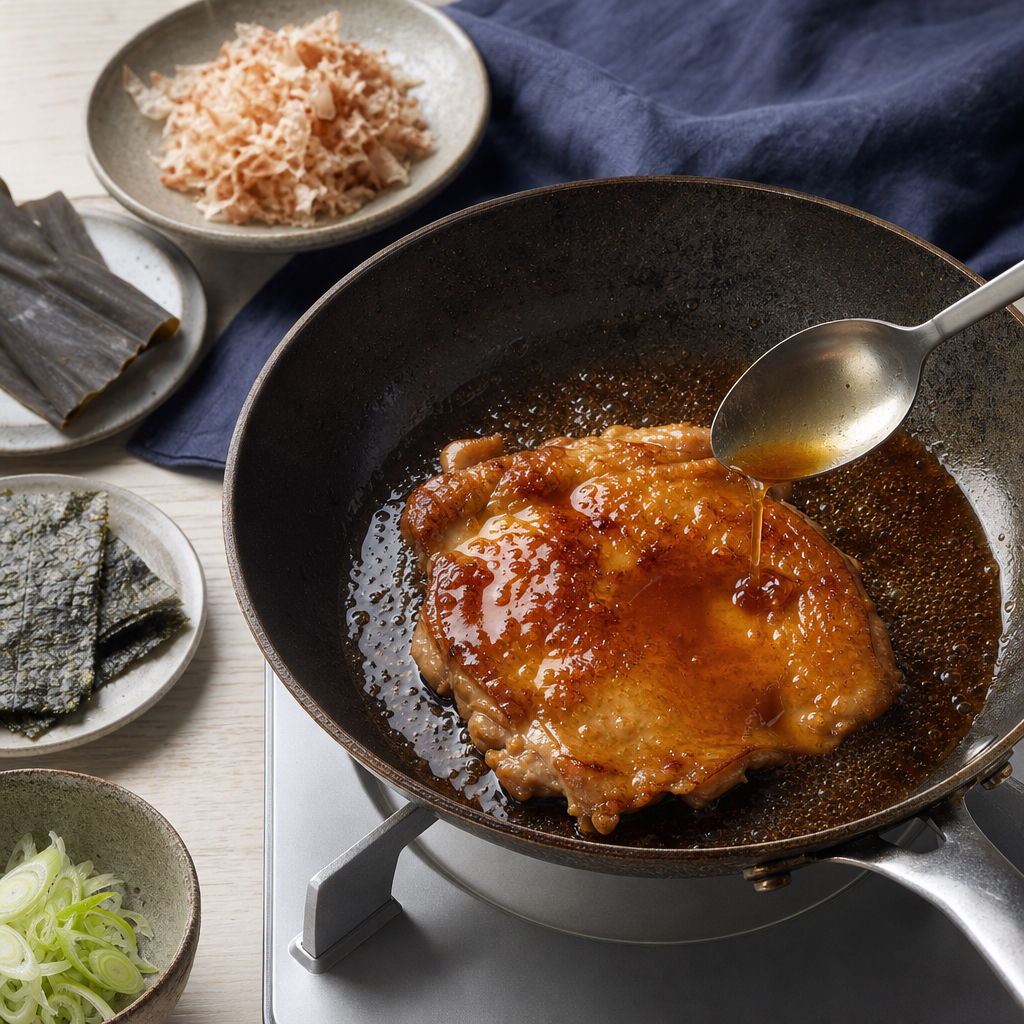
Lower the heat to medium-low and pour in the tare. Simmer, spooning sauce over the chicken, until the bubbles become tight and glossy and the sauce coats the back of a spoon, 4-6 minutes. The chicken should reach 74°C at the thickest point.
Rest and slice
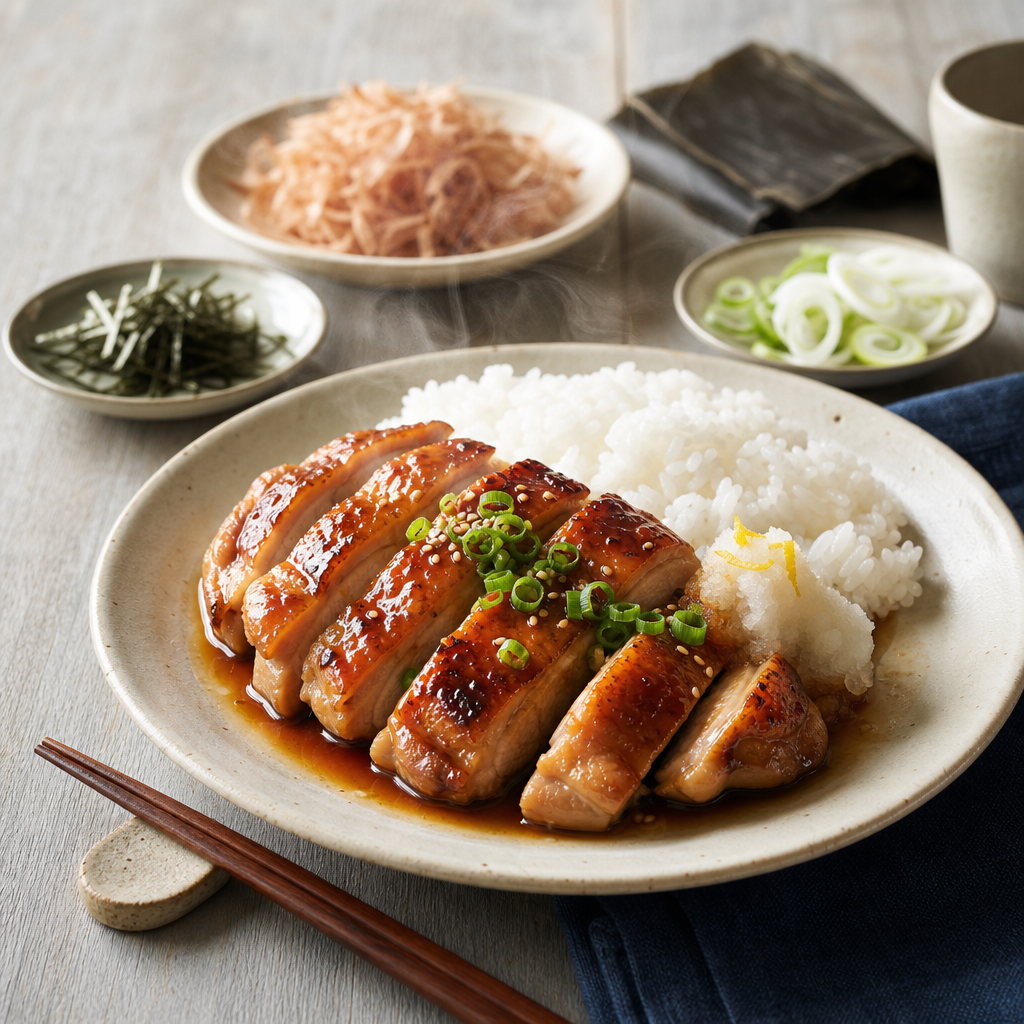
Transfer the chicken to a board and rest 3 minutes. Slice crosswise with the skin facing up, then spoon the pan glaze over the cut pieces. Serve with Japanese short-grain rice or shredded cabbage.
Common mistakes
- Using bottled American teriyaki sauce. It is usually thickened before cooking and too sweet, so it burns before the chicken is properly glazed.
- Adding cornstarch slurry. Teriyaki shine comes from reducing mirin, sake, shoyu, and sugar; slurry makes a dull, takeout-style coating.
- Crowding the pan. Chicken thighs release steam, and steam blocks skin browning.
- Leaving the rendered fat in the pan. Fat floats on the tare and stops it from clinging cleanly.
- Boiling the glaze hard after it turns glossy. Sugar moves from lacquer to scorch quickly.
What does not belong
- Pineapple juice does not belong in Japanese household teriyaki chicken.
- Sesame oil does not belong in the glaze; it dominates the shoyu-mirin profile.
- Cornstarch slurry does not belong in the sauce.
- Ketchup, hoisin, and oyster sauce do not belong.
- Commercial American teriyaki sauce does not belong unless the target is a Japanese-American takeout variant.
- Long-grain rice does not belong as the default rice pairing for this dish.