Karaage
The dish in context
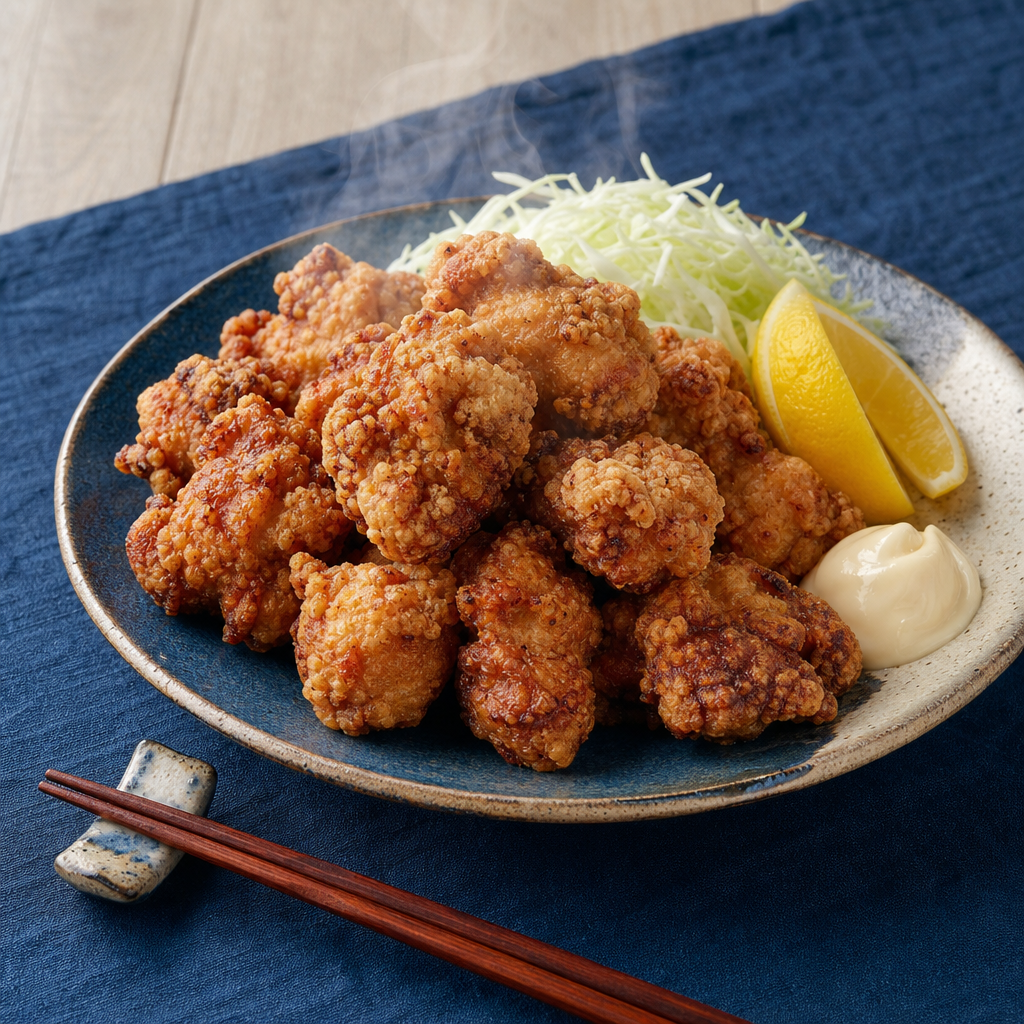
Karaage (唐揚げ, also written から揚げ or 空揚げ) refers to a Japanese frying method as much as to the chicken dish now most associated with the word. Older usage covered fish, vegetables, and other proteins dredged lightly and fried; modern household and restaurant usage often means chicken thigh marinated with soy sauce, sake, ginger, and sometimes garlic. Japanese culinary sources distinguish karaage from tatsuta-age (竜田揚げ), but the boundary is not rigid in contemporary cooking: tatsuta-age is more strongly tied to soy-mirin seasoning and potato starch, while karaage commonly allows starch, flour, or a blend. This version follows the current chicken karaage standard: boneless thigh, short soy-sake marinade, potato starch crust, and frying hot enough to cook the center without turning the coating greasy.
Method 9 steps · 60 min
Cut the chicken
Cut the chicken thighs into 4 cm pieces, keeping some skin attached to each piece where possible. Trim only large loose fat; thin fat and skin render during frying.
Marinate briefly
Mix soy sauce, sake, ginger, garlic, sugar, and salt in a bowl. Add the chicken, massage until every surface is wet, cover, and refrigerate for 25 minutes.
Drain hard
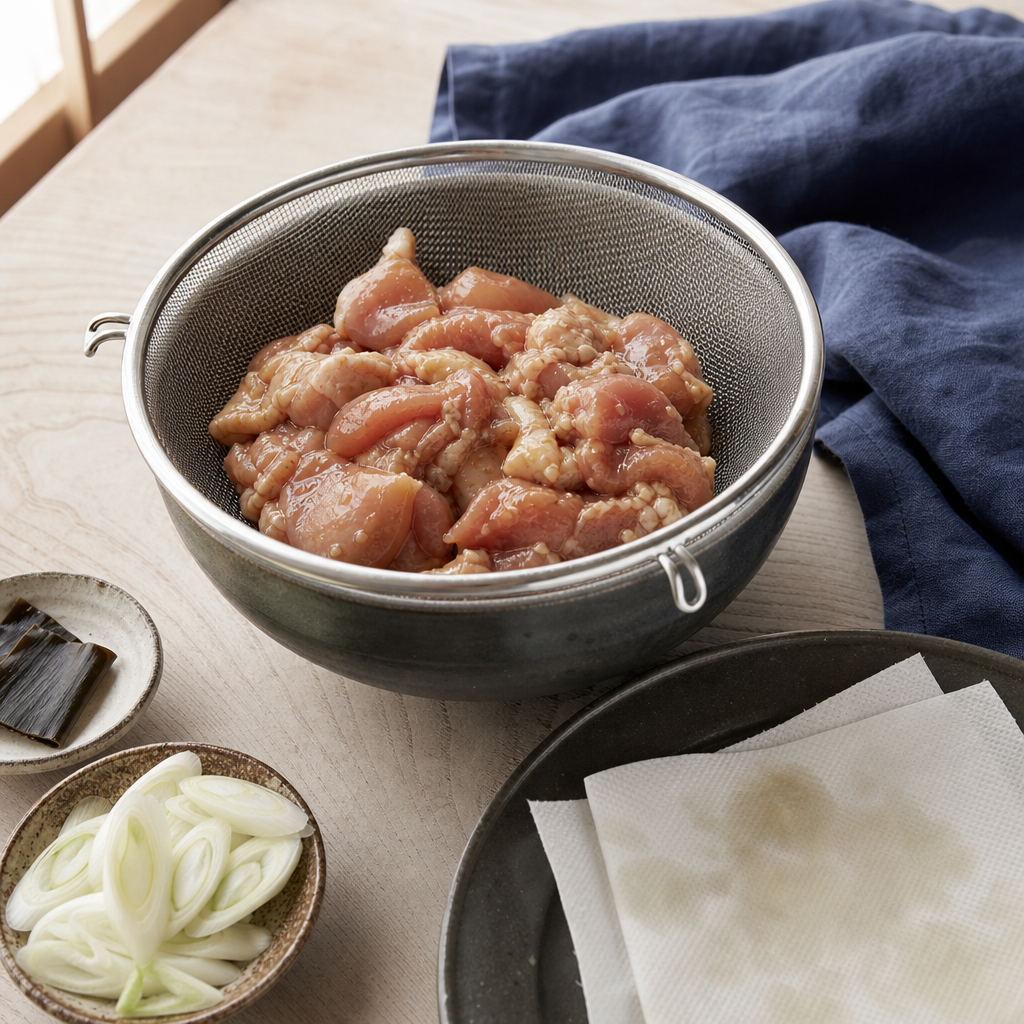
Tip the chicken into a sieve and drain for 5 minutes. Blot the surface lightly with paper towels; the pieces should look tacky, not glossy-wet.
Coat with potato starch
Put the potato starch in a wide bowl. Dredge the chicken piece by piece, pressing starch into the folds, then shake off loose powder. Rest the coated chicken on a rack for 10 minutes.
Heat the oil
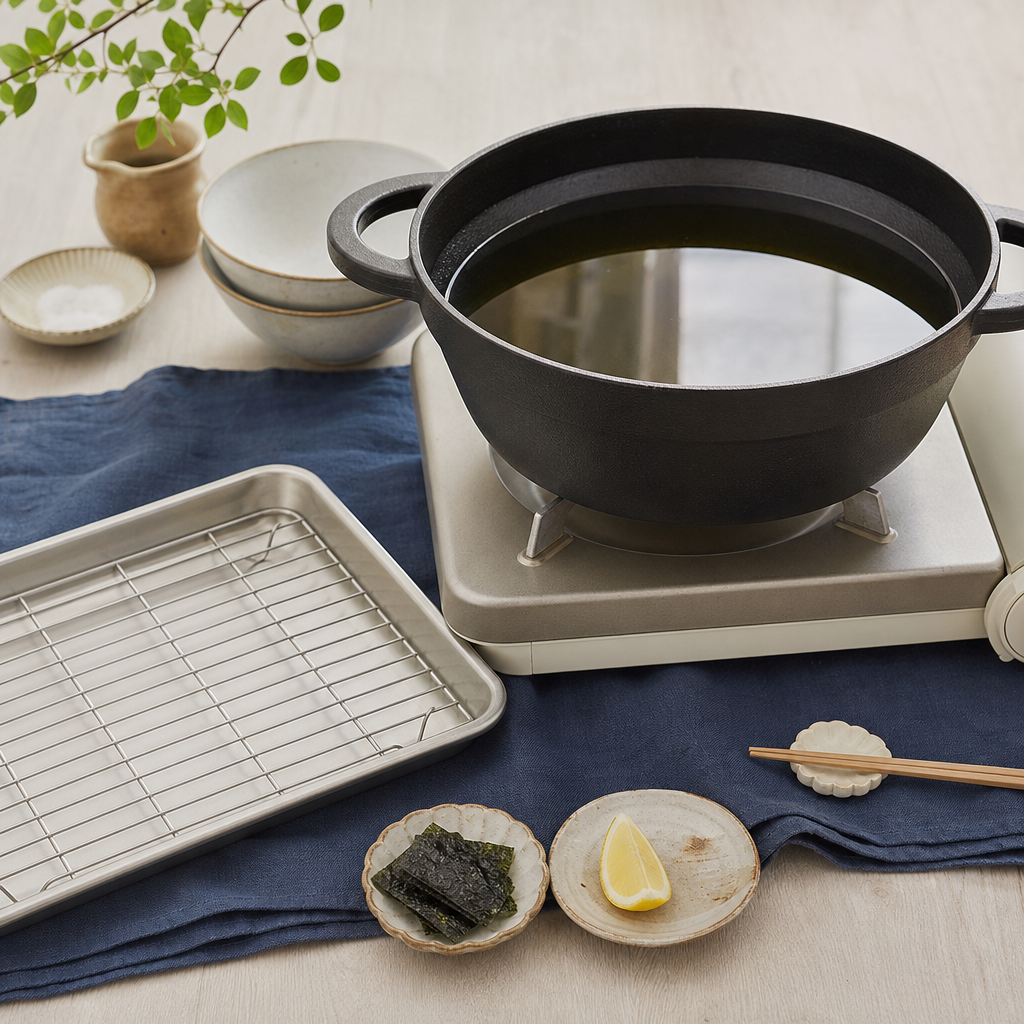
Heat 5-6 cm neutral oil to 160°C in a heavy pot. Set a rack over a tray before the first batch goes in.
First fry
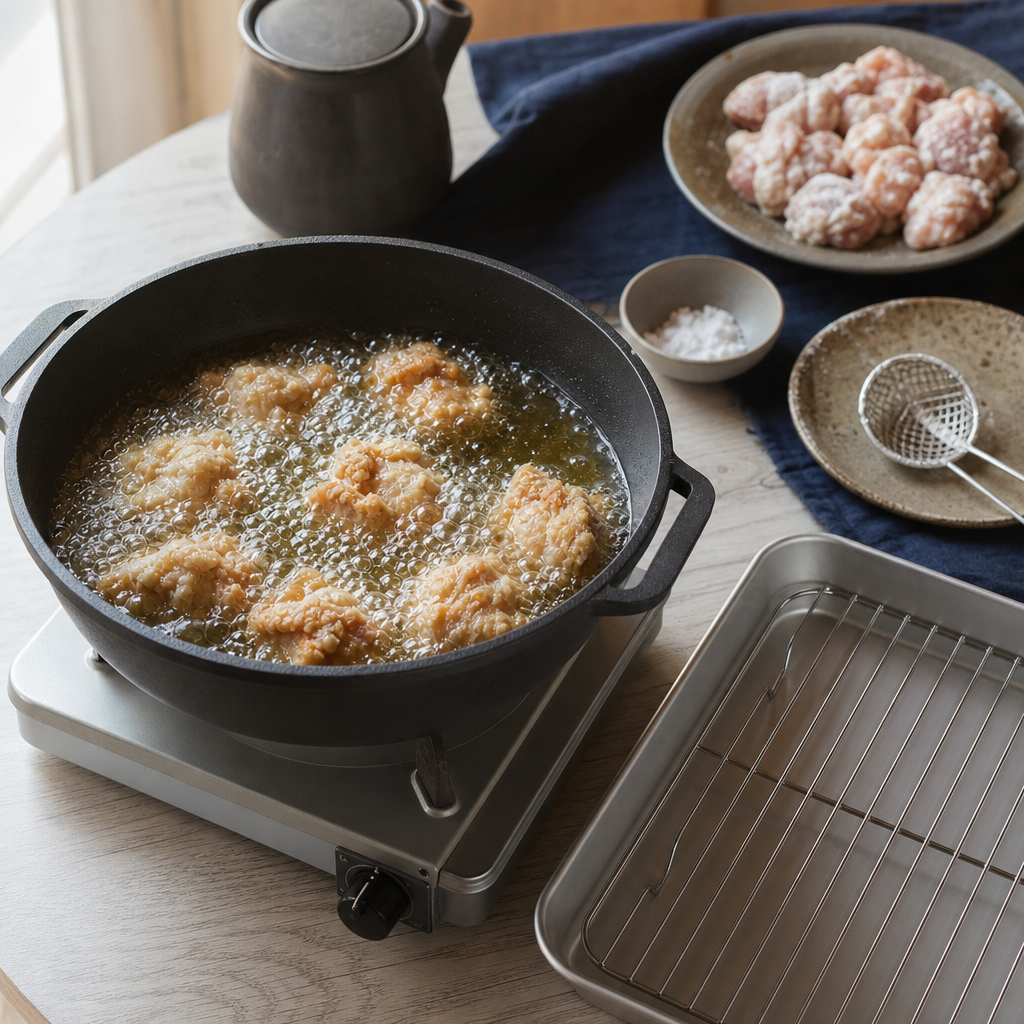
Fry the chicken in small batches at 160°C for 3 minutes, turning once or twice. Do not let the oil drop below 150°C; reduce the batch size if it does.
Rest between fries
Lift the chicken to the rack and rest for 4 minutes while the oil returns to temperature. Check the thickest piece if needed; it should be close to cooked through before the second fry.
Second fry hotter
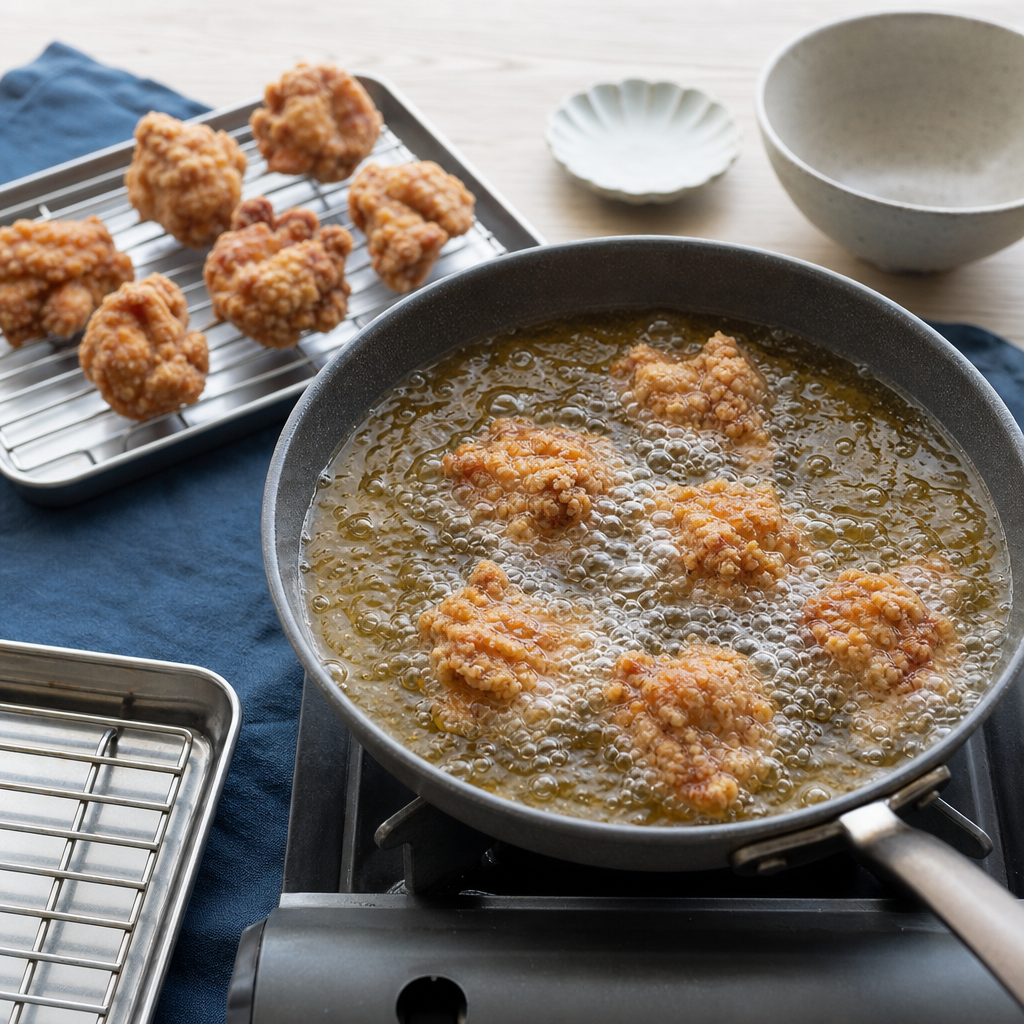
Raise the oil to 180°C. Return the chicken in batches and fry for 60-90 seconds, until the ridges are dry, crisp-looking, and amber at the edges.
Verify and serve
Drain on the rack, not paper towels. The thickest piece should read at least 74°C in the center, or 75°C held for 1 minute by Japanese food-safety guidance. Serve with lemon, shredded cabbage, and mayonnaise if using.
Common mistakes
- {'mistake': 'Marinating for hours', 'why_it_fails': 'Soy sauce keeps penetrating the surface and the chicken turns salty before the center gains anything useful.', 'fix': 'Keep the marinade to 20-30 minutes for 4 cm thigh pieces.'}
- {'mistake': 'Coating wet chicken', 'why_it_fails': 'Wet marinade makes a paste under the starch, then steam separates the crust during frying.', 'fix': 'Drain and blot until the surface is tacky rather than shiny.'}
- {'mistake': 'Using only all-purpose flour', 'why_it_fails': 'Flour browns and forms a softer shell. It does not give the dry crackle associated with katakuriko-coated karaage.', 'fix': 'Use potato starch, or at most a half-starch half-flour blend.'}
- {'mistake': 'Crowding the pot', 'why_it_fails': 'The oil temperature collapses, bubbling slows, and the crust absorbs oil.', 'fix': 'Fry in small batches and let the oil recover between batches.'}
- {'mistake': 'Judging doneness by color', 'why_it_fails': 'Soy sauce and sugar darken quickly, especially in the second fry.', 'fix': 'Use an instant-read thermometer on the thickest piece.'}
What does not belong
- {'item': 'Buttermilk', 'reason': 'Buttermilk belongs to American fried chicken, not karaage. It changes the acidity, texture, and dairy profile of the marinade.'}
- {'item': 'Panko', 'reason': 'Panko makes a breaded cutlet texture. Karaage needs a thin starch crust, not crumb armor.'}
- {'item': 'Bottled teriyaki glaze', 'reason': 'Sweet glaze turns the dish into a different preparation and softens the crust on contact.'}
- {'item': 'Butter or olive oil for frying', 'reason': 'Their smoke points and flavor profiles are wrong for high-heat Japanese frying. Use neutral oil.'}
- {'item': 'A thick batter', 'reason': 'Karaage is dredged, not battered like tempura or Western nuggets. A thick batter hides the meat and steams the surface.'}
Adaptations
For tofu, press 400-500 g firm tofu for 30 minutes, tear into rough chunks, marinate 15 minutes, then coat and fry at 170-180°C.
Check soy sauce and mayonnaise labels for alcohol-containing additives if strict certification is required.
Do not use the optional flour blend.
Buttermilk does not belong in the recipe.
Use fresh oil if cooking for someone with severe allergy and the fryer has previously been used for shrimp or seafood.