Thai Ginger Chicken Stir-Fry
The dish in context
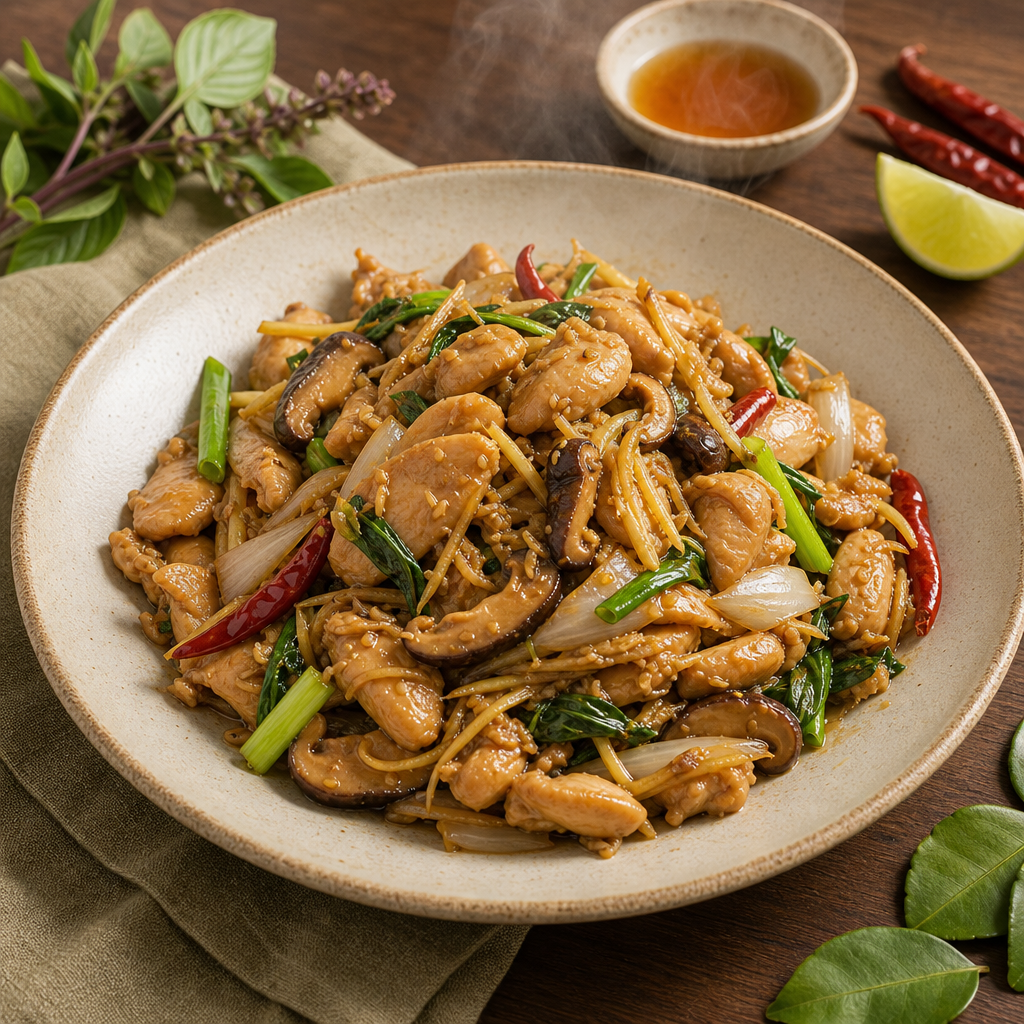
Gai pad king (ไก่ผัดขิง) sits in the Thai-Chinese part of central Thai cooking: wok heat, soy-based seasoning, fresh ginger, and wood ear mushrooms rather than curry paste or coconut. It is common as an aahaan dtaam sang (อาหารตามสั่ง), the made-to-order rice-plate format, and also fits household cooking because the sauce depends on pantry bottles rather than a pounded curry base. Thai academic and government sources often mention it as a ginger-forward everyday dish rather than a ceremonial one. The standard structure is chicken, shredded fresh ginger, garlic, fermented soybean paste, oyster sauce, mushrooms, onion, scallion, and mild red chili for color.
Method 9 steps · 30 min
Cut the ginger correctly
Peel the ginger and slice it with the grain into thin sheets, then stack and cut into fine matchsticks. Keep the strands long enough to stay visible in the finished stir-fry.
Mix the sauce
Stir the fermented soybean paste, oyster sauce, light soy sauce, seasoning sauce, dark soy sauce, fish sauce, sugar, white pepper, and water in a small bowl. Break up the soybean paste with the back of a spoon.
Heat the wok
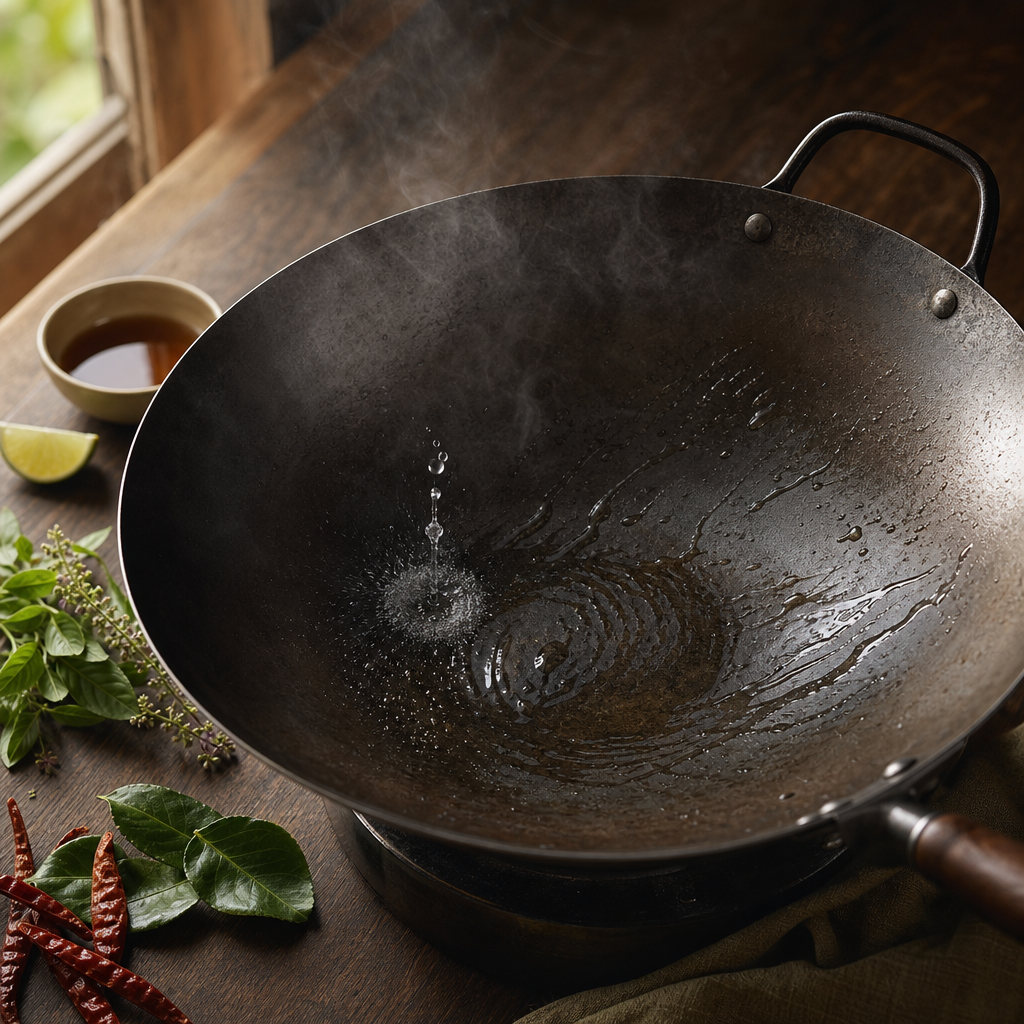
Set a wok over high heat until a drop of water skitters and evaporates within 1 second. Add the oil and swirl to coat.
Fry garlic and half the ginger
Add the garlic and about half the ginger. Stir-fry 20-30 seconds, until the garlic smells sharp and the ginger edges turn glossy but not brown.
Sear the chicken
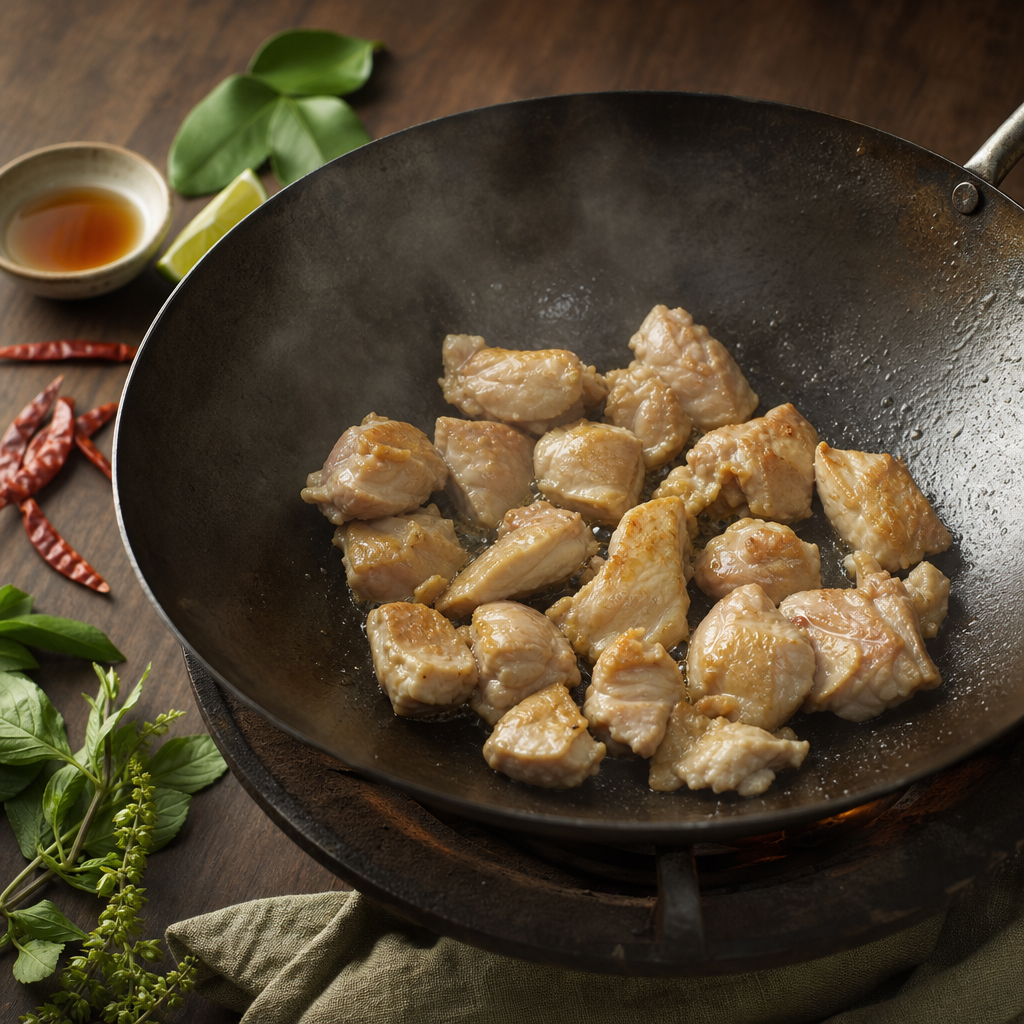
Add the chicken in a single layer and leave it undisturbed for 20 seconds. Stir-fry until the outside turns opaque and a few edges begin to brown, 2-3 minutes.
Add mushrooms and onion
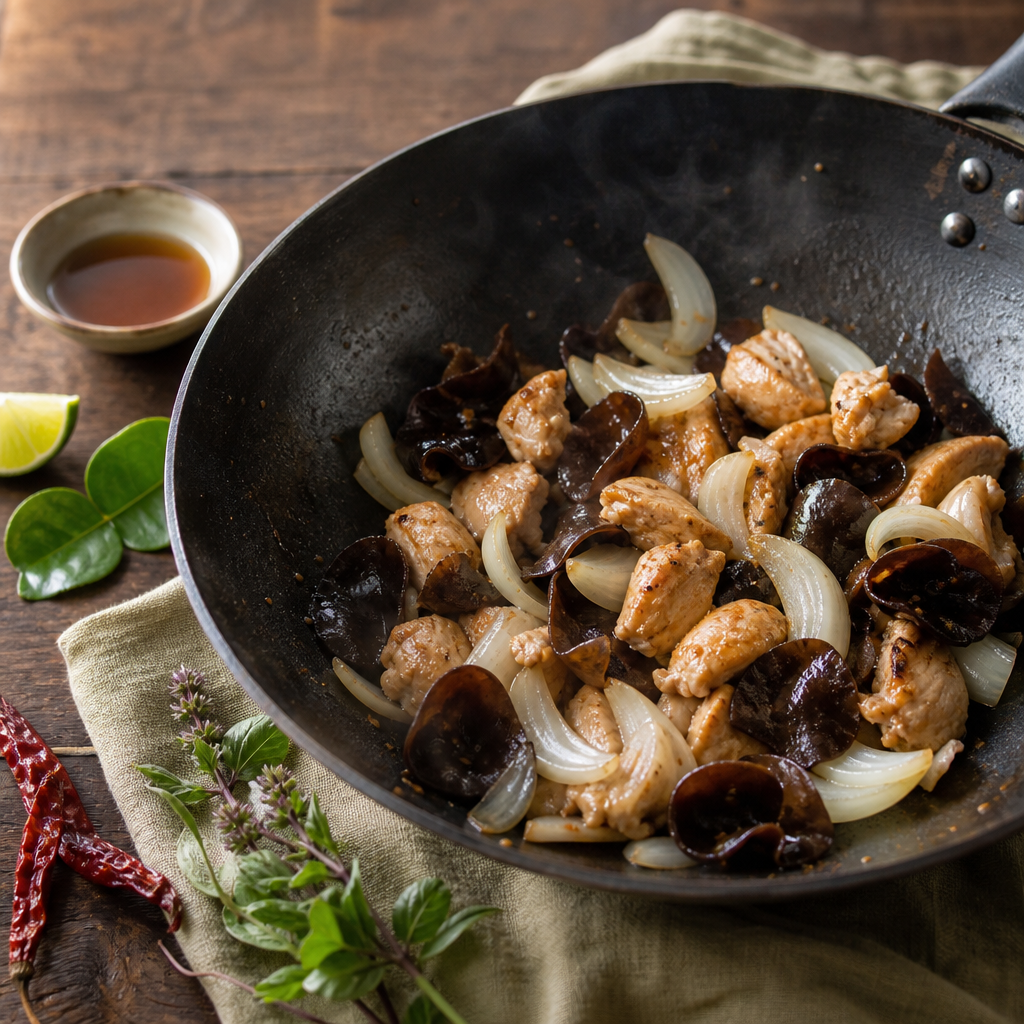
Add the wood ear mushrooms and onion. Stir-fry 1 minute, until the onion separates into curved petals and the mushrooms look glossy.
Glaze with the sauce
Pour in the mixed sauce and scrape the wok as it bubbles. Stir-fry 60-90 seconds, until the sauce reduces to a shiny coating and no watery pool remains at the bottom.
Finish with fresh ginger, chili, and scallion
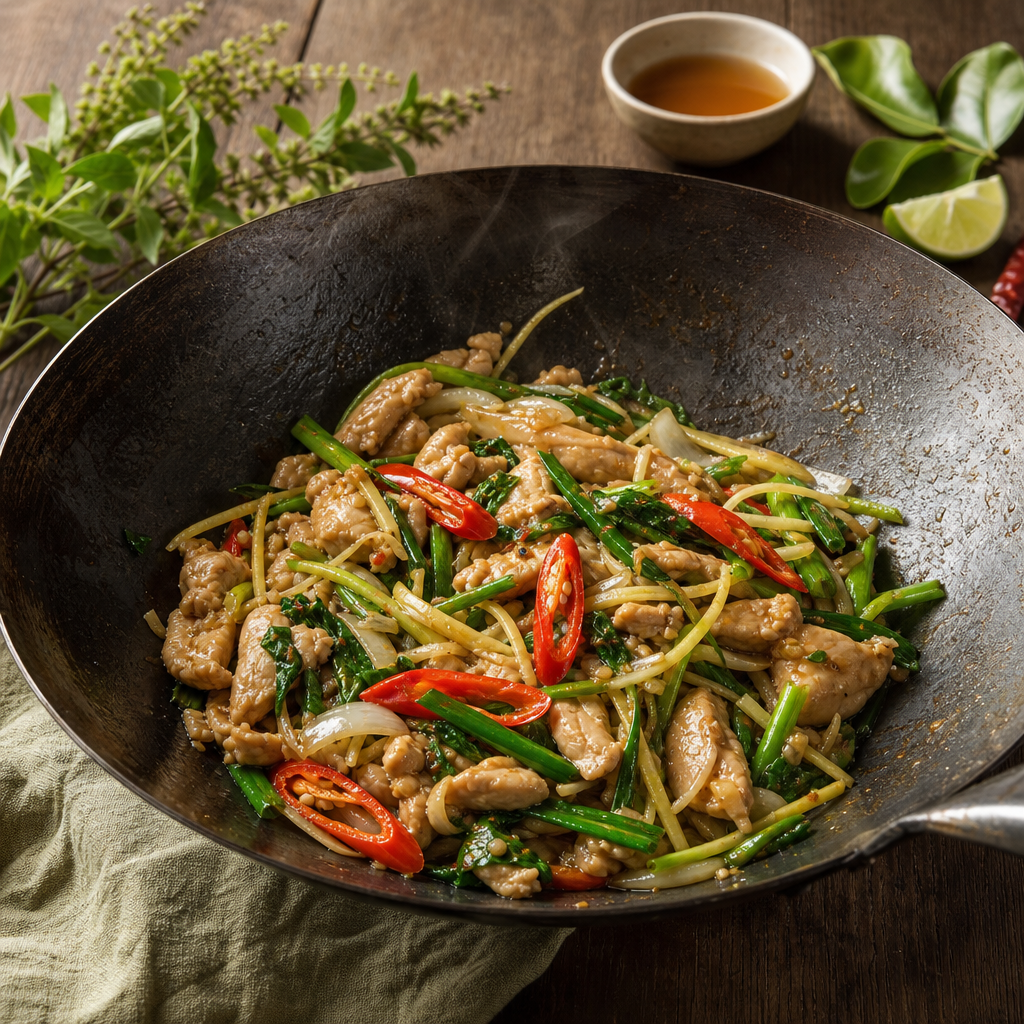
Add the remaining ginger, red chili, and scallions. Toss 20-30 seconds, then take the wok off heat while the scallions are still bright green.
Serve with rice
Serve immediately over steamed jasmine rice, spooning any clinging sauce from the wok over the top.
Common mistakes
- {'mistake': 'Cutting the ginger too thick.', 'fix': 'Use fine matchsticks. The ginger should bend slightly after cooking, not crunch like raw root.'}
- {'mistake': 'Adding too much water or stock.', 'fix': 'Use a small splash only. The sauce should reduce to a glaze in under 90 seconds.'}
- {'mistake': 'Treating sugar as a main balance.', 'fix': 'Use sugar only to round salty sauces. Gai pad king is savory and ginger-hot, not sweet.'}
- {'mistake': 'Overcooking wood ear mushrooms.', 'fix': 'Add them after the chicken has started to cook and stir-fry briefly. Their value is the bouncy snap.'}
- {'mistake': 'Using low heat for the whole dish.', 'fix': 'Use high heat and keep the food moving after the initial chicken sear. Low heat creates chicken in ginger gravy.'}
What does not belong
- {'item': 'coconut milk', 'reason': 'Coconut milk does not belong in gai pad king. This is a dry Thai-Chinese stir-fry, not a curry.'}
- {'item': 'curry paste', 'reason': 'Curry paste does not belong. It erases the ginger-and-soy structure of the dish.'}
- {'item': 'bottled sweet chili sauce', 'reason': 'Sweet chili sauce does not belong. It turns the stir-fry sticky and sweet in the wrong register.'}
- {'item': 'large amounts of palm sugar', 'reason': 'Palm sugar as a primary flavor does not belong. A small sugar correction is acceptable; sweetness should not lead.'}
- {'item': 'Italian basil or Thai basil', 'reason': 'Basil does not belong in this dish. Do not turn gai pad king into a confused pad krapow.'}
- {'item': 'sesame oil as the main fat', 'reason': 'Sesame oil does not belong as the frying oil. Its roasted aroma dominates the ginger and reads as a different Chinese stir-fry.'}