Salmon Shioyaki
The dish in context
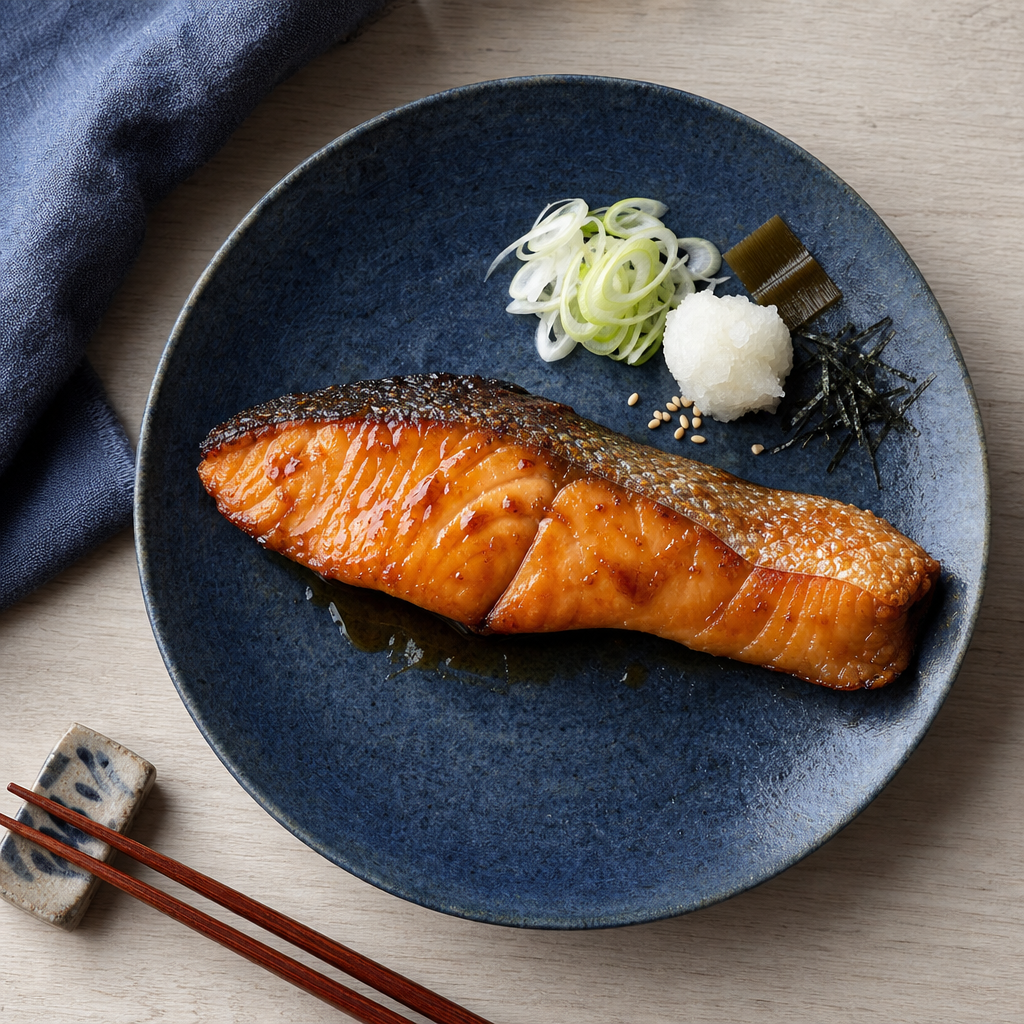
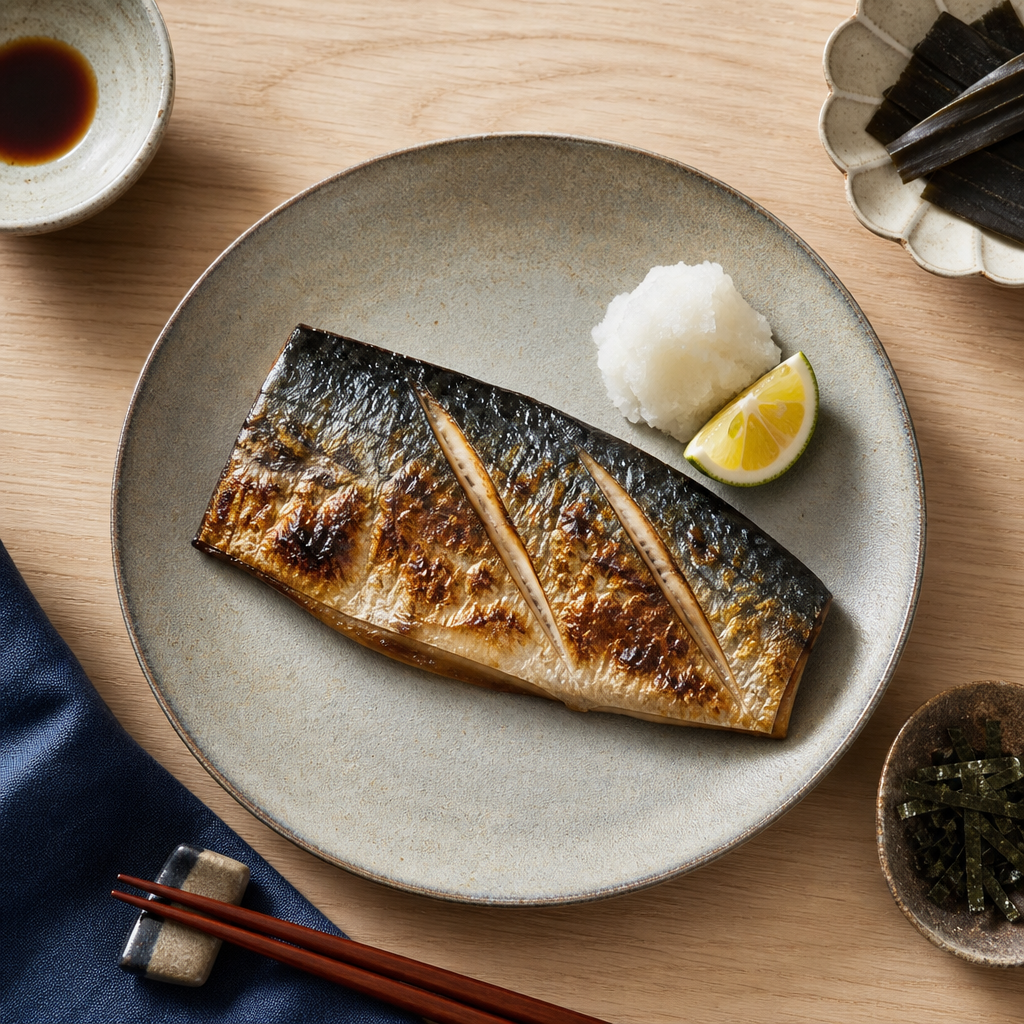
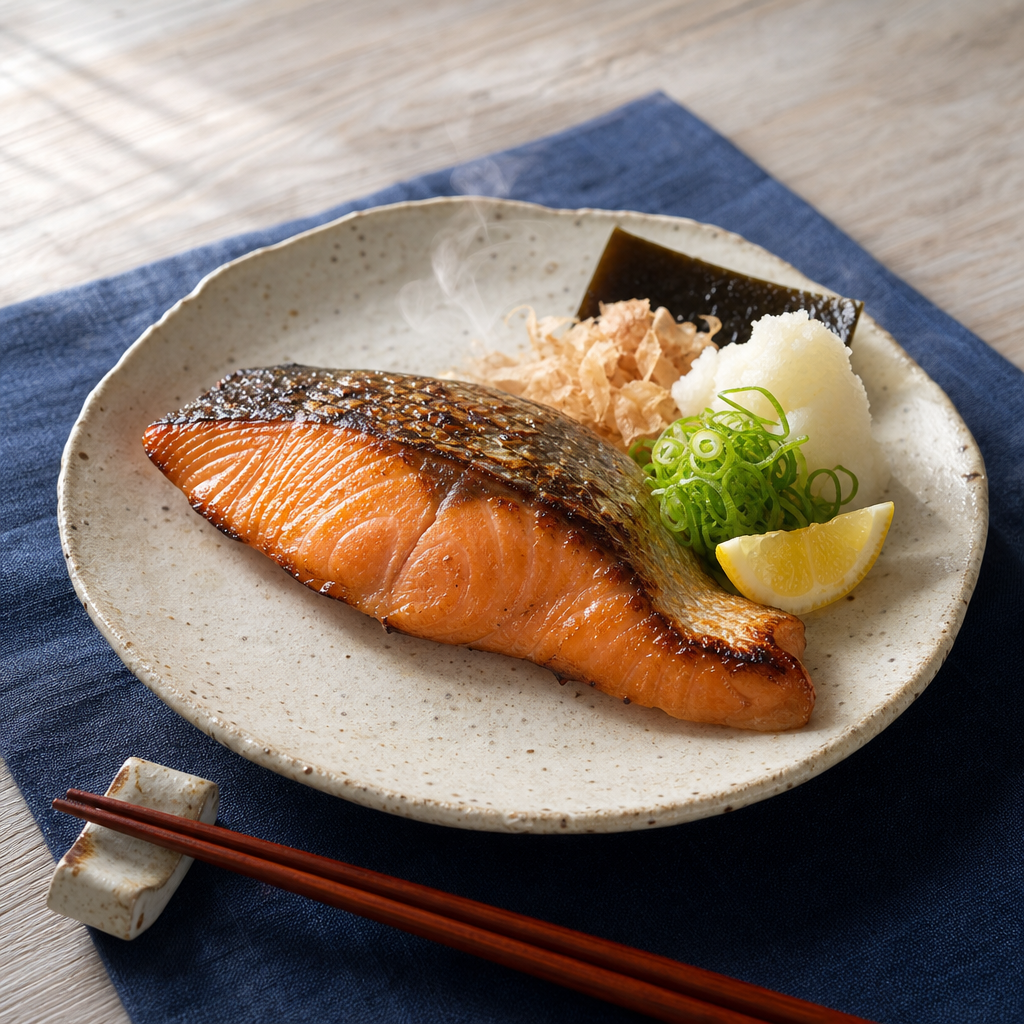
Salted grilled salmon is a fixed point of the Japanese breakfast table: rice, miso soup, pickles, and a firm, salty piece of fish. The broader practice overlaps with regional preserved salmon traditions such as aramaki-zake and shiozake, especially in northern Japan and salmon-producing areas, but home shioyaki does not require a whole preserved fish. Modern home versions usually start with fresh salmon, salt it for a short cure, then grill or broil it until the surface browns and the fat beads. The dish is intentionally plain; the point is salt, salmon fat, char, and rice.
Method 7 steps · 750 min
Wipe and salt the salmon
Pat the salmon dry. Rub with sake if using, then pat dry again. Sprinkle 12 g salt evenly over the flesh, skin, and cut sides, pressing it on so no face of the fish is untreated.
Cure on paper towels
Line a shallow glass or stainless container with paper towels. Set the salmon on the towels, cover, and refrigerate for 12 to 24 hours. Replace the towels and turn the fish once if liquid pools heavily.
Bring the surface out of refrigerator-cold
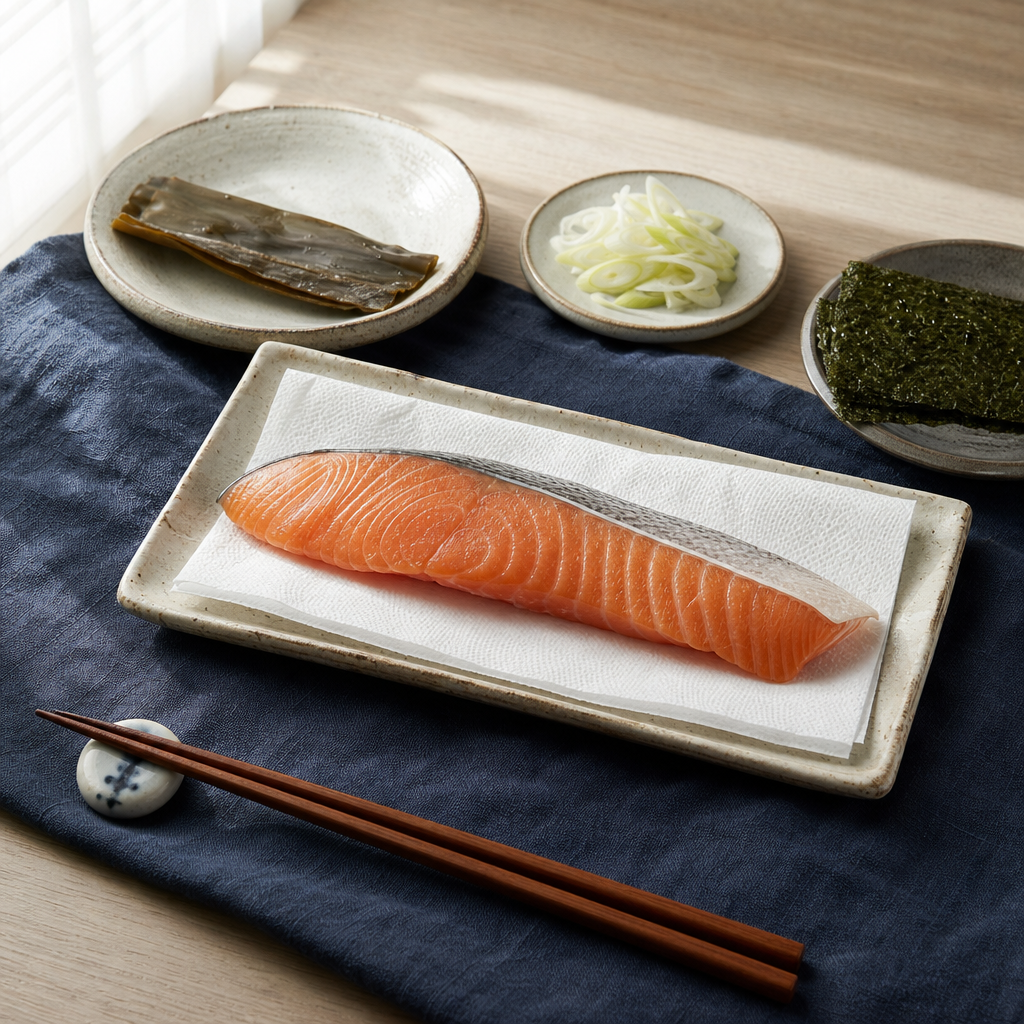
Remove the salmon from the refrigerator 15 minutes before cooking. Blot the surface dry again. Do not rinse unless the fish has cured longer than 24 hours; rinsing throws away the controlled salt layer.
Heat the broiler or fish grill
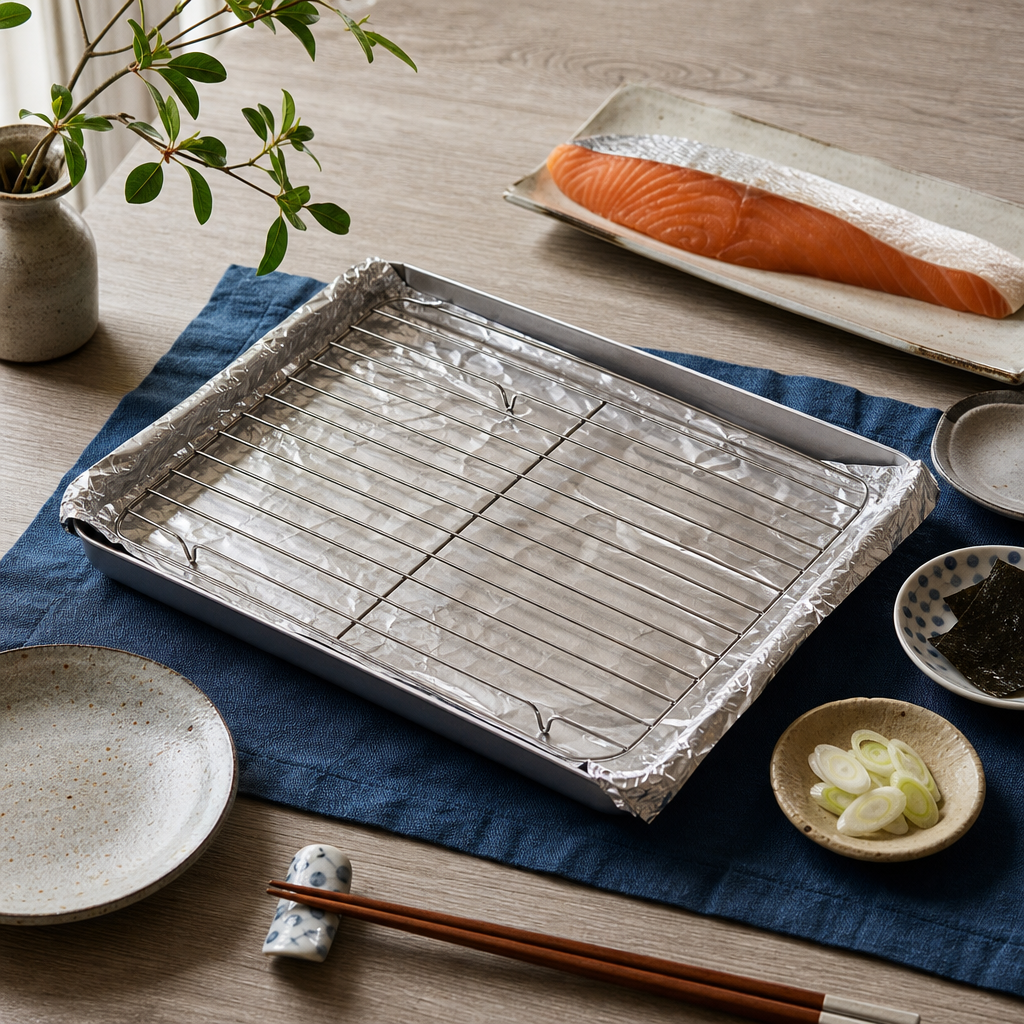
Set an oven rack 10 to 15 cm below the broiler and preheat on high for 5 minutes. Line a rimmed sheet pan with foil and set a lightly oiled wire rack on top if available.
Broil the first side
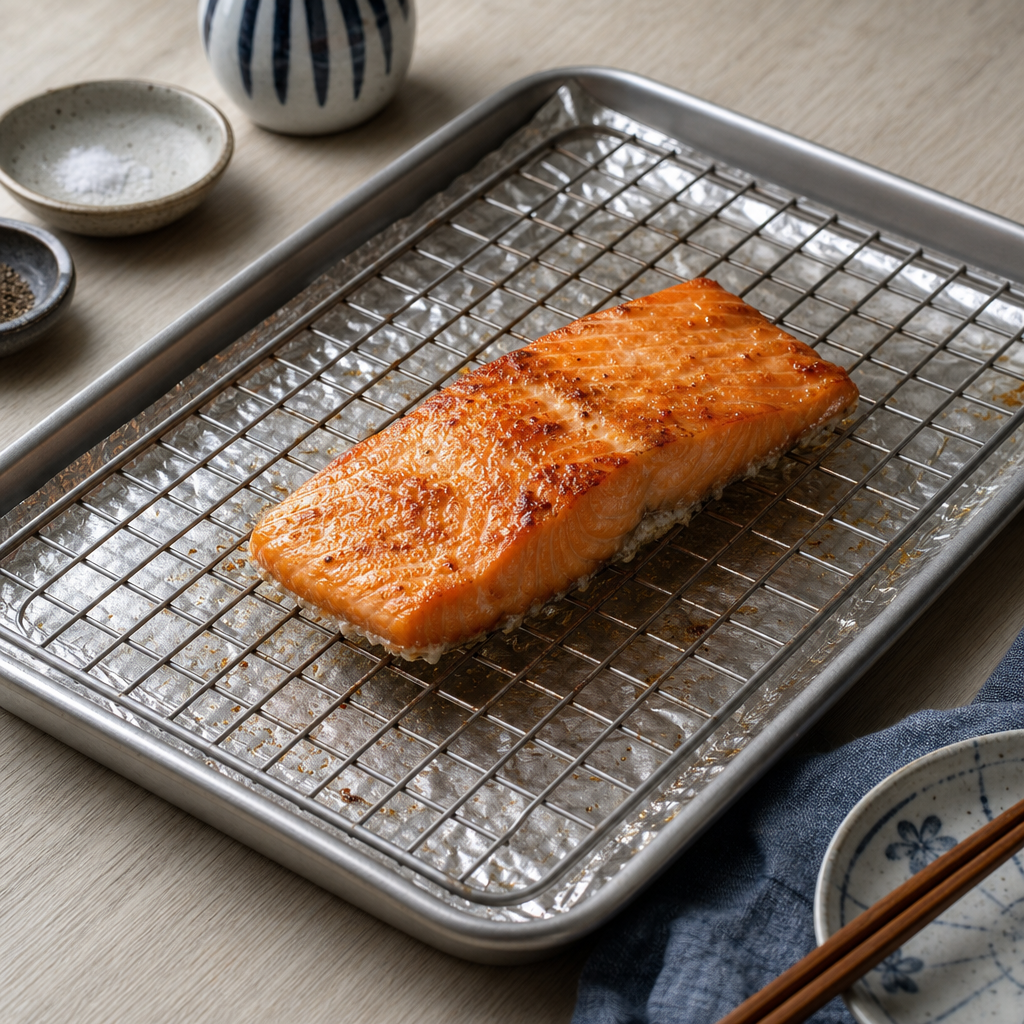
Place the salmon skin-side down on the rack. Broil until the top face is browned in patches and beads of fat appear at the edges, 4 to 6 minutes depending on thickness.
Turn and finish
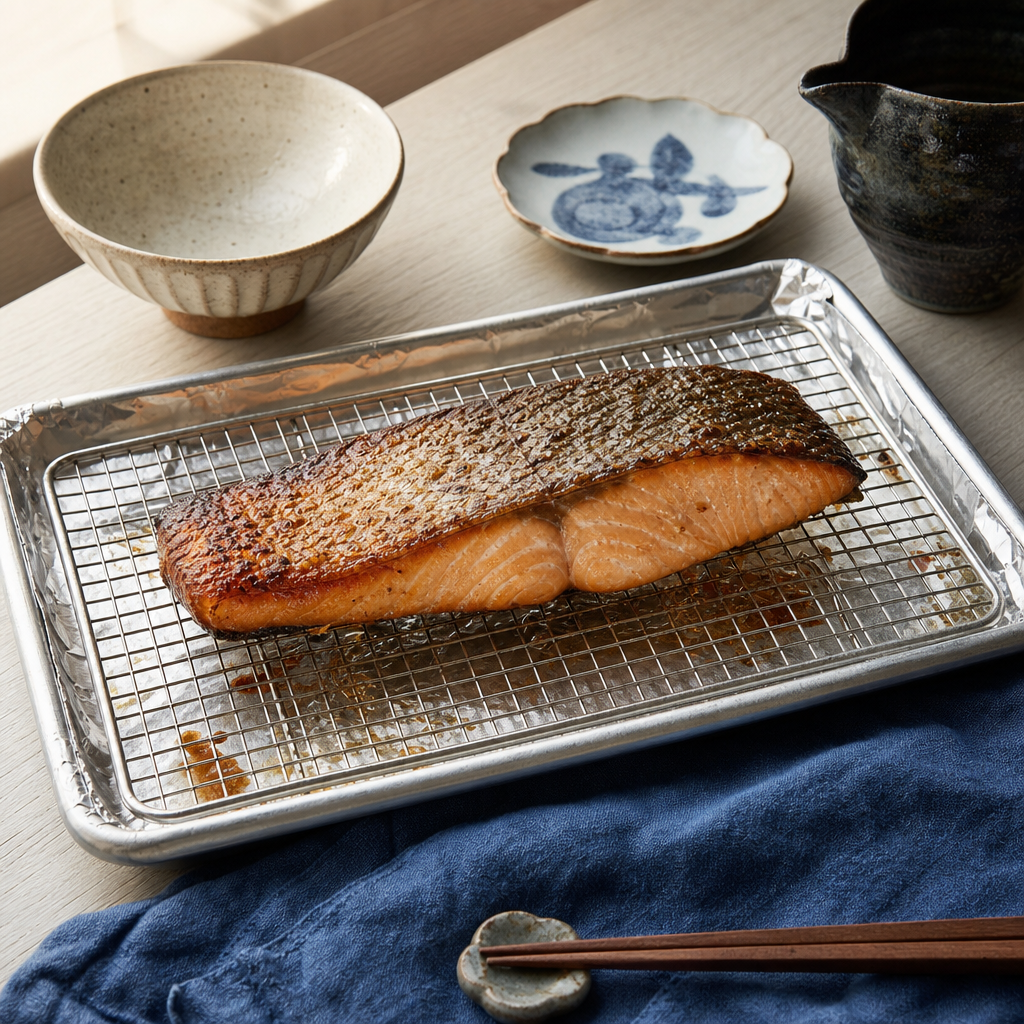
Turn the salmon with a thin spatula and broil the skin side until blistered and browned, 3 to 5 minutes. Pull it when the thickest part flakes under light pressure and the skin has dark gold patches, not black soot.
Serve hot with rice
Serve immediately with Japanese short-grain rice, grated daikon, and a lemon, sudachi, or yuzu wedge if using. Flake the salmon into the rice rather than saucing it.
Common mistakes
- {'mistake': 'Salting by spoon measure.', 'fix': 'Weigh the salt. Kosher salts vary so much by crystal size that a tablespoon can swing the dish from underseasoned to aggressively salty.'}
- {'mistake': 'Skipping the uncovered or towel-lined cure.', 'fix': 'Give the fish time on absorbent paper. Wet salted salmon steams under the broiler and stays pale.'}
- {'mistake': 'Cooking it like Western medium salmon.', 'fix': 'Cook shioyaki through. The cured fish should flake firmly and show browned fat at the surface.'}
- {'mistake': 'Rinsing after a normal 12 to 24 hour cure.', 'fix': 'Blot instead. Rinsing removes the calibrated salt layer and adds water back to the surface.'}
- {'mistake': 'Crowding the sheet pan.', 'fix': 'Leave space between pieces or cook in batches. Steam is the enemy of browned salted fish.'}
What does not belong
- {'item': 'Teriyaki sauce', 'reason': 'Teriyaki turns this into a different dish. Shioyaki means salt-grilled; sugar-soy glaze does not belong.'}
- {'item': 'Miso marinade', 'reason': 'Miso salmon is valid, but it is not shioyaki. The fermented paste covers the clean salt-and-fish structure.'}
- {'item': 'Butter', 'reason': 'Butter pushes the dish toward Western pan salmon. The fat should come from the salmon itself.'}
- {'item': 'Garlic powder or onion powder', 'reason': 'Those aromatics read as seasoned fillet, not Japanese salted grilled fish.'}
- {'item': 'Sugar in the cure', 'reason': 'Sugar softens the salt edge and encourages scorching. Shioyaki is salty, not sweet.'}
- {'item': 'American bottled teriyaki sauce', 'reason': 'It is usually thick, sweet, and starch-stabilized. It does not belong on this plate.'}