Miso Soup
The dish in context
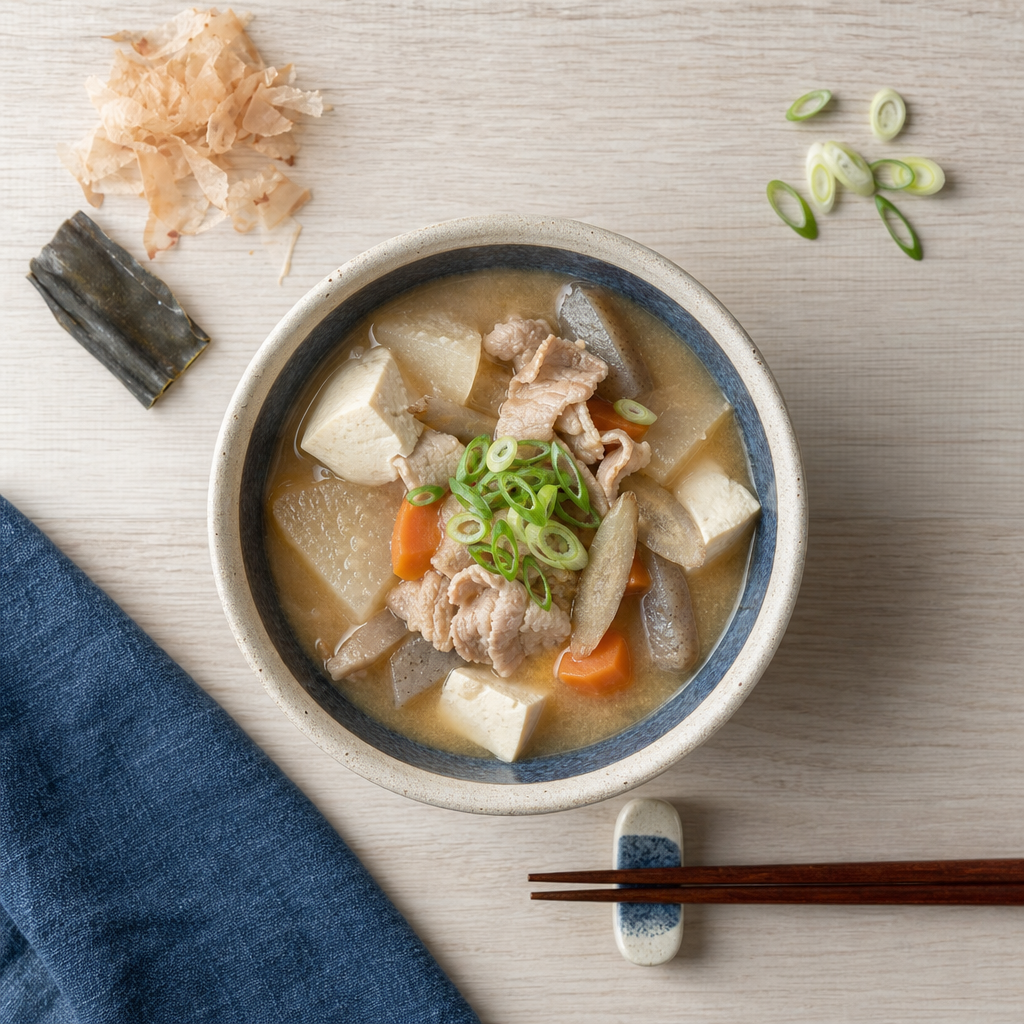
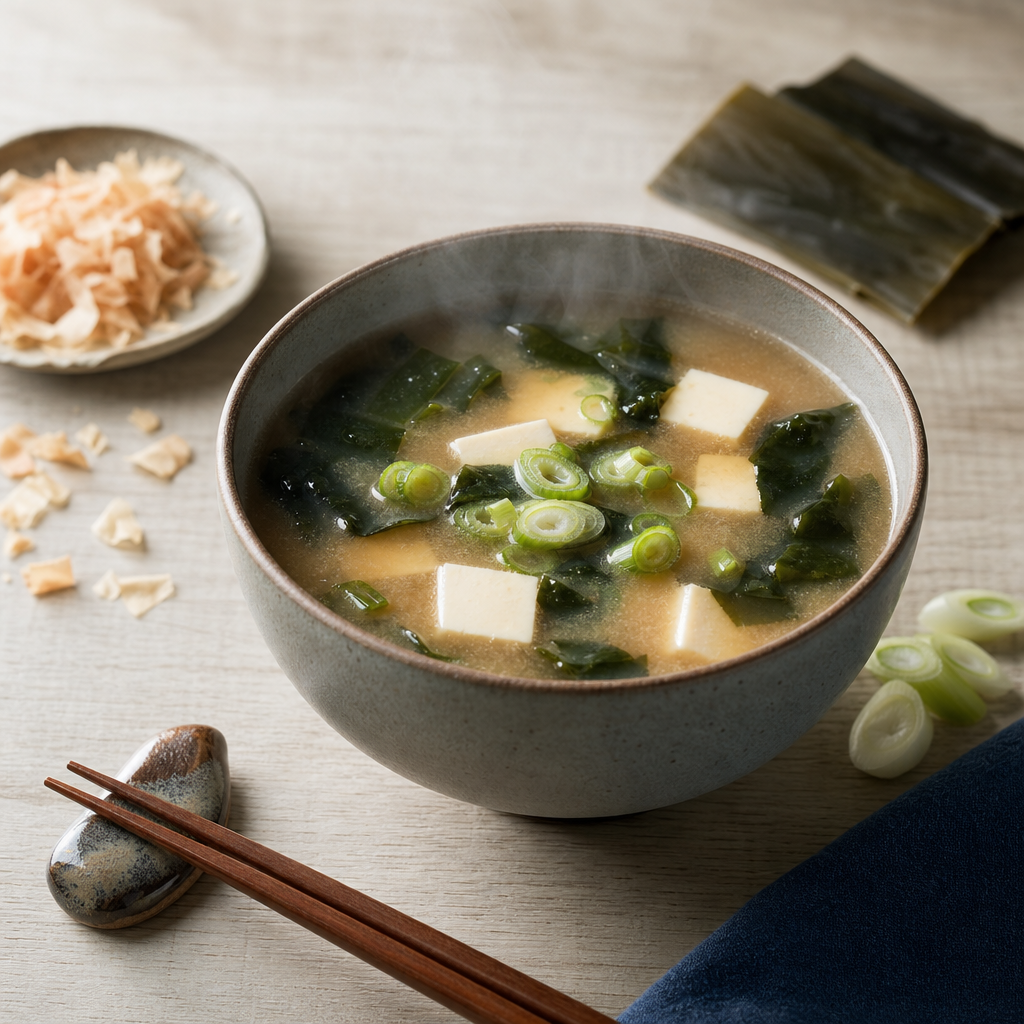
Miso soup, 味噌汁, is one of the standard forms of Japanese daily soup, often served as part of 一汁三菜, ichijū-sansai: one soup and three dishes. The structure is not miso dissolved in hot water; it is miso dissolved into dashi, with the stock carrying the soup as much as the fermented soybean paste does. Regional and household versions vary by miso type, dashi, and seasonal additions, from white miso in parts of Kansai to darker, saltier miso in other regions. The canonical everyday version uses dashi, miso, tofu, wakame, and scallion, with the miso added after the heat is lowered or turned off.
Method 6 steps · 30 min
Cold-soak the kombu
Put the water and kombu in a saucepan and soak for 20 minutes. For a deeper dashi, soak 1 hour in the refrigerator; do not rinse off the white powdery surface unless there is grit.
Heat below a boil
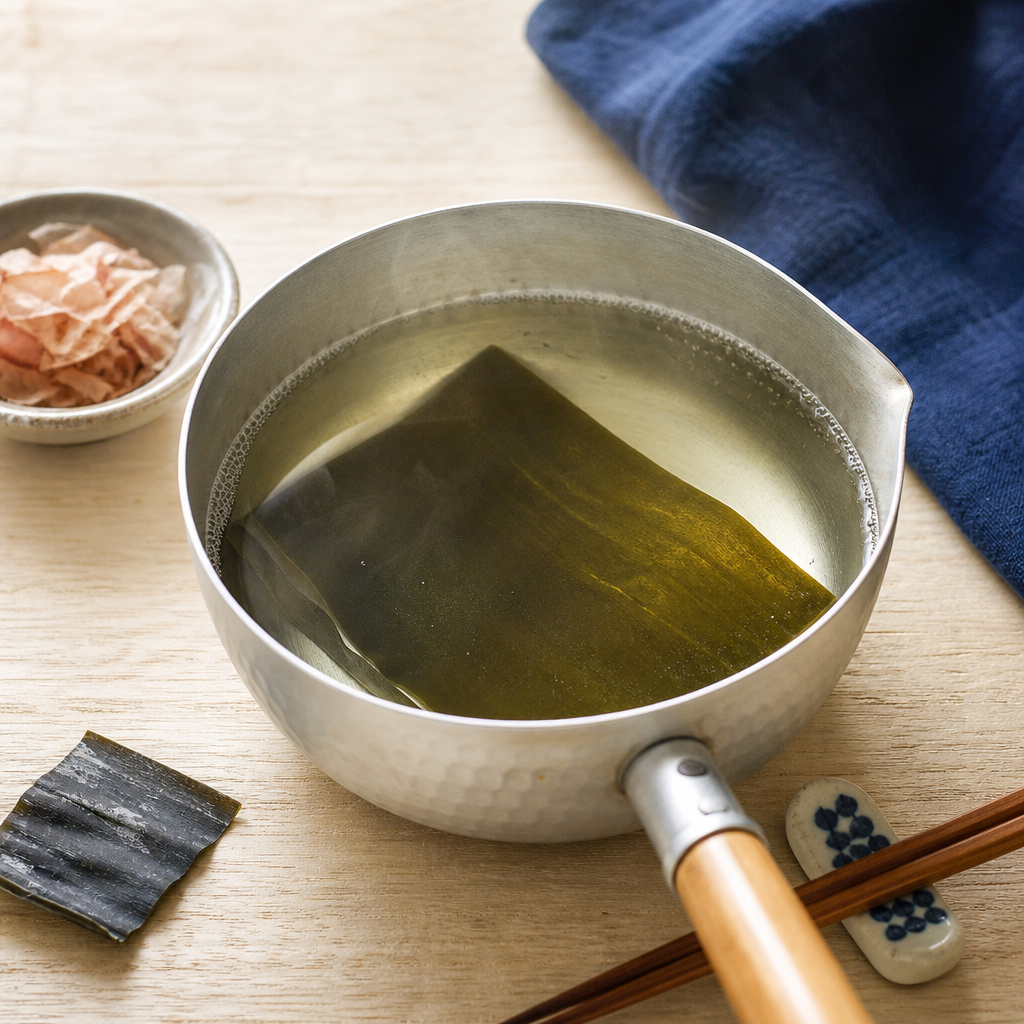
Set the pan over medium heat and bring the water to 80-90°C, when small bubbles collect at the edge but the surface is not rolling. Remove the kombu before the water boils.
Steep the katsuobushi
Bring the kombu dashi close to a boil, turn off the heat, add the katsuobushi, and let it sink for 60 seconds. Strain through a fine sieve without pressing hard on the flakes.
Warm the tofu and wakame
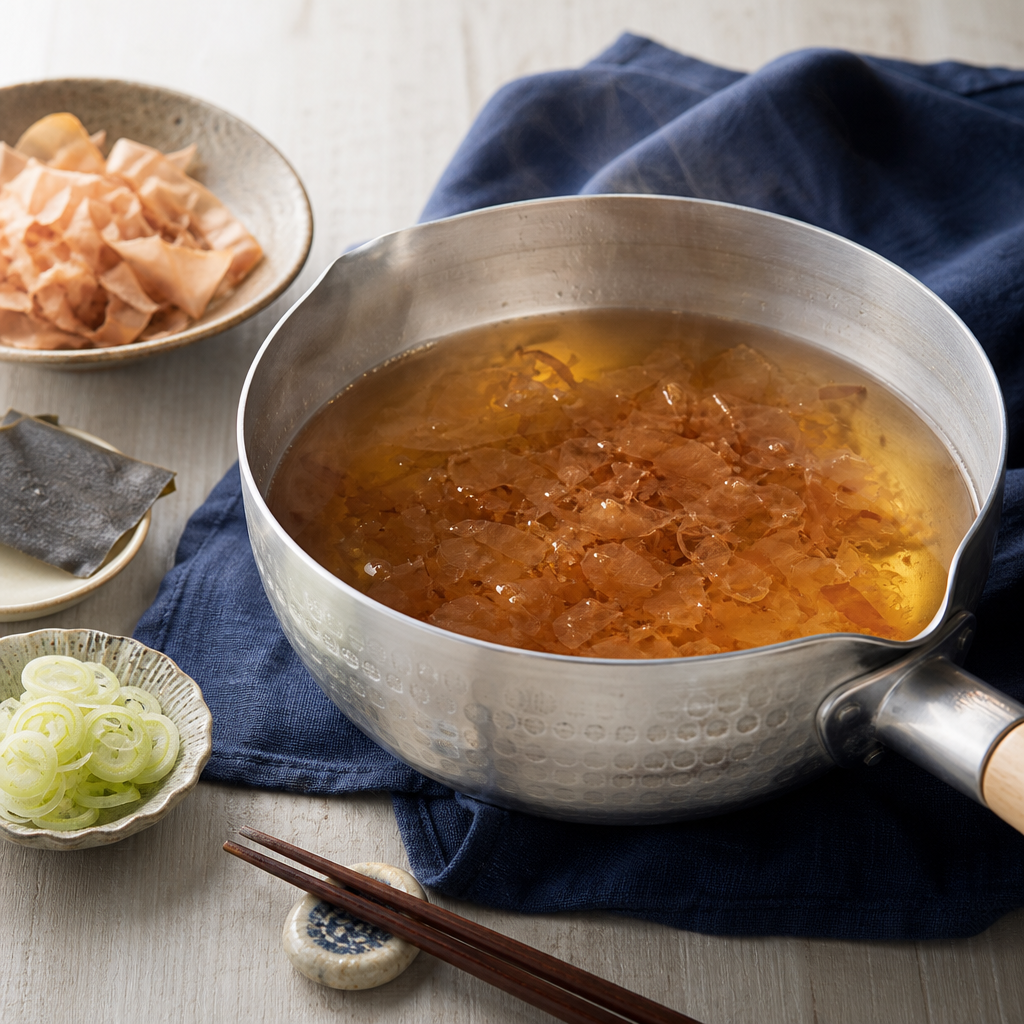
Return 800 ml dashi to the saucepan. Add the tofu and dried wakame, then warm over medium-low heat until the wakame opens and the tofu is hot, about 2 minutes; keep the liquid below a hard boil.
Dissolve the miso off heat
Turn off the heat. Put the miso in a ladle, dip the ladle into the hot dashi, and dissolve the paste with chopsticks or a small whisk before releasing it into the pot. Taste, then add more miso in small amounts if the broth tastes thin.
Serve immediately
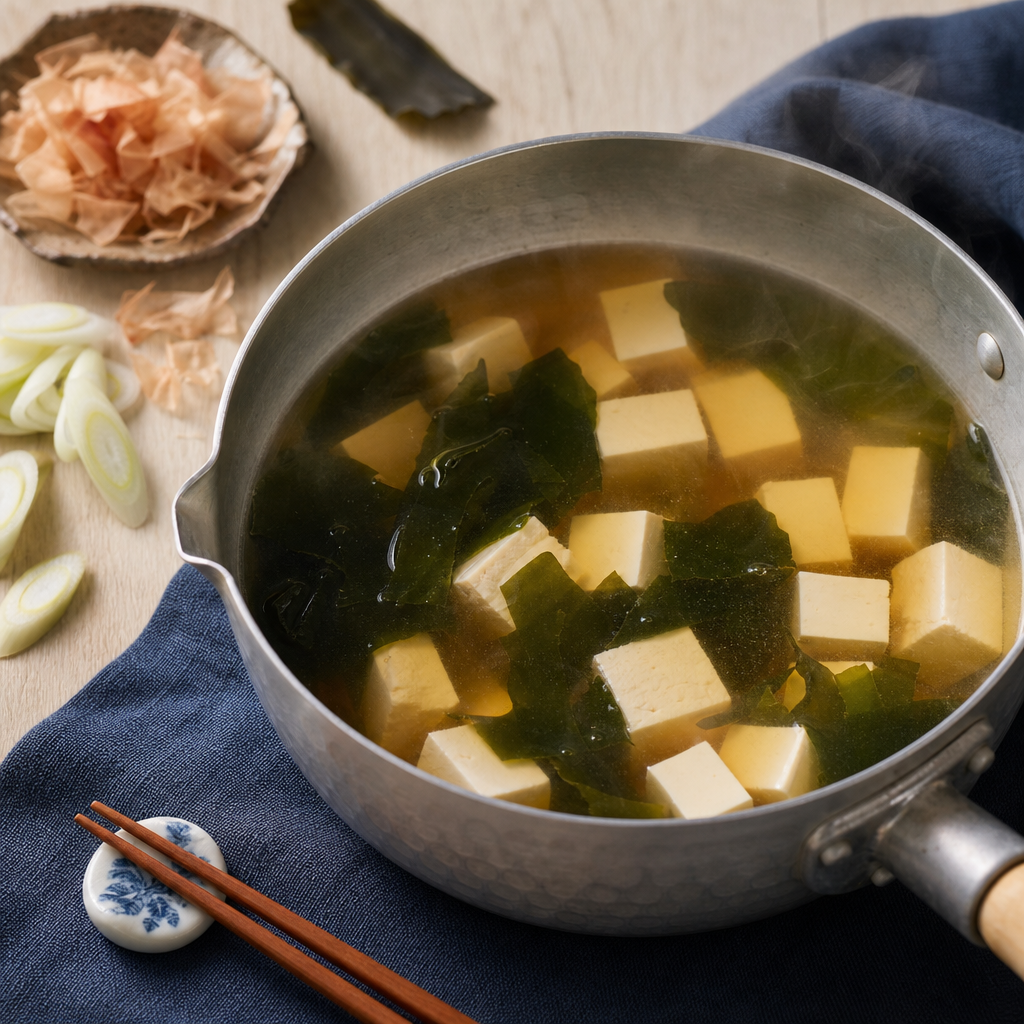
Ladle into bowls and scatter scallion over the surface. Serve while the tofu is still soft-edged and the miso aroma is rising from the bowl.
Common mistakes
- {'mistake': 'Boiling kombu', 'fix': 'Remove kombu before the water reaches a rolling boil. The cue is small bubbles at the pot edge, not a turbulent surface.'}
- {'mistake': 'Boiling miso after adding it', 'fix': 'Turn off the heat before dissolving miso. Reheat leftover soup gently and stop before it boils.'}
- {'mistake': 'Using plain water as the base', 'fix': 'Make dashi. Miso alone gives salt and fermentation; dashi gives the soup its length.'}
- {'mistake': 'Pressing katsuobushi hard during straining', 'fix': 'Let the flakes drain under their own weight. Pressed bonito gives a murky, rough stock.'}
- {'mistake': 'Adding all miso by tablespoon without tasting', 'fix': 'Weigh the first addition or start low. One miso may be mild and sweet; another may be dark, aged, and twice as assertive.'}
What does not belong
- {'item': 'Garlic', 'reason': 'Garlic does not belong in a classic everyday miso soup. It overwhelms the dashi and moves the bowl toward a different soup.'}
- {'item': 'Cream or milk', 'reason': 'Dairy does not belong. Miso soup should be suspended dashi and miso, not a creamy chowder.'}
- {'item': 'Chicken stock', 'reason': 'Chicken stock is not dashi. It gives body, but it erases the clean kombu-bonito structure.'}
- {'item': 'Soy sauce as the main seasoning', 'reason': 'Soy sauce makes the soup darker and sharper without replacing miso. If the soup tastes weak, the answer is better dashi or more miso, not soy sauce.'}
- {'item': 'Sugar', 'reason': 'Sugar does not belong in this household-standard version. Sweetness should come only from the miso style, especially if using white miso.'}