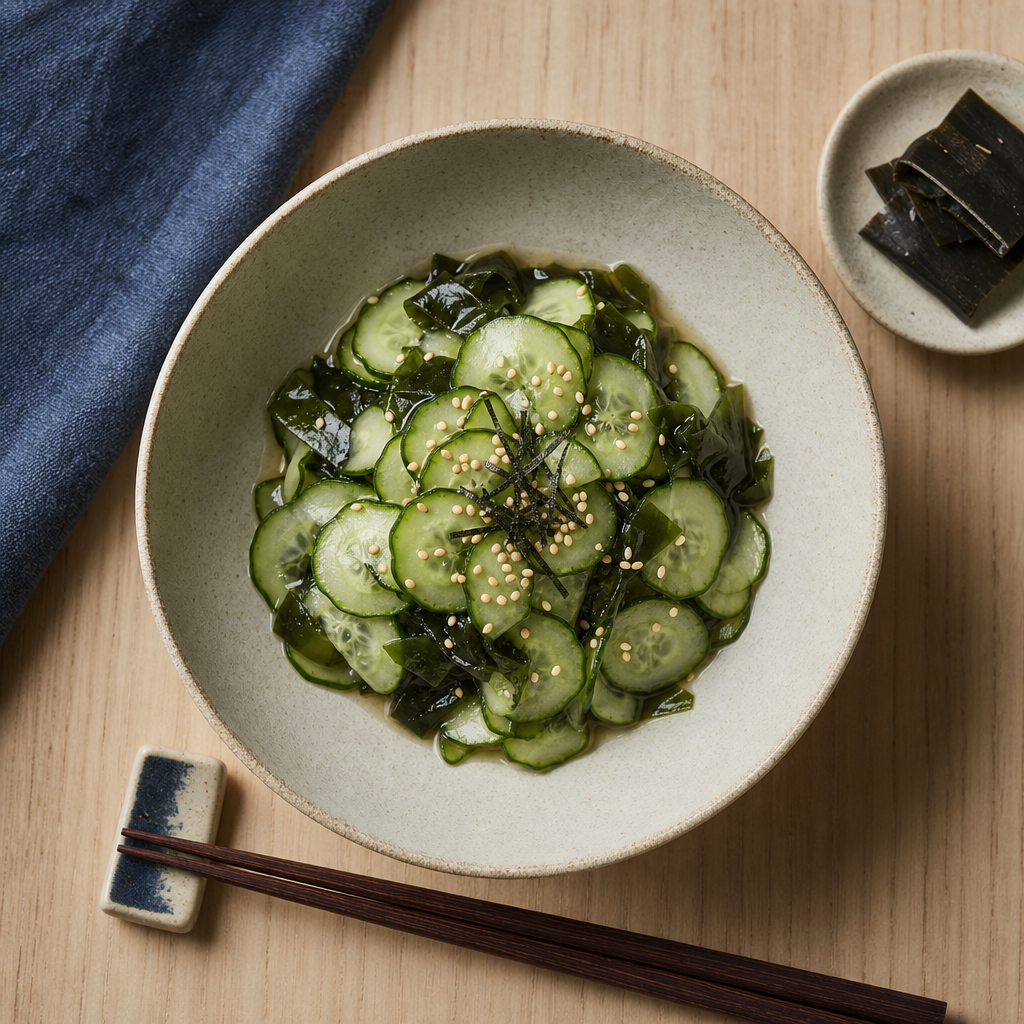
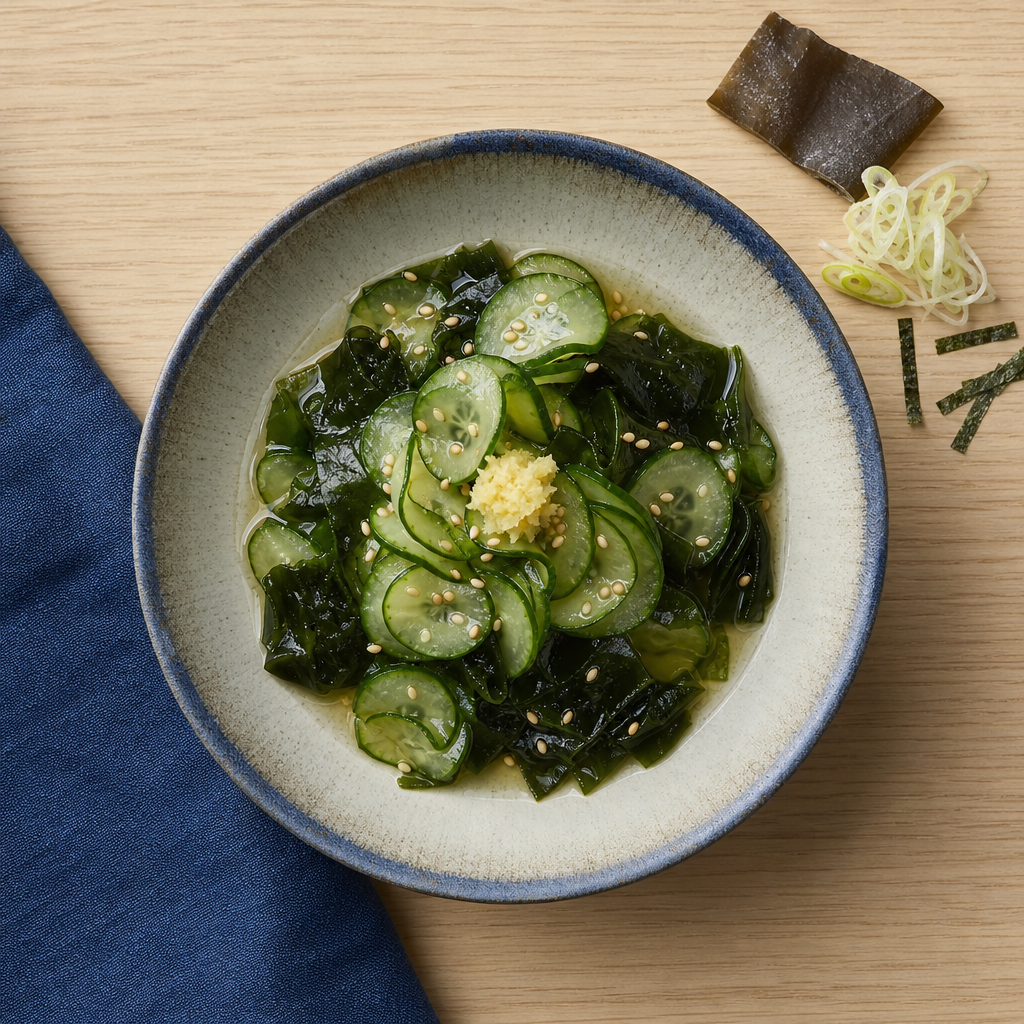
Wakame Salad
The dish in context
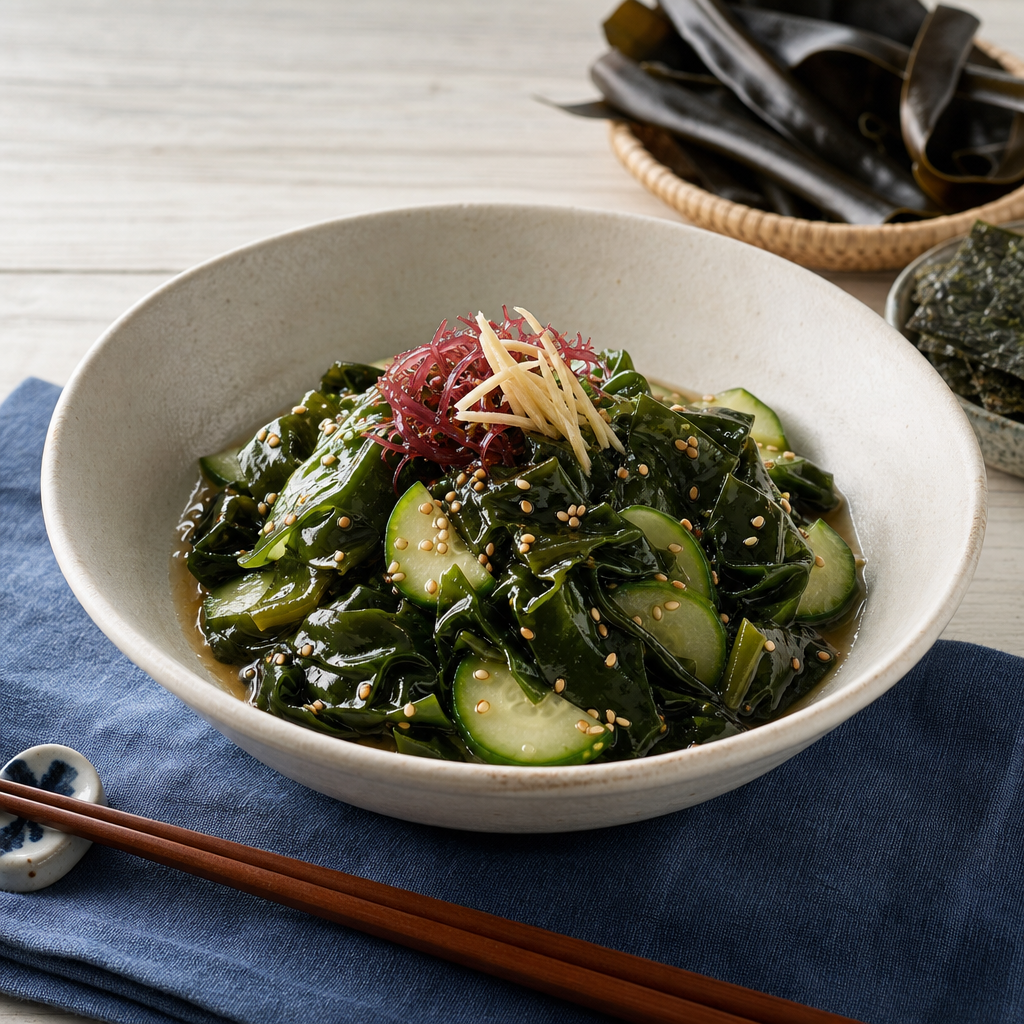
Wakame (わかめ) has been cultivated and eaten in Japan for centuries, especially in soups, vinegared dishes, and small side salads. The word salad here is modern Japanese usage, but the structure overlaps with sunomono (酢の物): rehydrated seaweed, crisp cucumber, and a light vinegar-based dressing. Restaurant versions outside Japan often use dyed mixed seaweeds in a sweet sesame dressing; that is a different commercial style. This version keeps the household grammar: clean rice vinegar, shoyu, sesame oil, and enough sugar to round the acid without turning the salad sweet.
Method 5 steps · 25 min
Hydrate the wakame
Place the dried wakame in a bowl with plenty of cold water and soak until fully expanded and satiny, 5-8 minutes. Drain, then squeeze firmly by handfuls until it no longer drips. Cut any long pieces into 3-4 cm lengths.
Salt the cucumber
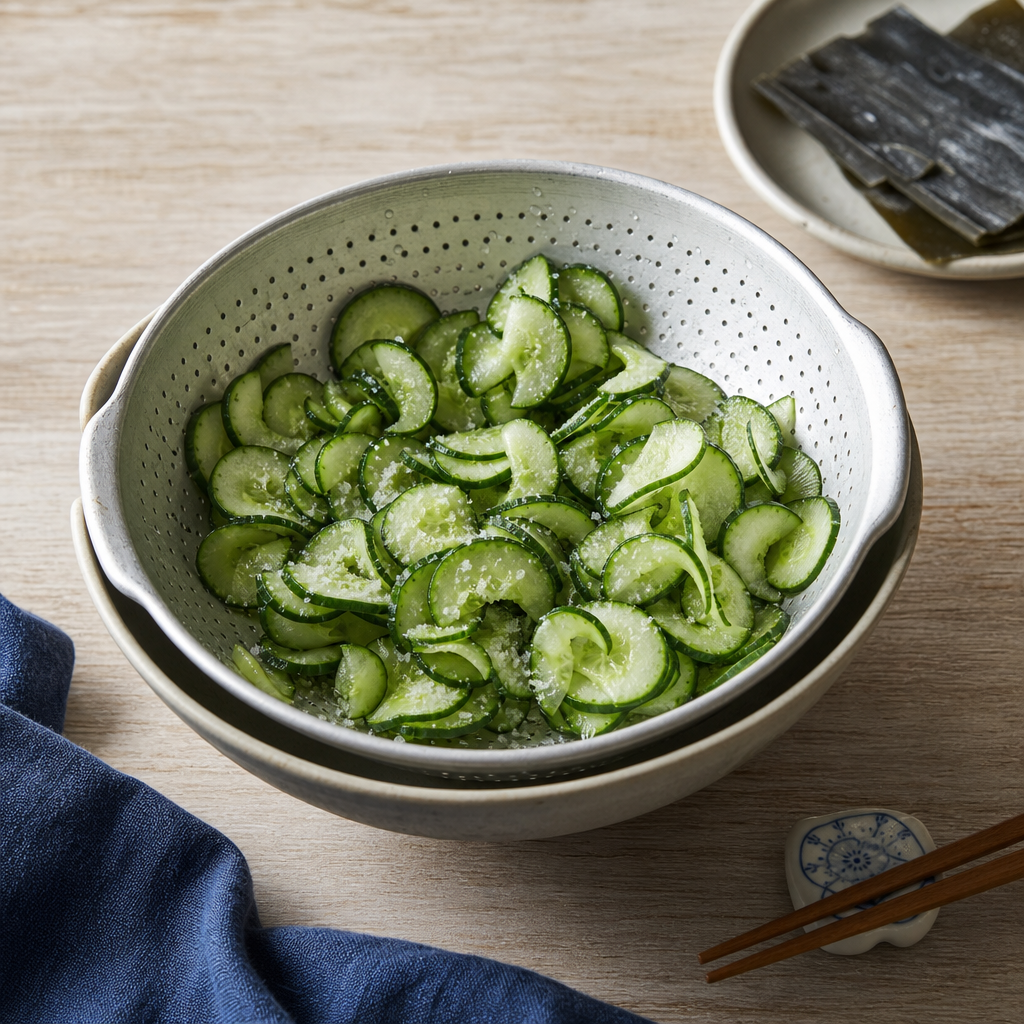
Toss the sliced cucumber with the salt and leave it in a colander for 10 minutes. Squeeze gently but decisively until the slices bend without flooding the bowl.
Mix the dressing
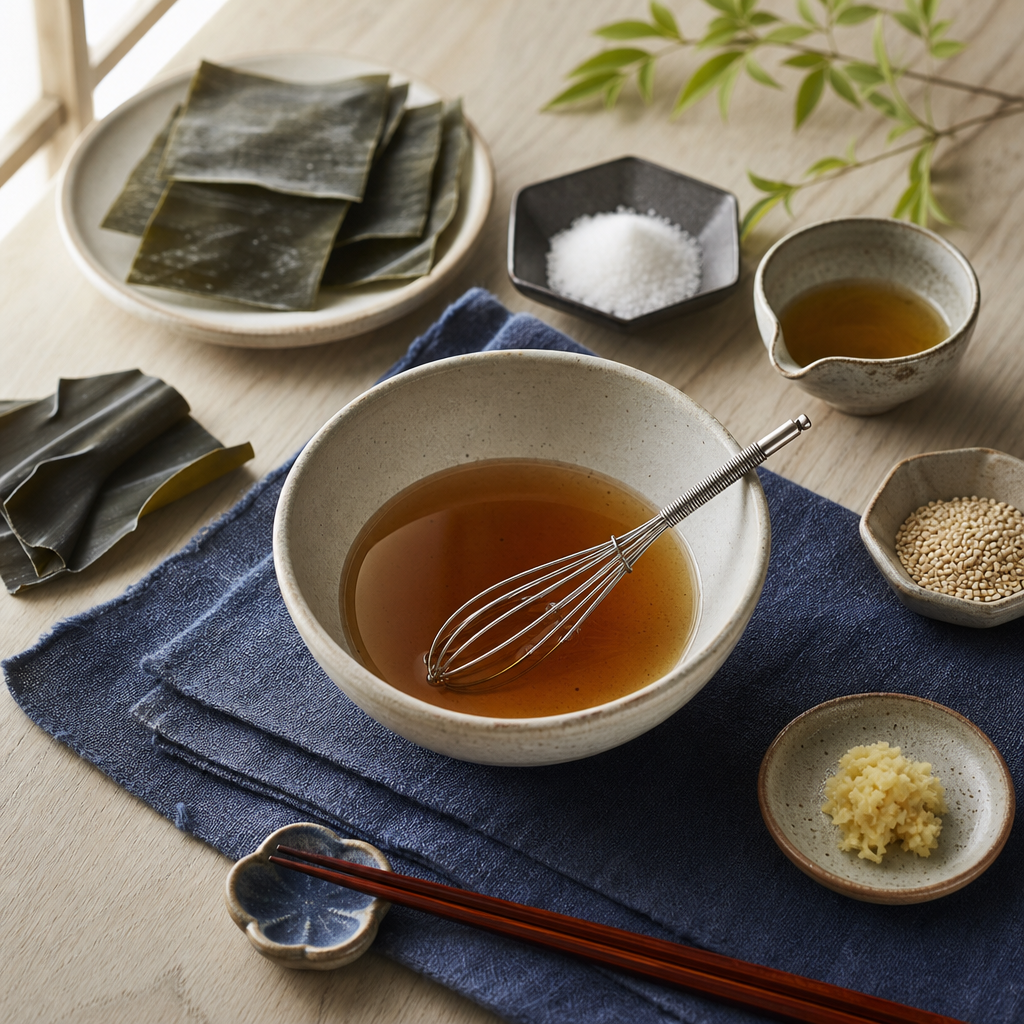
Whisk the rice vinegar, shoyu, sesame oil, sugar, and grated ginger in a mixing bowl until the sugar dissolves. Taste the dressing before adding the vegetables; it should read tart first, then salty, with sesame at the back.
Dress and rest
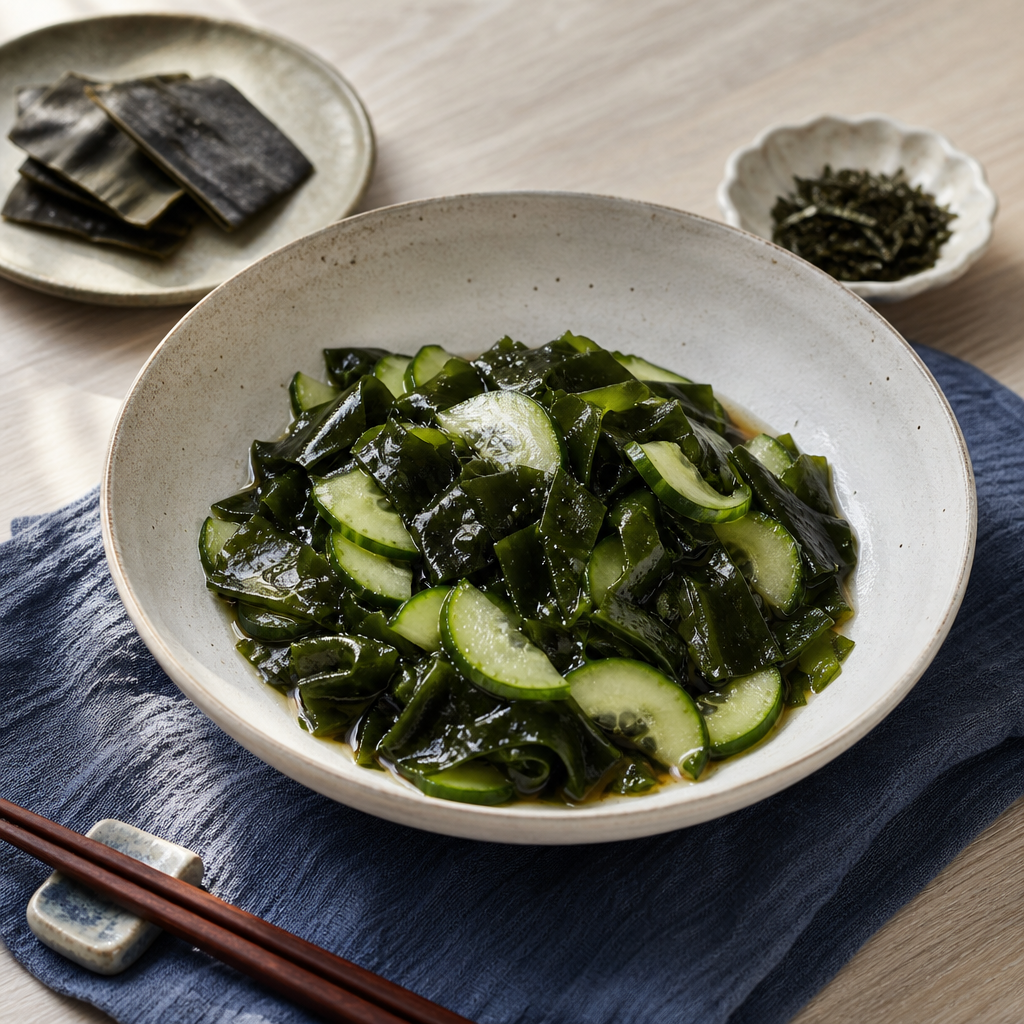
Add the squeezed wakame and cucumber to the dressing and fold until every piece is glossy. Rest 5 minutes in the refrigerator, then fold again.
Finish
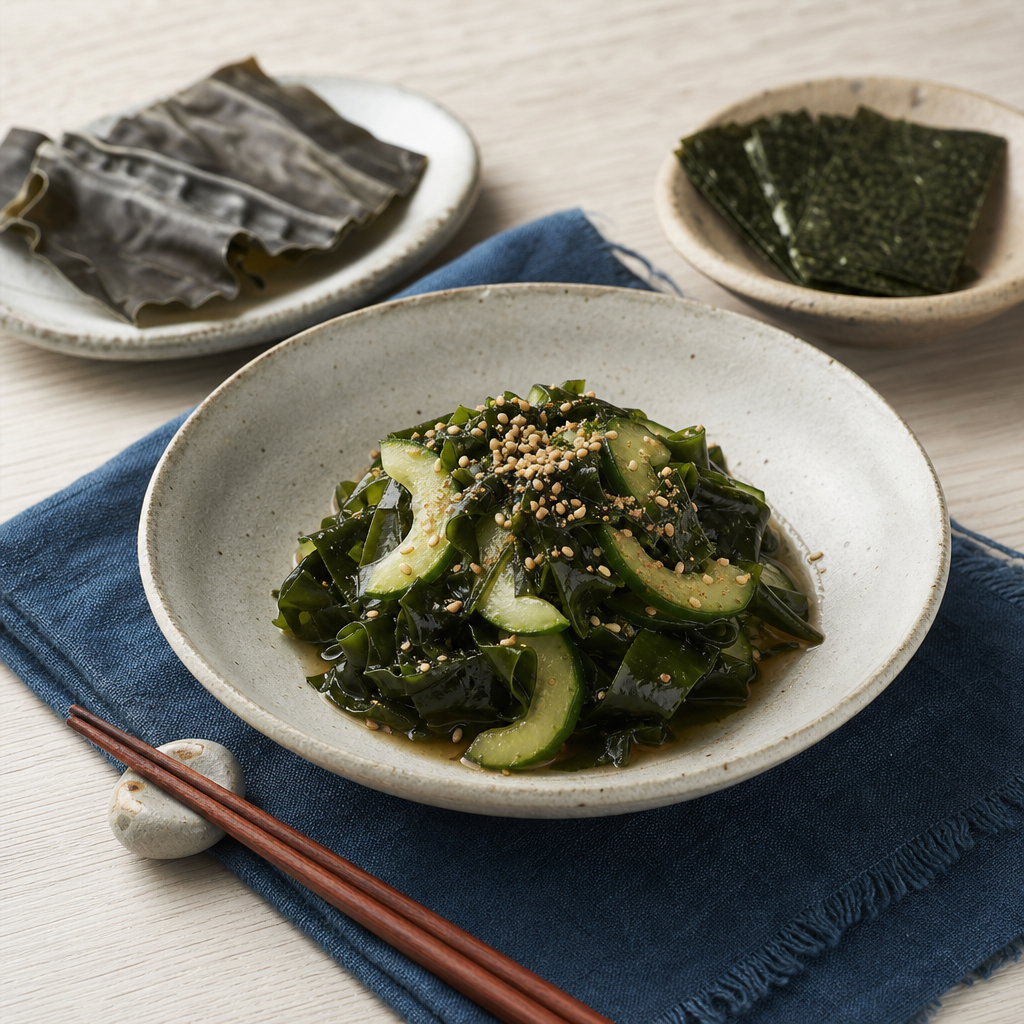
Transfer to a shallow bowl and scatter with crushed toasted sesame seeds. Add shichimi only if a small edge of heat is wanted.
Common mistakes
- {'mistake': 'Soaking wakame until it looks swollen and then leaving it in the water.', 'fix': 'Drain as soon as the pieces are pliable and glossy. Over-soaked wakame turns slack and watery.'}
- {'mistake': 'Skipping the squeeze.', 'fix': 'Squeeze both wakame and cucumber. This salad fails more often from excess water than from bad seasoning.'}
- {'mistake': 'Using seasoned sushi vinegar without adjusting.', 'fix': 'Use plain rice vinegar. If seasoned vinegar is all that is available, omit the sugar and reduce the soy sauce.'}
- {'mistake': 'Making the dressing sweet.', 'fix': 'Keep sugar restrained. The dressing should soften the vinegar, not turn into a sweet sesame sauce.'}
- {'mistake': 'Serving it straight from a deep pool of dressing.', 'fix': 'Lift the salad into the serving bowl and leave excess liquid behind. Wakame should be dressed, not submerged.'}
What does not belong
- {'item': 'Neon-green dyed seaweed mix', 'reason': 'That commercial sushi-bar salad is a different product. It does not belong in a household-style wakame salad.'}
- {'item': 'Mayonnaise', 'reason': 'Mayonnaise turns the salad into a creamy deli-style side and buries the briny wakame.'}
- {'item': 'Olive oil', 'reason': 'Olive oil reads grassy and Mediterranean. Toasted sesame oil is the correct aromatic fat here.'}
- {'item': 'Fish sauce', 'reason': 'Fish sauce pushes the seasoning away from Japanese shoyu-vinegar balance. It does not belong in this version.'}
- {'item': 'Large amounts of garlic', 'reason': 'Garlic dominates cold wakame and makes the salad taste like a different regional preparation.'}