Som Tum (Green Papaya Salad)
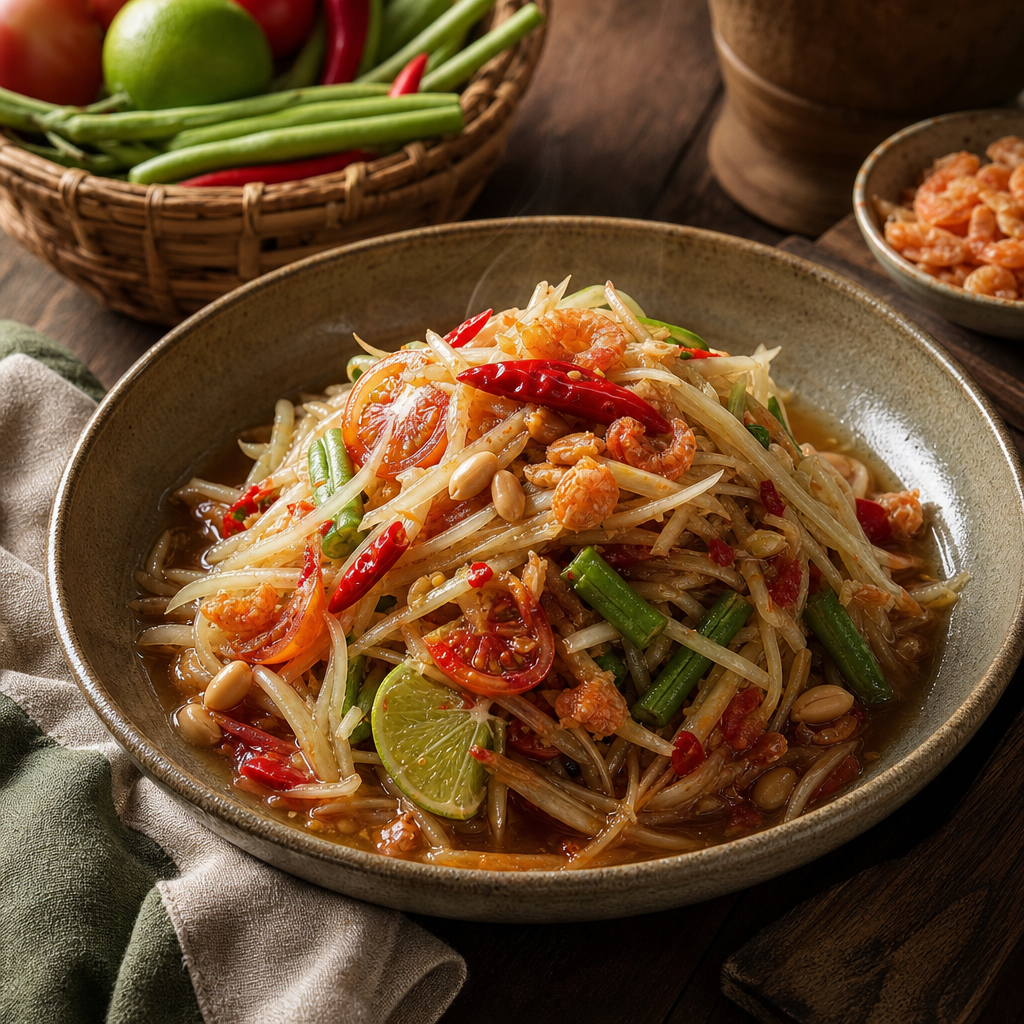
The dish in context
Som tum means a sour dish made by pounding: som (ส้ม) for sourness and tum (ตำ) for the action of the pestle. The wider family of pounded salads is strongly associated with Laos and Isan, then adapted across Thailand into regional styles. Som tum Thai is the central Thai version most familiar internationally: green papaya, lime, fish sauce, palm sugar, dried shrimp, peanuts, long beans, and tomato, with no pla ra. Its profile is more evenly sour-salty-sweet than Lao or Isan versions, but sourness remains the spine.
Method 7 steps · 25 min
Shred the papaya
Peel the green papaya, scrape out any seeds, and shred the flesh into thin, firm strands. Hold the strands in cold water for 10 minutes if the papaya feels limp, then drain hard and pat dry.
Crush the aromatics
Pound the garlic and chilies in a clay or wooden mortar until the garlic breaks into rough pieces and the chile skins split. Do not grind to a paste.
Build the dressing in the mortar
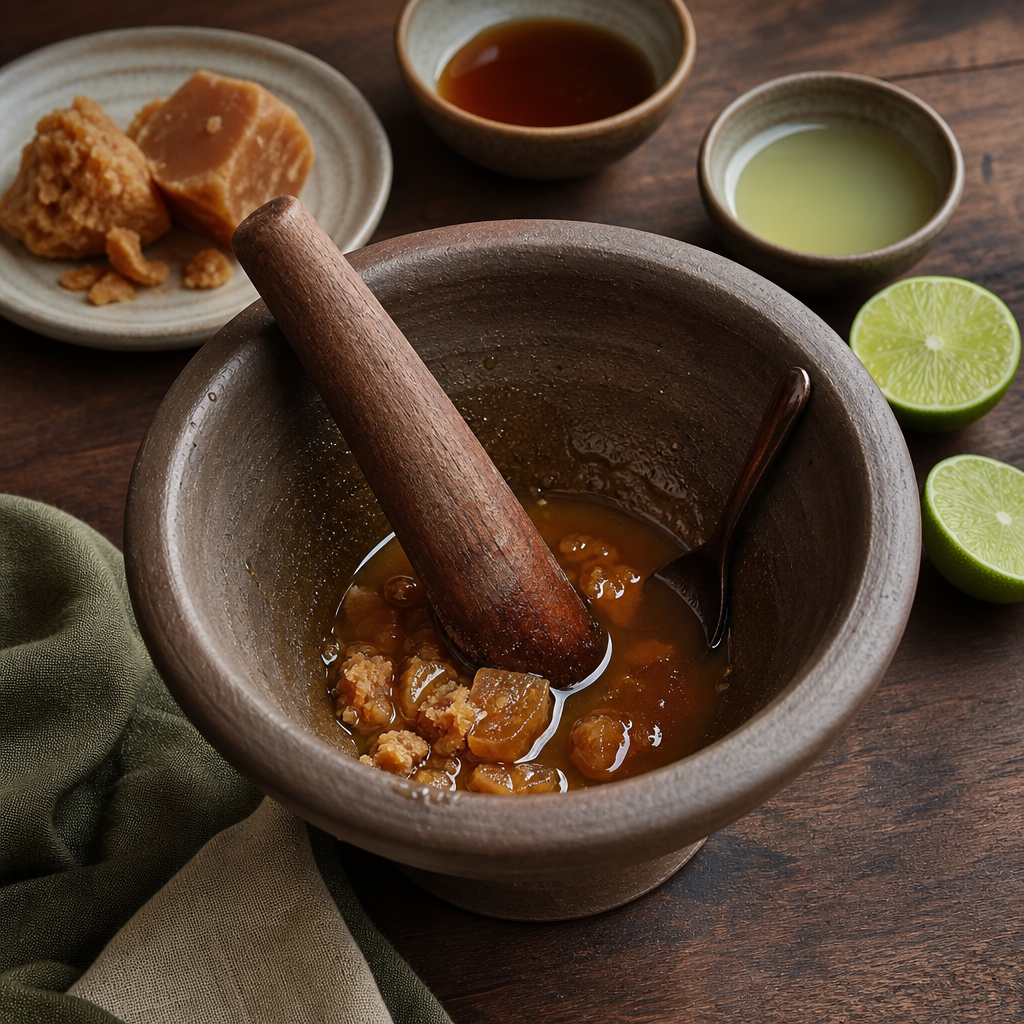
Add palm sugar, fish sauce, and lime juice. Press and stir with the pestle and a spoon until the sugar dissolves into a glossy, sharp dressing.
Bruise the beans and tomatoes
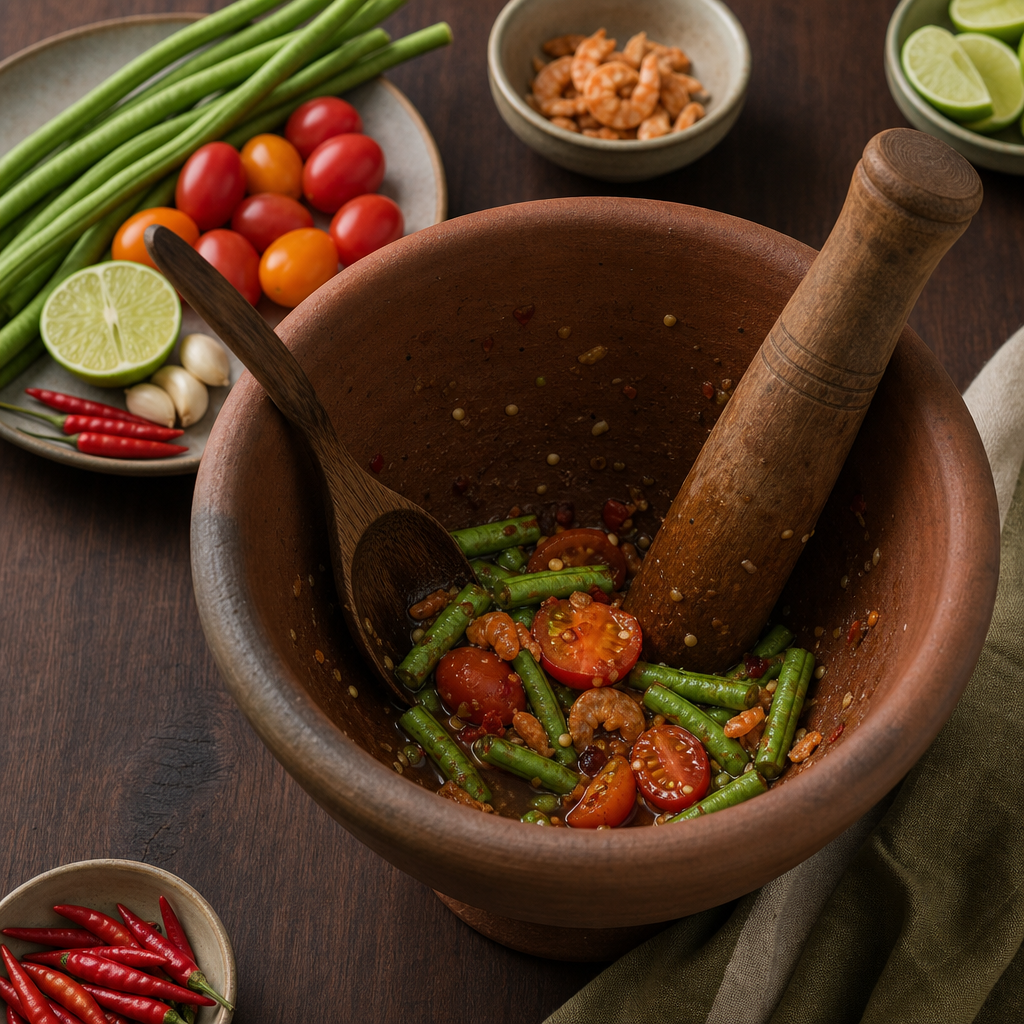
Add the dried shrimp and long beans. Pound 6-8 times, then add the tomatoes and press them until the cut sides release juice but the skins still hold shape.
Dress the papaya
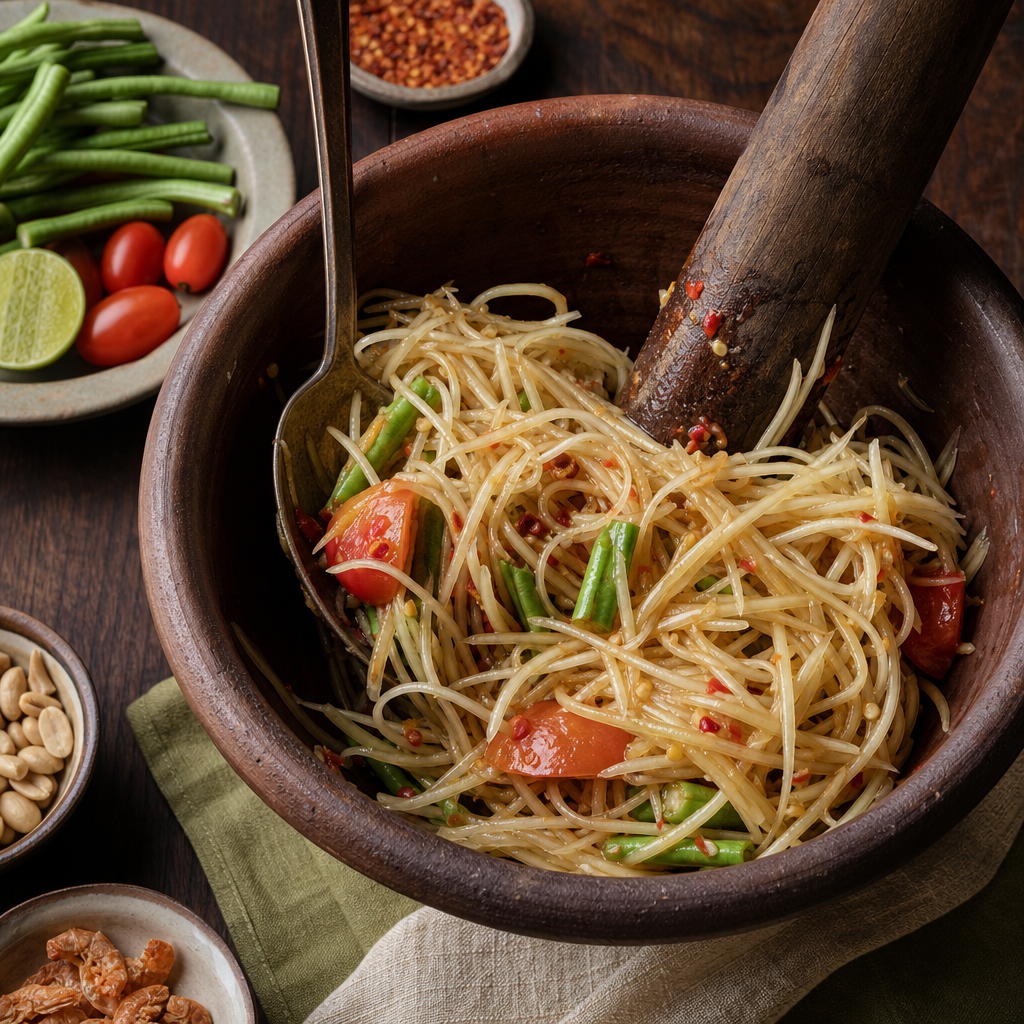
Add the drained papaya. Use the pestle to press down while lifting and turning with a spoon, working for about 45 seconds until the strands glisten and soften slightly at the edges.
Finish with peanuts
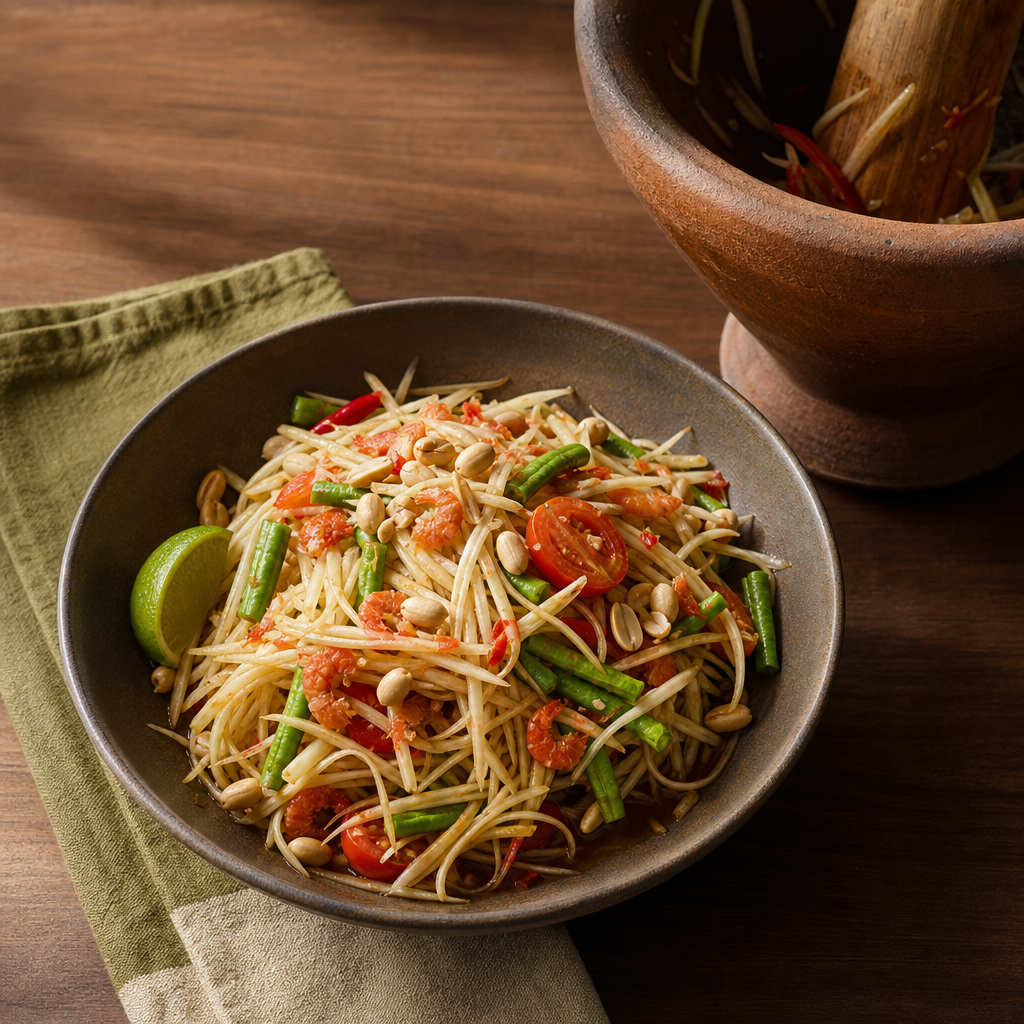
Add most of the peanuts and fold twice. Transfer to a plate with all the dressing from the mortar and scatter the remaining peanuts over the top.
Serve immediately
Serve at once, with sticky rice and grilled chicken if making a full Thai meal. If holding, keep the shredded papaya separate from the dressing and pound only before serving.
Common mistakes
- {'mistake': 'Using ripe papaya', 'fix': 'Use hard green papaya only. Orange ripe papaya turns soft and sweet, which breaks the dish.'}
- {'mistake': 'Grinding the garlic and chilies into paste', 'fix': 'Split and bruise them. Paste makes the salad harsh and cloudy.'}
- {'mistake': 'Over-pounding the papaya', 'fix': 'Press and turn rather than hammering. The finished strands should still snap lightly when bitten.'}
- {'mistake': 'Making the dressing sweet first', 'fix': 'Correct with lime and fish sauce. Som tum Thai is sweeter than pla ra versions, but it is still a sour salad.'}
- {'mistake': 'Using bottled lime juice', 'fix': 'Use fresh lime. Bottled juice tastes oxidized and dulls the whole mortar.'}
- {'mistake': 'Adding peanuts too early', 'fix': 'Fold them in at the end. Early peanuts absorb dressing and lose their roasted contrast.'}
What does not belong
- {'item': 'pla ra', 'native_name': 'ปลาร้า', 'reason': 'Pla ra belongs to som tum Lao and many Isan versions. It does not belong in som tum Thai.'}
- {'item': 'salted crab', 'native_name': 'ปูเค็ม', 'reason': 'Salted crab changes the dish into another regional branch. It is not part of the central Thai standard here.'}
- {'item': 'coconut milk', 'native_name': 'กะทิ', 'reason': 'Coconut milk does not belong in som tum. It dulls the lime and turns a pounded salad into a sweet dressing problem.'}
- {'item': 'sesame oil', 'native_name': None, 'reason': 'Sesame oil is a loud foreign aroma in this dish. It covers the lime, fish sauce, and dried shrimp.'}
- {'item': 'soy sauce as the main seasoning', 'native_name': 'ซีอิ๊ว', 'reason': 'Soy sauce makes the salad brown and beany. Fish sauce is the salinity structure for som tum Thai.'}
- {'item': 'lemon juice', 'native_name': None, 'reason': "Lemon juice does not belong. Its acid profile is flatter and lacks lime's floral bitterness."}
- {'item': 'ripe papaya', 'native_name': 'มะละกอสุก', 'reason': "Ripe papaya turns the dish soft and perfumed. Som tum Thai needs unripe papaya's dry crunch."}