Japanese Cucumber Salad
The dish in context
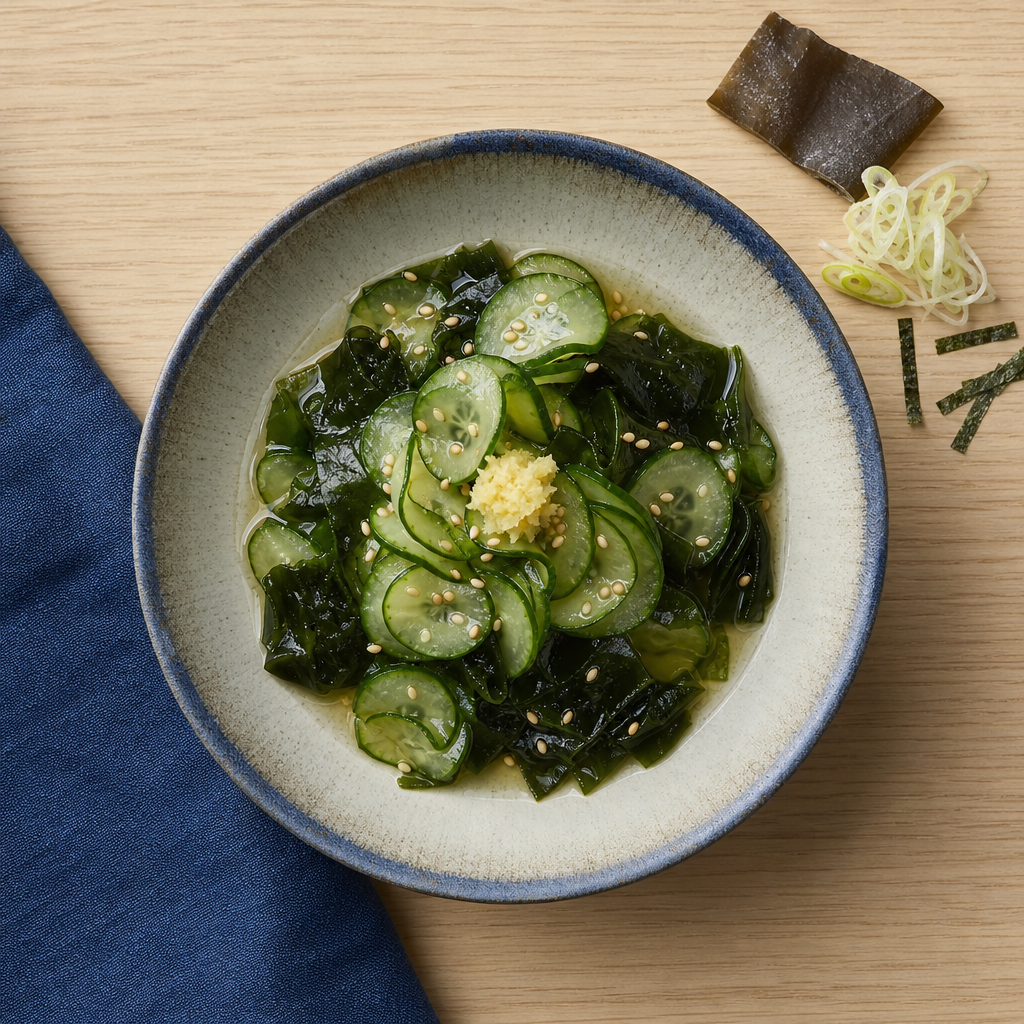
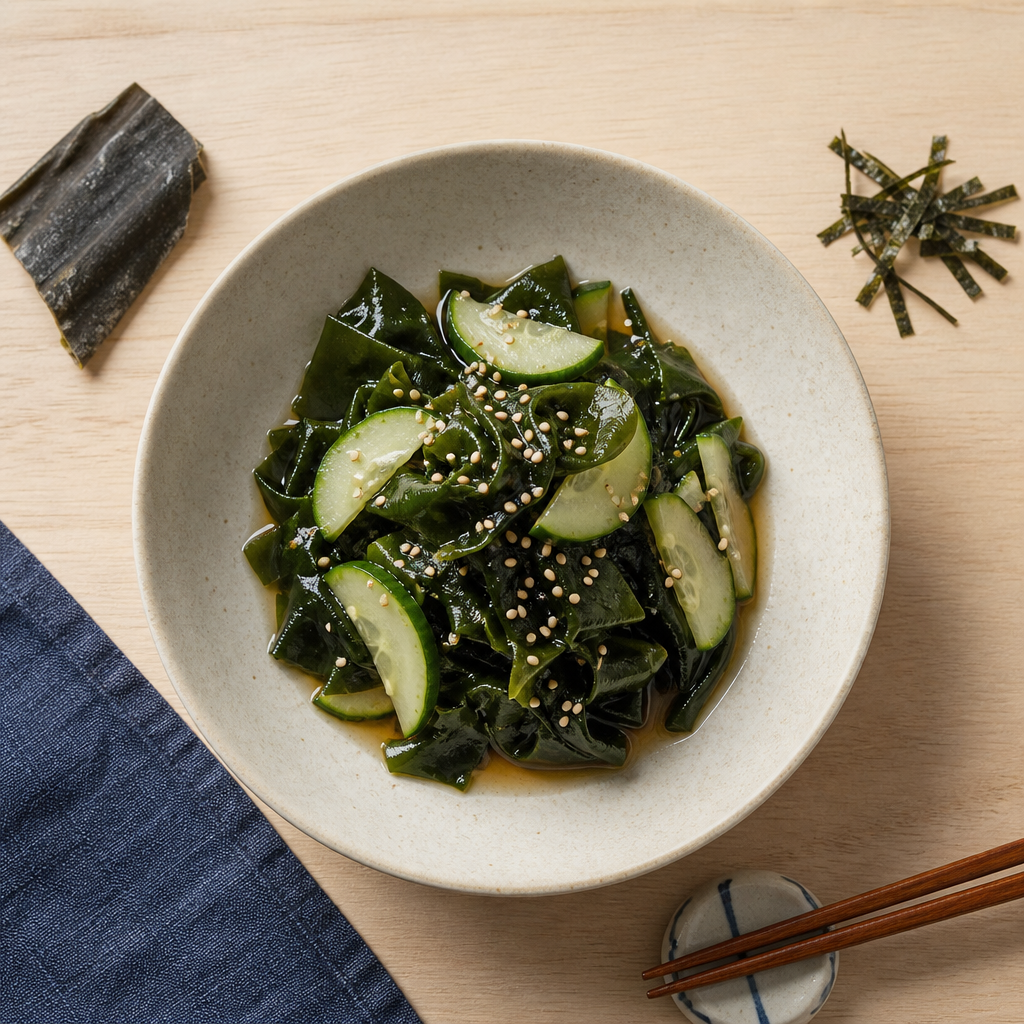
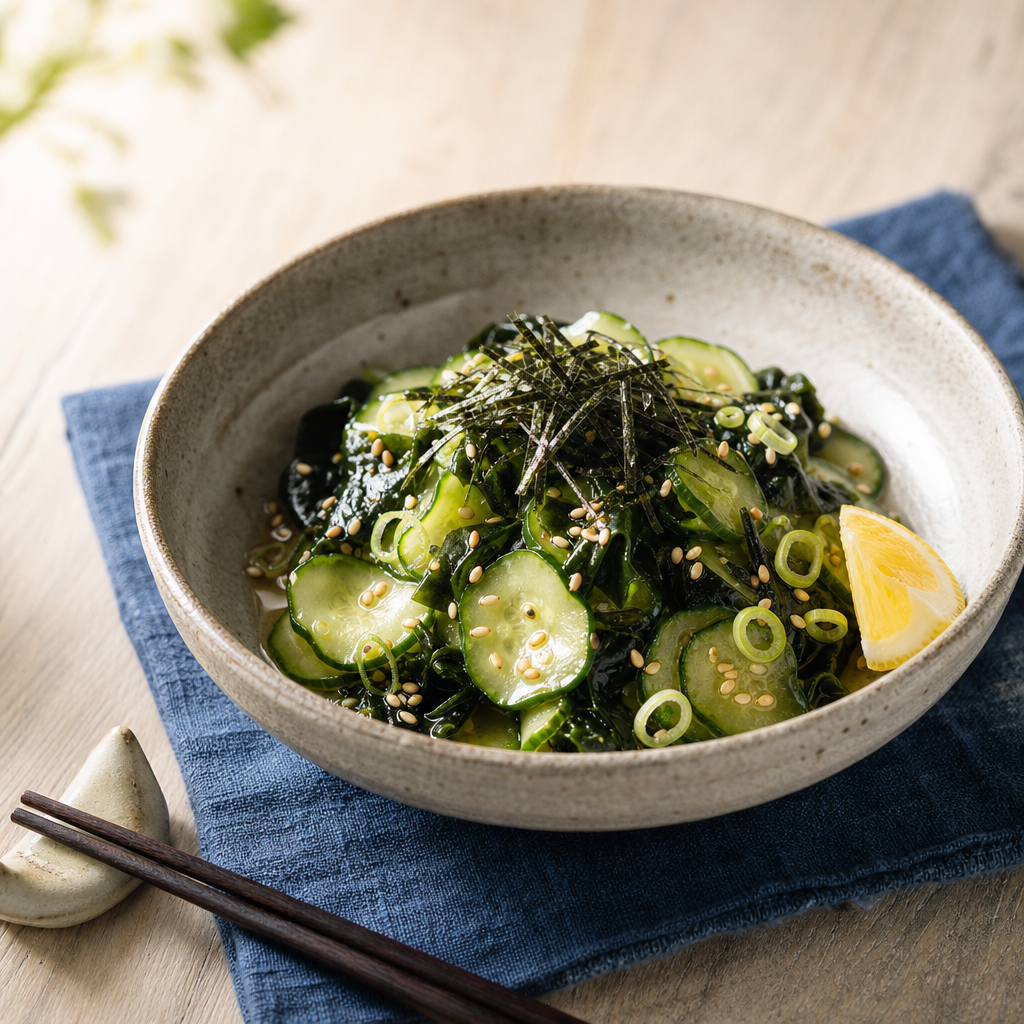
Sunomono (酢の物) means vinegared dish, a broad Japanese category rather than one fixed salad. Cucumber-and-wakame sunomono is a household-standard version: thin cucumber, salted and squeezed, then dressed with a restrained sweet-sour vinegar seasoning. Seafood additions such as boiled octopus, crab stick, shirasu, or mozuku are common variants, but the core technique stays the same. The dish is served cold or cool as a small side, often to cut through grilled fish, fried foods, or rice-heavy meals.
Method 6 steps · 25 min
Slice and salt the cucumber
Slice the cucumbers into 2 mm rounds. Toss with the salt and leave for 10 minutes, until the slices bend without snapping and a shallow pool of liquid collects in the bowl.
Soak the wakame
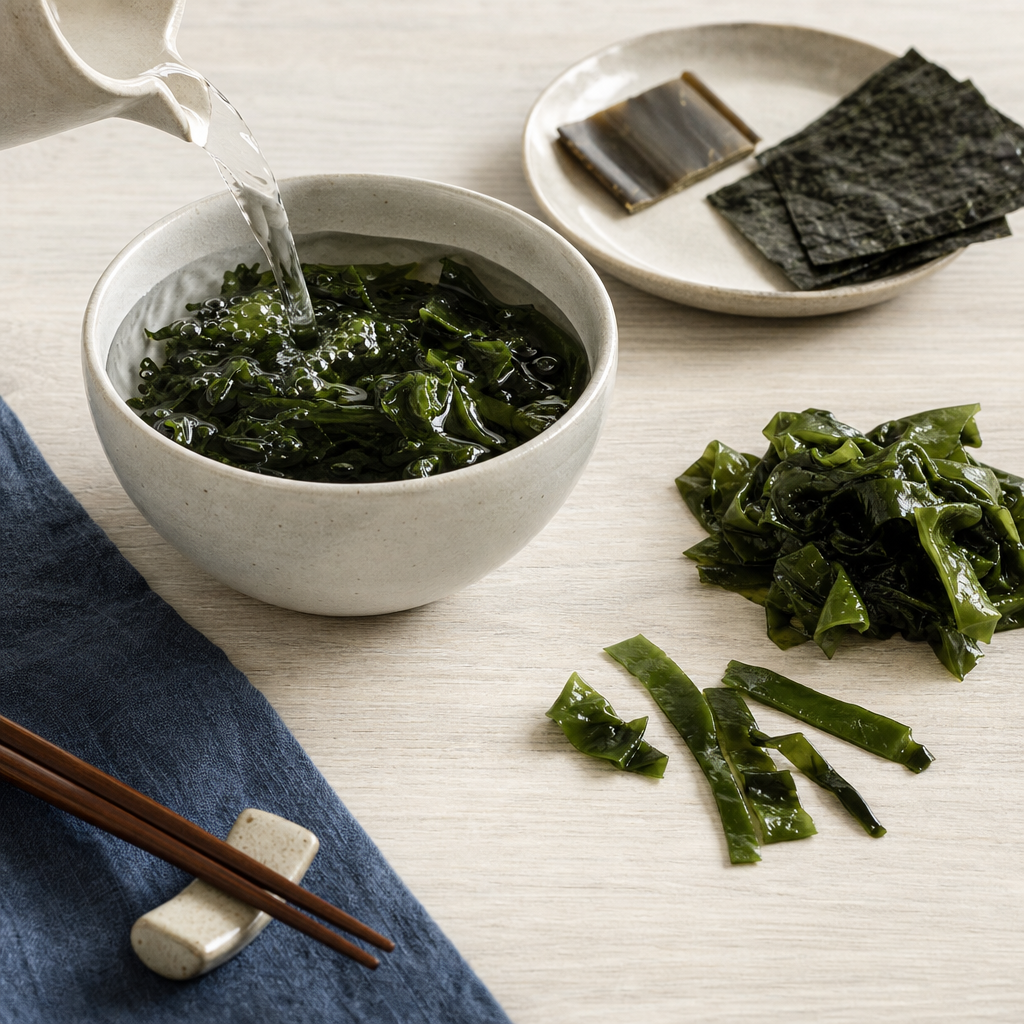
Cover the dried wakame with cold water for 5 minutes, until expanded and soft. Drain, squeeze lightly, and cut any long pieces into bite-size lengths.
Dissolve the dressing
Combine rice vinegar, sugar, shoyu, and mirin in a small saucepan. Warm over low heat for 30 to 45 seconds, stirring until the sugar dissolves; do not boil. Cool to room temperature, then stir in the grated ginger if using.
Squeeze the cucumber
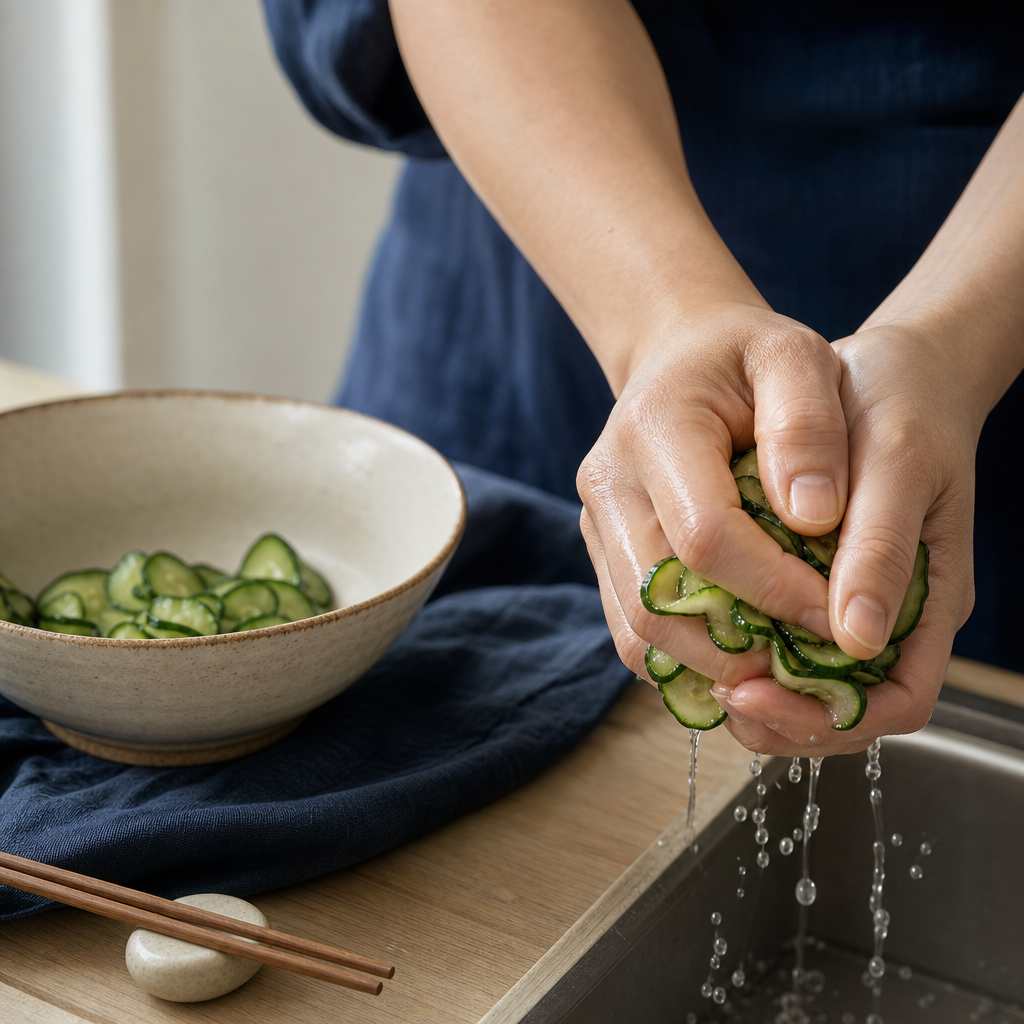
Gather the salted cucumber in both hands and squeeze firmly over the sink. The slices should look glossy and slightly translucent, not crushed.
Dress and rest briefly
Combine the squeezed cucumber and drained wakame in a bowl. Add the cooled dressing and toss, then rest for 5 minutes before serving.
Finish
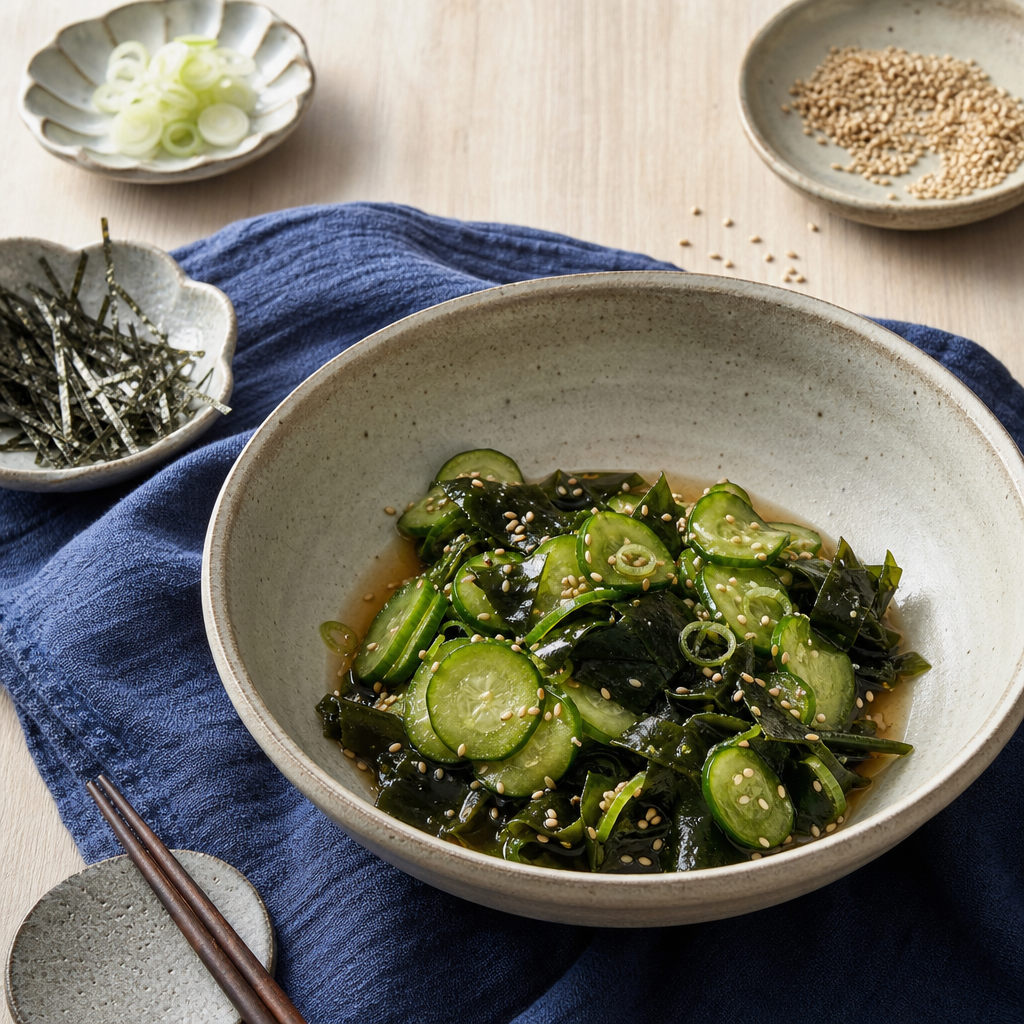
Transfer to small bowls with a spoonful of dressing at the bottom. Scatter toasted sesame seeds over the top.
Common mistakes
- {'mistake': 'Skipping the salt step.', 'fix': 'Salt for the full 10 minutes and squeeze firmly. Raw cucumber releases water into the dressing and thins the whole dish.'}
- {'mistake': 'Using seasoned sushi vinegar without adjusting.', 'fix': 'Use unseasoned rice vinegar. Seasoned sushi vinegar already contains sugar and salt, which pushes this salad sweet and muddy.'}
- {'mistake': 'Boiling the dressing hard.', 'fix': 'Warm only until the sugar dissolves. A hard boil strips the clean vinegar aroma and concentrates salt.'}
- {'mistake': 'Leaving rehydrated wakame wet.', 'fix': 'Drain and squeeze it lightly. Water trapped in wakame dilutes the dressing as fast as unsqueezed cucumber does.'}
- {'mistake': 'Cutting thick cucumber slices.', 'fix': 'Aim for 2 mm. Thick slices stay raw in the center and resist the vinegar.'}
What does not belong
- {'item': 'olive oil', 'reason': 'Oil does not belong in classic cucumber sunomono. This is a vinegar-dressed side, not a Western vinaigrette salad.'}
- {'item': 'mayonnaise', 'reason': 'Mayonnaise turns the dish into a different cucumber salad. Sunomono should stay sharp, light, and clear.'}
- {'item': 'sesame oil', 'reason': 'Sesame oil reads Chinese- or Korean-style here and covers the rice vinegar. Toasted sesame seeds are enough.'}
- {'item': 'Chinese soy sauce as a direct swap', 'reason': 'Chinese light and dark soy sauces have different salt, color, and aroma profiles. Use Japanese koikuchi shoyu or adjust with caution.'}
- {'item': 'large amounts of raw garlic', 'reason': 'Garlic dominates the narrow vinegar-cucumber profile. It does not belong in household-standard kyūri no sunomono.'}
Adaptations
The base recipe is vegan if the shoyu and mirin brands contain no animal-derived additives. Avoid bonito-based dashi additions sometimes used in other sunomono dressings.
Replace hon mirin with 15 ml water plus 4 g sugar, or use a certified alcohol-free mirin-style seasoning. Check soy sauce certification if strict halal compliance is required.
Use gluten-free tamari in place of koikuchi shoyu. Confirm that rice vinegar and mirin are gluten-free by label.
No dairy is used.
The base recipe contains no shellfish. Do not add octopus, crab stick, shrimp, or shirasu if avoiding seafood cross-contact.