Panzanella
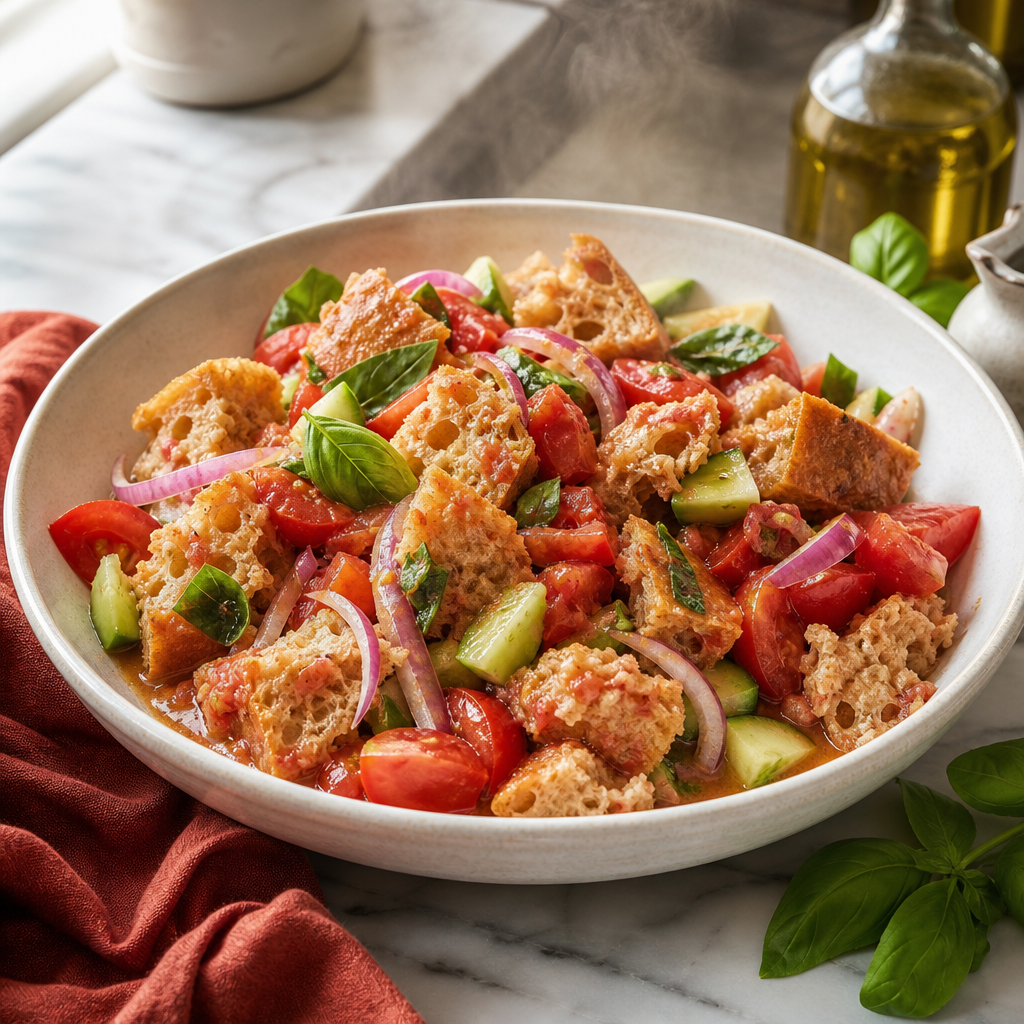
The dish in context
Panzanella is a central Italian bread salad associated most strongly with Tuscany and Umbria, built around stale bread before it was built around tomatoes. Early references describe bread, onion, cucumber, oil, and vinegar; tomatoes entered the dish after their adoption in Italian cooking and became dominant only much later. Tuscan pane sciocco, the region’s unsalted country bread, matters because it takes seasoning from tomato juice, vinegar, salt, and oil without becoming salty or heavy. Modern versions often add olives, mozzarella, tuna, peppers, or grilled vegetables; those are variations, not the lean Tuscan grammar.
Method 7 steps · 60 min
Dry the bread
Heat the oven to 150°C / 300°F. Spread the torn bread on a tray and dry it for 15-20 minutes, turning once, until the outside feels firm and leathery but the pieces are not browned. Cool while the tomatoes drain.
Salt the tomatoes
Put the cut tomatoes in a colander set over a large bowl. Toss with 8 g fine sea salt and let stand 20 minutes, pressing once or twice with a spoon to release juice without crushing the tomatoes into pulp.
Tame the onion
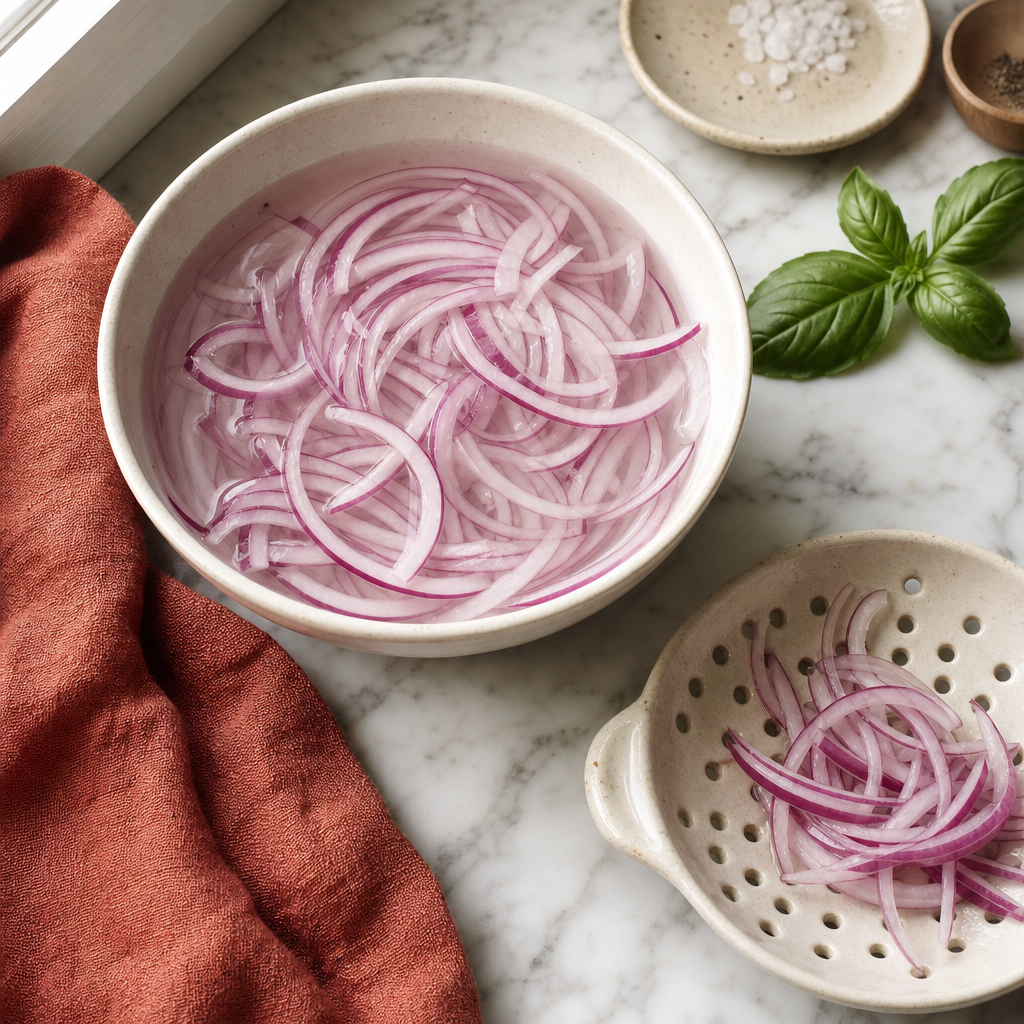
Soak the sliced red onion in cold water for 10 minutes, then drain and shake dry. Keep the slices thin enough to bend rather than snap.
Build the dressing
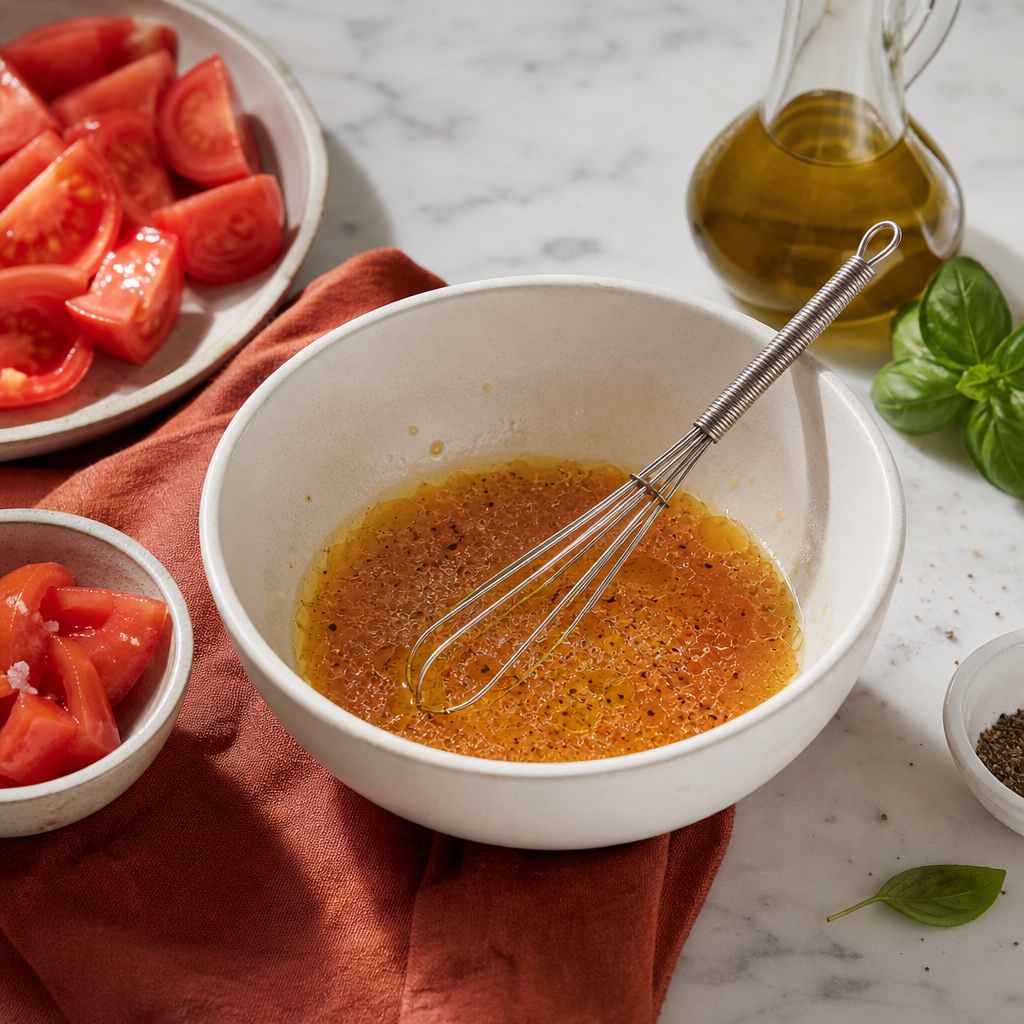
Whisk the red wine vinegar into the collected tomato juice. Whisk in the olive oil and black pepper until the surface looks glossy and broken into small droplets. Taste the liquid; it should be salty, tart, and tomato-forward because the bread will mute it.
Soak the bread with control
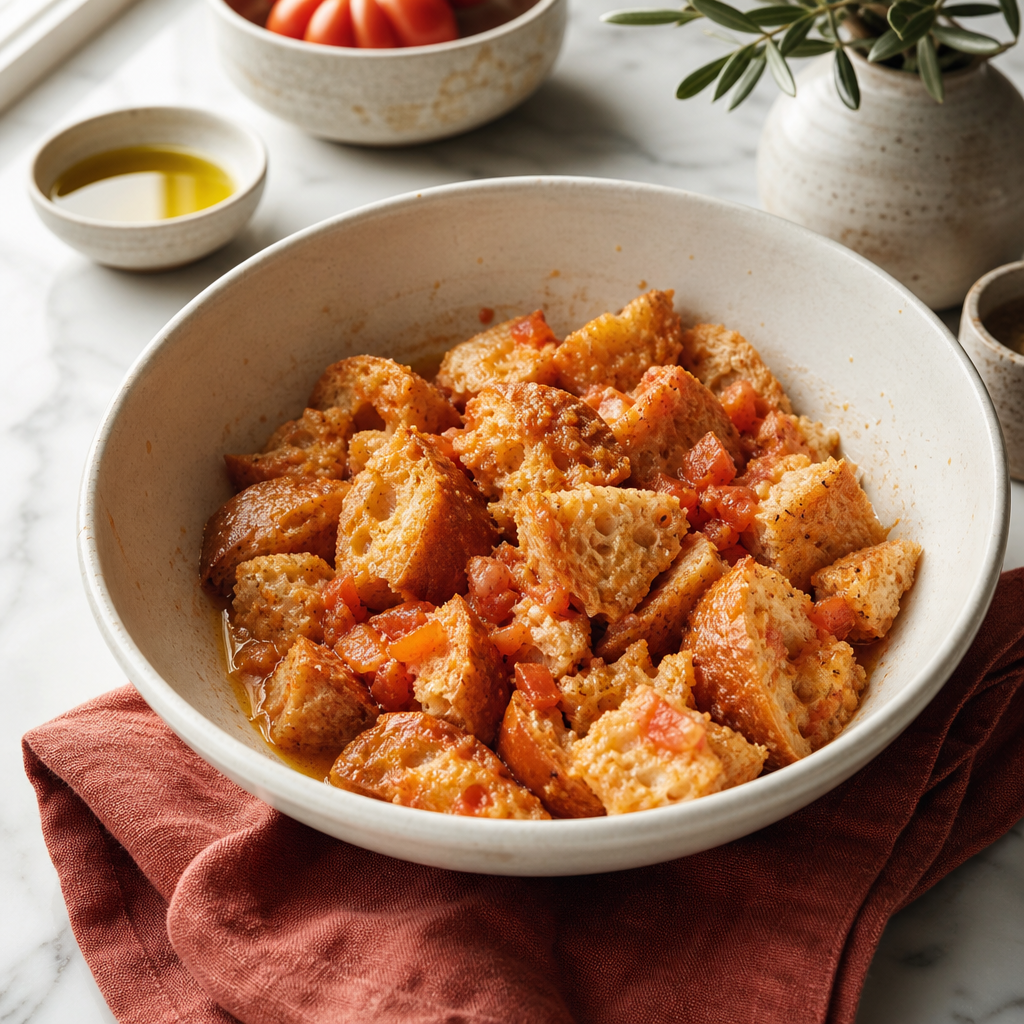
Add the dried bread to the dressing and toss until every piece is moistened. Let stand 10 minutes, then fold again; the bread should bend and chew, not dissolve.
Fold the salad
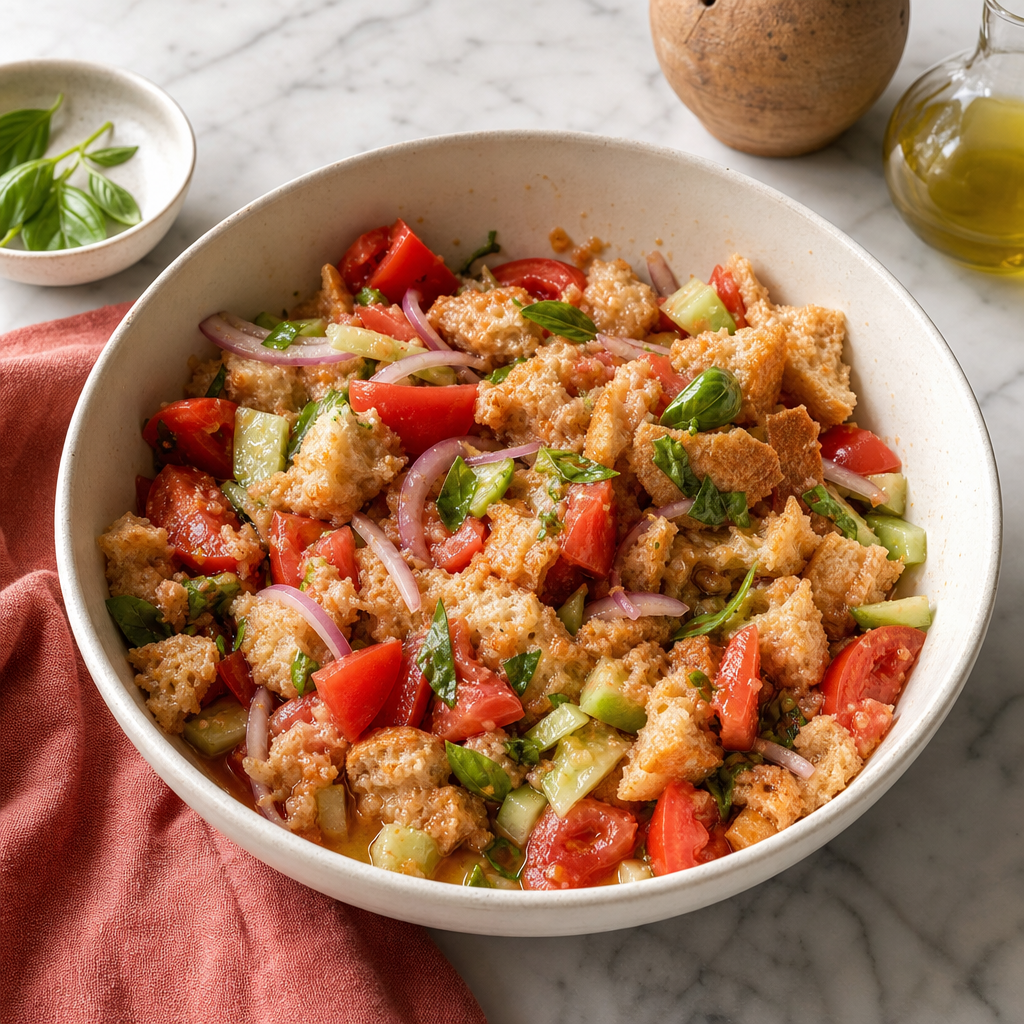
Add the drained tomatoes, onion, cucumber, and torn basil. Fold with broad strokes until the vegetables are distributed without smashing the tomatoes. Rest 15-20 minutes at room temperature before serving.
Correct and serve
Taste after resting. Add the final 2 g salt only if the bread still tastes underseasoned, then add a thin thread of olive oil over the top. Serve in a shallow bowl while the bread is saturated but still textured.
Common mistakes
- {'mistake': 'Using fresh soft bread.', 'fix': 'Dry it first or wait until it is stale. Soft bread becomes paste before it becomes salad.'}
- {'mistake': 'Treating the bread as garnish.', 'fix': 'Make bread the bulk of the dish. Panzanella is a bread salad flavored by vegetables.'}
- {'mistake': 'Skipping the tomato salting step.', 'fix': 'Salt and drain the tomatoes so their juice becomes the dressing instead of leaking out late.'}
- {'mistake': 'Serving it straight from the refrigerator.', 'fix': 'Serve at room temperature. Cold tomato tastes muted and the olive oil loses its flow.'}
- {'mistake': 'Using dry croutons.', 'fix': 'Dry the bread without frying it hard. The final texture should be soaked-chewy, not crunchy.'}
What does not belong
- {'item': 'Balsamic vinegar', 'reason': 'Balsamic does not belong in Tuscan panzanella. Its sweetness and syrupy body cover the tomato juice instead of sharpening it.'}
- {'item': 'Mozzarella', 'reason': 'Mozzarella makes a tomato-bread Caprese hybrid. It is a modern variation, not the Tuscan base recipe.'}
- {'item': 'Lettuce', 'reason': 'Lettuce turns the dish into a green salad with bread. Panzanella does not need leaves for volume.'}
- {'item': 'Soft sandwich bread', 'reason': 'It has the wrong crumb structure and collapses into paste. Use a crusty country loaf.'}
- {'item': 'Garlic-heavy dressing', 'reason': 'Garlic is not the spine of this dish. Tomato juice, vinegar, olive oil, onion, cucumber, basil, and bread are.'}
- {'item': 'Tuna, peppers, olives, or capers in the base recipe', 'reason': 'These can make legitimate house variations, but they pull the salad away from the lean Tuscan structure.'}
Adaptations
The base recipe contains no animal products.
The base recipe contains no alcohol as an ingredient beyond vinegar and no meat. Use vinegar acceptable to the diner’s standard.
Use a crusty gluten-free country-style loaf and dry it thoroughly. Soft gluten-free sandwich bread turns pasty faster than wheat bread.
Dairy does not belong in the base recipe.
The base recipe contains no shellfish.