Sunomono
The dish in context
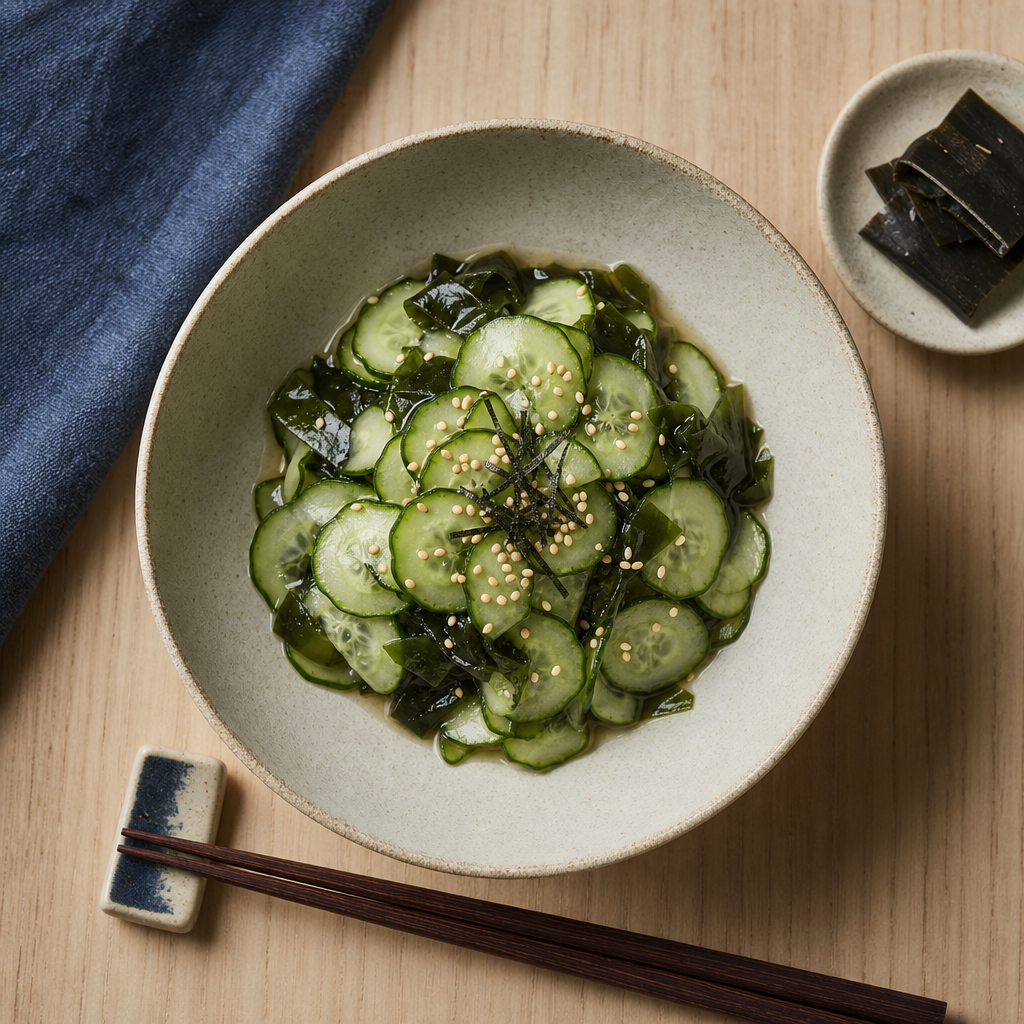
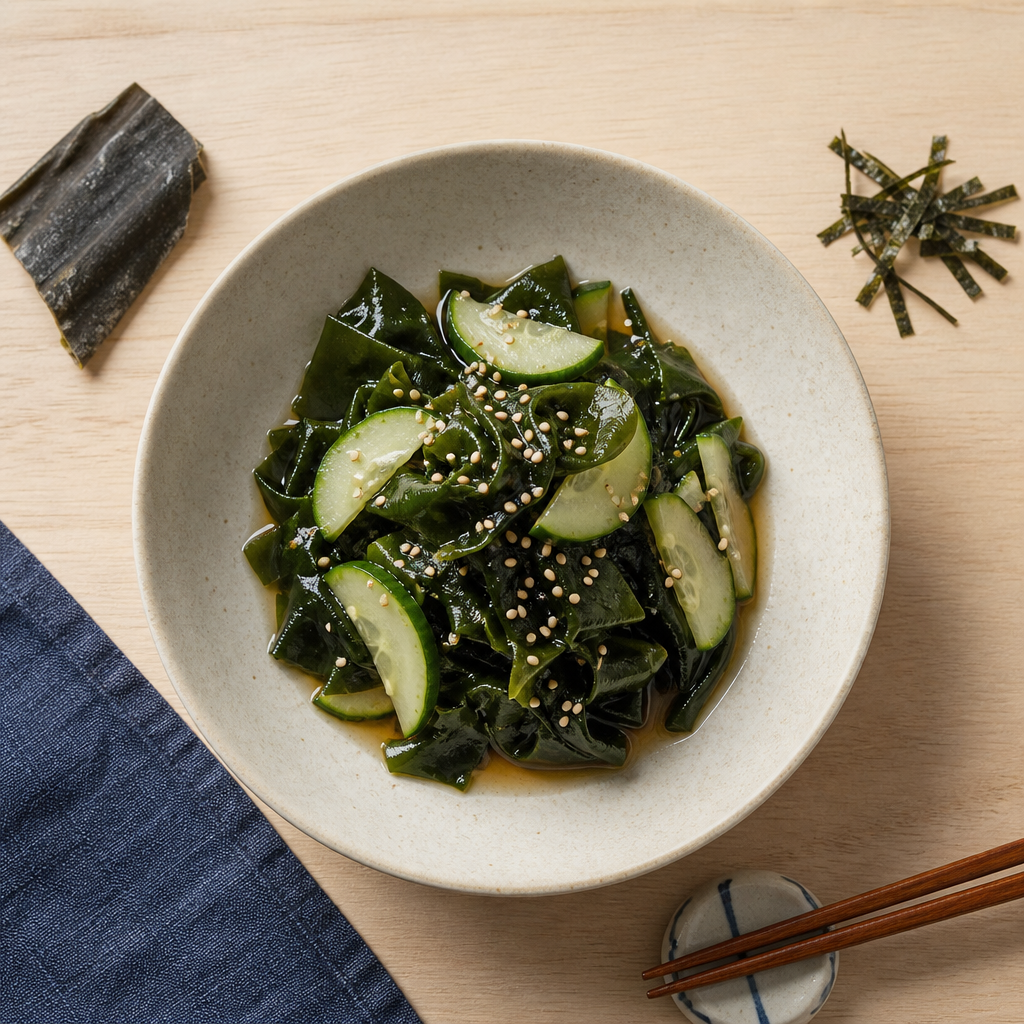
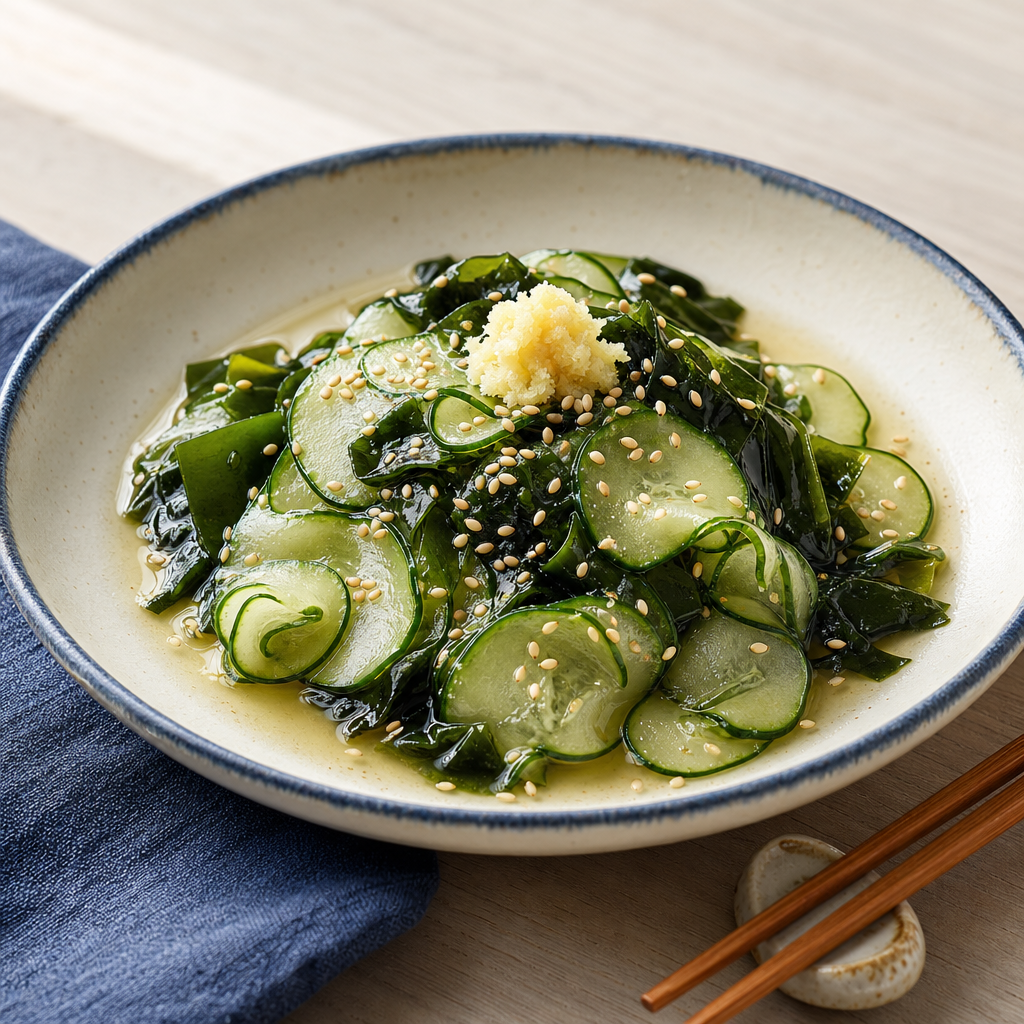
Sunomono (酢の物) means vinegared things, not one fixed salad. In Japanese meals it functions as a small acid course: a palate-clearing side beside rice, soup, grilled fish, simmered dishes, or richer fried foods. Cucumber-and-wakame sunomono is the common household form abroad, but the category also includes crab, octopus, shrimp, mountain vegetables, and seasonal greens. Japanese culinary sources distinguish the dressing by ratio and seasoning: amazu is sweet vinegar, nihaizu is vinegar and soy, and sanbaizu adds sweetness to the vinegar-soy frame. This version uses rice vinegar, sugar, salt, and a controlled amount of soy so the cucumber stays green rather than stained brown.
Method 6 steps · 25 min
Salt the cucumber
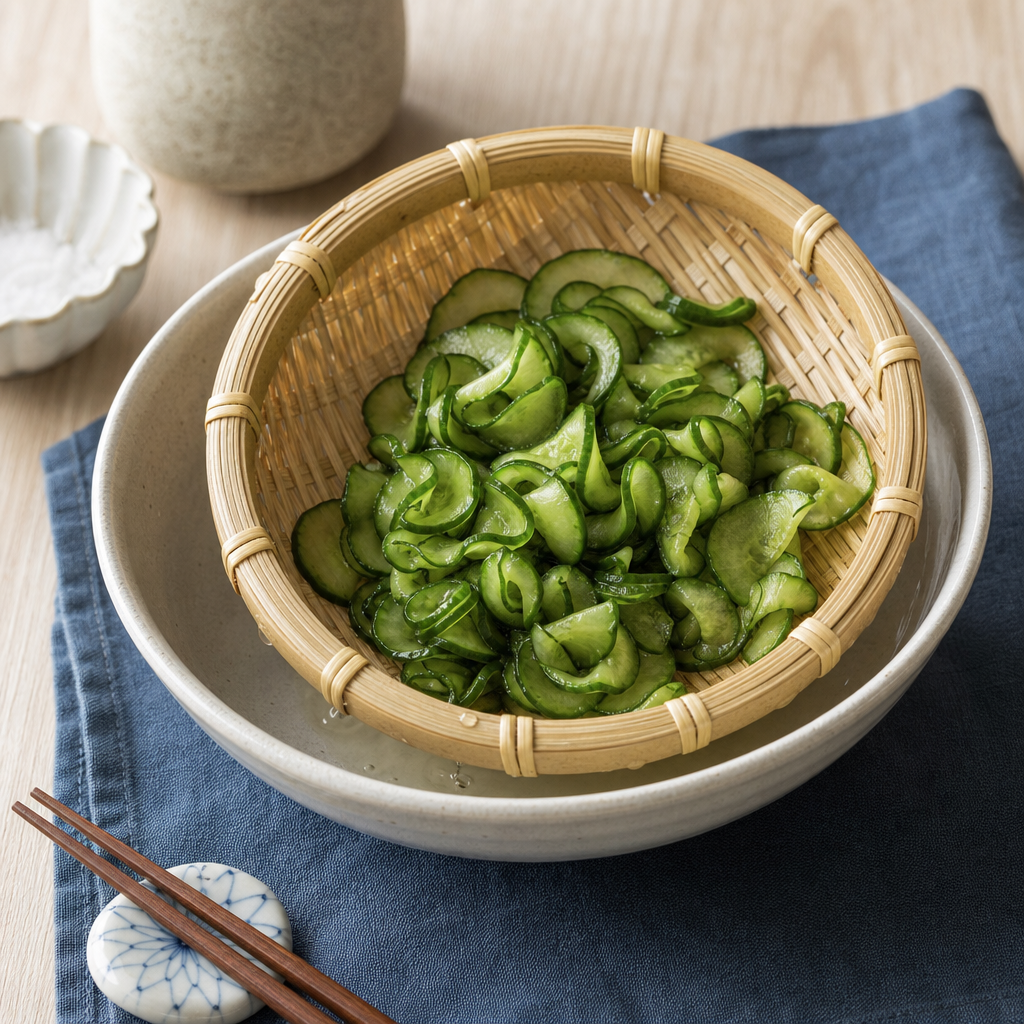
Toss the sliced cucumber with 4 g salt. Set aside until the slices bend without snapping and a visible pool of liquid collects in the bowl, 10 minutes.
Rehydrate the wakame
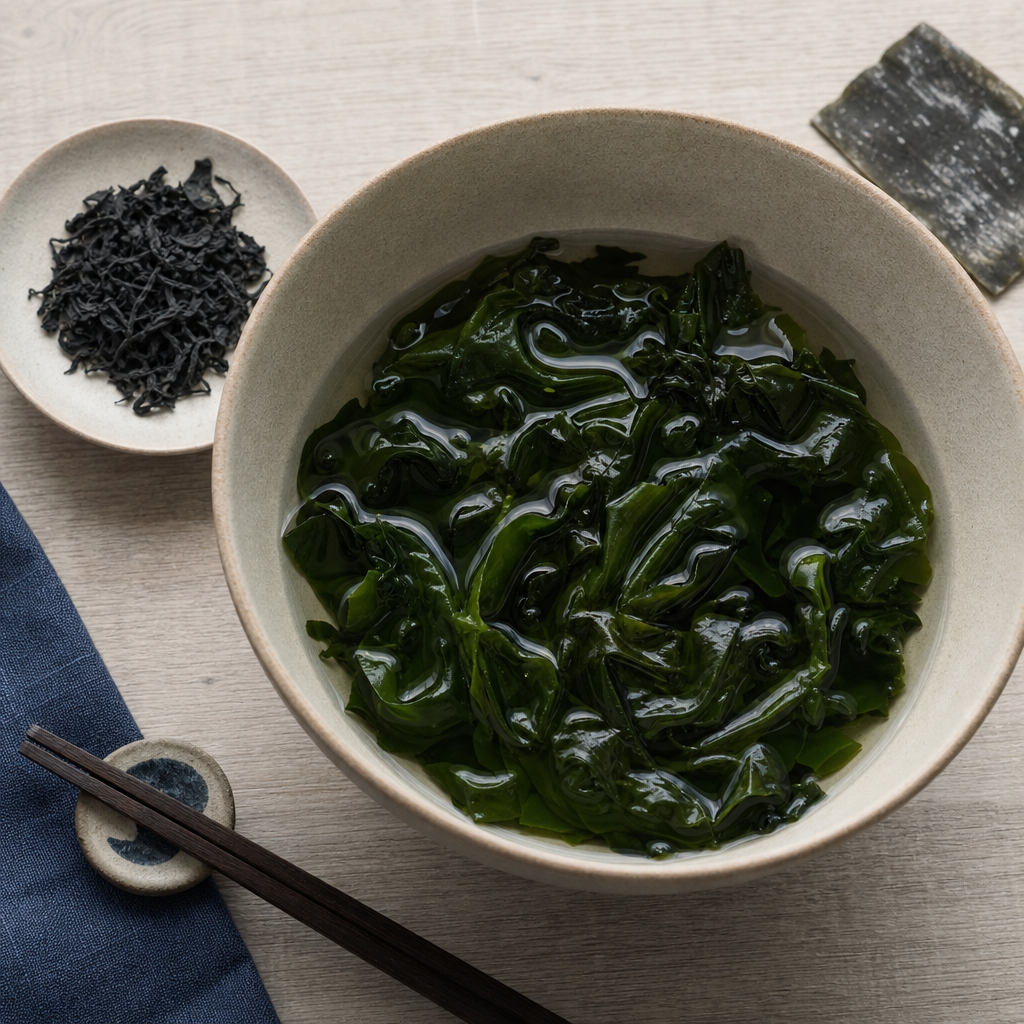
Cover the dried wakame with cold water and soak until fully expanded, 5 minutes. Drain, squeeze firmly, and cut any long pieces into bite-size lengths.
Mix the vinegar dressing
Stir the rice vinegar, sugar, 1 g salt, and shoyu until the sugar dissolves completely. The dressing should look clear, not gritty at the bottom.
Squeeze the cucumber
Rinse the salted cucumber briefly under cold water, then squeeze it hard in small handfuls. Stop when the slices are flexible, glossy, and no longer dripping.
Dress and rest
Combine the cucumber, wakame, and dressing. Rest 5 minutes in the refrigerator, then toss once more.
Finish
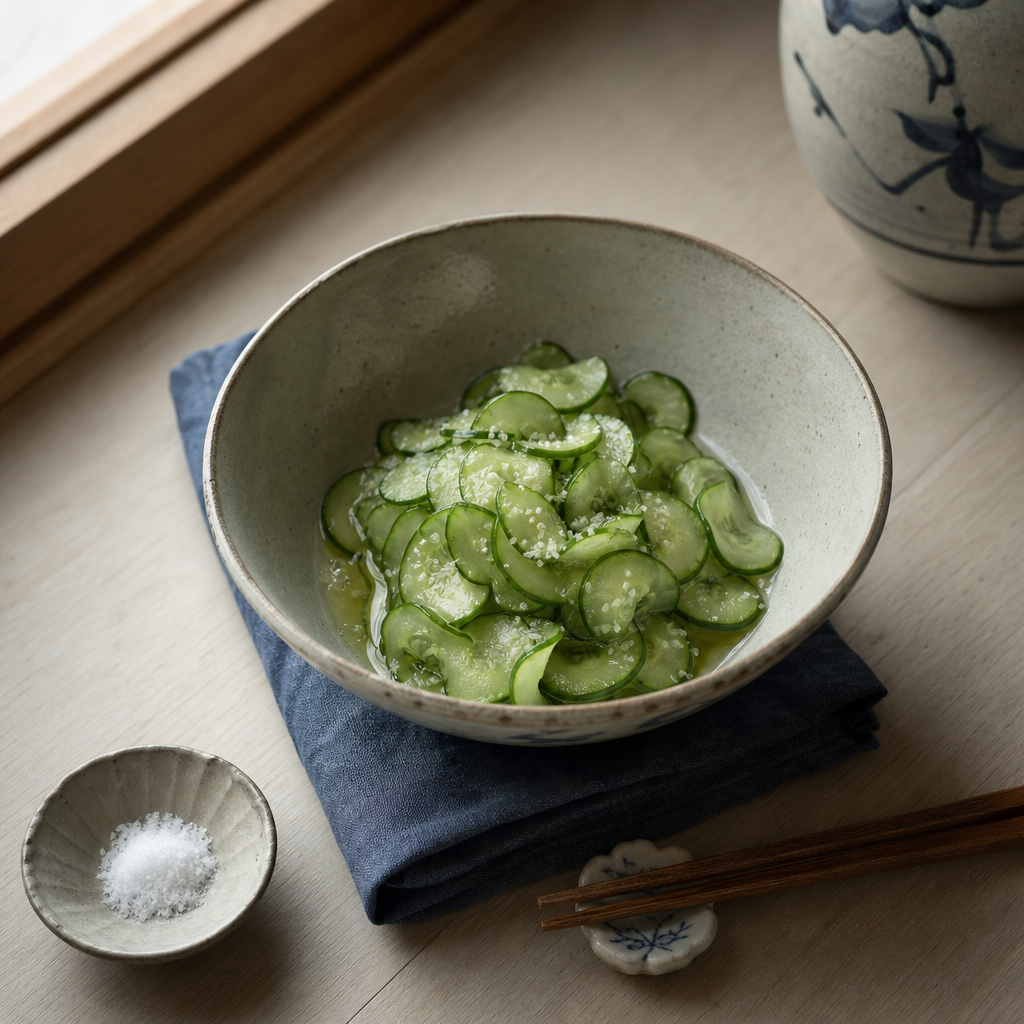
Transfer to small bowls with a spoonful of dressing at the bottom. Scatter sesame seeds over the top and add grated ginger if using.
Common mistakes
- Skipping the salting step. Raw cucumber releases water into the bowl and flattens the vinegar.
- Using seasoned sushi vinegar without adjusting sugar and salt. It makes the dressing heavy and often too sweet.
- Adding too much soy sauce. Sunomono should stay pale and sharp, not brown and soy-forward.
- Soaking wakame in hot water. It softens too far and loses its clean snap.
- Dressing hours ahead. The dish remains edible, but the cucumber turns dull and limp.
What does not belong
- Sesame oil does not belong in this standard cucumber-wakame sunomono; it turns the dish toward a different dressed salad.
- Mayonnaise does not belong. Creamy dressing blocks the clean vinegar profile.
- Garlic does not belong. It overwhelms the small acid course.
- Lemon juice does not replace rice vinegar. The acid profile is sharper and fruitier, and the dish stops reading as sunomono.
- Large amounts of soy sauce do not belong. Soy is a seasoning mark here, not the base.