Agedashi Tofu
The dish in context
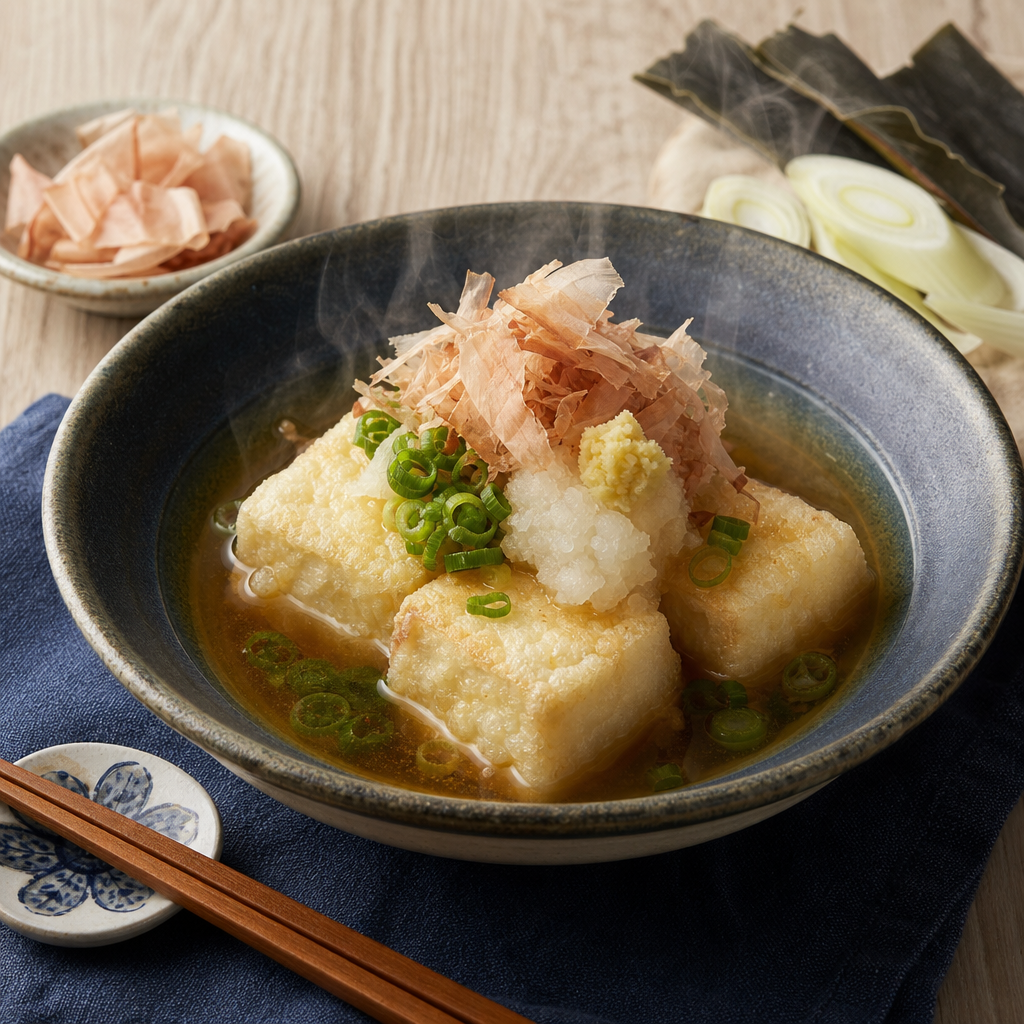
Agedashi dōfu (揚げ出し豆腐) belongs to the Japanese family of age-dashi preparations: fried food served with dashi-based broth rather than a heavy sauce. It appears in home cooking, cafeteria meals, izakaya menus, and set meals, often as a small dish alongside rice, grilled fish, pickles, and miso soup. The core grammar is stable: tofu, katakuriko (片栗粉) or another starch, frying oil, and warm dashi seasoned with soy sauce and mirin. The exact tofu firmness varies by cook; silken tofu gives the most custardy center, while firm cotton tofu is more forgiving and closer to a household-standard starting point.
Method 7 steps · 35 min
Drain the tofu without crushing it
Wrap the tofu in two layers of paper towel or a clean cloth. Set it on a tray, place a light plate on top, and drain for 15 minutes; the block should feel damp, not wet, and still springy.
Make the dashi broth
Combine dashi, soy sauce, and mirin in a small saucepan. Bring to a brief simmer, then hold hot off to the side; it should taste savory-sweet and clean, not syrupy.
Prepare the toppings
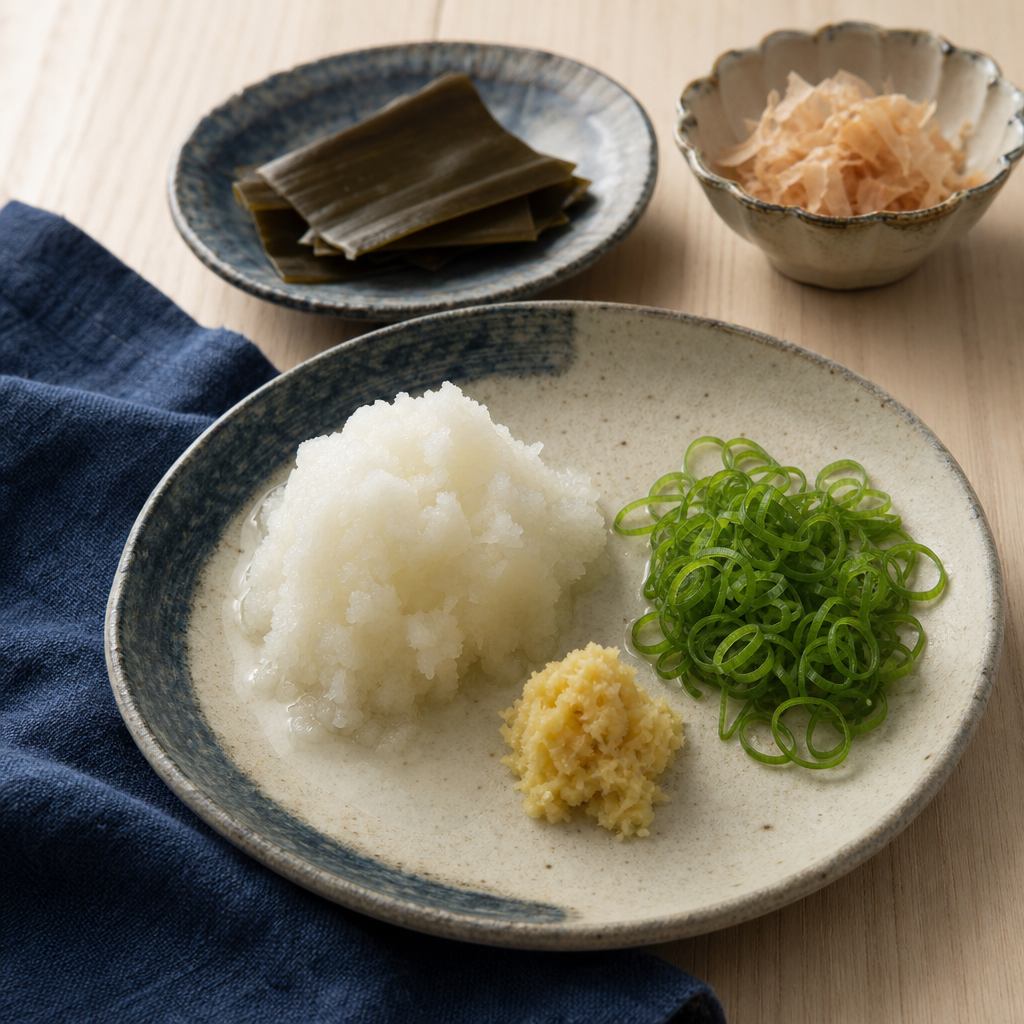
Grate the daikon and press out only the loose puddle of water. Grate the ginger finely and slice the scallions thinly.
Cut and starch the tofu
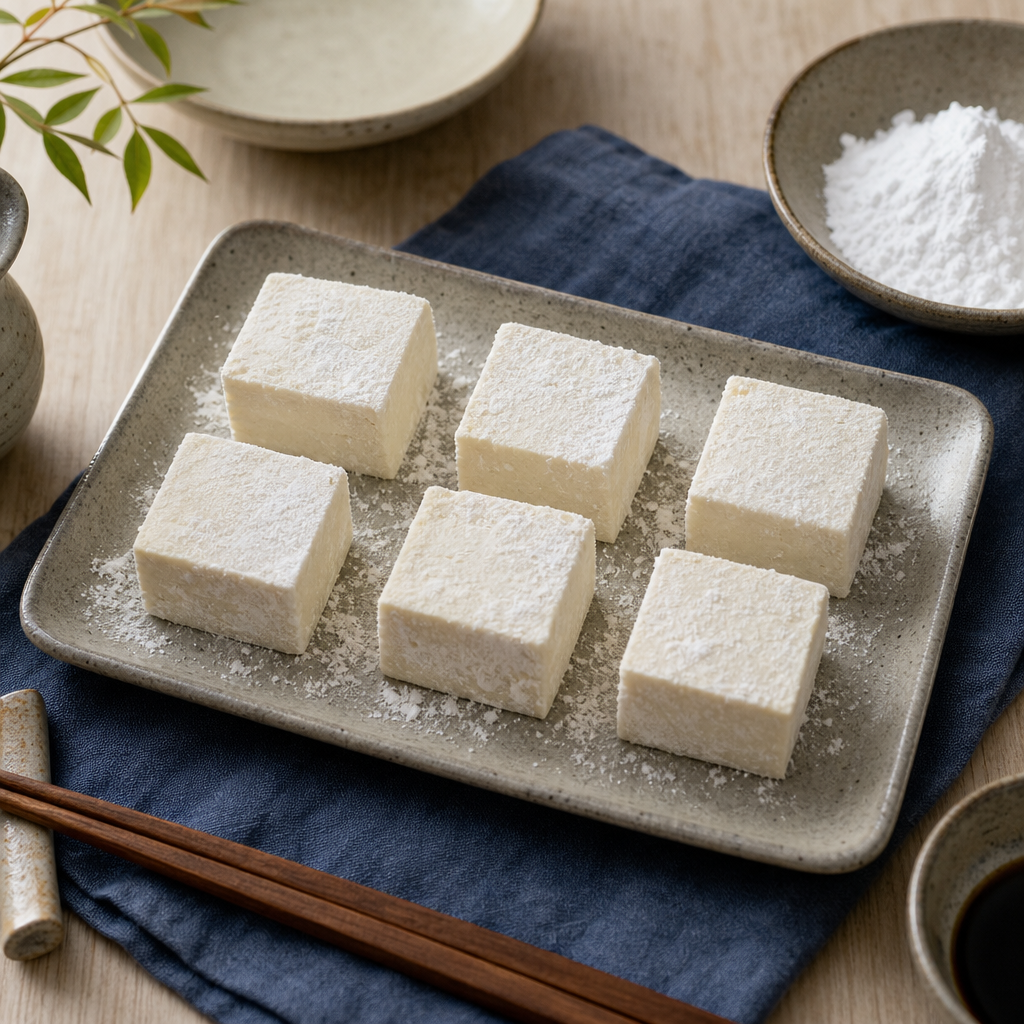
Cut the tofu into 6 large cubes. Dust each piece with potato starch on all sides, then tap off excess until the surface looks matte and thinly coated.
Fry at 170-175°C
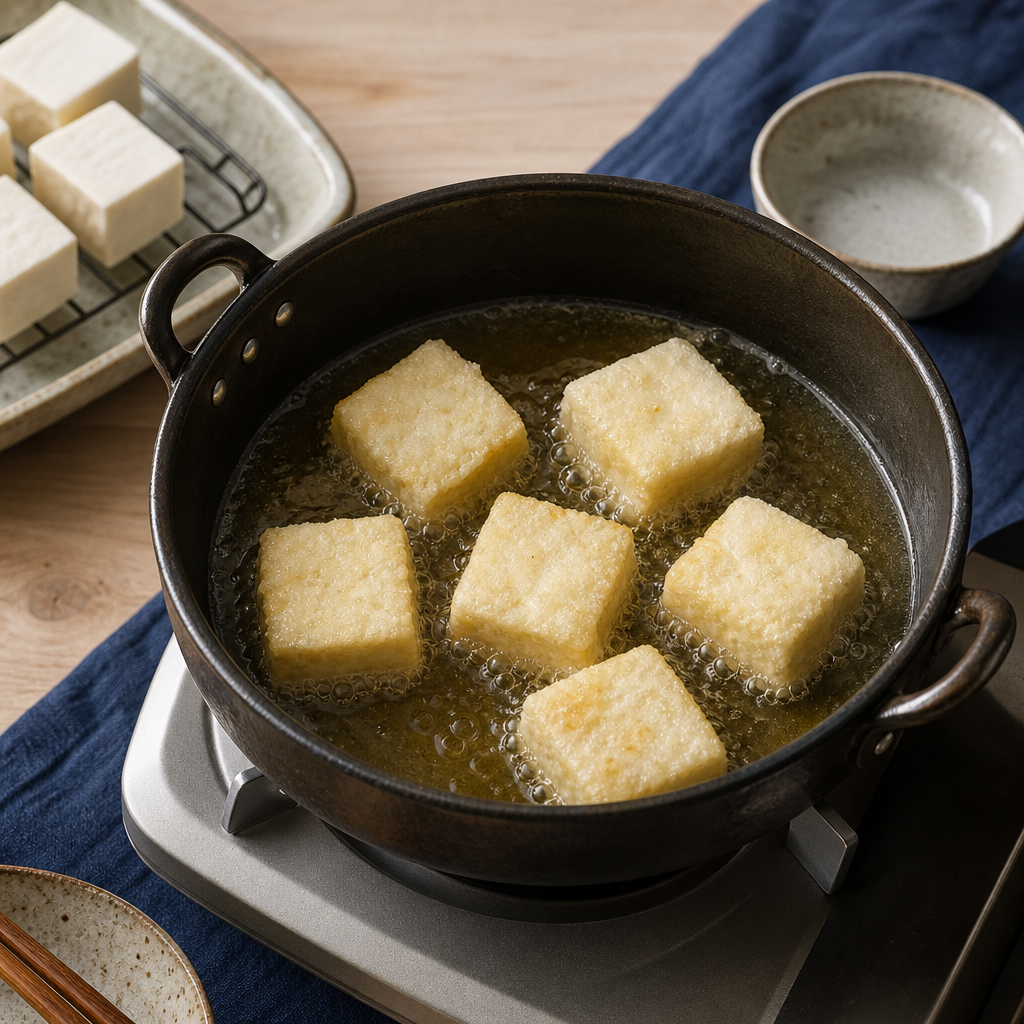
Heat 2-3 cm oil to 170-175°C. Fry the tofu in one uncrowded layer for 2-3 minutes, turning gently, until the edges are pale gold and the surface feels lightly crisp.
Drain briefly
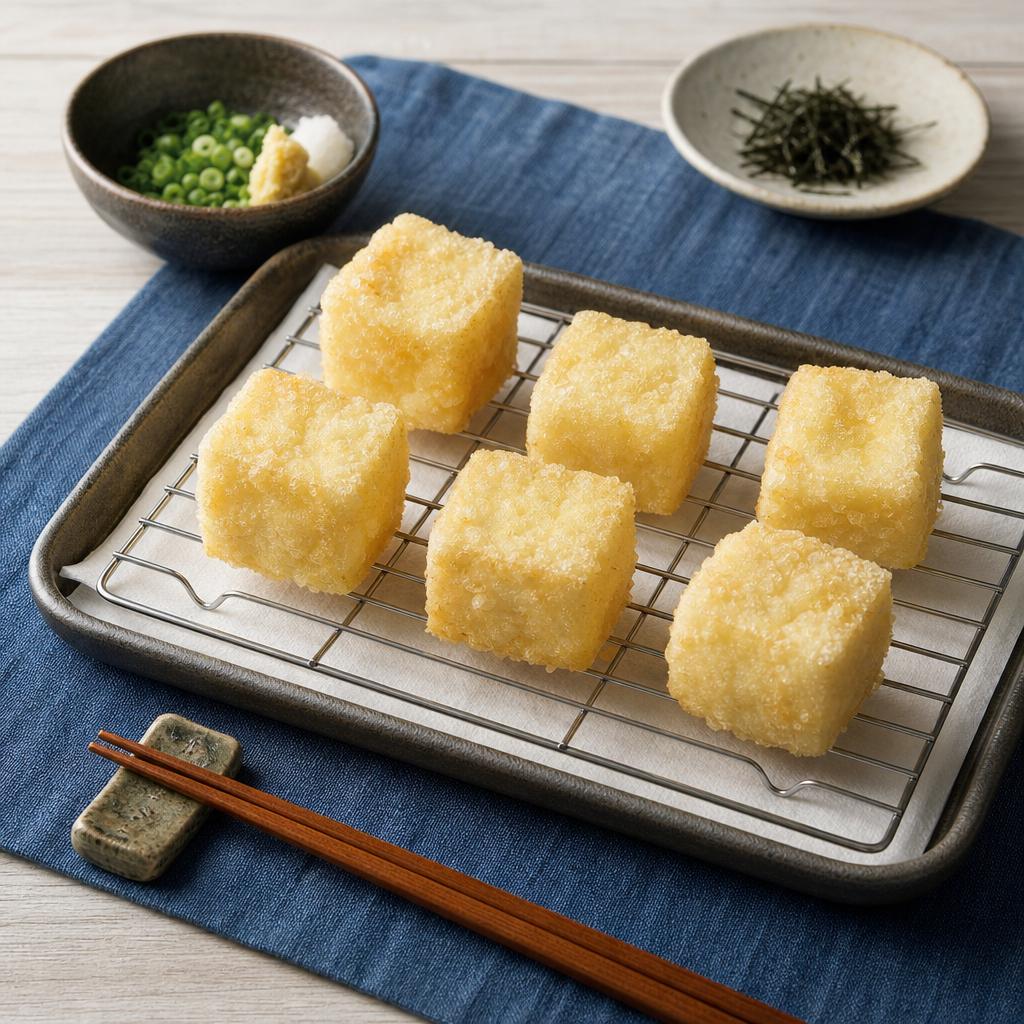
Lift the tofu with a slotted spoon or spider and drain on a rack or paper towel for 30-60 seconds. Do not stack the pieces.
Serve immediately
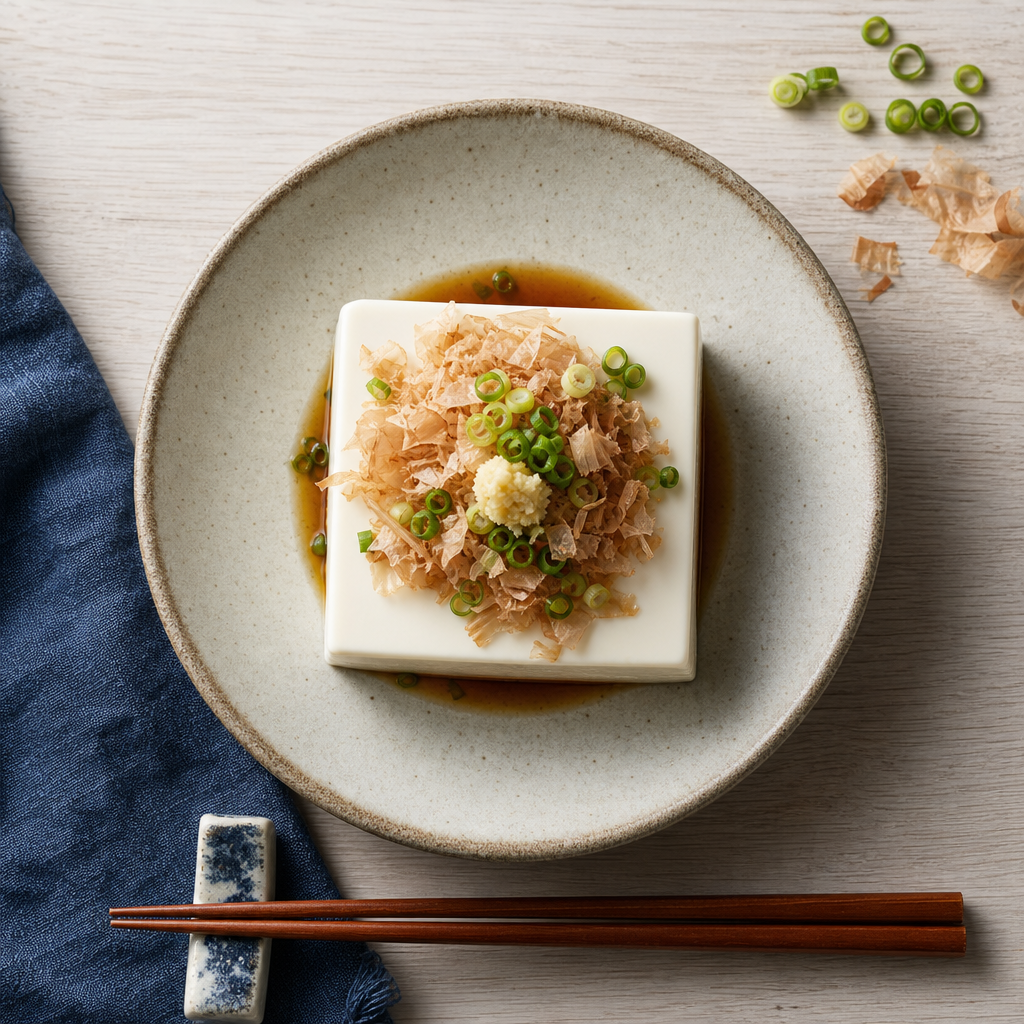
Place tofu in shallow bowls and pour hot broth around, not over, the pieces. Top with grated daikon, grated ginger, scallion, and katsuobushi if using; add shichimi at the table.
Common mistakes
- {'mistake': 'Using wet tofu straight from the package.', 'fix': 'Drain 15 minutes under light weight. Surface water makes starch slide off and causes violent oil spitting.'}
- {'mistake': 'Pressing tofu like Western crispy tofu.', 'fix': 'Use light pressure only. Agedashi tofu should be tender inside, not compressed and chewy.'}
- {'mistake': 'Coating with wheat flour or a thick batter.', 'fix': 'Use potato starch in a thin dusting. Flour makes a bread-like crust; batter turns the dish into tempura-adjacent tofu.'}
- {'mistake': 'Letting coated tofu sit before frying.', 'fix': 'Coat immediately before it goes into oil. Starch hydrates on the surface and turns gluey within minutes.'}
- {'mistake': 'Serving the broth cold or pouring it over the tofu early.', 'fix': 'Keep the broth hot and assemble at the last moment. The dish has a short textural window.'}
What does not belong
- {'item': 'Teriyaki sauce', 'reason': 'Teriyaki sauce does not belong. Agedashi broth is dashi, soy sauce, and mirin in balance, not a sticky glaze.'}
- {'item': 'Panko or breadcrumbs', 'reason': 'Breadcrumbs make fried tofu cutlets. Agedashi uses a thin starch coat that softens in broth.'}
- {'item': 'Garlic, sesame oil, or chili oil in the broth', 'reason': 'Those aromatics dominate the clean dashi structure. Add shichimi at the table if heat is wanted.'}
- {'item': 'Cornstarch-thickened gravy', 'reason': 'A thickened sauce is a separate ankake-style variation. Standard agedashi dōfu sits in a clear, loose broth.'}
- {'item': 'Long simmering after frying', 'reason': 'Fried tofu simmered in sauce is a different dish. Agedashi is assembled, not braised.'}