Saba Shioyaki
The dish in context
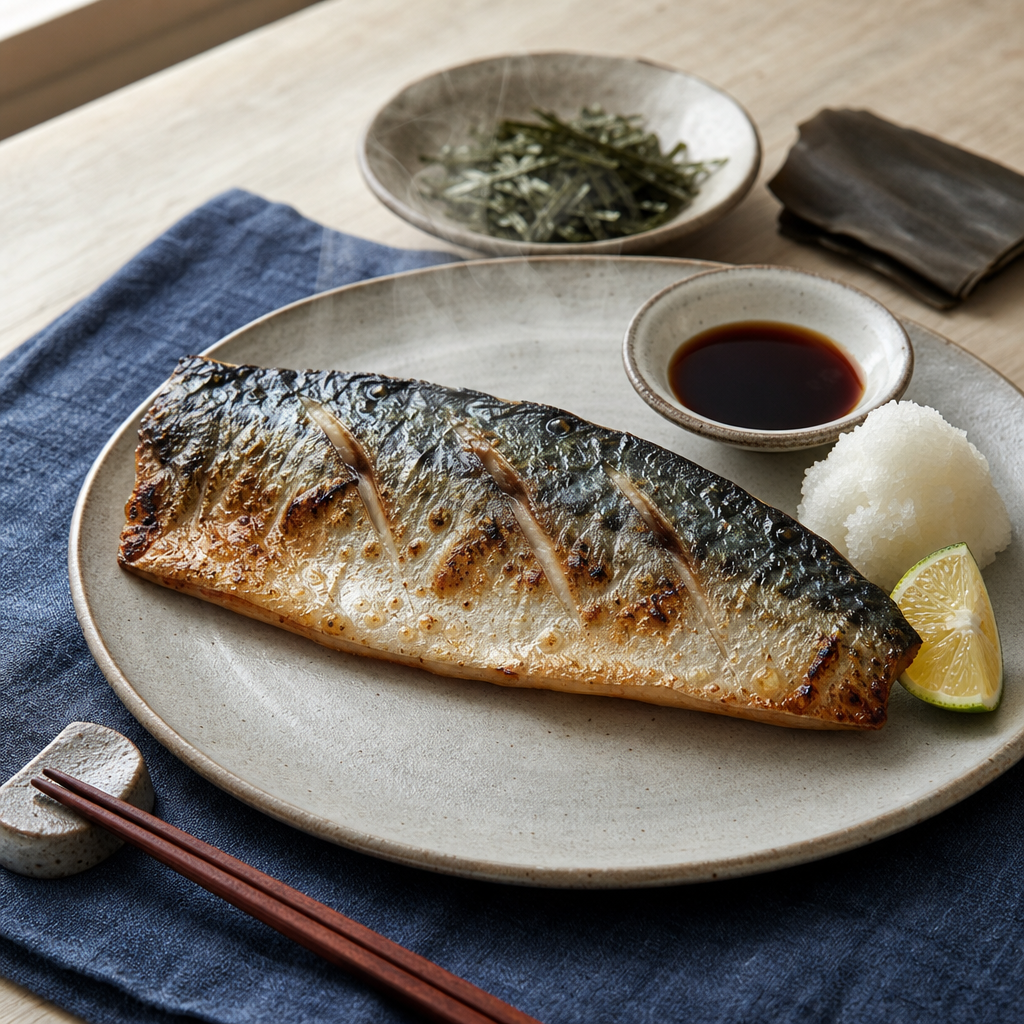
Shioyaki 塩焼き is one of the core Japanese grilled-fish methods: salt the fish, let it shed surface moisture, then grill it with little else. Saba 鯖, a blue-backed oily fish, is especially suited to this treatment because salting before cooking draws out some of the strong aroma associated with oily fish. Japanese culinary-school guidance distinguishes blue fish such as saba and aji from lean white fish: blue fish benefits from salting ahead, while many white fish are salted immediately before grilling. In home cooking, saba shioyaki is a standard teishoku 定食 item, commonly served with rice, miso soup, grated daikon, and pickles.
Method 8 steps · 35 min
Check and portion the fish
Run fingertips along the center line of each mackerel fillet and pull any pin bones with tweezers. If the fillets are large, cut each into one serving-sized piece, about 120-160 g.
Salt ahead
Sprinkle the fish evenly with salt, using about 1% of the fish weight. Set skin-side up on a rack or plate for 15-20 minutes, until beads of moisture appear on the surface.
Dry and score
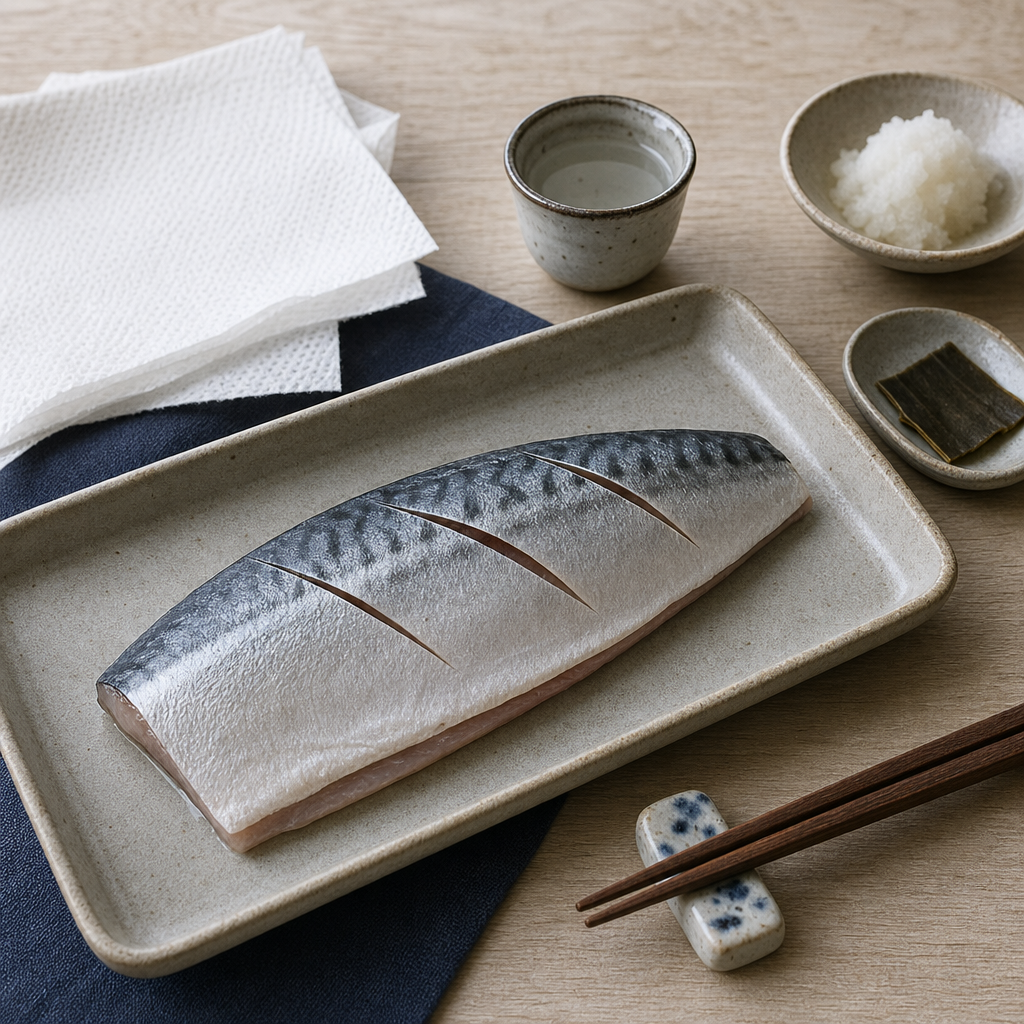
Pat the fish dry with paper towels. If using sake, wipe the flesh side lightly with it, then pat dry again. Cut 2-3 shallow diagonal slashes through the skin, not deep into the flesh.
Heat the grill or pan
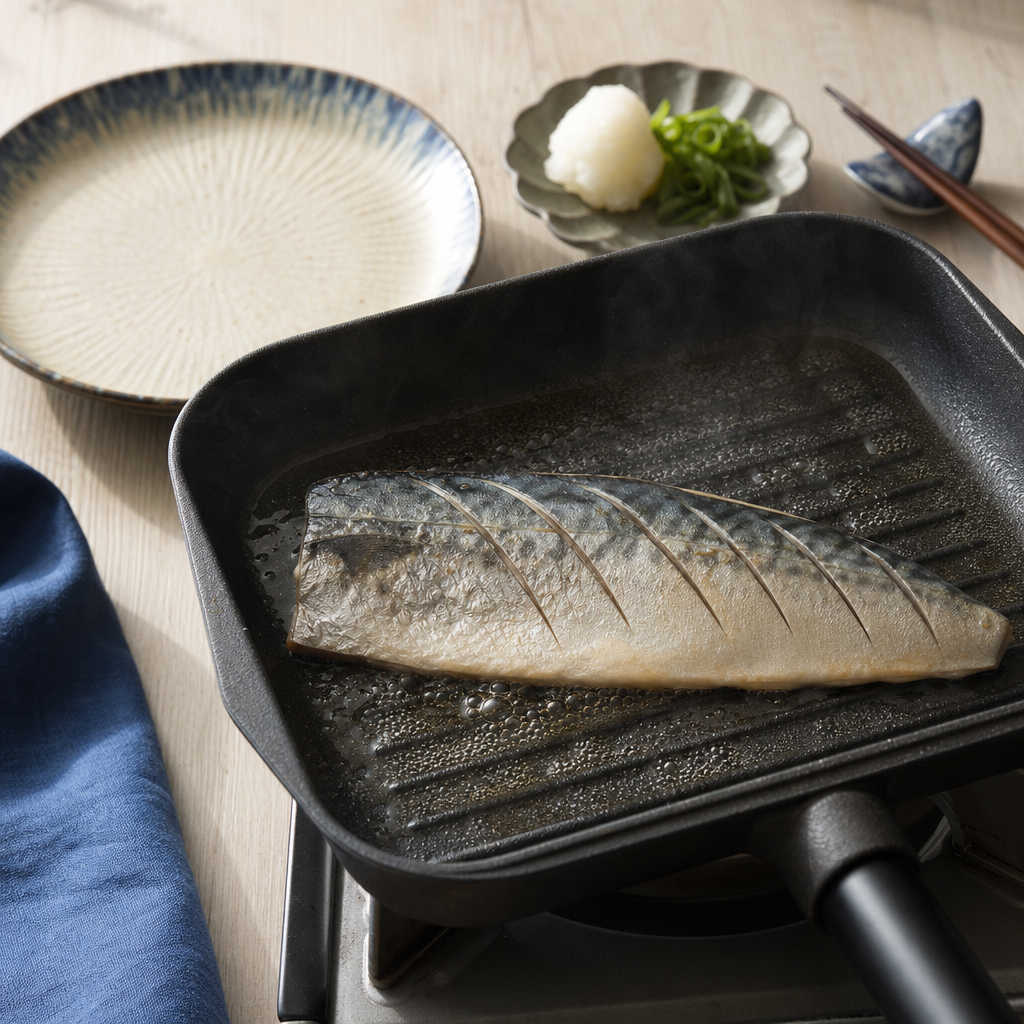
Preheat a fish grill or broiler on high for 5 minutes, or heat a lightly oiled skillet over medium-high heat. The surface should be hot enough that the skin starts sizzling within seconds.
Grill skin-side first with bottom heat
For a skillet or any heat source from below, cook the fish skin-side down first for 4-5 minutes. Press the thickest part gently for the first 10 seconds if it arches, then leave it alone until the skin is browned and crisp in patches.
Finish the flesh side
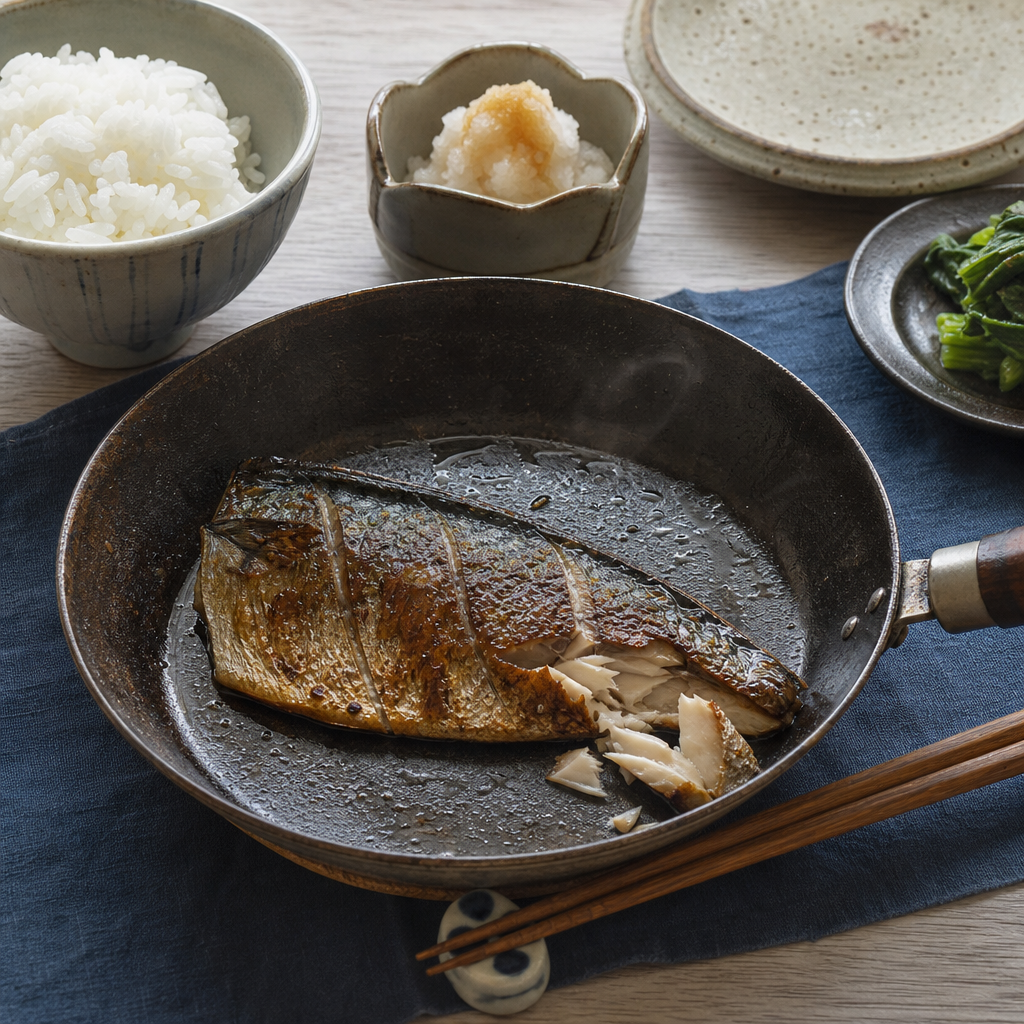
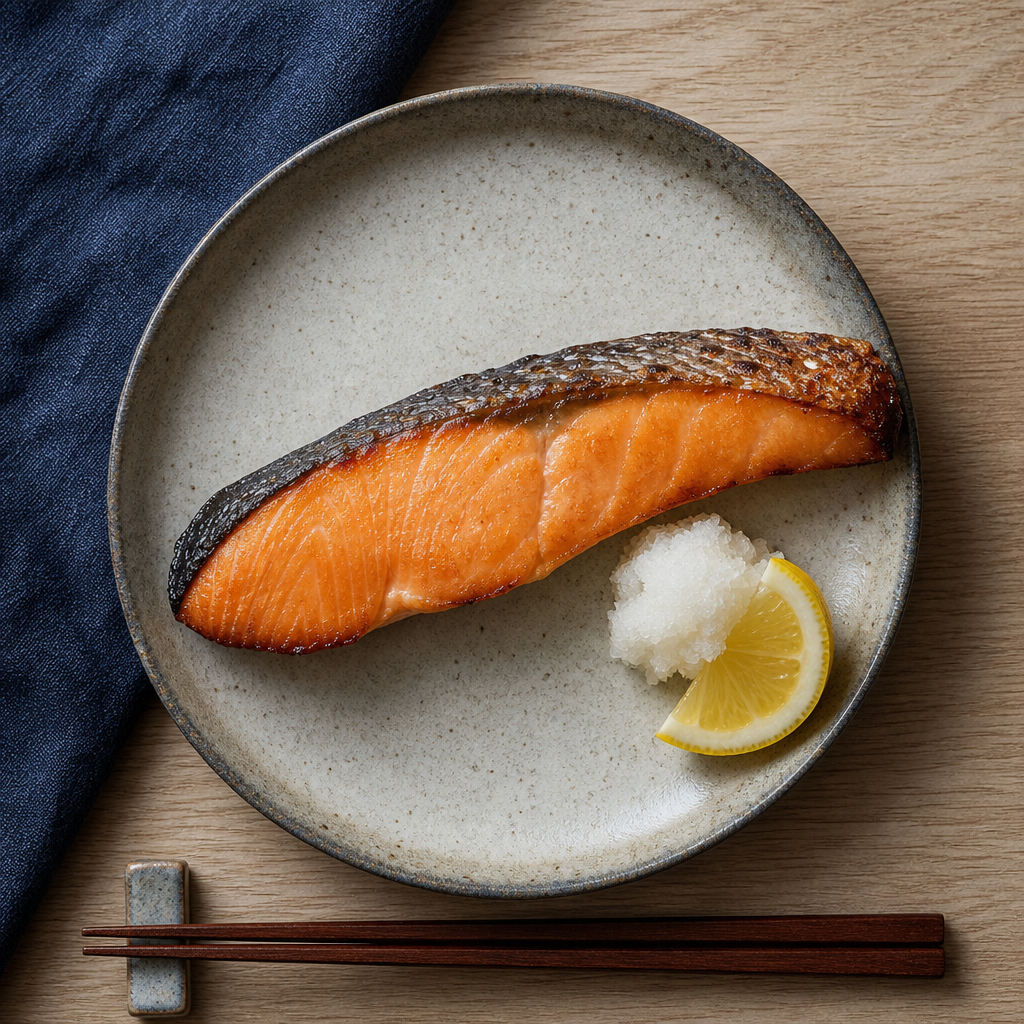
Turn once and cook the flesh side for 2-4 minutes, depending on thickness. Pull the fish when the thickest flakes separate with chopsticks but still look moist at the center.
Alternative: if using an overhead broiler
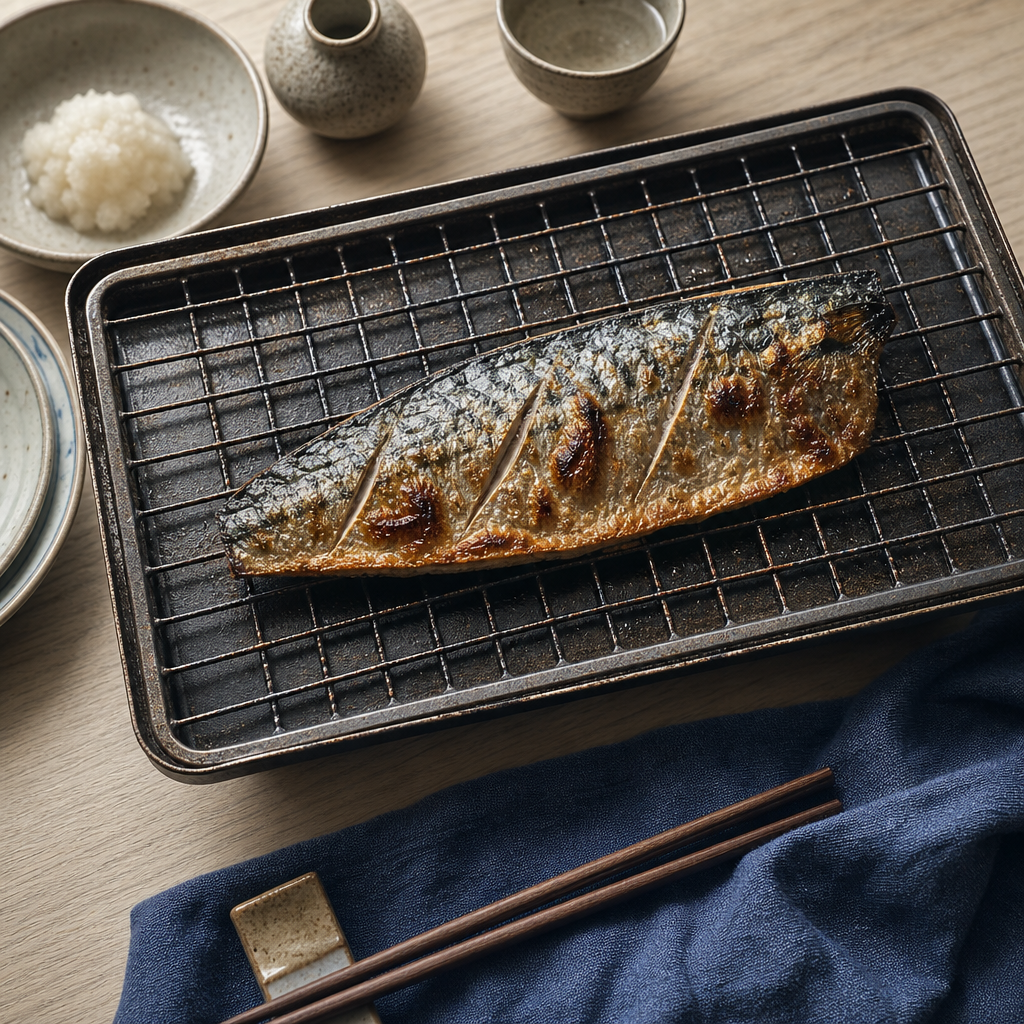
Instead of steps 5-6, for a Japanese fish grill or overhead broiler, start with the flesh side facing the heat for about 3 minutes, then turn skin-side up and cook 4-6 minutes until the skin blisters and browns. Watch the last minute closely; mackerel fat can flare.
Serve immediately
Plate skin-side up with grated daikon and a citrus wedge. Add a few drops of soy sauce to the daikon, not across the whole fish.
Common mistakes
- {'mistake': 'Skipping the salting rest', 'why_it_fails': 'The fish goes to the heat with excess surface water and a stronger oily-fish aroma. Salt needs time to pull moisture to the surface.'}
- {'mistake': 'Using too much salt by spoon measurement', 'why_it_fails': 'Fine table salt and coarse salt do not measure the same by volume. Use about 1% of the fish weight, especially with small fillets.'}
- {'mistake': 'Turning the fish repeatedly', 'why_it_fails': 'Mackerel flesh separates along flakes once hot. Repeated turning breaks the fillet and tears the skin before it crisps.'}
- {'mistake': 'Cooking over weak heat', 'why_it_fails': 'Weak heat renders fat slowly and steams the skin. The correct skin is blistered and crisp in spots, not pale and elastic.'}
- {'mistake': 'Treating pre-salted shio saba like raw saba', 'why_it_fails': 'Commercial salted mackerel may already contain enough salt for the whole dish. Adding the full salt amount makes it briny.'}
- {'mistake': 'Pouring soy sauce over the fillet', 'why_it_fails': 'The salt is already in the fish. Soy belongs in small quantity on the grated daikon, where it seasons the condiment without softening the skin.'}
What does not belong
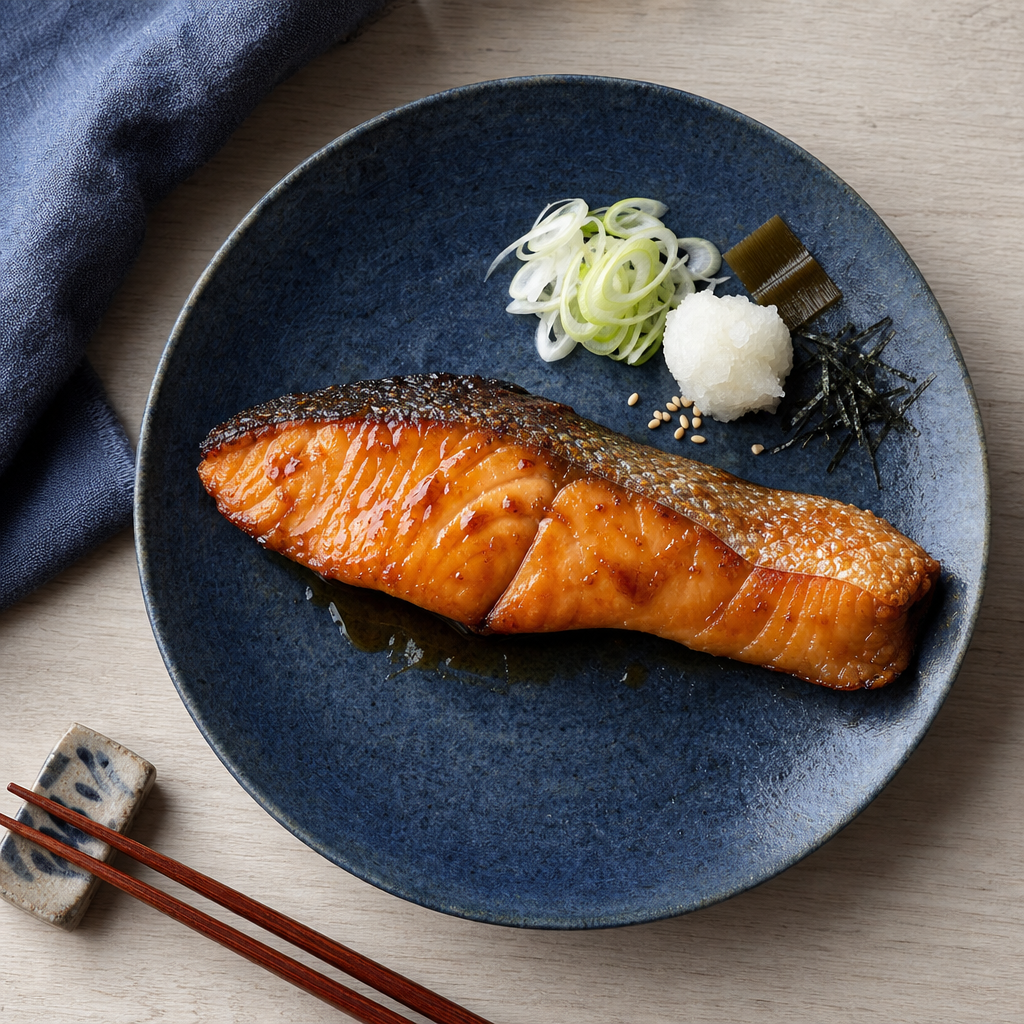
- {'item': 'teriyaki sauce', 'reason': 'Teriyaki sauce does not belong in saba shioyaki. That turns the dish into a glazed preparation, not salt-grilled fish.'}
- {'item': 'sugar or mirin', 'reason': 'Sweet seasoning does not belong in shioyaki. The point is salt, fish fat, charred skin, and a sharp condiment.'}
- {'item': 'butter', 'reason': 'Butter does not belong here. Mackerel has its own oil; dairy muddies the clean grilled-fish structure.'}
- {'item': 'garlic', 'reason': 'Garlic does not belong in this preparation. It dominates the light salt-grill profile and reads as a different dish.'}
- {'item': 'flour or starch coating', 'reason': 'A coating does not belong in saba shioyaki. If the fish is dusted and pan-fried, it is no longer the same grilled-fish method.'}