Khanom Jeen Nam Ya (Thai Rice Noodles with Fish Curry)
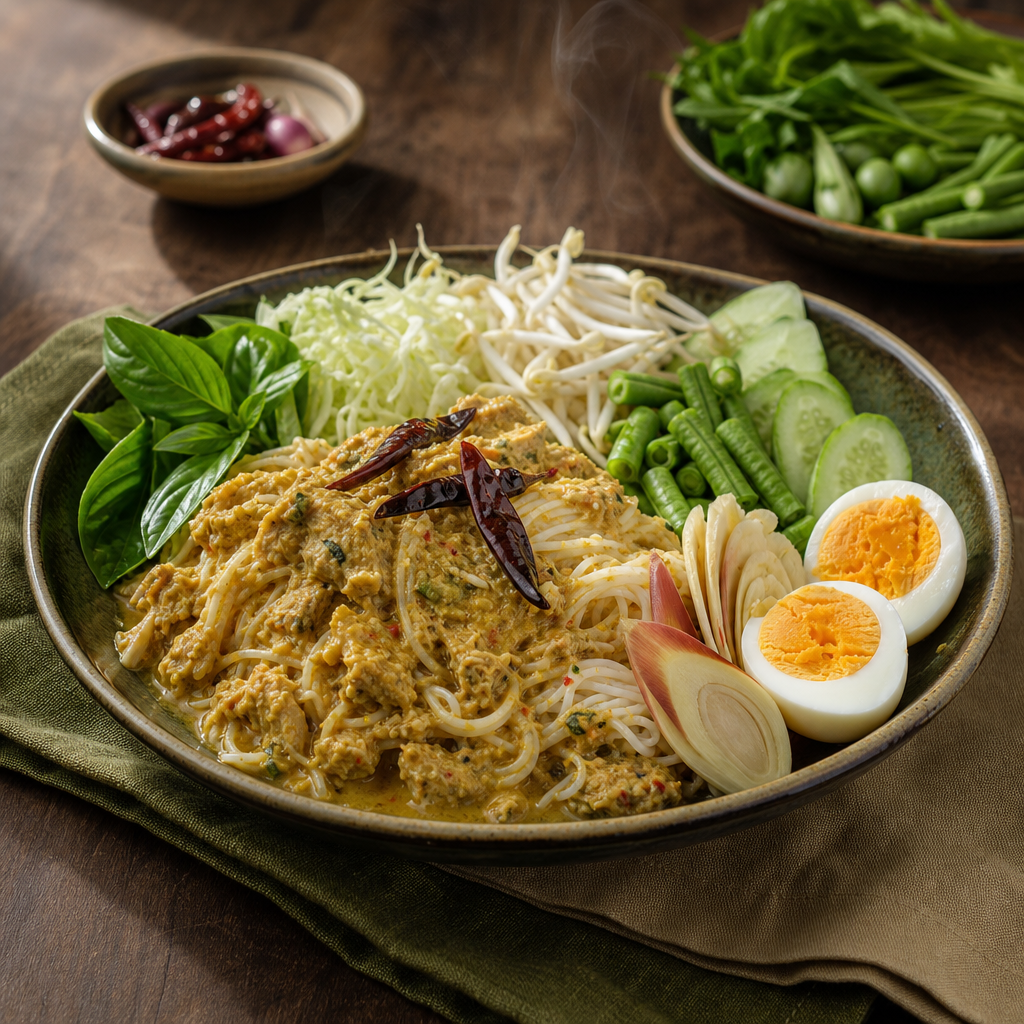
The dish in context
Khanom jeen ขนมจีน are Thai rice noodles with Mon linguistic roots, despite the word จีน sounding like 'Chinese' in modern Thai. Across Thailand they are paired with regional sauces, but central Thailand’s nam ya น้ำยา is built around coconut milk, fish, dried chilies, and a large amount of fingerroot กระชาย. Older market versions often used freshwater fish such as snakehead and sometimes a small amount of salted fish for depth. Southern nam ya is a different branch: hotter, more turmeric-forward, often made with sea fish, and usually without the heavy fingerroot signature. This recipe follows the central style.
Method 10 steps · 105 min
Soften the chilies
Cover the dried chilies with hot water and soak until leathery and pliable, 20 minutes. Drain, slit, and shake out seeds if a moderate central-style heat is the goal.
Poach the fish with coconut tail
Bring the thin coconut milk and water to a bare simmer with half the lemongrass, half the galangal, 40 g fingerroot, and 3 makrut lime leaves. Add the fish and simmer gently until the thickest pieces flake at the center, 8-12 minutes. Lift out the fish and strain the poaching liquid; reserve both.
Pick and flake the fish
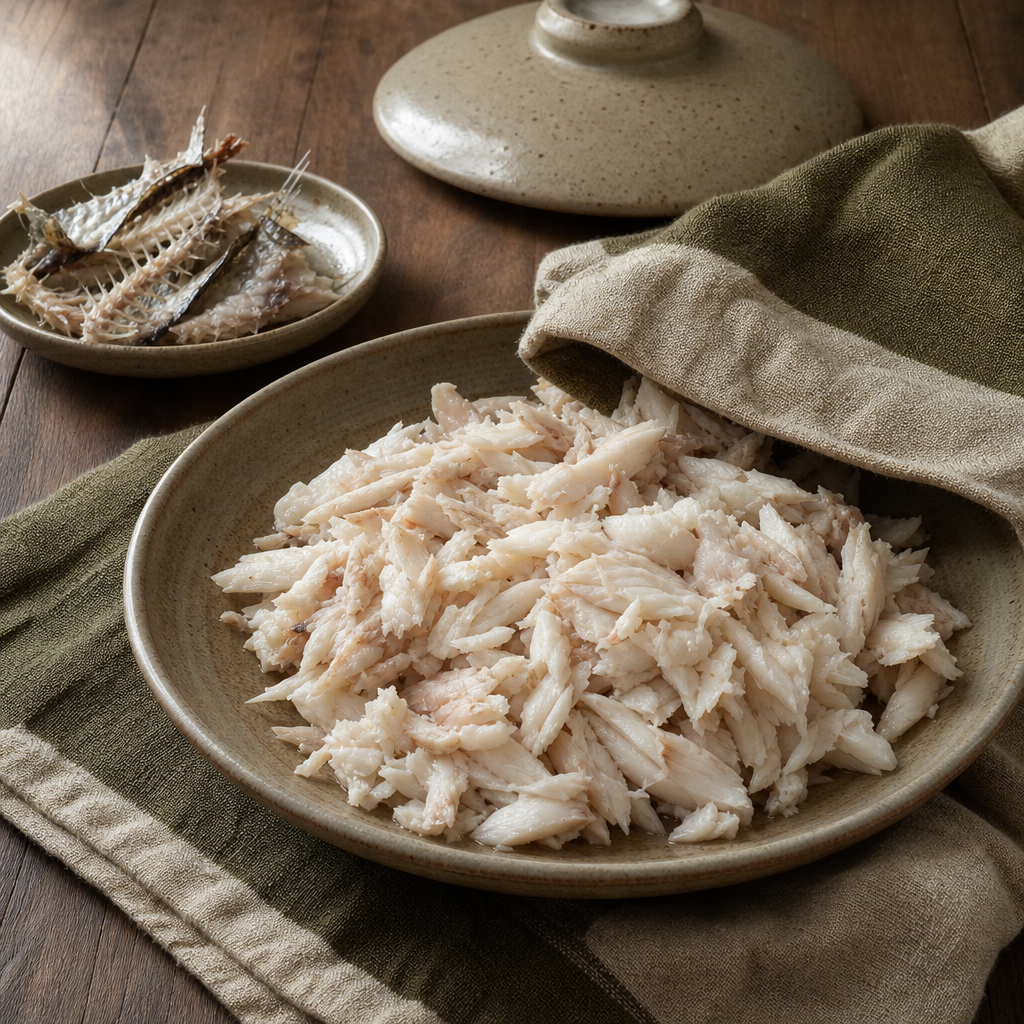
Remove bones, skin, and any dark bloodline from the cooked fish. Flake the flesh finely with fingers or a fork; keep it covered so it does not dry out.
Pound the curry paste
Pound salt, soaked chilies, remaining lemongrass, remaining galangal, remaining fingerroot, shallots, garlic, shrimp paste, salted fish if using, and turmeric if using into a fine paste. Work from the toughest aromatics to the wettest ingredients. If using a blender, add only enough reserved poaching liquid to move the blades.
Work the fish into the paste
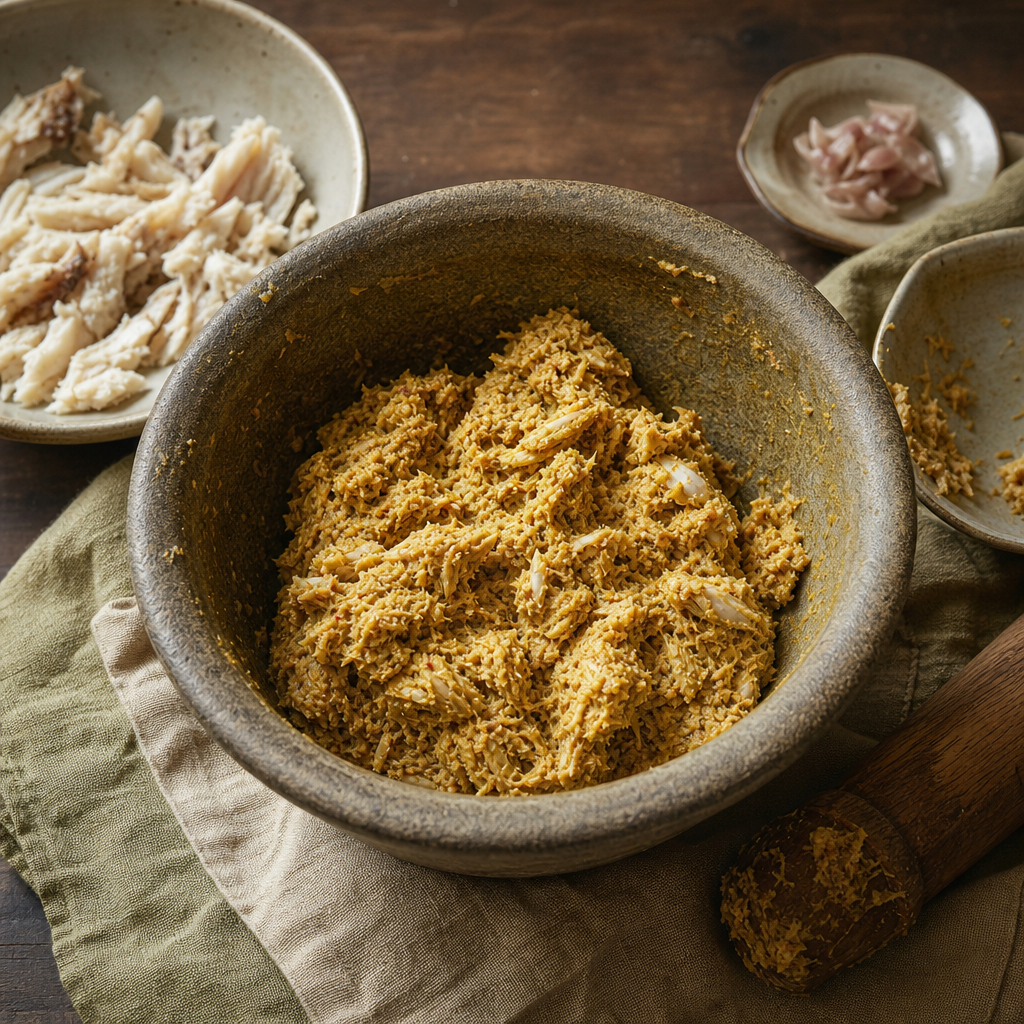
Pound or process the flaked fish into the curry paste in 3 additions until the mixture looks thick and fibrous, like a dense fish pâté. Do not leave large flakes.
Fry the paste in coconut cream
Heat 250 ml coconut cream in a wide pot over medium heat until glossy and slightly reduced, 4-6 minutes. Add the fish paste and cook, stirring constantly, until the raw chili smell fades and the paste darkens slightly, 8-10 minutes.
Build the curry
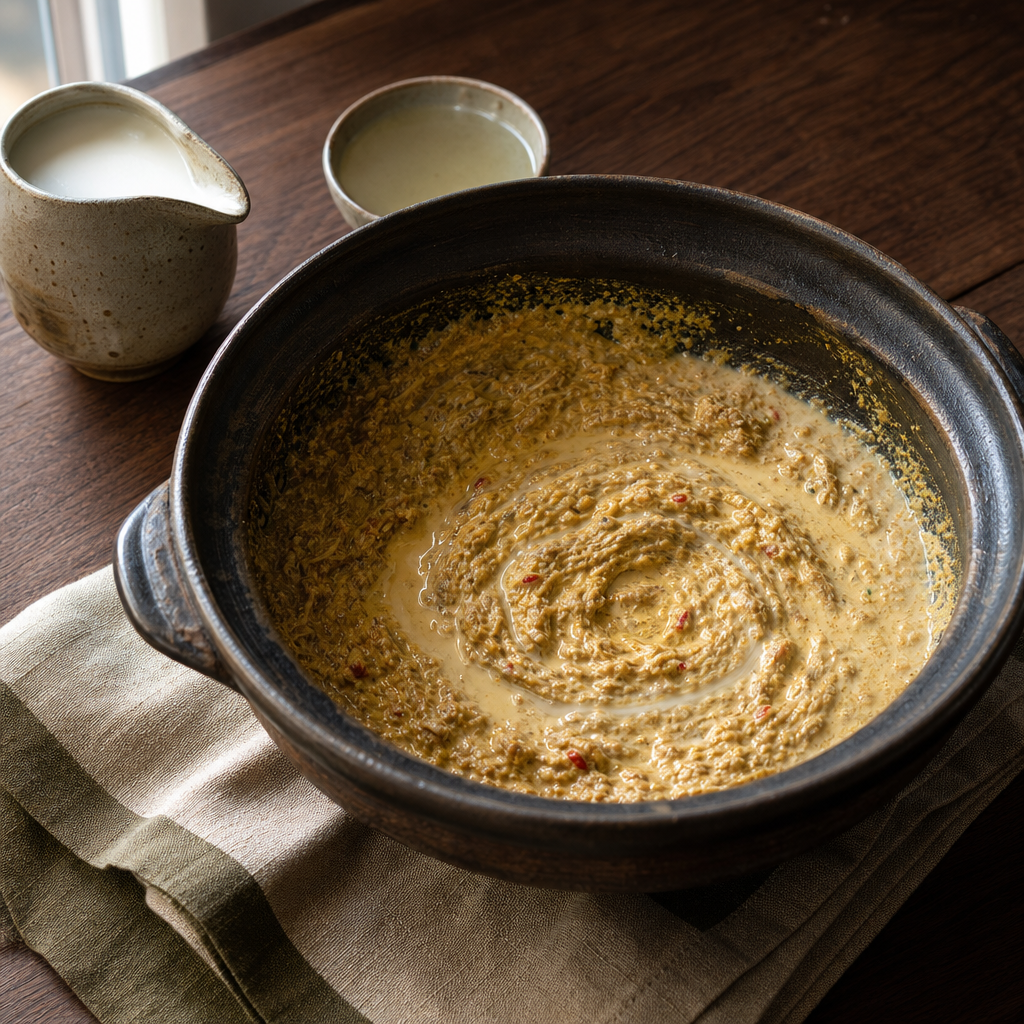
Add the strained poaching liquid in 3 additions, stirring until each addition is fully absorbed before adding the next. Add the remaining coconut cream and torn makrut lime leaves, then simmer gently for 15-20 minutes.
Season tightly
Season with fish sauce and a small amount of palm sugar if needed. The finished sauce should be salty enough to season plain noodles, lightly sweet only in the background, and thick enough to leave a yellow coat on a spoon.
Hold the sauce
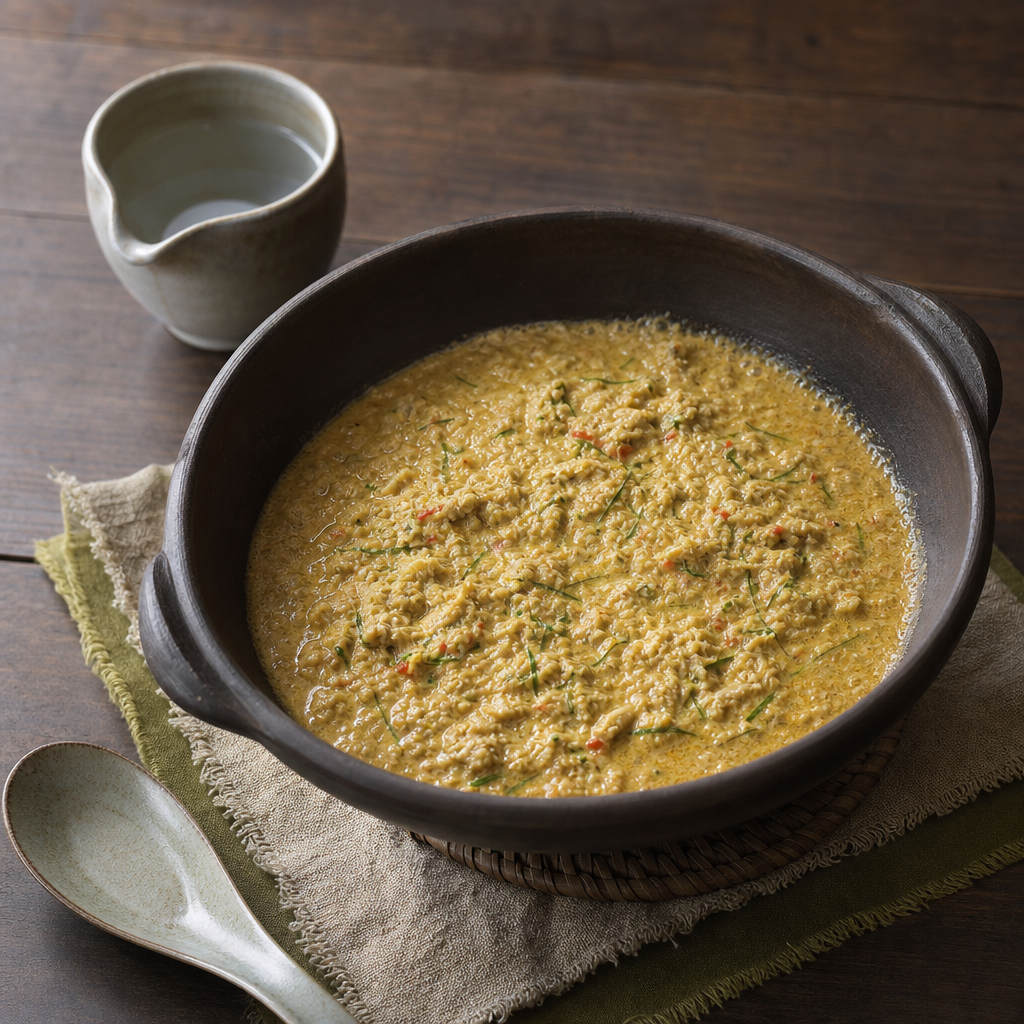
Keep the curry at the lowest simmer for service, stirring from the bottom every few minutes. Loosen with hot water only if it tightens into a paste.
Serve with noodles and vegetables
Place khanom jeen noodles in shallow bowls or plates, ladle the hot nam ya over the center, and serve with raw vegetables, boiled eggs, and fried dried chilies on the side. Let each eater mix at the table.
Common mistakes
- {'mistake': 'Using generic red curry paste as the base', 'fix': 'Make a nam ya paste with fingerroot and fish worked into it. Red curry paste is built for a different curry structure and usually lacks enough กระชาย.'}
- {'mistake': 'Treating the sauce like soup', 'fix': 'Reduce and suspend the fish until the curry coats noodles. Nam ya should be ladleable but not thin.'}
- {'mistake': 'Boiling the fish hard', 'fix': 'Keep the poach at a bare simmer. Hard boiling toughens the fish and clouds the coconut base.'}
- {'mistake': 'Leaving lemongrass coarse', 'fix': 'Slice thinly and pound thoroughly. Fibrous rings in the sauce are a paste failure, not rustic texture.'}
- {'mistake': 'Making the curry sweet', 'fix': 'Use palm sugar only to round bitterness and salinity. A sweet nam ya tastes like a different dish.'}
- {'mistake': 'Skipping the vegetable platter', 'fix': 'Serve raw vegetables and herbs. Without them, the coconut and fish become heavy after a few bites.'}
What does not belong
- {'item': 'Curry powder', 'reason': 'Curry powder does not belong in central Thai nam ya. The yellow tone comes from chilies, coconut, fish, fingerroot, and at most a small amount of fresh turmeric.'}
- {'item': 'Heavy turmeric and black pepper', 'reason': 'That moves the dish toward southern nam ya. Central nam ya is fingerroot-led.'}
- {'item': 'Canned tuna', 'reason': 'Canned tuna gives a metallic, dry flavor and a muddy texture. It does not replace poached fish pounded into the paste.'}
- {'item': 'Cornstarch or flour', 'reason': 'The sauce is thickened by fish protein dispersed through coconut milk. Starch makes it glossy and gluey.'}
- {'item': 'Lemon juice or vinegar', 'reason': 'Central khanom jeen nam ya is not a sour curry. Acidic sharpness belongs to other khanom jeen sauces, not this one.'}
- {'item': 'Dairy cream', 'reason': 'Dairy cream does not belong. Coconut milk is the fat, liquid, and aroma of the sauce.'}