Fried Fish with Chili Tamarind Sauce
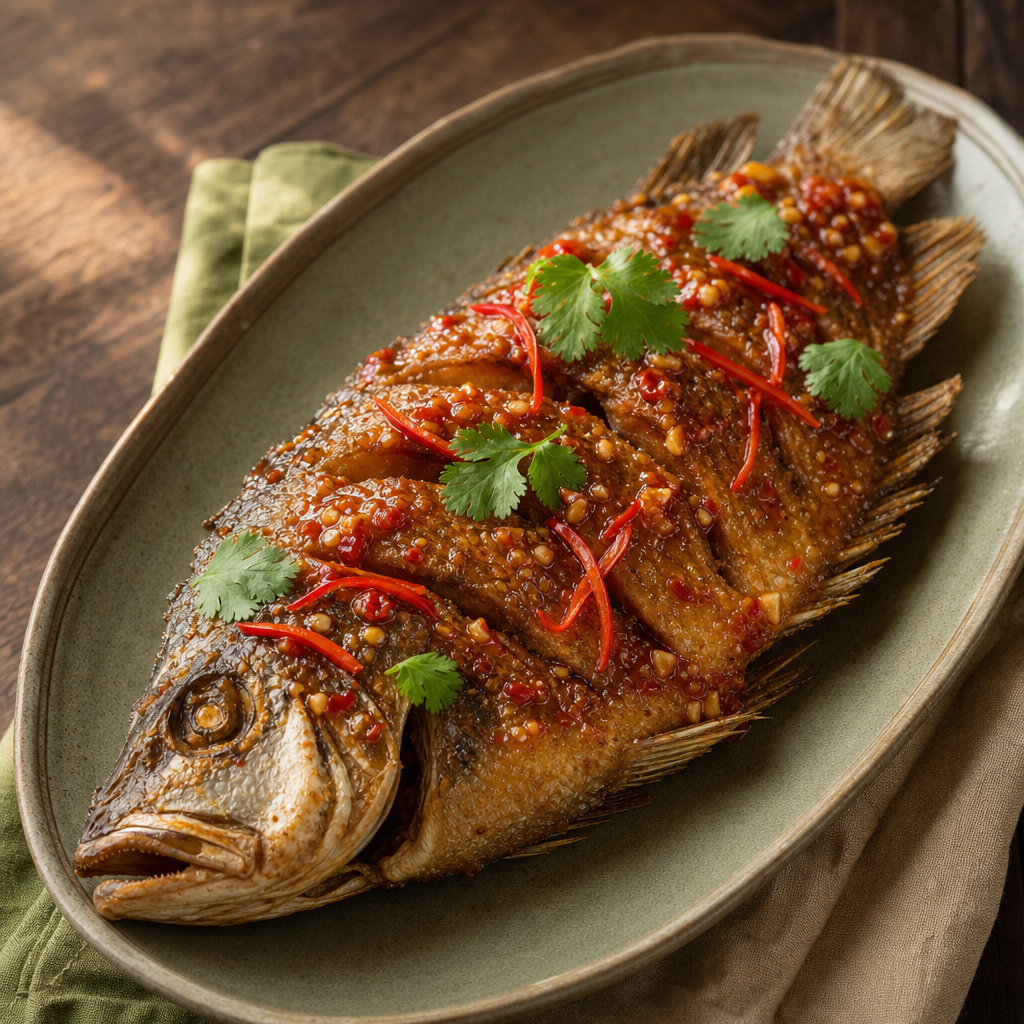
The dish in context
Pla rad prik (ปลาราดพริก) is a central Thai restaurant and household standard built around a whole fried fish and a cooked chili sauce poured over it at the end. Thai sources often describe the sauce as sam rot (สามรส), meaning sour, sweet, and salty, with heat from fresh red chilies rather than dried curry paste. The fish changes by market and budget: tilapia, snakehead, sea bass, snapper, and pomfret all appear in practice. Palace-style discussions emphasize careful fish preparation — scaling, drying, scoring, and frying cleanly — because the dish has no broth or coconut milk to hide muddy fish or limp skin. This version follows the common central Thai tamarind-palm sugar-fish sauce structure, not the bottled sweet chili shortcut.
Method 8 steps · 50 min
Prepare and dry the fish
Scale, gut, and rinse the fish, then rub it with the salt and rinse once more if the fish smells muddy. Pat the fish very dry inside and out. Score both sides with diagonal cuts down to the bone, spaced about 3 cm apart.
Pound the chili base
Pound the red chilies, garlic, and cilantro roots to a coarse paste. Do not blend it smooth; stop when the pieces are small but still visible.
Dust the fish lightly
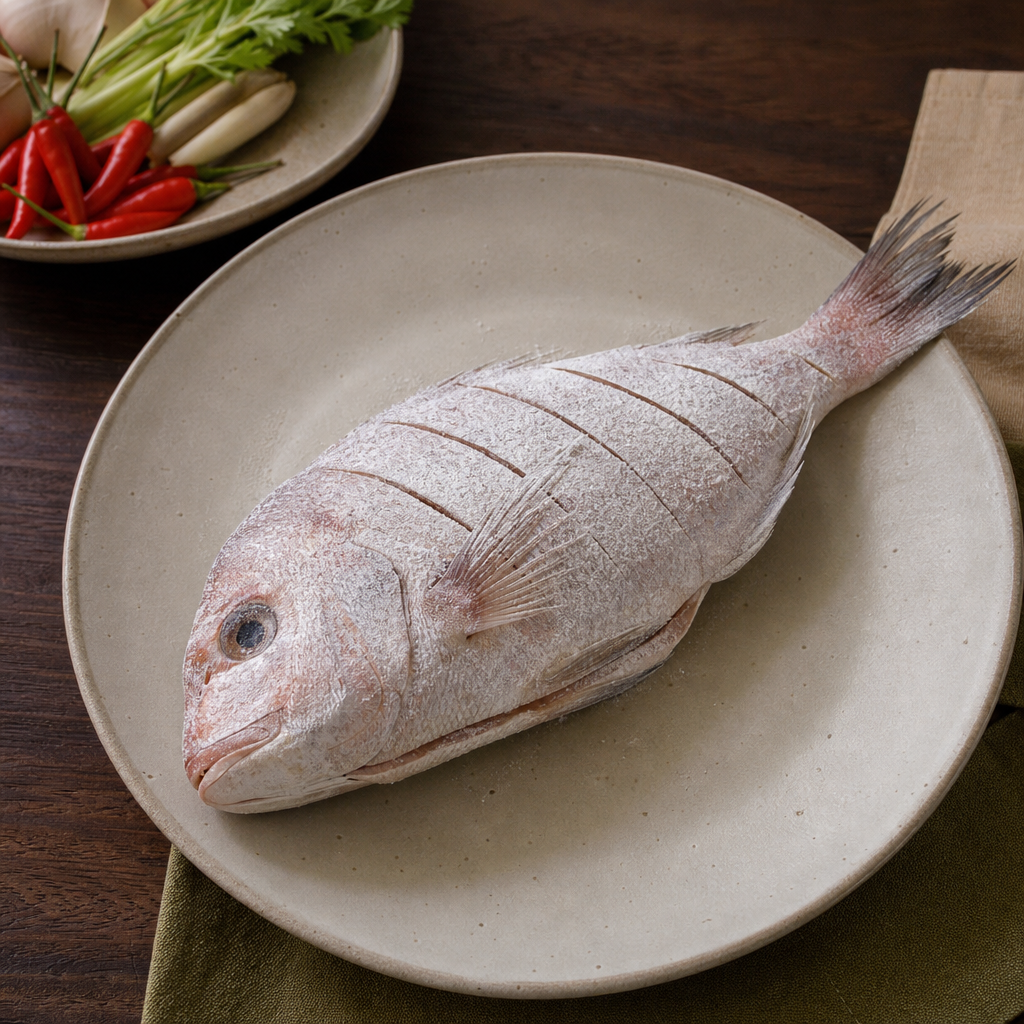
Dust the scored fish with rice flour, then shake off anything loose. The fish should look dry and matte, not coated in a white layer.
Fry the fish
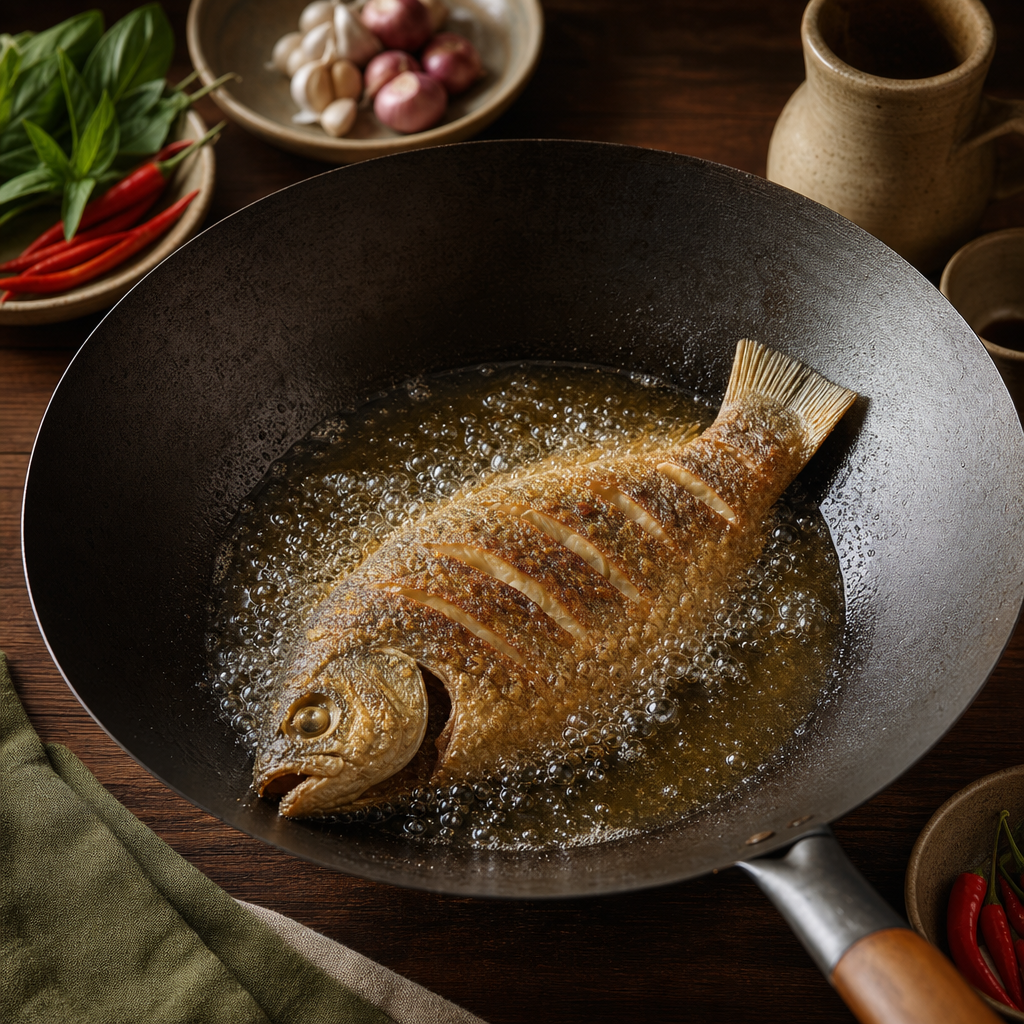
Heat the oil in a wok to 175-180°C. Lower in the fish and fry without moving it for 5 minutes, then spoon hot oil over the exposed side or turn the fish once if the pan allows. Fry until the skin is deep golden, the fins are crisp, and the thickest part flakes cleanly, 10-14 minutes total for an 800 g-1 kg fish.
Drain on a rack
Lift the fish onto a rack set over a tray. Let it drain while the sauce cooks.
Fry the chili paste
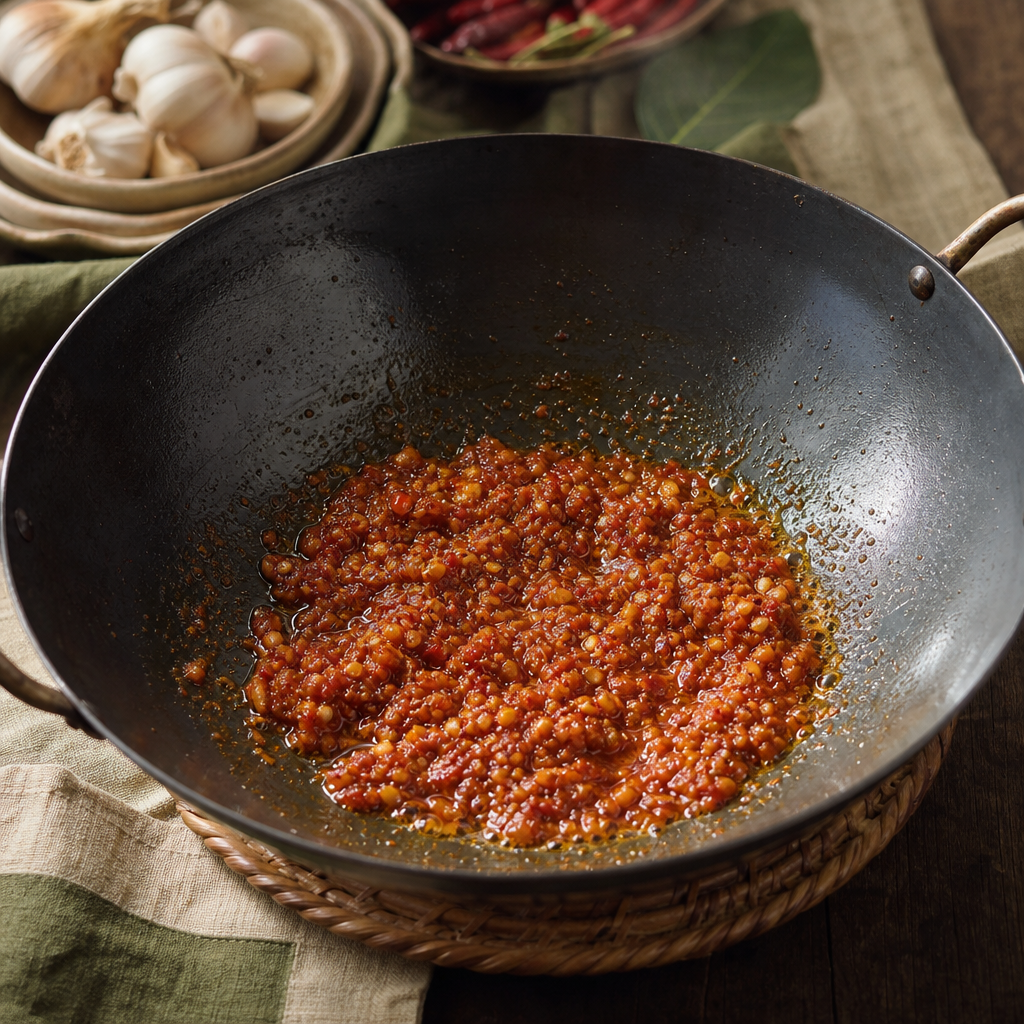
Pour off all but 2 tbsp oil from the wok. Add the pounded chili paste and fry over medium heat until the garlic loses its raw bite and the oil stains red-orange, 2-3 minutes.
Build the three-flavor sauce
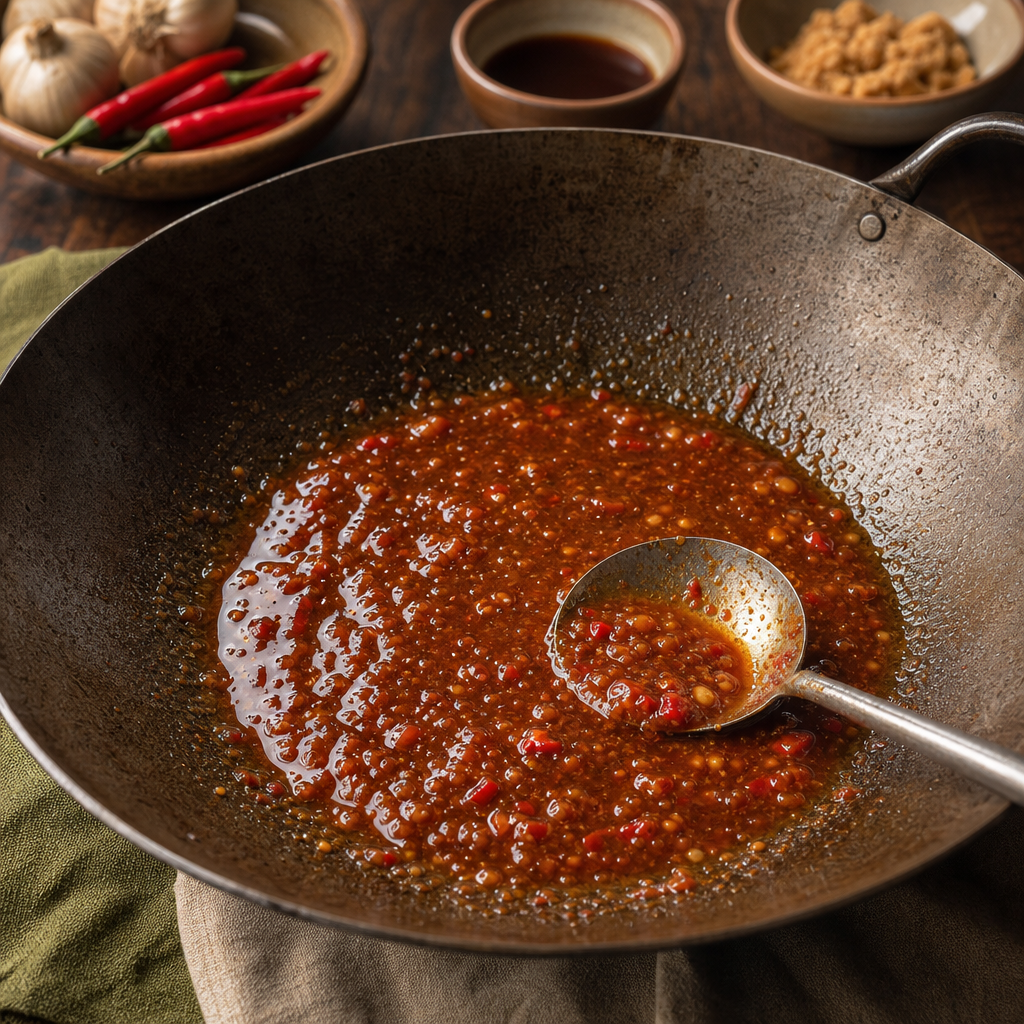
Add tamarind water, fish sauce, palm sugar, and water. Simmer, stirring, until the sugar dissolves and the sauce becomes glossy enough to coat a spoon, 3-5 minutes.
Sauce and serve
Place the fish on a platter and spoon the hot sauce over the top, leaving some crisp edges exposed. Garnish with sliced red spur chili and cilantro leaves. Serve immediately with jasmine rice.
Common mistakes
- {'mistake': 'Using wet fish.', 'fix': 'Dry the fish aggressively before scoring and frying. Surface moisture drops the oil temperature and causes tearing.'}
- {'mistake': 'Blending the sauce paste completely smooth.', 'fix': 'Pound or pulse to a coarse paste. Visible chili and garlic pieces are part of the structure.'}
- {'mistake': 'Making the sauce thin.', 'fix': 'Simmer until glossy and spoon-coating. Thin sauce runs off the fish and soaks the underside.'}
- {'mistake': 'Letting sweetness dominate.', 'fix': 'Use palm sugar for body, then correct with tamarind and fish sauce. Pla rad prik is balanced, not dessert-sweet.'}
- {'mistake': 'Pouring sauce over the fish too early.', 'fix': 'Fry, drain on a rack, and sauce at service. Crisp skin has a short life once coated.'}
- {'mistake': 'Trying to fry an oversized fish in a small pan.', 'fix': 'Use a smaller fish that lies flat. Bent fish cooks unevenly and breaks when turned.'}
What does not belong
- {'item': 'coconut milk', 'reason': 'Coconut milk does not belong in pla rad prik. This is a fried fish with a reduced chili-tamarind sauce, not a curry.'}
- {'item': 'bottled sweet chili sauce as the main sauce', 'reason': 'Bottled sauce turns the dish sticky and one-dimensional. It is a shortcut version, not the central Thai tamarind-fish sauce structure.'}
- {'item': 'ketchup', 'reason': 'Ketchup pushes the sauce toward tomato candy and covers the tamarind. It does not belong.'}
- {'item': 'lime juice as the sour base', 'reason': 'Lime is too volatile for this cooked sauce. Tamarind gives cooked acidity, fruit, and body.'}
- {'item': 'Thai basil or holy basil', 'reason': 'Basil belongs to other dishes. Pla rad prik finishes with cilantro and sliced red chili, if anything.'}
- {'item': 'heavy batter', 'reason': 'This is not battered fish. A thin dusting is insurance; a thick coating blocks the sauce from meeting the fish.'}