Southern Thai Sour Curry with Fish
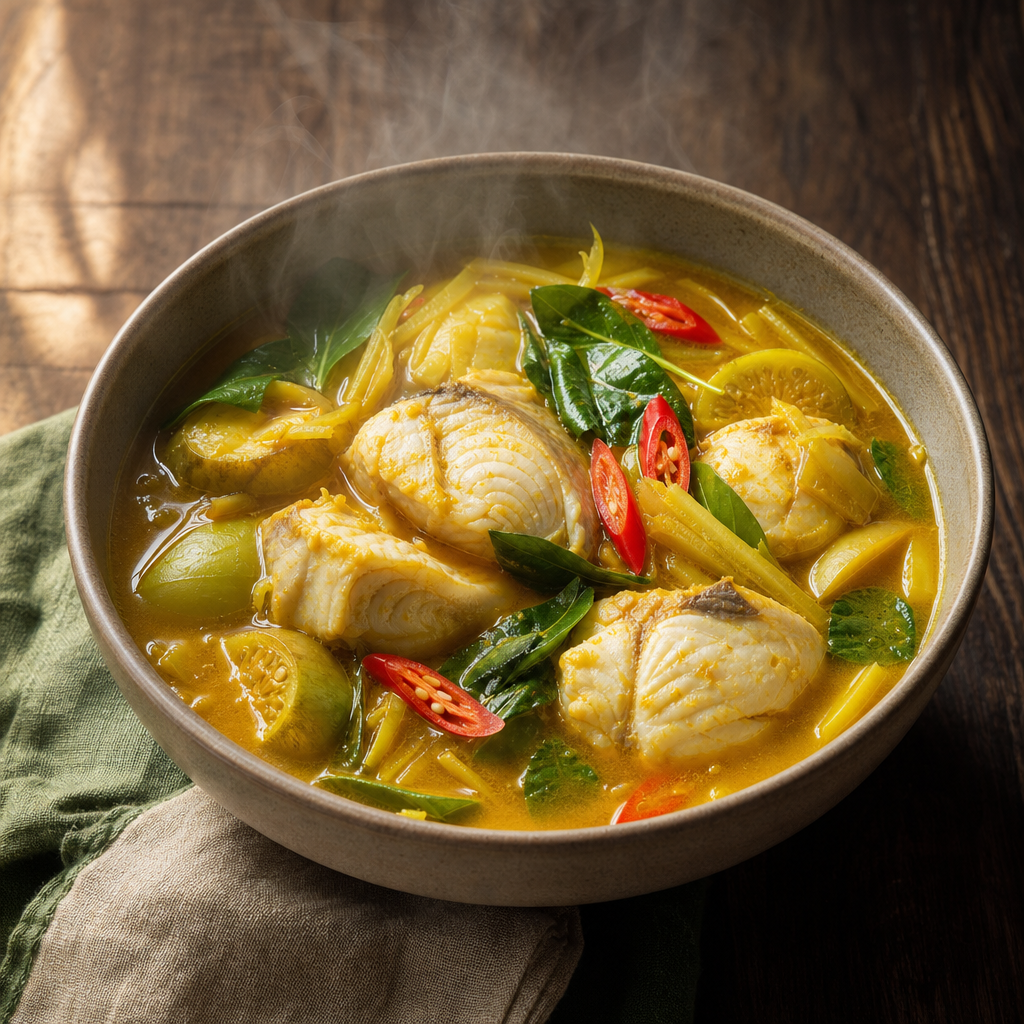
The dish in context
แกงเหลือง (gaeng leuang), also called แกงส้มใต้ (southern gaeng som), is the southern Thai branch of sour curry: water-based, turmeric-yellow, sharp with tamarind and lime, and usually built around seafood or fish. It is not the mild coconut-based yellow curry often labeled “Thai yellow curry” outside Thailand; that dish is gaeng garee. Southern versions are typically hotter, leaner, and more acidic than central Thai gaeng som, with fresh turmeric and shrimp paste giving the paste its color and depth. Common vegetables vary by household and province: green papaya, young coconut shoots, taro stem, bamboo shoots, and mixed local vegetables all appear in credible sources.
Method 7 steps · 45 min
Make the curry paste
Pound the soaked dried chilies and salt to a coarse paste. Add fresh chilies, turmeric, garlic, shallots, and galangal; pound until no large pieces remain. Pound in the shrimp paste last until the paste is thick, yellow-orange, and rough rather than smooth.
Start the broth
Bring the water to a boil in a medium pot. Whisk in the curry paste until it dissolves, then simmer 5 minutes until the raw garlic smell softens and the broth stains deep yellow.
Cook the vegetable
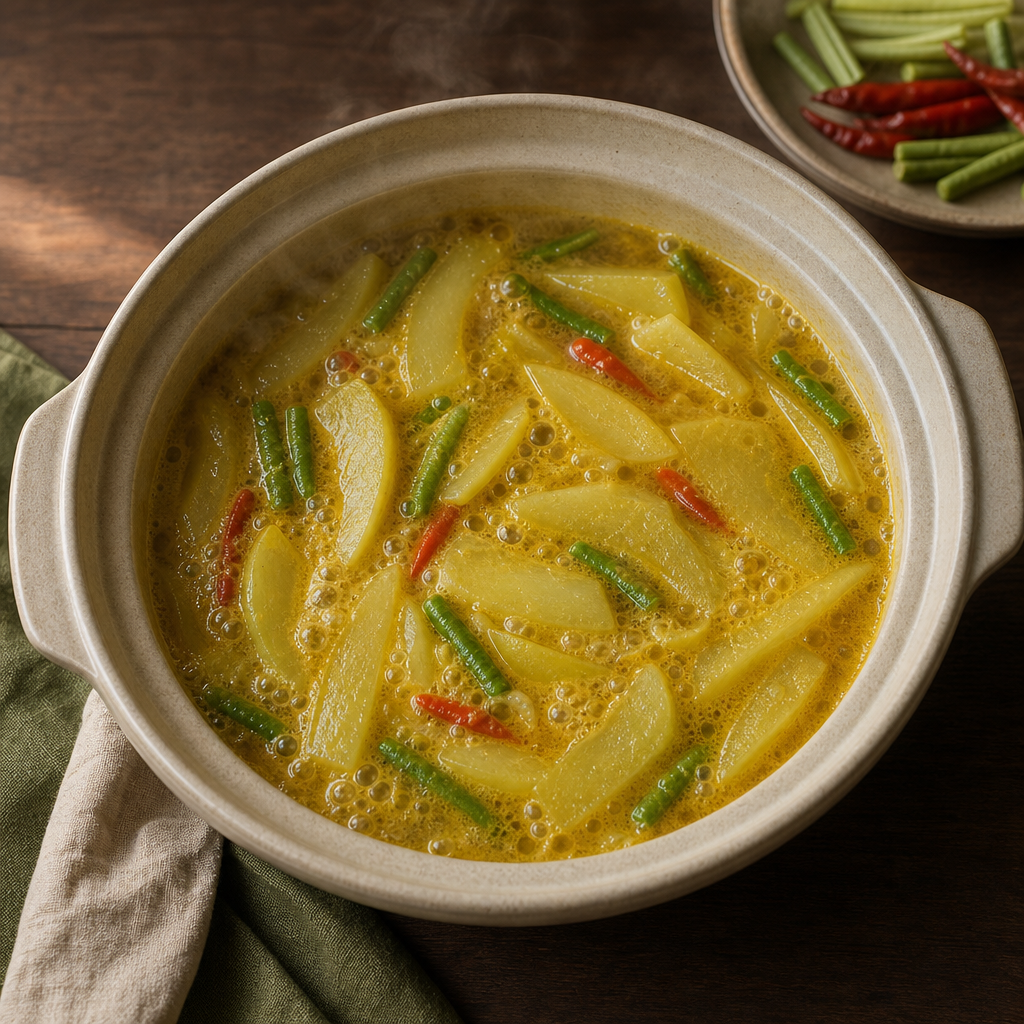
Add the green papaya and simmer until the edges turn translucent and a knife meets slight resistance, 8-12 minutes. Keep the boil active but not violent.
Season the sour-salty base
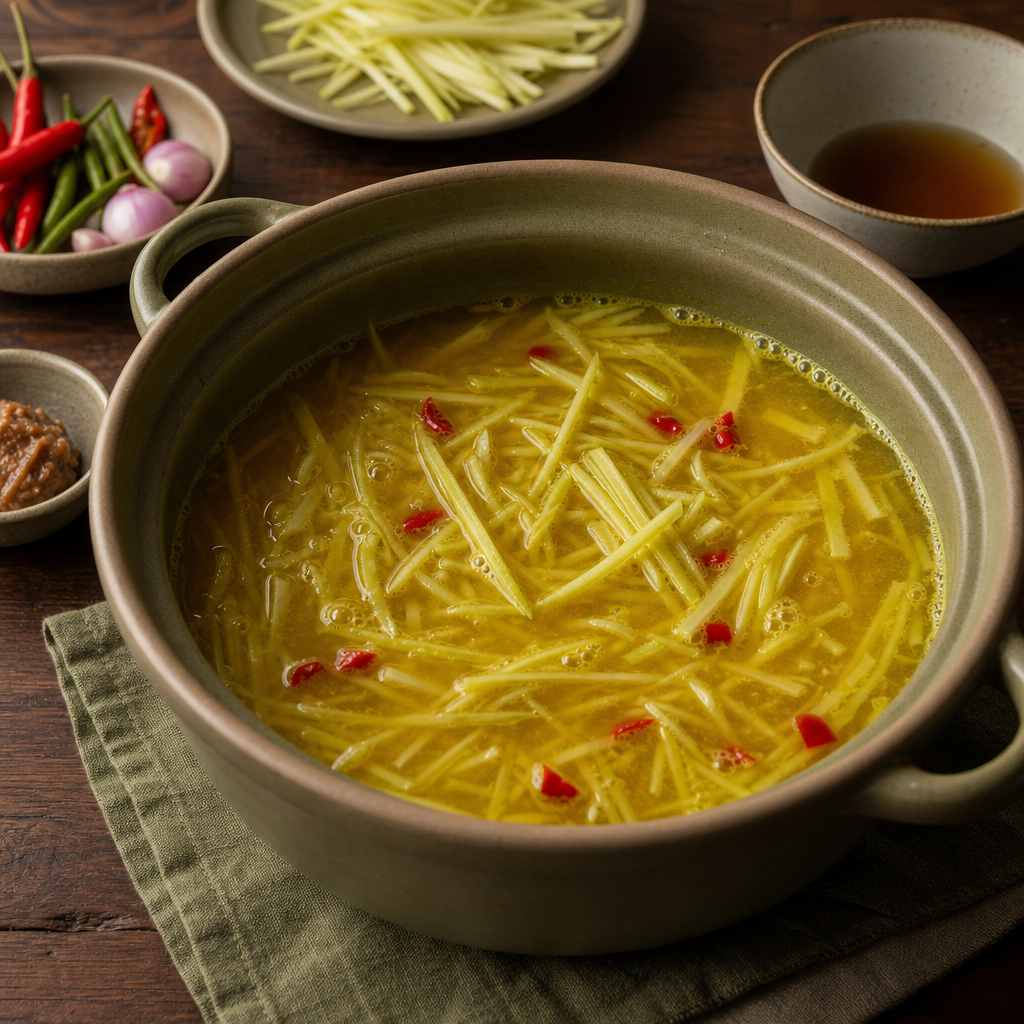
Add tamarind water and fish sauce. Add palm sugar only if the tamarind tastes thin or metallic; the broth should not read sweet. Simmer 1 minute.
Poach the fish without stirring
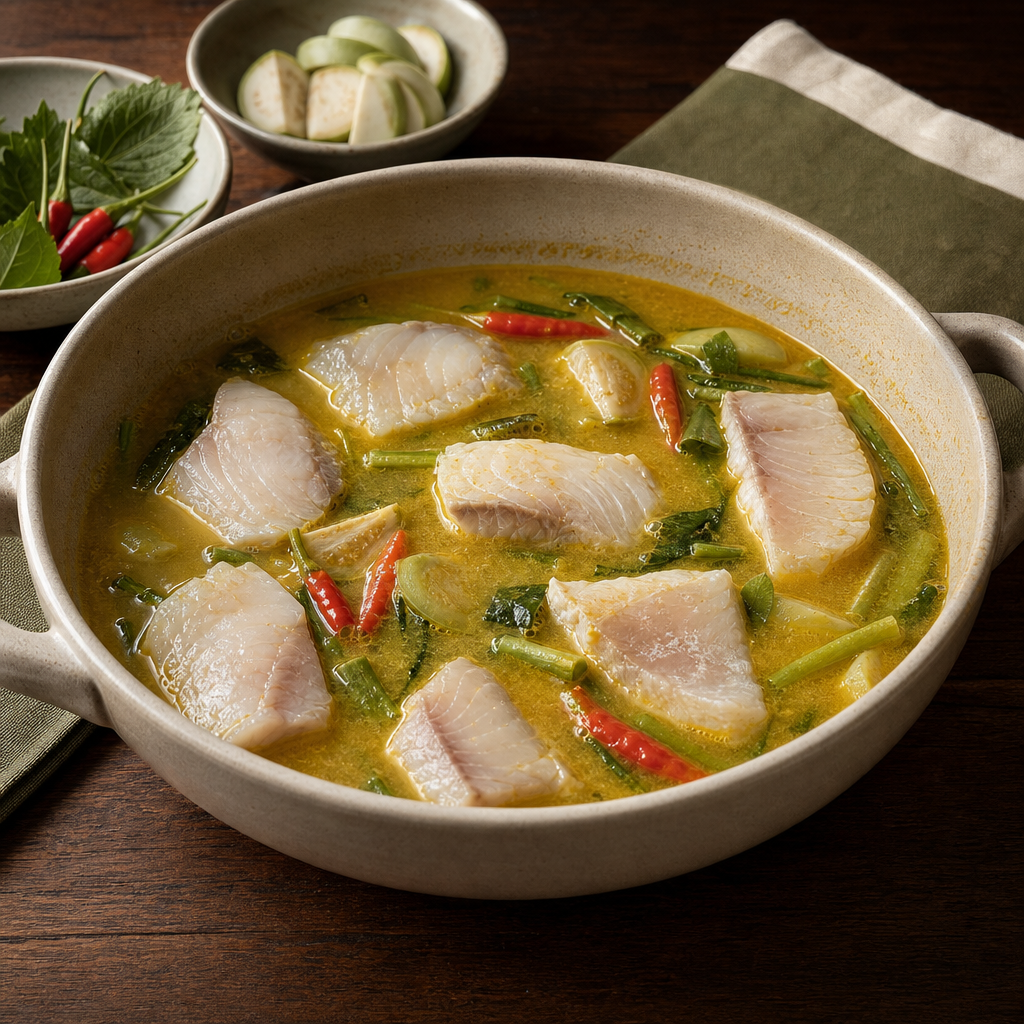
Slide in the fish pieces in one layer and press them gently below the surface. Do not stir until the exterior turns opaque and the pieces feel set, 4-6 minutes depending on thickness.
Finish off heat with lime
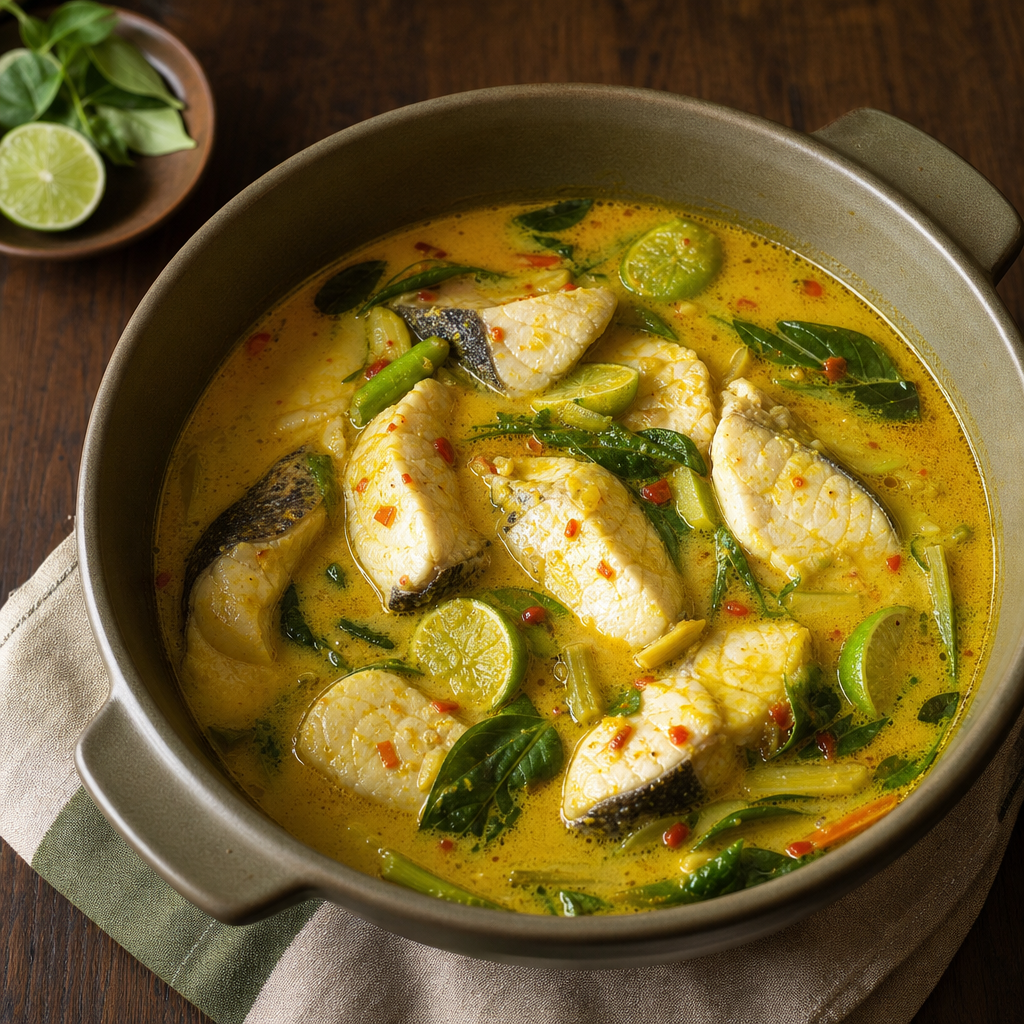
Turn off the heat. Wait 30 seconds, then stir in the lime juice by nudging the liquid around the fish rather than dragging a spoon through it. Taste the broth: it should be sharp enough to make rice necessary.
Serve
Ladle fish, vegetable, and broth into bowls without breaking the fish. Serve with plain jasmine rice and raw southern-style vegetables if available.
Common mistakes
- {'mistake': 'Using coconut milk', 'fix': 'Leave it out. Coconut milk belongs to other curries, not gaeng leuang or southern gaeng som.'}
- {'mistake': 'Confusing this with gaeng garee', 'fix': 'Gaeng garee is mild, spiced, and coconut-based. Gaeng leuang is sour, hot, turmeric-based, and water-based.'}
- {'mistake': 'Stirring after the fish goes in', 'fix': 'Press fish under the broth and leave it until set. Stirring releases albumin, flakes, and fishy aroma into the liquid.'}
- {'mistake': 'Boiling the lime juice', 'fix': 'Add lime off heat. Cooked lime loses its floral edge and makes the finish muddy.'}
- {'mistake': 'Making the curry sweet', 'fix': 'Use palm sugar as correction only. Southern sour curry should not taste sweet.'}
- {'mistake': 'Using thin fish fillets', 'fix': 'Use steaks or thick chunks. Thin fillets overcook before the broth can return to temperature.'}
What does not belong
- {'item': 'coconut milk', 'reason': 'Coconut milk does not belong in gaeng leuang. It changes the dish into a different curry structure.'}
- {'item': 'curry powder', 'reason': 'The yellow color comes from fresh turmeric, not curry powder. Curry powder pushes the dish toward gaeng garee.'}
- {'item': 'Thai sweet chili sauce', 'reason': 'Sweet chili sauce makes the broth sugary and glossy. This curry should be sharp and lean.'}
- {'item': 'bottled lemon juice', 'reason': 'Lemon juice has the wrong acid profile, and bottled juice tastes oxidized. Use fresh lime.'}
- {'item': 'cream or evaporated milk', 'reason': 'Dairy softens the heat and sourness that define the dish. It does not belong.'}
- {'item': 'basil or cilantro garnish', 'reason': 'Fresh herb garnish is not the point here. The paste and sour broth should carry the aroma.'}