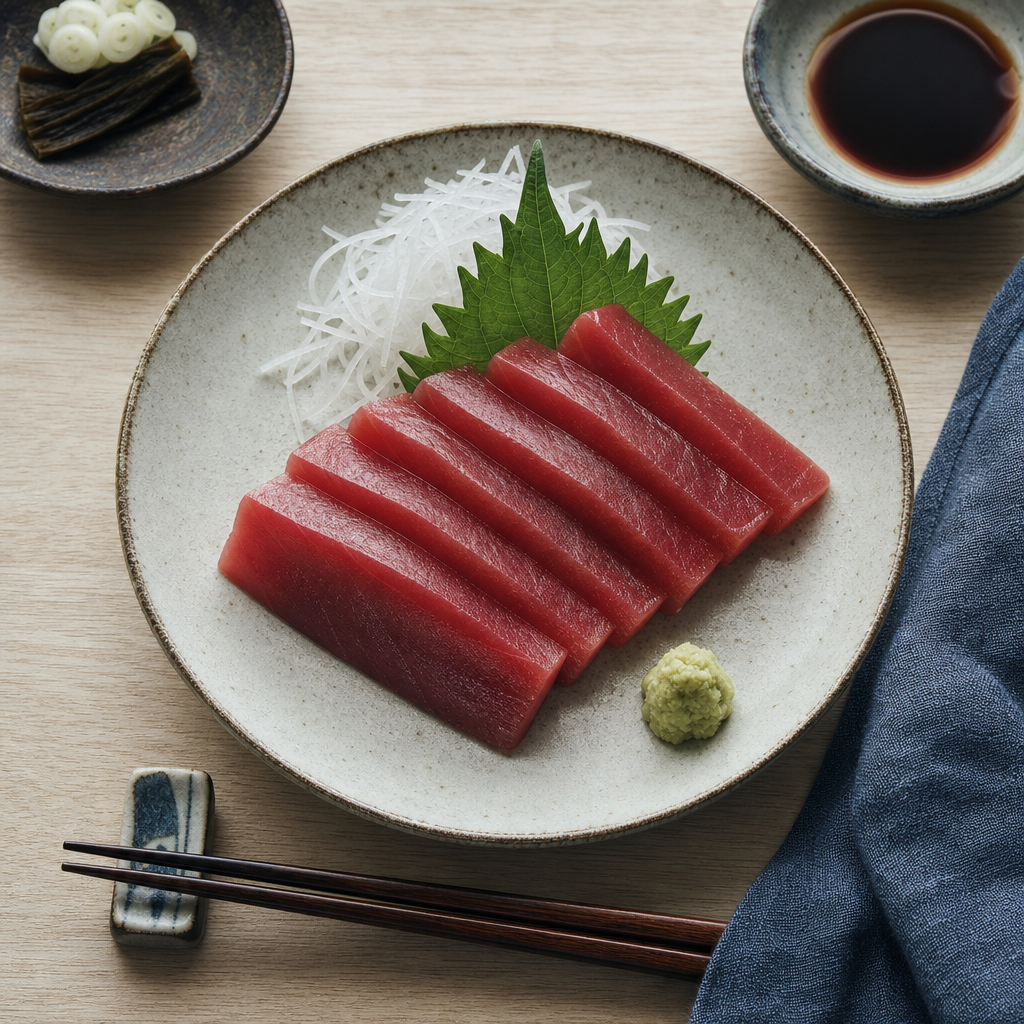
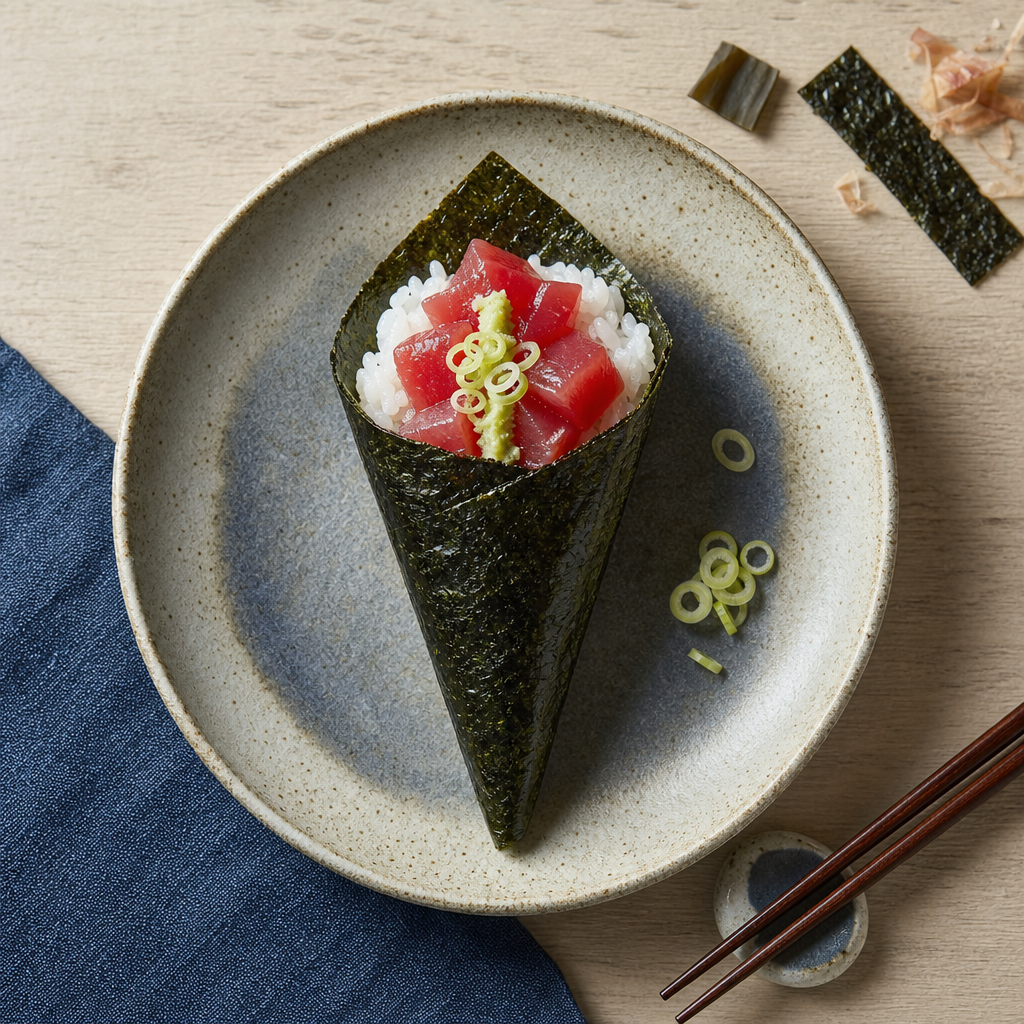
Tuna Mayo Onigiri
The dish in context
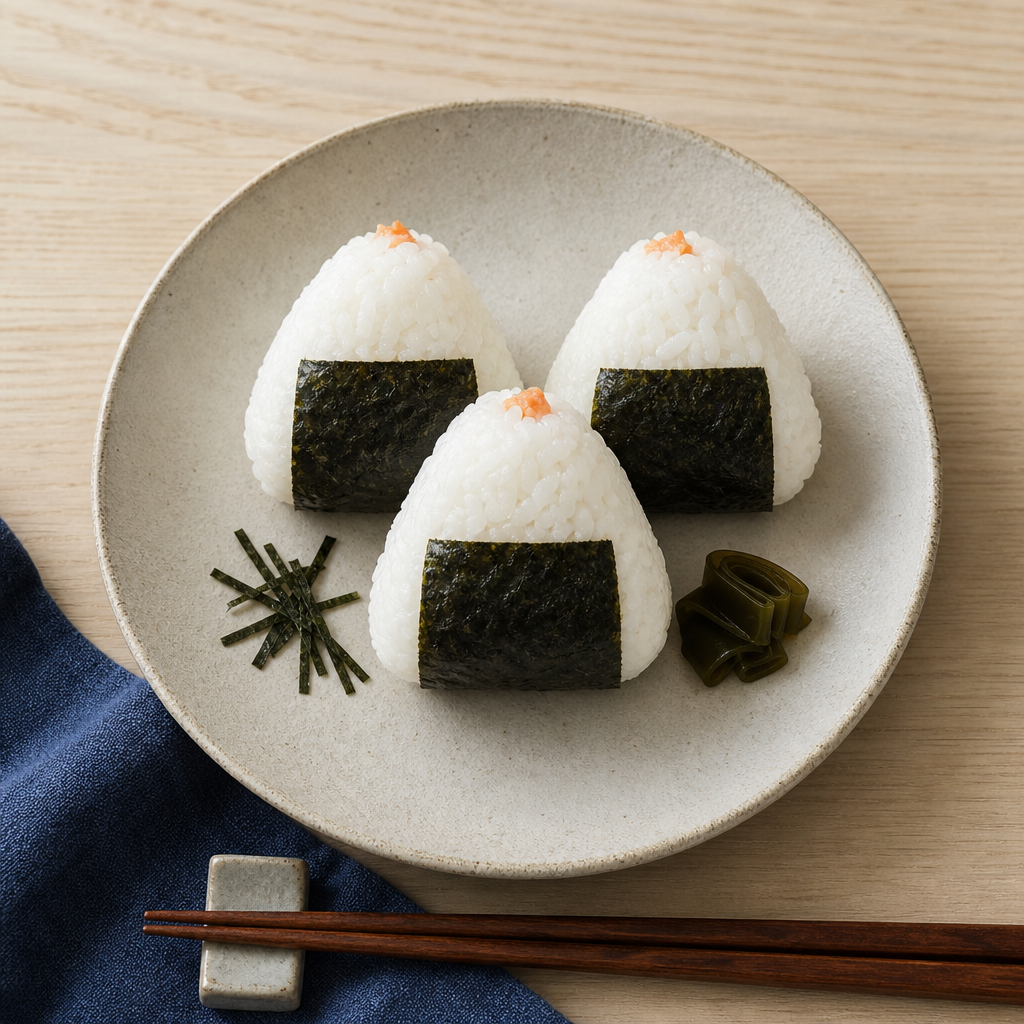
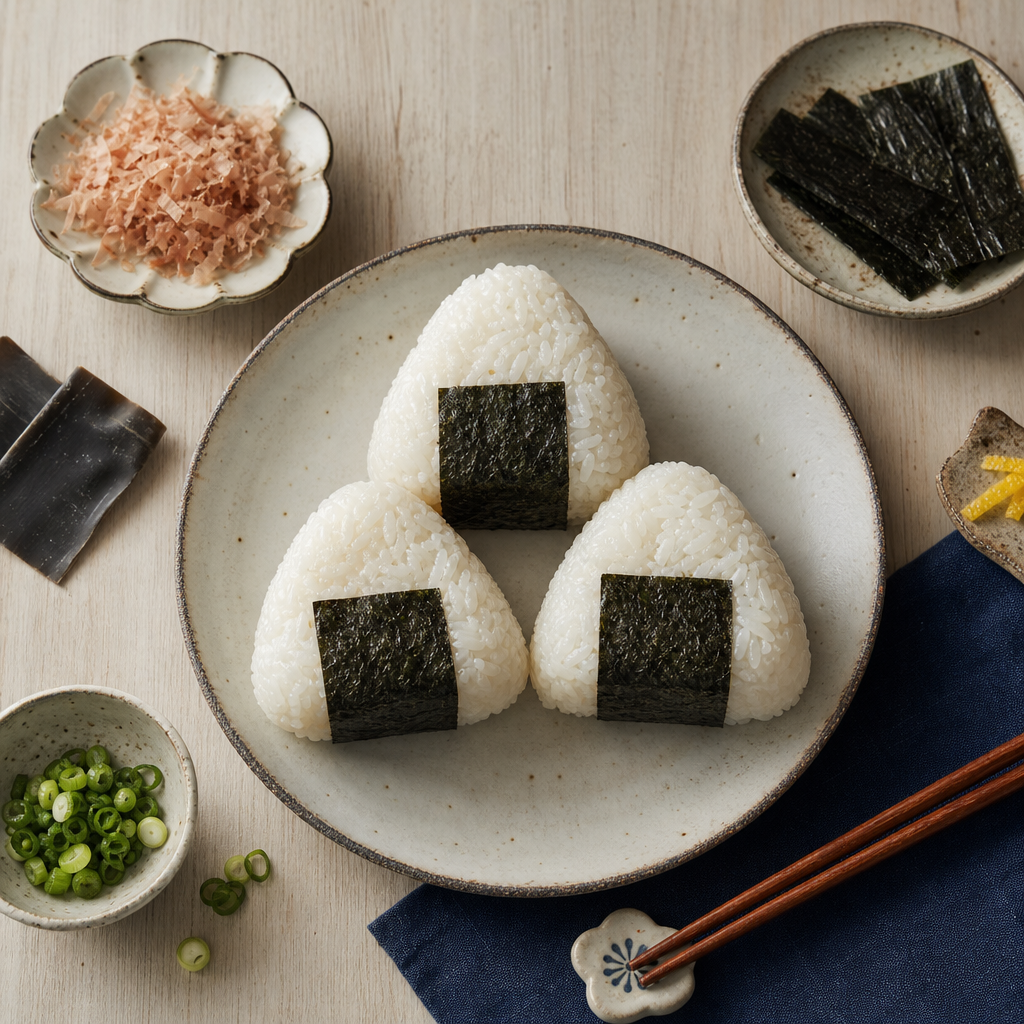
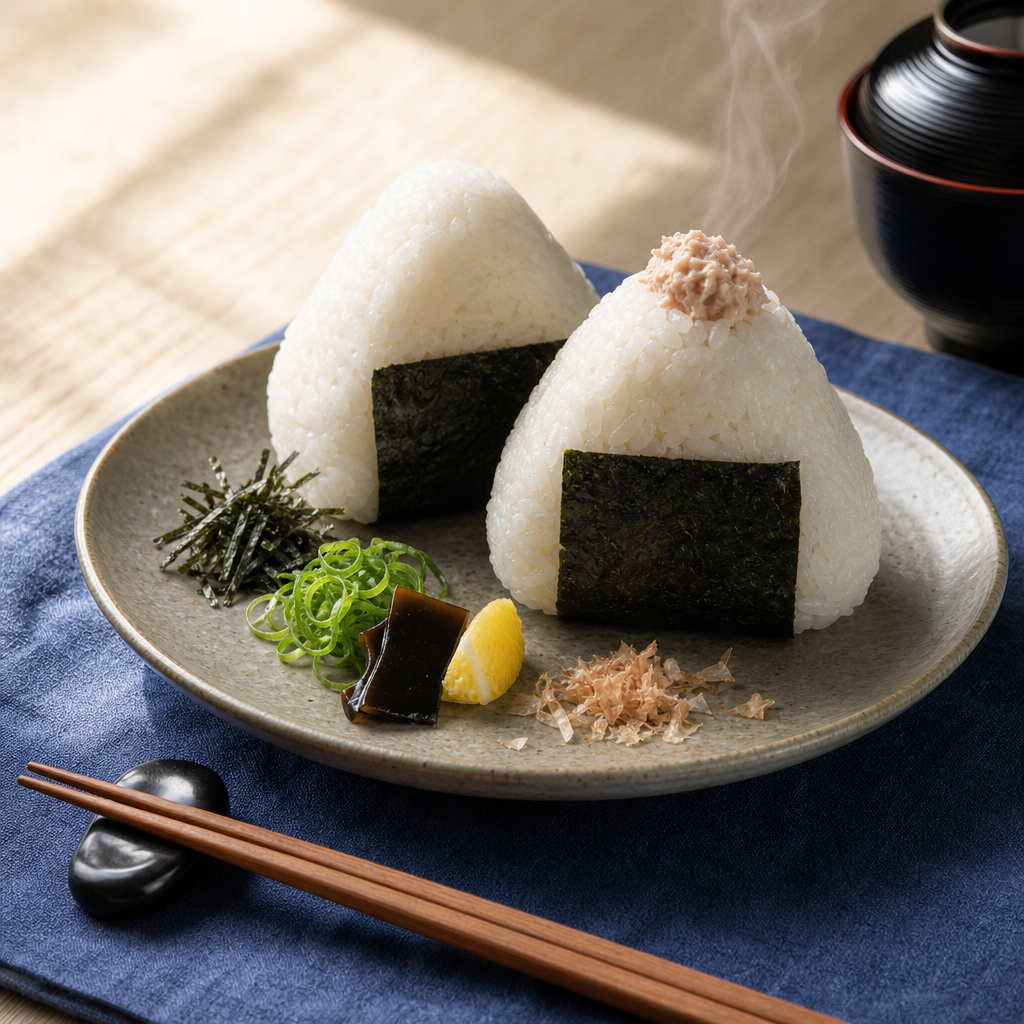
Onigiri, also called omusubi, is one of Japan's standard portable rice foods: shaped cooked rice, salted on the outside, often filled with a savory center and wrapped in nori. The form is older than the convenience-store era, but tuna mayo is modern, tied strongly to konbini shelves and home lunchboxes. Japanese convenience stores helped make ツナマヨ one of the default onigiri fillings: mild canned tuna, Japanese mayonnaise, and a small amount of soy or dashi-seasoned sauce. This recipe follows the household and konbini grammar rather than sushi practice: plain salted rice, not vinegar-seasoned shari.
Method 7 steps · 65 min
Wash the rice
Place the rice in a bowl, cover with cold water, swirl with your hand, and pour off the cloudy water. Repeat 3-5 times, until the water is no longer thick and milky. Drain in a sieve for 5 minutes.
Soak and cook
Combine the drained rice and 500 ml water in a rice cooker and soak for 30 minutes, then cook on the standard white-rice setting. For a saucepan, soak in the pot, bring to a boil covered, reduce to low for 12 minutes, then turn off the heat without lifting the lid.
Rest the rice
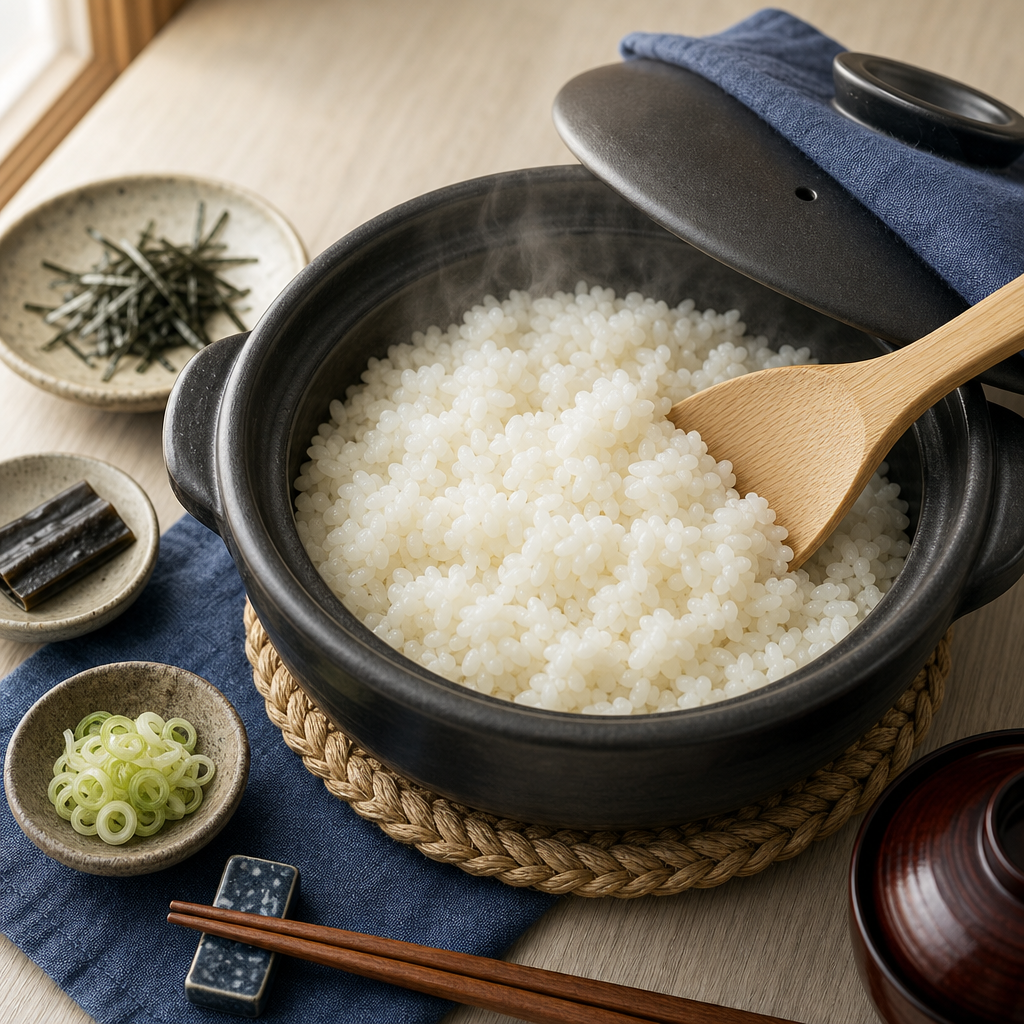
Let the cooked rice rest, covered, for 10 minutes. Fluff gently with a shamoji or rice paddle using cutting and folding motions, not vigorous stirring.
Mix the tuna mayo
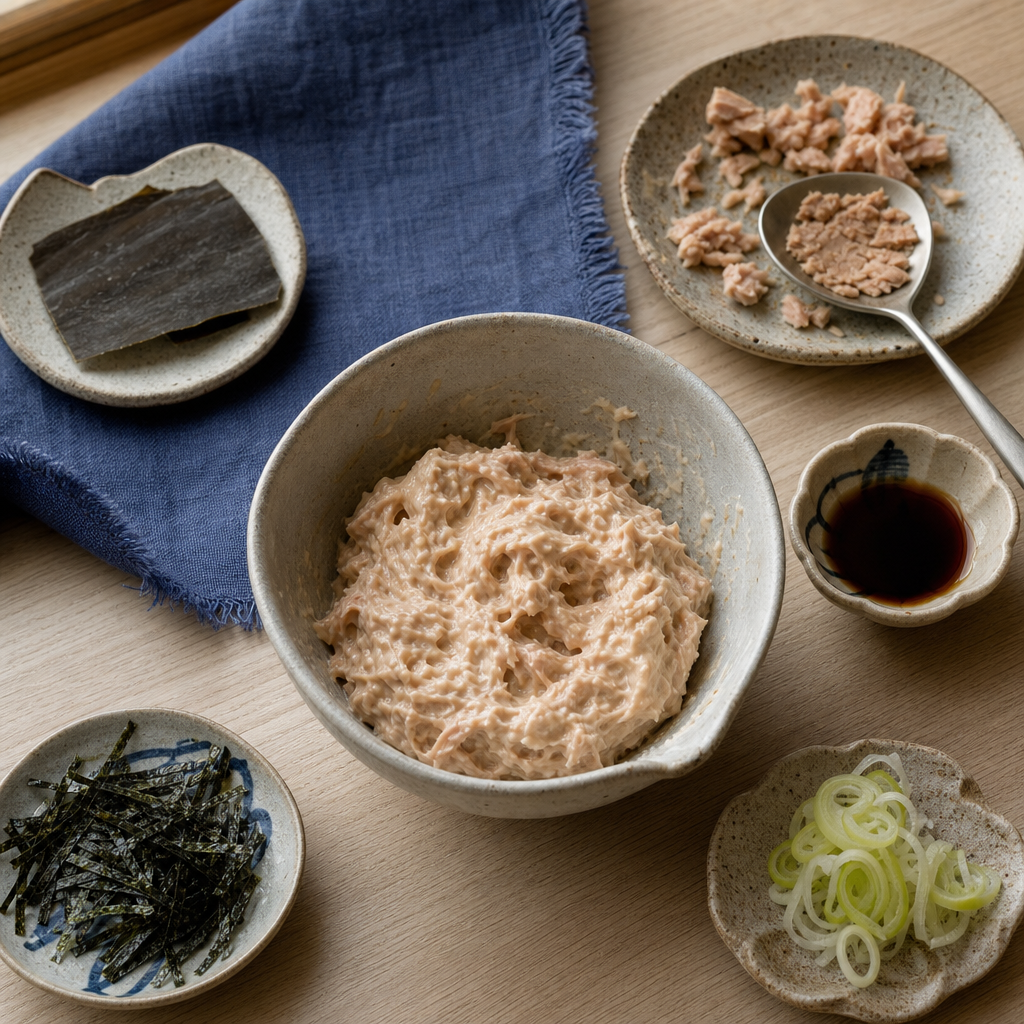
Press the drained tuna with a spoon or clean hands to remove excess liquid. Mix tuna, Japanese mayonnaise, and soy sauce until the tuna is coated but still flaky. The filling should mound on a spoon; it should not slump or drip.
Set up for shaping
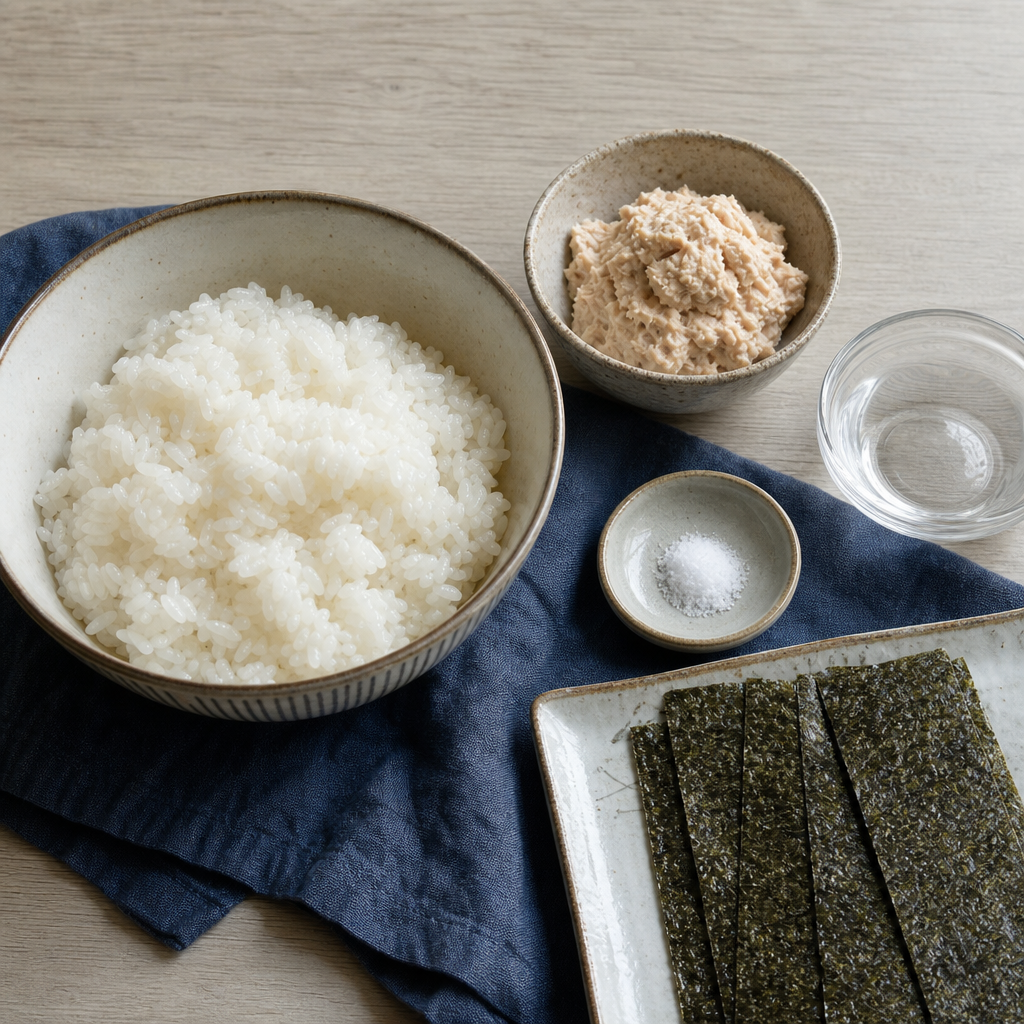
Put warm rice, tuna mayo, a bowl of water, and salt within reach. Wet both hands, shake off excess water, then rub a thin film of salt across the palms and fingers.
Fill and shape
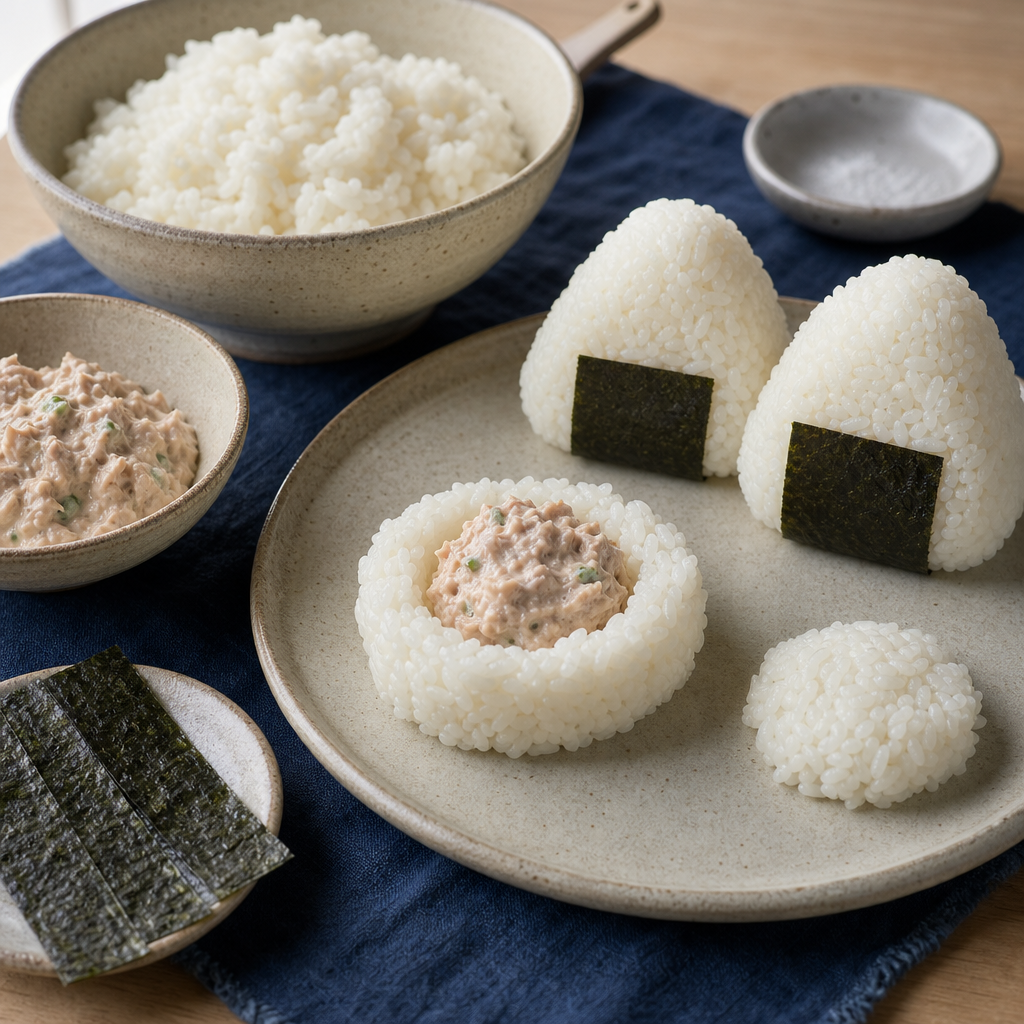
Place about 100-110 g warm rice in one palm, press a shallow hollow in the center, and add 1 heaped tablespoon tuna mayo. Cover with a small cap of rice if needed, then press into a triangle with cupped hands, rotating after each press. Stop as soon as it holds its shape.
Wrap with nori
Wrap each onigiri with a strip or half-sheet of nori just before eating if crisp nori is wanted. For lunchboxes, wrap the nori directly around the rice and accept a softer sheet.
Common mistakes
- {'mistake': 'Using long-grain rice', 'fix': 'Use Japanese short-grain or a japonica medium-grain fallback. Long-grain rice separates by design and forces overcompression.'}
- {'mistake': 'Shaping cold rice', 'fix': 'Shape while the rice is warm enough to handle. Cold rice hardens and cracks instead of sealing around the filling.'}
- {'mistake': 'Leaving the tuna wet', 'fix': 'Drain and press the tuna before adding mayonnaise. The finished filling should mound, not spread.'}
- {'mistake': 'Packing the rice too hard', 'fix': 'Use cupped hands and light pressure. Stop when the triangle holds; more pressure damages the grain structure.'}
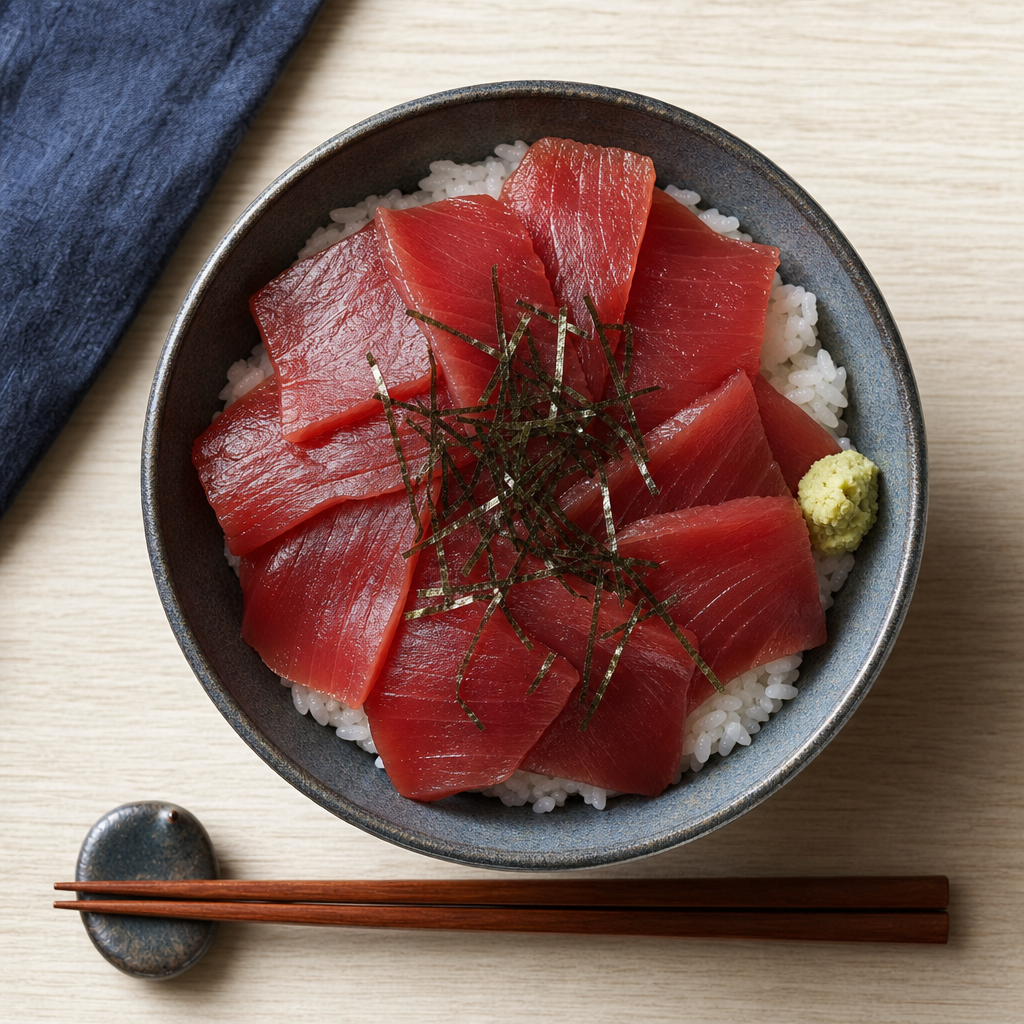
- {'mistake': 'Adding sushi vinegar to the rice', 'fix': 'Use plain cooked rice seasoned on the outside with salt. Vinegared shari belongs to sushi, not standard onigiri.'}
What does not belong
- {'item': 'Sushi vinegar', 'reason': 'Sushi vinegar does not belong in standard tuna mayo onigiri. The rice should taste like salted rice, not shari.'}
- {'item': 'Long-grain rice, basmati, or jasmine rice', 'reason': 'These rices do not have the sticky japonica structure needed for onigiri. They make loose rice piles or dense compressed lumps.'}
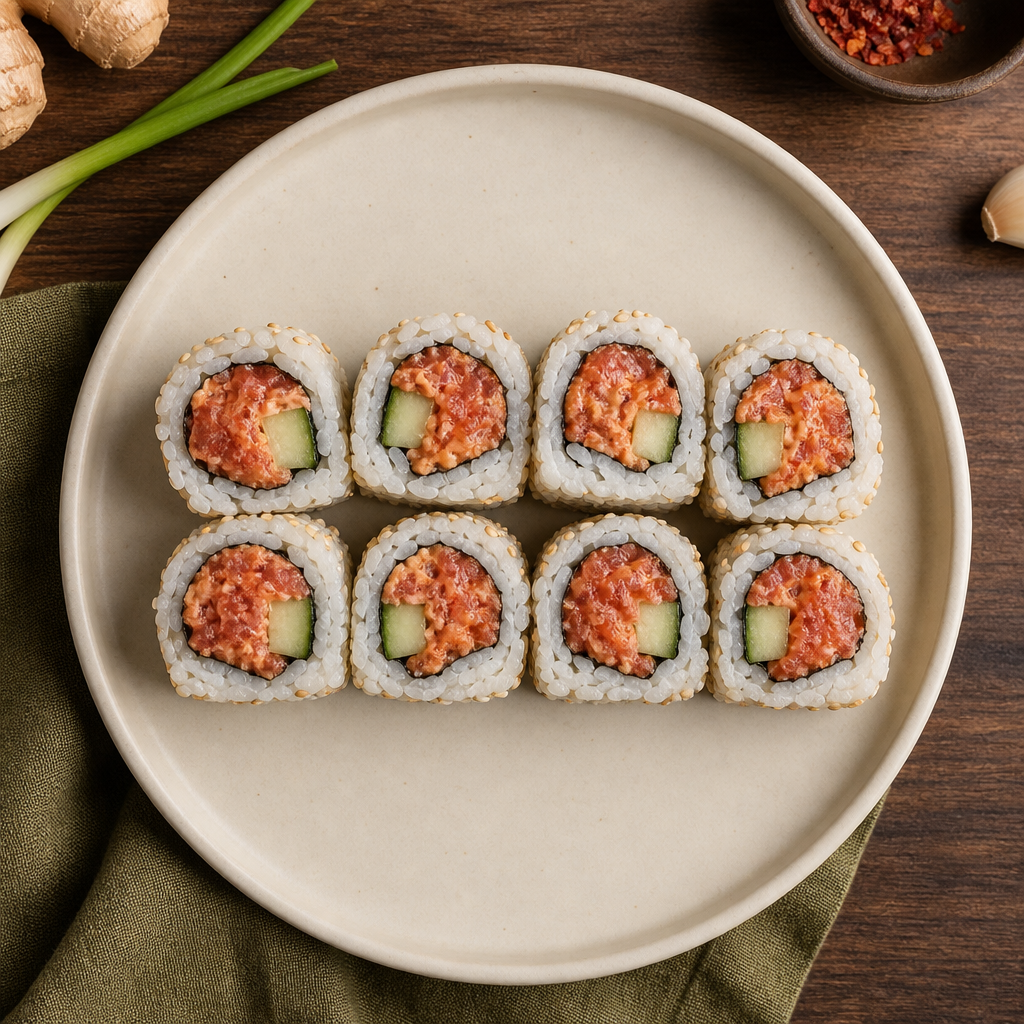
- {'item': 'Cream cheese', 'reason': 'Cream cheese turns the filling into a Western sushi-roll profile. Tuna mayo onigiri needs mayonnaise, tuna, and a small salty accent.'}
- {'item': 'Sesame oil in the filling', 'reason': 'Sesame oil dominates the mild tuna-mayo profile and pushes the rice ball toward a Korean-style filling. It does not belong in this version.'}
- {'item': 'Large raw vegetable pieces', 'reason': 'Cucumber chunks, onion, and celery break the seal and release water. Onigiri filling should be compact and spoonable.'}