Ginger Pork
The dish in context
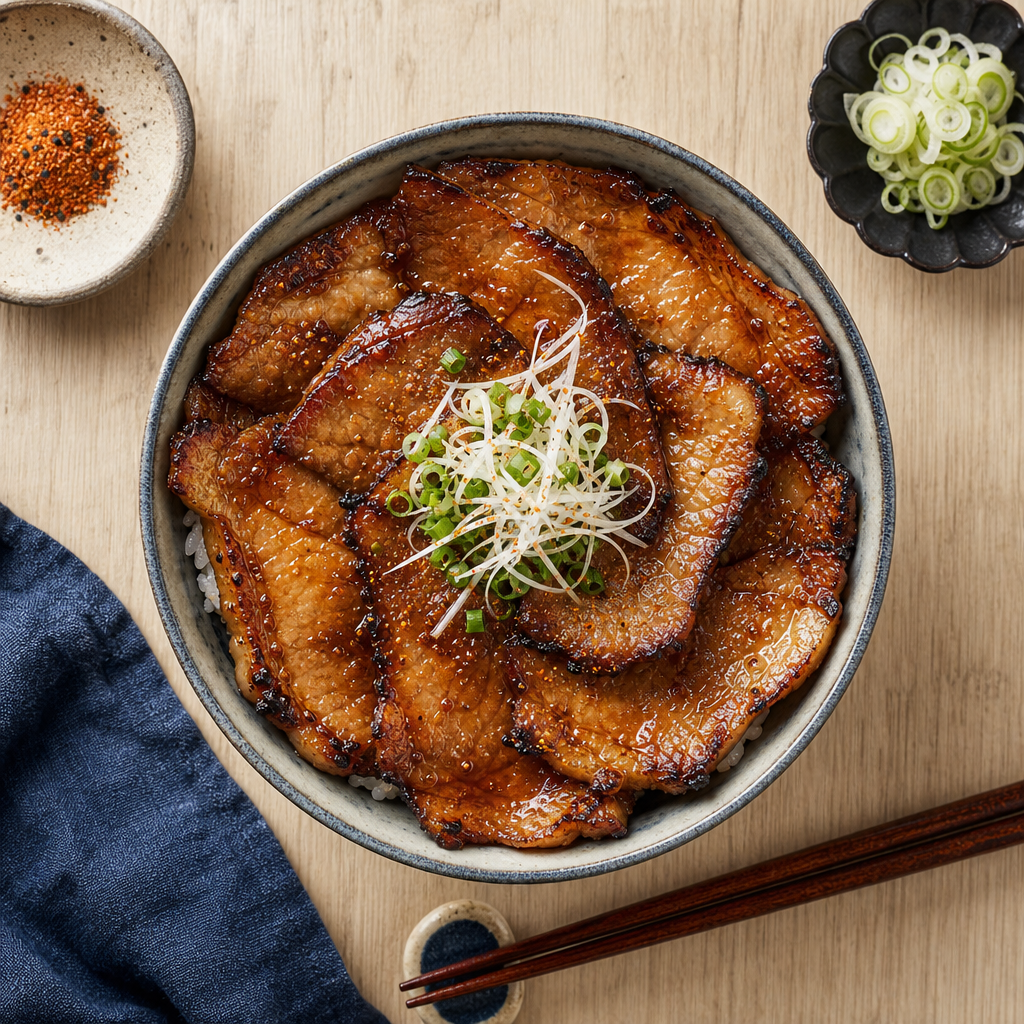
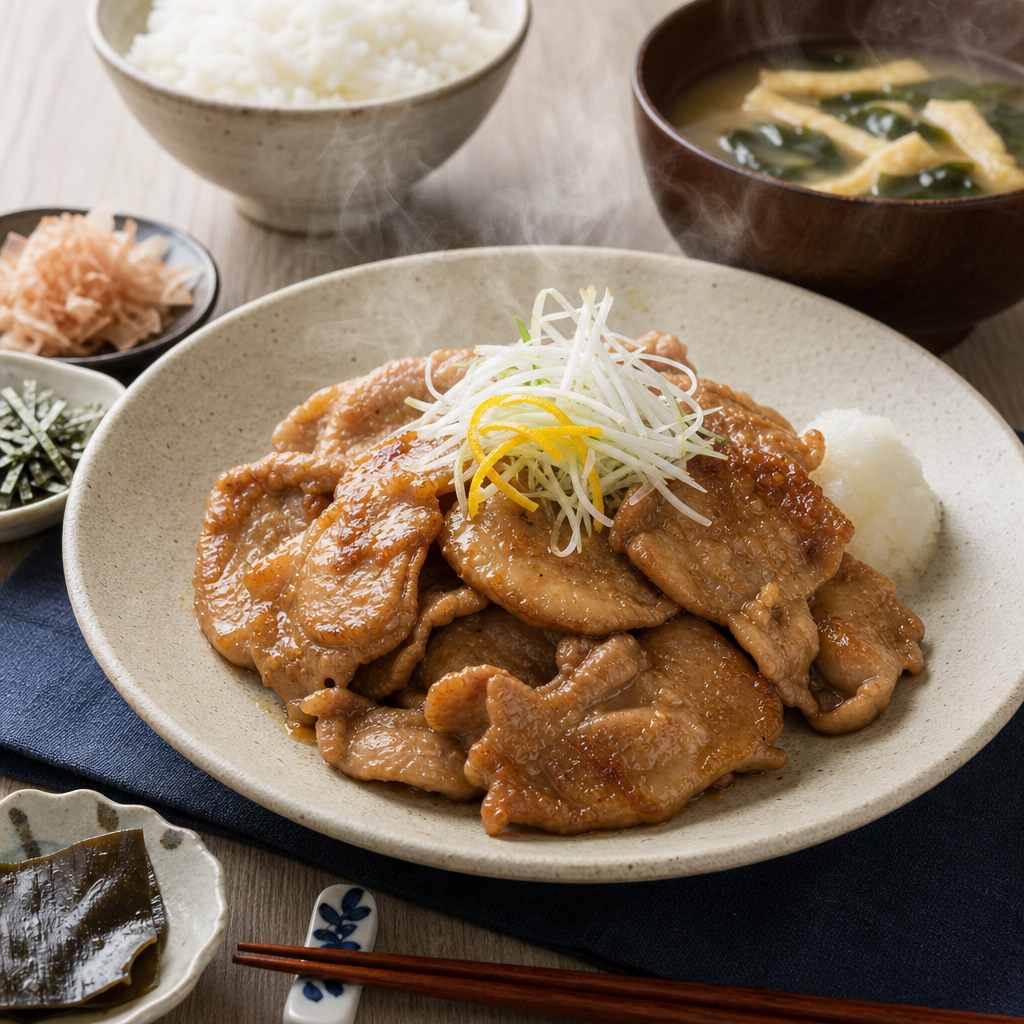
生姜焼き means “ginger-grilled,” but in Japan the unmarked cafeteria and household standard usually means pork ginger: 豚肉の生姜焼き. It is a teishoku fixture, commonly served with shredded cabbage, short-grain rice, and miso soup rather than treated as a standalone stir-fry. Sources split between marinating the pork first and glazing it in the pan; both are normal, but the shared grammar is pork, ginger, shoyu, sake, and mirin. Onion is common in school cafeterias and home versions, especially with thinner cut pork. Thick bottled teriyaki glaze is a different dish.
Method 6 steps · 25 min
Prepare the plate components
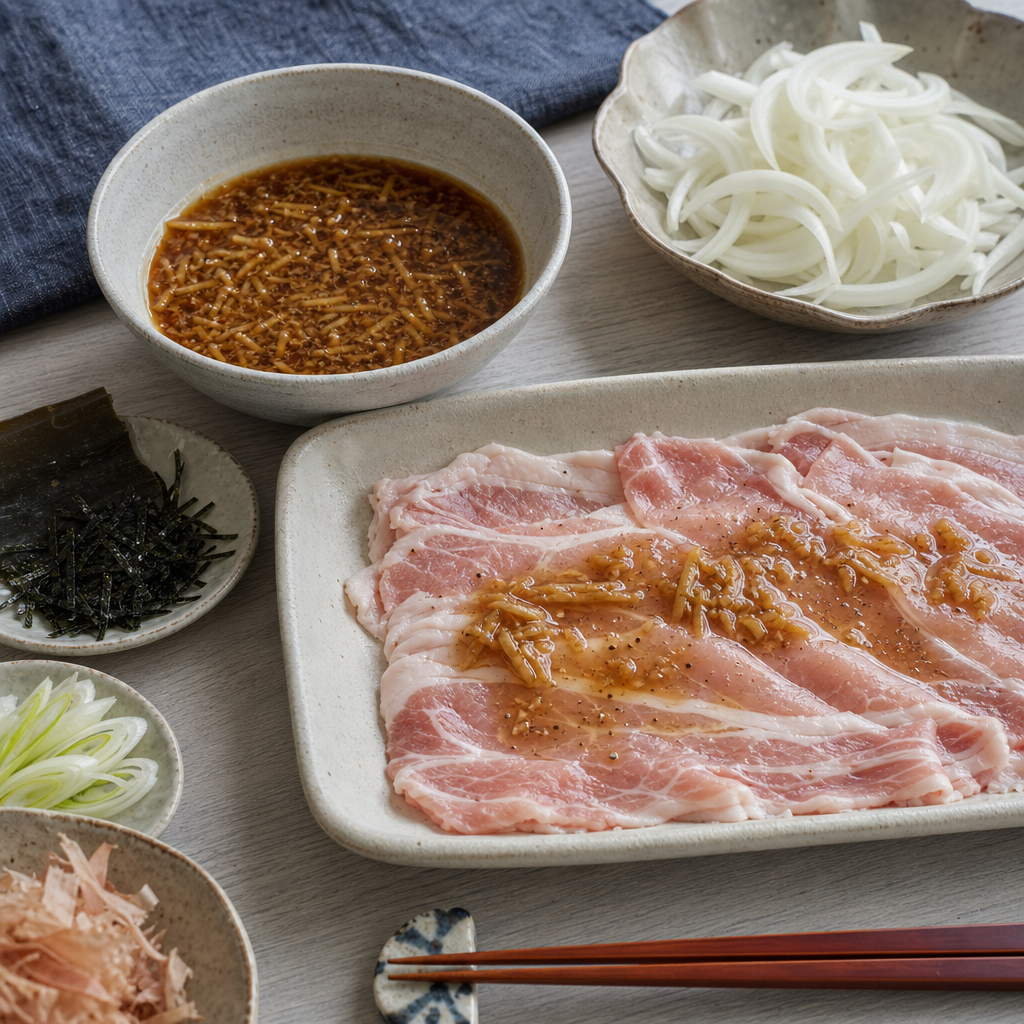
Slice the onion 5 mm thick. Shred the cabbage as finely as possible and keep it cold. Separate the pork slices so they do not enter the pan as a clump.
Mix the ginger sauce
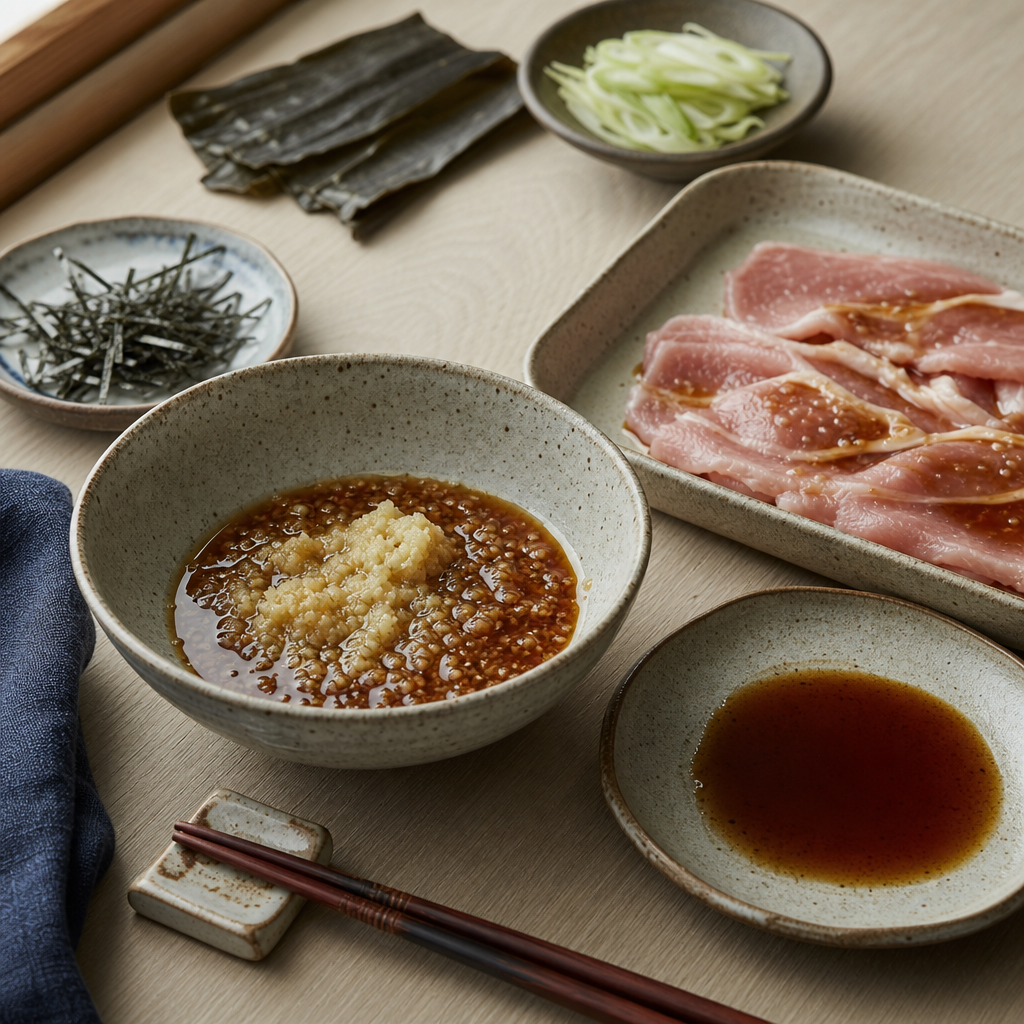
Combine the grated ginger, shoyu, sake, and mirin. Reserve most of this sauce clean; spoon about 15 ml over the pork and turn the slices to coat for 5 minutes.
Dust the pork lightly
Sprinkle the pork with potato starch or rice flour and shake off any visible excess. The slices should look matte, not breaded.
Cook the onion
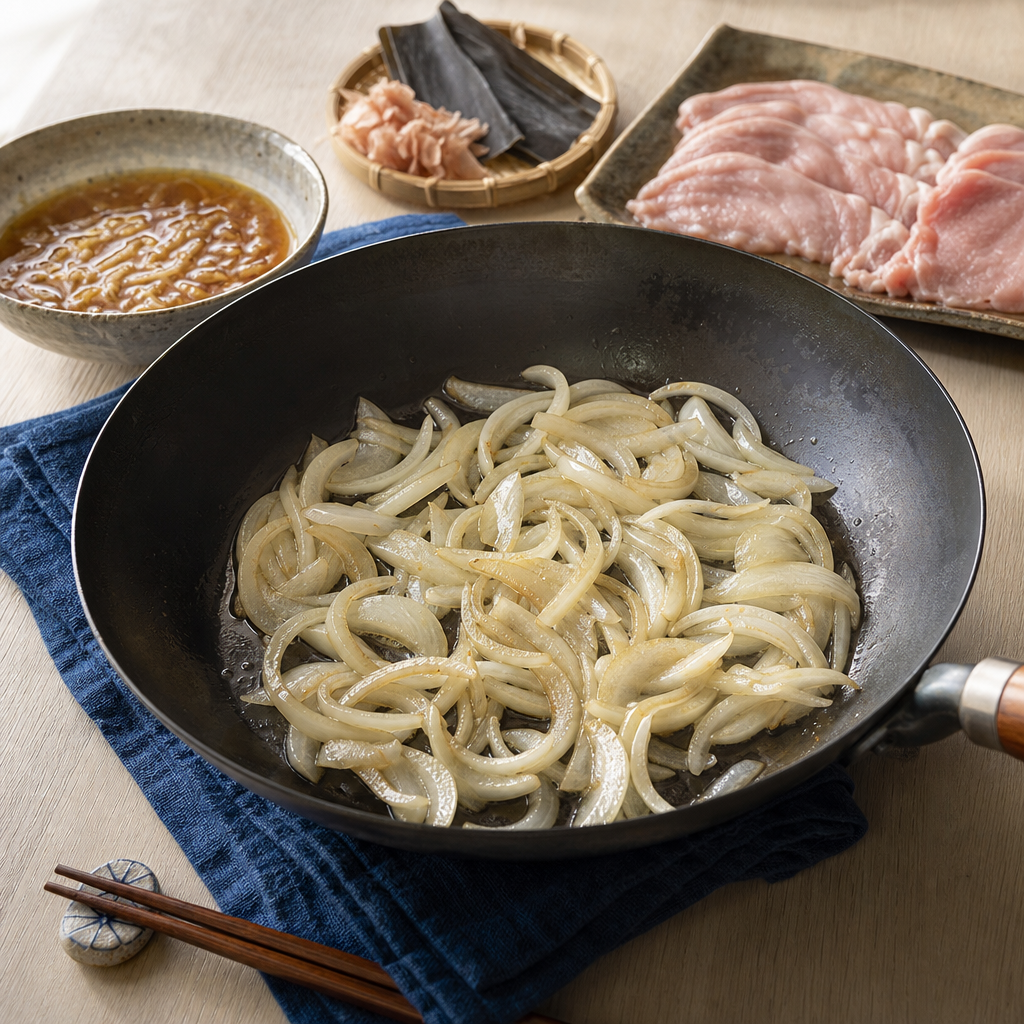
Heat the oil in a wide skillet over medium-high heat. Add the onion and cook until the edges turn translucent and a few surfaces pick up light brown spots, 2-3 minutes.
Sear the pork
Push the onion to one side or remove it if the pan is crowded. Lay in the pork in a loose single layer and cook until the first side loses its raw shine, about 45 seconds; turn and cook another 30-45 seconds.
Glaze, then stop
Return the onion to the pan if removed. Pour in the reserved sauce and toss constantly until the bubbles thicken and the pork is coated, 45-60 seconds. Transfer to a plate with shredded cabbage and serve with short-grain rice.
Common mistakes
- Using thick pork chops. Shogayaki depends on thin slices that cook before the ginger burns.
- Crowding the skillet. Steam gives pale pork and watery sauce.
- Reducing the sauce before the pork is in the pan. The glaze should tighten around the meat.
- Marinating for an hour. Soy sauce firms thin pork and makes the finished dish one-note salty.
- Adding too much starch. A dusting gives gloss; a coating makes paste.
What does not belong
- Bottled American teriyaki sauce does not belong. It is too sweet, too thick, and erases the ginger.
- Honey glaze does not belong in standard Japanese shogayaki. Mirin supplies the sweetness and shine.
- Sesame oil does not belong as the main cooking fat. Its roasted aroma pulls the dish away from the clean shoyu-ginger profile.
- Long-grain rice does not belong on a shogayaki teishoku plate. Use Japanese short-grain rice.
- A garlic-heavy marinade does not belong. A little grated garlic appears in some home versions, but ginger must lead.